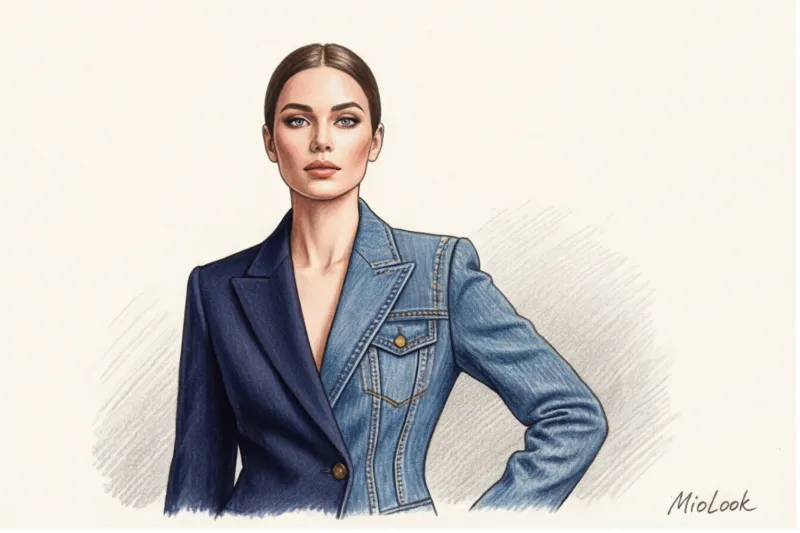
Let's be honest: when you hear the phrase "upcycling clothing," you probably picture a poorly made shopper bag made from old jeans or a t-shirt with clumsy cross-stitching. For decades, DIY projects have tarnished the reputation of sustainable fashion, firmly associating it with desperate thrifting.
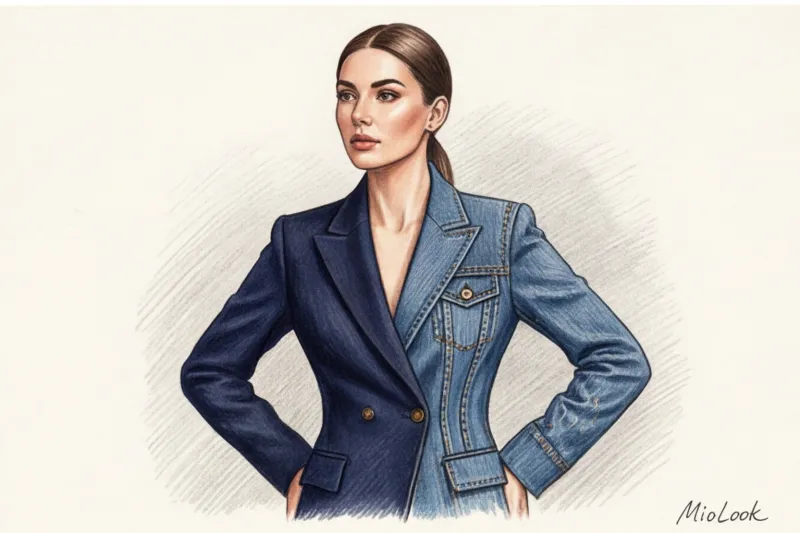
But true, high-quality upcycling isn't a way to save money. It's a tool for creating couture, high-status pieces with a perfect fit. It's an investment of time, expertise, and, sometimes, considerable resources in the work of a high-quality tailor for one goal: exclusivity. We discussed the origins of this macrotrend in more detail in our the complete guide to an eco-friendly wardrobe , but today I want to talk about practice.
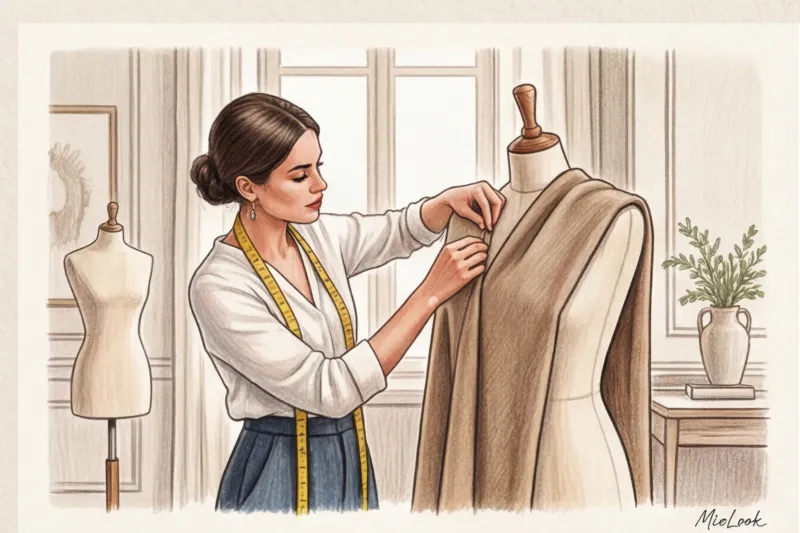
As a stylist, I often see closets filled with items that don't bring us joy. Instead of throwing them away, we can apply a sartorial approach to them—the sartorial art of transformation.
Clothing upcycling is not a sewing class.
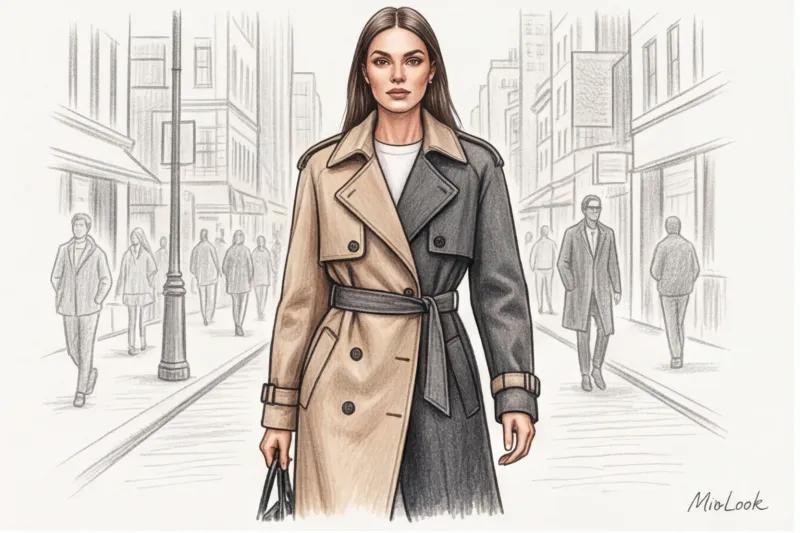
To begin with, let's draw a clear line between terms that are often confused. Recycling (recycling) is the breaking down of material into fibres to create new fabric. Downcycling - this is turning your old t-shirt into a floor rag. And here upcycling — this is up-cycling. You take a basic, outdated, or damaged item and make it more valuable, complex, and relevant than it was before the intervention.
In 2015, I was fortunate to visit Maison Margiela's Parisian atelier. I watched the creation of the Artisanal collection, and it revolutionized my understanding of luxury. The artisans took vintage theater costumes, ripped them apart, and reassembled them, creating architectural masterpieces. The house's founder, Martin Margiela, proved back in the 1990s that true luxury isn't a hyped-up brand logo, but rather intellectual labor and uniqueness.
Today, brands like Marine Serre and Marni continue this philosophy. According to a 2023 report by the Ellen MacArthur Foundation, only 1% of all clothing produced is recycled into new clothing. The rest ends up in landfills. Upcycling at the personal wardrobe level is our way to break this cycle without sacrificing style.
Why remake things when you can buy new ones?
The psychology of fast fashion has trained us to enjoy instant dopamine: buy it, wear it once, and forget about it. We buy things that don't reflect our personal archetypes simply because they were on sale for €29.
Customization restores the "one of one" status to items. You become a co-designer. But even if you're not ready for radical transformations, there's a basic level of upcycling that changes everything: customization.
"A store-bought item is only a semi-finished product. It only becomes a finished dish after being tailored."
— The main rule of personal styling
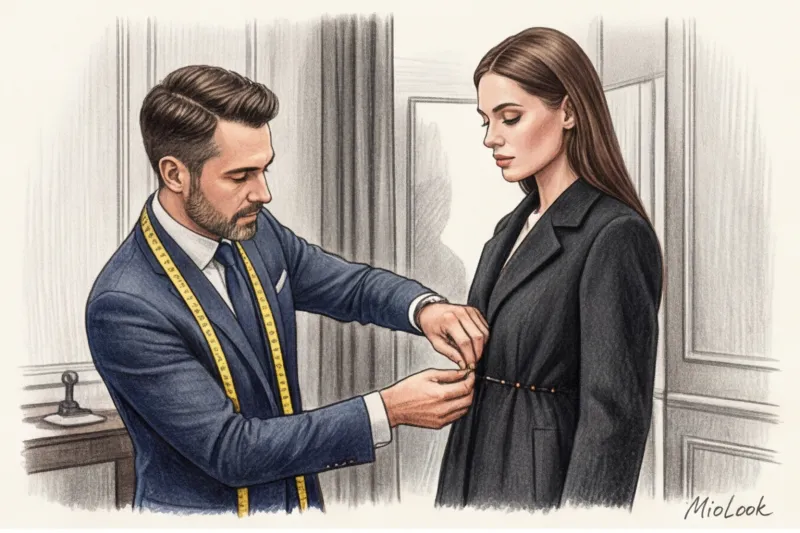
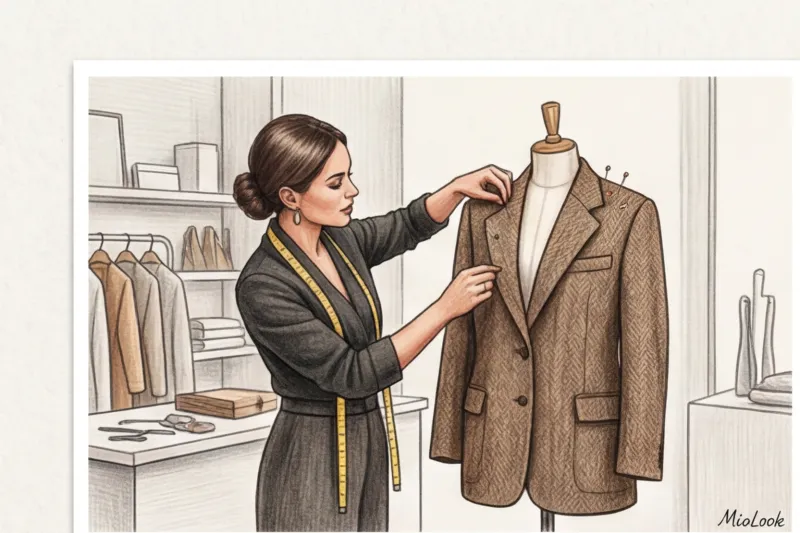
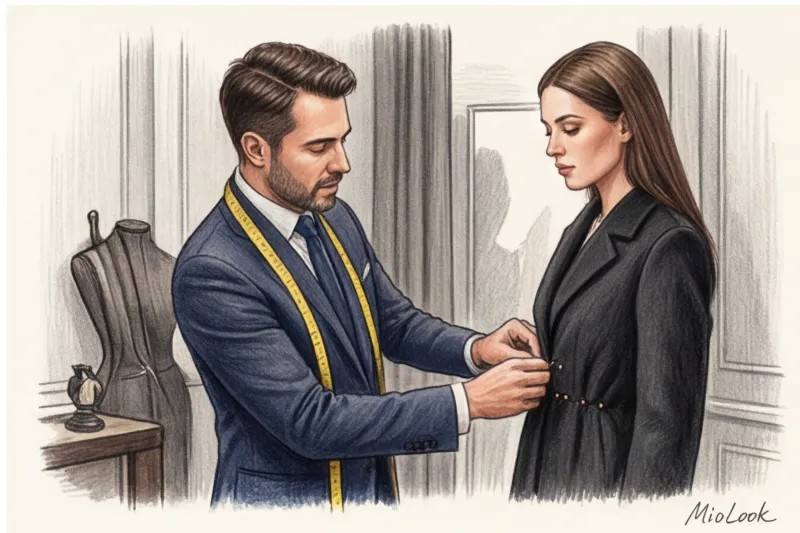
Have you ever noticed that jackets from the mass market often wrinkle at the armholes or have sleeves that are too long? By investing €30–50 in tailoring (shortening the sleeves, moving the vent, or cinching the waist), you visually elevate the garment from fast fashion to premium. If you have a hoard of such semi-finished items, upload them to MioLook smart wardrobe , to evaluate what they can be worn with after fitting, and whether the game is worth the candle.
Access to MioLook for €0.99 — one-time payment
A smart AI stylist will select the perfect look based on your real wardrobe and suggest which items need some tweaking.
Get access — €0.99 onceTop 3 Customization Techniques for Those Who Can't Sew
If you don't have a sewing machine, that's no reason to stop experimenting. Here are three wardrobe update methods you can implement in one evening.
Replacement hardware: an instant status upgrade
The biggest "traitor" to budget clothing is the hardware. Thin, shiny plastic buttons instantly give away the origin of a jacket or cardigan. Replacing them with high-quality alternatives increases the perceived price of the item by an average of 30-40%.
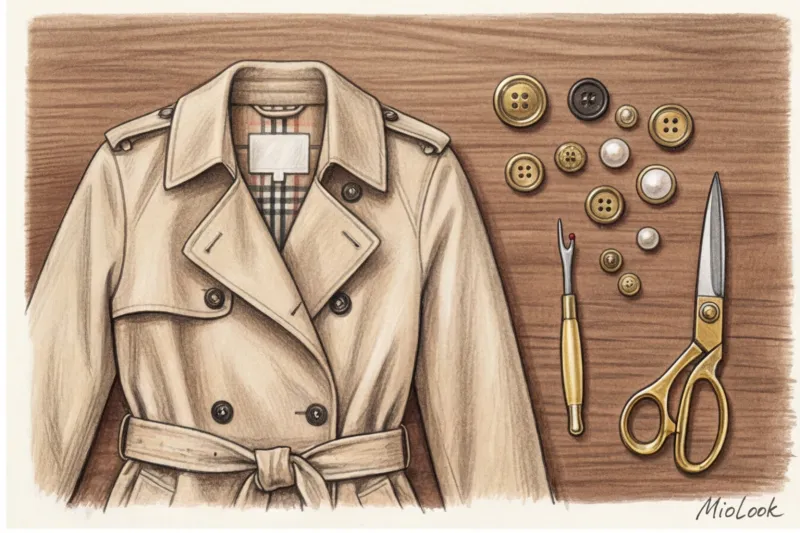
Where to look for the right hardware? I recommend hunting at flea markets or specialized vintage shops. For heavy wool jackets, look for chunky horn buttons or patinated metal. For summer linen suits, try natural mother-of-pearl or coconut shell. A set of vintage buttons will cost you around €15–20, but the effect will exceed all expectations.
Deconstruction and the raw edge
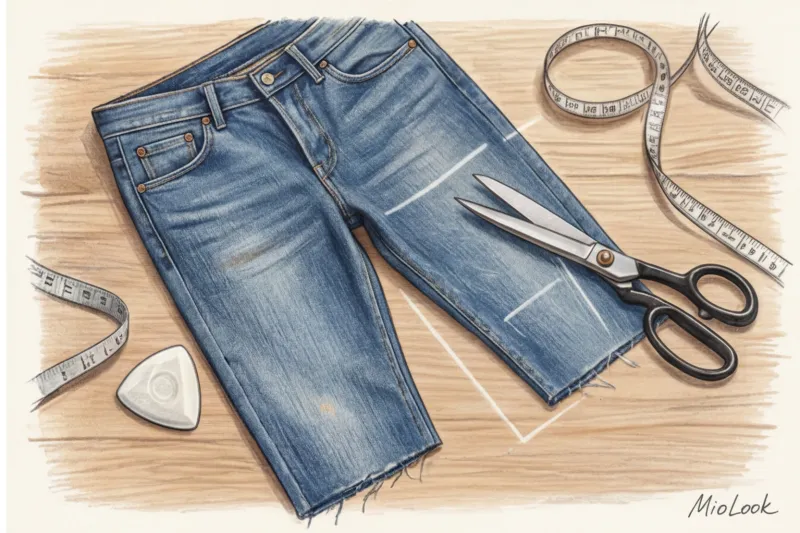
The grunge and deconstruction trend is still going strong. Cutting off the hems of jeans, removing stiff collars from shirts, and creating asymmetrical hems all contribute to a modern, slightly casual look.
But here lies the main mistake of beginners: they cut the wrong fabrics. Fair warning: This method absolutely doesn't work with thin, loose materials like silk, chiffon, or viscose—the item will simply unravel after the first wash and look untidy. Ideal candidates for deconstruction are denim, heavy cotton (180 g/m² and above), and textured tweed. For a stylish edge, after cutting, gently pull out a few crosswise threads with tweezers to create an even fringe, then machine stitch the result a millimeter above the edge (if you're concerned about the fabric continuing to fray).
Overdyeing: Bringing Back Color
Faded black jeans or a faded cotton sweatshirt don't have to be thrown out or donated. swap party Overdying (dyeing over) can give them a second life. A deep, rich color is a sign of a new, expensive item.
The secret to successful home dyeing lies in the composition. Fabric dyes work well on natural fibers (cotton, linen, wool). However, if your trousers contain more than 20% polyester or elastane, the dye will either appear patchy or wash out completely. Another sophisticated technique is toning yellowed white items in trendy shades of ecru, tea rose, or vintage lace using a strong infusion of tea or coffee. This gives the fabric a refined, antique flair.
From mass-market to couture: how to save a damaged item
Usually, a visible stain or hole means the end of a beloved item's life. But in the paradigm of conscious fashion, there is a concept Visible Mending (visible repair). Instead of awkwardly hiding the defect, we make it the main focus.
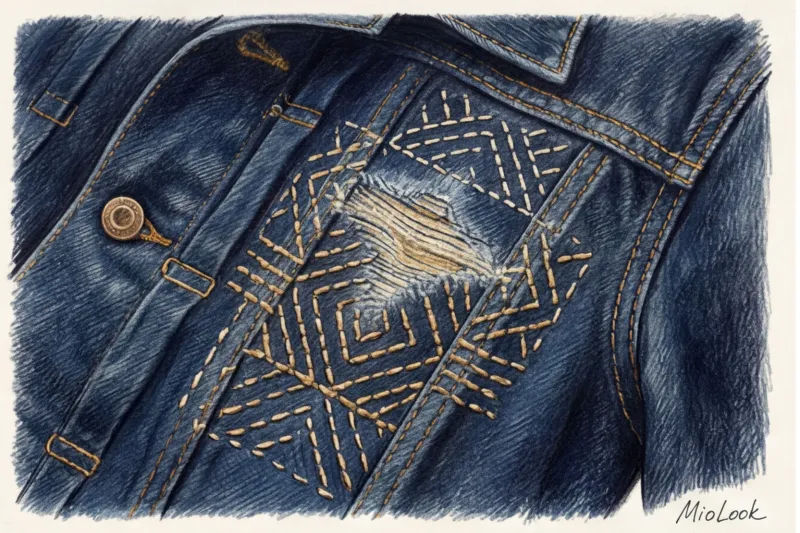
The Japanese philosophy of Kintsugi teaches us that a broken cup, mended with gold, becomes more beautiful and valuable than a whole one. In textiles, the equivalent is the technique of sashiko—a decorative geometric darning technique using contrasting (often white or gold) threads on denim. It appears to be a thoughtful design solution.
I had a difficult case: a client spilled a glass of Pinot Noir on a luxurious silk blouse from Celine, valued at around €900. The dry cleaner refused to provide a warranty. Instead of parting with the garment, we took it to a brilliant tailor. He carefully cut out the damaged front panel and replaced it with an insert of thick silk in a deep burgundy. We got a contrasting color blocking in the spirit of Marni collections. The blouse became even more avant-garde and garnered numerous compliments.
Your perfect look starts here
Not sure what to pair your customized pieces with? Join the thousands of users who look flawless every day with MioLook.
Get access — €0.99 onceUpcycling a business wardrobe: ethical and prestigious
Is repurposed clothing appropriate in an office with a strict dress code? Absolutely, as long as it's done professionally.
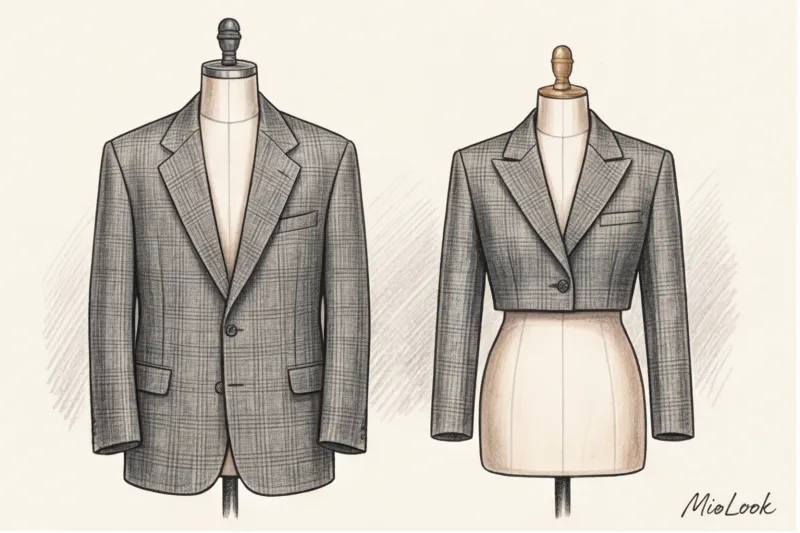
One of my favorite techniques for my female executive clients is transforming vintage men's suits. Men's jackets from the 1980s and 1990s, made of 100% natural wool, have a superb texture, wide shoulders (which are currently at the peak of fashion), and high-quality padding that simply isn't available in women's mass-market clothing. Purchasing such a jacket will set you back €40-€80. You'll pay an additional €100 to a tailor for refastening buttons, tapering the back, and accentuating the waist. The result is the perfect power suit that looks like it was tailored on Savile Row.
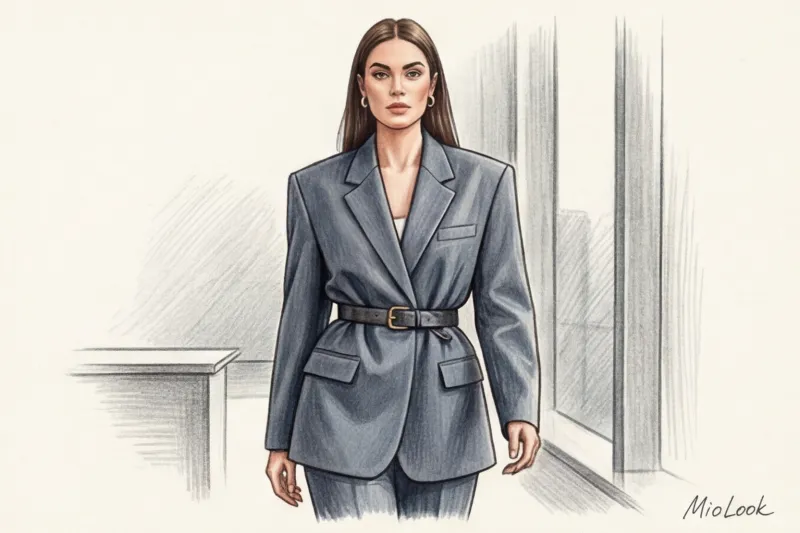
If you're not ready for a drastic change in shape, try "hidden upcycling." Replace the boring polyester lining of your business jacket with a contrasting natural silk (like emerald, fuchsia, or a vintage print). This bespoke technique is a huge confidence booster. No one notices this detail unless you accidentally open the jacket, but you know what you're wearing.
Checklist: How to Start Your First Remodeling Project
To ensure your first upcycling experience doesn't end in disappointment, follow this algorithm:
- Conduct an audit: Separate items into those that you don't wear because they fit poorly (take them to a tailor) and those that have defects (stains, snags) - these will become a testing ground for experiments.
- Choose the right fabric: Beginners should definitely avoid silk, chiffon, velvet, or fine knits. Your best friends at the start are denim, heavy cotton, linen, and wool.
- Assemble the basic set: You will need a sharp seam ripper (never rip seams with your hands!), high-quality reinforced threads (for example, Gutermann) and real tailor's scissors. Important rule: Tailor's scissors should never be used to cut paper, cardboard, or tape—they will become dull immediately.
- Delegate the difficult: If you need to change the shoulder design, alter the armholes, or adjust the fit of the trousers at the inseam, don't experiment on your own. Find a reputable tailor.
Mindfulness as the Highest Form of Style: Instead of a Conclusion
Sustainable fashion doesn't start the moment you buy an organic cotton t-shirt from an eco-friendly brand. It starts right now, in your own closet.
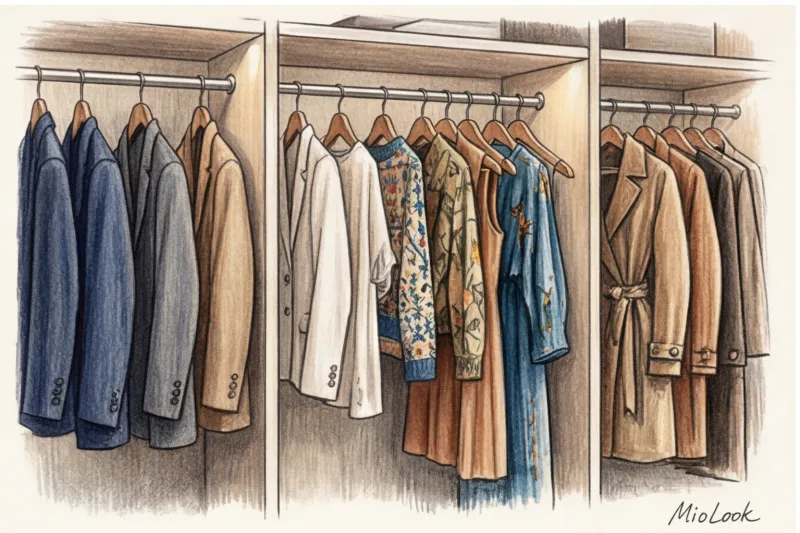
Upcycling and customization give us back what fast fashion has taken away: an emotional connection with our clothes. When you spend time searching for the perfect vintage buttons, when you discuss with a tailor the lapel width on your father's remade jacket, the garment ceases to be a faceless rag. It acquires a story.
This weekend, I challenge you to open your closet, pull out one item you haven't worn in a while, and ask yourself, "What's missing for me to fall in love with it all over again?" Perhaps your new favorite look is just a trip to the atelier or a couple of new buttons away.