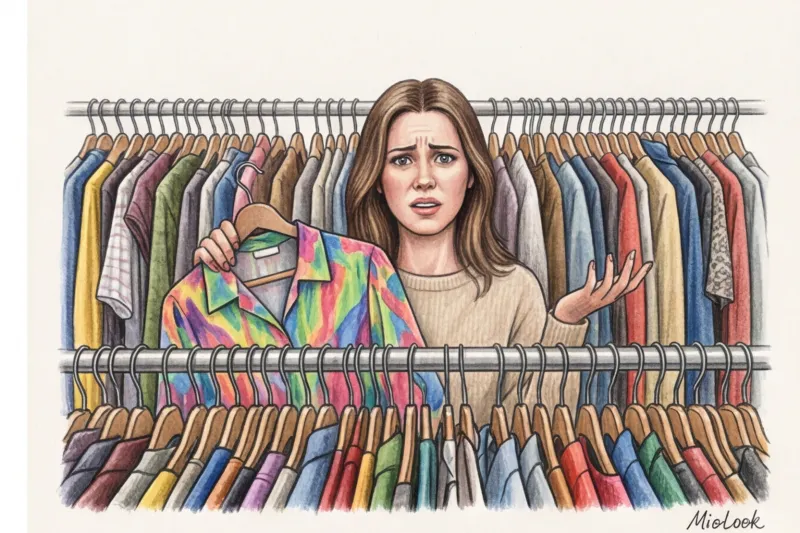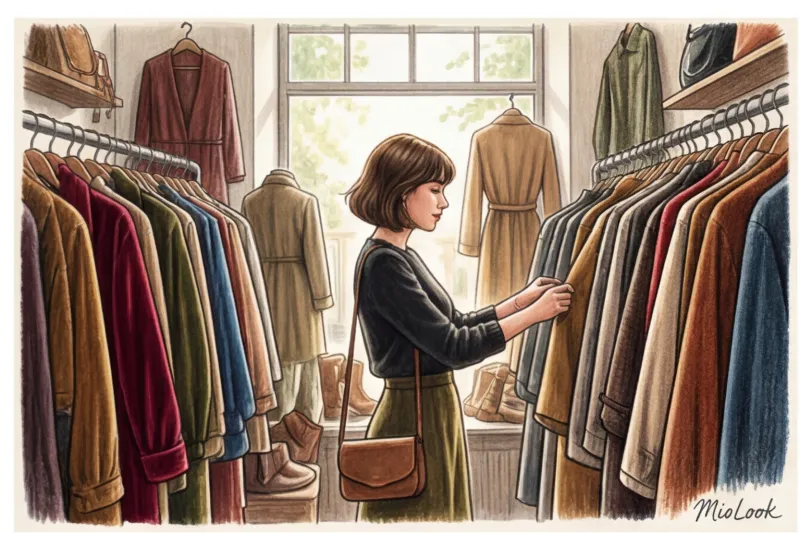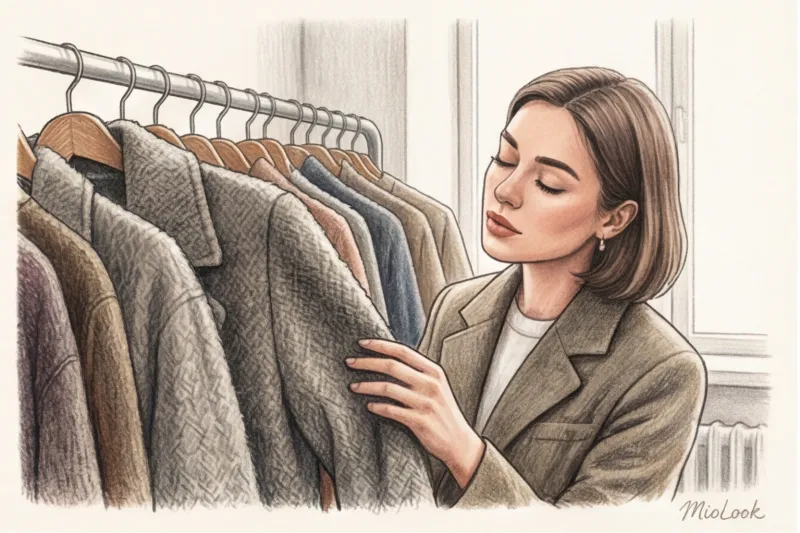
You know that distinctive smell of a vintage store? A mixture of mothballs, old perfume, and tightly hung items. Most women walk in, glance at the endless rails, get intimidated by the chaos, and leave. And those who stay make the biggest mistake—they start frantically searching for familiar logos. But if you want to know, How to shop at a second-hand store If you're looking for real treasures, not someone else's worn-out polyester, you'll have to completely change your strategy.
As a certified colorist and stylist with 12 years of experience, I've long understood that vintage isn't about saving money. It's about finding textures, colors, and cuts that mass-market brands simply don't produce today due to their high cost. We've already discussed the philosophy of long-lasting style in more detail in our the complete guide to an eco-friendly wardrobe , and today I'll tell you how to apply these principles in practice, standing between tight rows of clothes.
The Art of Blind Shopping: Why Stylists Look at Fabric, Not Brand
When I take a client to a thrift store, the first thing I do is forbid her from looking at the tags for exactly 30 minutes. This removes psychological bias. We tend to forgive poor quality fabric if the coveted name of a French fashion house is sewn onto the collar.
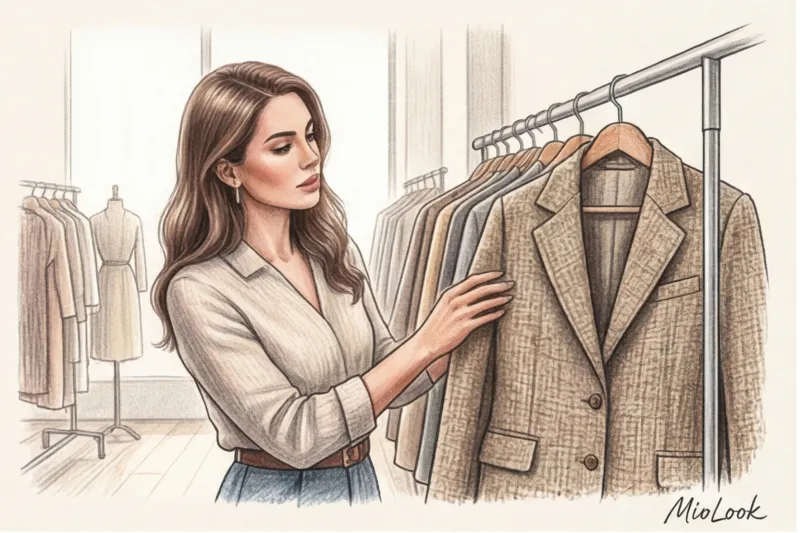
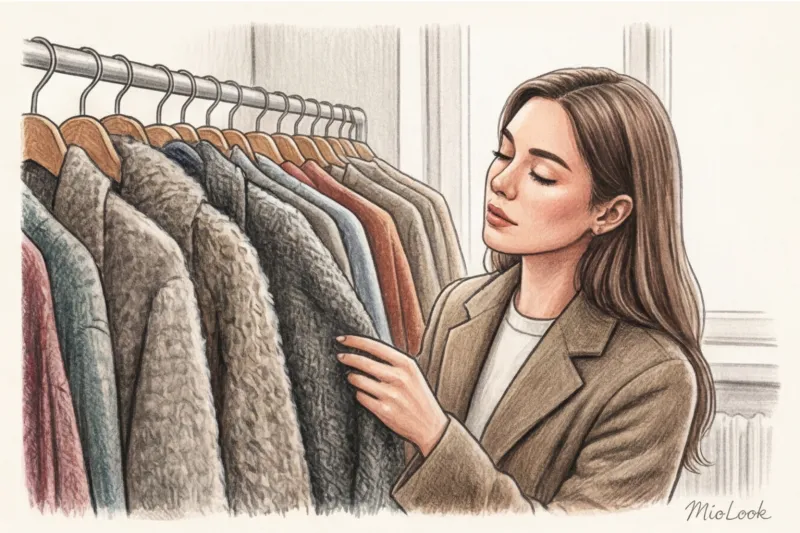
Instead, I teach the "first touch" technique. Close your eyes (literally) and slowly walk along the rail, letting the fabric flow through your fingers. Your hand will automatically land on the right thing.
Why is this critically important? High-quality wool (from 180 g/m²), heavy silk, and dense cotton are tactilely strikingly different from squeaky acrylic. If a garment feels unpleasant to the touch, you won't wear it, even if it's vintage Dior. Buying used clothing is only eco-friendly if the item actually works in your wardrobe, and isn't simply shuffled from one hanger to another.
"Hunting for brands in the secondary market is a false path. In the 90s and 2000s, even luxury brands began experimenting with cheap synthetics. Look for a premium composition, and let the year of production and the designer's name be a nice bonus."
The Vintage Size Trap: Why You Can't Trust Tags
If you wear a modern size M and happily grab a vintage dress with the same letter on the tag, you'll be disappointed in the fitting room. And it's not because you've gained weight.
There is a phenomenon vanity sizing (flattery to the buyer). According to a study on the evolution of clothing standards published in The Washington Post (2023), sizing charts have shifted dramatically since the 1950s. Brands gradually increased the physical dimensions of clothing while leaving the number on the tag the same, so that customers would feel slimmer.
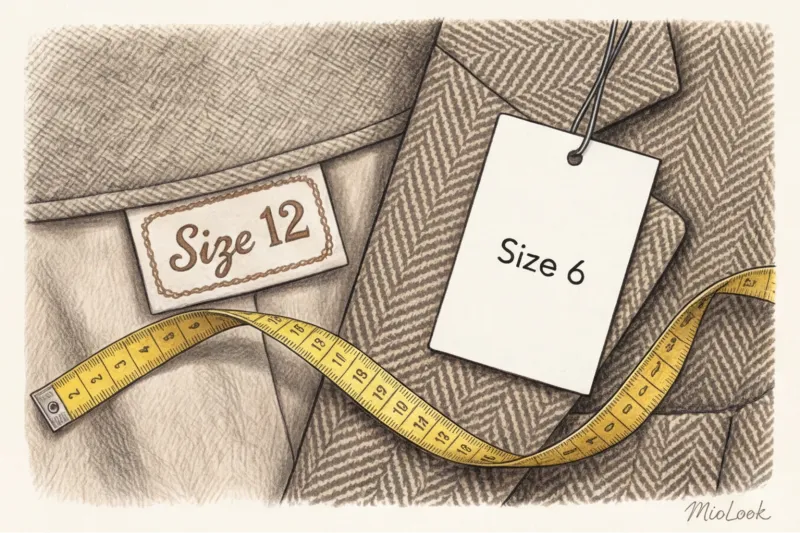
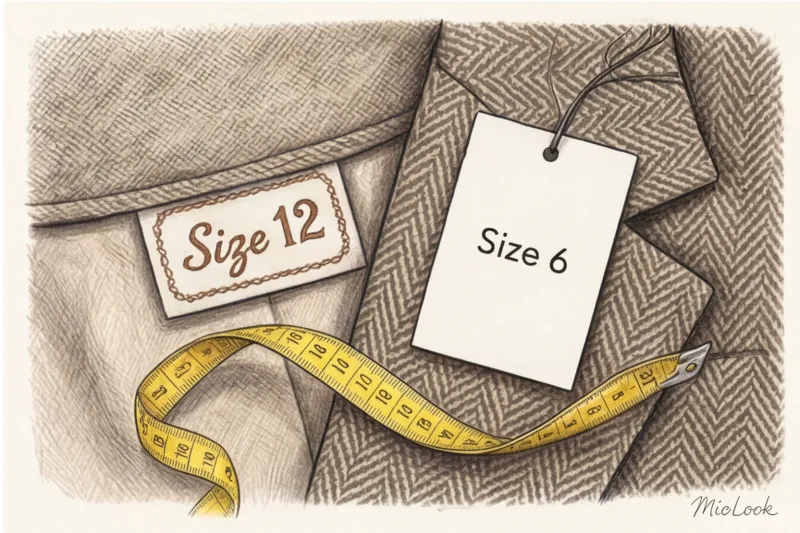
In reality, a vintage American size 12 from the 1980s is a modern 6, or even a 4 (our XS/S). So the main rule: Never measure yourself by the tag, measure the item itself I always carry a soft tape measure in my bag. Knowing my half-girth measurements (shoulder width, chest, and waist), I can eliminate 90% of unsuitable items in two minutes right there on the floor, without even stepping into a stuffy fitting room.
Access to MioLook for €0.99 — one-time payment
A smart AI stylist will select the perfect look based on your measurements and the items in your wardrobe.
Get access — €0.99 onceThe Magic of Color: How to Shop for Your Color Type at a Second-Hand Store
As a colorist, I often see the same drama: a woman buys a gorgeous retro dress, puts it on, and suddenly looks 10 years older. This is the "granny chest" effect. It arises not from an outdated cut (cutting is often brilliant), but from the fact that the color of the garment clashes with the temperature of her appearance.
Time changes not only people but also fabrics. Exposure to oxygen, ultraviolet light, and repeated washings transforms pigments. For example, dazzling white cool silk inevitably yellows over 20 years, turning a warm ivory shade. If you have a cool "Winter" complexion, this yellowed silk will make your complexion appear sallow.
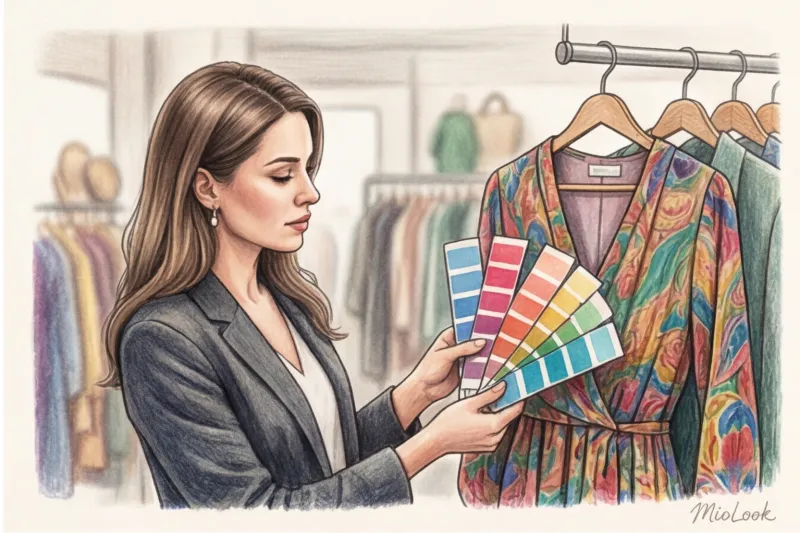
The PANTONE Color Institute regularly notes how historical dyes perform over the decades. Vintage black often veers toward rusty brown, while blue denim takes on a greenish undertone. Therefore, filter your rails exclusively according to your individual palette. If the color is "yours," even a piece from the '70s will look ultra-modern and avant-garde on you.
Print Integration: From Cucumbers to Geometry
Vintage prints are easy to go wrong with. Too many small florals or psychedelic paisley can make you look like you're at a costume party. My secret? One accent rule. If you've found a crazy vintage blouse with a '60s-style geometric pattern, tone it down with ultra-modern straight-leg jeans and simple loafers. Never wear vintage head-to-toe unless you're going to a themed event.
Top 5 Things to Hunt for in the Secondary Market
Mass-market fashion has weaned us off good fabrics. A modern equivalent of a quality Italian wool jacket will cost you at least €400–€500. You can find a better quality item at a thrift store for €30–€50. Here's my personal shortlist of what to look for:
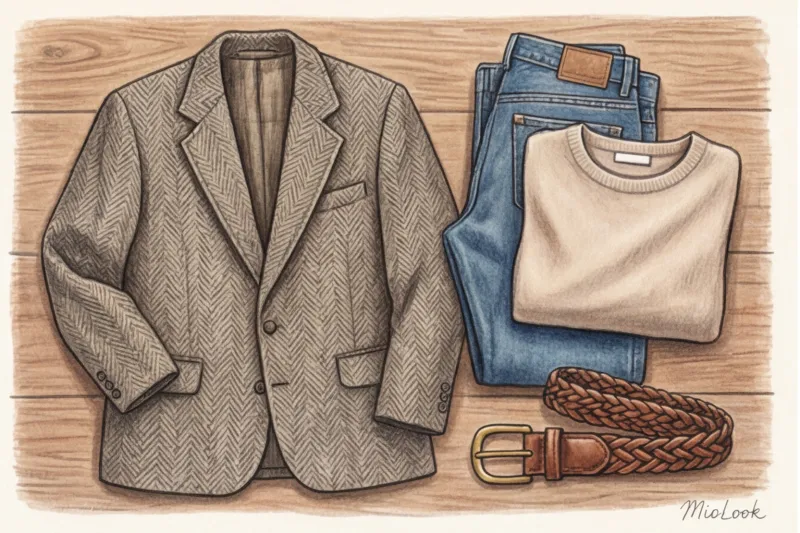
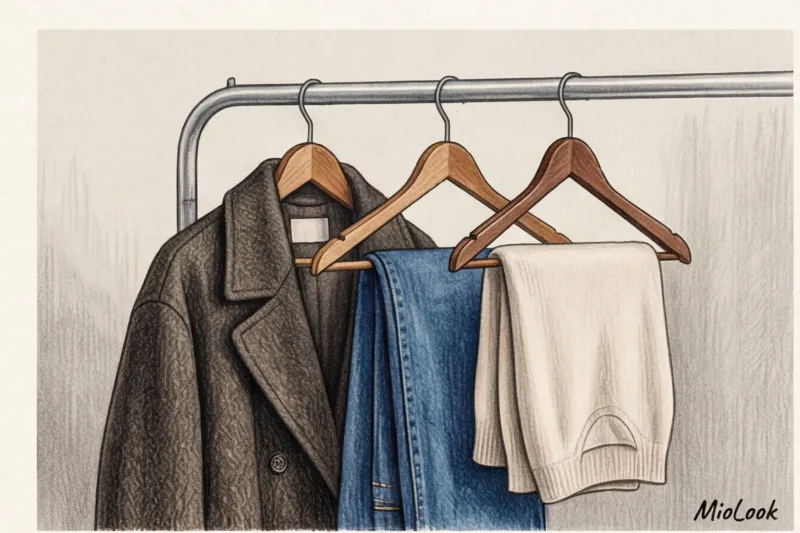
- Men's jackets made of 100% wool. They create the perfect, crisp, oversized silhouette. Look for them in the men's section.
- Thick vintage denim. Until the 1990s, jeans were made without a single ounce of elastane. This 100% stiff cotton material works like a corset, cinching the figure and creating a flawless hip line.
- Scottish cashmere. Old cashmere was made from longer fibers, so it is much denser and practically does not pill, unlike modern translucent sweaters for €150.
- Natural silk. Especially blouses with ascot bows (pussy-bow) or voluminous bobble scarves.
- Leather belts. Look for heavy, full-bodied leather and brass hardware that develops a rich patina over time.
Your perfect look starts here
Join thousands of users who look flawless every day. Digitize your vintage finds with MioLook.
Get access — €0.99 onceStop list: what you absolutely shouldn't buy (even if it's Chanel)
Now, for the bitter truth. Many stylists advise buying items with defects, assuring you that "the studio will fix everything." This is a dangerous illusion. As a practitioner, I must warn you—there are some items that nothing can save.
Once, early in my career, I bought a stunning Yves Saint Laurent silk blouse for €80. It had barely noticeable yellow stains under the arms. I was sure a premium dry cleaner would remove them. The technician just shrugged: a mixture of human sweat and aluminum from deodorants over 20 years had literally burned away the structure of the silk's protein fiber. Removing the stain was impossible—the fabric would simply fall apart. It was a waste of money.
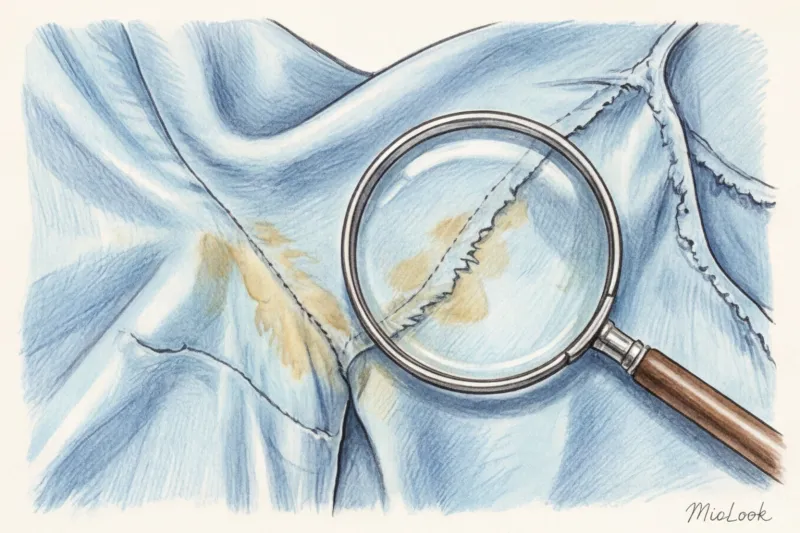
Here's my strict stop list for vintage shopping:
- Items that smell of mold and dampness. Mold spores eat into the fibers. Dry cleaning will mask the smell for a couple of weeks, but the first damp weather will return to the basement smell.
- Silk blouses with yellowing in the armpit area. As I already explained, this is not dirt, it is a chemical burn of the fabric.
- Stretched knitwear and skinny jeans from the 2000s. Elastane threads have a shelf life (usually 3-5 years). After that, they break, and the garment permanently loses its shape, becoming covered in small "hernias."
- Leather shoes with a worn-out last. Someone else's foot has already molded the insole to its own shape. Wearing such shoes directly harms your orthotics.
A Stylist's Checklist: A Guide to Mindful Shopping
The best impromptu ideas are always well-prepared. If you go into a vintage store thinking, "I'll look at something interesting," you'll leave with a headache and a weird velvet cape you'll never wear.
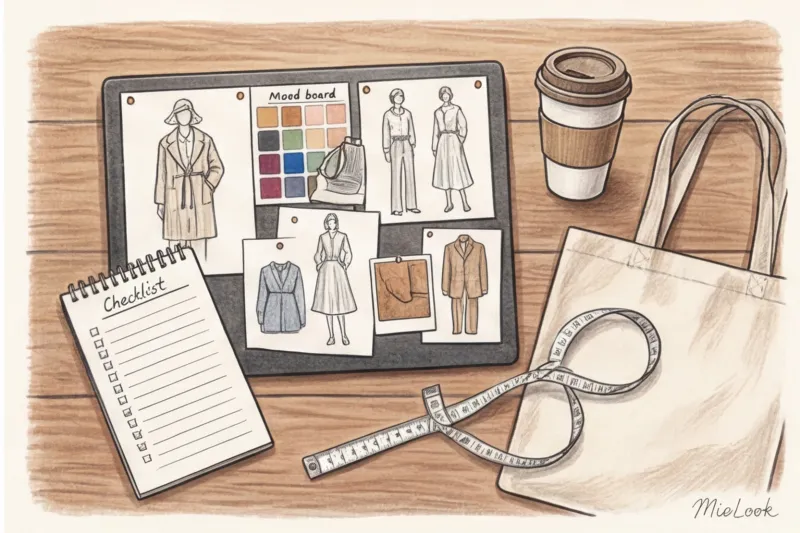
Here is my work protocol:
- Create a mood board. Look for a specific shape or texture. For example: "men's gray wool blazer" or "white cotton shirt with a stiff collar."
- Correct uniform. Wear a tight-fitting top, leggings, and easy-to-take-off shoes (slip-ons, loafers). Good thrift stores often don't have available dressing rooms. Leggings allow you to try on a skirt or jacket right in front of a mirror on the sales floor.
- Relevance test. Hold the item in your hands and ask yourself, "What from my current wardrobe will I wear this with tomorrow morning?" If the answer requires purchasing three more items, return the find to the rail.
- Calculate the real cost. See the €25 price tag? Add to that the cost of dry cleaning (around €15–€20) and basic tailoring (another €20). The final price is €65. Is it still worth it? If so, go for it.
Ready to get started?
Try the MioLook plan for free—no commitments required. Create a smart wardrobe on your smartphone.
Get access — €0.99 onceCustomization: How to Make a Vintage Find Your Own
Rarely does a vintage piece fit perfectly right out of the box. And that's where the real magic of style begins: customization.
One of my clients found a flawless Armani men's jacket from the '80s. The fabric was pure virgin wool, and it cost only €45. But the shoulders were exaggeratedly large. We took it to a trusted tailor, who removed the enormous shoulder pads from the '80s and added two neat darts at the waist. The work cost €35. In the end, for €80, she received a premium quality garment with a perfect fit.
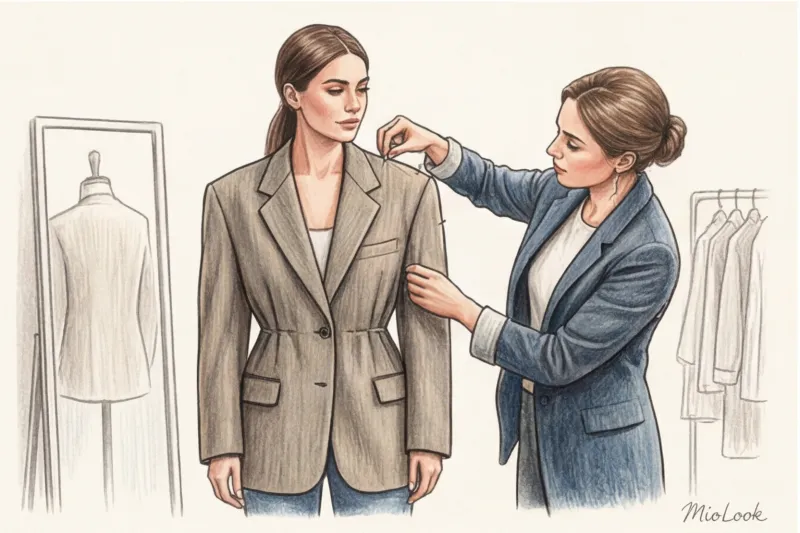
However, it's important to know what can and can't be fixed. Adding darts, shortening the hem, or shortening the sleeves is cheap and easy (ranging from €10 to €30). But if the garment is too small in the chest or the armhole (the area where the sleeve meets the shoulder) needs altering, skip the purchase. Armhole alterations are a complex engineering task, requiring a tailor to charge between €80 and €150, and the result may not be perfect.
The fastest and cheapest way to modernize vintage is replacement of fittings Cut off cheap plastic buttons from a good cardigan and sew on buttons made of natural horn, mother-of-pearl, or textured metal (a set will cost €10-15). This small detail will visually increase the cost of the item several times over.
Vintage shopping isn't a lottery, it's a skill. And it requires practice. Forget about brands, trust your hands, know your measurements and palette. Then, when asked, "Wow, where did you buy that?" you'll be able to proudly answer that it's a one-of-a-kind piece.