What makes a fabric truly eco-friendly? (Spoiler: It's not just the ingredients)
Open your closet and find the item you wear most often. Chances are, it's not the most expensive item, and perhaps not even the one proudly sporting the green "Eco-Friendly" tag. Over 12 years of working as a stylist and textile researcher, I've learned one ironclad rule: the eco-friendliness of a material is determined not only by what it's made of but also by how many washes it can withstand.
We're used to dividing materials into "bad synthetics" and "good natural fabrics." But the reality is much more complex. According to the Higgs Materials Sustainability Index (MSI)—one of the main tools for assessing a fashion industry's carbon footprint—a garment's life cycle plays a decisive role. A basic cotton T-shirt from a mass-market store for €15, made from high-quality, high-twist yarn that you wear for five years, is far less harmful to the planet than a thin "eco-shirt" for €60 that loses its shape after three washes.
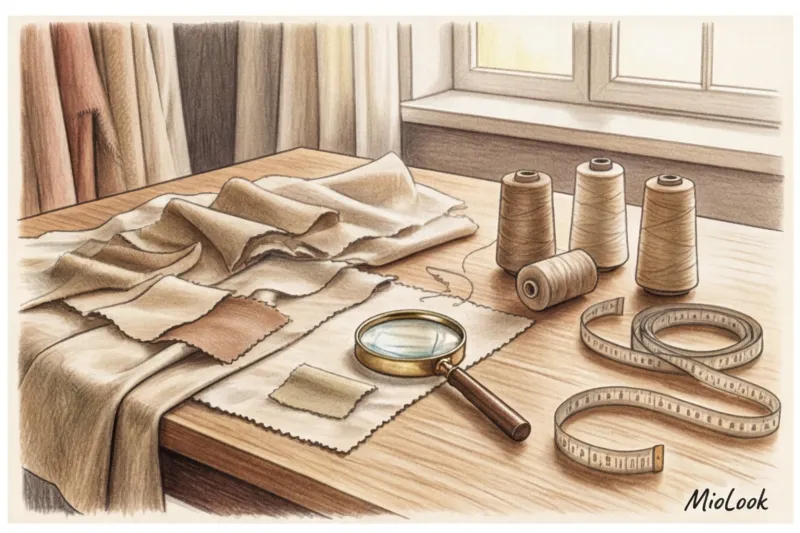
Choosing eco-friendly fabrics for clothing , we must evaluate three factors: the resource intensity of raw material cultivation, the toxicity of production, and potential wear resistance. We discussed the architecture of such a cabinet in more detail in our the complete guide to an eco-friendly wardrobe and conscious shopping.
Access to MioLook for €0.99 — one-time payment
A smart AI stylist will select the perfect look based on your preferences and the fabrics in your wardrobe.
Get access — €0.99 onceNatural plant fibers: cotton, flax, hemp
Humanity has been clothing itself with plant fibers for millennia, but the Industrial Revolution transformed their production into a chemical race. Today, a return to its roots requires new technologies and certifications.
Organic vs. Conventional Cotton: Is It Worth the Extra Pay?
Conventional cotton is the thirstiest and most chemically dependent crop in the world. According to a 2023 report by Textile Exchange, organic cotton cultivation uses 91% less freshwater because farmers rely on rainfall irrigation and healthy soils to retain moisture.
To understand that you are not dealing with greenwashing, look for certificates GOTS (Global Organic Textile Standard) or OCS (Organic Content Standard). They guarantee that the cotton is grown without pesticides and that no heavy metals were used in the dyeing process.
"The organic origin of the raw material does not guarantee the durability of the fabric. If the cotton fibers are short, the item will quickly become pilled, no matter how eco-friendly it is," says Sophia Müller.
One of my clients made a point of buying only 100% organic cotton T-shirts from a local brand. They cost €45 and up, and the shoulders would wear out from her bag strap within two months. The problem wasn't the raw material, but the skimping on spinning—the fabric was loose. Look for a weight of at least 180 g/m²—this kind of T-shirt will last for years.
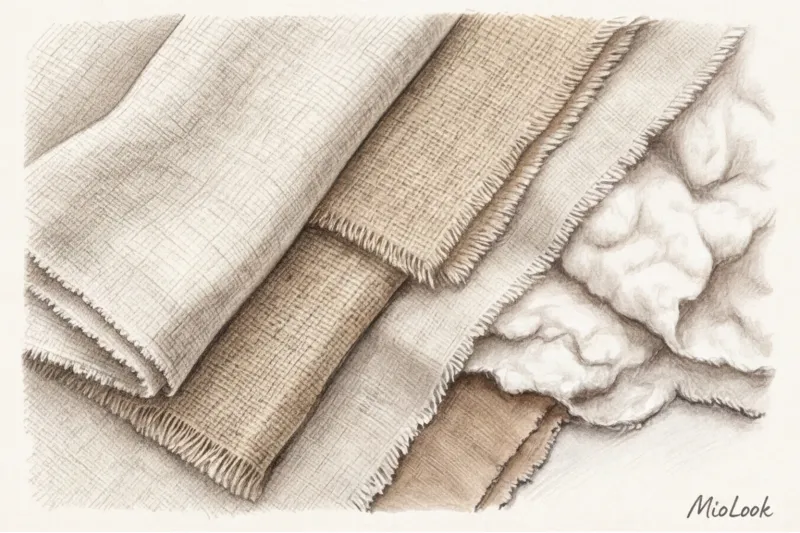
Linen and hemp are the underrated heroes of sustainable fashion.
While cotton depletes the soil, hemp and flax restore it (phytoremediation). These plants require virtually no additional watering or pesticides—they suppress weeds themselves.
The defining characteristic of these fabrics is their texture and wrinkle resistance. While a linen suit looks like you've slept in it by the end of the day, hemp fabric behaves differently. I have a 100% hemp shirt in my personal wardrobe, purchased four years ago. Initially, it was stiff, almost like canvas. But here's an insight that's rarely mentioned: with each wash, hemp softens, approaching the feel of flannel without losing its tear resistance.
Ready to get started?
Try a free plan—no commitments. Digitize your wardrobe and create stylish capsule collections with natural fabrics.
Get access — €0.99 onceInnovative cellulose fabrics (Tencel, Modal, Cupro)
Many people are still afraid of the word "viscose," considering it synthetic. In fact, it's a man-made fiber of natural origin (made from wood pulp). However, traditional viscose production is toxic: it uses carbon disulfide and aggressive acids, which are often discharged into water bodies.
The evolution of viscose has led us to lyocell (also known as Tencel/Tencel, if produced by the Austrian company Lenzing). This is a real breakthrough: eucalyptus cellulose is dissolved with an organic solvent, which is 99% reused in a so-called "closed-loop" system.

Tencel is often called "the new silk." It has a delicate sheen, flows beautifully, and wicks moisture beautifully. I recently worked with Maria, a top manager at an IT company, who needed a formal wardrobe without the "sheath effect." Natural silk required constant dry cleaning. We replaced silk blouses with items made of dense cupro and Tencel in the €80-€120 price range. The result? The same shine, but machine washable on a delicate cycle.
Incidentally, due to their high hygroscopicity, lyocell and modal are ideal for critical applications. We discussed the physics of this process in detail in the article Fabrics that don't show sweat stains: A guide for speakers.
Recycled PET Myths: When rPET Isn't Saving the Planet
And now for a counterintuitive fact that mass-market brands would rather hide. Have you seen those inspiring tags: "This jacket is made from 20 plastic bottles"? Sounds great, but from a circular economy perspective, it's a dead end.
A recycled plastic bottle can become a new bottle many times over. But as soon as we melt it down into yarn and sew a fleece sweater or dress (rPET), we break this cycle. Clothing made from recycled polyester is virtually impossible to recycle due to the dyes, trims, and fiber blends. downcycling — a delay in the path to the landfill, not a solution to the problem.
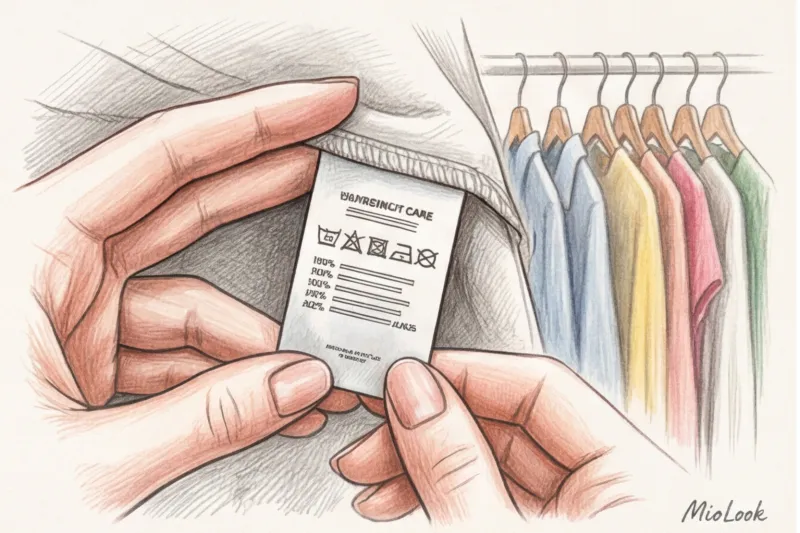
Moreover, each wash of such an “eco-friendly” item sends thousands of microplastic particles into wastewater (and then into the world’s oceans).
When are synthetics justified? This doesn't mean you should completely abandon polyester and nylon. Sustainable clothing fabrics are also about functionality. Sports leggings, membrane jackets (Gore-Tex), and down jackets—synthetics provide protection and compression that natural fibers can't. But buying an everyday blouse made of 100% polyester, even recycled, is an environmental crime against your own comfort.
Your perfect look starts here
Join thousands of users who look flawless every day with MioLook. Optimize your closet smartly.
Get access — €0.99 onceAnimal Materials: Ethical Wool, Silk, and Leather Alternatives
Animal farming in the fashion industry is fraught with ethical issues, from cruelty to overgrazing, which turns grasslands into deserts. If you're buying a wool coat or sweater (which, by the way, can last for decades), look for a standard. RWS (Responsible Wool Standard) - it guarantees humane treatment of animals and control of pastures.
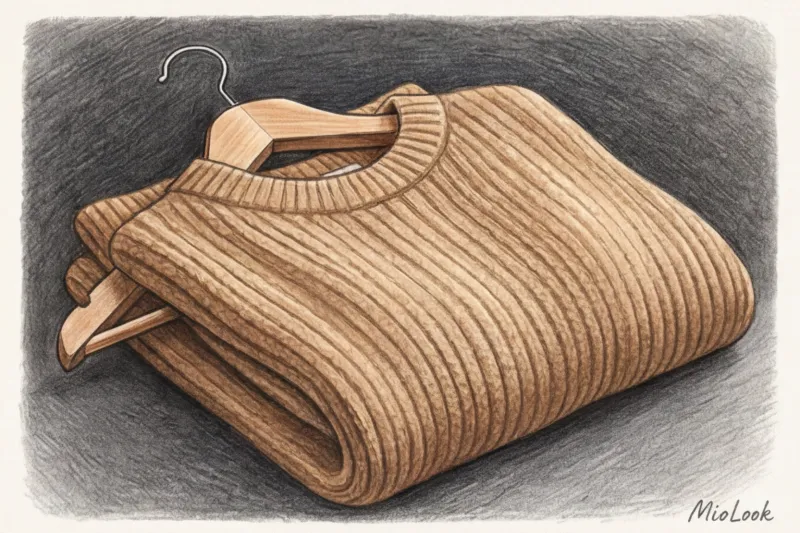
Silk lovers should pay attention to Ahimsa silk (or "peace silk"). Unlike the traditional method, where the cocoons are boiled along with the pupae, here the silkworm is allowed to chew through the cocoon and fly away, and the threads are collected afterwards. Yes, this silk is less smooth and has a slightly knotted texture, but it looks incredibly authentic.
The Truth About "Vegan Leather"
Marketers love to sell polyurethane (PU) under the guise of animal welfare. Today, the market is overflowing with plant-based leathers: from apples, mushrooms (Mylo), cacti (Desserto), and grape pomace.
What's the catch? To make apple pulp a durable material for a bag or shoes, it needs to be bound with polymers. The famous "apple leather" (Apple Ten) often consists of only 30-50% biomaterial, the rest being polyurethane. In my experience, shoes made from premium vegetable leather for €250 often begin to crack at the folds after just the second season, whereas high-quality vegetable-tanned leather (without chrome) lasts 10-15 years, developing a beautiful patina. When choosing eco-leather, be prepared to compromise on durability.
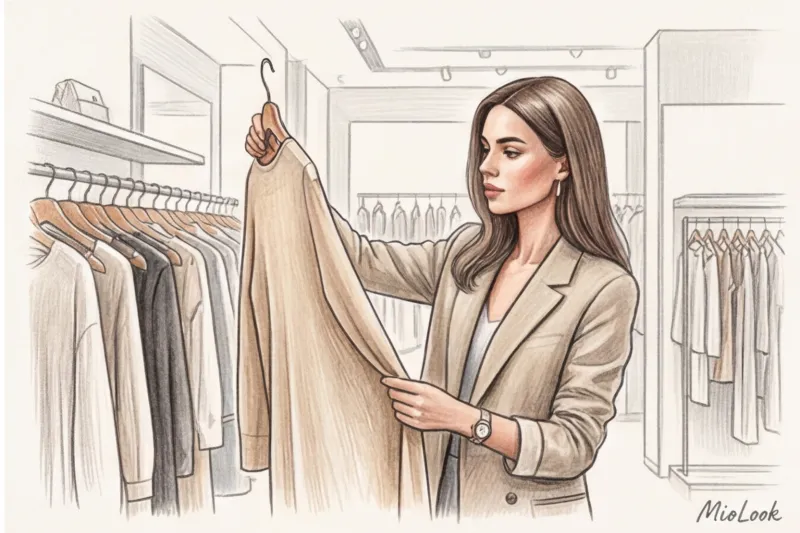
How to determine the quality of eco-friendly fabric right in the store: a stylist's checklist
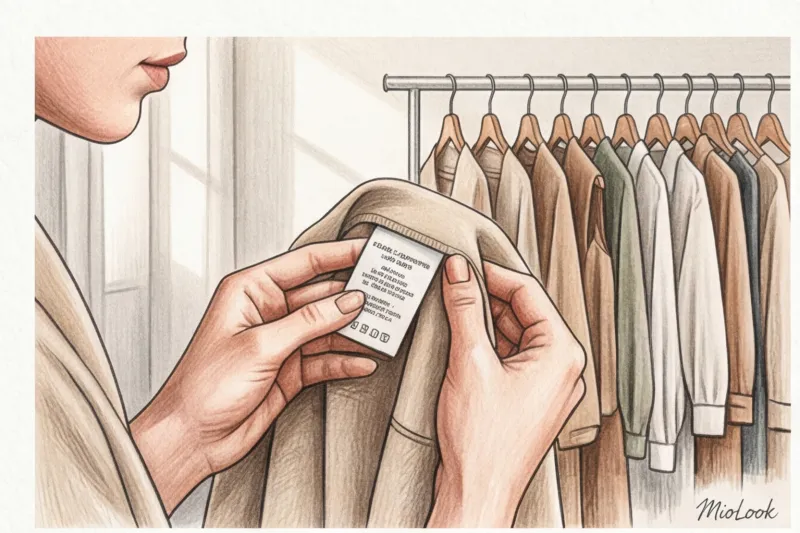
Even certified organic material can be ruined by poor execution. Here are four quick tests I always run during shopping trips:
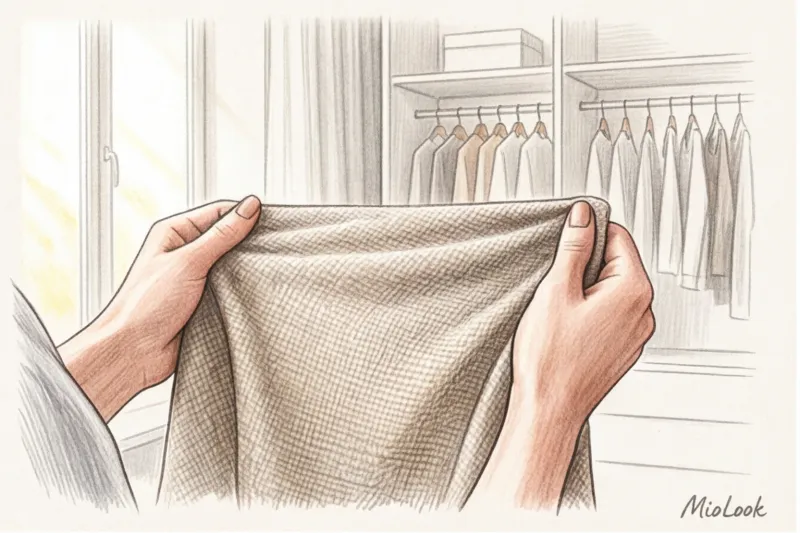
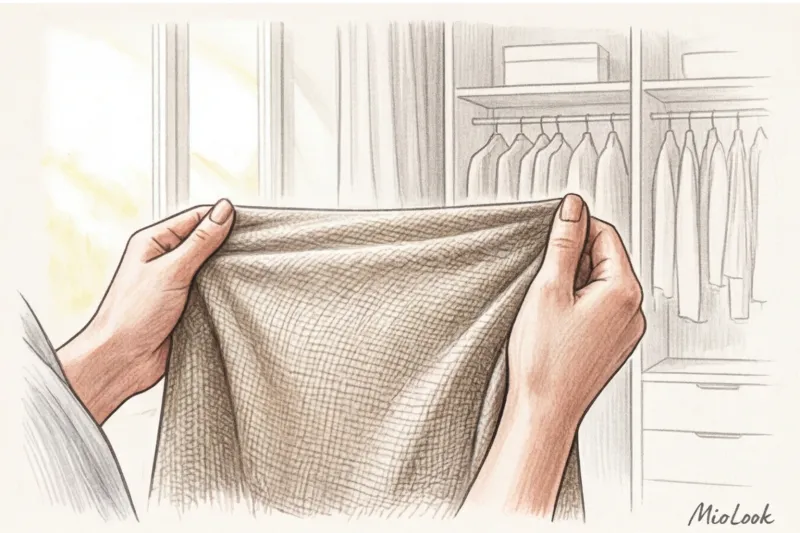
- Translucent test. Hold the item (especially a T-shirt or shirt) up to bright store lights. You should see a uniform weave without any bald spots or thickened threads (unless this is the intended texture of the linen). A loose weave will become distorted after the first wash.
- Crush test. Hold the edge of the fabric in your fist for 10 seconds. Release. If the fabric remains in hard creases that don't soften with the warmth of your hand, you'll look sloppy by lunchtime at the office. Good fabric (even one with a linen blend) should spring back slightly and bounce back.
- Side seam test. Take a close look at the side seams of your T-shirt or dress. If they're slightly slanted forward or back on the hanger, they'll twist after washing. This means the fabric wasn't cut along the grain to save material.
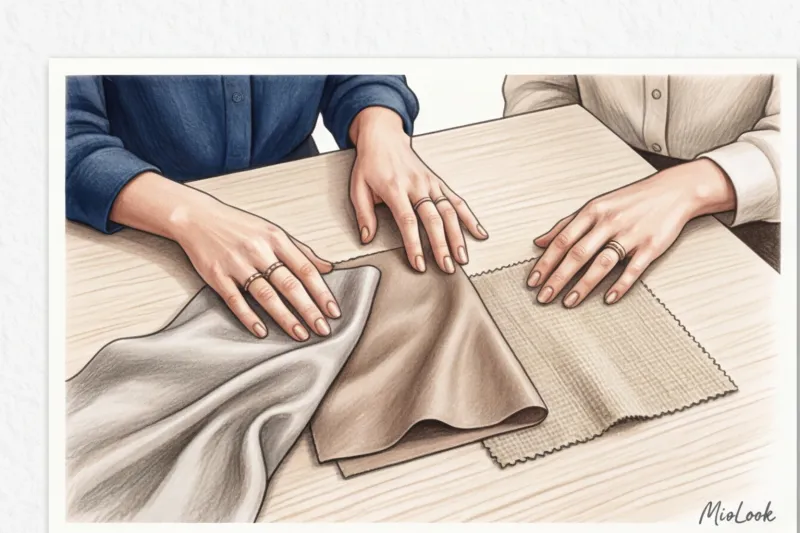
- Tactile assessment and sound. Rub the fabric against itself. Cheap polyester (even rPET) makes a characteristic dry squeak. Tencel, modal, and high-quality cotton glide silently, leaving a feeling of slight coolness.
Caring for Eco-Friendly Clothing Fabrics (In Conclusion)
Did you know that about 50% of a clothing's carbon footprint is generated not in the factory, but in your home? Heating water in a washing machine and running a dryer consumes a colossal amount of energy and destroys fabric fibers.
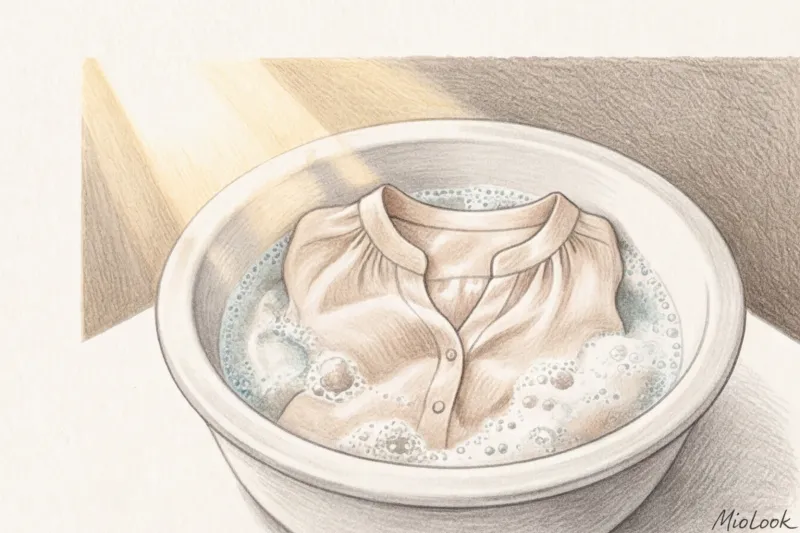
To ensure your eco-friendly clothing fabrics last for years, just implement three simple habits. First, wash at 30°C—modern enzyme gels work great in cool water. Second, avoid tumble drying and opt for air drying. Third, use natural cedar blocks on shelves with knitwear—they repel moths and absorb excess moisture, keeping the fibers supple.
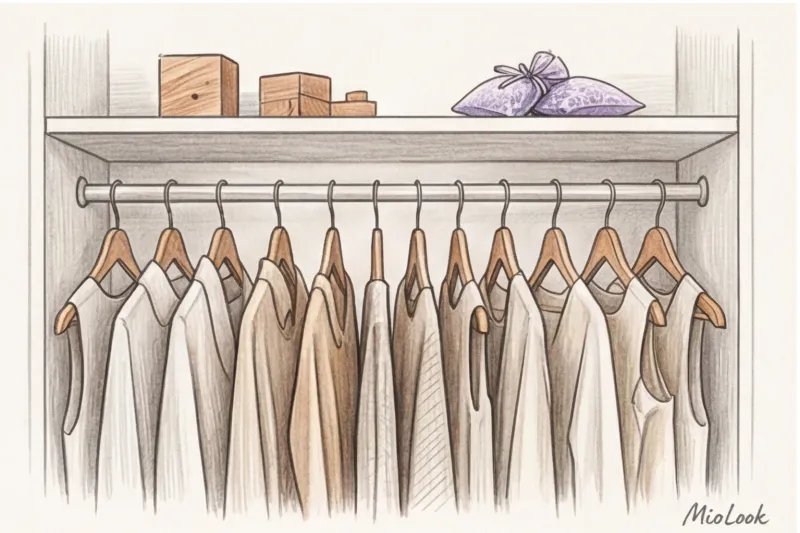
We live in an era of overconsumption, where every brand tries to sell us the latest "green" product. But true eco-friendliness begins with how you treat your clothes. Mending a hole in your favorite cardigan, choosing the right washing temperature, and understanding the density of fabrics, not just marketing slogans, are the true markers of sustainable style. Ultimately, the most eco-friendly item is one that's already hanging in your closet and worn with pleasure.
Try MioLook
A smart AI stylist will help you rethink the items you already have in your wardrobe and create dozens of new outfits.
Get access — €0.99 once