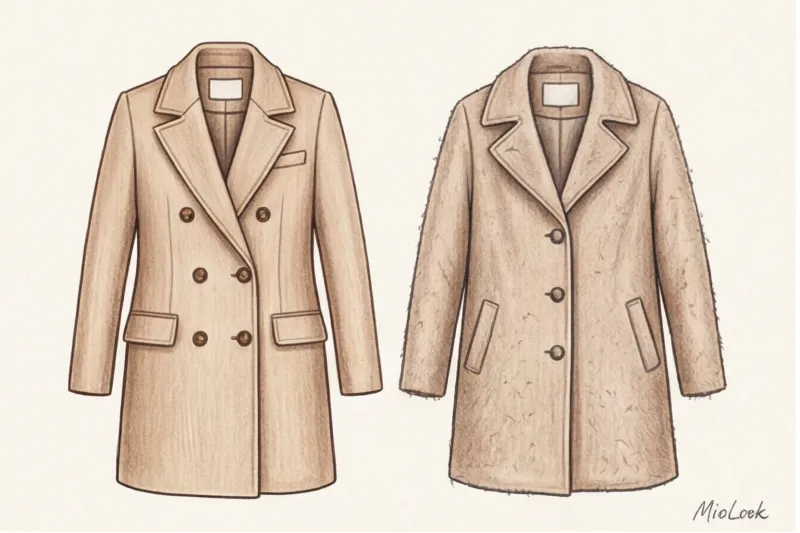
Remember that amazing silk blouse you bought on a spontaneous shopping spree for €150? How many times did you wear it? Once to a corporate event and once to the theater? Congratulations, each time you wore it, it cost you €75. Now look at your favorite €80 basic jeans that you haven't taken off in two years. Their cost per wear has long since dropped below the price of a cup of coffee.
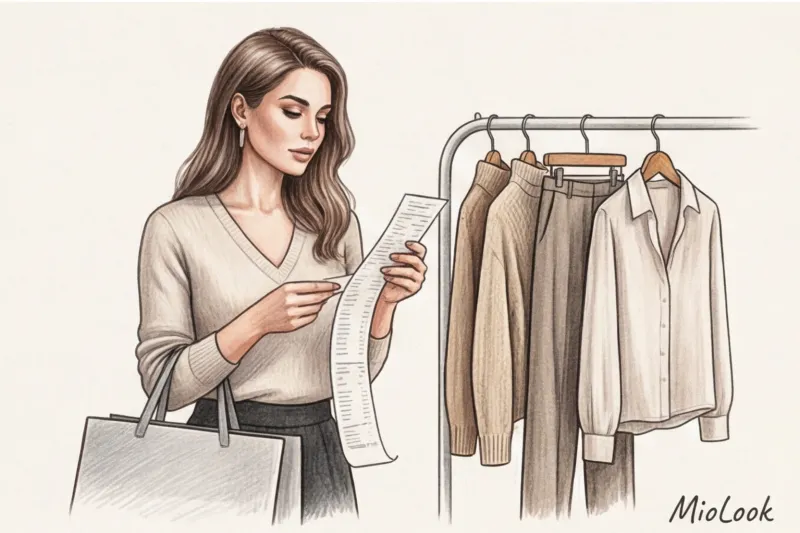
My name is Darina Marchenko, and I'm a stylist and colorist. Over 12 years of wardrobe analysis, I've seen hundreds of overflowing closets whose owners categorically have "nothing to wear." My client, Irina, once bought a luxurious cashmere coat for €1,200. She was so afraid of getting caught in the rain or rubbing against the subway doors that she wore it exactly twice in three years. The actual cost per outfit was €600. Meanwhile, her everyday trench coat from COS, which cost €150 and was worn over 180 times, cost her €0.83 per outfit.
This simple but sobering math is cost per wear formula — divides the contents of the closet into real investments and financial black holes. We discussed the concept of conscious consumption in more detail in our the complete guide to an eco-friendly wardrobe , and today we'll break down the hard numbers that will change your shopping habits forever.
What is Cost per Wear and why the basic cost per wear formula ruins the illusion of a price tag?
Behavioral economics has long proven that our brains thrive on the illusion of value. A red price tag with a 70% discount disables critical thinking. We buy a neon-green top for €15 simply because "it's almost free!", without considering that this item doesn't fit into any of our personal styles.
Cost per Wear (CPW) is a metric that transforms you from an emotional consumer to an investor in your personal style. The concept is that a garment's true value is determined not by the price on the receipt, but by how effectively it works for you.
The numbers don't lie. According to a 2023 report by the Ellen MacArthur Foundation, the average number of times a single item is worn has dropped by a staggering 36% over the past 15 years. The statistics are brutal: the average modern woman wears a new item only seven times before it's consigned to the trash or the back of her closet. Buying a cheap item you'll wear twice isn't saving money. It's the most expensive clothing rental you'll ever pay.
The Complete Cost-Per-Wear Formula: How to Calculate the Real Cost (You Forgot About Dry Cleaning!)
If you Google this term, most articles will offer you a simple calculation: divide the price by the number of outputs. But professional cost per wear formula looks different. As a stylist, I always make my clients take "wardrobe taxes" into account.
The real formula is: (Price of the item + Cost of fitting + Cost of care for the entire period) / Number of wearings.
Let's compare two real-life scenarios. You're choosing between two summer dresses:
- Scenario A: A fast-fashion dress made of ultra-thin viscose costs €30. After the third wash, it shrinks and the seams become crooked. You wear it three times. Your CPW = €10.
- Scenario B: A thick silk slip dress from a premium brand costs €200. You wear it 20 times over two seasons. It would seem that the dry cleaning value should be €10. But silk requires delicate dry cleaning. Let's say you dry cleaned it four times for €15 each. Total cost: €200 + €60 = €260. Actual dry cleaning value = €13.
As you can see, dry cleaning can completely ruin the benefits of purchasing a complex fabric. That's why, for everyday essentials, I always recommend blended fabrics (such as viscose with added polyester or heavy cotton) that can be washed at home.
Hidden Costs Brands Don't Tell You
Never evaluate an item in a vacuum. The base price often includes unseen but necessary costs:
- Custom fit: Are your trousers perfect in the waist but too long? Budget €15–€20 for tailoring services.
- Supporting infrastructure: You bought a translucent blouse on sale for €40. But you need a special, smooth, nude bra to go with it, which you don't have. That's another €40-50 on the bill.
- Depreciation of care: Buying cashmere means buying a special shampoo and an anti-pilling machine.
Access to MioLook for €0.99 — one-time payment
A smart AI stylist will select the perfect look based on your items and save you from unnecessary expenses.
Get access — €0.99 onceThe main myth of stylists: "Expensive things are always more profitable than mass-market ones."
One of the most damaging clichés in glossy magazines is: "Invest in luxury, it will last forever and pay for itself." It's counterintuitive, but a high price doesn't guarantee a low cost-per-wear (CPR). Moreover, it's often the heavier luxury that exhibits the worst CPR.
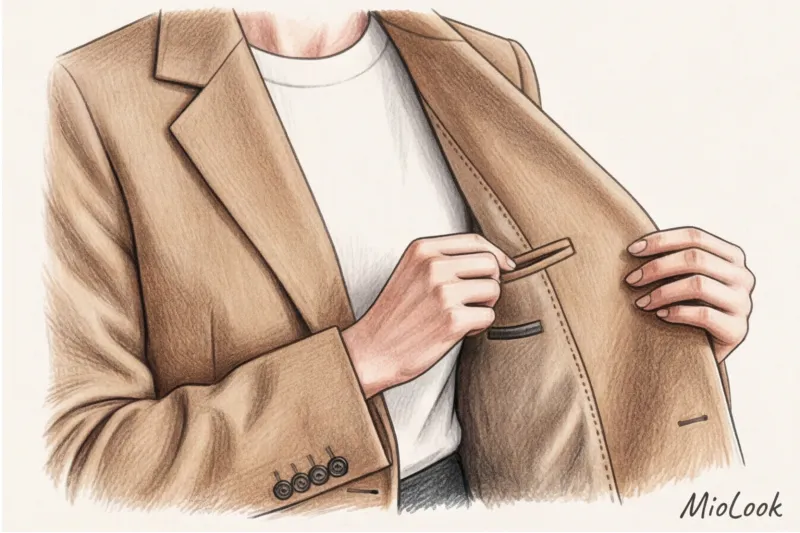
In shopping psychology, there's a concept called "museum piece syndrome" (or "too pretty to wear"). When you buy a €2,500 jacket, your brain begins to treasure it. You wouldn't wear it to the office, where you might get coffee on the sleeve, or take your child for a walk. You'd wait for that "special occasion" that comes twice a year.
The balance rule I've developed for myself and my clients is this: high-quality mid-range (Massimo Dutti, Arket, COS) often outperforms heavy luxury. Why? Because a basic turtleneck for €80 made of good merino wool overcomes the psychological barrier—you I don't feel sorry wear it every day. Read our article to learn how to recognize the right composition. How to Choose Quality Knitwear: A Materials Guide.
How to Predict CPW Before Buying: A Mindful Shopping Checklist
You're standing in the fitting room. You like the item. How do you know if it'll be a worthwhile investment or just dead weight? Run it through this filter.
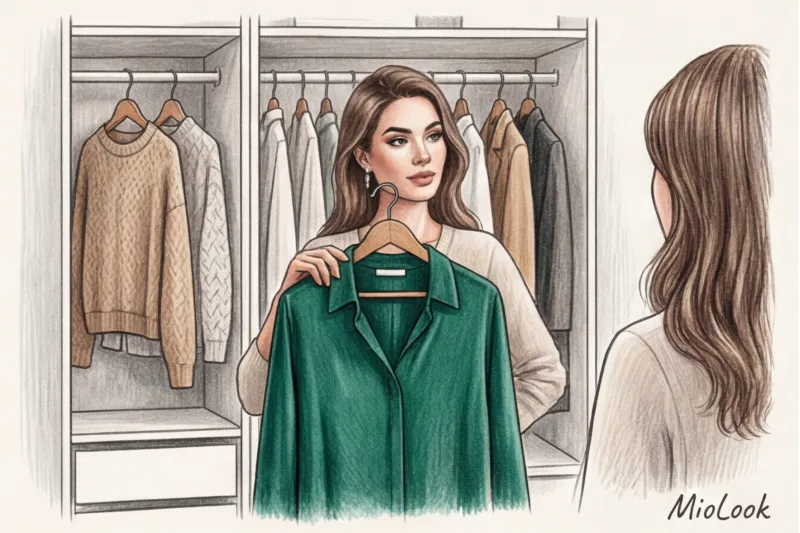
- Test for 3 images. If you can’t stand in front of the mirror right now and come up with 3 outfits with things that they're already hanging in your closet—don't buy it. An item that requires the purchase of "companions" doubles its CPW.
- Reality check. We often buy clothes for our "fantasy" lives (yachting, dinner parties), forgetting about the real world (working remotely, driving, walking the dog). Consider your monthly schedule. Where will you wear this item next Tuesday?
- Quality analysis. Take a look inside. Are there any loose threads? Is the fabric starting to static in the fitting room? This won't last through the tenth wash. Look for cotton with a weight of at least 180 g/m² or viscose with added elastane (around 5%), which will hold its shape.
"In my experience, there's a surefire indicator: if you're constantly tugging at your skirt, adjusting your neckline, or sucking in your stomach in the fitting room, you won't wear it. Physical discomfort always trumps the desire to look stylish. The CPW of such a garment will tend toward infinity." — Darina Marchenko
Of course, I must make an important disclaimer: this mathematics It doesn't work When it comes to emotional "anchors"—for example, your wedding dress, heirloom jewelry, or the luxurious kimono you wear with your morning coffee once a month to set the mood—we pay for pure emotion, not utility.
Your perfect look starts here
Join thousands of users who look flawless every day with MioLook.
Get access — €0.99 onceInvestment matrix: where to invest and where to save
A smart wardrobe is built on budgetary redistribution. There are categories where a high price tag is justified and quickly recouped through daily wear, while there are high-risk areas.
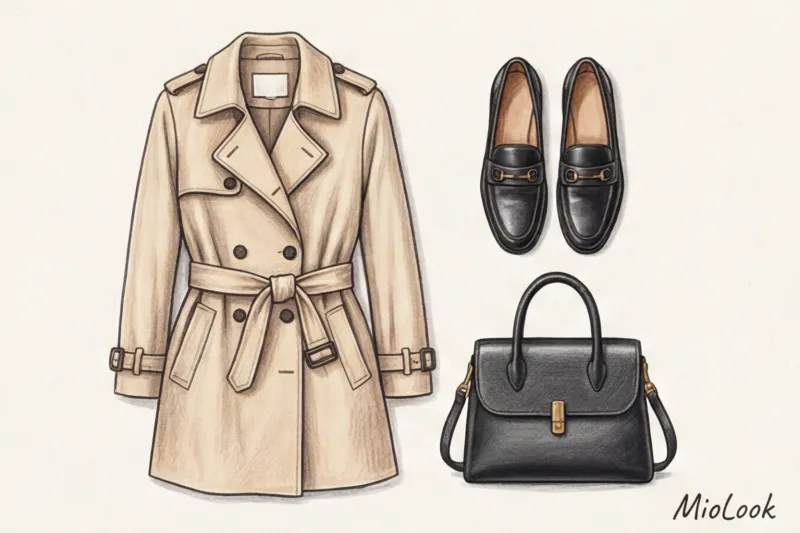
Green zone (the budget can and should be increased):
- Outerwear. You wear a coat or jacket every day for 4-5 months a year. A €300 coat worn 100 times per season costs €3 per day.
- Basic shoes and bags. Quality leather ages gracefully. (We have a great guide to choosing: Stylish shoes for tall women ).
- Perfect jeans and trousers.
Red Zone (look for budget alternatives or rentals):
- Evening dresses. Going out isn't something you do very often, and you don't want to repeat a statement dress with the same group of people. A great option is a mass-market dress or rental (more details in the article). Affordable Evening Dresses: How to Choose and Look Expensive ).
- Hot microtrends. What's hot today will be out of fashion in four months. Don't spend more than €30-50 on it.
- Specific clothing for vacation. An umbrella-sized straw hat for a trip to Bali shouldn't cost half your salary.
Smart Wardrobe: How MioLook Helps Reduce the Cost of Wearing Clothes
Let's be honest: no one in their right mind would keep an Excel spreadsheet recording every black-pants outing to calculate their CPW. That's utopian.
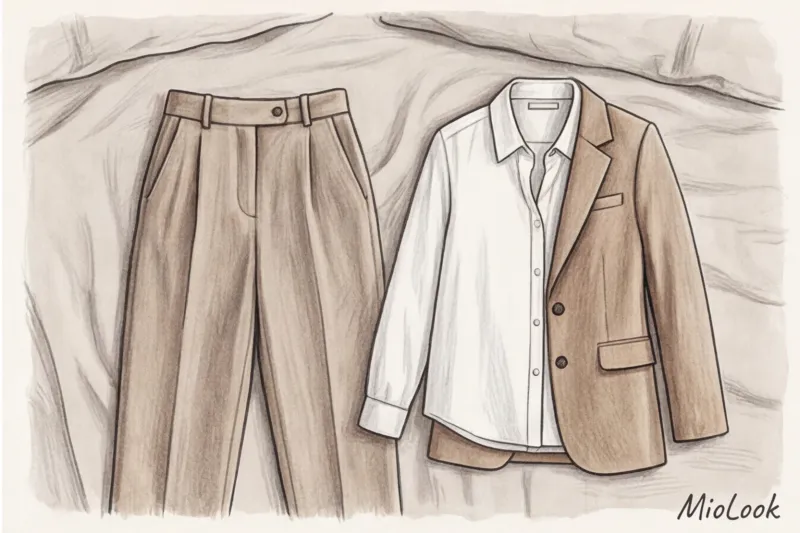
This is where technology comes into play. Digitizing your wardrobe via an app MioLook solves the main problem—it visualizes your "dead weight." When all your clothes are on your phone, the AI stylist analyzes them and suggests combinations you never even thought of.
That statement shirt you wore once and forgot about? The algorithm will create a layered look with it, layered with a basic cardigan. You start wearing forgotten items, and their CPW value plummets. And a virtual fitting room before purchasing saves you from those impulsive purchases: you upload a photo of the desired item and immediately see if it matches your current closet.
Ready to get started?
Try a free plan – digitize your wardrobe and start saving right now.
Get access — €0.99 onceThe Mathematics of Sustainability: Why Your Wallet Will Save the Planet
A global study by ThredUp (2024) revealed a startling fact: extending the active life of an item by just 9 months reduces its carbon footprint by 20–30%.
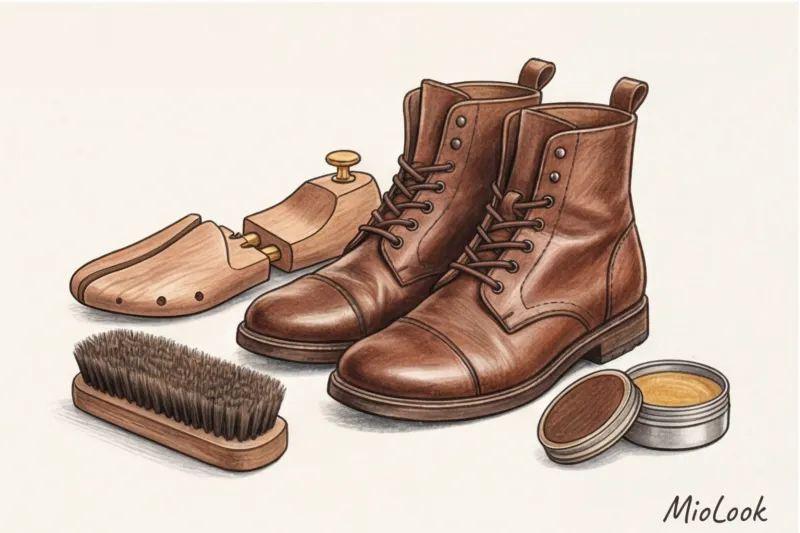
Sustainable fashion isn't just about buying t-shirts made from recycled plastic at exorbitant prices. Sustainability is, first and foremost, an action, not a label on your clothing. Wearing one high-quality basic t-shirt 100 times is much more environmentally friendly (and cost-effective) than buying five "green" t-shirts and throwing them away after a month.
The next time you reach for your credit card at the checkout, ask yourself this question: "Will I wear this item at least 30 times?" If the answer is no, feel free to return it to the hanger. Your style and your budget will benefit from it.