What is an investment wardrobe, really?
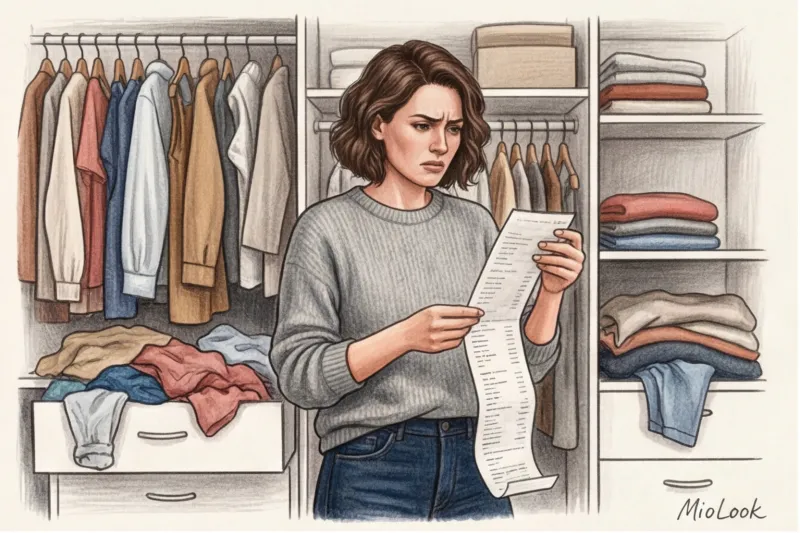
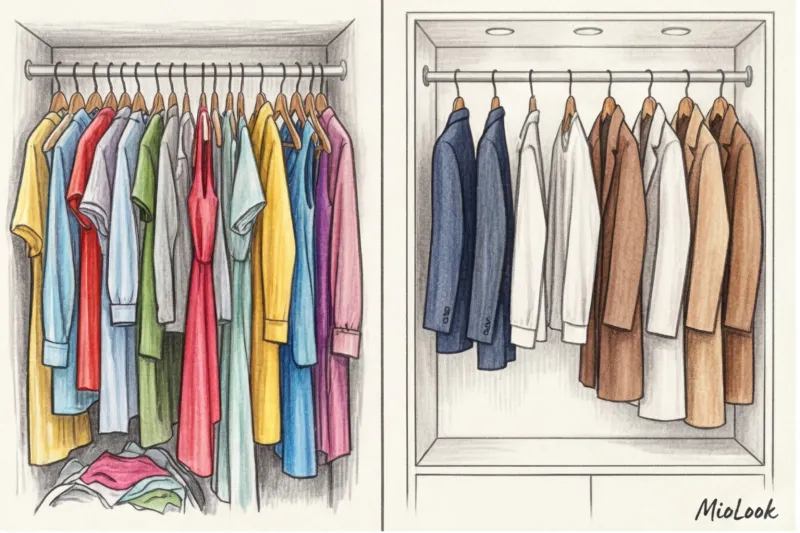
You open your closet, and there are so many hangers that they're creaking against each other, and there's nothing left to wear. Sound familiar? In 12 years of practicing as a stylist, 9 out of 10 of my clients have come to their first consultation with exactly this pain. During one recent closet audit, we found a total of 15 sweaters in her closet that she barely wore: one was itchy, another had lost its shape after the first wash, and a third simply didn't match any of her pants. If she'd spent that money on two perfect sweaters, her top problem would have been solved for years. That's how a real stylist works. investment wardrobe.
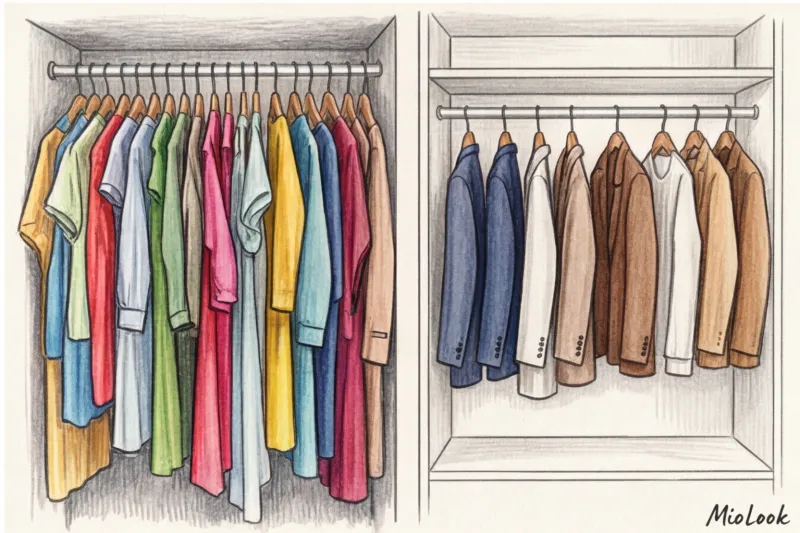
Let's debunk the biggest myth right away: a high price tag doesn't make an item an investment. An expensive sequined dress for €800, bought on a whim for a single corporate event, isn't an investment; it's a liability. But a perfectly tailored wool blazer for €300 that you wear to business meetings, throw over a silk dress for dinner, and pair with jeans on the weekend is a pure asset. A wardrobe investment isn't measured by the zeros on the price tag, but by how often the item earns back its cost.
This is where the famous Pareto principle comes into play: statistically, we wear 20% of our clothes 80% of the time. The remaining 80% of our wardrobe simply hangs on hangers, collecting dust and causing us to feel guilty about spending money.
The concept of a functional wardrobe is to consciously create that ideal 20%. These are the pieces that work for you, not you for them. They're easy to combine and don't require a morning of "dancing with a tambourine" in front of the mirror.
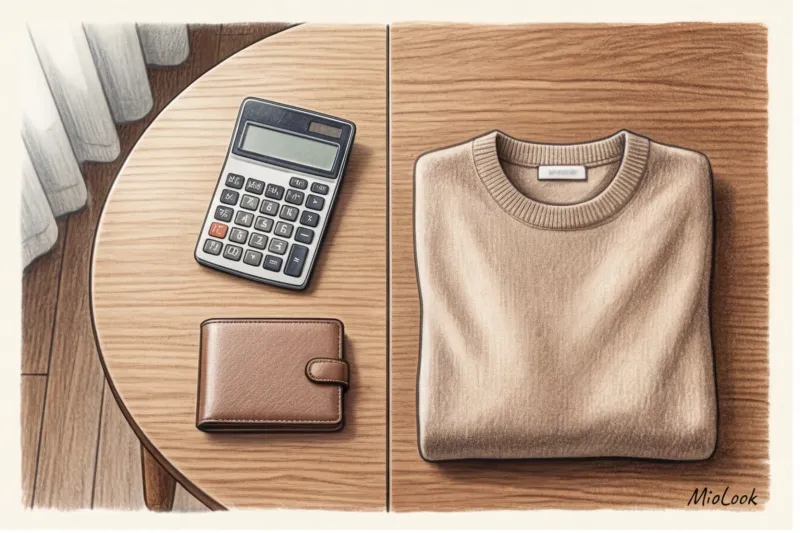
Now let's move on to the hard math of conscious consumption. Buying one expensive but high-quality item instead of five cheap ones paradoxically saves you money over the next 3-5 years. Take, for example, a basic sweater. A mass-market model for €40 has a 90% chance of pilling and losing its shape within two months. Over three years, you'd buy five such sweaters, spending €200, and you'd look unkempt most of the time. A quality sweater for €250 (I've written in detail about how to find one in a guide to choosing high-quality knitwear ) will serve you for the same five years, maintaining its premium look and your self-confidence.
To clearly see which items actually work and which ones are just taking up space, I always recommend digitizing your closet. Upload your everyday looks to MioLook — this way, you'll quickly understand your personal statistics, spot your blind spots, and stop wasting money on duplicate, useless purchases by starting to invest more targeted investments.
Payback Formula: How to Calculate Cost Per Wear (CPW)
The biggest mistake when evaluating a wardrobe is looking solely at the numbers on the tag. A garment's true value isn't determined at the boutique checkout, but rather through its use. In professional styling, we evaluate the investment potential of clothing through the lens of rigorous mathematics, specifically, the Cost Per Wear (CPPW) metric.
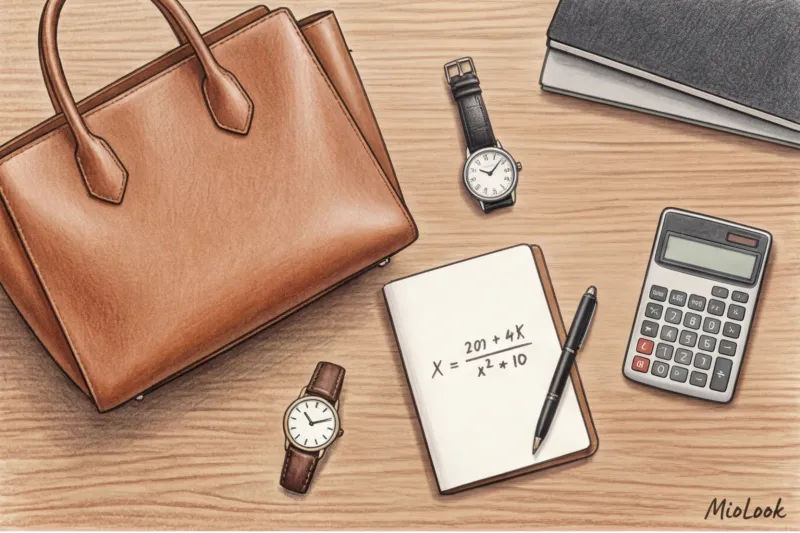
The explanation of the formula is extremely simple: CPW = (Item Cost + Care Cost) / Number of Wears.
To understand how this works in practice, let's look at a classic mathematical example. Suppose you buy a pair of basic leather shoes for €500. Over three years, you wear them a total of 200 times to work, meetings, and events (and with proper care, they'll last even longer). Their CPW is €2.50. Now compare this to an impulse purchase: a trendy, mass-market dress for €50, which you wear exactly once to a corporate New Year's party, after which it settles in your closet forever. Its CPW is €50.
The paradox of consumerism: a visually "cheap" dress for €50 actually costs your budget 20 times more per outing than "expensive" branded shoes.
This is the difference between spending and investing. An investment wardrobe works for you, reducing the cost of each outfit over time.
Let me give you a clear example from my wardrobe review practice. One of my clients had a habit of buying "disposable" knitwear. We compared two sweaters from her closet. The first was a cheap acrylic sweater for €45, which developed stiff pilling after exactly three washes and lost its shape (CPW = €15). The second was a bulky cashmere sweater in a neutral shade, bought five years ago for €350. She wore it at least 40 times each cold season (a total of about 200 times), plus we budgeted €50 for dry cleaning over those years. Its cost per wear was only €2. Cashmere turned out to be 7.5 times more economical than acrylic, not to mention the difference in quality and feel.
30 Wears Rule
In 2015, Livia Firth (founder of the consulting agency Eco-Age) launched a campaign that forever changed the approach to mindful consumption. She proposed a key rule: before you check out your item at the checkout, ask yourself one honest question: "Will I wear this at least 30 times?"
If the answer is no or you're unsure, the item stays in the store. However, as a colorist and stylist, I always teach my clients to adapt this rule to different clothing categories, because no wardrobe is uniform:
- Everyday essentials (coats, jeans, bags, basic shoes, jackets): Here, the 30-view mark is easily reached in a couple of months. For these categories, feel free to set a limit of 100+ views and choose the highest quality within your budget.
- Evening and event: A sequined cocktail dress or a silk tuxedo is unlikely to get you 30 appearances unless you're a socialite. The rule here is different: for such occasions, it's smarter to rent an outfit or buy a simple option (like a perfect pantsuit) that can be styled in different ways with accessories.
By the way, to avoid having to keep track of all the clothing statistics in your head, I recommend my clients digitize their closets. By uploading their items to the "smart wardrobe" feature in MioLook , you will be able to visually track which elements are working at 100% and which ones are just wasting your budget.
Emotional and physical wear and tear
Even if an item passes the 30-output test in your imagination, in reality its lifespan is limited by two ruthless factors.
Physical wear and tear — is the material degradation of the fabric. This includes loss of shape after washing, color fading (low-quality black cotton is especially prone to this), stretched elbows, and the notorious pilling. An investment piece is distinguished by its fabric's resistance to physical wear. Dense worsted wool or high-quality long-staple cotton age gracefully.
Emotional wear and tear — a more insidious factor. This is the moment when the item is still intact, but you're bored to death of it, you've fallen out of love with it, or it's hopelessly outdated. The fast fashion business model relies on emotional wear and tear: you're sold a neon top or jeans with a complex asymmetry, but after three months, they start to irritate you.
The main secret of an investment wardrobe: you should invest large budgets exclusively in items with zero risk of emotional wear and tear It's the simple cut, the absence of flashy accessories, and the colors from your personal, natural palette that always refresh the face and never go out of style.
Stop buying things for one time use
Try MioLook for free: A smart AI stylist will select the perfect looks from your items and calculate their effectiveness.
Get access — €0.99 onceThe main myth: “Universal basic things for everyone”
Open any glossy fashion magazine from the early 2000s or search for style advice, and you'll inevitably stumble upon the magical "10 must-haves list." For decades, we've been told that the ideal wardrobe must include a classic beige trench coat, a crisp white menswear shirt, and, of course, a little black dress. As a certified colorist, I can confidently say: the concept of a universal basic is the fashion industry's greatest marketing scam.
Take a classic sandy beige trench coat. If you have a cool or olive undertone, this shade will make your face look sallow and unhealthy. And a crisp white shirt on a woman with low contrast often looks as if the stiff uniform has a life of its own. In such cases, ecru, pearl, or ivory shades are much more flattering.
But the most dangerous stylistic misconception concerns black. It's generally believed to be slimming, extremely classy, and flattering on everyone. However, from a color physics perspective, black absorbs light. Unless you have high natural contrast (like, for example, "Winter" types), this "universal" shade will cast harsh shadows on your face. It mercilessly accentuates nasolabial folds, makes under-eye circles more noticeable, and visually adds 5-7 years.
"I bought the perfect, expensive, basic item, but for some reason I feel tired in it," is a complaint people regularly bring to my consultations.
A prime example is one of my clients with a delicate "Soft Summer" complexion. She decided to build an investment wardrobe and purchased an impeccably tailored black sheath dress in thick wool for around €450. However, she instinctively avoided it for a whole year, making excuses not to wear it. The problem wasn't the style or the fit. The black color literally "devoured" her soft features. When we replaced this dress with a similar style in a "dark chocolate" shade, the difference was dramatic: her skin was illuminated, her eyes appeared brighter, and the dress itself became her absolute favorite for important work meetings.
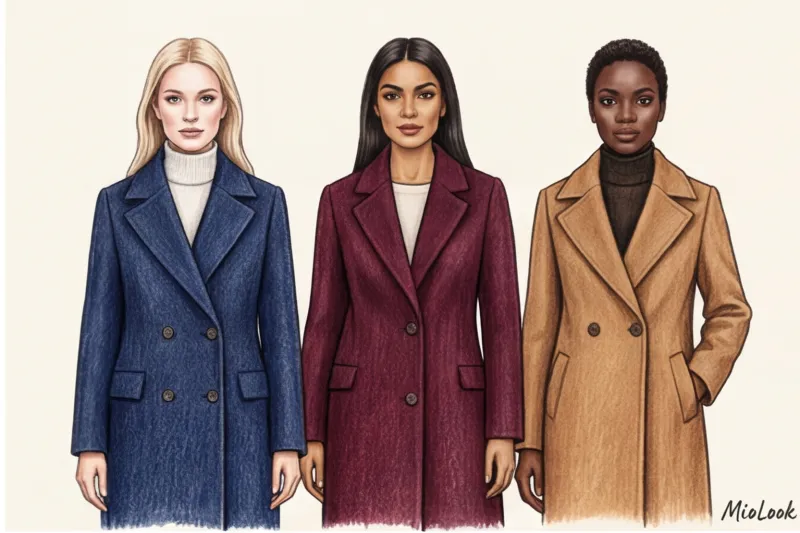
If we cross black and classic beige off our must-have lists, what should we build our wardrobe around? The answer lies in finding your own deep, personalized base shades. These are colors that possess the same formality and are just as easy to combine, but also complement your appearance.
Instead of standard black, try introducing an alternative dark base:
- Dark blue (Navy) — ideal for cool skin tones. It conveys the same sophistication and professionalism as black, but looks more refined and doesn't create a tired look.
- Deep wine (Bordeaux, Marsala) — a luxurious alternative for those with a contrasting complexion. This color looks especially luxurious when paired with smooth leather or suede (for example, when choosing an investment bag or shoes).
- Emerald or coniferous - perfectly brings out warm colors, especially if your hair has copper, chestnut or golden tones.
- Chocolate — an absolute must-have for soft complexions. From milk chocolate to rich cocoa, these colors look supremely aristocratic, especially if you invest in cashmere or thick silk.
Your basic palette is your foundation. Invest hundreds of euros only in items whose colors allow you to wear them against your face without a drop of makeup, while still feeling fresh and rested. If, when you look in the mirror, you see a beautiful jacket first and only then yourself, it's not the right investment for you.
What Essentials Are Worth Investing In (and Why)
In the visual psychology of style, there's an unspoken rule of "terminal points and large areas." When we first look at a person, our brain reads two things in a split second: the largest shape in the silhouette (a coat or jacket) and the outermost points of the outfit (shoes and a bag). You can wear a simple €15 cotton T-shirt or simple jeans underneath, but if your "boundaries" are impeccably aligned, the entire look automatically elevates to the premium category.
Working with clients, I often see the same budgeting mistake: buying a dozen expensive silk tops or trendy dresses, hidden under a shapeless down jacket, paired with worn-out ankle boots. This is a surefire way to visually cheapen your look. For a wardrobe to truly function as an investment portfolio, funds should be allocated to categories where the quality of cut and materials critically impacts the overall look.
Structured Outerwear (Coats and Trench Coats)
No other item has such power over your appearance as a coat. In our latitudes, it doesn't just complement an outfit—it and there is your outfit for most of the cold season. The coat sets the tone for the entire look, creating that very architectural framework that hides the imperfections of the fit of the lower layers of clothing.
The main requirements for an investment coat or trench coat are a perfect shoulder line and a dense fabric that holds the silhouette rather than sagging like a sad rag. Cheap mass-market items often skimp on internal reinforcements (shoulder pads and armhole reinforcements), which can lead to sloping shoulders and a loose collar after just a month of wear.
"A quality coat works like a good camera filter: it gathers the figure, elongates the vertical line, and creates a chiseled silhouette, even if you're wearing a bulky tracksuit underneath."
The composition deserves special attention. Never consider outerwear with more than 30% synthetic fiber as an investment. The ideal formula is at least 70% wool (virgin wool is best), ideally with 10-20% cashmere or alpaca for a luxurious shine and softness. A coat made of polyester or acrylic (even if it costs €150 and looks nice on the hanger) is not warm, quickly becomes covered in irremovable pilling, and causes static. An investment in the right wool coat in the €300-600 range will pay for itself with a decade of impeccable service.
Quality shoes and the right last
While a dress simply hangs on your shoulders, your shoes bear the weight of your entire body and are also exposed to harsh street conditions: chemicals, rain, uneven pavement, and temperature fluctuations. This is why cheap shoes made of faux leather or pressed-in-place materials become deformed within one or two seasons at most. They lose their alignment, collapse inward or outward, and develop deep, irreparable creases at the folds.
Investing in shoes is, first and foremost, an investment in your spinal health. High-quality shoes (especially those with heels or platforms) always have the right last and a steel shank (instep) to support the arch of the foot and prevent the heel from wobbling. Budget models often replace the instep with plastic, which can quickly lead to foot fatigue and a change in gait.
Choose only genuine leather (smooth calfskin, suede, or nubuck). Natural materials allow air to circulate, allowing your feet to breathe, and the material itself will adapt to the contours of your foot over time. A good basic pair of loafers, ankle boots, or classic pumps from a trusted brand (in the €150 to €400 price range) will retain their original appearance for years to come with proper care—using wooden shoe trees and creams.
Rigid frame bags
A bag is the key status symbol of any look. When building an investment bag, I strongly recommend avoiding soft, shapeless hobo bags in favor of strict geometric shapes. A tote bag or structured crossbody with clear edges always looks more expensive and elegant.
Why do soft bucket bags fail? They create an overly relaxed look, which easily becomes sloppy. Furthermore, soft leather stretches more quickly under the weight of items, causing the bottom to sag and the corners to fray. A framed bag made of thick leather (such as saffiano or epi-embossed leather) maintains its shape even when empty, creating the necessary geometric contrast with the softness of your outfit.
When choosing an investment bag, look not at the logo, but at the hardware and assembly. Hardware is a ruthless price detector. The main indicator of quality is the absence of a cheap, scratch-resistant gloss (so-called "samovar gold"). Look for matte metal, patinated brass, or a delicate galvanic coating. Pay attention to the edge finish of the leather: it should be smooth, without any paint bleeds, and the seams should be perfectly even, with uniform thread tension.
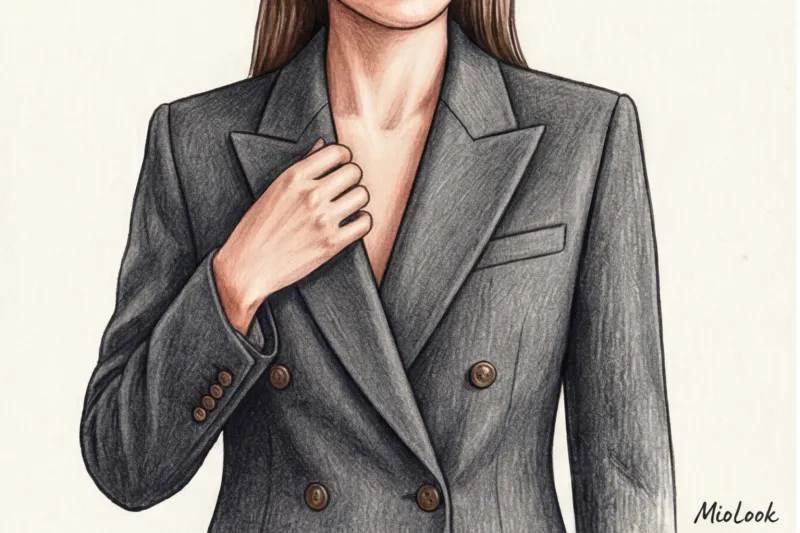
A perfectly fitting jacket or business suit
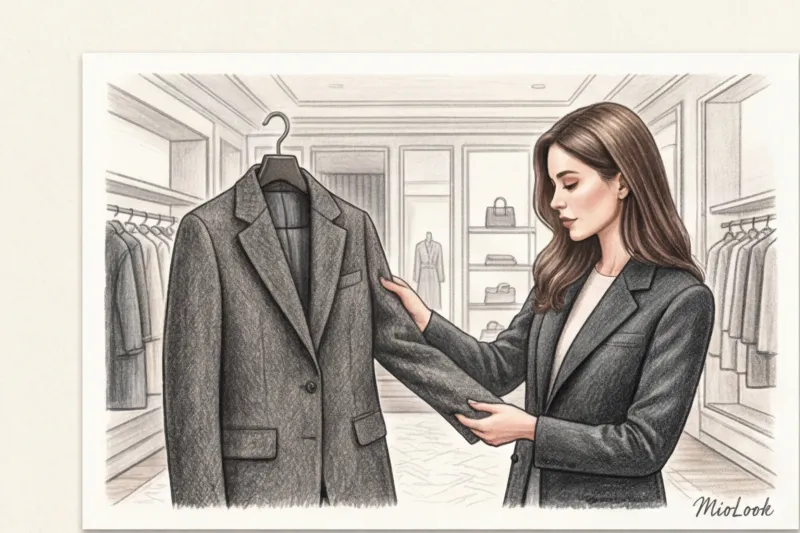
A jacket is a magic wand in any woman's wardrobe. Think about it: jeans and a white T-shirt look like something for a Saturday cleaning day. But throw on a perfectly tailored jacket, add loafers, and a crossbody bag, and you're ready for a business breakfast or a contemporary art exhibition. A jacket instantly ties together even the simplest, most relaxed outfit into a cohesive, polished ensemble.
The secret to a well-made jacket lies in its hidden architecture. As master tailors point out, a jacket is constructed, not simply sewn. Cheap, mass-market models are created using a fully bonded interlining (interfacing), which can bubble after the first dry cleaning or exposure to rain. An investment jacket requires proper interlining of the front and the use of high-quality interlining (an interlining made of horsehair or heavy cotton), which allows the fabric to flexibly hug the chest without being stiff.
Never forget to look inside: a high-quality lining is the litmus test of a quality garment. Investment jackets are made of breathable materials (100% viscose, cupro, or acetate). If you see 100% polyester lining on a €200 jacket, don't hesitate to return it to the hanger. A polyester lining will create a greenhouse effect, negating the benefits of even the most expensive wool on the outer surface.
Access to MioLook for €0.99 — one-time payment
Start creating perfect images with the help of artificial intelligence
Get access — €0.99 onceWhat you can and should save on when building your wardrobe
The idea of an investment wardrobe sometimes breeds toxic perfectionism in women: it seems like every single item in the closet now has to be expensive. Recently, one of the participants in my masterclass lamented how she'd ruined a basic €150 white T-shirt with stubborn yellow stains after just a month of active wear. My response shocked her: "Why are you even buying base layers for that much money?"
Let's be honest: a smart wardrobe is built on a balance of high and low investment. And there are categories where a high price tag is simply a tax on your trust.
A stylist's direct recommendation: basic cotton tees and tank tops are a consumable item. They bear the brunt of the impact when in contact with the skin, instantly lose their crystal-clear white color due to sweat reacting with deodorants, and become misshapen from frequent machine washing.
No premium cotton will prevent a collar from stretching or the underarm area from discoloring. There's no point in buying luxury here. Get them renewed every six months at a quality mass-market store (in the €15-€30 range), and invest the money you save in a good architectural jacket to wear over that same T-shirt. A fresh, inexpensive T-shirt under an expensive blazer will always look more luxurious than a washed-out haute couture T-shirt.
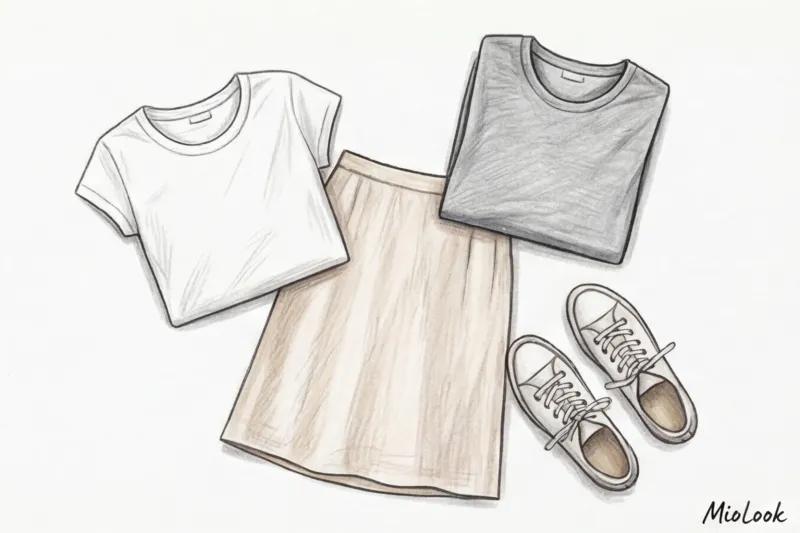
Beyond the first layer, I strongly advise against investing large sums in the following categories:
- Trendy items for one season (microtrends). Please don't invest in leopard-print leggings, neon tops, or trendy asymmetrical sequin skirts. These are toys that last a couple of months at most. As a colorist, I'll add: neon and ultra-bright pigments print beautifully on cheap synthetics, so there's virtually no visual difference. Such items quickly experience "emotional wear"—you'll be tired of them by next season. Save them for fast fashion.
- Summer clothes made of thin linen and viscose. It sounds counterintuitive, but thin summer fabrics wear out incredibly quickly. They deteriorate from the harsh effects of the sun, salt, chlorine from swimming pools, and constant washing. The fibers dry out, and the colors fade. An expensive linen shirt and its budget €40 equivalent will look equally tired by the end of a hot resort vacation.
If you're unsure where your budget is going, try tracking your wear statistics. Analytics in MioLook This will quickly and clearly show you which categories of items "burn out" the fastest. You'll see that the cost of each expensive summer T-shirt remains high due to its short lifespan, while an investment in a classic coat pays for itself in just one season.
Investment Wardrobe Fabrics: A Stylist's Guide
According to the Textile Institute, up to 70% of a garment's visual value is determined not by the cut, but by the texture of the material. You can find a perfectly fitting jacket, but if it's made of loose fabric, it will become a dull rag after a month of heavy wear. Investing in your wardrobe means, first and foremost, purchasing the right threads. Let's explore which yarns are truly worth spending €200 and up on.
Let's start with the basics of suiting. There are two fundamentally different approaches to wool production: carded and worsted yarn. Carded wool is fluffy, loose, and very warm (it's used to make bulky sweaters), but it wears out quickly from constant friction. For investment jackets, trousers, and skirts, only worsted is needed. worsted wool During its creation, short fibers are combed out during the production stage, leaving only long, tightly twisted, and smooth threads. This is why high-quality worsted wool is virtually pilling-free—there's simply no loose fluff on its surface that could form clumps.
When choosing a suit, look for quality markings on the lining, ranging from Super 100s to Super 150s. These numbers indicate the thread thickness: the higher the index, the finer, silkier, and more expensive the fabric. For everyday wear, a balance of Super 110s–120s is ideal—it's moderately elastic and perfectly maintains the silhouette's shape.
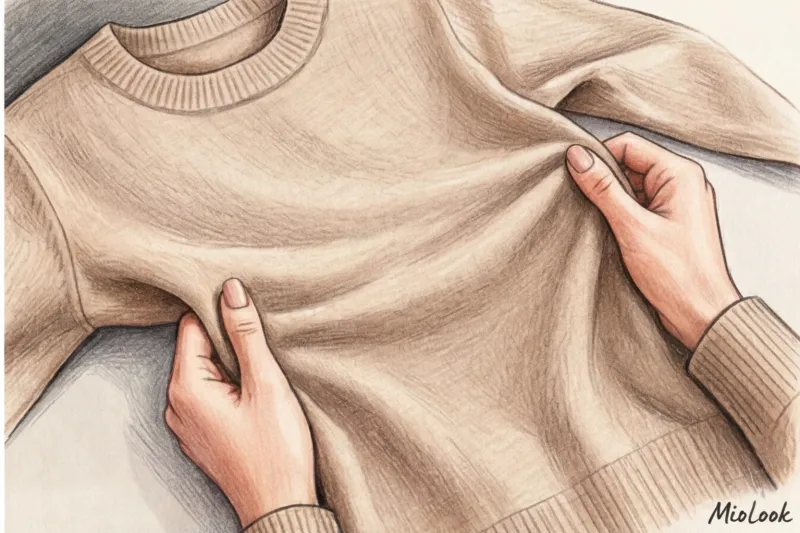
When working with clients in the premium segment, I always use one foolproof trick. My life hack is called "The Squeeze Test": crumple the edge of a wool jacket in your fist, hold it tightly for 5 seconds, and then release. If the fabric immediately springs back without any hard creases, it's a great investment. If it's still wrinkled, leave it in the store; it won't survive the office grind.
When it comes to cashmere, prices vary enormously: from €80 in mass-market stores to €1,000 in niche boutiques. How can you tell good cashmere from bad without looking at the price tag? The secret lies in two parameters: pile length and knit density. Budget cashmere is made from short fibers (less than 30 mm). The ends of these fibers quickly become separated from the yarn structure and become covered in telltale pilling after the first wash. Furthermore, to save on expensive raw materials, cheap sweaters are knitted too loosely. High-quality cashmere should be elastic: if you gently stretch the fabric with two fingers, it should instantly return to its original shape, and there should be no large voids between the stitches visible when held up to the light.
To help you remember which expensive items require delicate care or specialized dry cleaning, I recommend making notes for each item in the app's digital closet. MioLook — this way, your investment knitwear will be safe from accidental washing in the washing machine.
In summer wardrobes and basic shirts, silk and the right cotton reign supreme. It's worth investing in long-staple cotton , such as Peruvian Pima or Egyptian Mako. Thanks to the exceptional fiber length, the fabric is incredibly smooth, with a slight matte sheen, and, most importantly, it doesn't thin out at the elbows, cuffs, or collars for years.
When choosing silk blouses, consider the density, measured in momme. Thin silk up to 14 momme will inevitably come apart at the seams where it's stretched within six months. However, a density of 19-22 momme is a sign of a classy garment that will flow beautifully over the figure, conceal underwear, and last for many seasons.
Your ideal image
it begins Here
Join thousands of users who look flawless every day with MioLook.
Get access — €0.99 onceA step-by-step plan: how to build your first investment wardrobe
"I want everything at once, let's just go and buy some new basics!" – this is the phrase that begins most of the most disastrous shopping trips. A warning I give to every client at the first meeting: the most common mistake is trying to buy all your "investments" at once, spending €3,000–€5,000 in boutiques. The problem is that your taste and visual acuity will inevitably change as you develop your style. If you buy everything today, in six months half of your items will seem boring or awkward. Build your wardrobe gradually, using a clear, step-by-step methodology.
Step 1: Audit (Real-Life Test)
We love buying clothes for an imaginary version of ourselves—the one who goes to art exhibitions every evening and sips matcha on verandas in the morning. To break this pattern, conduct an audit: track what you wear most often over the course of a month. Where do you go, how many steps do you take, what bag do you grab without thinking? If you spend 80% of your time in an office with a relaxed dress code and behind the wheel, your main investments should be in impeccable wool-blend jackets, cashmere turtlenecks, and comfortable leather loafers to meet the needs of real life, not just your fantasy of it.
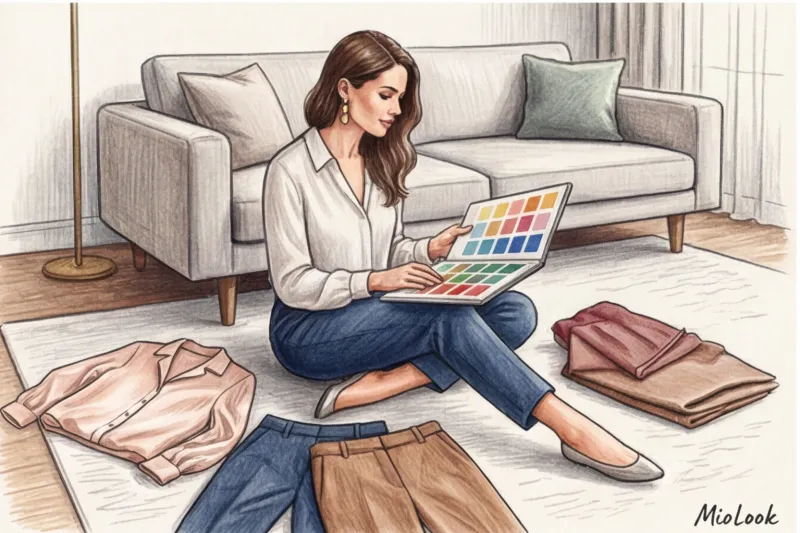
Step 2: Defining Your Personal Basic Palette
As a colorist, I forbid jumping into active shopping without a color foundation. Your personal base palette should include two to three dark neutrals (for example, deep emerald, mahogany, dark chocolate, or classic navy) and one to two light colors (ecru, cool beige, or milky). This strict color framework ensures that items will be easy to combine without your input. This doesn't mean foregoing bright accents, but a neutral base provides the canvas on which to build a luxurious look.
Step 3: Gap Analysis
The term "gap analysis" comes from the business world, but it's brilliant for styling. Look at your favorite pieces that you wear regularly and identify the "gaps" that prevent you from creating new looks. For example, you have the perfect pair of wide-leg pants, but you wear them with a faded cotton T-shirt because you don't have a decent top. Then your gap is a heavy silk top or shirt. To clearly see these gaps, I recommend digitizing your closet using an app. MioLook — this way you'll immediately understand the actual statistics of wears and create an accurate shopping list, eliminating duplication.
Step 4: Gradual Replacement (The "One Expensive Thing" Rule)
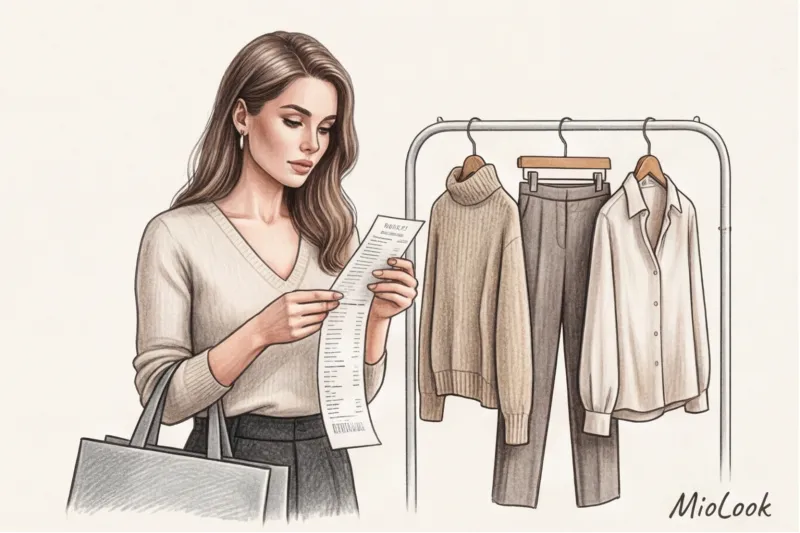
Don't throw out your usual mass-market items overnight, leaving the shelves empty. Adopt the ironclad rule of "one expensive item per month." In September, you invest €300 in a great wool coat. In October, you buy quality ankle boots for €180. In November, you buy a structured bag. This strategy allows you to build a luxurious, functional base within a year, without breaking your budget and giving your psyche time to adapt to the new level of fabric quality and cut.
Checklist before an expensive purchase: 5 questions from a stylist
Did you know that dopamine release peaks not when you first put on a new item, but a second before you swipe your card? Neuromarketing research, particularly the work of Martin Lindstrom, proves that our brains cherish the illusion of ownership. It's this biochemical trap that causes us to make the most ridiculous and costly fashion mistakes.
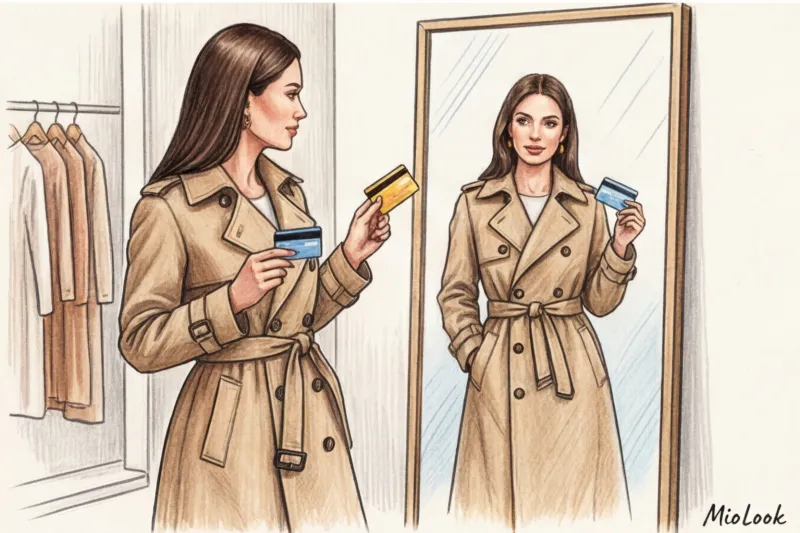
To outsmart my emotions and avoid buying yet another "investment" item that will end up at the bottom of my closet, I developed a strict filter. It's a five-question checklist that I make every client go through. If you answer a sincere "no" to even one of them, the item stays in the store.
1. Will I be able to create at least 5 looks with this item from what I already have in my closet?
An expensive purchase shouldn't require additional investment. For example, you've set your sights on a stunning chocolate-colored leather trench coat. But if it only pairs with jeans, and all your dresses are midi-length, leaving hems unsightly peeking out from under your outerwear, that's not an investment, but a financial drain that requires a new wardrobe.
Before purchasing, I always recommend uploading a photo of a potential upgrade to the "smart wardrobe" feature in MioLook and visually cross it with the existing lows and highs. Found 5 organic combinations? Great, let's move on to the next point.
2. Does it suit my natural complexion?
As a colorist, I see this all the time: a gorgeous, textured, premium turtleneck can make a face look dull and tired. If the garment is positioned in a portrait zone (outerwear, knitwear, scarves, blouses), it should act as a natural reflector.
A cool olive skin tone will instantly take on a sickly greenish cast if you wear a warm mustard-colored sweater. Conversely, the right shade works like a good concealer, visually erasing signs of sleep deprivation. No fabric quality can justify a color that forces you to apply two layers of foundation.
3. Does it match my real lifestyle?
We often buy clothes for our imaginary double. A woman who works remotely 80% of the time and walks her dog invests €400 in a pair of formal stiletto pumps and a fitted jacket, which then wait for years for that special occasion.
Ask yourself honestly: where exactly will I wear this in the next 14 days? If the answer is no, it's time to postpone the purchase. Your investment wardrobe should cater to your current reality, not red carpet fantasies.
4. Am I willing to pay for dry cleaning/special care for this item?
The hidden cost of ownership (Total Cost of Ownership) is as relentless in fashion as it is in the auto industry. Imagine a luxurious mulberry silk top for €150. If the manufacturer strictly forbids hand washing, every night out will cost you an extra €15–20 for professional dry cleaning.
Are you willing to spend an extra €100–€150 per year on this item's maintenance? If the thought of complex care is irritating, it's better to build your basic wardrobe around dense, long-staple cotton and smooth worsted wool, which are gentle on the delicate side of the machine wash.
5. If it didn't have the brand logo on it, would I still pay that amount for the fabric and cut?
This is my favorite "blind test." Mentally unravel or cover the tag with your finger. Feel the seams, look at the stitching, evaluate the composition and tactile feel.
A true investment piece reveals itself in the little details: buttons made of natural horn or mother-of-pearl instead of cheap plastic, a perfectly matched intricate print at the side seams, dense and even stitching (at least 4-5 per centimeter). We often confuse an investment in uncompromising quality with a banal marketing premium. Are you paying for the architectural cut or the recognizable letters on the chest?
Mindful shopping isn't about stinginess or strict restrictions. It's about a deep respect for your work, your body, and your money. An investment wardrobe isn't built in a single trip to the mall; it's assembled through thoughtful, ruthless selection.
Your practical assignment for today: before you click "Checkout" on your favorite online store's shopping cart, run your desired item through these five steps. You'll be surprised how quickly the fashion noise will clear out, leaving only what truly makes your style impeccable.
Guide Chapters
How to Buy Resale: A Guide to Luxury Without the Fake
How to build a premium collection without giving your money away to scammers? We explore the key rules for purchasing archival luxury items and the secrets to spotting counterfeits.
How to Choose a Women's Pantsuit: A Cut Guide
The difference between an investment piece and disposable clothing lies in the details. Let's break down the suit seam by seam: pattern, armhole height, and the correct fabric composition.
The Ideal Basic Wardrobe for a 30-Year-Old Woman: Must-Have
How to transform the chaos of mass-market fashion into a prestigious investment wardrobe. We'll explore common mistakes and build the perfect wardrobe essentials for women in their 30s and 40s.
A Basic Jewelry Wardrobe: What to Buy for Every Day
We often spend fortunes on evening jewelry, forgetting about everyday essentials. Learn how to create a functional kit for stylish everyday looks.
Caring for Premium Fabrics: Stylist Tips
Caring for your expensive items is asset management. Learn how to extend the life of cashmere, silk, and leather without constant dry cleaning.
Basic, Quality Women's Shoes: An Investment in Style
Forget about uncomfortable stilettos that gather dust in your closet for years. Learn the principles of choosing the right shoes, where style meets anatomy and durability.
Timeless Basic Bags: Investing in Style
Trendy micro bags quickly go out of style and end up on shelves. We'll explain how to choose the perfect basic bag that will become a reliable investment in your wardrobe.
Wardrobe Analysis: The app will find gaps in your wardrobe
About 30% of our clothes sit idle in our closets while we buy copies. Learn how a mathematical approach to style helps you create the perfect wardrobe essentials.
Guide: How to choose a white women's shirt and look expensive
The perfect white shirt isn't just boring office attire, but a luxurious foundation for dozens of looks. We'll explain what to look for when choosing a premium base.
How to Choose a Cashmere Coat: Styling Tips
100% cashmere isn't always the best investment. A personal stylist explains how to find the perfect piece that won't fade in just one season.
How to calculate cost per wear: a smart wardrobe formula
Think the price tag in the store reflects the true cost of an item? A personal stylist explains why a luxurious silk blouse will ultimately cost you less than a pile of cheap polyester from a sale.
What you shouldn't skimp on in clothing: advice from a stylist
Buying cheap clothes often leads to the constant problem of "nothing to wear." We'll explain the Cost Per Wear rule and items worth investing in.
Quiet Luxury: A Wardrobe in Old Money Style
The true Old Money aesthetic isn't about beige mass-market fashion, but rather impeccable cuts and high-quality fabrics. Learn how to assemble a status wardrobe without making mistakes.
How to Determine Clothing Quality: A Guide to Seams and Fabrics
Things may look the same on the outside, but the inside always reveals their true value. Learn what to look for in a fitting room to buy clothes that will last for years.