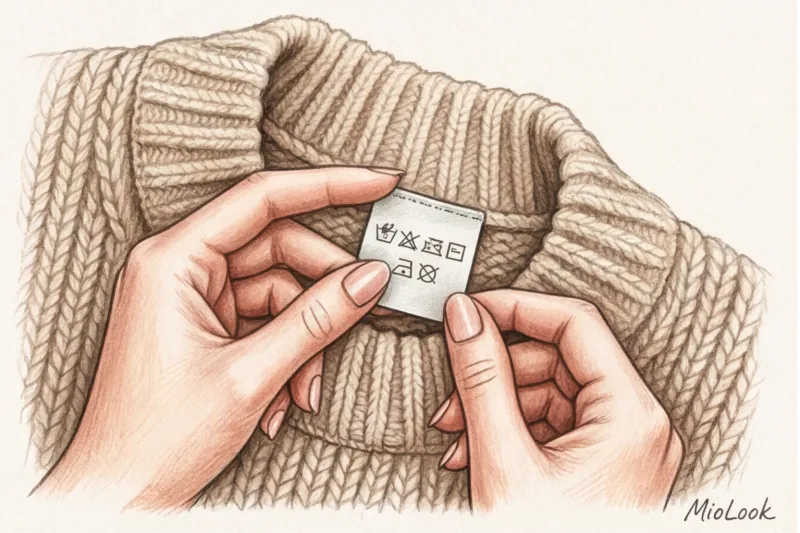
I still remember the day I pulled my perfect €400 cashmere sweater out of the smart washing machine. The cycle, proudly labeled "Delicate Wool Wash," transformed this luxurious wardrobe staple into a thick, squeaky XS felt boot. This failure forced me to completely rethink my approach to clothes. As a stylist, I realized that it's not enough to simply buy an expensive item—you need to know how to manage it.
We've covered in more detail which things deserve major investments in our The Complete Guide to Investment Wardrobes But today we'll talk about the next step. Forget boring instructions on the tags. The right one care of premium fabrics It's not a household matter, it's asset management. If you spend hundreds of euros on silk, cashmere, and leather, your goal is to maximize their life cycle and reduce the cost per garment (CPE).
The Dry Cleaning Myth: Why We're Killing Our Investment Wardrobe
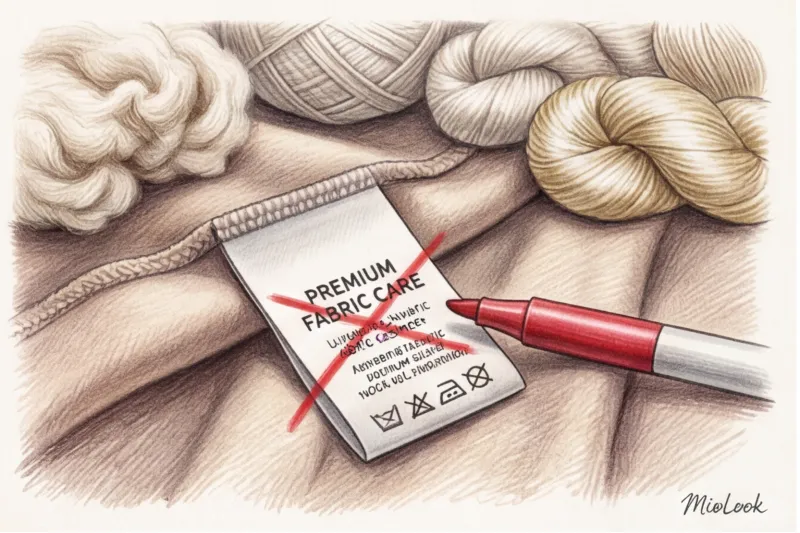
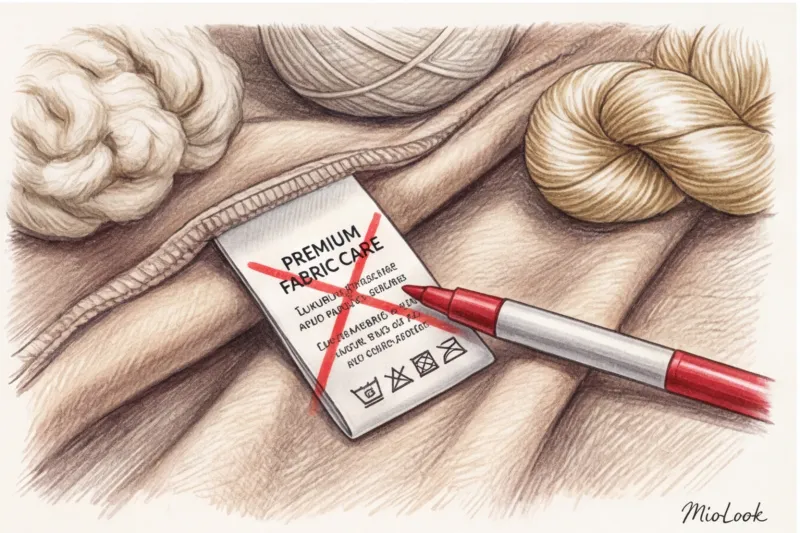
Let's start with the biggest deception in the clothing care industry. Take a look in your closet: I bet half of your silk blouses and wool pants have a categorical tag on them. Dry Clean Only (Dry clean only).
As someone who regularly reviews clients' wardrobes, I constantly see a sad picture: expensive pieces from Massimo Dutti or COS look dull, and the fibers seem lifeless. The reason? Excessive reliance on dry cleaning. The "Dry Clean Only" label is, in 70% of cases, a legal safeguard for the brands, not a genuine requirement for the fabric. It's easier for a manufacturer to prohibit washing than to be held responsible for a customer throwing silk in the dryer at 60 degrees.
"According to a 2023 study by the Drycleaning & Laundry Institute, regular exposure to perchloroethylene (a common dry cleaning solvent) reduces the lifespan of natural protein fibers such as silk and wool 30% faster than delicate hand washing."
Chemical solvents literally dry out natural fabrics. The concept of care as asset management requires a different approach. If a cashmere sweater costs €300 and each dry cleaning costs €15, after 20 dry cleanings you'll be paying for the item again, receiving a thinner fabric in return. We must regain control of the process.
Your perfect look starts here
Join thousands of users who look flawless every day with MioLook.
Get access — €0.99 onceCaring for premium fabrics: cashmere without pilling and shrinkage
Cashmere's biology is as follows: it's the undercoat of mountain goats, which historically requires moisture to maintain its fluffiness. Overdried in dry cleaning, cashmere becomes brittle and begins to pill. Water restores volume to the fibers.
The main mistake I correct for nine out of ten clients is storing knitwear on hangers. Even the softest satin hangers will stretch the shoulders of a heavy sweater in a couple of months. Cashmere should only be folded. Italian yarn manufacturers, such as Loro Piana, insist in their manufacturing protocols that heavy knitwear should be stored exclusively horizontally.
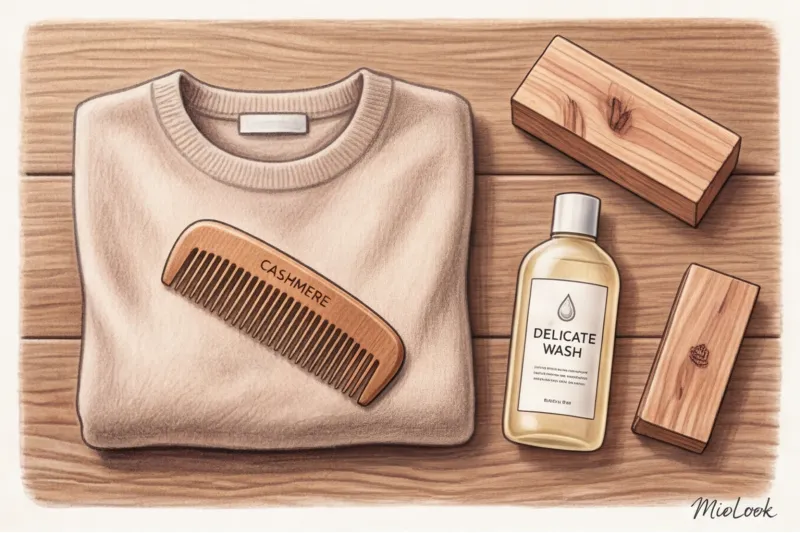
As for pilling, forget about electric clippers. The blades cut not only the pilling but also the healthy fibers, thinning the fabric. I only use wooden cashmere combs. They gently comb out the dead lint without damaging the fiber structure.
Washing vs. Airing: Changing Habits
Cashmere has a "wear and rest" principle. Protein fibers have a memory effect. If you've been wearing a sweater all day, let it rest on a shelf for 24 hours—it will regain its shape and release any odors it's absorbed. Washing cashmere after every wear is a crime.
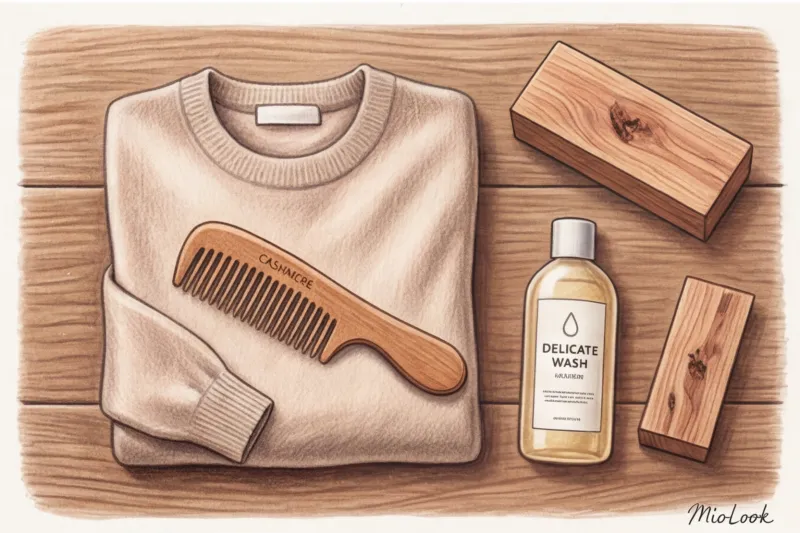
I'll be honest, hand washing sounds like a return to the Stone Age, but it takes exactly 10 minutes of active work:
- Fill a basin with cool water (strictly up to 30 degrees, otherwise the fibers will mat).
- Add a drop of baby shampoo with a neutral pH - cashmere is hair, it does not need aggressive powders with enzymes.
- Gently squeeze the item in water without rubbing.
- Rinse in clean water at the same temperature (temperature changes cause shrinkage).
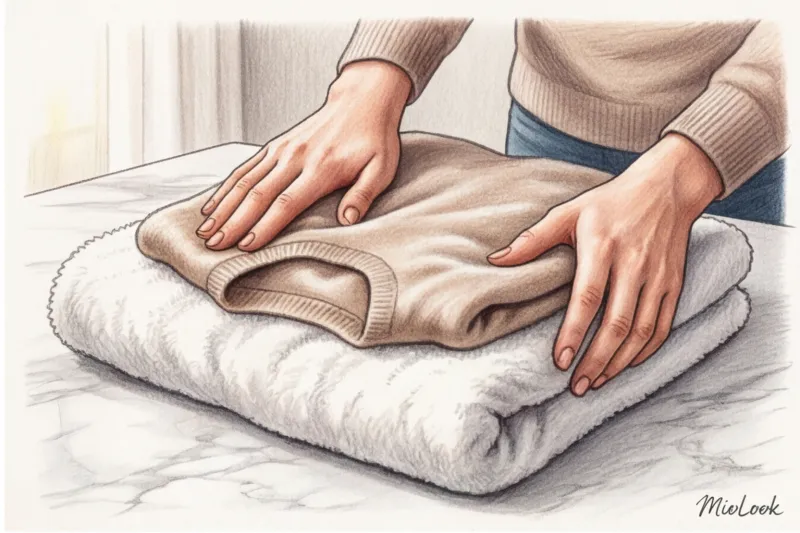
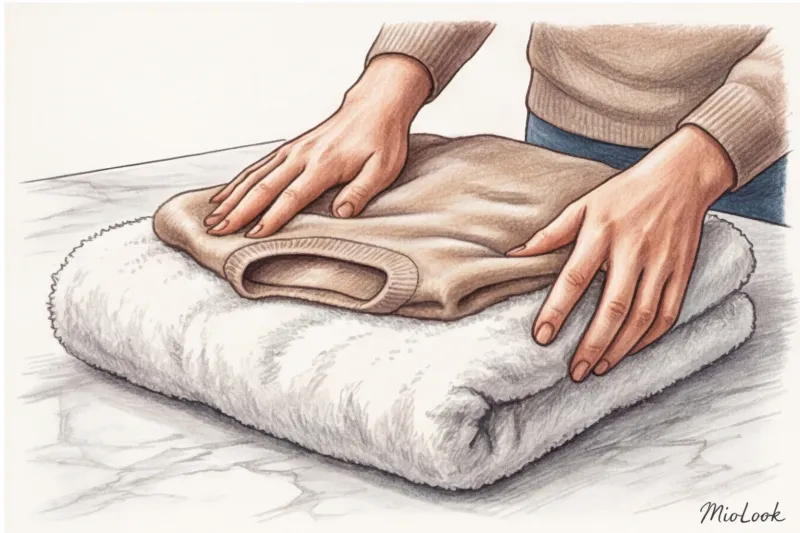
The most important step is drying. Never wring the sweater. Lay it out on a thick terry towel, roll it up (like sushi), and press gently to absorb the water. Then lay it out horizontally away from radiators.
Storage and protection from moths (no mothball smell)
Dry cleaners' plastic covers are hotbeds for moths and yellowing. Investment items need to breathe. Use only bags made of breathable, undyed cotton.
Instead of toxic mothballs, use modern aromatherapy. Restoring the moth-eaten collar of a cashmere sweater at a reputable tailor will cost you around €50–€80. A block of natural red cedar costs around €10 and protects an entire drawer. Every six months, simply lightly sand the cedar balls to renew the essential oil release.
Access to MioLook for €0.99 — one-time payment
A smart AI stylist will choose the perfect look for you and help you organize your wardrobe.
Get access — €0.99 onceTaming Natural Silk: Shine Without Stains and Streaks
Natural silk is made of a protein called fibroin. When viewed under a microscope, it takes the shape of a triangular prism that reflects light. This is what gives silk its shine. And this is why the alkaline environment of ordinary laundry detergent kills it: the alkali destroys the smooth structure of the prism, leaving the silk permanently matte.
Silk is incredibly fragile when wet. Any friction will cause the threads to shift, creating whitish creases in the fabric that are impossible to smooth out. My main warning: never try to wash out a spot stain on a silk blouse (for example, coffee stains). You'll get a distinct water mark that won't disappear even after a full wash. Silk should only be washed whole.
Ironing or steaming: how to avoid wasting your investment
Ironing is the enemy of silk. Firstly, the risk of burning the fiber is enormous. Secondly, even expensive irons sometimes spit out rusty scale, which is a death sentence for light-colored silk.
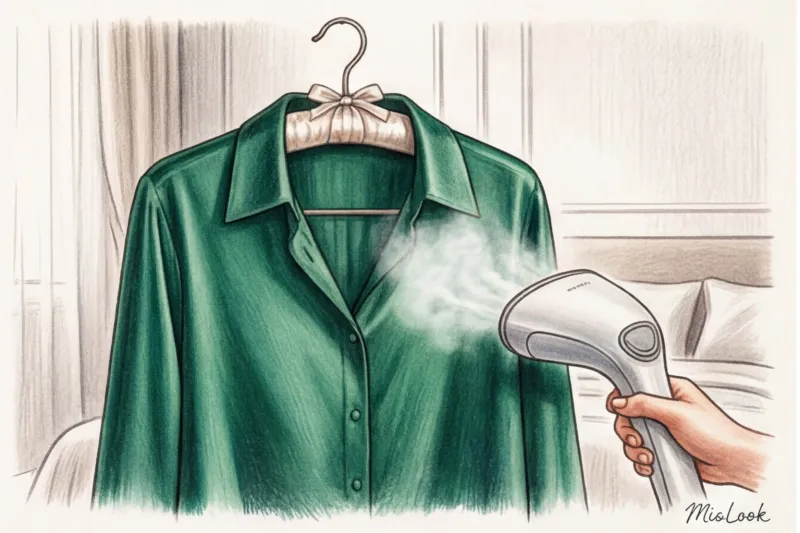
Steam is protein fibers' best friend. One of my executive clients complained about wasting Sunday mornings ironing silk shirts for the office. I advised her to buy a good handheld steamer. The result: saving three hours a week. Simply hang the shirt on a hanger, gently pull the hem, and run a jet of steam through it. The steam straightens the fibers in seconds without wrinkling them, preserving the fabric's natural volume.
Investment Leather: How to Prevent Creases and Cracks
Leather is a living material. Just like the skin on your face, it needs moisture. Winter street chemicals and dry air from radiators draw oils from the leather, making it brittle. Cracks in the bends of expensive shoes appear not from age, but from dehydration.
Care is radically different:
- Smooth skin: Requires rich creams and waxes. Apply conditioner with a horsehair brush, let it soak in for 15 minutes, then buff.
- Suede and nubuck: They are absolutely terrified of grease. The only things that save them are water-repellent sprays (apply three coats before the first use) and a crepe brush that raises the nap.
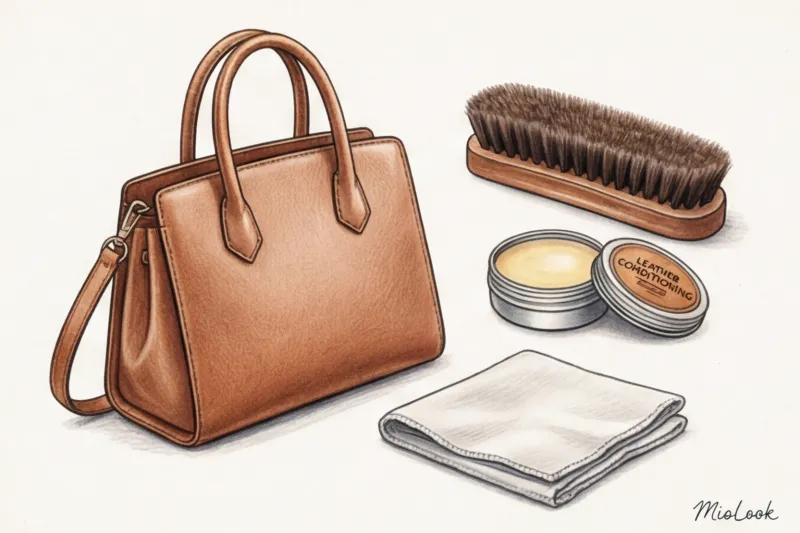
The investment math here is crystal clear. High-quality shoe trees made of unvarnished cedar for €30 draw moisture from the lining and smooth out creases. They've been proven to extend the life of €300 Oxfords by 2-3 times. And a good €20 can of conditioner will keep your €1,500 bag from losing its shape for the next 5-7 years.
Technology to Protect Your Wardrobe: Gadgets and Apps
Wardrobe maintenance today isn't about basins and brushes, but rather technology and data. Digitizing your closet helps prevent you from wearing your favorite items to the point of holes. By uploading your capsule wardrobe to MioLook You can track your wear cycles. The app displays statistics: if you've worn a wool jacket five times this week, the system will visually prompt you to give it a rest on a hanger.

When it comes to gadgets, the industry has come a long way:
- Steam ovens (eg LG Styler): It's an expensive investment (starting at €1,200), but for those with a strict business dress code, it pays for itself within a year. The cabinet treats jackets with hot steam on a vibrating hanger, eliminating restaurant and cigarette odors and smoothing out creases without washing. However, I will make a reservation: This gadget is useless for loungewear or sporty chic; it's only a solution for classic suit cuts.
- Ozonizers for clothes: Compact devices that kill bacteria (and sweat odor) with ozone gas. Ideal for refreshing cashmere between seasons without contact with water.
Checklist: A Routine for Caring for a Premium Wardrobe
To make all the above processes less overwhelming, break them down into simple rituals. Implement this routine this evening:
- Daily: After removing an item, evaluate it. Place heavy knits on a shelf. Place leather shoes directly on cedar shoe trees. Hang a jacket on a wide hanger in an open space overnight before putting it away in the closet.
- Monthly: Inspect the "assets." Go over cashmere with a wooden comb (5 minutes while listening to a podcast). Apply conditioner to leather bags that have been worn the most.
- Seasonal: No dirty preservation. Before storing your items for the summer, even if your sweater appears clean, it must be washed. Invisible sweat particles will oxidize within six months, turning into permanent yellow stains, and skin particles will become a haven for moths. Pack your items only in cotton bags with cedar sachets.
An investment wardrobe only pays off when the fabric looks expensive not only on display at the boutique, but also after three years of active wear. Stop delegating the responsibility to dry cleaners—get a comb, a good steamer, and breathable cases, and your clothes will last for decades.