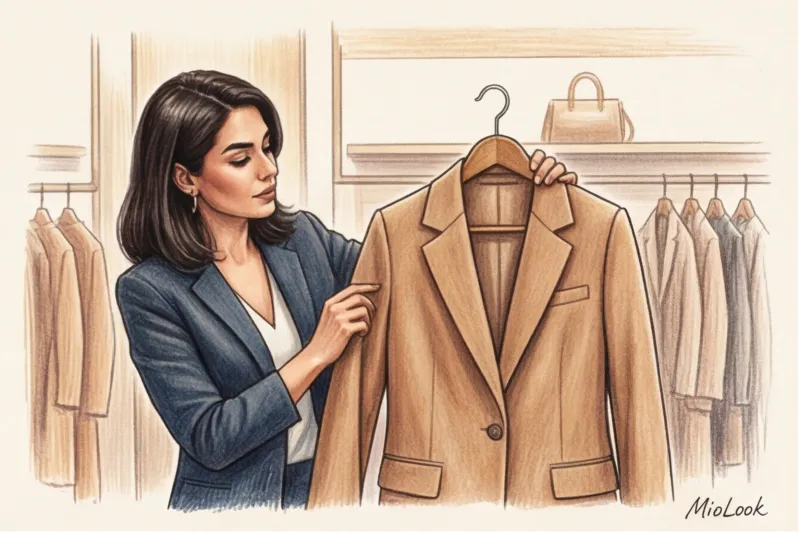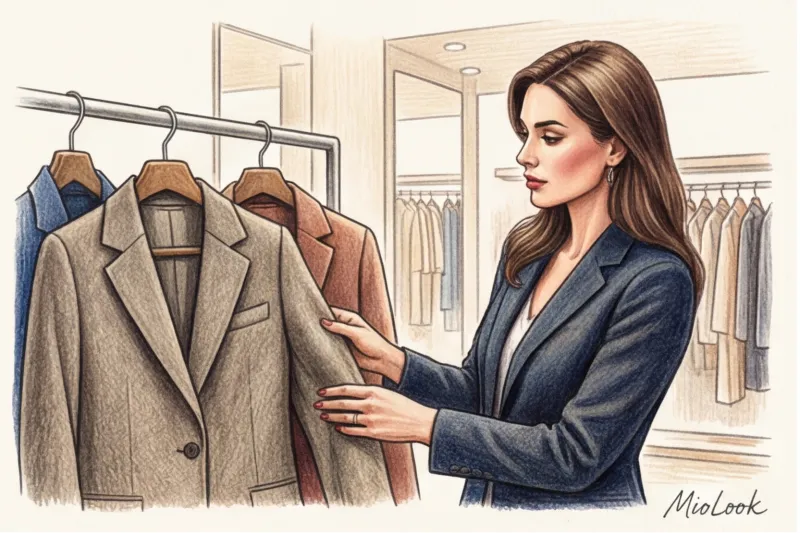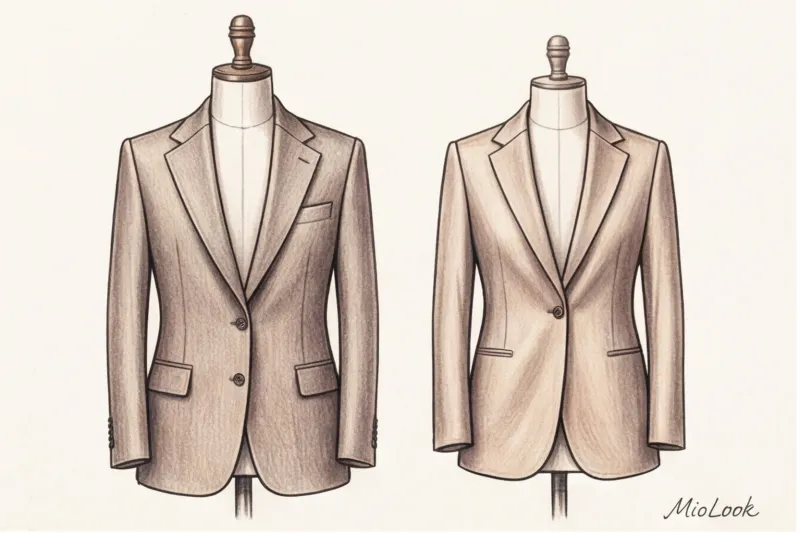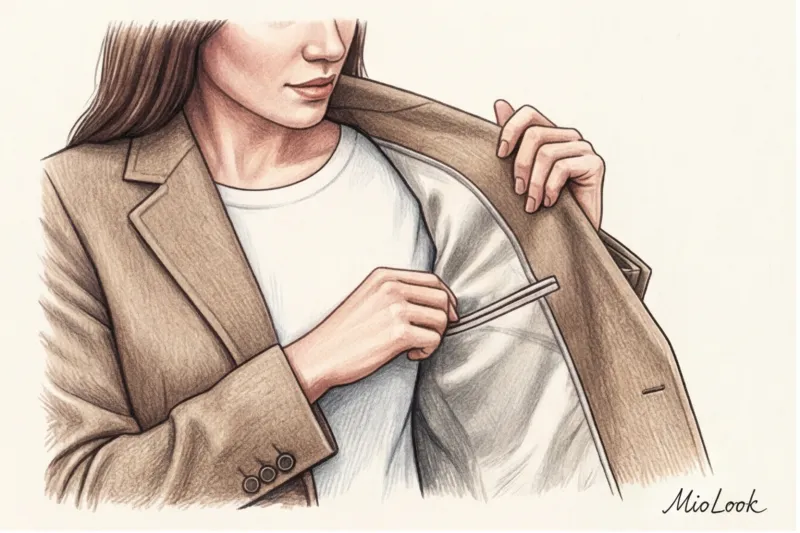
Recently, during a shopping trip with a client, I performed a simple but sobering trick. We walked into the fitting room and simultaneously turned two black jackets inside out: one from Zara for €80, the other from a local European boutique for €300. On the hanger, they looked almost identical. But the inside immediately revealed everything. In the first jacket, we were greeted by a protruding overlock stitch, a crisp polyester lining, and a bubbling fusible lapel. In the second jacket, we found seams carefully bound with contrasting binding, and the tailor's extra fabric left for a perfect fit.
For many women, shopping turns into a lottery: an item can last for years, or it can lose its appearance after the first wash. If you don't know, How to determine the quality of clothing Before you even check out, you risk regularly stocking your closet with disposable items. We've covered more about how to build a base in our The Complete Guide to Investment Wardrobes: What's Worth Investing In? Today, I suggest arming yourself with the knowledge of technologists and learning to read the "anatomy" of things right in the store.
The Myth of 100% Naturalness: How to Determine Fabric Quality Before Trying It On
"Synthetics are always bad, but 100% natural materials guarantee quality." In my 12 years as a stylist, I hear this phrase every week. And every time, I have to debunk this dangerous myth. I see hundreds of "killed" items in my clients' wardrobes, and more often than not, it's the cheap, 100% natural fabrics that are the first to go.
Why doesn't the "100% organic cotton" label on a €10 T-shirt guarantee you anything? The main problem lies in the fiber length. According to the Textile Exchange 2023 report, mass-market products are overwhelmingly buying short-staple cotton and cashmere. Short-staple yarns fray and break easily. That's why basic 100% cashmere from a budget segment is guaranteed to pill after just a week of heavy wear. High-quality blended yarns or dense merino wool will perform much better.
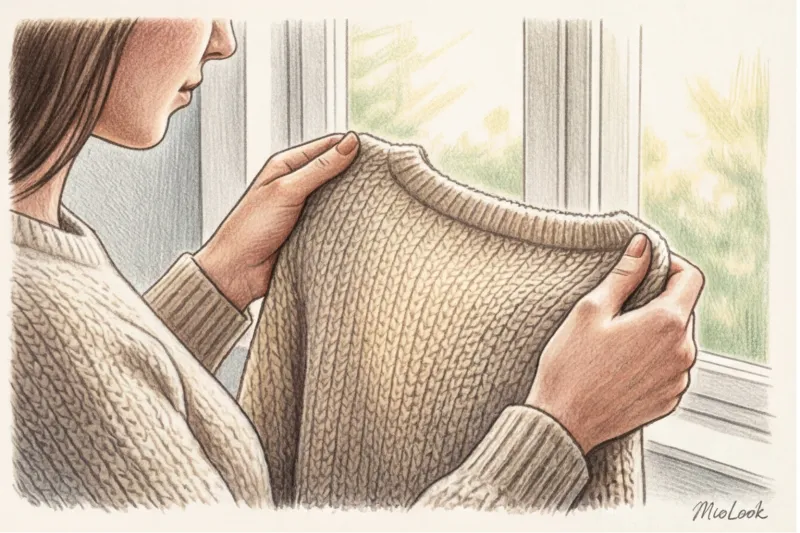
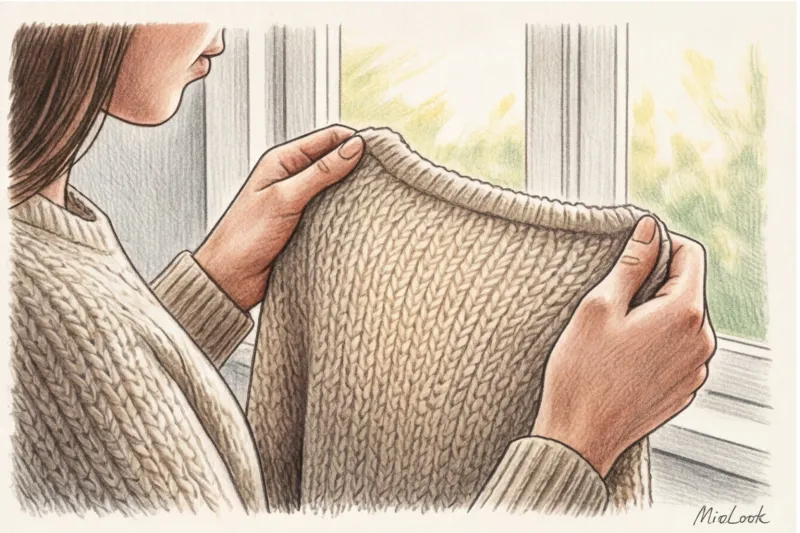
Another important visual technique is the "light test." Hold the fabric up to a light source in the store. If you see a loose weave with large gaps between the threads, the item will lose its shape after just one wash. High-quality knitwear should have a dense, uniform texture (according to industry standards, the optimal fabric weight for a basic T-shirt is 160 to 200 g/m²).
Adding 2–5% elastane or polyamide to wool trousers isn't the brand cutting corners on you. It's a technological necessity. Trousers made of 100% fine wool will stretch out at the knees by the middle of your first day at the office.
Ideal compositions for basic items
To avoid guessing at the hanger, memorize this cheat sheet of working compounds. They will ensure wear resistance and preserve your items' original appearance:
- Trousers and jackets: base made of wool, viscose or thick cotton + 2–5% elastane (spandex) for freedom of movement and shape retention.
- Everyday knitwear: Merino wool, thick cotton with the addition of 10-15% silk or high-quality viscose.
- Autumn and winter coats: At least 60% wool. The remaining percentage can easily be polyamide (up to 20–30%)—it acts as reinforcement, making the fabric stronger and protecting it from abrasion.
Access to MioLook for €0.99 — one-time payment
A smart AI stylist will help you sort through your wardrobe, analyze your items, and select the perfect looks for every day.
Get access — €0.99 onceThe Anatomy of a Proper Cut: How to Determine the Quality of a Garment by Its Seams
The most important rule for a smart shopper: turn the item inside out before going into the fitting room. The inside doesn't lie. It will tell you everything about the brand's attitude towards its product.
Let's start with the mathematics of stitching. A high-quality factory-made garment should adhere to the standard: 3-4 stitches per centimeter of seam. If there are fewer stitches (1-2 long stitches), the brand was simply saving thread and the seamstress' time on the assembly line. The slightest tension will cause such a seam to unravel.
The second critical issue is seam allowances. I work closely with tailors, and we regularly tailor items to suit the specific shapes of our clients. High-quality European brands (even mid-market ones, like Massimo Dutti or COS) always leave 1.5–2 centimeters of fabric inside trousers or skirts. This allows for some extra bulk if you've gained a couple of kilos. Cheap mass-market brands cut the fabric right down to the root, overlocking right along the edge. It's physically impossible to adjust such a garment.
Be sure to check the print match at the seams. If you're buying a checked or striped jacket or shirt, the pattern should match perfectly at the side seams, pockets, and lapels. Print matching requires a significant increase in fabric consumption during cutting (up to 20-30%). If the brand hasn't skimped on this, you're looking at a quality item.
Closed Seam Rule (Edging)
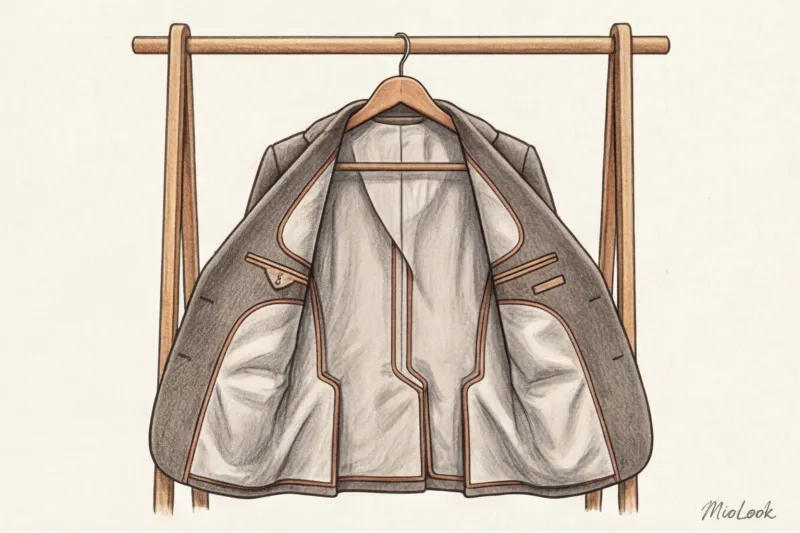
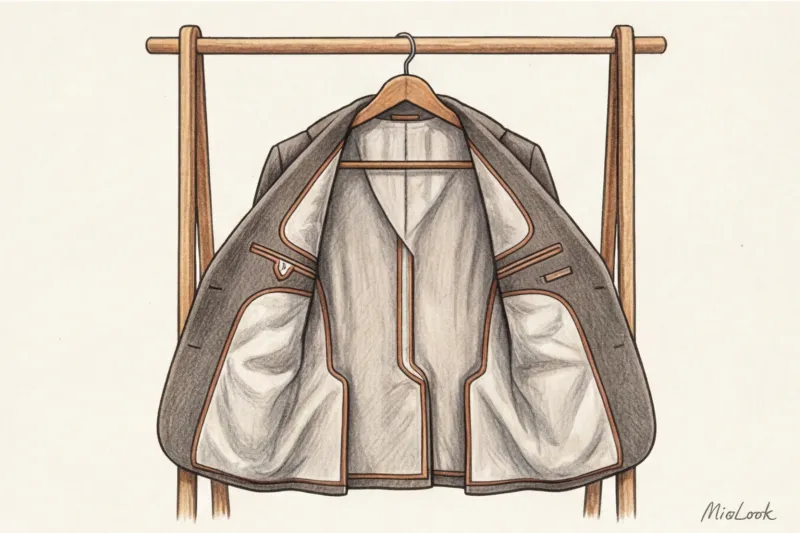
Pay attention to how the inside edges of the fabric are finished. An open overlock is acceptable on knits, but in structured garments (jackets, trousers, unlined coats), the seams should be closed. Premium garments use bias binding (a tape that wraps the edge of the fabric) or a French seam (a folded seam), where the edge of the fabric is tucked into itself. The back of a good summer linen jacket should look as aesthetically pleasing as the front.
Your perfect look starts here
Join thousands of users who look flawless every day with AI-powered tips from MioLook.
Get access — €0.99 onceHardware and lining: details that reveal cheapness
Zippers, buttons, and linings are the very same "blind spots" where brands save millions of euros, hoping that the buyer won't notice the difference.
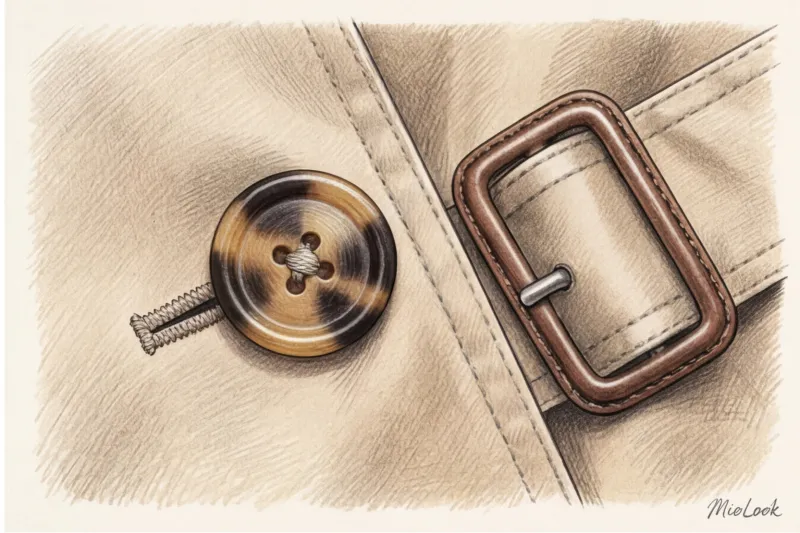
Cheap, shiny, metallic-looking plastic can cheapen even the best tailoring. Reputable brands use natural horn, mother-of-pearl, covered buttons, or high-quality matte polymer. An important detail for outerwear and jackets is that the button should be sewn on a "shank" (a small column of thread between the fabric and the button). This allows the thick fabric to lie flat when buttoned, without constricting the buttonhole.
Advice from personal experience: You can easily upcycle. If you bought a perfectly fitting blazer at &OtherStories for €120, don't be lazy and stop by a hardware store. Buy a set of horn buttons for €15-€20 and replace the standard plastic ones with them. The jacket's visual value will instantly skyrocket to €400.
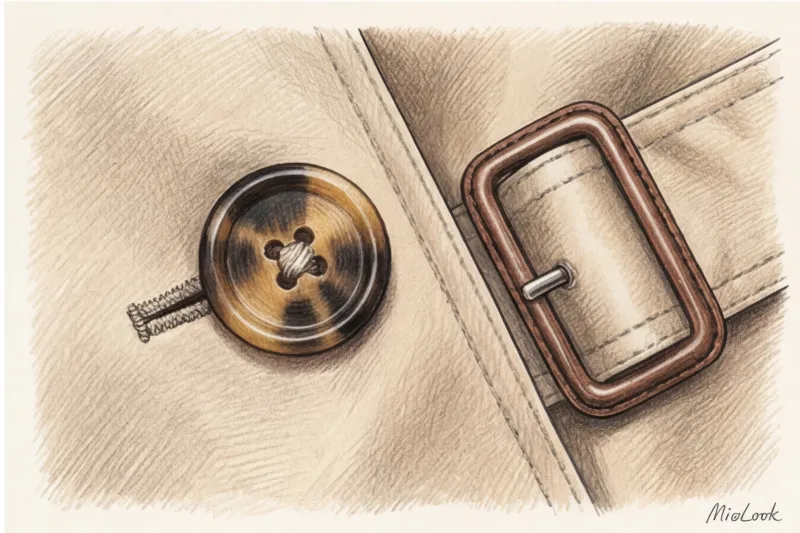
When it comes to zippers, YKK (a Japanese brand that controls about half the global market for high-quality fasteners) remains the industry gold standard. Their zippers operate smoothly and don't chew up fabric.
Be sure to feel the lining. Expensive jackets and coats will never have 100% squeaky polyester, which will static your hair and create a greenhouse effect. Look for linings made of cupro, viscose, or acetate—they breathe and glide over the base layer.
Fast Fashion Triggers: What You Shouldn't Spend Money On
To make your wardrobe work for you, you need to learn when to put things back on the shelf. Here are the main red flags that indicate poor quality:
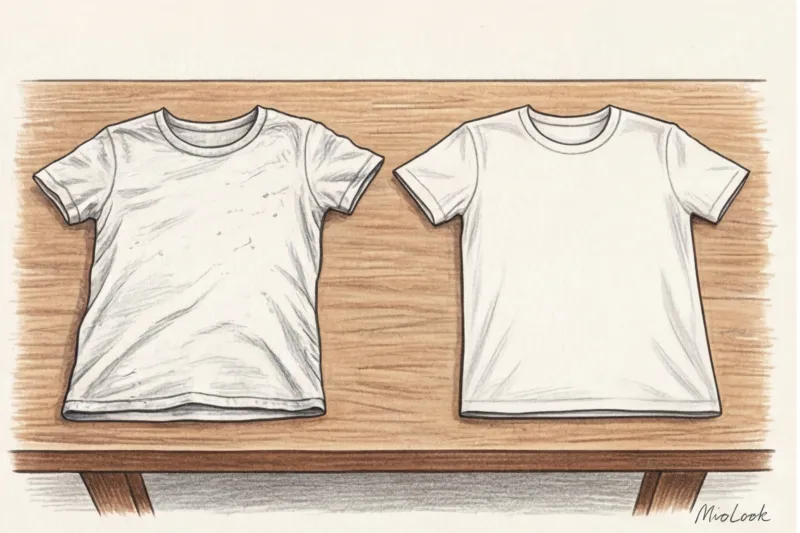
- Skewed side seams on T-shirts. Have you ever noticed how, after washing, one side seam slants toward your stomach and the other toward your back? This is because the fabric was cut diagonally at the factory, not along the grain (straight), to cram more pattern pieces onto a single piece of fabric. Restoring the shape of such a garment is impossible, even with a powerful steamer.
- Glue "bubbles" on collars and lapels. To keep the collar standing up, interlining is glued inside. In cheap items, the glue is unevenly distributed, and after the first rain, wrinkles and bulges will appear on the lapels.
- No darts. The female figure is a 3D object with curves. If a dress or jacket is cut simply as two flat rectangles without darts at the bust and waist, it will never fit. You'll look shapeless.
- Flimsy knitwear. If the store hanger is clearly visible through the weave of the sweater, leave it in the store.
Does this mean you should completely ditch Zara or Mango? Not at all. Just filter your selection. Look for their premium lines: Zara Studio, Mango Selection, or H&M Premium Quality. They use completely different factories and quality control standards.
Stylist Checklist: How to Check Out a Dress in the Fitting Room in 1 Minute
When you're alone with the item in the fitting room, do a quick audit. I make all my clients memorize this checklist:
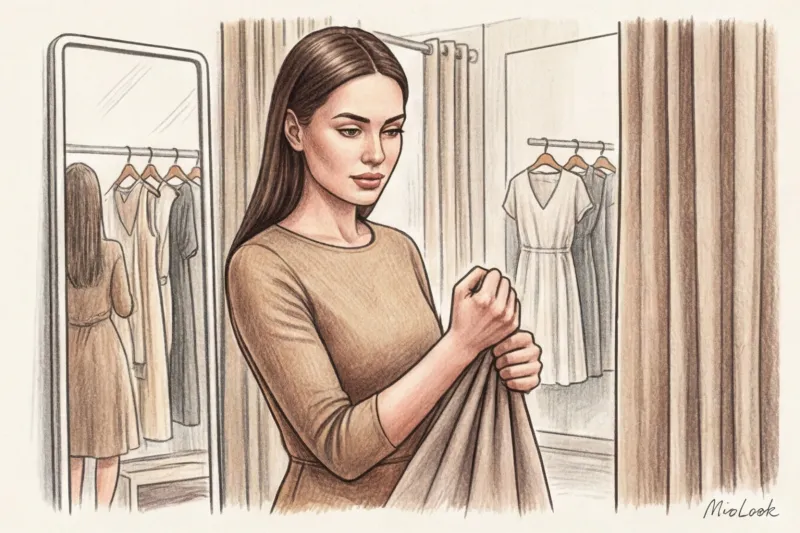
- Fist test. Squeeze a piece of fabric tightly in your fist and hold it for 10-15 seconds. Then release. If the fabric remains crumpled like a sheet of paper, you'll look unkempt an hour after leaving the house. (Note: This rule does NOT work for natural linen - its wrinkling is a noble norm.)
- Tensile test. Pull the fabric at the elbows (if it's a sweater) or knees (if it's pants). The fabric should immediately spring back to its original shape. If a "bubble" remains, the garment will quickly lose its shape.
- Tactile prick test. Never test wool with your palms—the skin there is too rough. Place the sweater against your neck or the inside of your wrist. The slightest discomfort in the fitting room will turn into an unbearable itch after an hour of wearing it.
- Checking spare parts. A quality item always has a small bag with a spare button sewn onto the inside tag, and sometimes even a skein of matching thread (for repairs).
Ready to get started?
Try MioLook's free plan—no commitments required. Upload your items and let AI create the perfect capsule for you.
Get access — €0.99 onceQuality clothing as the foundation of an investment wardrobe
Analyzing hundreds of closets, I always see the same picture: the Pareto principle is in effect. You wear the 20% of your perfectly-made clothes 80% of the time. The rest are impulse buys, compromises, and throwaway items that simply take up space.
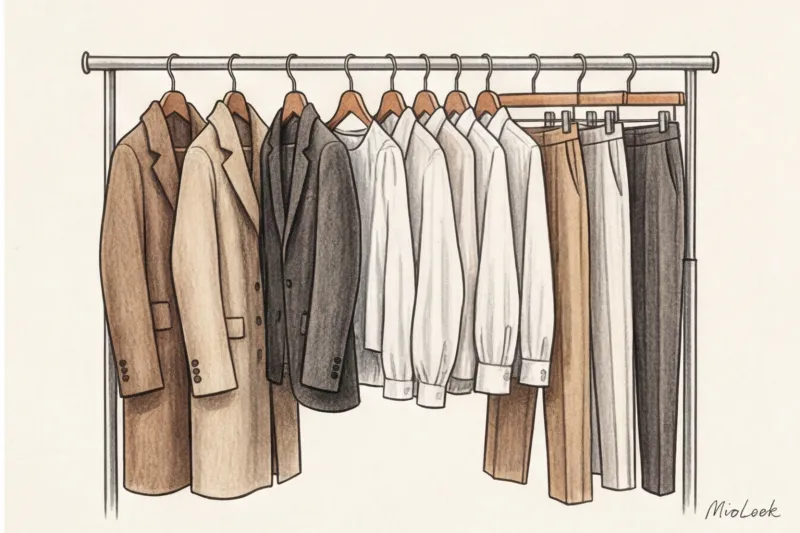
Buying one structured, dense wool-blend jacket for €180 may seem expensive right now. But over three years, it saves more money than buying shapeless, €40 jackets every season. Learn to calculate your cost per wear.
Your style and self-confidence are directly dependent on what touches your skin and how it's cut. So my main advice: be a ruthless critic in stores. It's better to go home empty-handed than to add another compromise to your wardrobe. Turn things inside out, read the tags, touch the fabric—and very soon you'll be scanning stores with precision, choosing only what's truly worth your money.