I remember one of my clients arriving for a consultation with tears in her eyes. The day before, she'd bought a "gorgeous" black suit from Zara for €80 for a crucial meeting. An hour later, in the stuffy meeting room, she felt, in her words, "literally boiled in a plastic bag," and by the end of the day, her pants had stretched out at the knees as if she'd been doing squats in them. 100% polyester is unforgiving, especially when a contract depends on your appearance.
The difference between an investment item and a disposable rag isn't the logo on the lining. So the question is, How to choose a women's pantsuit It's not about trending shades of the season. It's pure engineering: the pattern, the armhole height, the quality of the interlining, and the carefully calculated percentage of elastane.
I talked more about the math behind conscious shopping and Cost Per Wear in our complete guide to investment wardrobe Today we'll take the suit apart, seam by seam.
Style Engineering: How to Choose a Women's Pantsuit That Looks Expensive
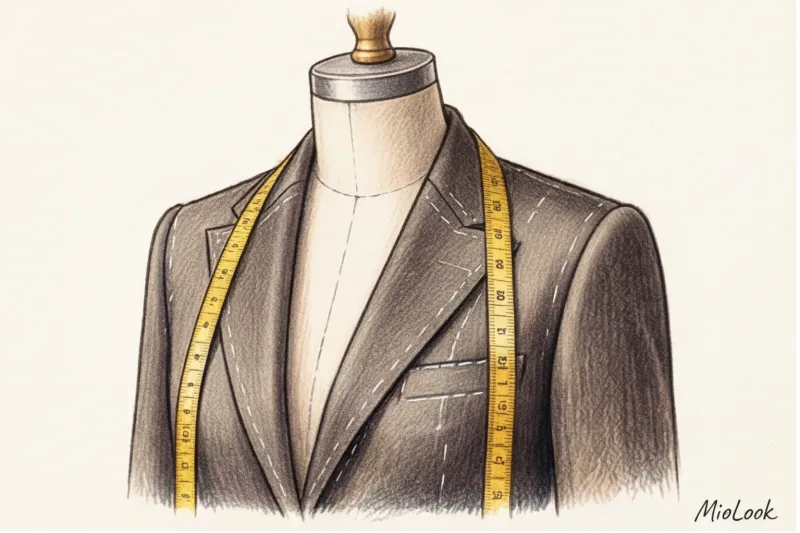
A suit is an architectural structure. Over 12 years of working as a stylist, I've developed a habit: when I walk into a store, I don't look at the price tag; I immediately feel the lapels and collar of the jacket. That's where the true value of the garment lies.
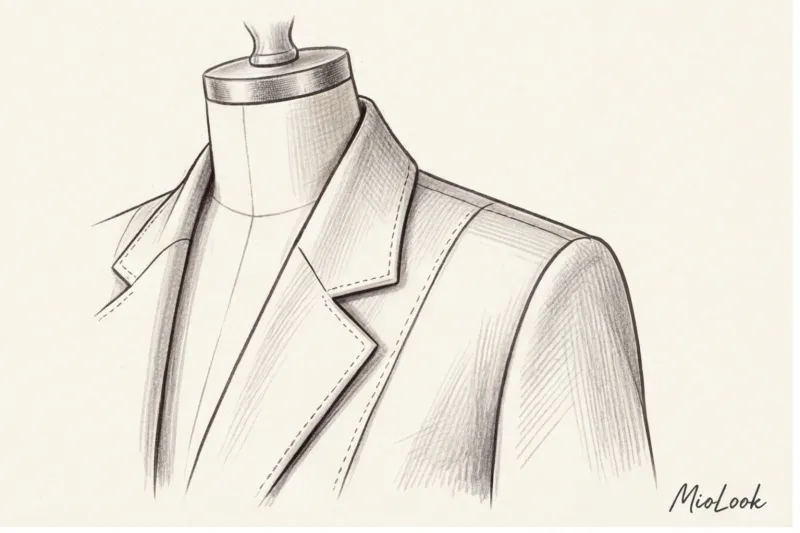
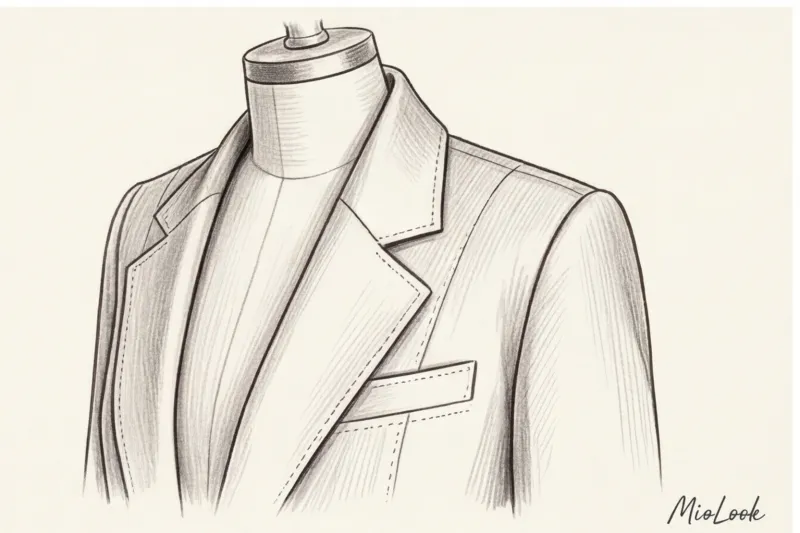
In tailoring, there are two main methods of giving a jacket shape: adhesive ( fused ) and semi-frame ( half-canvas ). 99% of mass-market jackets use fusible interlining—cheap interlining simply ironed onto the main fabric. The problem is that after the first dry cleaning or exposure to heavy rain, this fusible interlining begins to bubble. The outer surface of the jacket becomes lumpy, and the garment ends up in the trash.
"An expensive jacket always springs back. If you gently squeeze the lapel of a quality semi-skeleton suit, it will instantly spring back into shape, creating a soft, beautiful crease rather than a hard fold," is a rule a Savile Row tailor taught me.
The investment approach states that one well-designed, structured suit replaces 10 disparate pieces. You can wear a jacket with jeans, trousers with a voluminous sweater, and all together, it becomes powerful armor for important meetings.
Fabric Mathematics: The Perfect Composition for Durability
There's a myth that the best suit in the world must be made of 100% natural wool. It sounds luxurious, but in practice, it's a disaster for the modern woman who spends eight hours a day sitting at a computer or driving.
In fact, pure wool is a bad idea for everyday wear. Pants will inevitably stretch out at the knees and buttocks within the first day. According to the latest reports from textile analysts WGSN (2024), office clothing should have a wrinkle recovery index of at least 85%. This requires a synthetic blend.
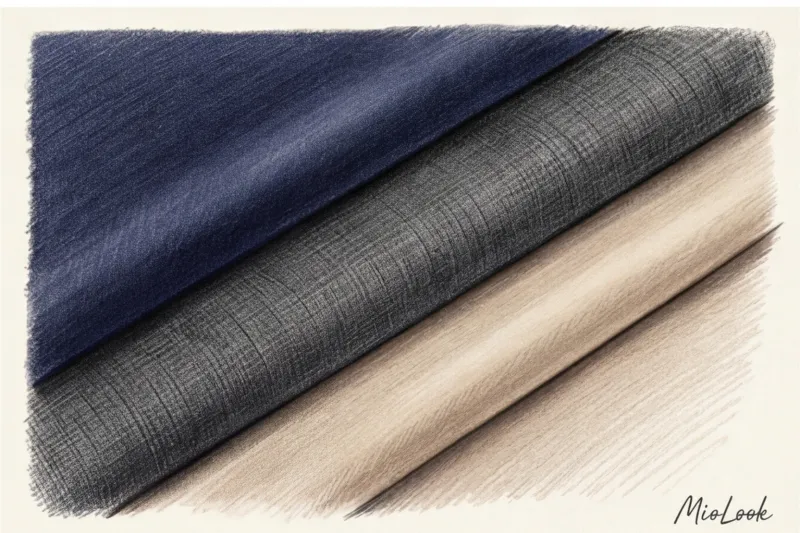
The ideal workhorse formula looks like this:
- 70–80% wool (Look for the Super 100s or 120s twist rating—this is the gold standard for wear resistance).
- 15–25% viscose or high-tech polyester (provides strength and prevents shrinkage).
- 2–5% elastane or lycra (those same saving percentages that will not allow your trousers to stretch out).
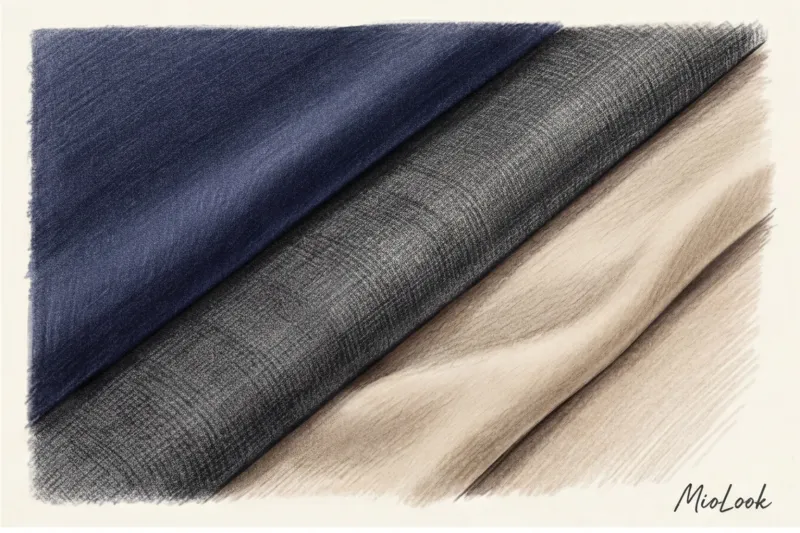
The texture of the fabric directly influences status. Smooth gabardine is a strict classic. Flowing crepe perfectly camouflages figure irregularities, and dense tweed is ideal for autumn. business capsule clothing.
In-store practical test: Squeeze the edge of the fabric (for example, on a sleeve) in your fist and hold it for 10 seconds. If after releasing the pressure, the fabric is still chewed up like paper, hang it back up. You'll be a pain in the ass ironing it.
Tired of racking your brains over combinations?
Trust your wardrobe to a smart algorithm. MioLook will analyze your items and create dozens of stylish looks for every day.
Get access — €0.99 onceSecrets of the perfect jacket pattern
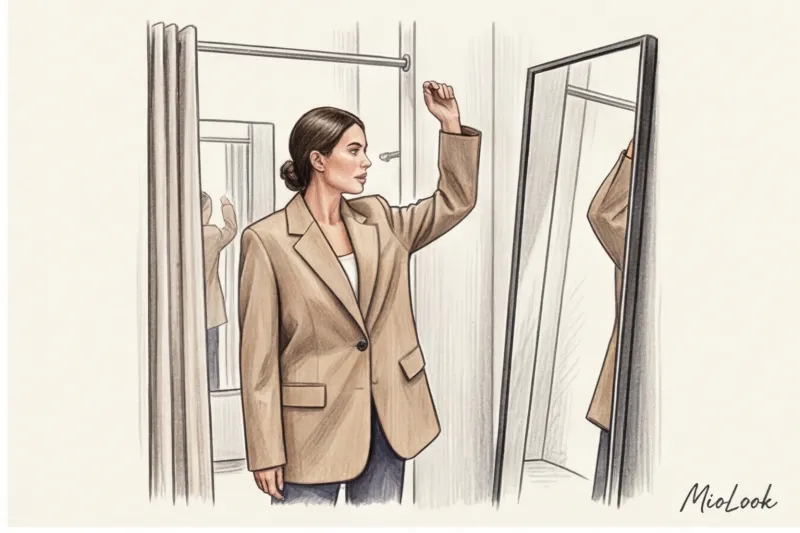
Even premium fabric can't save a poor fit. The main sign of a cheap jacket, where the manufacturer skimped, is a low and wide armhole (sleeve opening). It's easier for manufacturers to create larger armholes because they allow the garment to fit a wider range of body types without any adjustments.
But what happens in real life? As soon as you raise your hand to fix your hair or grab a folder from the top shelf, the entire jacket slides up toward your ears. A well-tailored jacket has a high, fitted armhole: your arm moves independently of the "body" of the jacket.
Jacket length and your figure proportions
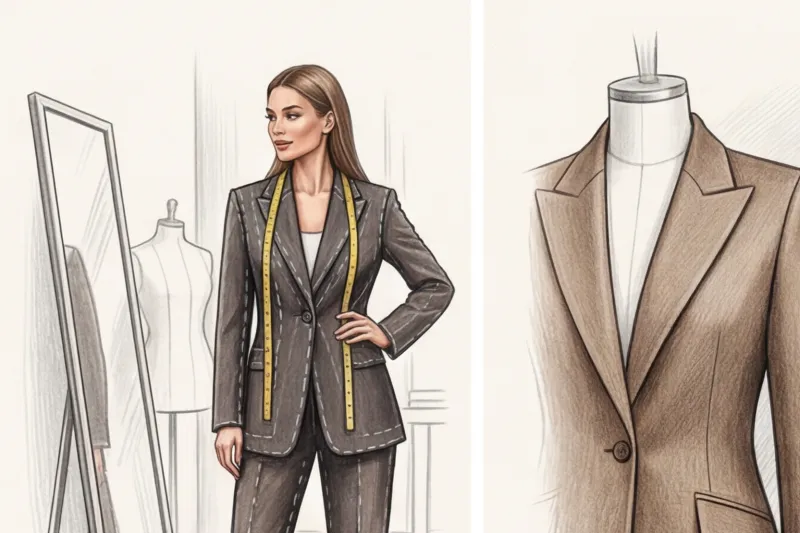
The starting point for a basic straight jacket is the "knuckle" rule. Place your hands at your seams: the hem of an ideal jacket should fall roughly along this knuckle.
Critically important: the jacket should cover the widest part of your hips, not stop right there. If the horizontal hem cuts into your hips at their widest point, you'll visually add 5 kilograms.
It's worth mentioning some honest limitations here. Double-breasted jackets are currently at the peak of popularity, but they are not suitable for everyone If you have a full bust (size D or larger) and broad shoulders, two rows of buttons and an extra layer of fabric across the chest will make your figure look boxy. In this case, single-breasted styles with one or two buttons are your only true choice.
Slimming trousers: what to look for in the fitting room
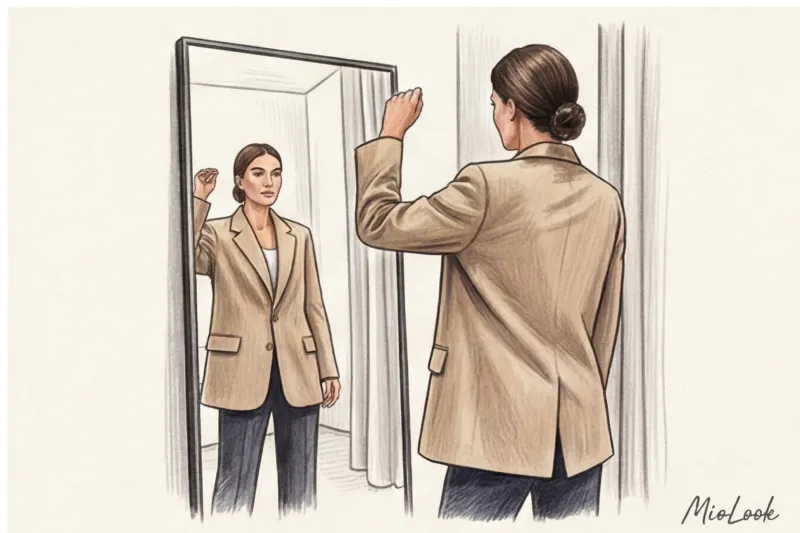
The fit of trousers reveals the quality of a garment designer's work in a second. When I bring clients into the fitting room, the first thing we look at is the groin area.
Horizontal creases extending from the zipper (stylists call them "whiskers") are a dead giveaway. This means the pants are too tight in the hips or have an incorrect seat seam. Pants shouldn't be bursting at the seams, even if they're a slim-fit style.
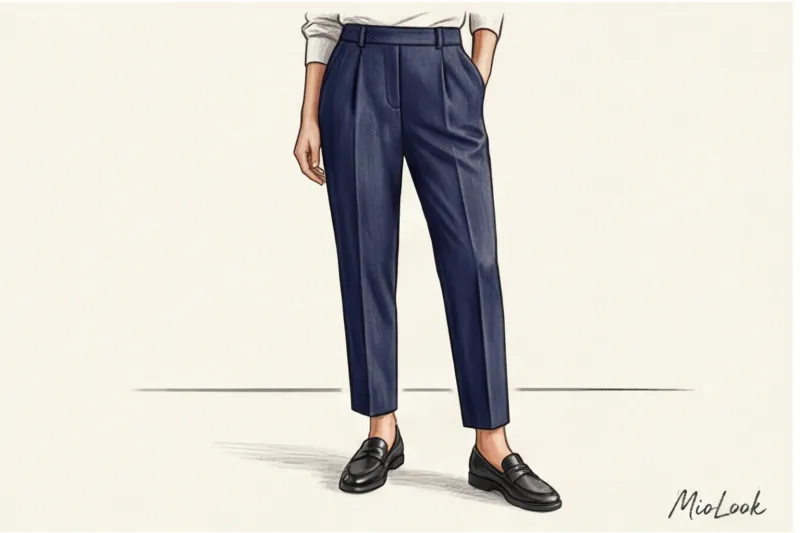
Don't be afraid of pleats. For a long time, women avoided them, fearing they would add extra bulk to their midsection. In practice, deep pleats provide the necessary freedom of movement when you sit down and are phenomenal at concealing a small belly. And pin-tucks are a legitimate cheat code for those who hate ironing but want to look put-together. They visually elongate your height and never fade.
Trouser length and footwear issues
It's a terrible mistake to buy a suit without including the shoes. Palazzo pants or wide-leg straight trousers should be exactly 1–1.5 cm from the floor with the shoes you'll be wearing them with. If you buy trousers with heels, you won't be able to wear them with loafers—the fabric will drag on the pavement.
For cropped skinny jeans or straight ankle-length styles, the ideal finish point is the narrowest part of the ankle. An exposed, thin ankle lightens the overall silhouette.
Your perfect look starts here
Join thousands of users who look flawless every day with the help of the AI stylist MioLook.
Get access — €0.99 onceEuropean High Street: Massimo Dutti vs. Zara and H&M
Let's take a closer look at the situation within a single price segment and even a single company (Inditex). What's the difference between a Zara suit for €80 and a Massimo Dutti suit for €250?
At Zara, you'll likely get a polyester lining (which is impossible to breathe in), plastic buttons sewn into a single hole, and crooked seams on the facings. At Massimo Dutti, the quality was impeccable five years ago. It's dropped a bit now, but you can still find suits with 100% viscose or cupro linings, real horn buttons, and functional sleeve vents (buttons that can be undone, not just sewn on for show).
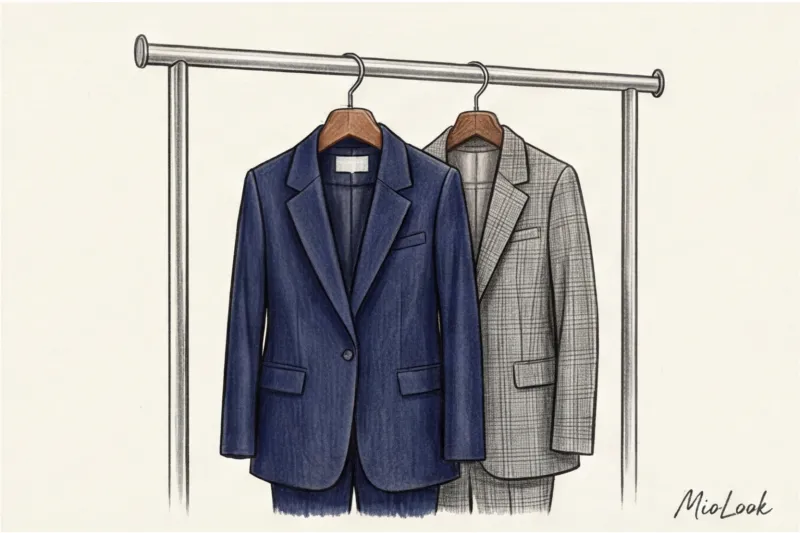
According to McKinsey analytics (2024), consumers are beginning to count their money through the prism Cost Per Wear (cost per wear). Let's do the math: you bought a high-quality wool-blend suit from COS or a local mid-market brand for €300. You wore it 120 times over two years (to work, split between a jacket and trousers, and to events). The cost per wear was 2.50 €.
You bought a trendy fuchsia polyester suit from H&M for €70. You only wore it three times because it was too hot, wrinkled, and quickly went out of style. The cost of the outfit is 23.30 € The conclusions are obvious.
Where can you save? On relaxed summer linen suits. Linen wrinkles easily, so don't hesitate to buy from H&M Premium or Mango (in the €80–€120 range). But if you're looking for classic business wool, don't stoop below Massimo Dutti or good local brands.
Pre-purchase checklist: 5 moves for a suit test drive
Clients often make the same mistake: they put on a suit in the fitting room, stand up straight in front of the mirror, suck in their stomachs, and say, "I'll take it!" But we're not statues. Clothes are necessary for life. Here's my personal shopping guide, 5 essential steps to take BEFORE going to the checkout:
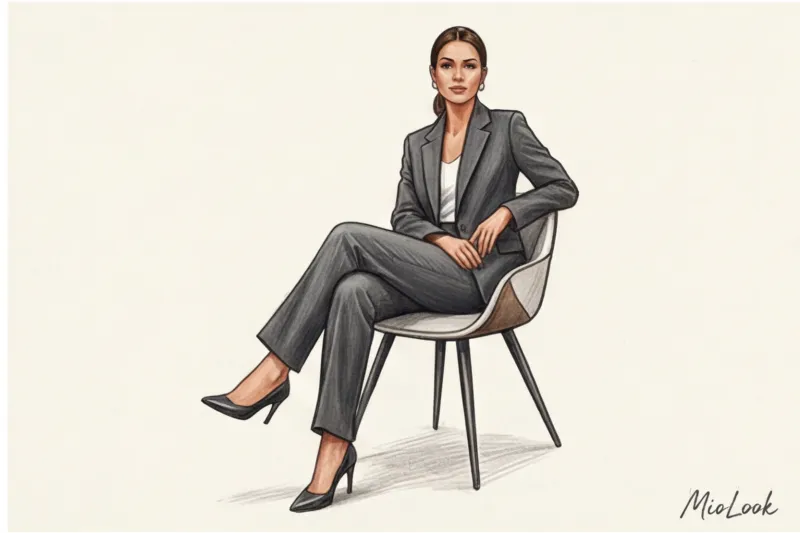
- Sit on a chair (or ottoman in the fitting room). Trousers should not cut into the waist fatally, and a buttoned jacket should not part at the chest, exposing the blouse.
- Hug yourself by the shoulders. Check the shoulder blades for room. If the back is creaking as if a seam is about to rip, the jacket is too small.
- Raise your arms up or stretch forward. Remember the armhole? Check to make sure the entire jacket doesn't ride up.
- Place both hands in your trouser pockets. Pockets shouldn't bulge unattractively, creating "ears" on your hips. If they stick out even without the arms, the cut isn't right for you.
- Take a wide step. Check the stretch of the fabric across your hips. You should feel confident, not shy because the legs are too tight.
To sum it up, the perfect women's suit is always a balance between uncompromising fabric quality and precision tailoring. Don't compromise on the shoulder fit or material composition. Find that perfect suit, and it will solve the problem of "nothing to wear to an important meeting" for at least the next five years.