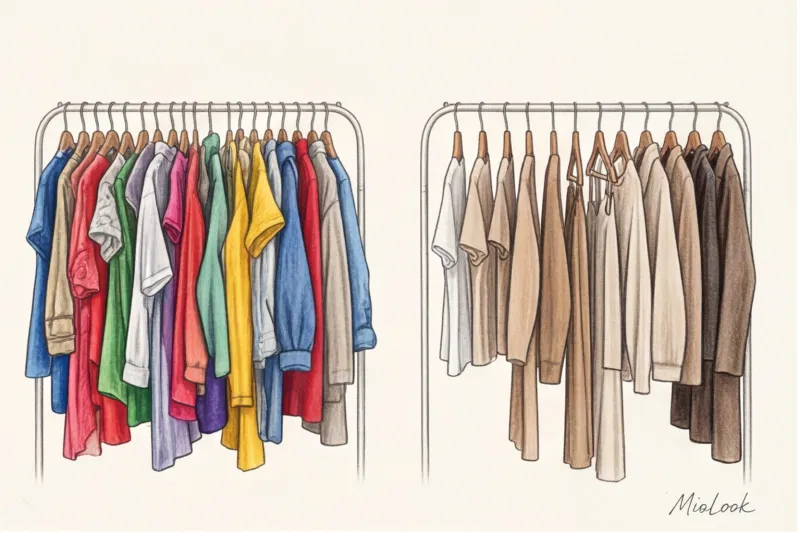
Instead of a preface: the crisis of the "full closet"
Recently, 34-year-old Anna, a department head at a large IT company, came to me for a wardrobe review. She opened her closet, crammed full of high-street fashion, and uttered a phrase I hear almost weekly in my stylist practice: "Olena, I manage a team of 20 people, I have a great salary, but in these clothes I feel like a student working part-time."
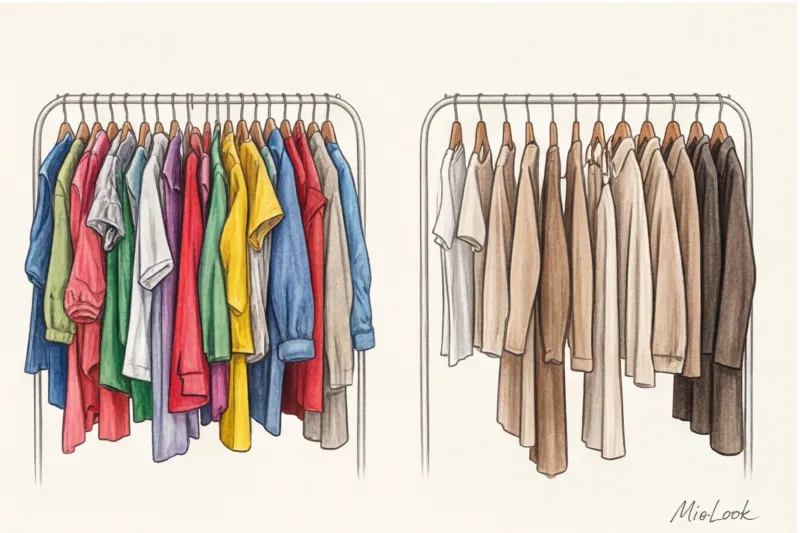
This is a classic scenario. Collecting Basic wardrobe for a 30-year-old woman , we continue to use twenty-something strategies out of inertia: we buy micro-trends, go for quantity, and ignore the quality of textures. But at some point, this pattern stops working. Your appearance, your status, and your lifestyle change, and your wardrobe lags behind. We discussed how to fundamentally redesign this approach in our The Complete Guide to Investment Wardrobes.
Today, we won't be compiling banal lists of "10 must-haves." We'll discuss the mathematics of style, debunk a few common myths, and learn how to choose clothes that will enhance your credibility.
How does a basic wardrobe for a 30-year-old woman differ from a wardrobe for a 20-year-old?
At 20, clothes are primarily a way of self-expression, play, and self-discovery. You can wear a neon polyester top for €15, accessorize it with chunky plastic earrings, and still look effortlessly stylish. Youth forgives cheap fabrics and sloppy tailoring.
After 30 (and even more so by 40), clothes begin to convey different meanings. They become your nonverbal resume. Others perceive your status, level of expertise, and self-confidence even before you utter a single word.
According to The Business of Fashion's 2024 global report, the trend for "quiet luxury" has firmly established itself in the 30+ segment. And it's not just about brand logos. True status is conveyed through architectural cuts, impeccable fit, and the texture of fabrics. Cashmere, dense silk, and high-quality wool blends speak volumes about your success than a belt buckle with a huge logo.
Your perfect look starts here
Join thousands of users who look flawless every day with MioLook.
Get access — €0.99 onceThe Hard Math of a Conscious Wardrobe (Cost-Per-Wear)
Professional image makers use the formula Cost-Per-Wear (CPW) — the cost per wear. The formula is simple: take the price of the item, add the approximate cost of care (dry cleaning), and divide by the number of times you'll wear it.
Let's do the math. You buy a trendy acrylic sweater at a fast-fashion store for €35. According to McKinsey statistics, the average person wears such a sweater only seven times, after which it becomes covered in pills, loses its shape, and is sent to the countryside. The cost per wear: €5.
Now let's take a perfectly tailored wool-blend jacket for €280. You wear it to work, drape it over a dress on a cool evening, and pair it with jeans on the weekend. Over two years, you'll wear it at least 100 times. Cost per wear: €2.80.
An "expensive" item is cheaper in the long run than regularly buying cheap disposable rags. And you'll still look flawless every single time.
The biggest stylist myth: why you shouldn't spend a fortune on a white shirt
If you open any standard article about a basic wardrobe, the first item will be: "Buy an expensive white Egyptian cotton shirt." Over 14 years as a stylist, I've thrown away hundreds of such "investments" from my clients. Here's why.
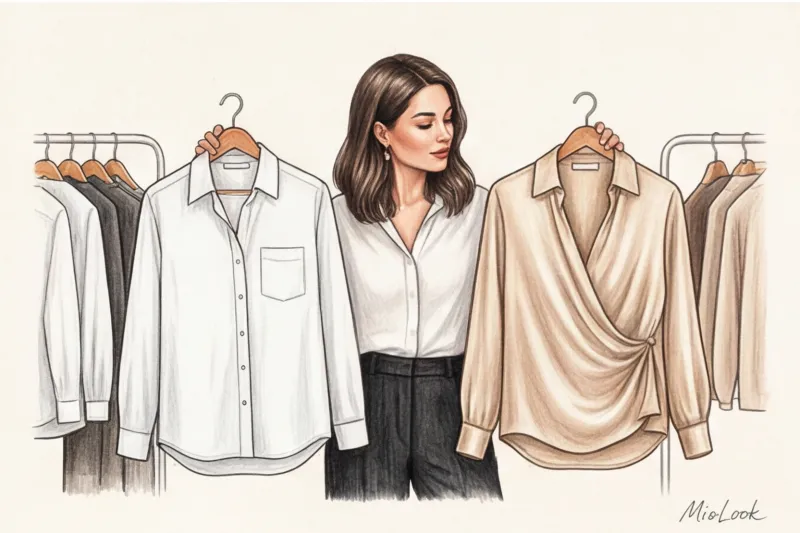
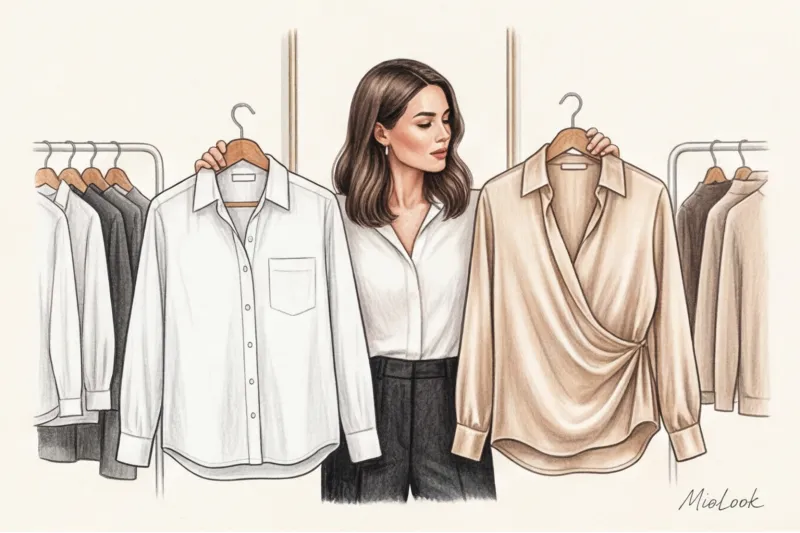
It may sound counterintuitive, but a basic white cotton shirt and a white t-shirt are the worst investment in your closet. White cotton is a consumable. It comes into direct contact with the body, absorbing sweat, deodorant, and sebum. Even with perfect care, a snow-white item will acquire a grayish or yellowish undertone after six months of active wear. And as soon as white ceases to be crisp, it instantly cheapens the entire look.
My advice: Buy white shirts and T-shirts from mid-range stores (Zara, H&M Premium, COS) for €40–€80 and ruthlessly change them once a season. Invest in silk blouses or tops made of thick viscose in complex, deep shades (champagne, taupe, pearl, deep chocolate). Silk is less susceptible to color shift, and complex shades don't require crystal-clear tones like pure white.
A list of status must-haves: what's really worth investing in after 30
If a white shirt is off your investment list, where should you spend your money? I've compiled four categories of items you absolutely mustn't skimp on if you want to look classy.
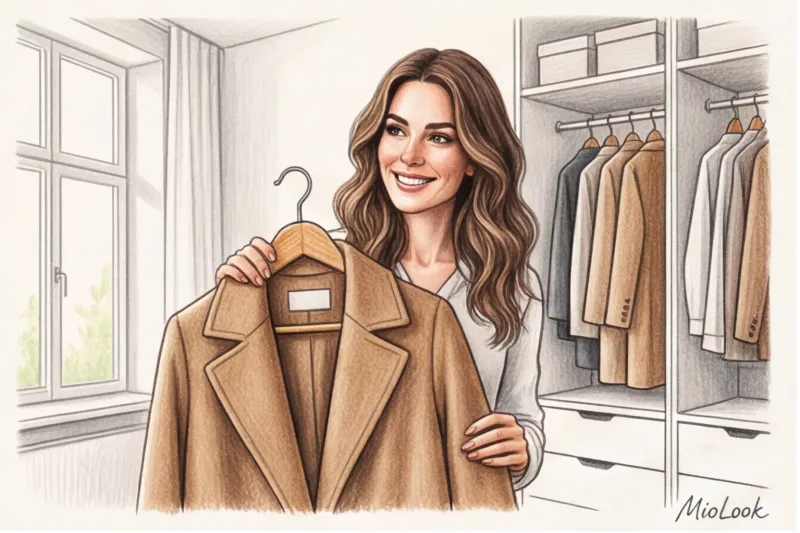
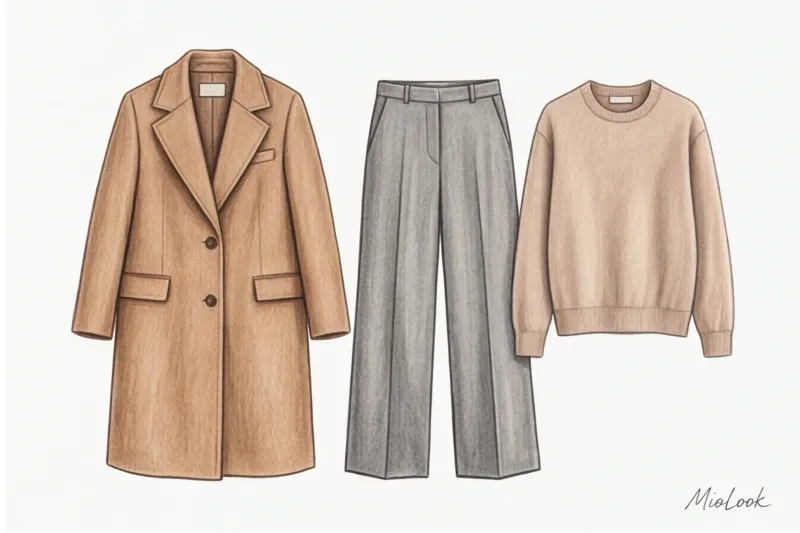
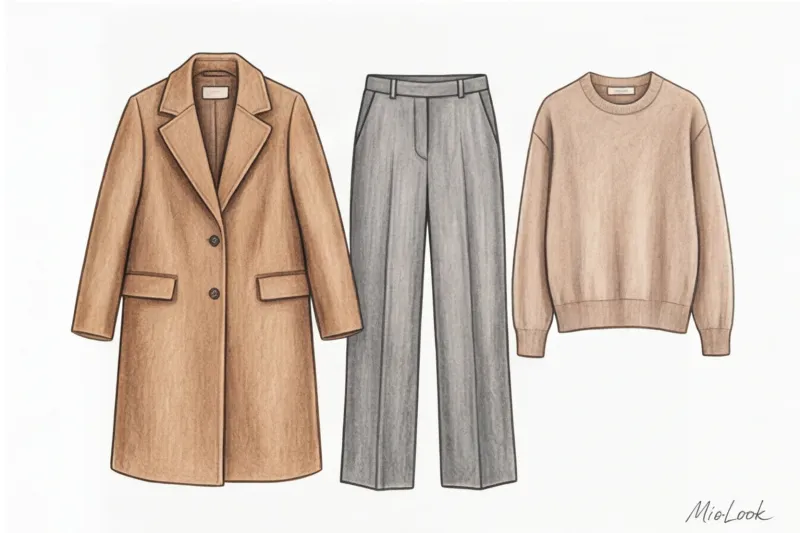
- Midi length outerwear. A well-cut wool or cashmere coat can elevate even the most casual look with simple jeans and sneakers. Avoid thin, stiff fabrics. Look for at least 70% wool.
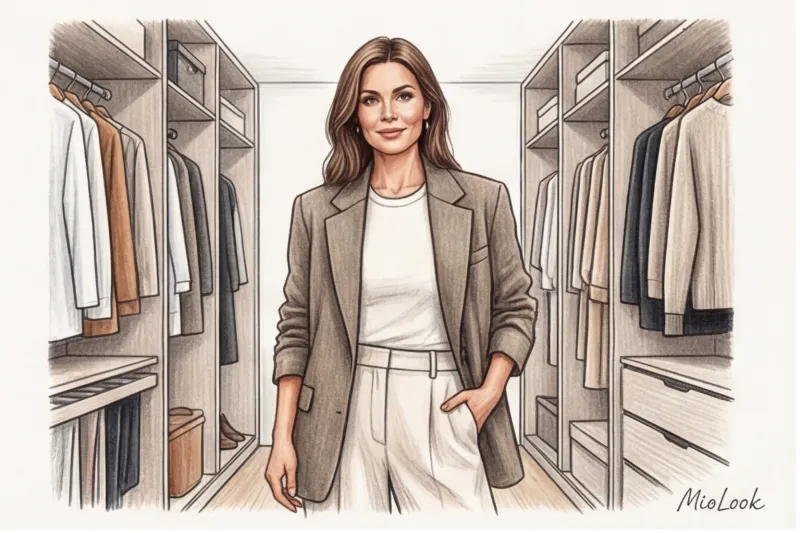
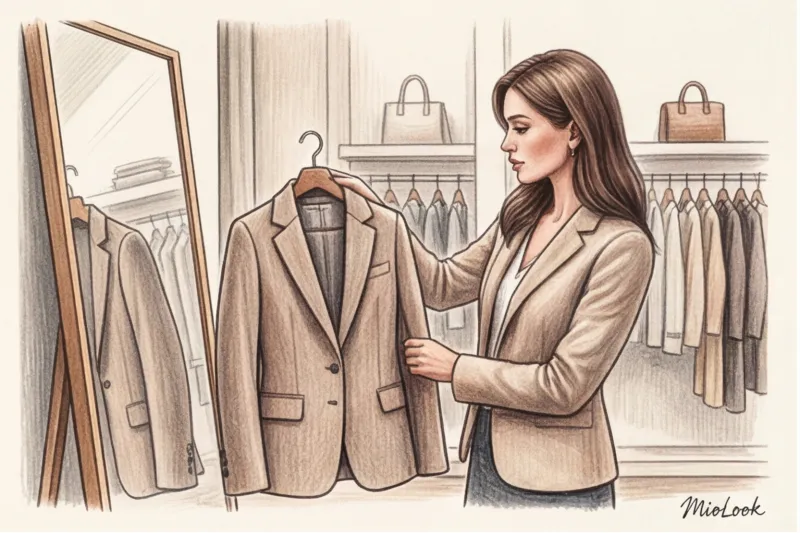
- A perfectly tailored jacket. The secret of luxury brands lies in the patterns. A €30 item will never fit as well as a €250 one, because mass-market brands skimp on fabric, cutting pieces to minimize waste rather than to conform to the body's contours. A high-end jacket has a perfect shoulder line, a dense interlining (the fabric doesn't wrinkle at the folds), and a high-quality viscose lining, not "greenhouse" polyester.
- Full length suit trousers. Forget skinny, cropped skinny pants. Invest in wide-leg or straight-leg, full-length wool-blend trousers with a crease. They visually lengthen your legs and pair well with both classic pumps and loafers.
- Noble knitwear. Cheap, shiny acrylic will ruin any look. A prestigious item should contain natural fibers. Look for dense cotton (from 180 g/m²), merino, cashmere, or blends (for example, 70% wool, 30% silk).
It's important to understand: this doesn't mean you have to wear a formal suit every day. Even if you have a relaxed dress code, the rules of texture still apply. If you want to learn how to incorporate comfortable elements into your workday, read our article. Sporty Office Style: How to Wear Athleisure to Work.
Access to MioLook for €0.99 — one-time payment
A smart AI stylist will select the perfect look for every day and help you digitize your wardrobe.
Get access — €0.99 onceInvesting in Accessories: What Elevates Your Style
There's a strict rule among professional stylists: "People look at your face and judge you by your bag and shoes." You can be wearing €40 jeans and a simple turtleneck, but if you're carrying a high-quality frame bag and wearing excellent leather loafers, your look will look expensive.
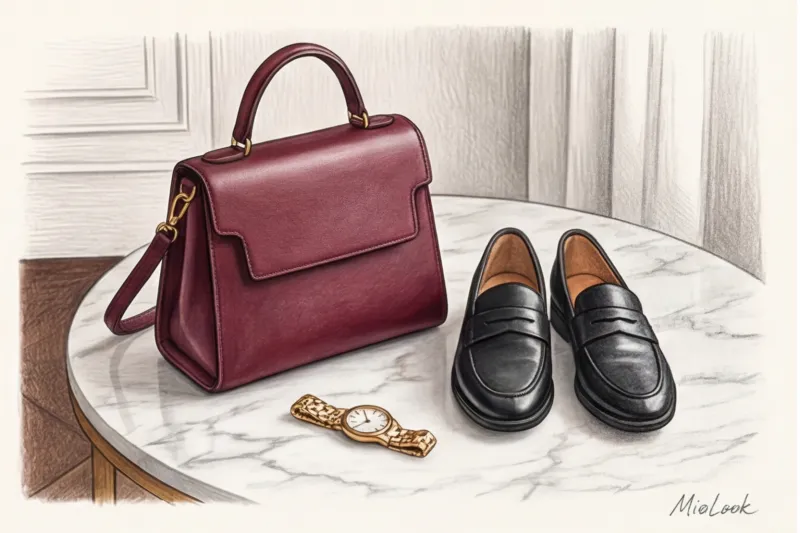
Bags. In your 30s and 40s, it's time to ditch the shapeless, soft totes and backpacks (unless you're on a walk in the woods). A soft shape always simplifies your look. Choose bags with a rigid, geometric shape, minimal hardware, and a complete absence of logos. Smooth leather, even seams, and proper design are status markers. If you like mixing styles, I recommend checking out our guide. The perfect bag for a sporty style.
Shoes. Skimping on lasts at age 35+ inevitably leads to problems with posture and foot health. Invest in a basic pair: classic leather loafers, simple ankle boots with a sturdy heel, and elegant pumps. Avoid excessive embellishments like buckles, rhinestones, and chains.
Decorations. Cheap jewelry made of oxidizing metals is acceptable at a festival for those over 20. For a classy wardrobe, choose minimalist gold, sterling silver, or high-quality rhodium-plated jewelry alloys. One simple bracelet watch is better than five jingling bracelets of dubious origin.
A step-by-step checklist: how to overhaul your wardrobe without breaking your budget
Transitioning from quantity to quality doesn't have to break the bank. It's a gradual process that requires strategy, not impulsive raids on boutiques.
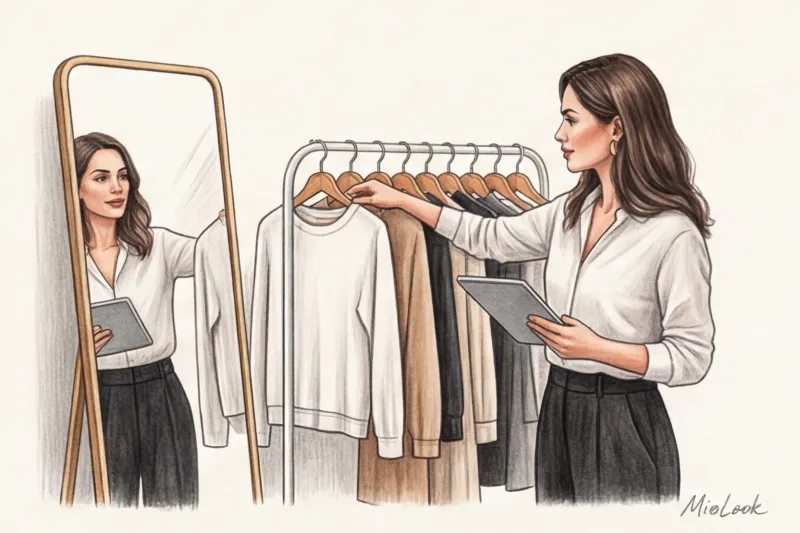
- Audit and ruthless decluttering. Take out all your clothes. Remove anything that's pilled, lost its shape, or faded. And most importantly, get rid of the "when I lose 5 kilos" category of clothes. Your wardrobe should serve you here and now, not make you feel guilty.
- Forming a list of spaces. Analyze your typical week. If you spend 80% of your time in the office and 20% on the playground, your budget should be split accordingly.
- Digitization of the database. Before you go to the store, take photos of the items you decide to keep. I highly recommend using the "smart closet" feature in MioLook The app will help you see the real picture and suggest what you can combine with your future purchase.
- The one expensive thing a month rule. Don't try to buy everything at once. Budget for one quality investment purchase per month (for example, a great pair of trousers in March, a basic jumper in April). Over the course of a year, you'll have a flawless capsule wardrobe.
- Complex palette. The base doesn't have to be black and white. Incorporate deep shades into your wardrobe: burgundy, emerald, dark chocolate, caramel. They look much more expensive and refined than flat black.
Ready to get started?
Try the MioLook plan for free—no commitments required. Digitize your wardrobe today.
Get access — €0.99 onceFatal Mistakes That Turn Expensive Things Into a Waste of Money
Even with a substantial budget, you can make mistakes that can ruin all your efforts. In my experience, 50% of complaints like "I have nothing to wear" aren't due to a lack of items, but rather to the fact that the expensive clothes they bought don't match their actual appearance.
First of all, it is buying investment items that don't fit Never buy status pants or a coat as a "weight loss incentive." A €400 item hanging in your closet with a tag has a Cost-Per-Wear value of zero. Clothes should fit you perfectly at your current weight.
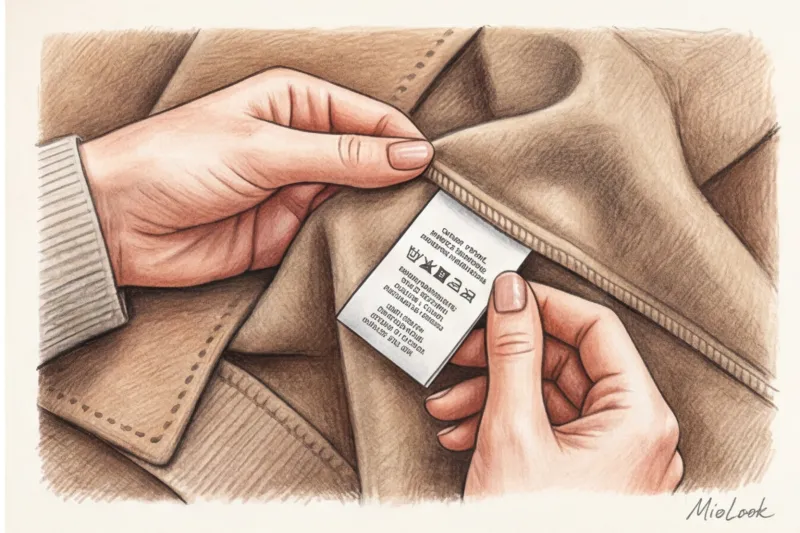
Secondly, ignoring care You can buy a stunning cashmere sweater, but if you machine wash it at 40 degrees and hang it to dry, it will die after the first wash. Expensive fabrics require delicate dry cleaning, flat drying, and proper storage (knitwear should only be folded on shelves).
Thirdly, inconsistency with context There's no point in investing €800 in a formal business suit if you work remotely and commute to a coworking space once a week. In your case, a luxurious cardigan made of thick merino wool or a pair of perfect ankle boots would be an investment must-have.
Building a wardrobe in your 30s and 40s isn't about limiting yourself to strict boundaries, but rather about reaching a new level of self-respect. Your main goal at this stage is to learn to buy less but choose the best. Leave compromises in the past. Choose pieces that serve you, highlight your experience, and make you feel like a million bucks every time you look in the mirror.