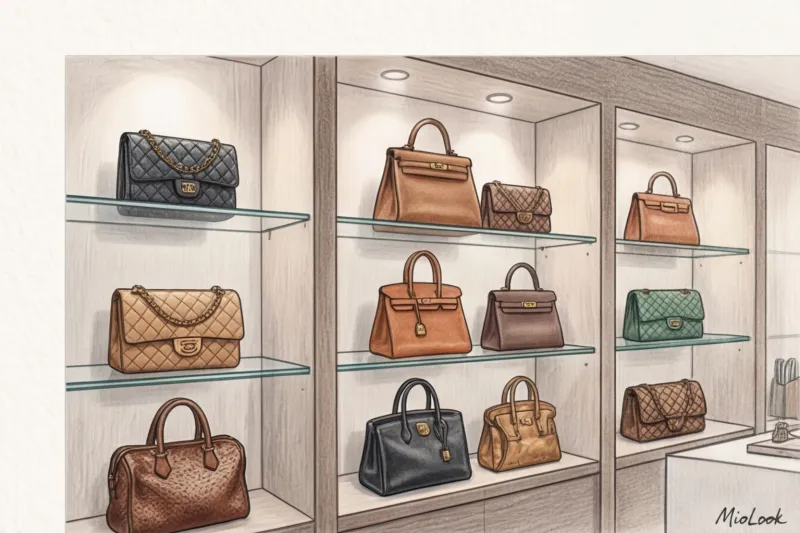
One day, a client came to me with a Céline Classic Box bag. "Can you believe I found a vintage bag in perfect condition!" she beamed. The bag looked flawless: the perfect shade of burgundy, the heavy brass clasp, the perfect shape. But as soon as I opened the flap, I was hit by the sharp, chemical smell of cheap cyanoacrylate glue. It was a top-notch "superfake."
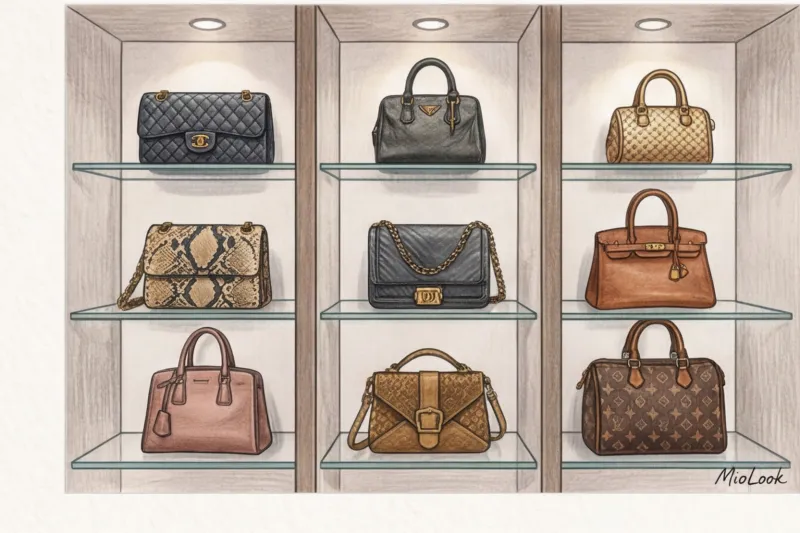
I often tell my clients: to look expensive, you don't need to buy every new seasonal collection. We talked more about style architecture in our The Complete Guide to Investment Wardrobes The main secret lies in the ability to find timeless, archival-quality items. And that's why today we'll take a detailed look at How to buy things on resale to build a premium base and avoid giving your money to scammers.
Why Stylists Love Resale: The Hunt for Quality, Not a Bargain
Forget the myth that resale is a flea market for those who can't afford a boutique. Today, it's a private club for connoisseurs. According to a global report by McKinsey & Company (2024), the luxury resale market is growing four times faster than the primary market. And it's not just about sustainability, although conscious consumption has indeed become a new status marker in high society.
The real reason my fellow stylists and I literally live on resale platforms is access to archival quality. Let me give you an example. If you pick up a vintage Chanel bag made before 2008, its hardware will be plated with 24-karat gold. The brand's modern models, despite tripling in price, use only gold plating, which can fade over time.
"Resale allows us to buy not just a brand, but an era when things were created to be passed down, not to last just one season before the first dry cleaning."
Let's calculate the cost-per-wear. A classic vintage Max Mara coat made from 100% camel wool will cost you around €800 on a reputable resale platform. A mass-market coat (30% wool and 70% polyester) costs around €200. Within five years, the mass-market coat will pill, lose its shape, and require replacing three times, costing you €600 and ruining its appearance. The Max Mara coat will look just as impeccable in five years, and you could sell it for the same €800, if you wanted.
Your perfect look starts here
Join thousands of users who look flawless every day with MioLook. Download your resale finds and create dozens of new looks!
Get access — €0.99 onceStrategy: How to Build a High-Value Base through the Secondary Market
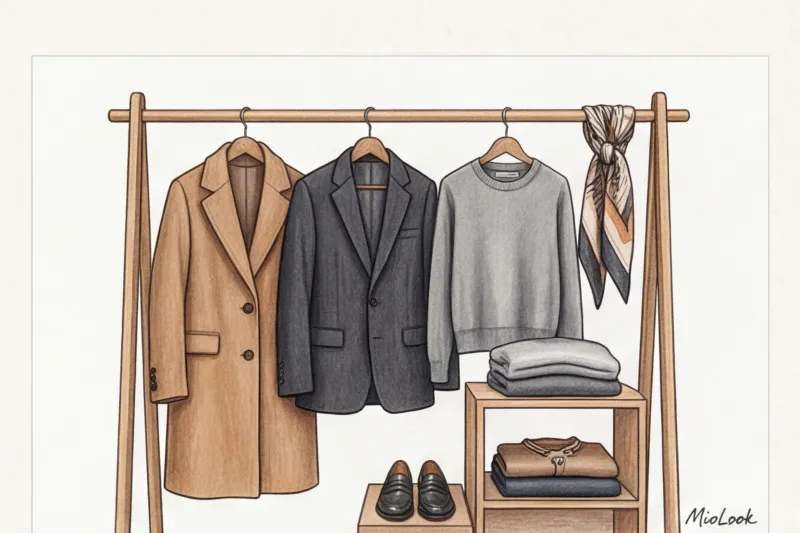
In my practice, I always rely on the Pareto principle: 20% of the items in your closet create 80% of your looks. This 20% is your "core." These are the ones you should look for on the secondary market. Don't buy a neon Jacquemus bag on impulse just because it's on sale. Look for structured bags, thick cashmere sweaters, the right trench coats, and silk scarves.
When clients ask how to wear archival luxury without looking like you pulled something out of grandma's trunk, my answer is simple: mix it up. A vintage YSL tweed jacket calls for modern straight-leg jeans and a basic white 180g/m² T-shirt, not a matching skirt and strands of pearls.
Tier 1 Brands: Eternal Investments
There are brands that are literally an investment when purchased on the secondary market. These include:
- Hermès bags (Kelly, Birkin, Constance) - their price on resale is often higher than in the boutique due to artificial scarcity.
- Chanel Classics (Classic Flap models, 2.55).
- Burberry trench coats (especially those made in England).
- Coat Max Mara (lines 101801, Teddy, Manuela).
These items have incredible liquidity. If you bought them at a good price and wore them carefully, you can always get your money back.
Quiet Luxury: Logo-Free Status
For those who understand, true luxury whispers, not shouts. "Quiet luxury" brands—The Row, Loro Piana, Brunello Cucinelli, Jil Sander—are ideal for second-hand purchases. They are difficult to counterfeit due to the unique quality of their fabrics.
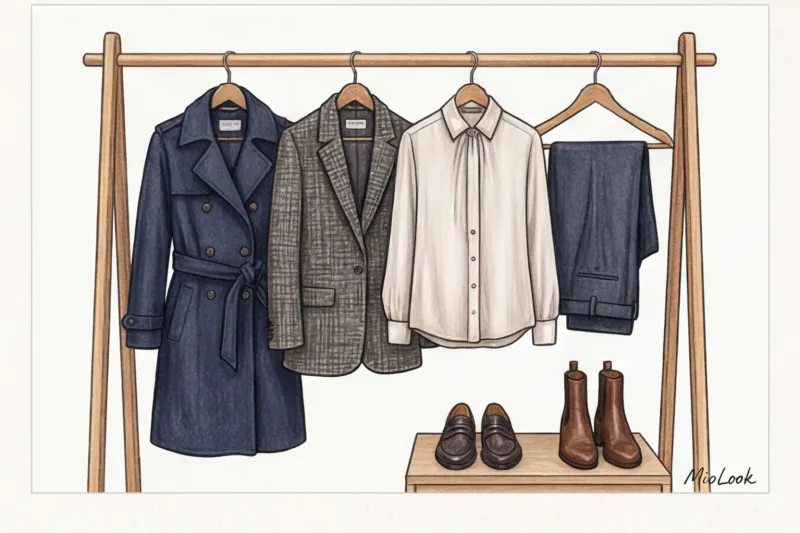
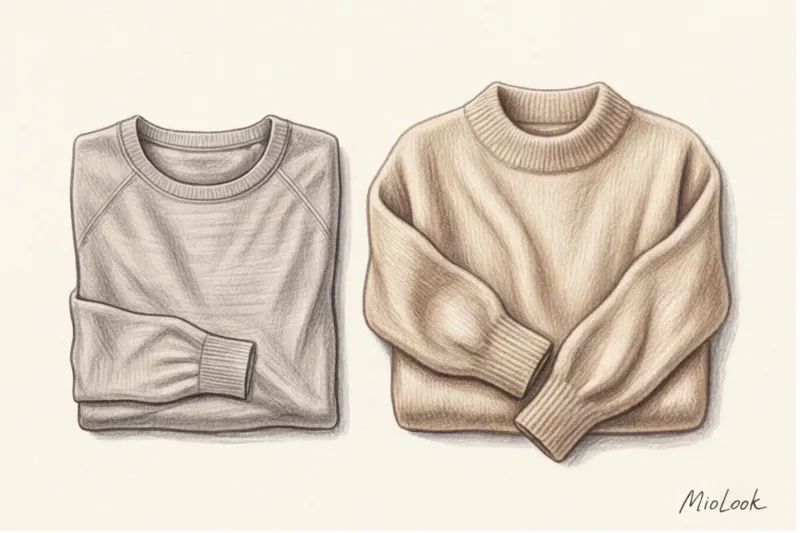
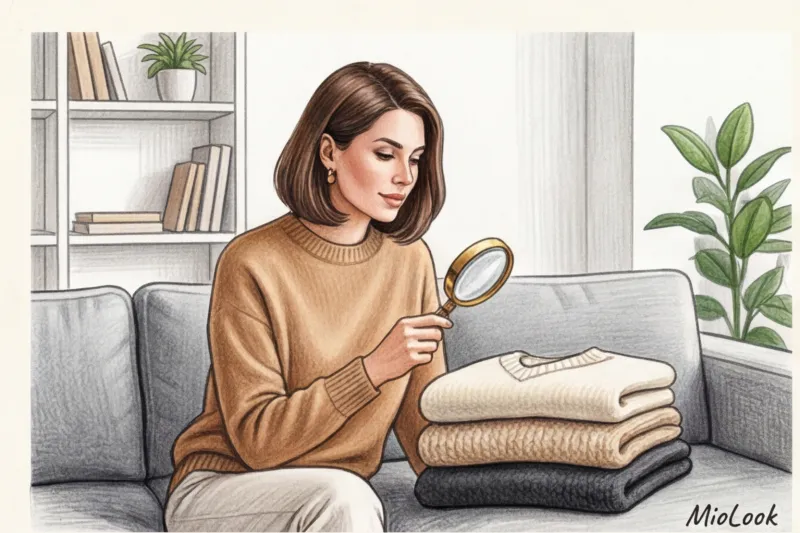
When choosing Loro Piana knitwear at a resale store (for example, a sweater for €350 instead of €1,500 in a boutique), always request macro photos of the friction zones: underarms, cuffs, and hem. Genuine Mongolian cashmere may have a slight fuzz, but it shouldn't form hard, unbreakable pilling.
The Anatomy of a Fake: How to Spot a 'Superfake' in 2024
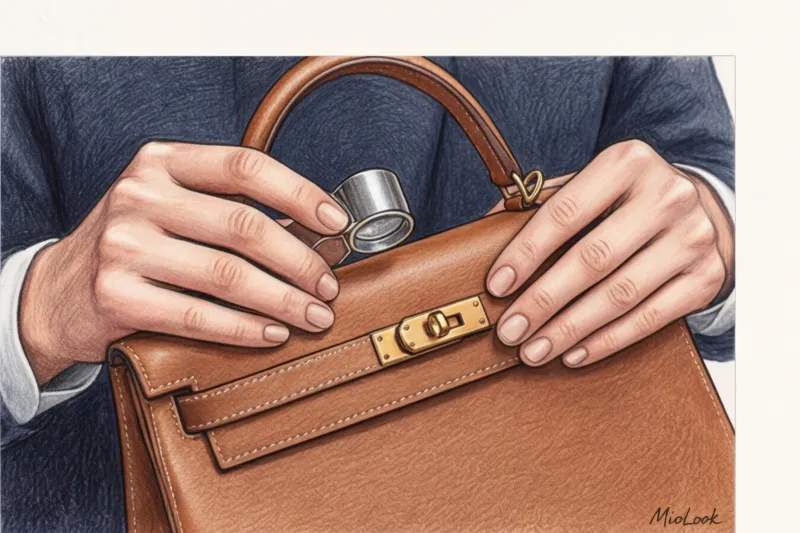
If you think a fake is easy to spot by loose threads and a crooked logo, you're stuck in 2010. Today, "superfakes" have taken over the market. According to Entrupy (an AI authentication company), about 20% of luxury items sold secondhand without professional verification are high-quality counterfeits.
Old YouTube videos about barcode verification no longer work. Chinese factories have long since learned to copy serial numbers and even clone NFC chips. Authentication has moved to the touchscreen level.
Here's a counterintuitive insight that's rarely talked about: Perfectly straight seams aren't always a sign of an original. Take Hermès bags, for example. They're hand-sewn using the famous saddle stitch. Due to the tension applied by the hand of the craftsman, the stitches have a natural, subtle asymmetry and a slight tilt. But the machine-made stitching of a "superfake" will be frighteningly perfect, sterile, and absolutely straight. Perfection is the hallmark of a machine, while slight asymmetry is the signature of a real craftsman.
Pay attention to tactility. The hardware should be heavy and cool. Zippers from top manufacturers (riri, Lampo), used by top-tier brands, open with a characteristic, smooth, oily glide, not a metallic scraping sound. And, as in the case of my client, scent is your greatest ally. Expensive leather is treated with tanning agents (often plant-based). Cheap glue and caustic chemicals from counterfeit leather are impossible to remove, not even after a month or a year.
Documents and receipts: The illusion of security
Never buy an item just because it comes with a "receipt from TSUM" or a boutique on Rue Saint-Honoré. Entire shadow factories exist that specialize solely in counterfeiting luxury packaging: dust bags made from the right cotton, boxes with the right embossing, and receipts for any day or year. The item itself needs to be authenticated, not the paperwork.
Ready to get started?
Digitize your wardrobe with the help of a smart AI stylist. Upload your favorite items, and the algorithm will suggest stylish combinations for every day.
Get access — €0.99 onceGolden Rules: How to Buy Safely on Resale
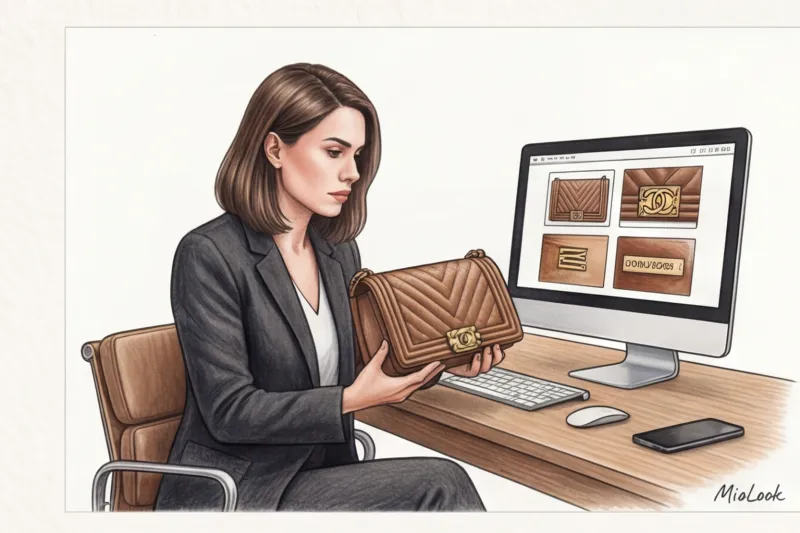
The main rule: distinguish between P2P platforms (person-to-person, like Avito or Vinted) and professional resellers (Vestiaire Collective, Oskelly, The RealReal). On P2P, you can find a diamond for next to nothing, but the risk of being scammed is colossal. Professional platforms charge a commission (often 15% to 25%), but they conduct an expert review.
Entrupy's technology, used by many platforms, analyzes macro images of leather and hardware, comparing them to a database of millions of original images. The AI detects things the human eye misses, such as the microscopic structure of leather pores or the specific angle of a logo engraving.
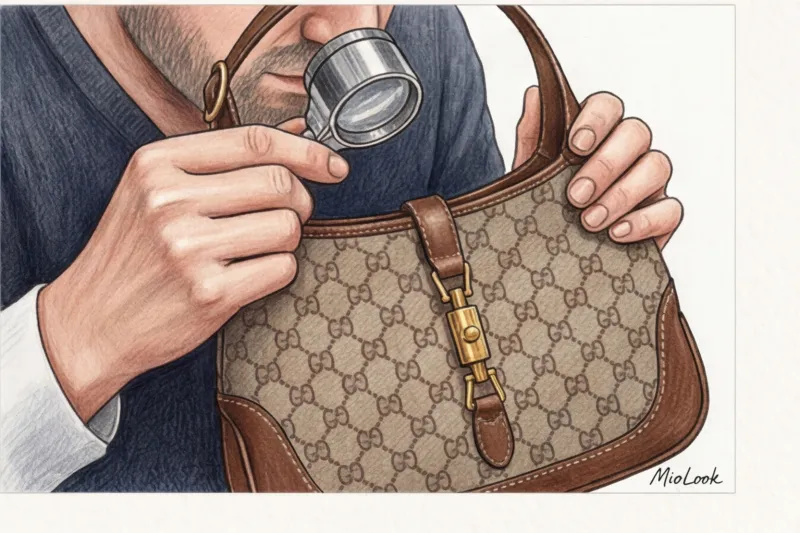
If you do buy directly from the seller, please request the following photos:
- Serial number or date code close-up.
- The reverse side of fittings (fasteners, zipper pulls) - scammers often forget to engrave logos where they are not visible.
- Seams on the corners of the bag.
- Expert's secret: Ask the seller to take a photo of the item next to a piece of paper with today's date and your name handwritten on it. This will weed out 90% of scammers who simply stole someone else's photos from the internet.
Stop List: What You Should Never Buy on the Secondary Market
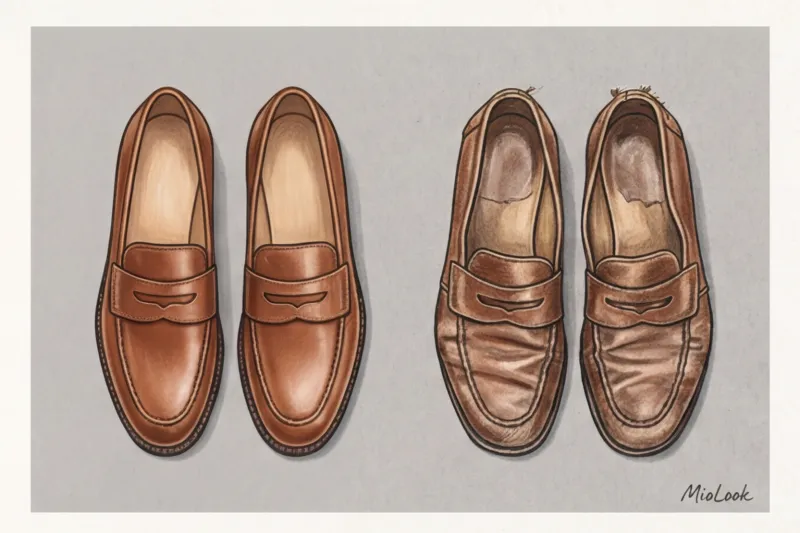
Over 12 years of working, I've developed a strict stop list of items I never allow my clients to buy. While this advice doesn't apply to all types of clothing (for example, vintage denim only gets better with age), the following three categories require strict adherence.
1. Shoes with worn-out insoles. Replacing heels is normal. But a shoe last that's been deformed to fit someone else's foot cannot be repaired. This is not only unsightly but also dangerous to the health of your feet and spine. Furthermore, it's a matter of basic hygiene.
2. Heavily altered suits and jackets. If a Saint Laurent jacket has been tailored at the shoulders or waist to fit a previous owner, its design is permanently compromised. You're not buying a designer piece, but the work of an anonymous atelier.
3. Bags after "home-made" restoration. A handbag spa treatment is a great idea until it comes to dyeing. Over-dyed leather loses its investment value (no auction house, including Sotheby's, will accept it). A dyed bag is easy to recognize: the leather becomes stiff and plasticky to the touch, and the item emits a slight scent of acrylic paint.
Checklist: What to do before paying for a luxury item
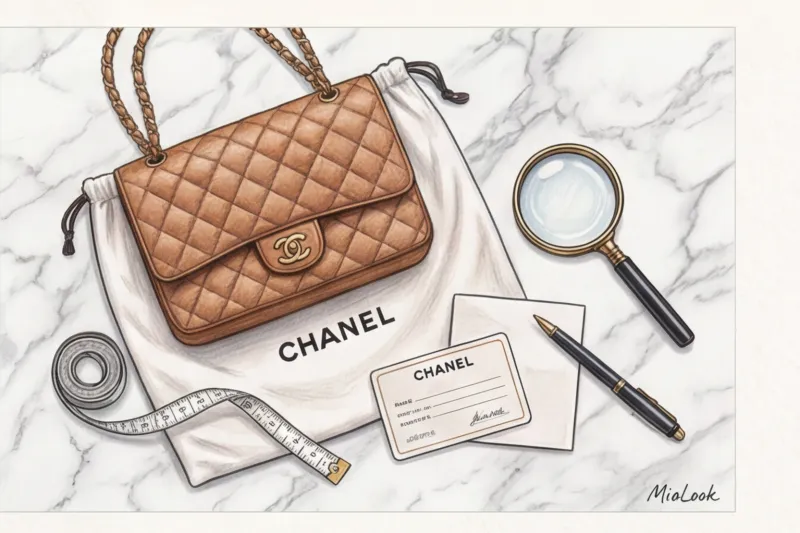
To ensure your style investments are secure, I've created a step-by-step action plan. Save it and refer to it before every transfer.
- Step 1: Research reputation. Buy only from sellers with a review history. If your account was created a week ago and the profile lists a Kelly for €4,000, close the page.
- Step 2: Checking the archives. Find macro photos of the original item online. Compare the logo's fonts. Counterfeits often have irregular letterforms, especially in the Céline logo (the distance from the accent to the letter E) and Chanel logos (the intersection of the C's).
- Step 3: Independent authentication. There are services (like Real Authentication) where, for €30–€50, experts will verify an item using photographs BEFORE you buy it. It's a small fee for insurance against the loss of several thousand euros.
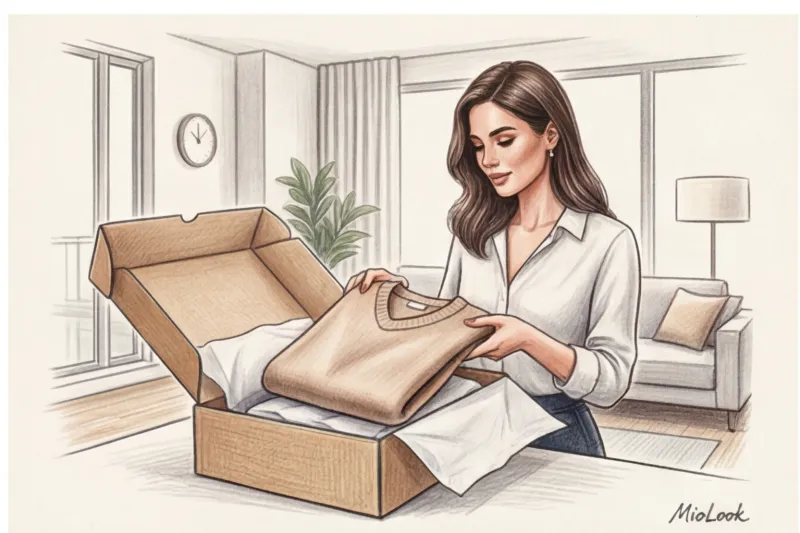
- Step 4: Unboxing video. When picking up your package, film the opening process in one take. If you receive a counterfeit instead of the original, this video will be your only argument with the bank or platform when seeking a refund.
Resale is a fantastic tool for creating a unique, luxurious style without breaking the bank. But it requires a cool head. Don't chase logos at any cost—invest in quality you can feel with your eyes closed.