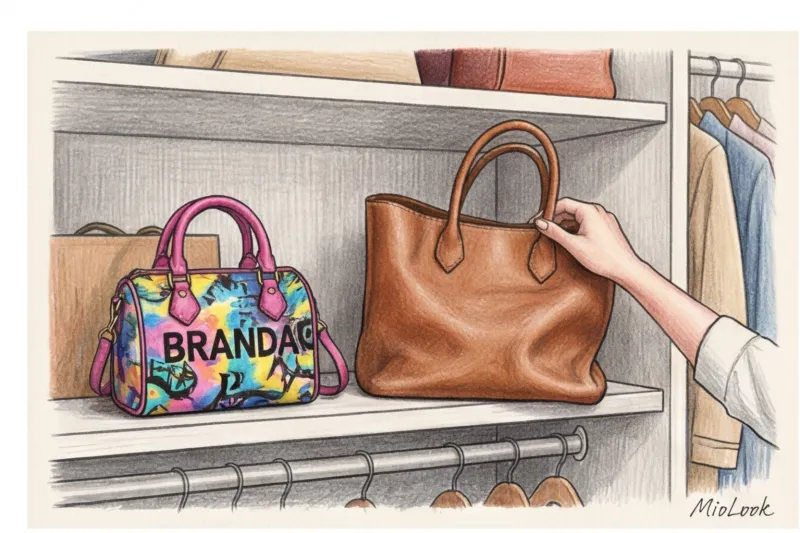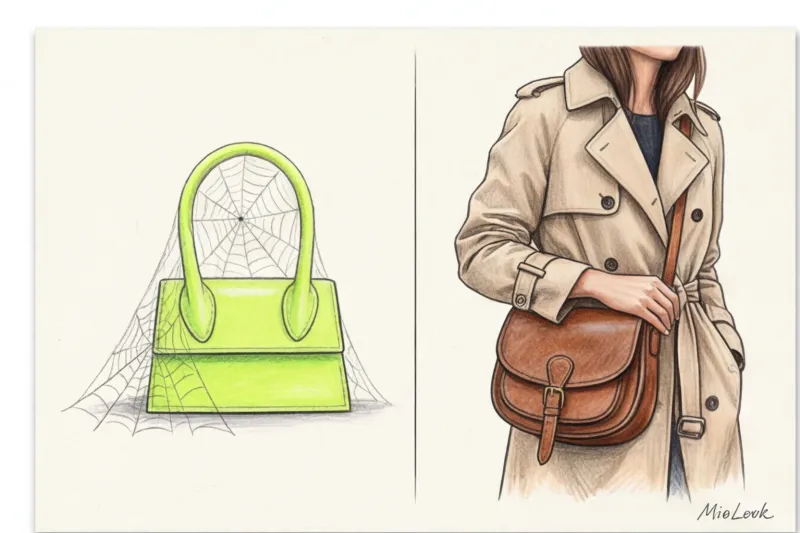
One day, a client came to me proudly displaying five trendy micro bags in vibrant shades. "Look, Isabella, I've got all the season's hits!" she said. The problem was, none of them even fit her phone and keys. And most importantly, just seven months later, these acidic colors and extravagant shapes had become a clear sign of a passing trend. In the end, about €1,500 simply sat like dead weight on the shelf.
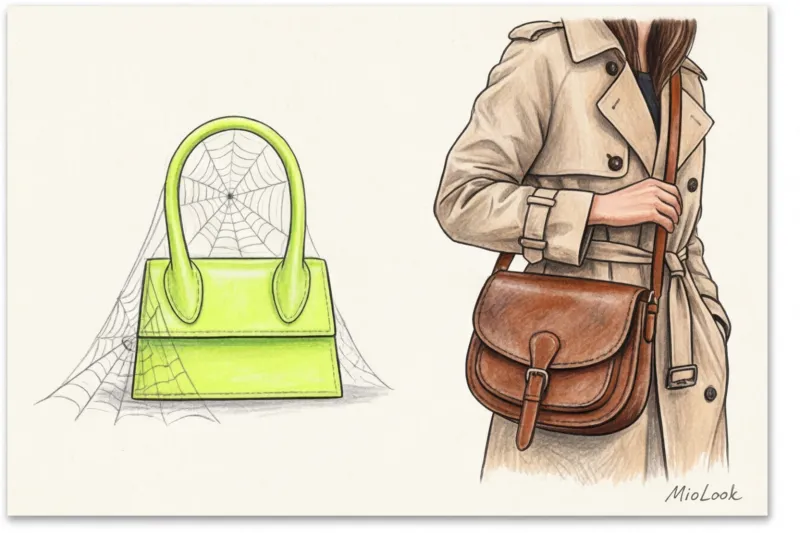
This incident once again convinced me: a wardrobe begins not with the quantity of items, but with their quality and functionality. The right basic bags are timeless—they're more than just a place to stash your lipstick and cardholder. They're a true financial asset and a visual anchor that can pull together even the most casual look with jeans and a white T-shirt.
We've covered more details on how to wisely allocate your budget for things that last for years in our The complete guide "Investment Wardrobe: What's Worth Investing In" Today, we'll be talking exclusively about bags: how to read their quality, why black isn't the best choice, and which four models will cover all your needs.
Anatomy of an Investment: Why Timeless Basic Bags Are Better Than Hot Trends
When I suggest a client consider a quality bag costing, say, €450–€600, the initial reaction is often resistance. We think it's more cost-effective to buy five bags for €80 each from a mass-market store to have "variety." But let's turn to the mathematics of style—the concept of Cost-per-Wear.
Let's say you gave in to an impulse and bought a faux leather baguette bag covered in sequins for €100. You took it to two parties, and then it lost its shape, the sequins faded, and it was consigned to the back of your closet. The cost per wear (CPW) was €50.
Now let's take a classic structured tote made of thick, full-grain leather for €500. You wear it to work, meetings, and travel 200 days a year for at least three years. Your CPW is only €0.83 per day. The difference is colossal.
According to The RealReal Luxury Consignment Report (2024), trendy "it-bags" (one-day bags) lose up to 60-75% of their value on resale after just 6-8 months. Meanwhile, classic architectural shapes in neutral shades reliably retain 70% to 85% of their original price.
Psychologically, it's difficult for us to invest in "boring" basics. The brain craves the quick dopamine hit of a flashy purchase. If you're having trouble reframing your thinking, I always recommend using the wardrobe analytics feature in MioLook By digitizing your belongings, you'll clearly see which accessories are truly worth the investment and which are simply taking up space.
The Myth of Black: Which Shades Are Really Universal
"The first expensive bag must be black" is the biggest and most harmful misconception that I regularly combat during wardrobe reviews.
What's the catch? Black is incredibly graphic. It creates a harsh, sharp contrast. If you wear a light beige trench coat, blue jeans, and a white shirt, a black bag will hang heavy on you, cutting into your silhouette. Black only works flawlessly when it's supported by other dark elements in the outfit (shoes, belt, print).
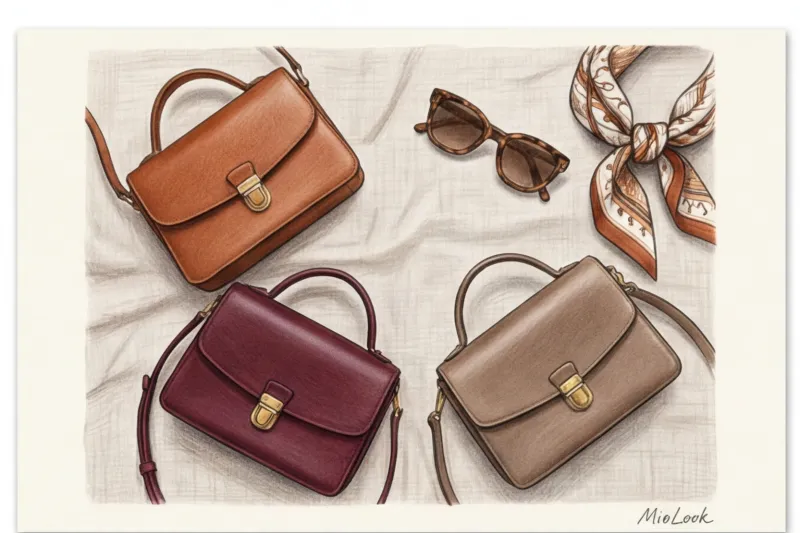
I always suggest a Mediterranean approach to palette to my clients—a play on rich undertones. Here are three "new blacks" that complement 90% of any wardrobe:
- Rich Cognac: A perfect pairing for blue denim, beige, emerald, and off-white. It adds warmth and a luxurious feel.
- Deep Burgundy (Oxblood / Burgundy): That perfect shade of red wine. Looks luxurious against gray cashmere, navy blue coats, and olive trench coats.
- Correct taupe: A complex taupe without a noticeable reddish tint. It literally adapts to the lighting, shifting from cool graphite to warm beige.
These shades don't shout, but they whisper of your good taste. They don't create sharp edges, allowing the eye to glide smoothly over your silhouette.
Access to MioLook for €0.99 — one-time payment
A smart AI stylist will select the perfect look based on your color palette and available bags.
Get access — €0.99 once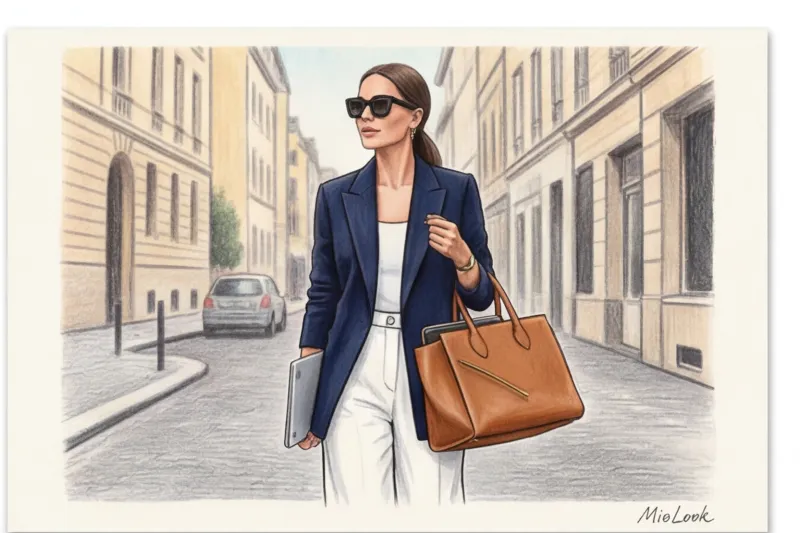
Tote bag: the status workhorse of your wardrobe
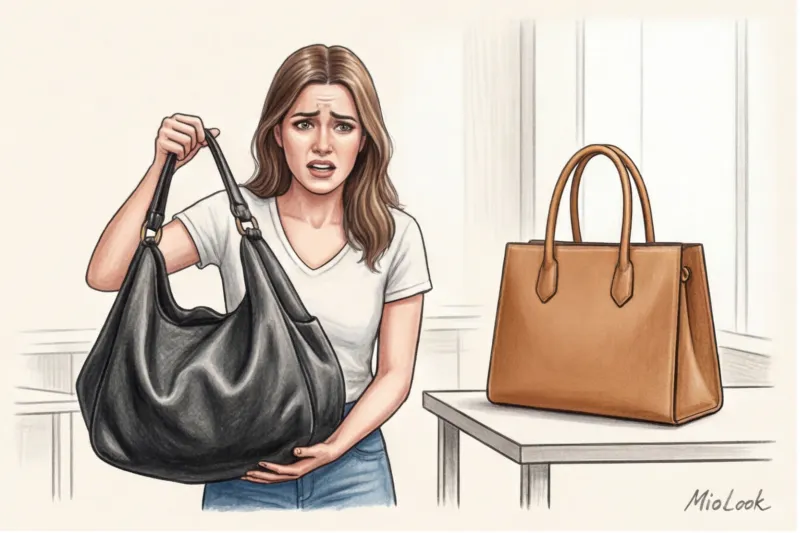
I worked with a client, a marketing manager at a large IT company. She wore expensive but completely shapeless hobo bags. Because of this, even in a formal suit, her look was too relaxed, slightly sloppy. As soon as we replaced the soft bag with a rigid architectural tote, her silhouette instantly straightened out and she gained a certain air of status.
A proper tote is a foundation. Its main characteristics are: It should stand on the table and hold its shape even if there is only one lipstick inside.
Image formula: A chunky knit sweater + straight jeans + slouchy loafers + a tough tote = perfect casual chic that you wouldn't be embarrassed to wear to brunch or a meeting with an investor.
What to look for before purchasing: Be sure to test the length of the handles. Slip your hand through: the bag should fit easily on your shoulder, leaving at least 5-7 cm of clearance. If you're trying it on in the summer with a light dress, remember that a wool coat or trench coat will add bulk in the fall. If the handles are too short, the bag will constantly slip off, making you nervous.
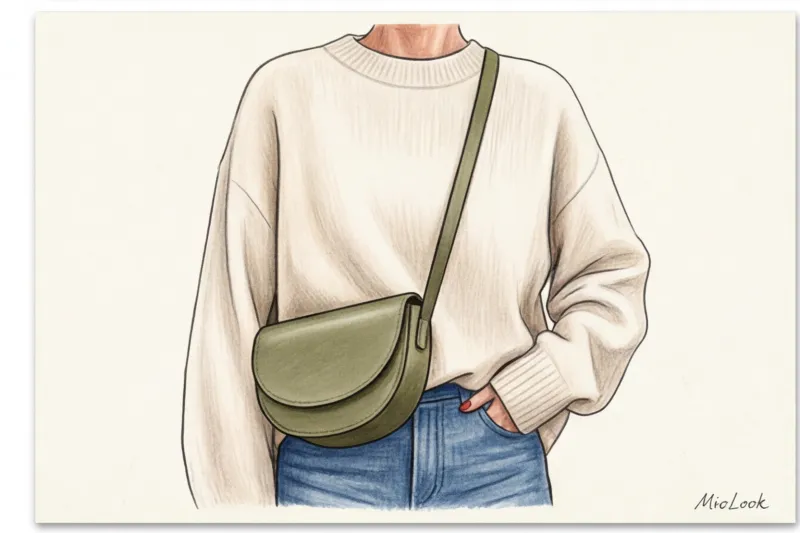
Medium-stiff crossbody: a basic classic for the dynamic city
If a tote is about work and a laptop, then a crossbody bag is about freedom of movement on weekends or days when you don't have to carry half the office. The ideal size is a happy medium: it should comfortably fit a smartphone (even the largest), keys, a cardholder, sanitizer, and lipstick, but it shouldn't look like a duffel bag.
The most investment-friendly shapes now and for decades to come are the saddle, with its slightly rounded hem, and the half-moon. Their smooth geometry perfectly softens the strict lines of office wear.
Image formula: A double-breasted blazer + silk midi skirt + a crossbody bag worn diagonally over the jacket. The bag acts as a belt, creating a visual accent at the waist.
Important limitation (when this does NOT work): A long crossbody strap can be tricky. If the bag hangs too low and hits the widest part of your hips, it will visually add 3-4 extra pounds in that area. The ideal strap length is when the top edge of the bag is level with your waist or just below your ribs.
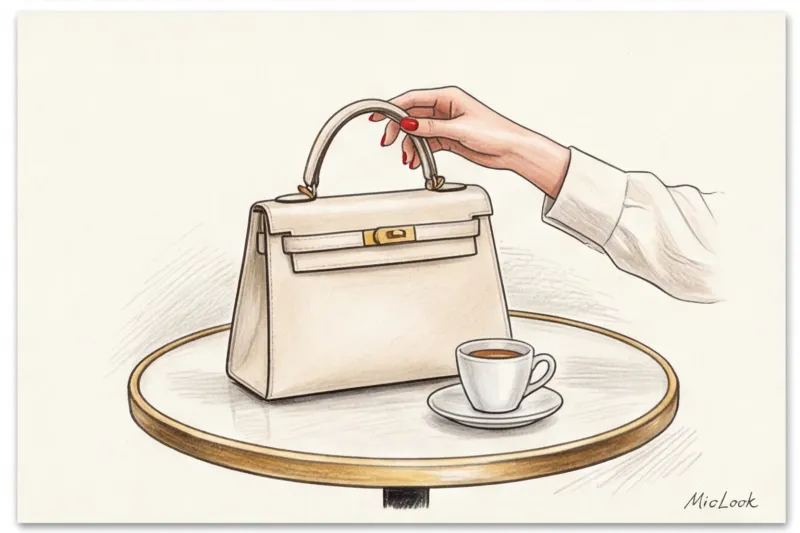
Top-handle bag: the DNA of feminine elegance
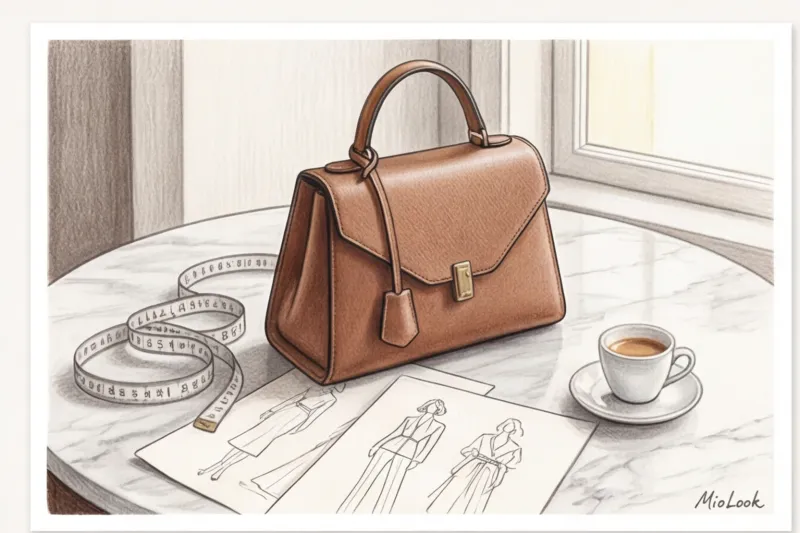
Historically, bags with short, rigid handles entered the fashion pantheon thanks to icons like Grace Kelly. In the 1950s, carrying a bag in the crook of the elbow or in the hand was considered a sign of aristocracy—after all, a woman carrying such a bag didn't have to carry heavy things or rush to catch a departing bus.
The psychology of this model is astonishing: as soon as you pick up this structured top-handle bag, your posture automatically straightens and your gait becomes smoother. It's the perfect choice for both smart casual and business attire.
However, to avoid looking too retro or overly serious in 2024, I love to use a stylistic trick to tone down the pretentiousness. Don't pair this bag with pearls and formal sheath dresses. Wear it with straight-leg distressed jeans, white sneakers, and a voluminous men's jacket. The contrast between relaxed clothing and a super-smart bag creates that very "effortless chic" effect.
Your perfect look starts here
Join thousands of users who look flawless every day with AI-powered tips from MioLook.
Get access — €0.99 once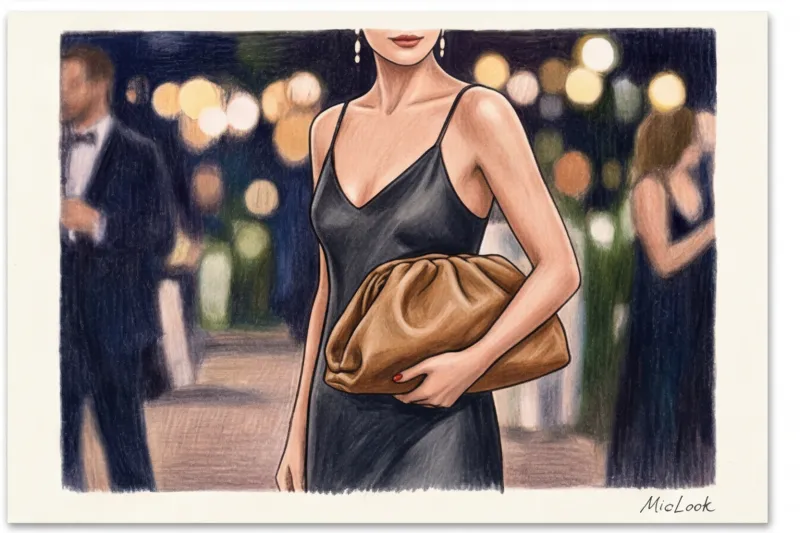
A soft pouch or envelope clutch: from morning coffee to a theater premiere
Clutches have long been associated exclusively with evening gowns, red lipstick, and rhinestones. Forget it. Stiff micro-minaudières that barely fit a credit card are a poor investment unless you're hitting the red carpet every Friday.
A modern basic wardrobe requires daytime Clutch. This is a soft, voluminous pouch made of smooth leather or suede, reminiscent of a puffy cloud, or a flat, minimalist envelope clutch.
Mediterranean Secret: Italian and French women masterfully integrate such bags into their daily routine. They tuck a soft, voluminous clutch under the arm over a loose trench coat or cashmere coat. This casualness (when a prestigious leather item is worn easily and without piety) bespeaks a confident woman. In the evening, the same bag perfectly complements a silk slip or pantsuit worn next to nothing.
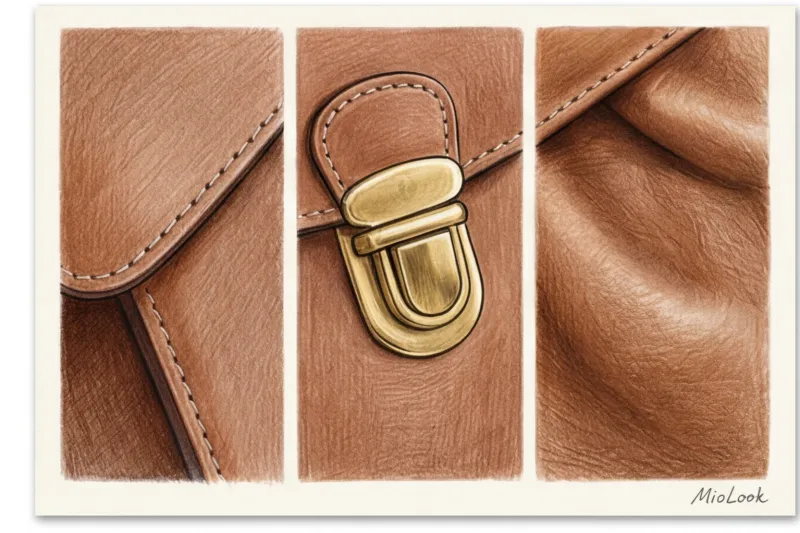
A stylist's checklist: how to recognize the quality of a bag before buying it
We've covered the shapes, but how can you be sure a €200-€300 bag is truly worth the money and won't fall apart within a season? As a stylist, I always conduct a technical audit of the item right in the store. Here's what you need to look for:
1. Skin type: reading labels correctly
If a bag says "Genuine Leather," don't get too excited. In the leather goods industry, this often means a lower-grade leather (split leather), generously coated with a layer of polyurethane with a printed texture pattern. This type of leather quickly cracks in the cold.
Look for markings Full-grain leather (grain leather, unpolished) or Top-grain It is the grain leather that has the ability to beautifully patinate (age), acquiring that vintage sheen over time.
2. Weight and material of fittings
Cheap hardware is distinguished by its light weight and dazzling yellow, almost gypsy-like sheen. High-quality locks and snap hooks are made of cast brass or steel. Touch the metal right in the store—it should feel cool and weighty. The zipper should slide smoothly, without snagging, and without scratching your skin.
3. Processing the edge of the leather
Look at the edges of leather parts (handles, straps). In cheap bags, this edge is either simply sealed with plastic, which will start peeling off within a month, or carelessly painted over. In high-quality bags, the edge is hand-polished in several layers, becoming smooth and slightly convex.
4. Stitches
Expensive bags often have stitching at a subtle angle (a characteristic of a saddle stitch or a high-quality machine imitation), rather than a perfectly straight line. The threads should be thick, synthetic (for strength), and free of protruding knots.
5. Lining
Never buy a bag with a black lining made of cheap, rustling polyester. Firstly, it's tactilely unpleasant. Secondly, a black lining turns the bag into a "black hole" where it's impossible to quickly find your keys. A lining made of light-colored cotton, microfiber, or light-colored suede is ideal.
By the way, if you doubt the quality of your current bags, upload photos of them to MioLook and try creating new looks with them. Often, the algorithm's fresh perspective helps you understand whether a piece fits your style or if it's time to replace it.
Let's sum it up: your personal handbag capital
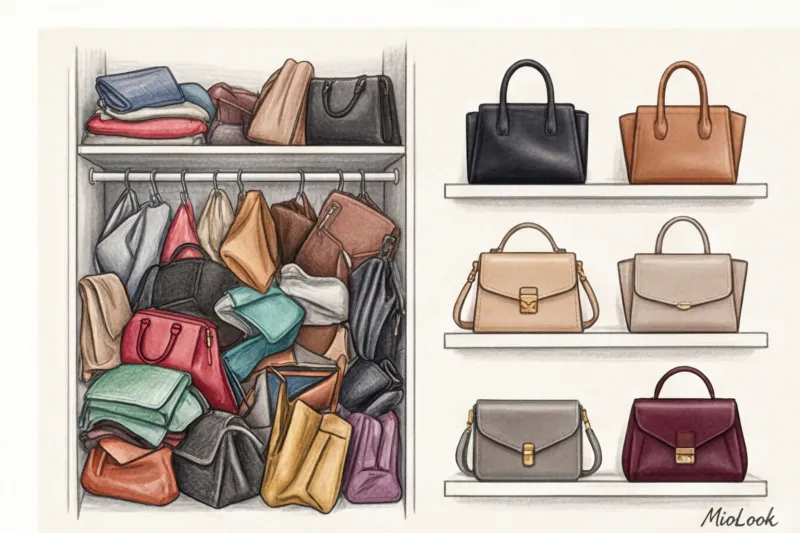
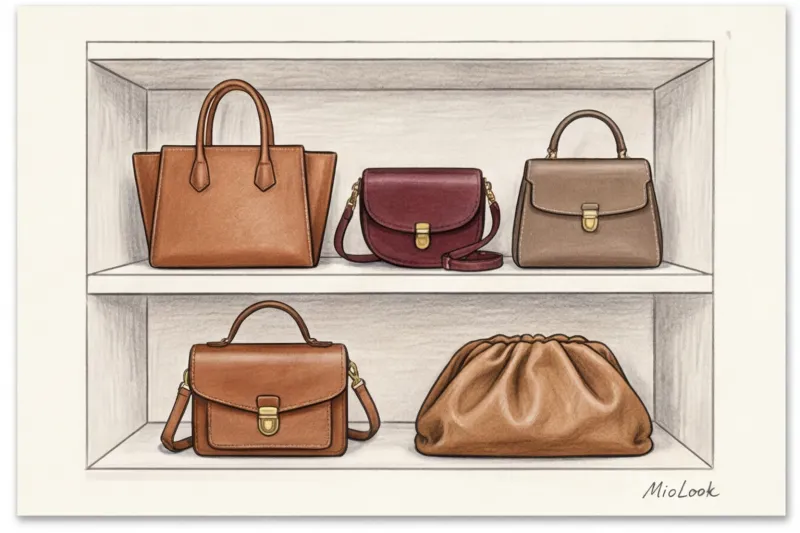
Over the years, I've discovered a golden rule: you don't need a huge closet filled with dozens of dusty accessories. A well-curated capsule collection of 3-4 ideal basic pieces (a structured tote for workdays, a comfortable crossbody for the city, an elegant top-handle for meetings, and a soft clutch for evenings) will completely cover your style needs.
I suggest you take an honest inventory today. Take out all your bags. Those that haven't been used for over a year, have lost their shape, or look cheap—feel free to send them to resale platforms. The freed-up funds are your starting capital.
Invest them in a single, flawless, basic bag made of thick leather in a sophisticated, elegant shade. Invest not just in a beautiful accessory, but in the feeling of confidence and inner composure you'll experience every time you pick it up. Trust me, this emotion always pays off.