

Over the 12 years I've been working as a personal stylist, I've personally helped clients get rid of hundreds of pairs of classic black pumps with 10-centimeter heels. Do you know what fate brought these shoes together? They were worn exactly twice: on the day they were bought and to a corporate event, after which they settled forever in the depths of their closets, evoking nothing but guilt over the money spent.
Today basic quality women's shoes — this isn't a blind copying of Pinterest lists from ten years ago. It's a precise mathematical calculation where comfort intersects with anatomy and durability. I discussed the principles of creating a smart closet in more detail in our The Complete Guide to Investment Wardrobes , but footwear requires a separate, almost technical analysis. In this article, we'll shift the focus from glossy trends to last architecture, leather quality, and the actual return on investment for each pair.
Why basic, quality women's shoes are the true foundation of a wardrobe
The magic of a flawless look always starts at the bottom. You can wear a simple white T-shirt from H&M and vintage jeans, but if you're wearing high-status, perfectly tailored loafers, the entire outfit will visually "read" as expensive. Conversely, cheap, poorly made shoes can instantly ruin the magic of a Max Mara cashmere coat.
But the main reason to invest in shoes is math. Let me introduce you to the Cost-Per-Wear formula. One of my clients bought four pairs of trendy shoes from a mass-market store over two years, each costing €50. They quickly lost their shape, cracked at the folds, or peeled off, costing her a total of €200. Each pair was worn a maximum of 15 times (CPW = €3.33 per wear).
Instead of a fifth cheap pair, we chose classic handmade Chelsea boots for €250. Four years have passed. She wears them about 80 days a year, for a total of 320 outings. The price per outing was only €0.78—and the boots still look great. An expensive item always ends up being cheaper in the long run.
"Every time you skimp on lasts and arch supports, you're taking a loan from your health that you'll later have to pay back to an osteopath. Poor footwear alters the biomechanics of your gait, which inevitably affects your posture and lower back."
Anatomy of an investment: how to distinguish a pair of shoes that will last 10 years from those that will last one season
When I walk into a boutique with a client, I rarely look at the logo. The first thing I do is turn the shoe over and examine the sole, then tactilely assess the material. Price has long ceased to be an absolute guarantee of quality.
Materials: From full-grain leather to eco-friendly alternatives
The label "Genuine leather" is a marketing ploy of the highest order. Technically true, but in reality, it's a low-grade material, pressed from scraps and coated with a thick layer of polyurethane paint. This leather doesn't breathe and cracks within a season.
If you are looking for an investment, look for markings Full-grain (grain leather without sanding, retaining its natural texture and is incredibly durable) or Top-grain I'd like to specifically mention the Leather Working Group (LWG) standards—if a brand is certified by this organization, it means that the tanning process was carried out with minimal harm to the environment.
What about vegan leather? In 90% of cases, this term in mass-market products simply refers to polyurethane (plastic). However, there are innovative eco-friendly materials that are truly worthy of attention: for example, Apple Ten-Tex (made from apple pomace) or Piñatex (made from pineapple leaves). They offer good breathability and wear resistance.
Sole Construction: Why Stitching Is More Important Than Glue
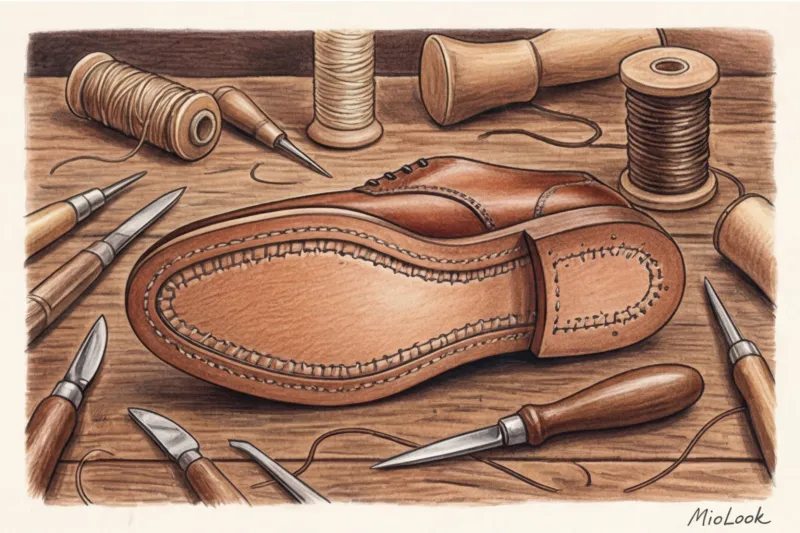
According to sustainable fashion research (in particular, the Global Fashion Agenda reports), more than 300 million pairs of shoes are thrown away worldwide every year. The main reason? They cannot be repaired. Most modern shoes are made using Cemented construction — the upper is simply glued to the sole. If the glue dries, the pair is most likely destined for the trash.
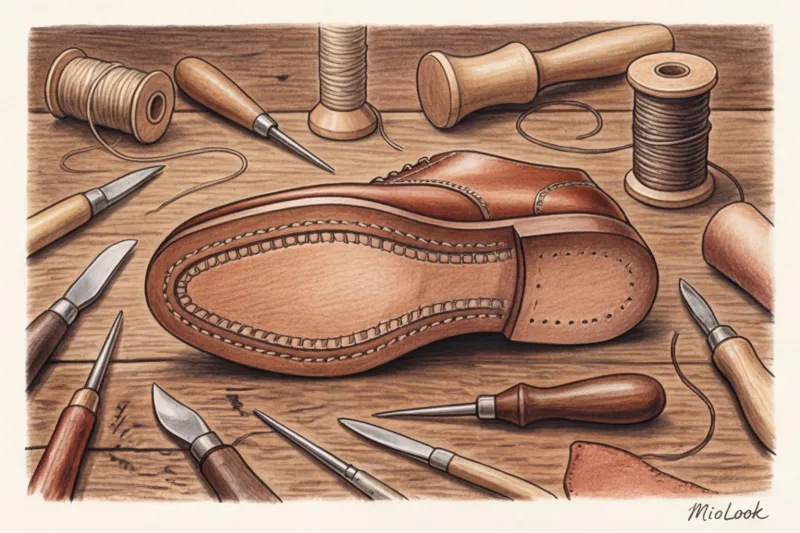
Investment shoes are constructed differently. Remember two terms: Blake stitch (through stitching of the upper, insole and sole) and Goodyear welt (a complex construction using a leather welt and a cork layer that conforms to the anatomical shape of your foot over time). Any qualified shoemaker can replace worn out soles on Goodyear-designed shoes, giving your favorite boots another 5-10 years of life.
The One-Stop Base Myth: Why You (Probably) Don't Need Black Pumps
"Every woman should have a pair of black stiletto pumps in her wardrobe" is the most damaging fashion cliché. A basic wardrobe should reflect your real life, not the fantasies of glossy magazines from the 2000s.
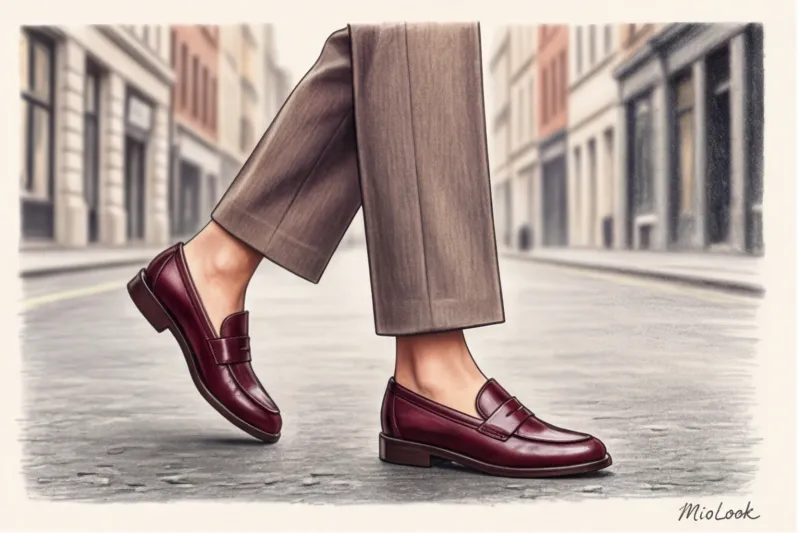
We recently audited a wardrobe for a designer working remotely. Her closet contained a pair of luxurious black shoes, €600, bought as a "essential essential." She wore them twice in three years. We sold them on a resale platform and used the proceeds to buy premium chocolate-colored suede loafers. Now she wears them four days a week—to cafes, client meetings, and galleries.
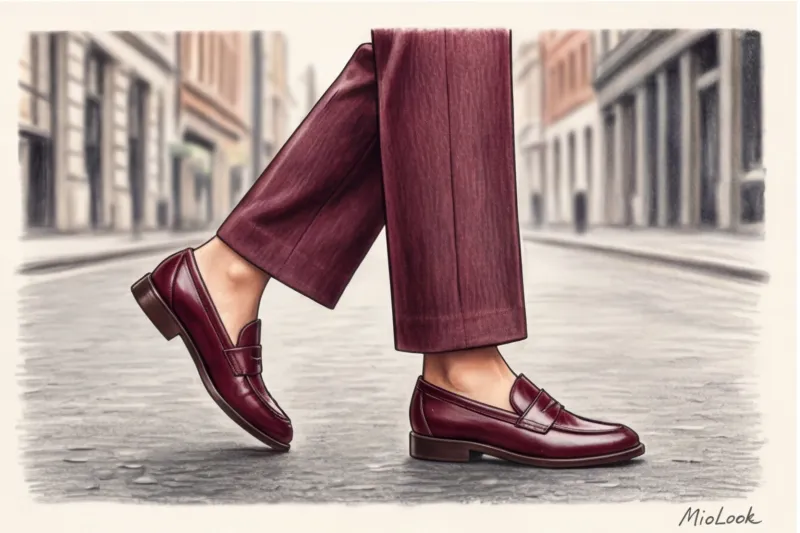
Another nuance: deep black near the face and on the legs often looks too flat and heavy. Complex, deep shades like burgundy, bitter chocolate, dark khaki, or rich cognac are much more elegant in a basic wardrobe. They pair with the same colors as black, but add dimension to the look.
Your perfect wardrobe starts here.
Stop buying random things. MioLook's smart algorithm will help you put together a capsule collection where every pair of shoes perfectly matches your outfit.
Get access — €0.99 once5 pairs of shoes that are worth every euro invested
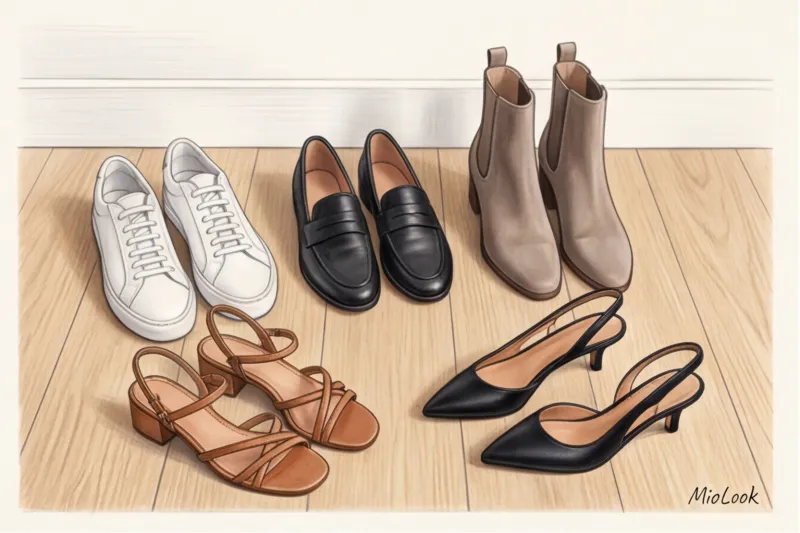
Below is a modular list for a modern, functional capsule wardrobe. You don't have to buy everything—choose 3-4 items that cover 95% of your life scenarios. More stylish ideas can be found in our article about office shoes and their alternatives.
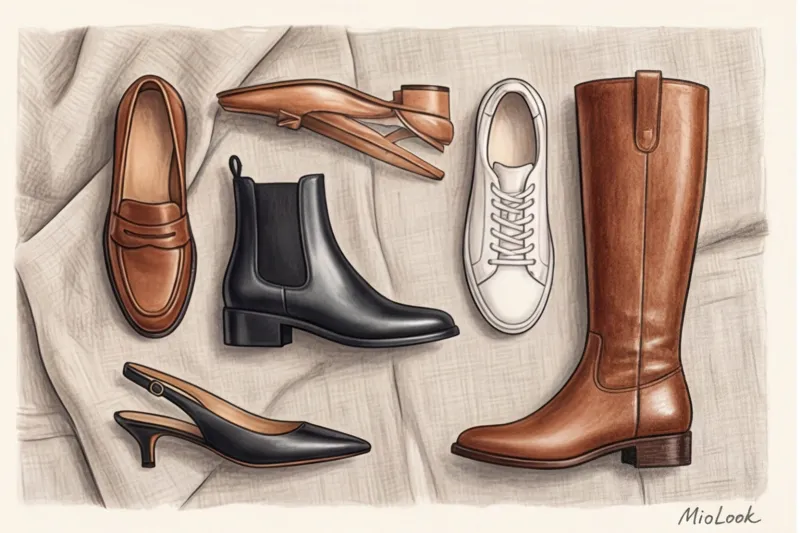
1. Structured loafers (Penny or Tassel)
They're the perfect balance between formality and comfort. Loafers instantly put together an outfit: they look equally impeccable with a tailored pantsuit or relaxed straight-leg jeans and a cashmere sweater. When choosing, pay attention to the heel (it should be stiff to prevent wear) and the toe shape. Almond-shaped or soft square toes work best as a base.
2. Chelsea boots: an all-season essential
Smooth leather without unnecessary hardware and a medium-thick sole (not too chunky, but not paper-thin either) make Chelsea boots a versatile mid-season staple. The key to style lies in the shaft height. To make your legs appear longer and slimmer, the shaft should be narrow enough, ending just above the thinnest part of your ankle.
3. Minimalist sneakers made of smooth leather
It's important to clearly distinguish between athletic running shoes and "city sneakers." For a basic look, we need the latter. The ideal investment pair is made of smooth matte leather and lacks contrasting logos, neon accents, or bulky athletic cushioning. Brands like Common Projects and their more affordable counterparts from COS and Massimo Dutti have set the standard for shoes that can be worn even under a light summer dress or suit.
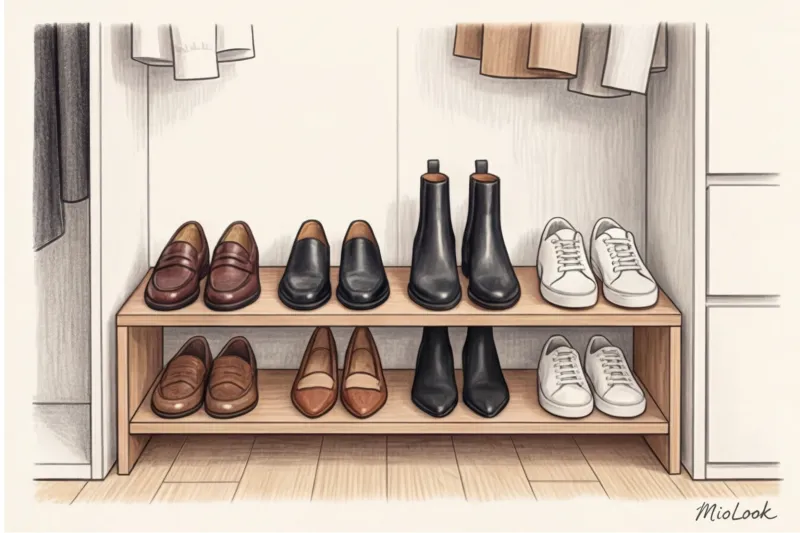
4. Slingbacks or kitten heels
This is the perfect modern and healthy alternative to classic pumps. The kitten heel, 3–5 cm high, provides a graceful lift, elongating the silhouette without disrupting the biomechanics of walking. The open-toe strap adds a touch of airiness and lightness to the look. It's the perfect choice for a casual office or for evening wear.
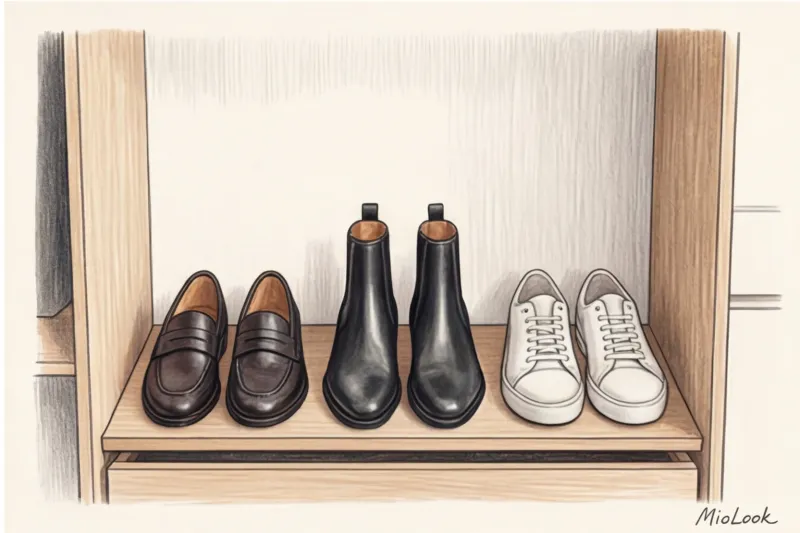
5. Knee-high boots
A must-have for the colder months if you love midi skirts, silk slips, or knit dresses. Tube boots should sit just under the hem of your skirt—this style doesn't cut off your height and creates a continuous vertical line. How do you check for the right fit? Use the "two-finger rule": if you can fit two fingers comfortably between the boot shaft and your calf, the width is perfect.
A Stylist's Checklist: How to Test Shoes Before Buying
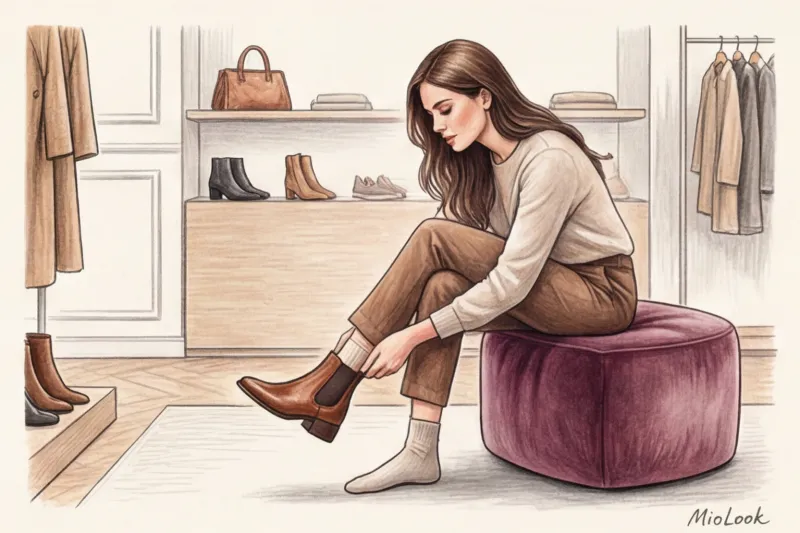
Buying expensive shoes requires the right approach. These four rules are pure insider wisdom, rarely covered by fashion bloggers.
- Evening fitting rule. Never buy stiff shoes in the morning. By 5:00–6:00 PM, your feet naturally increase in size by 0.5–1 size due to increased blood flow and slight swelling.
- The Flex Test. Take the shoe in your hands and bend it. Quality shoes should bend. only In one place—where your toes bend when you walk. If the sole easily bends in half right down the middle, the metal shank is missing or broken. This pair guarantees arch pain after just an hour of walking.
- Checking internal seams. Reach inside the shoe and run your fingers along all the seams, especially the heel and little toe area. Any rough, protruding seam will turn into a bloody blister within a couple of hours. Everything inside should be perfectly smooth.
- 1 centimeter margin. When it comes to closed-toe autumn shoes, there should be exactly 1 cm of space between your longest toe and the toe of the shoe. As you walk, your foot lengthens, and without this space, you risk joint deformities.
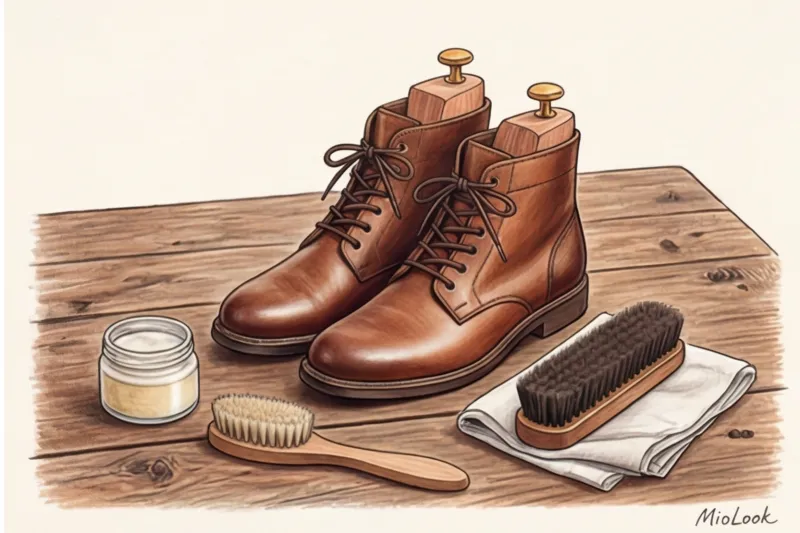
Frequently Asked Questions
Your perfect vacation wardrobe
Pack your suitcase correctly – find out which vacation style suits you
About the author
Unlock MioLook
for €0.99
Start creating perfect outfits with artificial intelligence
Get access — €0.99 onceRelated Articles
Stylist Tips: How to Wear a Flattering Oversized Scarf
A voluminous scarf not only provides warmth but also creates an optical illusion...
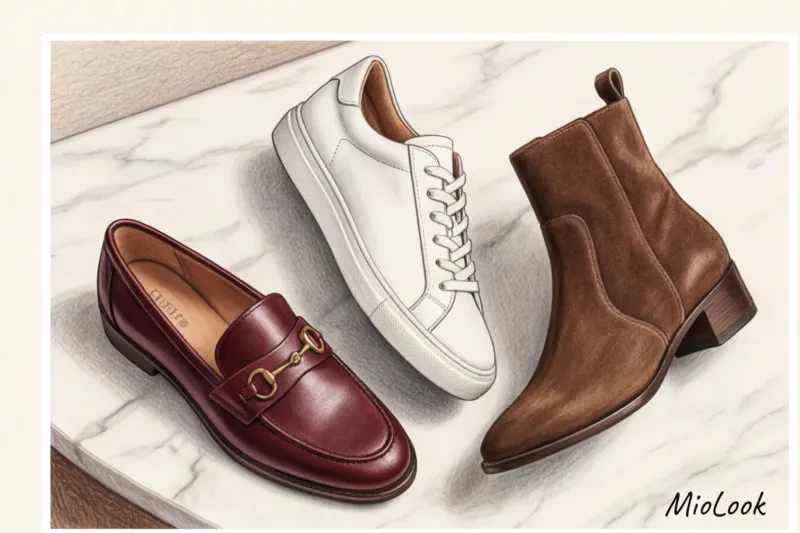
Basic Women's Shoes: 5 Pairs You Shouldn't Skimp On
Tired of beautiful but uncomfortable shoes? Discover 5 pairs of shoes that will ...
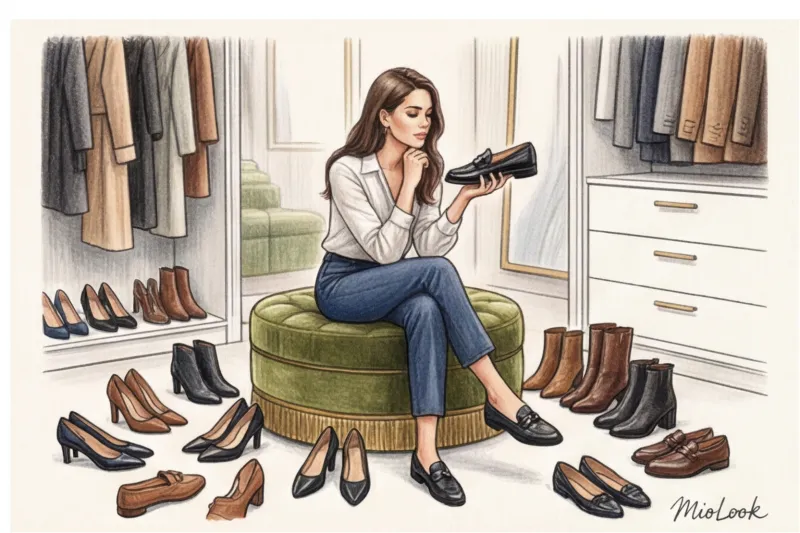
Women's Essential Shoes: A Guide to an Elegant Wardrobe
Forget uncomfortable stiletto heels and generic online lists. We'll show you how...
Basic Women's Shoes: 5 Pairs for All Occasions
Forget about dozens of uncomfortable shoes collecting dust in your closet. We're...