Why Proper Laundry Care Is an Investment, Not a Routine
Have you ever noticed how your posture changes when you wear a perfectly fitting lace bra? Buying a luxurious set can be a euphoric experience, but often that joy ends after the first encounter with the washing machine drum. Clients regularly contact me with the question, How to wash underwear To prevent expensive silk from fading and its perfect shape from turning into a shapeless rag within a month. My answer always begins with a paradigm shift: caring for delicate fabrics isn't a boring household chore, but a direct protection of your financial investment.
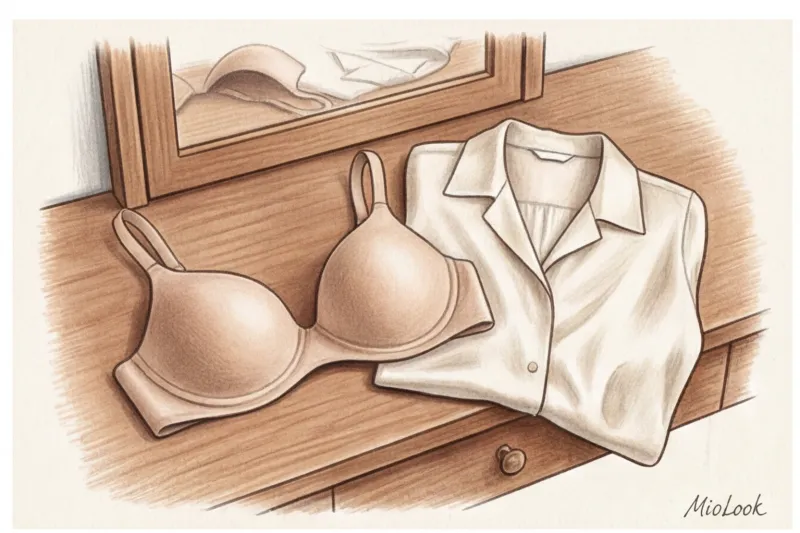
I had a particularly revealing case. One of my clients invested over €1,500 in a flawless Jil Sander wool suit. However, during the fitting, the jacket was a frankly poor fit: her chest appeared sagging, and unsightly folds formed in her back. The problem wasn't with the jacket's cut, but rather with the fabric underneath. She was wearing an expensive but completely misshapen bra. The stretched elastane of the waistband was riding up her back, providing inadequate support, and the crushed cups distorted her silhouette. Remember the golden rule of stylists: the fit of even the most expensive couture dress begins with a proper frame, so stretched elastane ruins the silhouette of any outerwear.
Unfortunately, damaged lingerie is instantly obvious. You can hide it under a thick turtleneck, but you can't fool the physics of fabric. What exactly is a sign that it's time to discard an item? First and foremost, it's the creases in the cups that show through the fine knit. Secondly, it's the lace that's tired and pilled, having lost its original luster. And most importantly, it's the band that's critically loose. If you fasten your bra on the tightest hook and it still doesn't securely fit your ribs, its support function is dead. I discussed the general principles of extending the life of bras in detail in the article about Secrets of a Long-Lasting Wardrobe.
In the world of smart styling, we always operate under the concept of Cost-Per-Wear. Let's do the math. Let's say you bought a high-quality basic bra for €180. If you wash it with a harsh detergent on a high-temperature cycle, the elastane will break down after 20 wears. Your cost per wear will be €9. But if you follow the gentle washing instructions and let the material "rest" between wears, the same bra will last 2-3 years (about 150 wears), reducing the cost per wear to a modest €1.20! An expensive bra only pays for itself with proper care.
The longevity of premium lingerie depends 20% on the quality of the materials and 80% on how you wash and dry it. An investment only works if you protect it.
To avoid damaging a delicate item right from the start, before the first wash it is worth check the stylist's interpretation of the symbols And it's incredibly convenient to control how often you use your favorite sets, creating the right rotation for your laundry capsule, using the app's item tracking feature. MioLook.
How to Wash Underwear: Basic Rules for Different Fabrics
When clients ask me how to wash premium lingerie, I usually follow up with one question: "How do you sort items before washing?" Nine out of ten proudly answer, "Light to light, dark to dark." And this is the first fatal mistake that turns a luxurious €150 bra into a shapeless garment in just a couple of months.
Sorting solely by color is an outdated approach. The main criterion is the composition of the fabric Silk, cotton, and synthetics (such as microfiber or mesh) have completely different fiber structures and require radically different chemical and temperature treatments. Mixing them in the same basin or drum inevitably compromises the quality of one fabric.
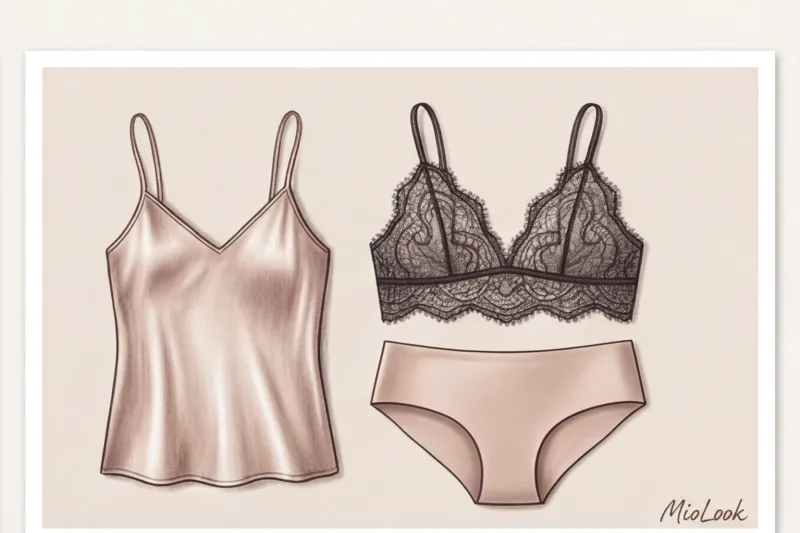
The golden rule for any underwear containing elastane (which is 99% of modern bras and panties) is strict adherence to a temperature regime of 30 degrees Why this specific figure? According to researchers from the Hohenstein Textile Institute (Germany), elastane and spandex fibers begin to lose their structural "memory" when exposed to water hotter than 30°C. Hot water literally "cooks" the elastic fibers. They become brittle, dry out, and crack, causing bra bands to ripple and straps to stretch, no longer supporting the breasts.
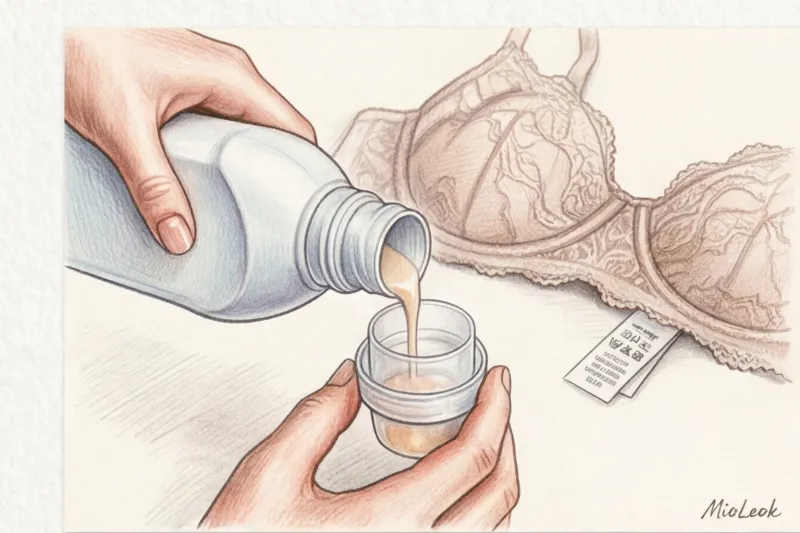
The second, no less important aspect is choosing a detergent. This is where the difference lies, which is rarely mentioned on the packaging. Standard laundry detergents and gels contain enzymes—protease, amylase, and lipase. These are excellent at breaking down blood, sweat, and grease stains. However, they can be damaging to some delicate fabrics. You'll need non-enzymatic, strictly pH-neutral liquid detergents that clean the fabric using mild surfactants without damaging the fiber structure.
Silk and French lace: the pinnacle of care
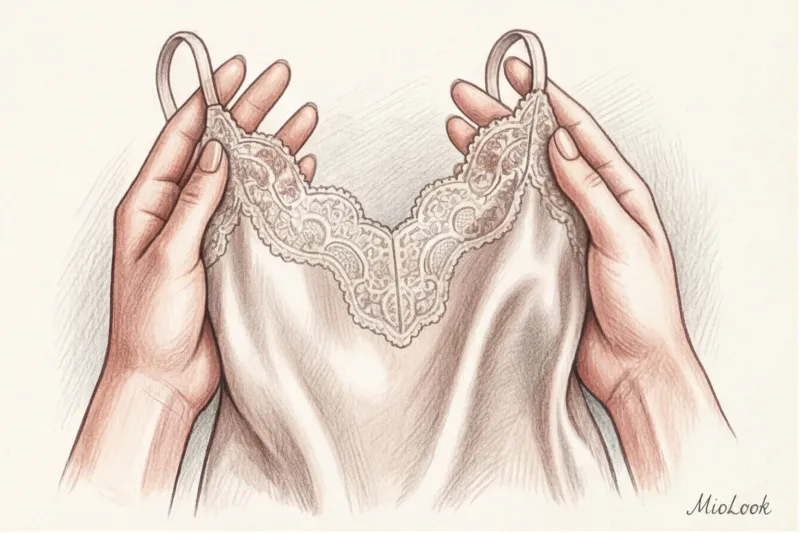
Natural silk is a fabric of animal origin, composed of the protein fibroin. Now let's remember how enzyme detergents work: their protease enzyme is programmed by nature to break down protein compounds (after all, many complex stains are made of protein). If you wash a silk slip or panties with a regular detergent, you're literally forcing the detergent to "eat" the fabric itself. With each wash, the silk becomes thinner, loses strength, and eventually falls apart at the seams.
There's a popular myth among my clients that's passed down from mouth to mouth: "Silk should be washed with baby shampoo." Please forget this advice. Baby shampoos contain superfatting and lipid-replenishing ingredients designed to protect baby's skin. These ingredients settle on the silk fibers, forming a persistent matte film. The glossy shine of your luxurious set will disappear forever, leaving behind a dull finish.
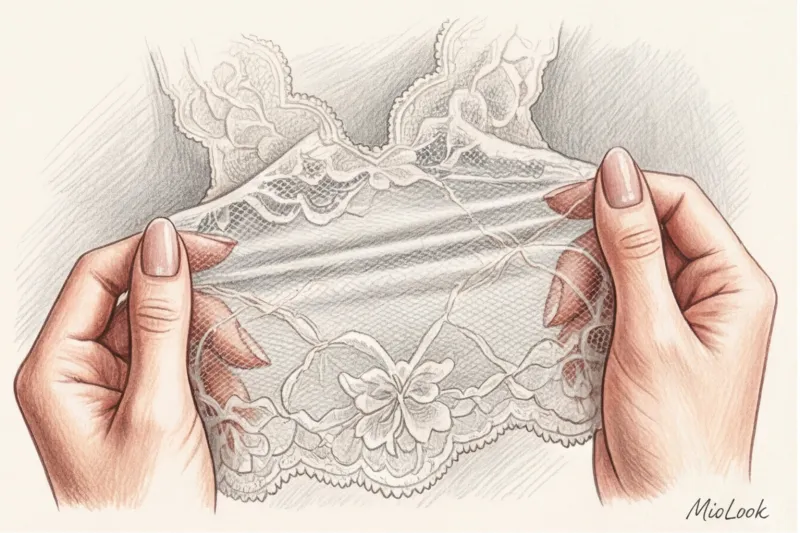
When it comes to elite French lace (such as the famous Chantilly or Leavers lace), mechanics are key. Leavers lace, created on vintage 19th-century looms, is composed of thousands of ultra-fine threads that are interwoven rather than knitted. Any intense friction disrupts the pattern's tension. This type of lingerie should only be washed by soaking in cool water (no higher than 20°C) with a specialized silk and lace cleaner. Light blotting movements are sufficient—gently lower the lace set into the water and press it gently with your palms, like a sponge.
Access to MioLook for €0.99 — one-time payment
A smart AI stylist will select the perfect look.
Get access — €0.99 onceBasic cotton linen and microfiber
Basic wardrobes also have their weaknesses. Pure white cotton tends to turn gray or yellow over time when exposed to sebum. The instinctive urge is to douse it with harsh chlorine bleach. This is the worst thing you can do to cotton. Chlorine destroys cellulose fibers, and paradoxically, the fabric begins to yellow even faster when exposed to light. To restore the pristine whiteness of basic cotton panties or tops, use gentle oxygen bleaches based on sodium percarbonate—they break down sebum using oxygen bubbles without damaging the threads themselves.
Seamless underwear made of smooth microfiber deserves special attention. Have you ever wondered why it's seamless? The edges aren't simply laser-cut; they're sealed with a special heat-activated adhesive. If you wash these panties at 40°C or, even worse, 50°C, the adhesive will melt. As a result, after a couple of washes, the edges will come apart, and the item will end up in the trash.
Another hidden problem with microfiber is its oleophilicity. This synthetic fabric attracts and retains oils more strongly than natural fibers. If you wash microfiber sports bras or base layers on a delicate cycle or (even worse) in the same load with heavily soiled items, the fabric won't rinse properly. It absorbs bacteria and sebum deep into the fibers. As a result, seemingly clean underwear begins to smell sour as soon as you put it on and it warms slightly from your body temperature.
To organize your underwear wardrobe wisely and always know which items can be washed together, I highly recommend digitizing your underwear sets. The smart wardrobe feature in MioLook — You can create separate capsules for basic, sports, and delicate underwear. This will transform routine pre-wash sorting into a streamlined system that will save you hundreds of euros on buying new bras to replace damaged ones.
The Hand Wash Myth: When Machine Washing Is Safer for Bras
Forget all the fine print on labels for a moment. There's a paradox in the luxury care industry: a modern, high-tech washing machine is often much gentler than your own hands. Yes, you heard that right.
According to testing data from the textile laboratory of the French Institute of Textiles and Clothing (IFTH, 2022), uneven mechanical wringing of wet spandex destroys its polymer structure 2.5 times faster than uniform rocking of the washing machine drum on a delicate cycle.
I had a particularly revealing case. One of my clients brought in a stunning handmade corset set for a wardrobe review, costing around €280. She proudly emphasized that she hand-washed it exclusively in cool water. But upon closer inspection, I saw a disaster: the molded cups were covered in small, irreversible creases, and the metal underwire had treacherously bent outward.
Many women sincerely believe that hand washing is the most gentle method. However, the problem lies not in the washing itself, but in the final step. Trying to remove excess water, you instinctively squeeze and twist your bra. This aggressive hand wringing breaks the underwires and stretches the microfibers of the band far more than a washing machine drum. Water significantly weighs down the fabric, and the localized pressure of your fingers during hand wringing permanently deforms the smooth architecture of the molded cups.
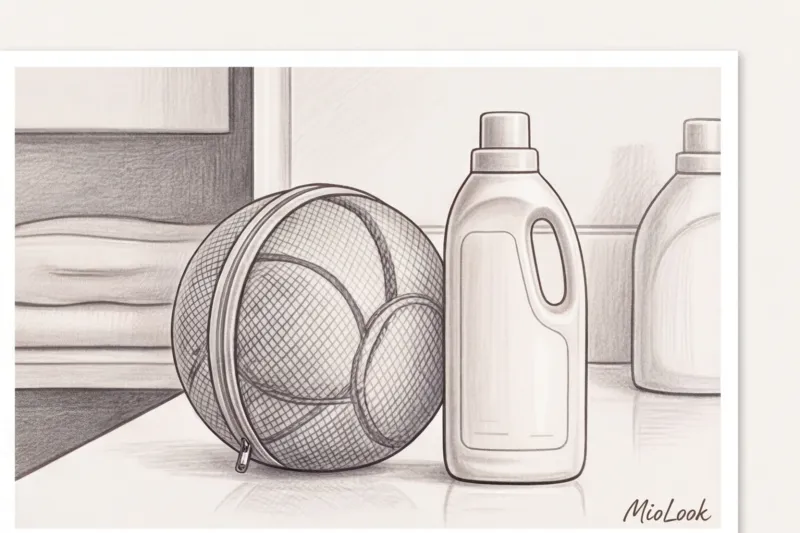
The secret of lingerie styling professionals lies not in blind faith in manual labor, but in the wise use of the right accessories. The most important of these is rigid, framed laundry bags for bras. It's important to understand the difference: regular soft mesh bags with zippers are completely useless for underwired and push-up bras. They only protect the lace from snagging, but they don't protect against the pressure of water and other items. A framed bag (spheres with plastic reinforcement) acts like an armored shell. It absorbs any impacts against the drum walls, maintaining the perfect geometry of the laundry inside.
But even in a reliable protective capsule, laundry won't withstand a standard wash cycle. How do you properly set your washing machine's cycle to avoid damaging your items? The key is to avoid spinning. Centrifugal force at standard 800-1000 RPMs forces water deep into the foam, creating micro-tears in the polyurethane foam. If your machine doesn't allow you to completely disable the spin cycle, select the lowest possible setting (usually 300-400 RPMs).
By the way, to systematize the care instructions for different sets and avoid having to remember all the instructions, I advise my clients to digitize their lingerie drawers. The most convenient way is to create a virtual catalog using MioLook — there you can immediately add personal care tags for each bra: which ones require a hard case, and which ones can be washed in a soft bag.
How to properly wash underwear in a washing machine: step-by-step instructions
Let's break this process down into specific steps. Here's a detailed protocol that will show you how to machine wash your underwear without damaging your favorite sets.
- Step 1. Neutralization of fittings. Before placing your bra in the protective zone, be sure to fasten all the hooks on the band. This is a basic, but crucial rule. Leaving the clasp loose will act like a harpoon in the tumble dryer. The sharp metal micro-teeth have a 99% chance of snagging on the French lace of adjacent items or irreparably tearing the delicate mesh.
- Step 2. Select the delicate mode. Forget about the "Daily Wash" or "Synthetics" programs. Look for "Hand Wash" or "Silk" modes in your washing machine's menu. These cycles don't involve full, intense spinning, but rather gently rocking the drum from side to side, mimicking the gentle movement of your hands in a basin of water. The temperature should be kept strictly below 30°C. At 40°C and above, hot water begins to destroy the finest elastane threads—the waistband will permanently lose its elasticity and support.
- Step 3. The golden rule of loading. The biggest mistake is washing underwear in a tightly packed machine. The drum should be no more than a third full. Delicate fibers require plenty of space and water to ensure cleansing through gentle hydrodynamic friction rather than pressure. Furthermore, only wash underwear with lightweight items (such as silk pillowcases or chiffon blouses). Never put heavy jeans, bath towels, or thick hoodies in the same cycle. Their weight triples when wet, and when spinning, they will crush fragile bra underwires, even through a protective plastic case.
The Main Enemies of Delicate Fabrics: What to Avoid at All Costs
The most destructive lingerie care mistake I regularly see when sorting through lingerie wardrobes is made with the best of intentions. When buying an expensive lace set, women instinctively want to give it the utmost care: they add more detergent, generously pour in fabric softener, and try to dry it as quickly as possible on a warm radiator. And in doing so, they destroy the delicate materials within a couple of months.
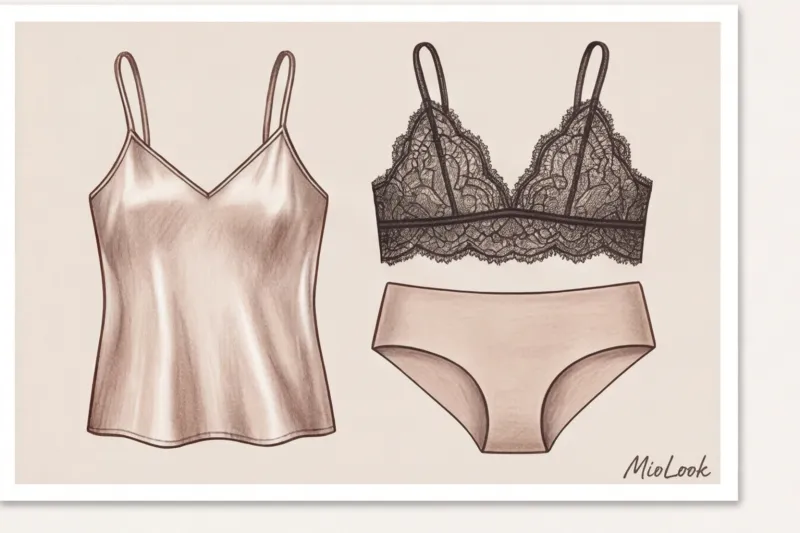
If you've already mastered the art of washing lingerie by color and strictly adhere to temperature settings, it's time to sort through your bathroom cabinets. The first hidden enemy is classic dry laundry detergent. If you invest in sets featuring French Chantilly or Leavers lace, granular detergents should be banished from your routine forever. When washed at 30°C (the maximum temperature for maintaining shape), the granules don't have time to dissolve completely. They act as a microscopic abrasive: they get stuck in dense lace patterns and seams, don't rinse out completely, and when dry, turn into a hard crust. This crust not only causes contact dermatitis on delicate skin but also mechanically abrades the fine nylon threads with every movement.
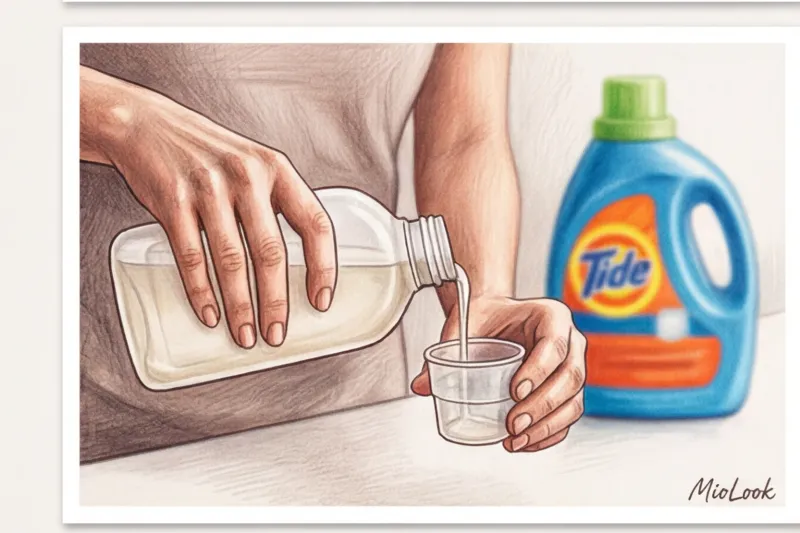
But the absolute antagonist of premium linen hides in bottles labeled "softening conditioner." Any fabric softener works by creating a thin wax film on the surface of the fibers, smoothing the lint. This works great for stiff terry towels, but for linen, it's a death sentence. There's a proven technological fact: regular use of fabric softeners destroys the elasticity of spandex 30% faster than washing with basic liquid gels. The film envelops the elastane threads, weighing them down and preventing them from shrinking back. Moreover, this same silicone layer reliably "traps" bacteria and microparticles of the epidermis within the fabric, completely depriving the material of its ability to breathe.
The third risk factor is aggressive drying on a radiator or in direct sunlight. Many admit to hanging their bras on a hot towel rail to speed up the drying process before going to work. High temperatures literally bake the microscopic rubber bands inside the bra band, causing them to lose moisture and burst. Ultraviolet light, in turn, mercilessly burns out the pigment and makes the lace brittle. After just 10-12 drying cycles like this, the band of a luxurious €120 bra will develop a characteristic, unsightly "wave," lose its shape, and cease to perform its primary function—supporting the weight of the breasts.
Why sports bras require a special approach
A dangerous misconception often pervades styling: because sportswear is designed for extreme exercise, it's indestructible and can be washed with any harsh method, just like sneakers. In reality, high-tech sports bras made of Lycra and membrane fabrics are among the most demanding items in a wardrobe.
The main challenge in caring for them lies in the problem of bacteria encapsulation. Dense synthetic fabrics are designed to wick moisture away from the body during cardio or strength training. Washing such a top with a regular, gentle detergent for delicate fabrics won't dissolve the sebum deeply embedded in the fibers. The bacteria will become trapped within the weave. The result is probably familiar: a seemingly perfectly clean sports bra begins to emit a pungent, unpleasant odor within five minutes of starting your workout, as soon as the fabric warms slightly from your body.
That's why sports bras require specialized detergents, formulated to break down the biological oils in the membranes without damaging the elastic structure of the Lycra. And here, the use of any softeners is strictly prohibited. Fabric softener instantly clogs the micropores of moisture-wicking fabric. Just one wash with fabric softener can turn a breathable sports bra from a premium brand, costing €80–€150, into an impenetrable plastic bag, creating a greenhouse effect on the skin.
Try MioLook
for free: Start creating perfect images with the help of artificial intelligence
Get access — €0.99 onceDrying without deformation: the secret of stylists with a salad spinner
Do you know what object in the backstage of professional lingerie shoots invariably shocks novice assistants? A simple plastic drying rack for greens.
When we discuss in detail, How to wash underwear , many overlook the final step. Wet foam, innovative spacers, or the dense padding of push-up cups can retain a colossal amount of water. If you start twisting the bra aggressively by hand, the metal or plastic underwires will inevitably become deformed. And if you simply let it drain, the water's own weight will irreversibly stretch out the delicate elastane fibers.
This is where our top insider lifehack comes in: the salad spinner. This mechanical centrifuge operates on the principle of the most gentle spin. You carefully fold the wet bra inside (nesting one cup inside the other to save space and maintain its shape), and spin it gently and then vigorously with the handle. Centrifugal force removes all excess moisture in 15-20 seconds, leaving the bra only slightly damp. There's absolutely no friction, twisting, or pressure on the bra frame.
For investment sets priced between €150 and €300, this method is indispensable, as it completely eliminates the risk of creasing on smooth cups. The only obvious rule: keep a separate carousel for your silk slips and expensive lace, not the one used in the kitchen.
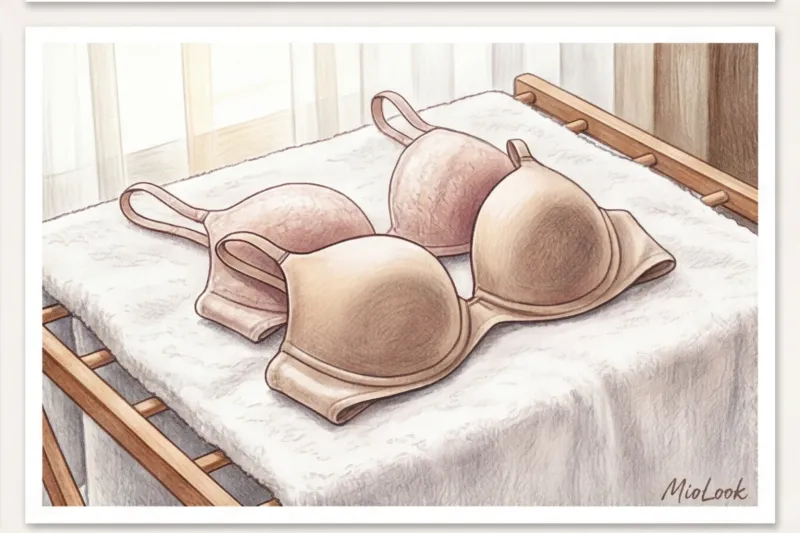
After removing most of the water, we move on to final drying. The only safe method for intricately designed bras is to lay them flat. Place the bra on a clean, dry terry towel away from heat sources. Carefully straighten the cups with your fingers, restoring their original anatomical shape, and smooth out the lace edges. The towel will quickly absorb any remaining moisture from below, and air circulation will dry the top layer.
Why do I insist so much on a horizontal position? Hanging a bra by the straps or draping it over a clothesline by the bridge is strictly prohibited.
Lingerie designers confirm that a wet molded cup weighs three to four times more than a dry one. By hanging a bra by the straps, you force gravity to work against you. Under the weight of the wet foam, the elastane in the straps develops micro-tears and instantly loses its elasticity.
A similar story happens with the bridge (the central part between the cups). The bridge is the architectural "anchor" of any bra, responsible for a tight fit against the sternum. If you hang a bra by it, the weight of the wet cups will pull the structure downward and outward. The framework will disintegrate, and the next time you wear it, the underwire will begin to pull away from your body or painfully dig into your ribs. The perfect fit you paid so much for will be lost forever.
To systematize these subtleties of grooming and avoid having to keep all the rules in your head, I recommend my clients digitize their wardrobes. By adding their collections to MioLook , you can leave personalized notes (e.g., "tumble dry only") for each specific item. This eliminates the need to read tiny, faded-after-the-first-wash labels and protects your favorite items from accidental damage.
How to store underwear to extend its lifespan
I once audited a client's lingerie wardrobe, where she'd spent over €1,500 on stunning Agent Provocateur and La Perla sets. She'd cared for them impeccably, meticulously following all the washing temperature settings, yet they were still quickly losing their shape and looking tired. The cause was immediately apparent the moment we opened her dresser. When it comes to prolonging the life of delicate fabrics, storage is just as important as washing. In our concept of a neat and elegant wardrobe (which we frequently discuss in MioLook articles), proper organization of the space determines how long a garment will retain its original luster.
The most important and strict rule for bras with molded cups (whether it's a classic spacer or a tight push-up): never turn one cup inside out into another This is the most common mistake women make when trying to save drawer space. What happens at a macro level? The polyurethane foam inside the cups develops micro-tears when it bends backwards. You won't notice them on the first day, but within a month, unsightly lumpy creases will appear on a smooth bra under a tight silk blouse, and the cups themselves will lose their elasticity forever. There's only one correct storage method: stack bras one after another, like nesting dolls or spoons in a set, preserving their natural volume.
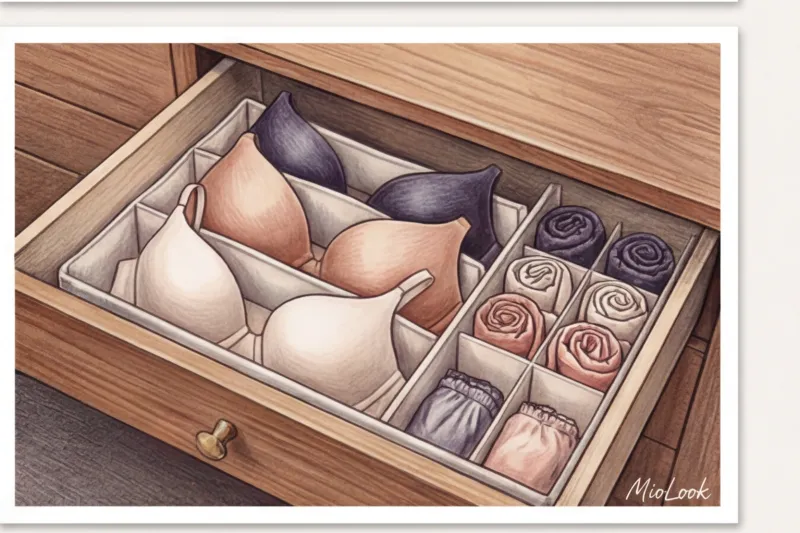
Marie Kondo's popular vertical storage method works great for T-shirts and jeans, but for luxury lingerie, it requires a small but crucial adaptation. Basic panties made of thick microfiber or cotton can be conveniently folded into compact rectangles and stacked like "soldiers." However, the finest French Chantilly lace or lightweight silk thongs should absolutely not be rolled too tightly. Excessive tension during folding will damage the fragile elastane threads in the selvedge. I recommend folding them more loosely, allowing delicate fabrics to "breathe."
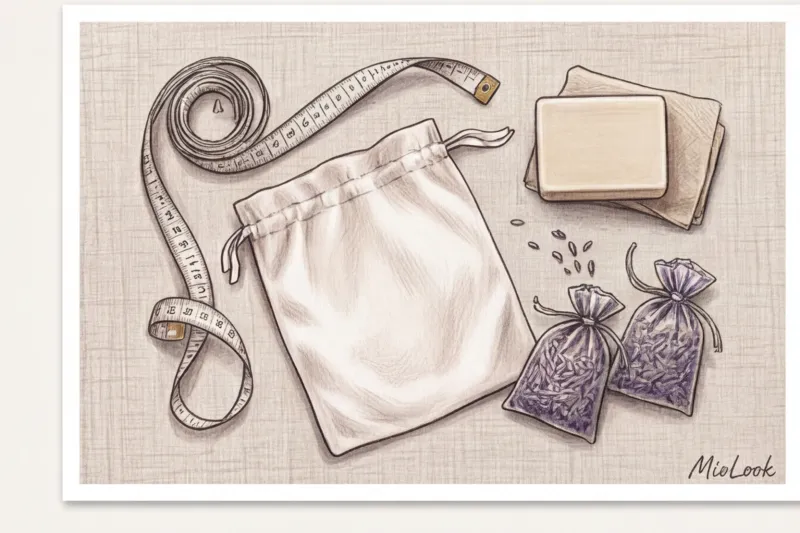
Speaking of fabrics breathing, protecting your closet from moths and keeping your linens fresh is an art form in itself. Please avoid synthetic fragrances and perfumed sachets from the supermarket. The strong chemical compounds in these can react with the polyurethane and proteins in natural silk, leaving stubborn yellow stains. I always recommend using natural lavender sachets or cedar balls. Cedar not only repellent eco-friendly insects, but also gently absorbs excess moisture in the drawer, preventing the spandex from drying out and aging.
Remember: how you treat your laundry after washing directly reflects your attitude toward yourself. Respect for the things hidden from view is the highest form of love for your own comfort.
If your collection includes silk slips, peignoirs, or robes, avoid storing them folded on shelves (they'll develop hard creases) or hanging them on regular wooden or metal hangers. The weight of the fabric itself can cause thin straps on rigid frames to stretch out quickly. Such garments should be hung exclusively on properly padded hangers, generously covered in satin, foam, or velvet. This distributes the weight evenly and doesn't damage the delicate silk fibroin.
Drawer Organization: Dividers and Aesthetics
Let's move on to the micro level—the interior of the dresser itself. In my styling practice, I constantly encounter plastic dividers from mass-market stores. They're perfect for cotton socks, but for intricate Leavers lace, they're a death sentence. Sharp edges, hard seams, and microscopic burrs on plastic will inevitably snag the micromesh with every move. Use only soft fabric organizers, ideally lined with smooth cotton, satin, or viscose.
Sorting your drawers by color and purpose isn't just about aesthetics; it's pure functionality, saving you time in the morning. Divide the space into logical blocks: a smooth, seamless base (nude shades to match your skin tone), sets that complement dark fabrics, and a separate capsule for special occasions. To easily navigate your collection and remember rare sets, I always advise my clients to use MioLook By digitizing your lingerie drawers, you'll stop wearing the same three comfortable bras around the clock, completely ignoring other great style investments.
Your ideal image begins Here
Join thousands of users who look flawless every day with MioLook. Organize your wardrobe like a pro.
Get access — €0.99 onceAnd one last thing: always organize separate storage for shapewear and garter belts. Thick microfiber compression garments, heavy metal alligator clips, and stiff boning should never be placed next to delicate, everyday lace. One awkward movement while rushing to retrieve an item, and a metal hook could snag a €200 bra. Designate a separate fabric box or the back of your dresser for this "heavy artillery."
Checklist: Step-by-step care for premium lingerie
According to a large-scale study by the German Cleaning Technology Institute (wfk – Cleaning Technology Institute) in 2023, 90% of premature wear of delicate fabrics is due not to poor sewing quality, but to skipping just one step in a basic care routine. I constantly remind my clients: a luxurious silk or lace set for €200 can lose its shape and color in just a month if you rely on intuition rather than a strict system.
To save you from frantically googling how to wash underwear before loading it into the washing machine, I've put together this ultimate protocol. This step-by-step guide is a distillation of my professional experience. Save this checklist, take a screenshot, and keep it handy in your bathroom.
- Step 1: Checking tags and sorting. Separate items not only by dark/light colors, but also by material density. Fine Chantilly lace should never be mixed with heavy cotton tops. And the most important rule before diving: be sure to fasten all hooks on your bras to prevent metal elements from tearing adjacent delicate fabrics.
- Step 2: Choosing the right liquid detergent. Forever avoid all-purpose dry powders—they get stuck in the lace fibers. Use only specialized liquid gels with a neutral pH. For silk, choose enzyme-free products (such as Tenestar), and for the base, choose formulas without harsh bleaches. And remember: no conditioner if it contains even 1% elastane!
- Step 3: Place in protective hard cases. Soft mesh bags are suitable only for panties. Premium underwire bras are placed exclusively in special framed spheres (carriers). These absorb all the mechanical shock from the machine drum and protect the underwire from deformation.
- Step 4: Wash at 30°C without spinning. Program the machine correctly. Select the "Hand Wash" or "Delicate" cycle. The temperature limit is strictly up to 30°C (hot water will irreversibly melt the spandex). It is absolutely necessary to completely disable the spin cycle (0 RPM) for molded cups.
- Step 5: Gently remove moisture and dry flat. After removing wet linens, do not wring them out under any circumstances. If the cups are thick, use a salad spinner to gently spin them. Then lay the sets out horizontally on a dry terry towel, away from direct sunlight and hot radiators.
- Step 6: Correctly inserting cups into cups (without creases) in the dresser drawer. Once the bras are completely dry, stack the molded cup bras one after the other (like spoons), making sure not to twist the center bridge. This arrangement ensures that the foam doesn't break and that your tight-fitting clothes won't show unsightly bulges from a misshapen bra.
To make this process systematic, I highly recommend digitizing your linen drawer. MioLook app By tagging each set by fabric type and care instructions, you can group items together with one click before washing and track how proper care reduces the Cost-Per-Wear (Cost-Per-Wear) of your most expensive investments.
Investing in a premium wardrobe only works if you're willing to invest in its care. Your lingerie is the first line of contact with your body, a hidden but crucial foundation for your confidence.
Practical action for today: Right now, open your dresser and check how your bras are stacked. If even one of them is folded in half with the cup inside out, straighten it out and stack it correctly. It only takes 15 seconds, but it will add at least six months to the life of your favorite bra.
Guide Chapters
How to wash silk underwear without ruining it
Washing a silk bra incorrectly can ruin the fit of even the most expensive suit. We'll explain how to care for this delicate garment.
How to wash shapewear without losing compression
One wrong step when washing can turn expensive shapewear into a useless rag. We'll explain how to properly care for compression hosiery.
How to wash seamless underwear without ruining its shape
Improper washing can permanently ruin your favorite seamless underwear and make it visible under a dress. We'll explain how to properly care for delicate fabrics.
Laundry bag: how to use it correctly
Proper care of your underwear is the secret to a perfect silhouette. Learn how to choose a laundry bag and permanently protect your delicates from deformation.
How to wash period panties without ruining them
Smart underwear requires smart care. We'll tell you how to wash period-appropriate panties so they don't lose their protective properties or ruin your silhouette.
How to wash a push-up bra without ruining its shape
Has the foam become deformed after washing? We'll tell you how to properly care for your push-up bra to keep the cups in perfect shape for a long time.
How to remove blood stains from underwear: saving your favorite underwear
A sudden leak isn't a reason to throw out your favorite lace. We'll tell you how to properly remove blood stains and save your luxury lingerie.
How to whiten underwear at home without damaging the fabric
Has your favorite set turned yellow after washing? A stylist explains how to safely restore delicate items to their crisp white appearance without damaging the fabric or elastane.
How to wash lace lingerie correctly: care without snagging
Proper care of delicate lingerie is the key to protecting your wardrobe investment. We'll break down the key washing guidelines for lace sets to preserve their shape.
How to Machine Wash a Bra: Dos and Don'ts
A perfect fit for any garment begins with proper bra care. We'll explore the rules and common mistakes of machine washing bras.
How to Store Underwear: Life Hacks for Your Closet and Dresser
Proper storage of your underwear is the key to a perfect fit. Discover proven organization hacks from a stylist.