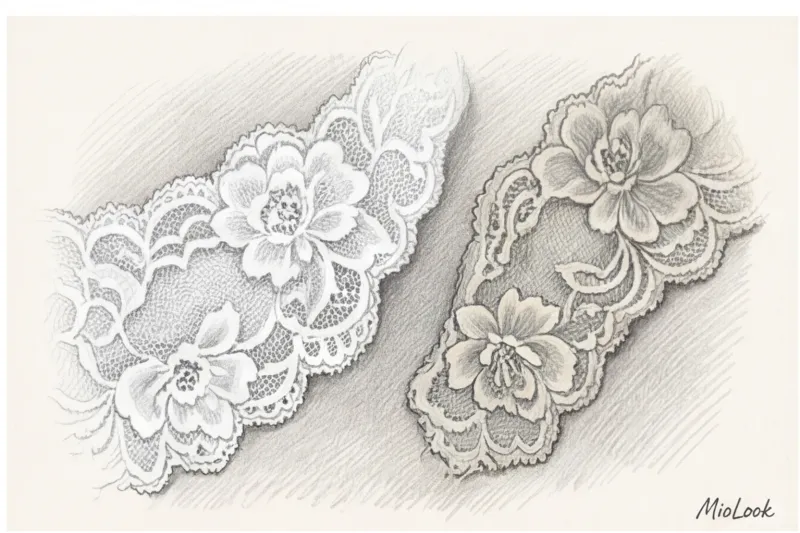
Last Tuesday, a client came to my studio almost in tears. She brought a stunning, snow-white La Perla set for €800, which after one "refreshing" wash had acquired a persistent yellowish-rusty tint and, worst of all, had completely lost its elasticity at the waist. It turned out she'd simply soaked it in water containing chlorine bleach, following advice from some forum.
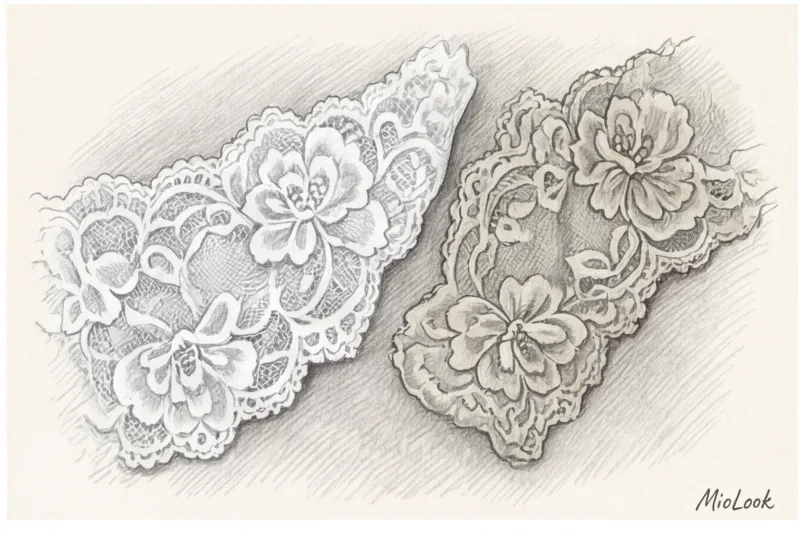
As a stylist with ten years of experience working with premium wardrobes, I see this all the time. We spend huge sums on essentials, but we ruin them with harsh chemicals, forgetting that caring for delicate fabrics isn't magic, but pure physics and the chemistry of materials. I've already written about the basic principles of washing such items in our a complete guide to caring for delicate fabrics , but the topic of color restoration deserves a separate analysis.
Today I will tell you, How to whiten underwear Safe, why your favorite powders are deceiving you, and how to restore your clothes to a salon-quality look without melting the elastane.
Why do whites turn yellow and gray (and why regular laundry detergent won't save them)
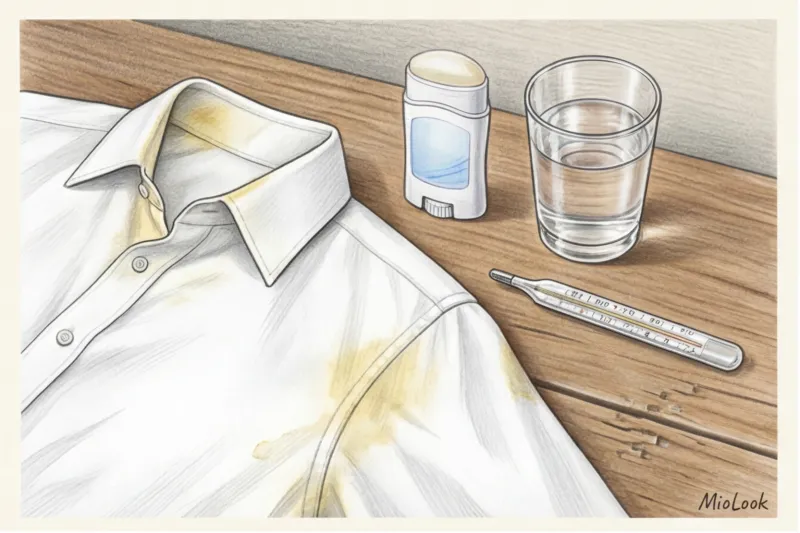
Let's be honest: white underwear doesn't change color simply over time. Yellowing is always a chemical reaction. Throughout the day, the fabric comes into contact with sebum, sweat, and aluminum, which is found in 90% of deodorants and antiperspirants. Add hard tap water (magnesium and calcium salts literally "seal" dirt into the fibers), and you get that yellowing in the gusset and underarm area.
"If the water during washing is hotter than 40°C, protein stains (sweat) simply 'baked' into the fabric. The yellowing becomes irreversible," a technician at one of the oldest Parisian corset ateliers explained to me.
The Optical Brightener Trap
The biggest counterintuitive discovery that shocks my clients is that mass-market "snow-white" laundry detergents (priced between €5 and €15) don't whiten anything at all. They contain fluorescent additives—blue or purple microparticles. This is an optical illusion. The particles settle on the fabric, reflect ultraviolet light, and trick our eyes into making the garment appear whiter.
The problem is that over time, these particles build up. Your precious French lace takes on a persistent, dirty-gray, "dusty" hue that's impossible to remove with regular washing. We haven't removed the dirt—we've simply painted over it.
Access to MioLook for €0.99 — one-time payment
A smart AI stylist will select the perfect look for every day and help you organize your wardrobe.
Get access — €0.99 onceHow to Whiten Underwear: The Golden Rule of Sorting by Fabric Type
The main rule I teach when sorting through a wardrobe is: we're not bleaching a "stain," we're working with a specific material. There's no universal grandma's method—what will save cotton will dissolve silk in 10 minutes. If you keep track of your items in an app MioLook , get into the habit of immediately tagging your laundry by fabric composition—it will save you hours when sorting your laundry.
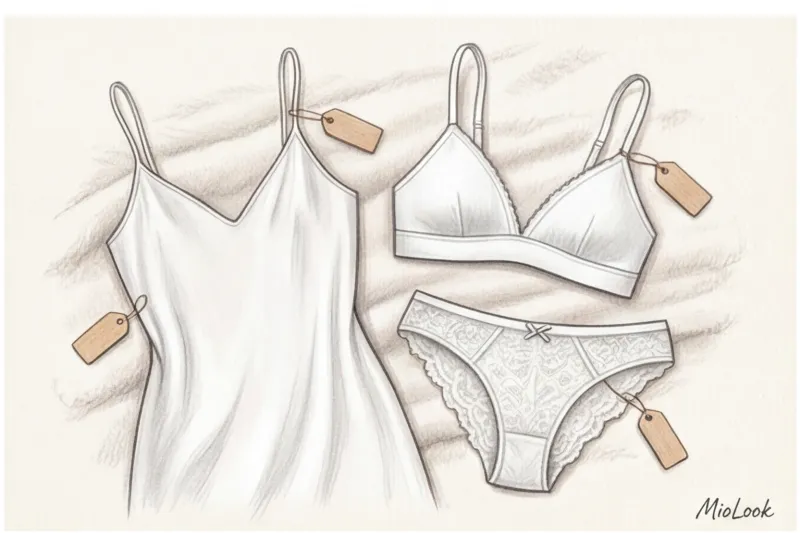
Cotton: Bringing Back Crisp Freshness
Cotton with a density of 160 g/m² or more (classic basic panties or tops) is the most durable material. It can withstand temperatures up to 40-50°C. But there's a catch: pay attention to the waistband and piping. If the material contains even 5% elastane (and 99% of the time, it's there to maintain shape), aggressive boiling is strictly prohibited. The elastane will begin to break down, and your panties will become a shapeless parachute.
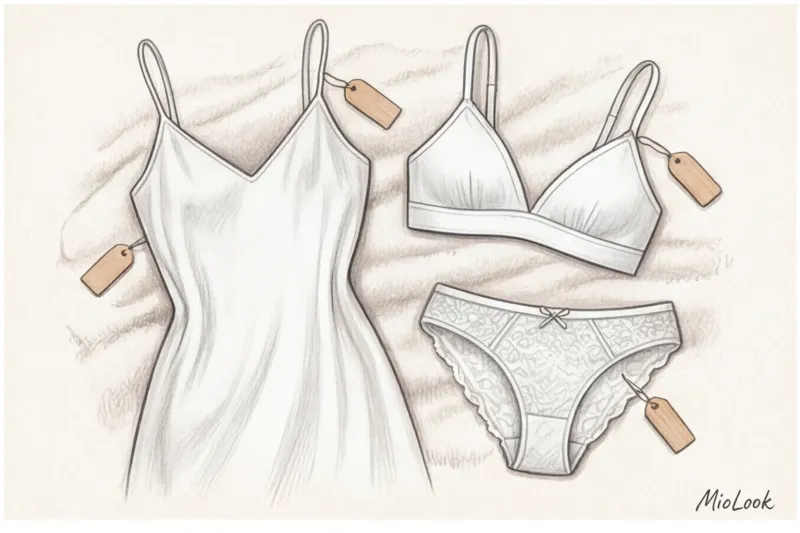
Lace and synthetics (polyamide, elastane): delicate restoration
The synthetic lace and mesh used in Agent Provocateur or Aubade bras are held together by ultra-fine polyurethane (elastane) threads. These threads provide the structure and support for the breasts. The strict safety limit for such items is water at 30°C. Bleaching synthetics is not an aggressive cleaning, but a gentle "restoration."
Natural silk: royal care
Natural silk is a protein fiber (like our hair). If you try to wash it with enzyme-based detergent, the detergent will literally begin to "digest" the fabric. The silk will become thinner and covered with micro-holes. Only hand wash in cool water with specialized liquid gels with a neutral pH is acceptable.
Top 3 Safe Homemade Ways to Bleach Laundry Without Chlorine
Let's get down to practice. These methods have been tested by me and my assistants on hundreds of sets, from basic Uniqlo to premium brands.
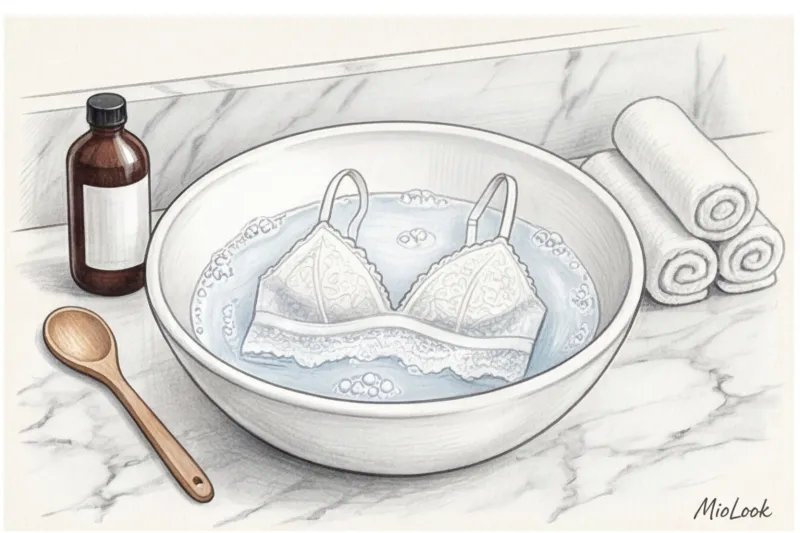
Method 1: Oxygen bleach (sodium percarbonate)
This is an ideal option for cotton linens. Percarbonate works by releasing active oxygen—millions of microbubbles literally push dirt molecules out.
How to use:
- The secret is in activation: percarbonate begins to work only in water at 80-90°C.
- Pour 1 tablespoon of powder (about 15-20 g) into an empty bowl.
- Pour 1 liter of boiling water and wait for a vigorous reaction (thick foam will appear).
- Critical step: Cool the water by diluting it with cold water to a safe temperature of 30-40°C! Only then should you immerse the laundry.
- Leave for 1 hour, then rinse.
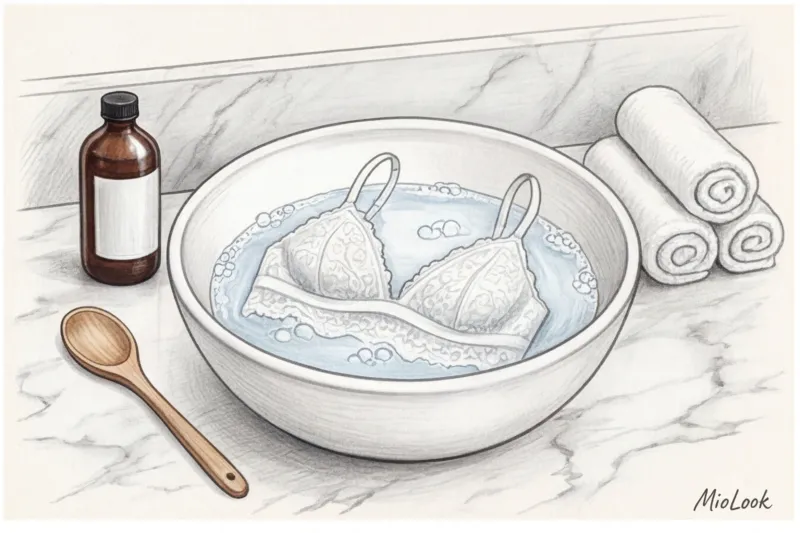
Method 2: Hydrogen peroxide and gentle soaking
My favorite way to save yellowed synthetic lace. Peroxide is extremely gentle and doesn't damage the elastane threads.
How to use: Take 2 tablespoons of standard 3% hydrogen peroxide from the pharmacy per 1 liter of cool water (no hotter than 30°C). For a stronger effect, you can add a teaspoon of mild laundry detergent. Soak the bra for 30-40 minutes. If the lace is very gray, you can increase the soaking time to an hour and a half.
Method 3: Aspirin to get rid of yellow sweat stains
This isn't a myth from women's forums, but a working chemical formula. Aspirin is excellent at breaking down complex protein stains (sebum and sweat) that have become embedded in the armholes or gussets of white bras.
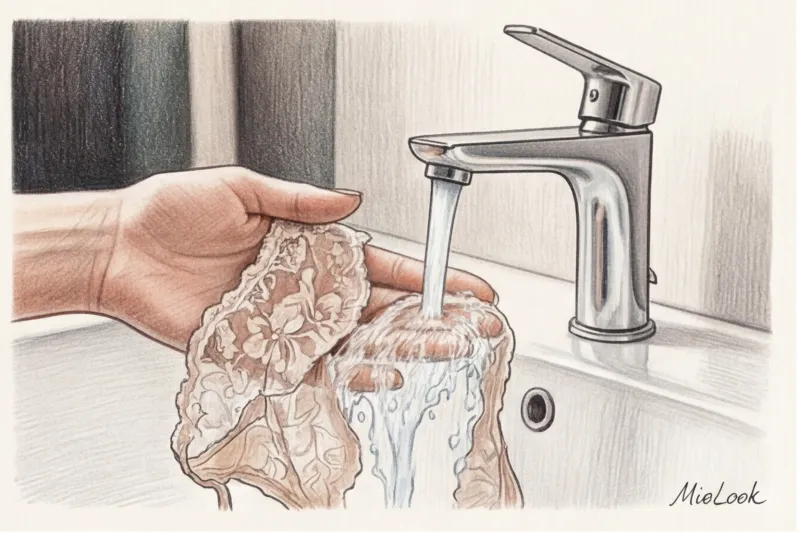
How to use: Crush 4-5 regular (not effervescent) aspirin tablets into powder. Add a couple drops of water to form a thick paste. Apply this paste to the yellow stains, gently rub in with an old soft toothbrush, and leave for 40 minutes. Then rinse with cool water.
Your perfect look starts here
Join thousands of users who look flawless every day with the MioLook app.
Get access — €0.99 onceWhat you absolutely must not do: the main mistakes
Returning to the story of the ruined La Perla set, let's figure out how to avoid ruining things yourself.
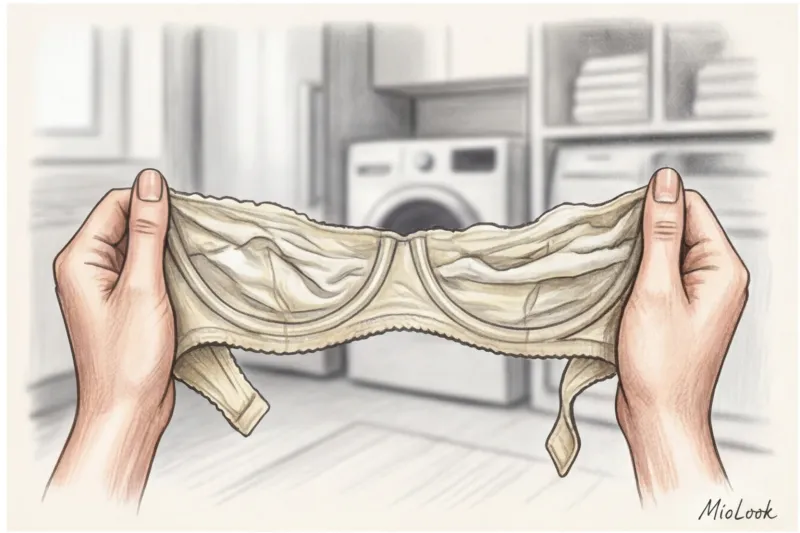
- No chlorine (bleach). Research by the French Textile Institute (IFTH) shows that sodium hypochlorite reduces the elasticity of elastane by 40-50% after just 2-3 applications. The threads literally melt, and the white fiber permanently acquires a chemical yellow tint.
- Washing "light" with white. Many people think, "Well, these are light beige panties, so I'll throw them in with the white ones." A huge mistake. Pigment from beige, light pink, or gray fabrics will imperceptibly transfer to whites in the washing machine drum. You won't see any stains, but the perfect whiteness will be gone forever. Whites are ONLY washed with crystal whites.
- Drying on a radiator. Direct heat from a radiator (or blazing sun) causes thermal burns on elastane and cotton. The fabric turns yellow, and nothing can bleach it.
A stylist's checklist: how to keep your underwear white from day one
Prevention is always better than cure. Here's the care protocol for basic white sets that I recommend to all clients:
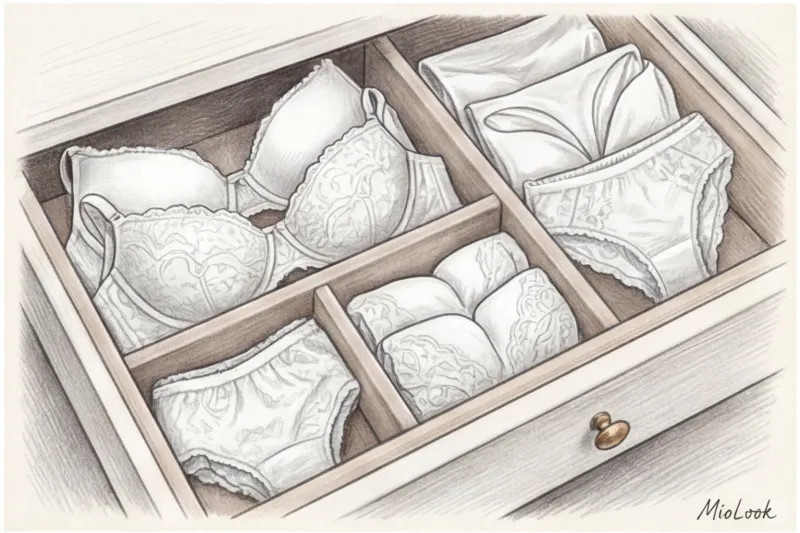
- Wash after 1-2 wears maximum. Don't wait until your laundry is visibly dirty. Sebum is transparent, but it oxidizes over time and causes a yellow tint. The longer an item sits in the laundry basket, the deeper the sebum penetrates.
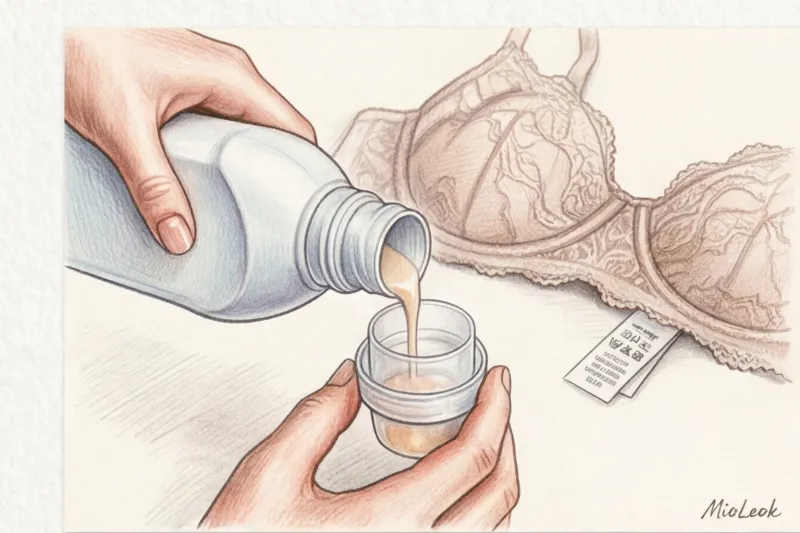
- Switch to liquid products. Dry laundry detergents often aren't rinsed out completely in cold water (and we remember that we wash laundry at 30°C). Microscopic particles of detergent stuck in the lace attract dust, turning the fabric gray.
- Use frame bags. If you're washing bras in the washing machine, a regular flat mesh bag isn't enough. Buy a special cylindrical bag with a plastic frame—it will protect the underwire from deformation and the lace from rubbing against the drum.
When bleaching is useless: laundry diagnostics
I always say: lingerie is the foundation of a silhouette. I recently styled a client for an important performance. We found the perfect wool Jil Sander suit, but the jacket was a terrible fit, breaking the bust line. The problem wasn't the suit's cut, but an old bra with a stretched-out band that had slipped down onto her shoulder blades and wouldn't hold its shape.
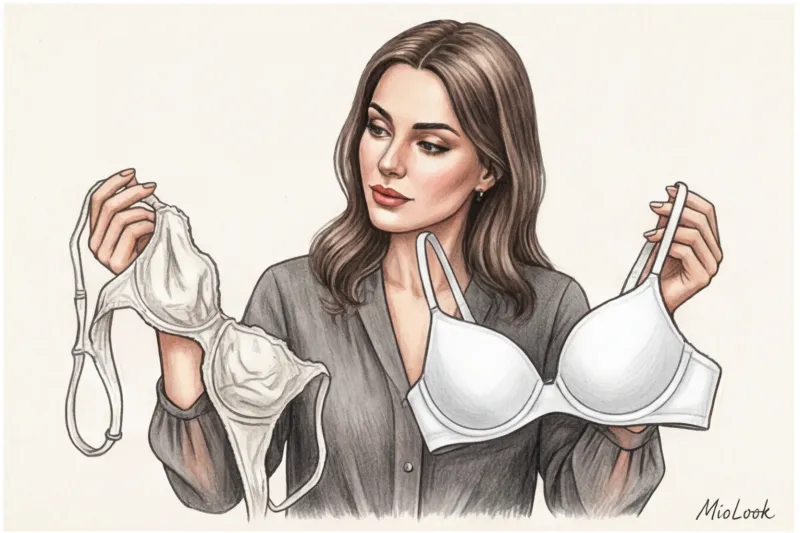
Sometimes you just have to be able to say goodbye to things. A perfectly bleached but stretched-out bra will ruin the fit of any garment, even the most expensive one. How do you know when resuscitation is pointless?
- Belt test: If you fasten your bra on the tightest hook and you can still fit more than two fingers under the band at the back, elastane is dead.
- Creases on cups: If a molded foam cup is wrinkled and has permanent creases (often the case after washing in a machine without a bag), it will show through in lumps under any thin blouse or T-shirt.
- "Floating" lace: If the lace edges on your panties curl into a tube and lose their wavy outline, it's time to discard the item.
Caring for white linens requires discipline, but the results are worth it. Forget harsh old-fashioned recipes and cheap fluorescent powders. Use knowledge of fabric properties and a gentle oxygen-based approach, and your favorite items will last three times longer, maintaining their pristine, salon-quality whiteness.