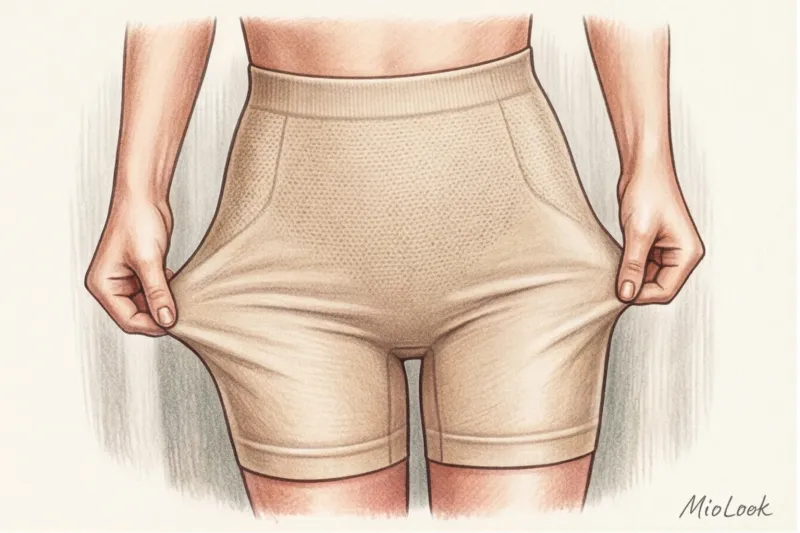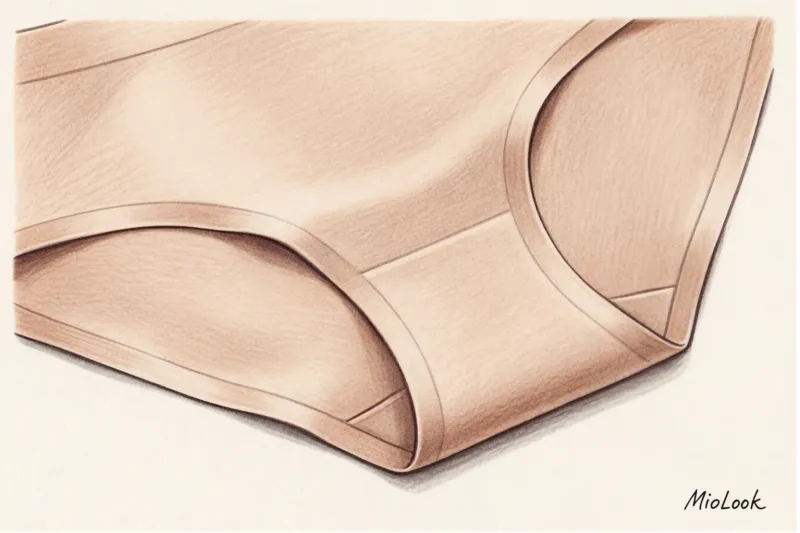
One day, my client Anna came to me in tears on the eve of an important charity dinner. Her stunning €1,200 silk slip dress by Jil Sander was a disaster: a distinctly rippled contour was visible on her hips. It turned out the dress wasn't to blame. It was her favorite basic panties, which she'd carefully washed with fabric softener and then dried on a hot towel rack. The edges, which were supposed to blend with her skin, had rippled, mercilessly ruining the magic of her expensive look.
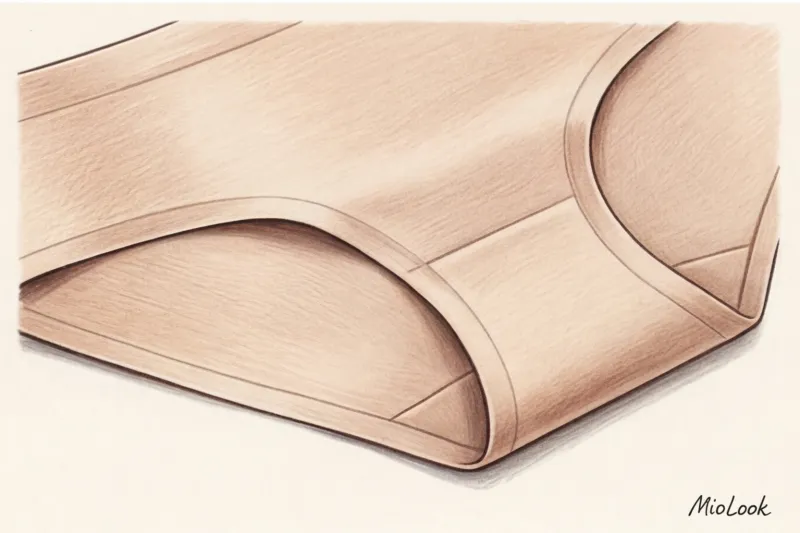
We demand the impossible from a basic wardrobe: it must shape the silhouette, support, and at the same time literally dissolve under the fabric of clothing. We discussed this in more detail in our The Complete Guide to Washing Underwear: Caring for Delicate Fabrics But today I want to focus on the most fragile element of our base. If you don't know how to wash seamless underwear properly, you risk not only ruining the items themselves but also compromising the fit of your entire garment.
The Anatomy of Invisibility: Why Is Seamless Underwear So Fragile?
To understand the care instructions, you need to understand how this "second-skin magic" is created. Over 12 years of working as a personal stylist, I've learned that the perfect frame for a strict office dress code is half the success of your suit. Perfectly fitting trousers made of fine wool don't tolerate digging elastic bands.
Unlike traditional models, seamless underwear is created using laser-cutting and thermal bonding technology. This means the edges of the fabric are not folded or stitched. They are welded together under high temperatures using a special polymer hot-melt adhesive. And it is this adhesive that is the Achilles' heel of your invisible base.
"Every time the edge of seamless panties or a bra becomes deformed and stretched, the garment loses its purpose. It loses its fit and begins to show through clothing, creating unnecessary visual noise," say Italian lingerie technologists.
The main question: how to wash seamless underwear in a washing machine (and is it possible at all)?
Let's bust the biggest myth: washing seamless items in the washing machine Can I recently took a personal test drive: I bought two identical basic microfiber tops (in the €50 range each). I hand-washed one exclusively, and machine-washed the other, but using the strictest delicate care instructions. After six months of intensive wear, there was virtually no difference in their condition. Machine-washing, however, requires ironclad discipline.
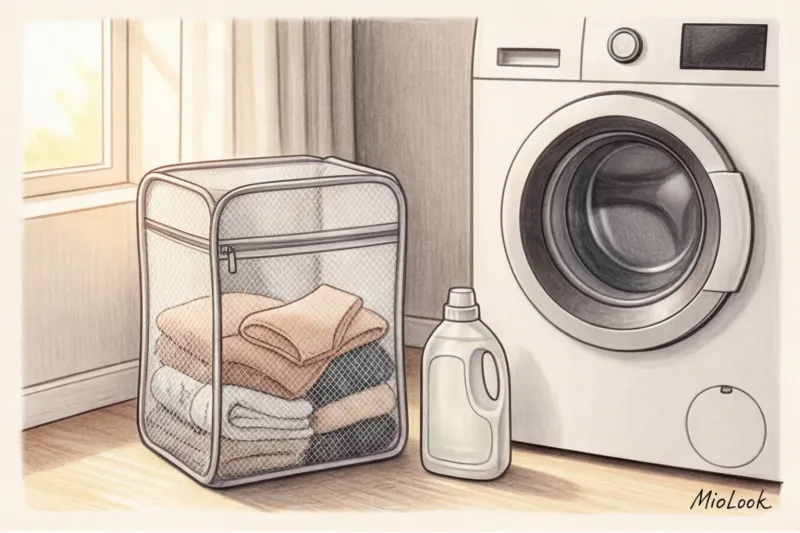
The danger of the drum lies not so much in the rotation as in its surroundings. Friction against stiff fabrics (jeans, zippers, buttons, terry towels) is detrimental to smooth microfiber. One of my clients managed to "kill" a premium set in a month simply by throwing it in the drum with heavy denim. The microfiber immediately became covered in pills, and the finest edges frayed.
Temperature Control: Saving Elastane
Why is 30°C the absolute maximum for such products? Hot water literally "cooks" the elastane threads and melts the hot-melt adhesive.
Studies by textile testing laboratories show that washing at temperatures above 30°C accelerates the breakdown of hot-melt adhesives in seams by 60%. Your underwear will become a shapeless rag, the edges will fray, and the elasticity will be lost forever. Choose the "Silk," "Hand Wash," or "Delicate" cycles with minimal spin (no more than 400 rpm) or no spin at all.
Laundry bags: framed vs. regular
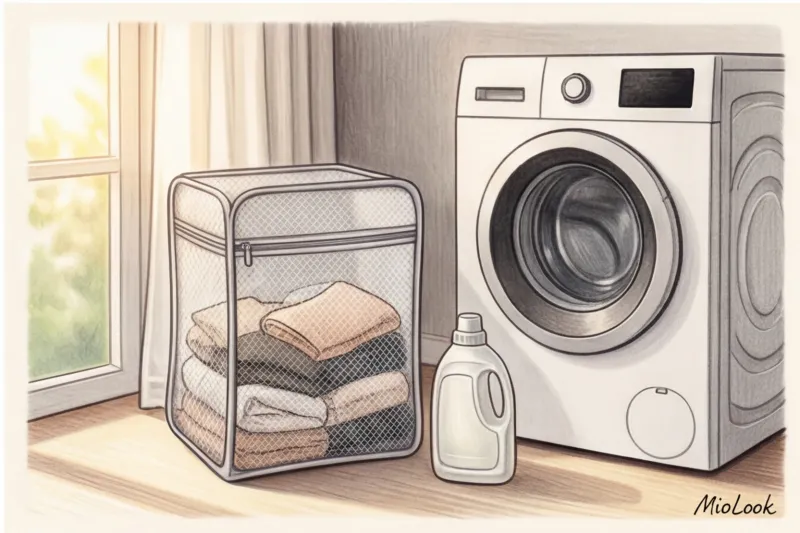
If you put a bra with molded cups in a regular, flat mesh bag, you're just wasting your time. During the spin cycle, the flat mesh bag doesn't protect against the pressure of the drum, and creases will appear on the smooth cups, which will be visible under delicate knits.
- For sconces: Use only 3D bags with rigid plastic ribs that hold the shape of a sphere.
- For panties: Thick bags with small holes are suitable.
- Golden rule: Don't overfill the bag. There should be no more than 3-4 items inside, so they can be easily washed in the soapy water.
Ready to get started?
Try the free plan—no commitments required. Upload your favorite items and plan your perfect looks with our smart AI stylist.
Get access — €0.99 onceEnemy number one: why air conditioning kills seamless fabrics
And now a counterintuitive fact that surprises 90% of women in my wardrobe decluttering workshops. The myth is that fabric softener makes laundry soft, fragrant, and pleasant to the touch. The reality: fabric softeners are a slow death for stretchy fabrics.
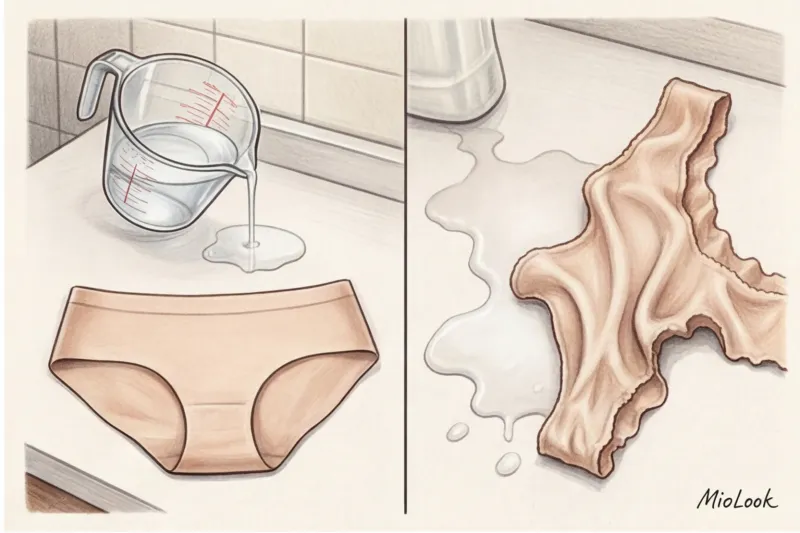
According to textile experts, seamless underwear loses up to 40% of its elasticity with regular use of fabric softener. Silicones in fabric softeners coat the microfiber fibers with a dense film. As a result, the fabric:
- It stops “breathing” (loses hygroscopicity, which is critical for the intimate area).
- Starts to trap odors (silicone film traps bacteria inside).
- It reacts chemically with the hot melt adhesive, literally dissolving the laser cut welded edges.
My advice: Replace your fabric softener with a tablespoon of regular white vinegar (added to the rinse cycle). It will neutralize any detergent residue, soften the fabric, and won't damage the elastane. But there's exception: This method does NOT work for high-support sports bras—the thick spandex there requires machine washing with specialized enzyme gels to break down stubborn sweat and oil.
Hand washing as a ritual of investing in your style
For premium basics, hand washing remains the gold standard. I suggest viewing this process not as a boring chore, but as a tactile ritual of self-care and your investment in style.
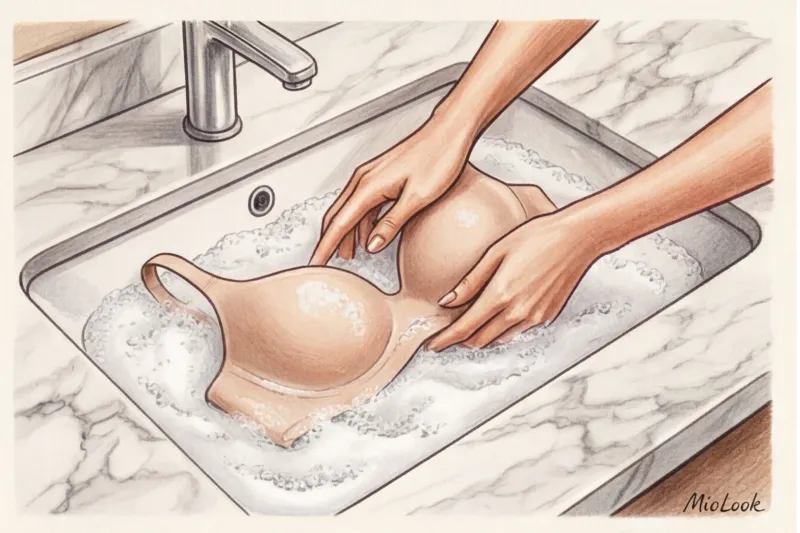
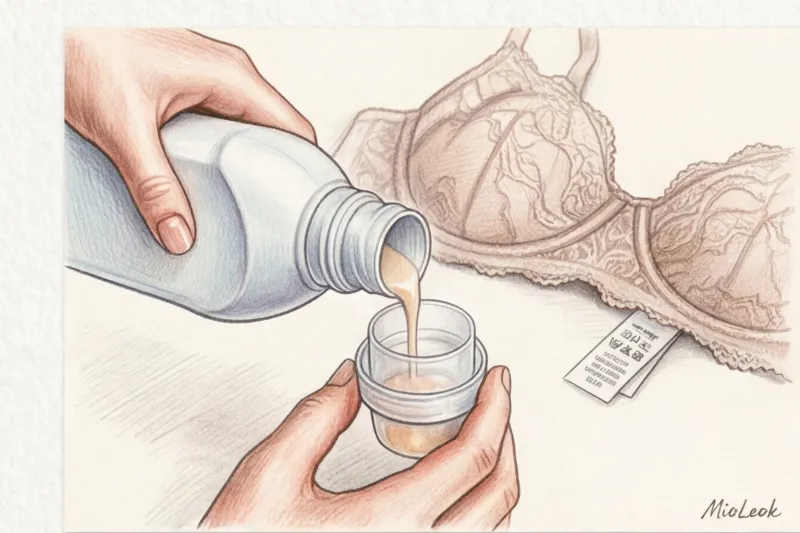
Use only liquid detergents for delicate fabrics. Powders contain harsh enzymes and microabrasives that won't rinse out of fine microfiber fibers at low temperatures.
The correct technique is the "pump effect":
- Fill the sink with cool water (no warmer than your body temperature).
- Dissolve the liquid gel and soak the laundry for 10-15 minutes.
- Don't rub the fabric against itself! Gently press the items with your palms, creating a pumping effect, forcing the soapy water through the fibers.
- To remove stubborn stains from the gusset, use a soft brush (a baby toothbrush will do) or simply rub it with your finger and a drop of soap.
Drying Geometry: How to Maintain Correct Belt Tension
Even if you've washed an item perfectly, one misstep while drying can ruin everything. A stretched-out bra band will no longer be able to support 80% of the breast's weight (as intended), meaning all the weight will be transferred to the straps, ruining your posture and the fit of any clothes you wear over it.
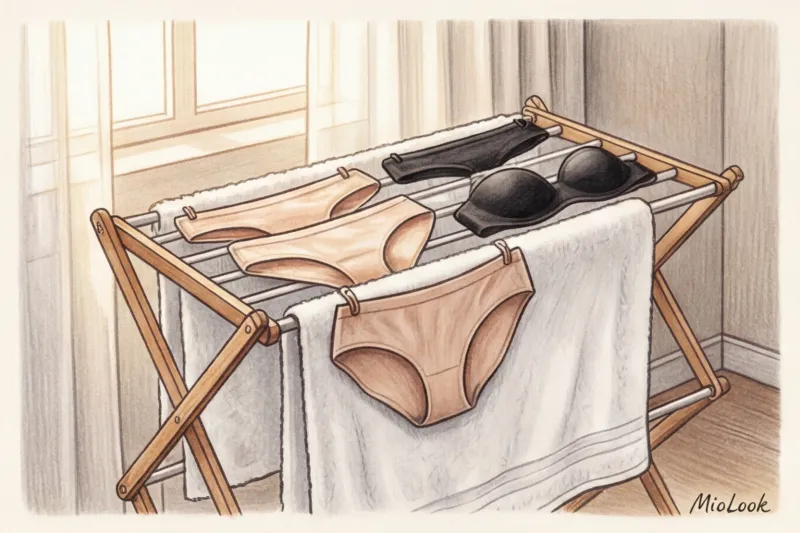
Hanging wet seamless underwear by the straps or one edge of the waistband permanently stretches the garment under the weight of the water. Even worse is "death by radiator." Any direct heat source (radiator, heated towel rail, hair dryer) destroys the molecular structure of spandex within a couple of hours. It becomes brittle and begins to crack.
The correct position: hang to dry horizontally on a terry towel, in a well-ventilated area, away from direct sunlight. Smooth the garment out with your hands, returning it to its original shape to avoid creasing.
Try MioLook
A smart AI stylist will choose the perfect look for you and help you organize your wardrobe so that everything lasts a long time.
Get access — €0.99 onceChecklist: 5 Golden Rules for Caring for Delicate Basic Wardrobe Items
Save this list or take a screenshot. Implementing these simple habits will extend the life of your "invisible database" at least threefold.
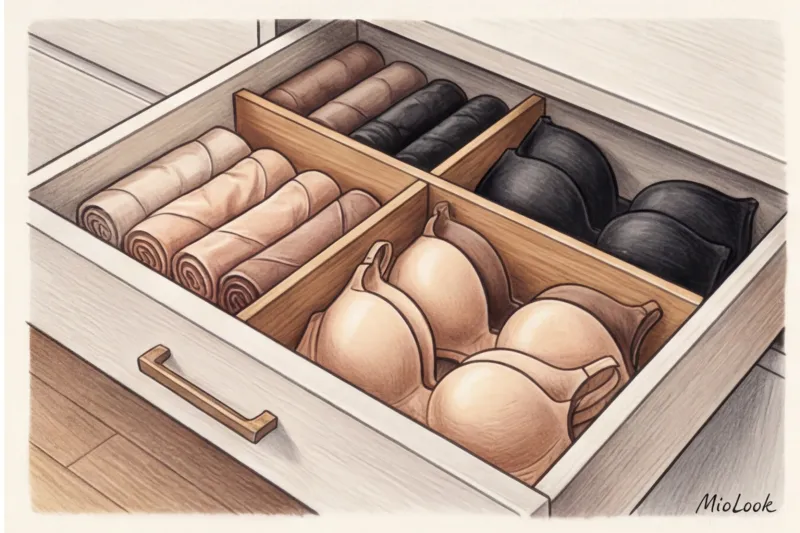
- Strict sorting: Microfiber should only be washed with microfiber or silk. No cotton, wool, or denim.
- Liquid textures only: gels or shampoos for delicate fabrics.
- A cool head means cold water: maximum water temperature 30°C.
- No twisting: squeeze out the water by gently squeezing it through a dry towel.
- Horizontal drying: Dry flat, away from heat.
A stylist's verdict: how to tell when it's time to retire your underwear
No matter how meticulously you care for your wardrobe, seamless underwear has a lifespan. On average, with active wear (rotating between 3-4 sets), it lasts 6-8 months. To keep track of time, I recommend digitizing your database. Upload photos of your sets to the app. MioLook - this way you will always see which items need replacing and can easily plan your purchases.
Signs of "death" in seamless underwear are obvious: rippled, stretched edges, micro-cracks (tiny white spots) in the elastane, and loss of elasticity in the waistband. If a top or panties no longer return to their original shape after you take them off, recycle them without hesitation.

Returning to my client Anna's story: we had to scramble to find a new seamless set an hour before the event to save the Jil Sander dress. Skimping on properly washing basics always leads to the loss of the prestige of expensive outfits.
The main point I want to convey is that caring for your invisible underwear isn't a chore, but the foundation of your appearance. The perfect fit of your first layer determines how luxurious cashmere, fine silk, or a smart suiting crepe will look on you.