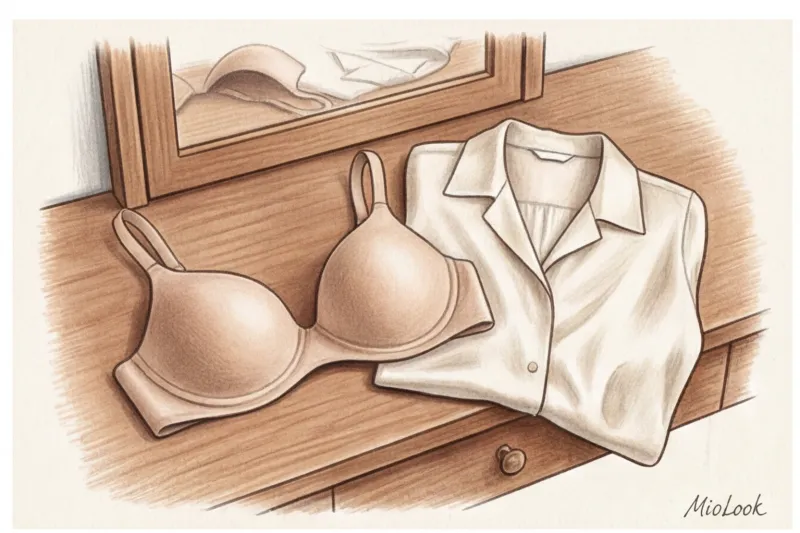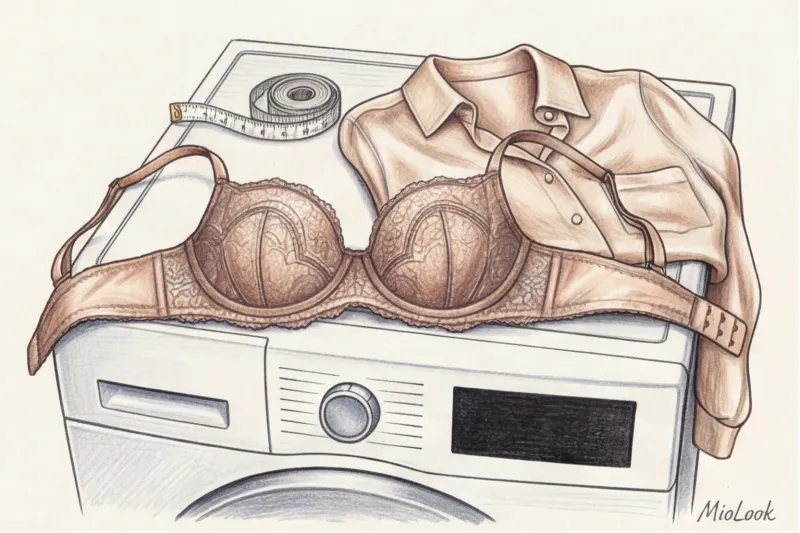
Do you know what can instantly cheapen a perfectly tailored €1,500 jacket? No, it's not a poorly tailored bag or worn-out shoes. It's a stretched-out bra band that will ruin it. When I started working as a stylist, I discovered that most women view lingerie care as a routine household task, not as an investment in their wardrobe. And they shouldn't. The perfect fit of any garment begins with the correct body contours, which is created by a bra.
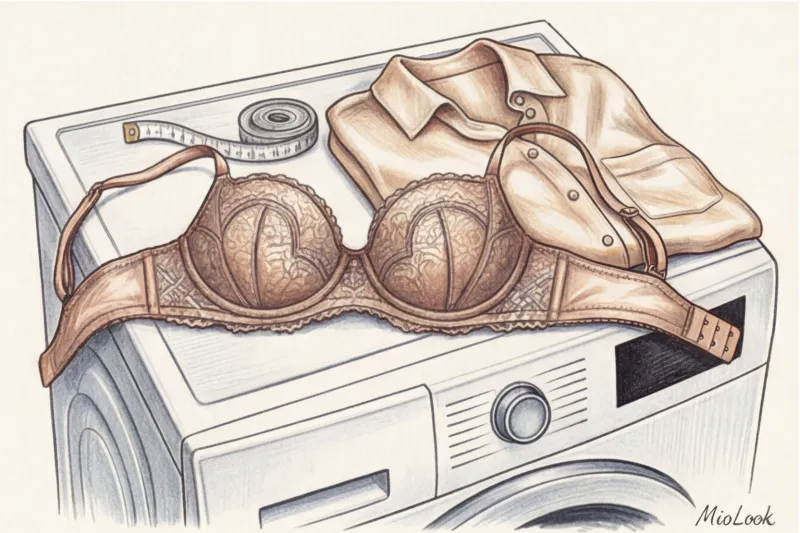
I talked in more detail about the philosophy behind creating a lingerie capsule in our a complete guide to caring for delicate fabrics But today we'll address the most pressing and controversial issue: How to wash a bra in a washing machine so that it doesn't lose its shape after a month, and the bones don't sabotage the drum.
The Hidden Foundation of Style: Why the Fit of a Couture Dress Starts with Bra Care
One day, a client came to me with a stunning wool Jil Sander suit. The jacket fit her terribly: the fabric bunched up at her shoulder blades, and the proportions of her silhouette seemed distorted. We spent half an hour trying to figure out the problem with the fit until I noticed her back. The band of her everyday bra had slipped almost to her neck. The elastane had been completely destroyed by washing at 60°C, and the bra simply couldn't support her breasts, riding up and pulling the lining of her expensive jacket down with it.
The silhouette's architecture doesn't forgive a weak foundation. You can buy a perfect silk shirt for €150, but if you wear a bra with cups that are misshapen from the wringing process, the whole look will look sloppy.
"Hand washing is the only way to preserve laundry." I've been hearing this for years and am happy to bust this myth.
Hand washing works for vintage silk. But it's detrimental to 90% of modern everyday microfiber bras or high-tech spacers. Aggressive hand wringing and friction destroy the fibers much faster than the delicate cycle in a modern washing machine, if you know how to adjust the settings.
Your perfect look starts here
Join thousands of users who look flawless every day with MioLook.
Get access — €0.99 onceHow to Machine Wash a Bra: A Step-by-Step Guide Without Losing Shape
When conducting wardrobe audits (by the way, for convenient organization of things I recommend Digitize your closet with the MioLook app ), I see some alarming statistics. Around 80% of women ruin expensive elastane within the first three months of wearing it. And the reason isn't the brand's quality, but a misunderstanding of the physics of a washing machine.
The most important rule for machine washing laundry is to sort by weight, not just by color. You can't throw delicate lace in the drum with heavy jeans. The heavy, wet denim will act as a press during the spin cycle, physically flattening the foam cups.
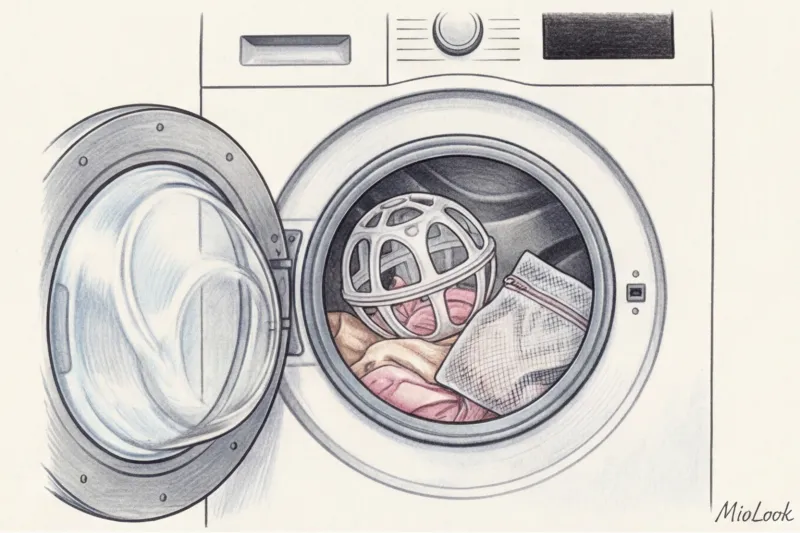
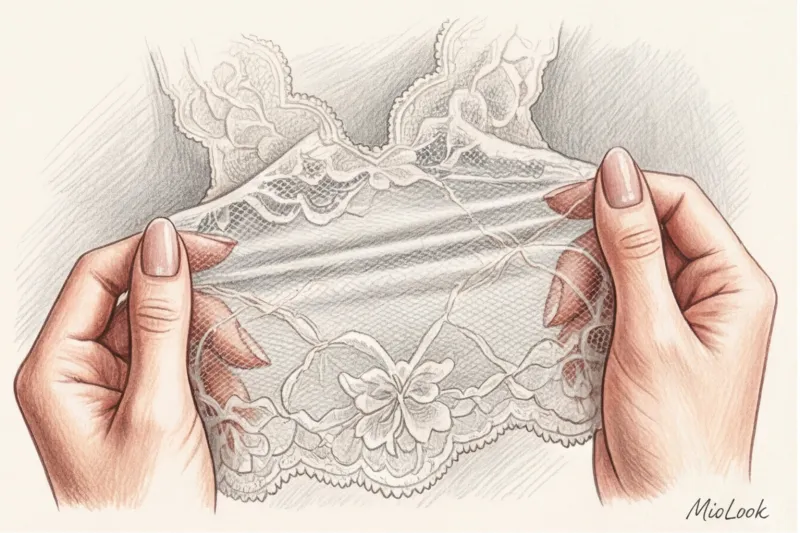
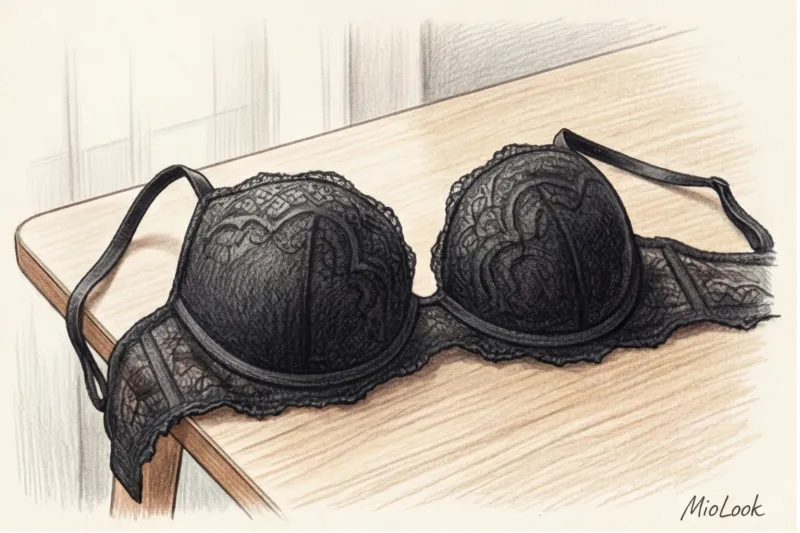
Protective gear is essential. No "free floating" in the tumble dryer. For soft lace, use thick mesh bags. For molded cups (especially push-up cups), use special hard plastic spheres. These absorb the impact of the drum walls and prevent centrifugal force from flattening the cups.
Temperature control: saving elastane from "cooking"
The gold standard for manufacturing procedures at brands like Chantelle and Agent Provocateur is a temperature no higher than 30°C. This isn't a recommendation, it's a law of chemistry. According to research by The Lycra Company (the manufacturer of that very same elastane), when washed above 40°C, the fibers lose up to 40% of their elasticity in just five cycles.
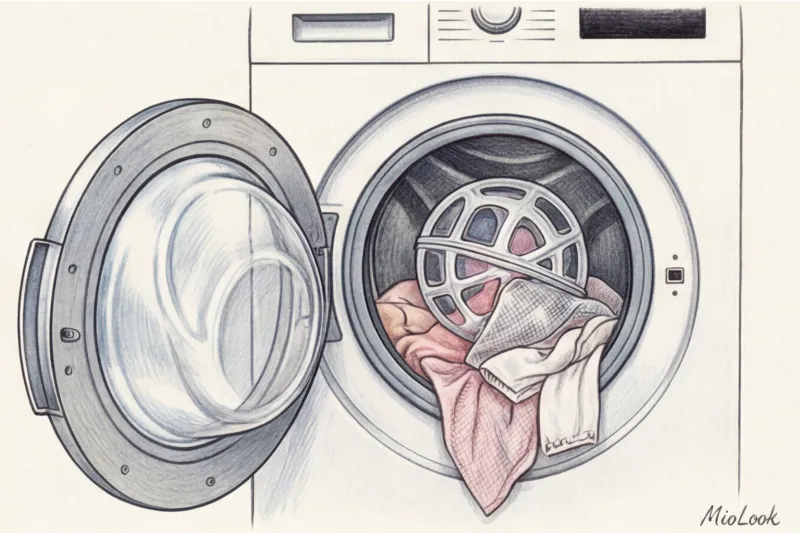
Many people are afraid to wash clothes in cold water, believing the myth: "Cold water doesn't remove sebum." In the 1990s, this was true. But modern enzymes in high-quality laundry detergents break down sebum even at 20°C. Hot water won't make clothes cleaner; it will simply cook the elastic bands, turning them into brittle, inelastic ropes.
Choosing a product: why powder is strictly prohibited
Forget about dry powder. Its granules are highly abrasive. They don't dissolve completely in a delicate wash cycle (with little water and low spin speed). These microscopic stones get stuck in the polyamide fibers, leaving micro-scratches on the silk and destroying the delicate lace from the inside.
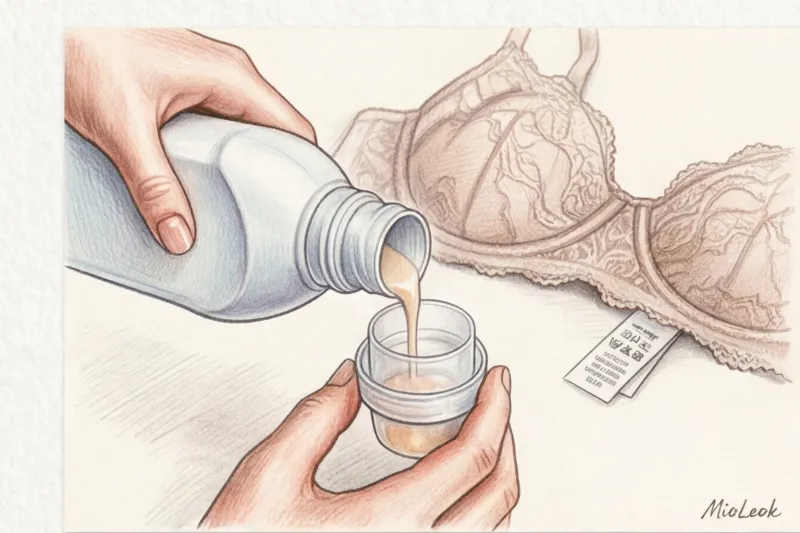
- Use only liquid gels. They are pH-neutral and wash out without leaving any residue.
- A categorical "NO" to air conditioners (fabric softeners). These are the main killers of sports and everyday underwear.
Fabric softener coats the fabric with a thin wax film. This is great for a terry towel. It's a disaster for a bra. The film clogs the fabric's pores, destroying its moisture-wicking properties and depriving the elastane of its ability to contract. The underwear becomes loose and loses its breathability.
Sconce Anatomy: A Pre-Drum Preparation Checklist
Before throwing your laundry in the washing machine, take a minute to prepare it. This habit will save more than one lace garment.
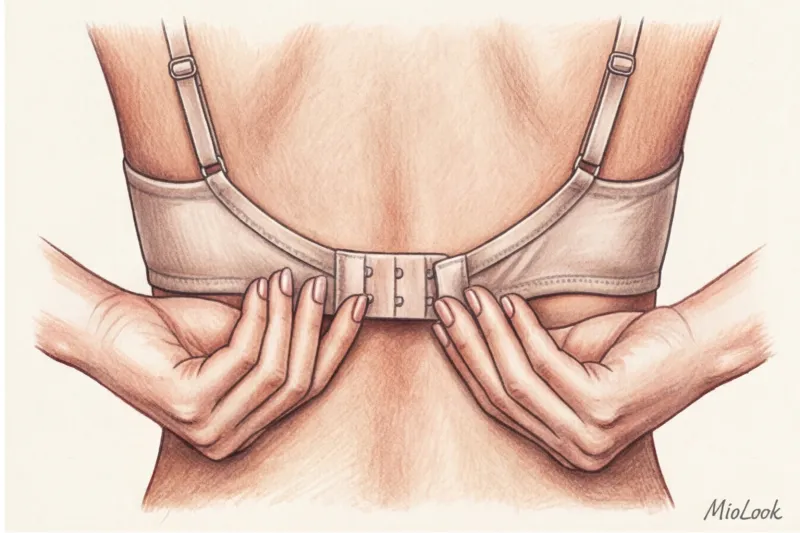
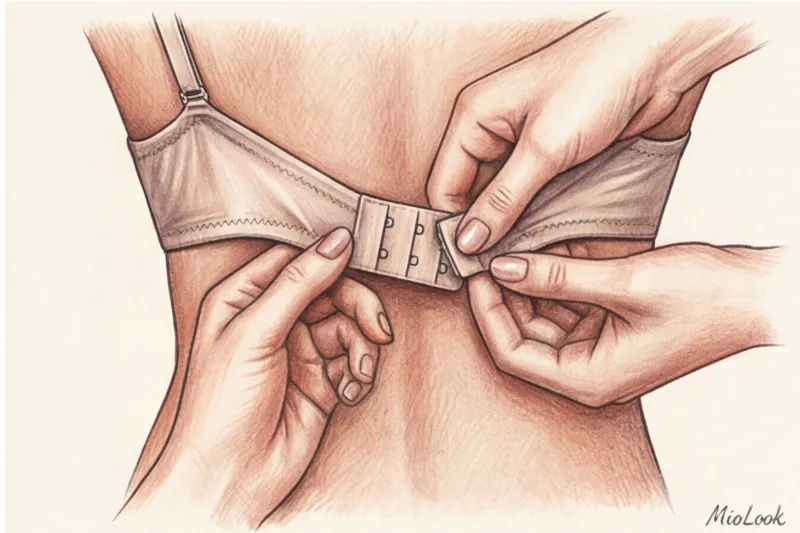
- Fasten all hooks. An open metal hook in a washing machine is like a harpoon. It's sure to snag on delicate knitwear or, worse, on the perforated surface of the drum itself, ripping out the clasp.
- Pre-processing. If there are traces of deodorant or foundation on the straps, apply a drop of liquid detergent locally 15 minutes before washing. Do not scrub!
- Removable parts. Remove the push-up pads and wash them separately in a small bag. They will bunch up and lose their shape inside the bra.
When it does NOT work: There's an exception to this algorithm. If you have a vintage silk corset from the 1950s or a bra with extensive hand-beaded embroidery, a machine won't do the trick. Professional dry cleaning or a gentle soak in a basin are the only options.
Access to MioLook for €0.99 — one-time payment
A smart AI stylist will select the perfect look for every day.
Get access — €0.99 onceCommon Mistakes: What Ruins a Perfect Fit in One Cycle
The wash cycle is over, but the danger isn't over yet. According to my statistics, 70% of metal pit deformations occur not during the wash cycle itself, but during the spin cycle.
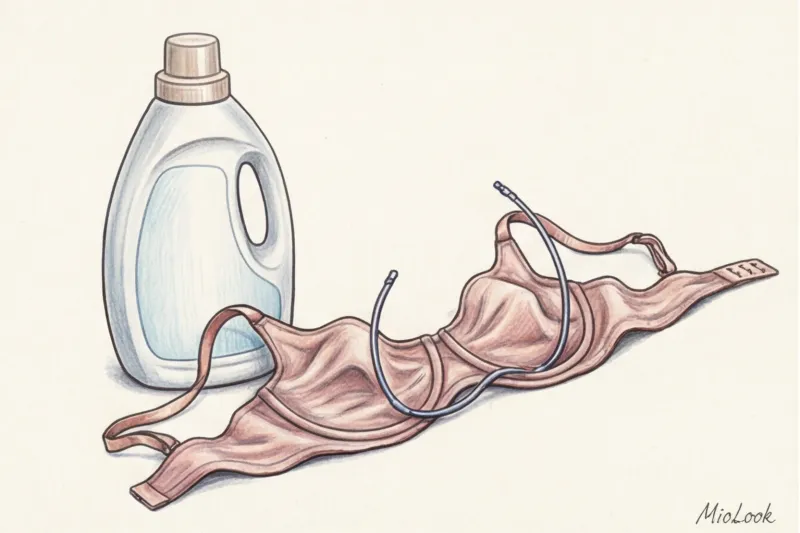
Any speed above 600 rpm is critical for underwear. The centrifugal force in the drum is so strong that the metal underwire begins to bend at an unnatural angle. Eventually, the underwire breaks through the tunnel belt and digs into your ribs the first time you try it on.
Another fatal mistake is leaving laundry in the washing machine. If molded spacers or foam rubber are left in a damp, crumpled state for more than an hour, hard creases will form. These creases cannot be straightened with an iron or steamer—the foam's structure is permanently destroyed.
Drying and storage as a continuation of care (laws of gravity)
Hanging a wet bra by the straps on a drying rack can cut its lifespan in half. Wet foam weighs 3-4 times more than dry foam. Gravity pulls this weight down, stretching the elastane in the straps to their limits.
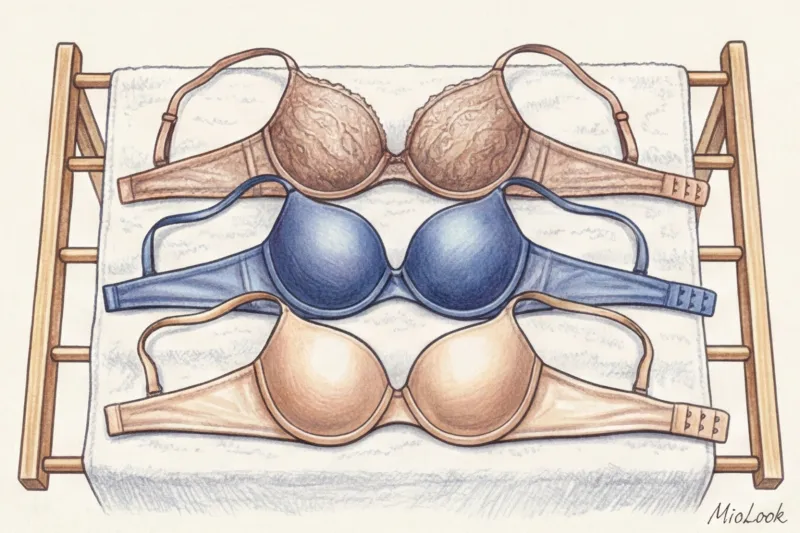
Rules of proper drying:
- Horizontal only. Place the sconce on a clean, dry towel.
- The central bridge (between the cups) should lie flat on the surface.
- No radiators. Sudden temperature changes destroy the adhesive seams in seamless underwear.
A separate professional secret concerns storage. The "spoon rule": stack bras one after another, without crushing the cups. Never turn one cup inside out to nest it inside another! This disrupts the bra's central axis of symmetry (woe). After a month of storing like this, the bridge will no longer fit snugly against your sternum, and the bra will lose its support function.
When it's time to retire your laundry: the fabric fatigue test
You can't create a stylish wardrobe if your dresser is full of zombie-like items. How do you know when a bra is time to ditch it, even if it cost €100?
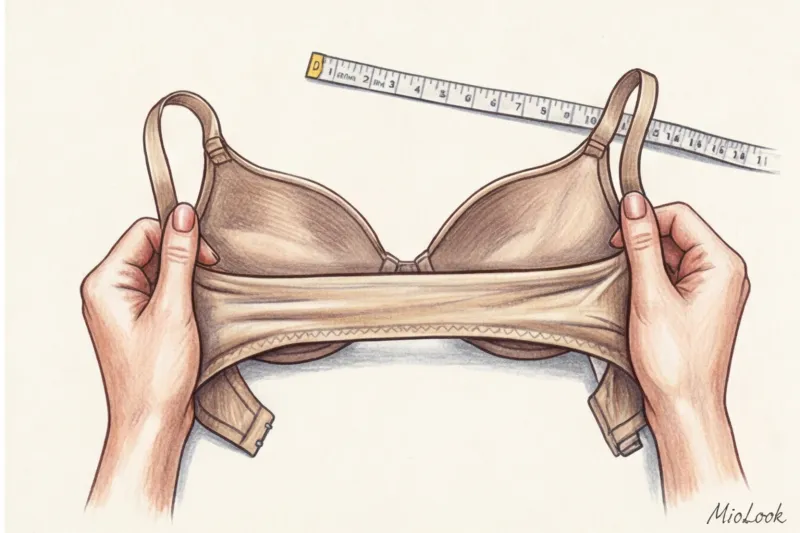
Perform a check-up on three markers:
- Belt test. Fasten the bra using the tightest (inner) hook. If you can fit more than two fingers under the band at your back and pull it back 5 cm or more, the elastane is dead.
- Creases on cups. Wear a thin merino knit turtleneck (like a basic one from COS or Uniqlo). If the texture of the wrinkled foam or the lumps show through the smooth fabric, the bra will ruin any fall look.
- Strap fatigue. If you have to tighten the length adjusters every week because they slip, the elastic inside has become thinner.
The condition of your underwear directly affects your posture. It's impossible to feel confident at an important interview or date if you're constantly adjusting a slipping strap or feeling like the underwire is digging into your skin.
With proper machine care (30°C, 600 rpm, mesh, liquid gel, flat drying), a basic bra will easily last 1.5–2 years without losing its shape. Don't turn your bra into the drudgery of hand washing, but don't subject it to the harshness of a household appliance either. Invest 5 minutes in setting your machine correctly, and your wardrobe will reward you with a flawless fit.