How to Store Your Underwear: Why It Affects Your Figure More Than Diet
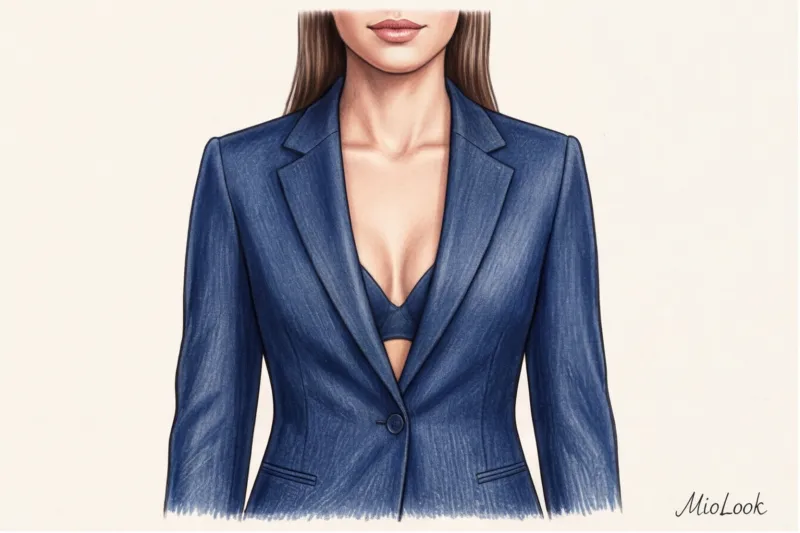
In 14 years of working as a personal stylist, I've learned one hard and fast rule: you can buy the perfect Jil Sander jacket for €1,500, but if you're wearing a misshapen bra underneath, the whole outfit will look like it costs €15. Lingerie is the architectural framework of your outfit. And how you handle it matters. to How you put it on determines the fit of the most expensive items in your closet.
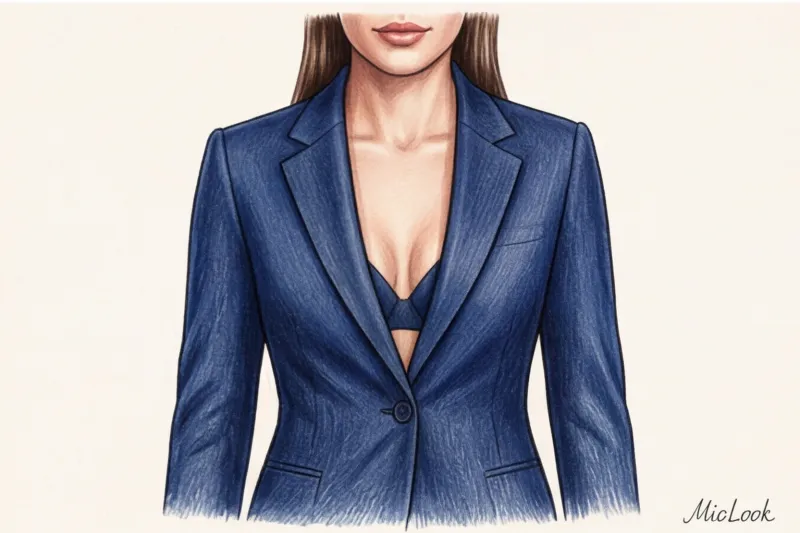
One day, a client came to me with the question: "All my classic suits fit me poorly; my breasts look saggy, even though I'm 32." We went into the fitting room, and the problem became obvious. She was wearing an expensive, smooth microfiber bra, but its center bridge was bowed and the cups had deep creases. It turned out she'd been storing her bras in a tiny drawer, forcing them in. The result? The ruined bra had completely ruined her silhouette.
Many people think that the life of elastane depends solely on how you wash it. Yes, harsh detergents destroy the fibers—we've covered this topic in detail in our a complete guide to washing and caring for delicate fabrics But the truth is, 80% of women ruin the shape of their bras in the closet. Today we'll look at How to store underwear from the point of view of fabric architecture, so that your clothes last for years and your figure looks impeccable in clothes.
The Biggest Mistake That's Killing Your Bras (Spoiler: You Do It Every Day)
Search YouTube or Pinterest for "storage hacks," and you'll see hundreds of videos of women deftly folding their bras in half, twisting one cup into the other. As a bra fitter and stylist, I can tell you: this is a real crime against your belongings.
Turning a molded cup inside out breaks the structure of the spacer (a three-dimensional porous material) and the foam. According to research by Lycra fiber manufacturers, constant unnatural tension and kinking reduce the lifespan of elastic threads by exactly half. Furthermore, folding permanently deforms the corset and the central bridge (the part between the cups that should fit snugly against the sternum). If it buckles, the bra will never properly support your breasts again.
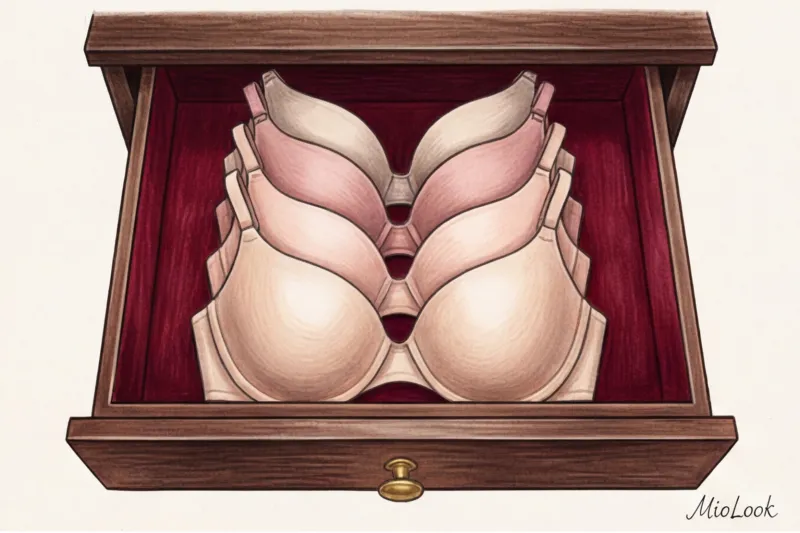
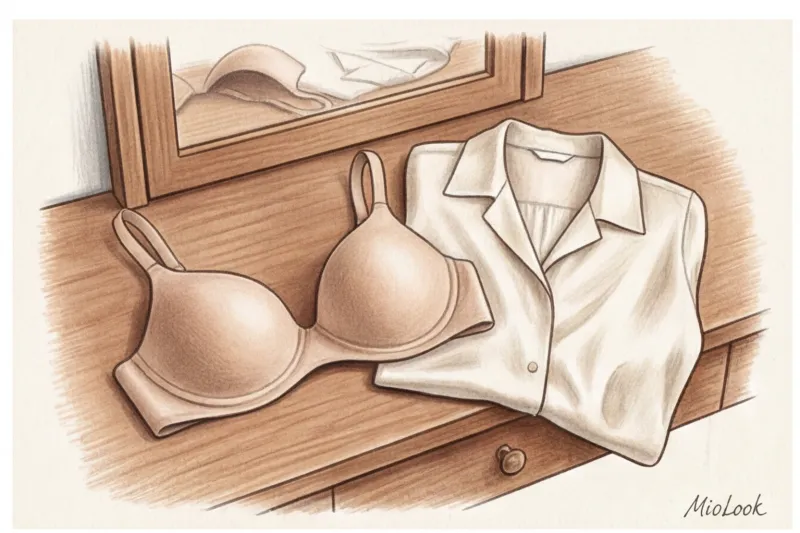
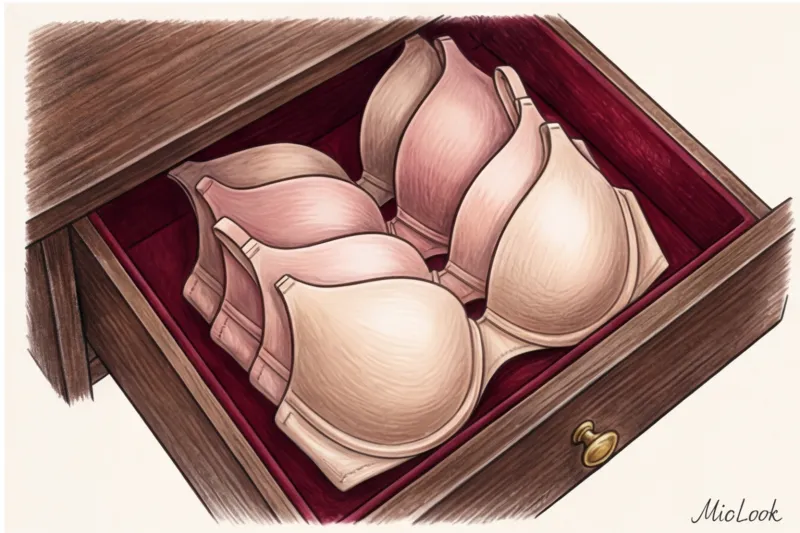
The only true way for molded models is spoon rule Bras should be stored flat, nested inside one another, like spoons in a drawer. Yes, this takes up more space. But ask yourself: is it more cost-effective to dedicate a larger shelf to lingerie or to buy a new basic bra every three months for €50–€80?
Molded Cups vs. Soft Lace: Different Rules of the Game
It's important to note here: what's harmful to a dense push-up bra is perfectly normal for soft lace.
- Molded sconces, spacers, balconettes: Only when unfolded, one cup inside the other. Fasten the hooks at the back to prevent them from catching on the adjacent lace.
- Soft bralettes and lace styles without underwire: They can be safely folded in half along the bridge line (without turning the cups themselves inside out) and placed in a stack or vertically.
Ideas and life hacks for storing underwear in a dresser: creating a system
Dresser drawers are objectively the best place for your linen capsule. They protect delicate fabrics from damaging UV rays and dust. But simply throwing everything in a dark drawer isn't enough.
Over the years of cleaning out wardrobes, I've tested dozens of storage systems. The most popular solution I see from clients is cheap plastic dividers. Get rid of them. In my experience, hard acrylic with microburrs (the kind left by cheap factory casting) has ruined more than a meter of expensive French Chantilly lace. Plastic scratches microfiber and leaves snags in silk.
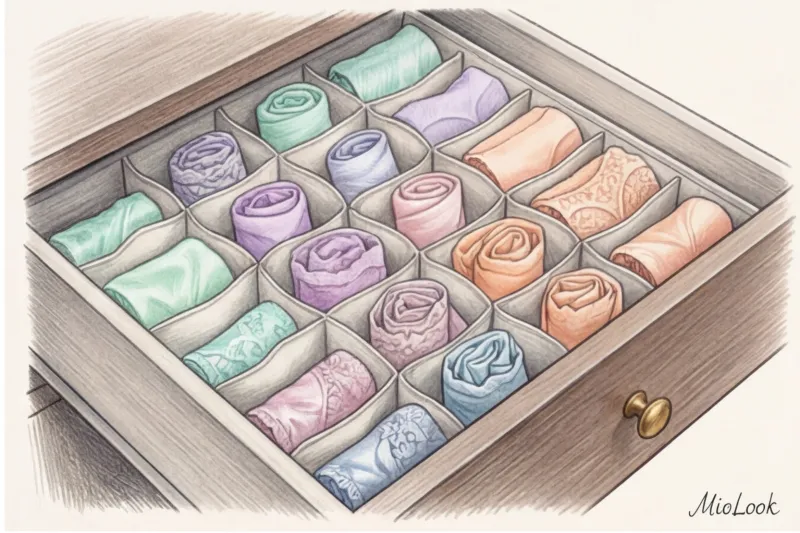
Fabric organizers are the best choice. The "honeycomb" method is ideal for panties and socks. These soft fabric compartments hold each pair individually. You can see your entire arsenal at a glance, and your items won't rub against each other.
"When using the Marie Kondo method for underwear, the key is not to overdo it. When folding panties into a roll or envelope, never pull the elastic to secure them (as you do with athletic socks). This will destroy the elastane at the edges within a couple of months."
How to fold panties safely: Place them face down, fold the gusset up (toward the waistband), then fold the sides toward the center. This will create a neat rectangle that stands upright in the honeycomb without any tension.
Your perfect look starts here
Join thousands of users who look flawless every day with MioLook. Digitize your wardrobe in just a few clicks.
Get access — €0.99 onceHow to store underwear in a closet if you don't have a separate chest of drawers
Not every apartment has a chest of drawers, and we're often forced to integrate linen storage into the closet. If you only have shelves and rods, the strategy changes.
The best invention for such situations is hanging fabric shelves. They attach to a rod with Velcro, creating a vertical mini-chest of drawers. However, there is an important limitation here: This method does NOT work for heavy corsets with steel bones. Their weight causes the soft bottom of the case to sag, deforming the corset. Cases are only suitable for lightweight basic lingerie.
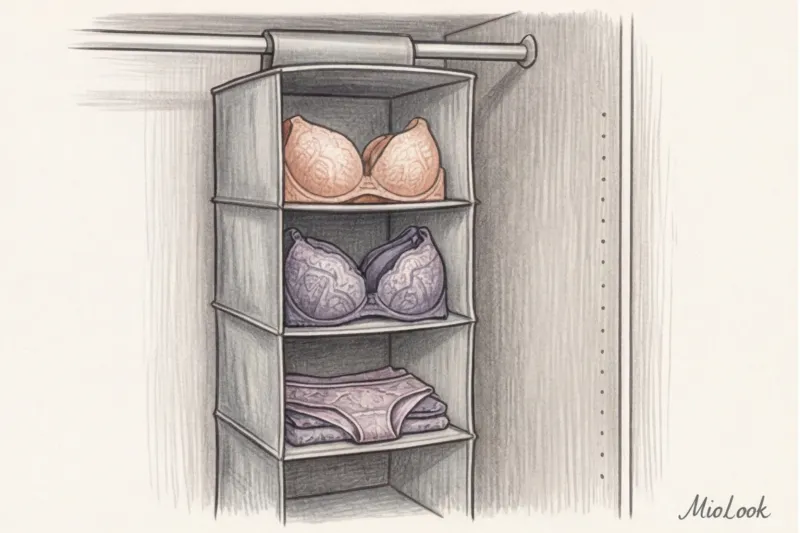
Many people use multi-tiered hangers for silk slips, bodysuits, and negligees. This is a great space-saver, but you shouldn't hang these items by their thin straps—the silk will stretch under its own weight (especially with changes in humidity). Use hangers with soft clips (with silicone pads) and hang the bodysuit by the thick part of the bodice or armhole.
If you store your underwear on regular closet shelves, use ventilated containers. According to the Textile Institute (2023), elastane fibers require air circulation. In tightly sealed plastic containers, underwear "suffocates," body oil residue (which is microscopically present even after washing) oxidizes, and the fabric acquires an unpleasant rancid odor.
Sorting: How to Organize a Laundry Capsule So You Can Get Ready in 5 Minutes
When we plan our wardrobe in an app MioLook We always separate things by function. The same principle applies to the underwear drawer. A chaotic arrangement ensures that in the morning you'll wear what's on top, not what goes with your outfit.
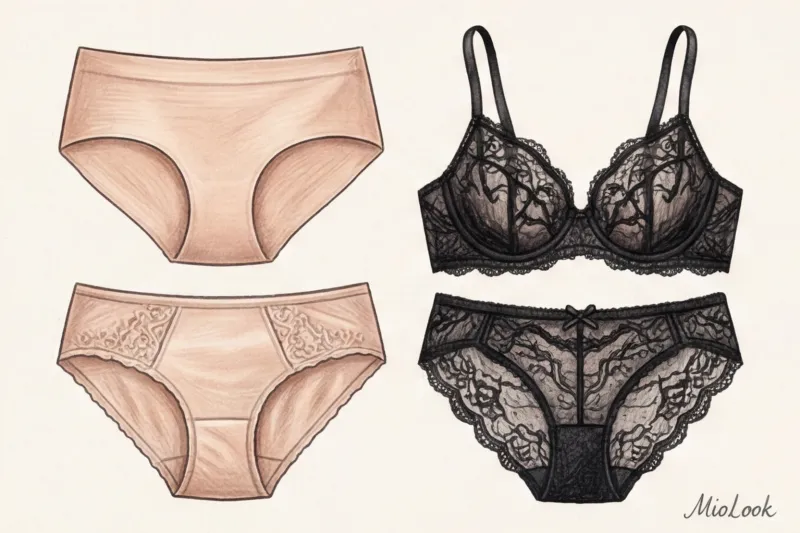
Divide the box into two strict zones:
- Utility base (closer to you): Smooth bras, seamless panties, nude shades that match your skin tone (not the white that shows through white shirts). This is your "uniform," and it should be accessible in a second.
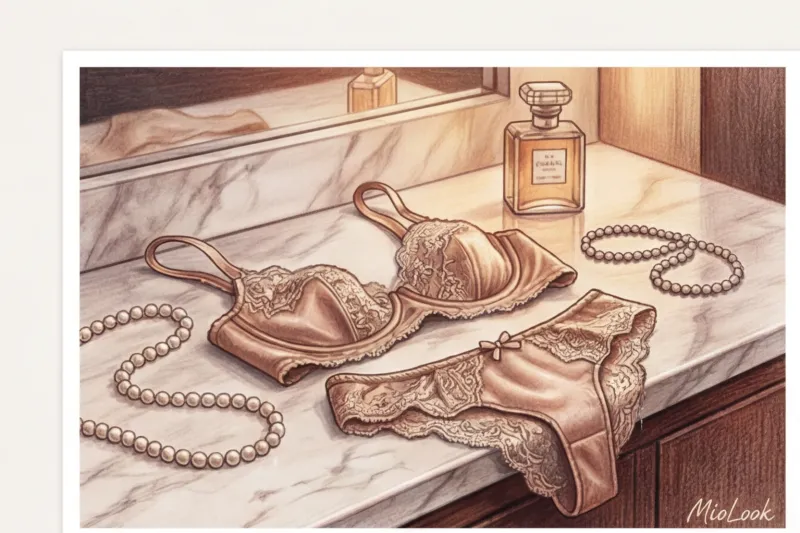
- Accent lingerie (back row): Intricate lace, bright colors, balconette bras for evening dresses, halter bras.
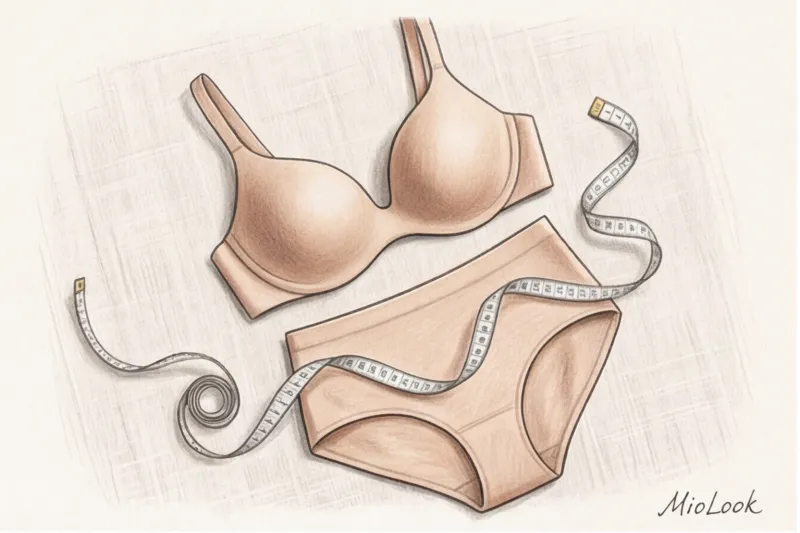
Should you store your underwear sets together? My experience shows that this isn't effective for basic lingerie. Panties usually wear out faster, so we buy two or three pairs of bottoms for every top. Store your bras in a separate row, and your panties in a grid by color. This will help you assemble your desired combination faster.
If you're interested in a more in-depth approach to creating a functional wardrobe, I recommend checking out our article: Basic Printed Wardrobe: How Many Accents Do You Need? — the logic of choosing the base and accents in clothing is absolutely identical to that of underwear.
Special Care: Storing Silk, Corsets, and Vintage Lace
If you have investment pieces in your wardrobe (natural silk, complex corsets, vintage lace elements), they require a separate “living space”.
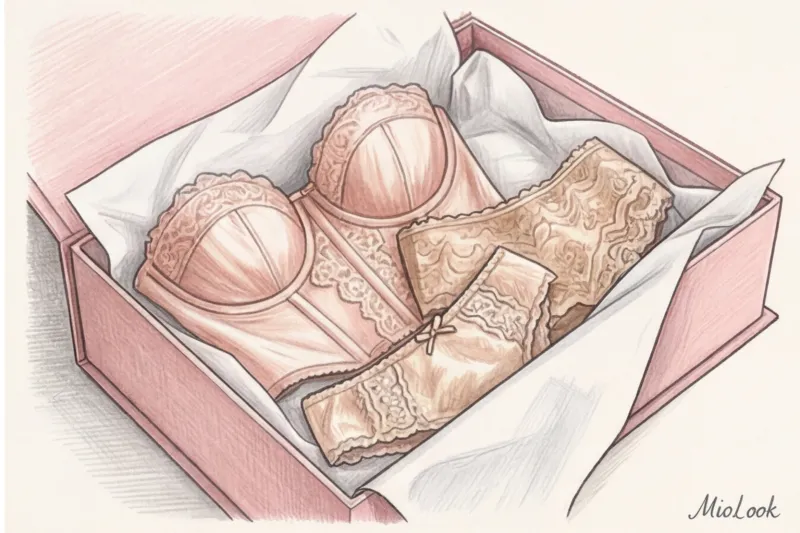
Natural silk is extremely sensitive to two things: direct light and friction. UV rays cause it to turn irreversibly yellow. Therefore, it's best to store expensive peignoirs and corsets in rigid cardboard boxes lined with acid-free tissue paper. This is the type of paper premium brands use when purchasing. It wicks away excess moisture and doesn't contain chemicals that can damage the silk protein fibers.
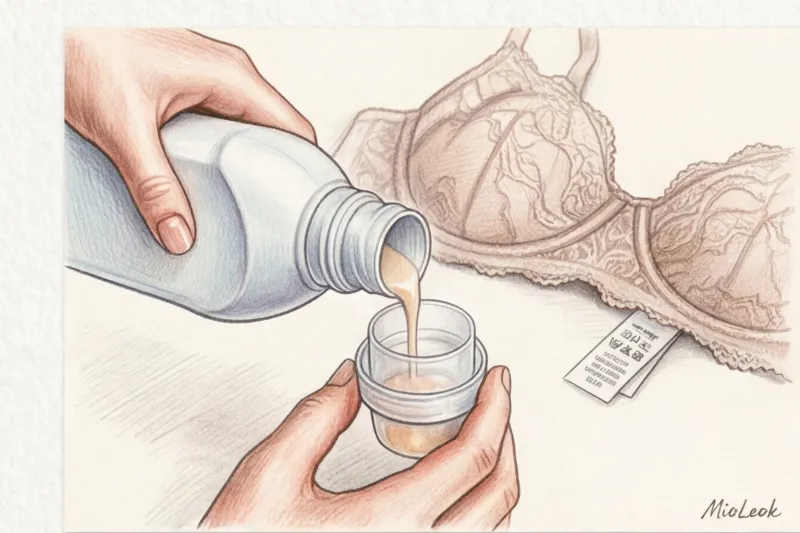
Scenting is worth a special mention. Quite often, online users recommend throwing a bar of scented soap directly into your laundry drawer. Don't do this. Essential oils and fragrances, when in direct contact with lace and elastane, can leave yellow stains and ruin the spandex. If you want to add fragrance, use sachets of dried lavender or cedar, hanging them away from the fabric.
Access to MioLook for €0.99 — one-time payment
Start creating your perfect looks with AI. Upload your items and get ready-made outfits for every day.
Get access — €0.99 onceStylist Checklist: 15-Minute Lingerie Drawer Review
No matter how perfect your storage system is, it won't work if your drawers are filled with "dead weight." Every six months, I make my clients conduct a thorough inventory. We discussed the psychology of hoarding things in this article. Wardrobe Psychology: Why Your Closet Is Full, But You Have Nothing to Wear , but with underwear it’s even simpler: stretched elastane cannot be treated.
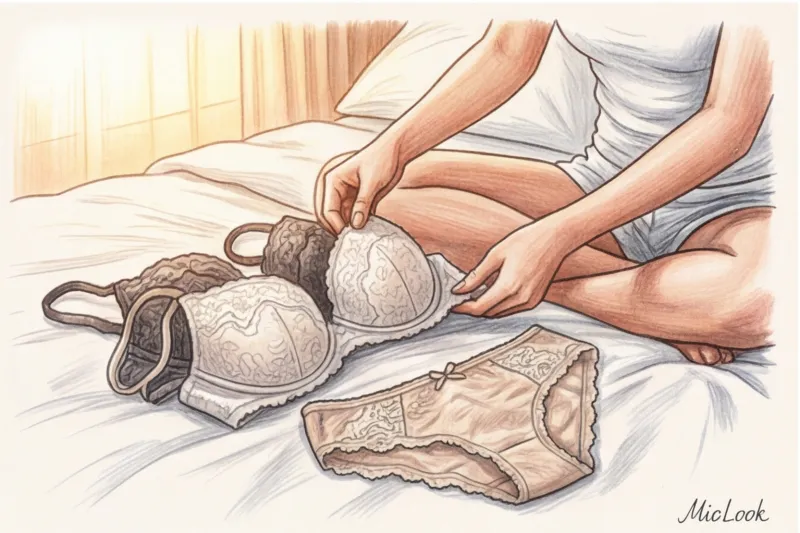
Take 15 minutes and test it. It's time to throw the item away if:
- She failed the "tight hook test." If you fasten your bra on the tightest, inner hook, and you can still fit four fingers under the band at your back, your waist is stretched. It's no longer supporting your breasts, and all the weight is transferred to the straps (and your shoulders).
- The lace turned grey. White items acquire a gray undertone over time due to dust particles and washing with other items. Restoring lace to its original white color is virtually impossible, as bleaches dissolve elastane.
- A bump appeared on the foam rubber. Run your finger along the inside of the cup. Do you feel any pits or bumps? This is the beginning of the irreversible deterioration of the polyurethane (often from washing in hot water or improper storage).
Lay everything out on the bed. Throw out anything that doesn't pass the test. Separate the rest into bases and accents, nest molded bra cups, and arrange panties in fabric honeycombs. You'll be surprised, but proper closet organization isn't about meticulousness. It's about that morning calm when you know for sure that whatever you wear, it will fit perfectly.