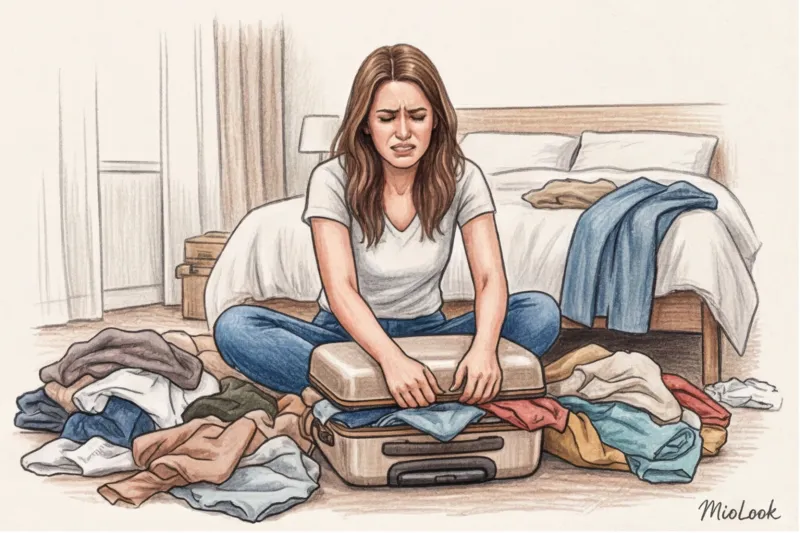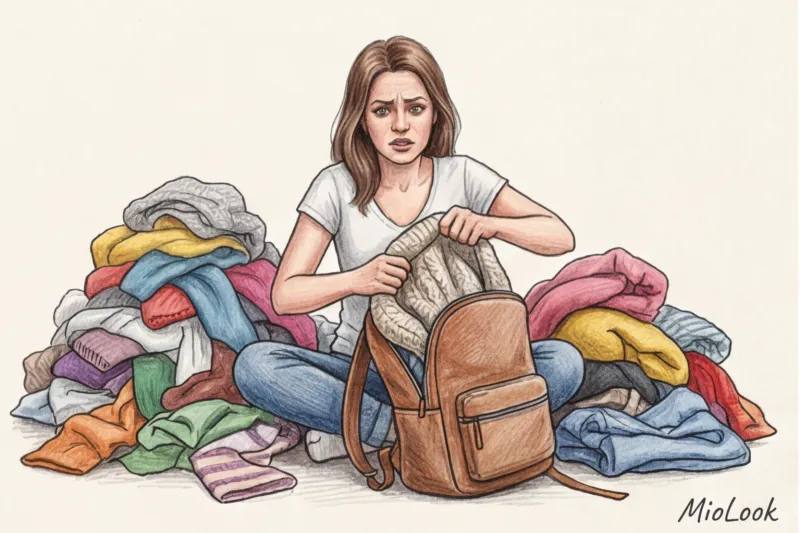
It's a familiar scene: you're sitting on top of your suitcase, trying to zip up a stubborn zipper, your mind racing with thoughts like "what if it rains?" or "what if we're invited to an expensive restaurant?" You end up paying €50 for excess baggage at the low-cost airline counter, and half of the things you brought never get worn. Packing wardrobe for carry-on luggage , most of us make the same mistake—we try to solve the lack of space by aggressively rolling things or buying rigid organizers. But the secret to lightweight luggage lies elsewhere.
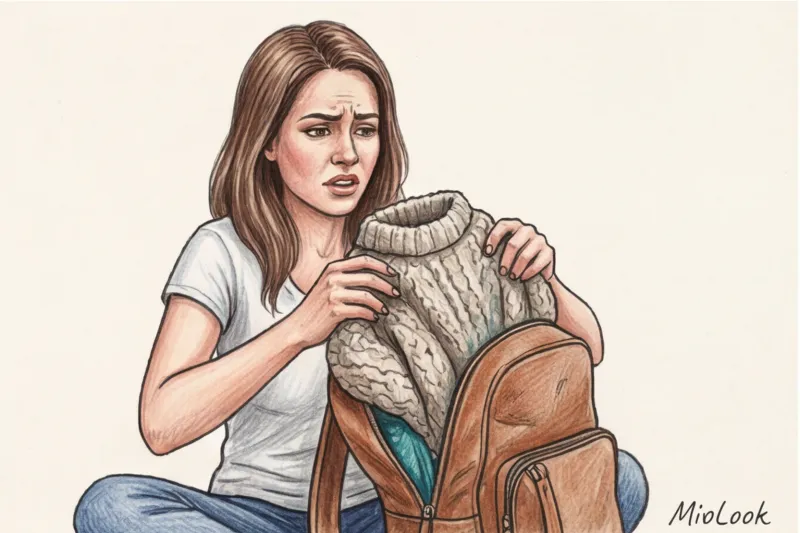
After 12 years of working as a stylist and studying textile materials science, I've realized that to travel light, you need to change not the way you pack, but the materials themselves. In this article, we'll explore "textile math"—a scientific approach to fiber selection that allows you to reduce your luggage volume by a third without sacrificing comfort or style.
The Illusion of Volume: Why We Take Excess and How to Avoid It
The psychology of packing for vacation is often rooted in fear. We pack our worries, not clothes, into our bags. This illusion of "just in case" translates into very real pounds on our shoulders.
According to the International Air Transport Association (IATA), the standard dimensions for carry-on baggage are 55x40x20 cm. However, if you're traveling with a backpack that must fit under the seat in front (a requirement of many budget airlines), your limits shrink to a strict 40x30x20 cm. Under these conditions, weight becomes even more important than volume.
"A heavy backpack changes your biomechanics. You tire faster, start slouching, and upon arrival, your only desire is to get to the hotel and shed the load, not to explore a new city."
I learned this lesson in 2019 during a three-week trip to Italy. I packed a 20-liter backpack, filling it with heavy cotton layers and jeans. On my very first day in Rome, after walking 15 kilometers on cobblestones with 8 kilograms on my back, I cursed every spare sweatshirt. Since then, I've completely changed my approach.
Textile Mathematics: Fabrics that Save Space
The main rule for travelers: volume does not equal insulation. We're used to thinking that the thicker an item, the warmer it will be. This is true for synthetic padding, but it's completely untrue for high-quality natural fibers.
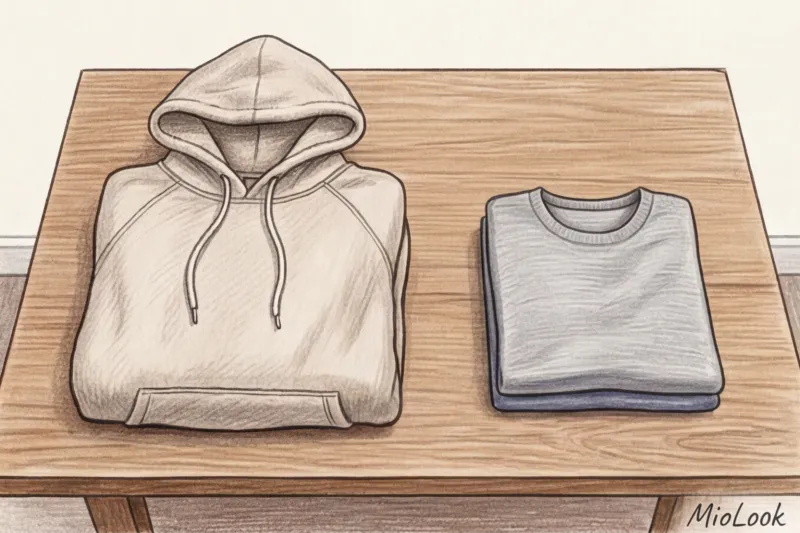
Let's look at some specific numbers. A standard 350 g/m² cotton sweatshirt weighs about 450 grams and, when folded, takes up almost 2 liters of your backpack. A sweater made of 100% cashmere or high-quality merino wool with similar insulating properties weighs only 200 grams and takes up 0.8 liters. The difference in volume is 2.5 times.
In addition to weight, pay attention to the following fabric properties:
- Wrinkle recovery rate (ability to recover after wrinkling). Pure linen is a disaster for a backpack. Replace it with lyocell (Tencel) or a blended fabric (linen + 20% viscose). Lyocell has a unique fiber structure that straightens under body temperature after 15 minutes of wear.
- Moisture wicking and odor control. According to research by the Textile Institute (2023), merino wool contains lanolin, a natural wax that inhibits the growth of odor-causing bacteria. A synthetic T-shirt (polyester) will begin to smell after three hours of vigorous walking. A thin merino T-shirt can be worn for three to four days, simply by airing it out at night.
One of my clients constantly complained about excess baggage on low-cost airline flights. We simply replaced her basic cotton long sleeves with merino-silk blend ones. The result? 2 kilograms less weight and no need to find a laundry service while on vacation.
Build the perfect vacation capsule
Tired of wondering what to pack? Upload a photo of your clothes to MioLook, and our smart AI stylist will create a compact, perfectly coordinated wardrobe for you.
Get access — €0.99 onceCarry-on wardrobe: Build a capsule using the formula
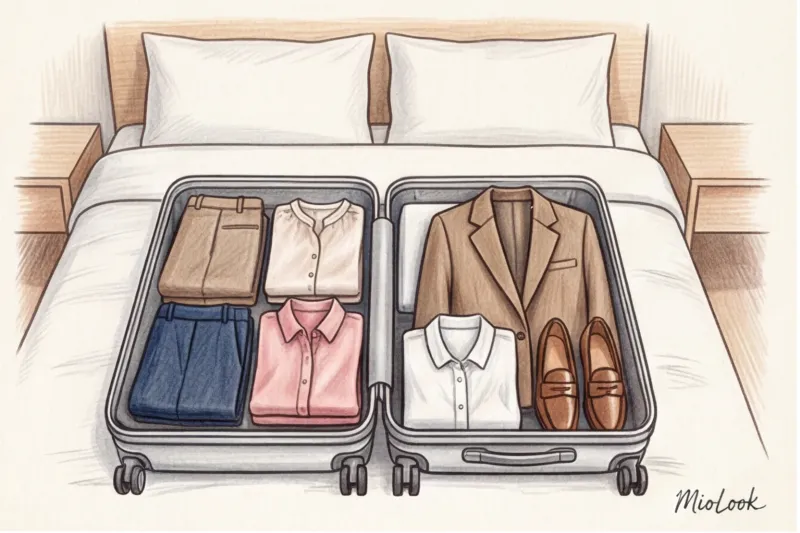
If you take things in pieces, you'll have to take a lot. If you take capsule wardrobe , you'll need a minimum of items. I use the classic 5-4-3-2-1 formula, which mathematically generates up to 315 different combinations (if every top matches every bottom).
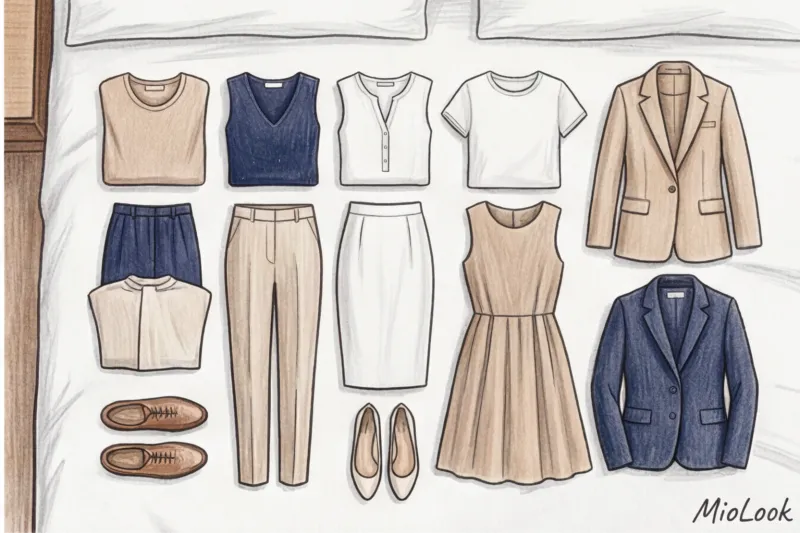
The formula looks like this:
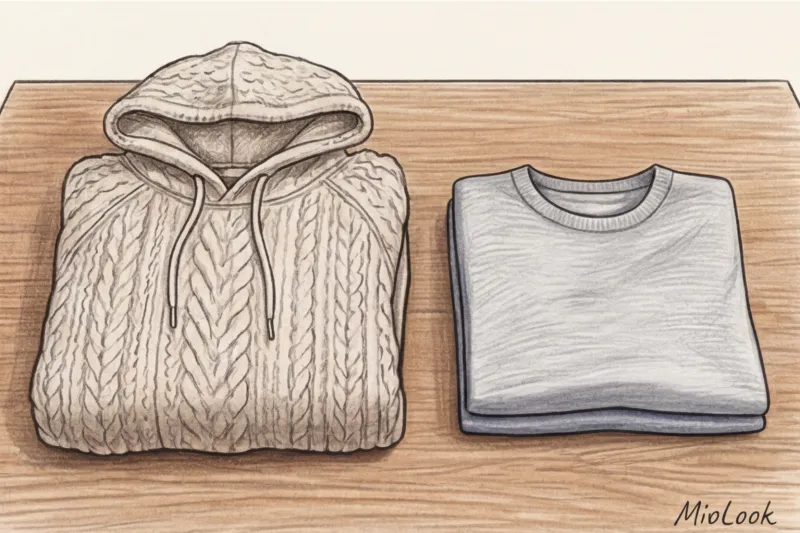
- 5 tops: 2 basic t-shirts (cotton-modal blend), 1 shirt, 1 thin jumper, 1 dressy top.
- 4 bottoms: 1 pair of wrinkle-resistant trousers, 1 pair of shorts/Bermudas, 1 skirt, 1 pair of jeans (to wear on the plane).
- 3 dresses or extra layers: 1 slip dress, 1 cardigan, 1 light jacket.
- 2 pairs of shoes: comfortable sneakers (on you) and sandals/loafers (in your backpack).
- 1 outerwear: trench coat, light jacket or thick oversized shirt.
To make this work, use the "three-color rule": choose two neutral base shades (like navy and sand) and one accent shade (like terracotta or emerald). My pro tip: before packing, lay your clothes out on your bed and take photos of 10-15 finished looks. On vacation, you won't waste your mornings thinking—you can just open your phone's gallery.
Base Layer: What to Wear on a Plane
The most important rule for backpacking is "wear the heaviest baggage on yourself." Airlines weigh your luggage, but they don't weigh you. Chunky sneakers, thick jeans, a bulky sweater, and a jacket should all fit snugly on your body.
On the plane, layer up: T-shirt, unbuttoned shirt, and jacket. If the cabin gets hot, you can easily remove the outer layer. Keeping the air conditioning on full blast will keep you warm.
Transformers: Dual-Purpose Items
There's no room for one-size-fits-all items in a small backpack. Each item must be able to support its weight in at least three scenarios.
For example, a thick lyocell shirt provides sun protection during the day at the beach, works as a light jacket over a dress in the evening, and serves as an extra layer on a plane. A thick viscose slip dress with sneakers and a T-shirt makes a great urban look, while with statement earrings and red lipstick, it's perfect for a Michelin-starred restaurant. A silk scarf can be used as a sunshade, a bandeau top, a belt, and even as an accent piece on a bag handle.
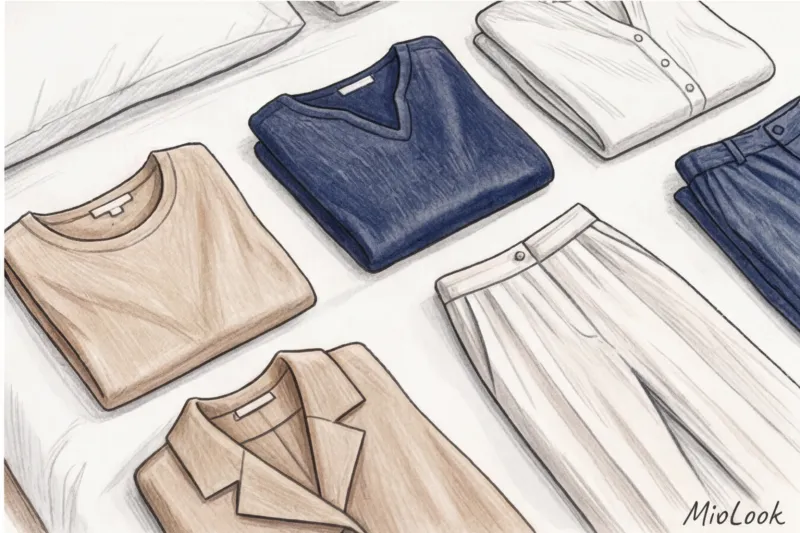
The Vacuum Bag Myth: Why They Harm Your Clothes
I'm going to say something that contradicts hundreds of TikTok videos: vacuum bags and hard compression bags are the main enemies of your wardrobe and budget.
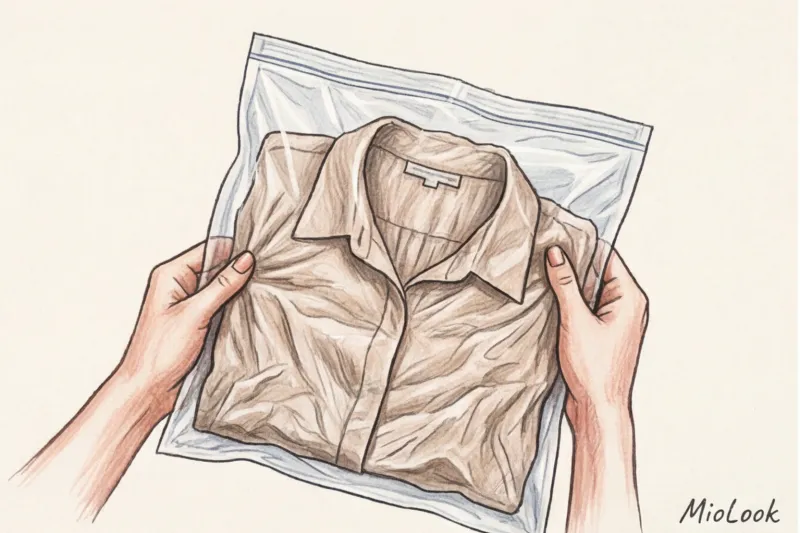
First, it's a psychological trap low-cost airlines play. By compressing your bags, you reduce their volume, but their weight remains the same. You're happy to have some room left in your backpack, throw in three more "really needed" sweatshirts, and at check-in, your compact backpack weighs in at 12 kg, compared to the 8 kg weight limit.
Secondly, from a textile expert's perspective, aggressive compression literally breaks fibers. Have you ever noticed how silk, linen, or fine wool, tightly spun in a vacuum, refuses to be smoothed even with an iron? Under intense pressure, the structural bonds within the fiber are deformed. For delicate fabrics, this often means irreversible damage to their appearance.
What to do instead? Use soft fabric bags (packing cubes without a rigid frame) and the rolling method. But be sure to roll correctly: fold the item along the main seams, then roll it gently without stretching the fabric. This prevents sharp creases.
Vacation Wardrobe Care Without Dry Cleaning
Packing your capsule is only half the battle. You need to understand how to maintain it if you don't plan on spending time on laundry. Frankly, there is a limitation: if you're going on an extreme hike or have a strict black-tie dress code every evening, these tips won't work. But for 90% of city and beach vacations, they're perfect.
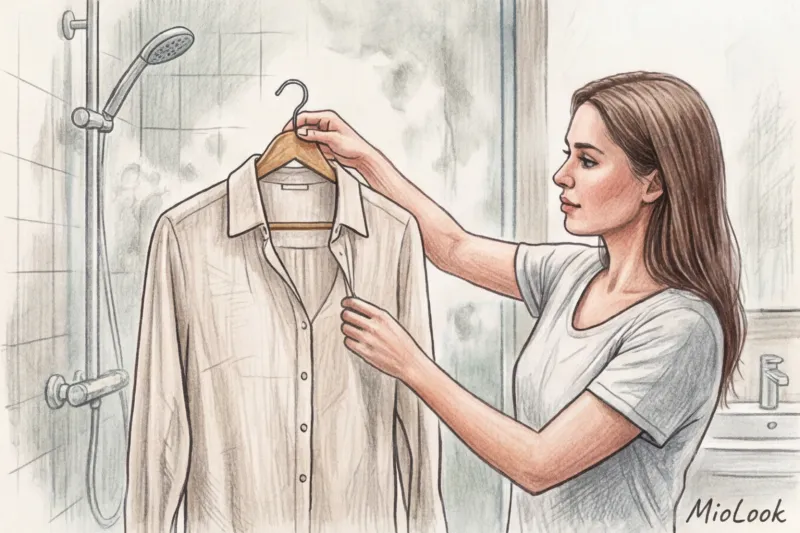
When shooting fashion shoots in locations without electricity, we often use a trick that will save you in any hotel. If an item gets wrinkled in your backpack, hang it on a hanger in the bathroom while you take a hot shower. The steam will do all the work for you. The fibers of viscose, silk, and fine wool relax in the moist heat and stretch under their own weight. The key is to let the item dry completely before wearing.
For spot-cleaning stains, there's no need to carry a bottle of stain remover. Just keep a special solid stick or enzyme wipes (they're about the size of a matchbox) in your makeup bag. An eco-friendly approach to fashion dictates new rules: wearing an item several times in a row, as long as it's not soiled, is normal, modern, and appropriate.
Your digital wardrobe is always at your fingertips.
Forget about the "nothing to wear" problem on vacation. Save your favorite looks in the MioLook app and plan your outings in advance.
Download the appChecklist: Packing a Backpack for 7 Days
The architecture of a proper backpack packing is based on the distribution of the center of gravity. If you pack your things haphazardly, the backpack will pull your shoulders back.
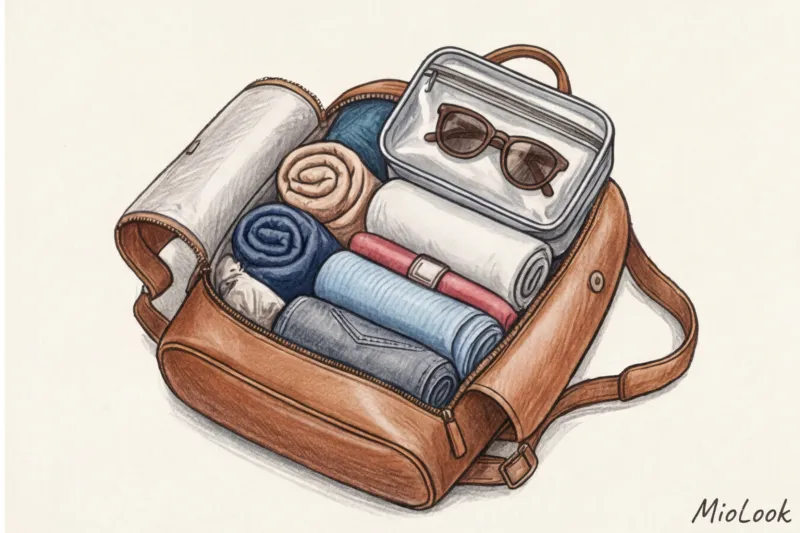
Step-by-step algorithm:
- Bottom of the backpack (closer to the lower back): shoes (in fabric covers, we hide socks inside the shoes to save space) and a cosmetic bag.
- Middle (closer to the back): Rolls of jeans, trousers, and thick layers (sweaters, cardigans) create a dense frame.
- Outer part and top: Rolls of light T-shirts, shirts and underwear.
- The very top (near the zipper): a transparent zip-lock bag with liquids so you can quickly get it out during security checks.
What about the 100 ml rule? Experienced travelers have long been circumventing it legally by switching to solid formats. Solid shampoo, solid hair conditioner, dry perfume, and enzyme face wash powder aren't considered liquids at all. They won't spill on your silk skirt and will save you precious grams.
Traveling with carry-on luggage isn't about restrictions, it's about freedom. The freedom to not have to wait at the baggage carousel, the freedom to easily hop on a departing train, and the freedom to be independent of your belongings. Choose smart fabrics, utilize capsule math, and you'll be surprised how little you really need for impeccable style.