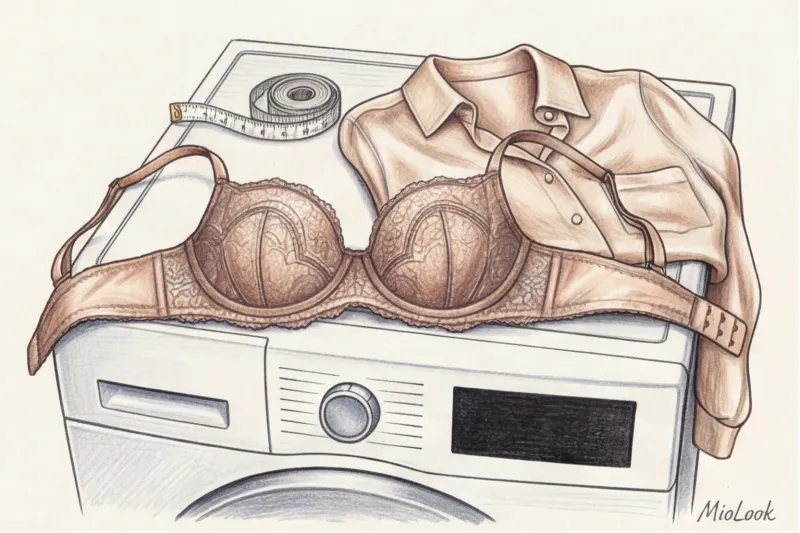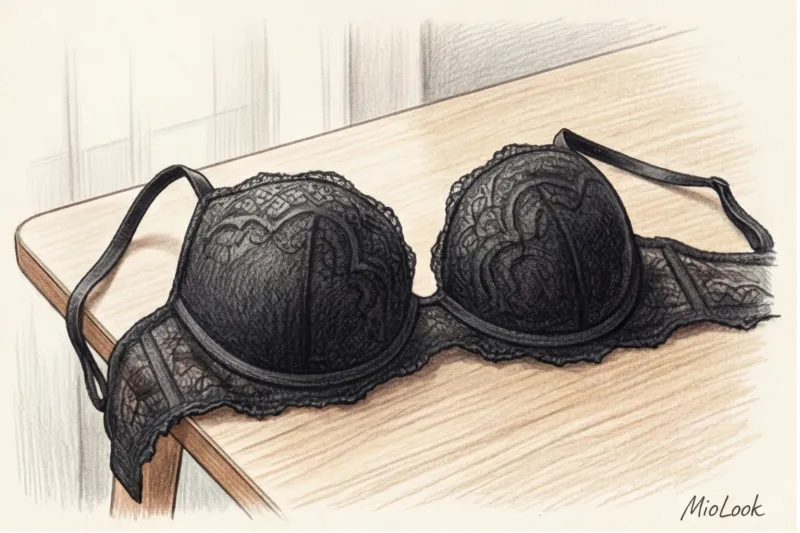
Last Friday, a tearful client of mine sent me a photo of her luxurious €200 lace bra from Agent Provocateur. Just one quick wash at 60 degrees along with the bedding, and the perfect cups had been reduced to chewed-up, misshapen foam. Money wasted, her mood ruined, and her favorite low-cut top was relegated to the back of her mind.
As a stylist and analyst, I often see the same thing: women invest hundreds of euros in high-quality basics, but completely fail the "maintenance" stage. If you don't understand how to wash a push-up bra, you're not just ruining the item—you're ruining the fit of your entire outerwear. We've covered the basic laundry routine in more detail in our a complete guide to caring for delicate fabrics , but today I suggest we delve into the higher mathematics of the lingerie wardrobe.
Lingerie Architecture: Why It's Important to Know How to Wash a Push-Up Bra
A push-up bra isn't just a piece of fabric. It's a complex engineering construct. Inside, it contains polyurethane foam, sometimes gel inserts, rigid metal or plastic underwire, and ultra-thin elastane. Each of these materials reacts differently to water, temperature, and mechanical stress.
I was once sorting through a top manager's wardrobe. We couldn't figure out why her expensive, perfectly tailored Jil Sander jacket fit her like a sack. The answer lay underneath: a misshapen push-up bra with creases in the cups distorted the geometry of her chest, ruining the jacket's silhouette. Ruined underwear visually cheapens any look, even the most prestigious one.
Let's calculate the cost per wear (Cost Per Wear). According to textile technologists from the Hohenstein Institute (2023), with proper care, the lifespan of a quality bra is 100-120 wears. If you bought a model for €80, the cost per wear is only €0.66. But aggressive machine washing destroys the polyurethane foam in 25-30 cycles (it loses up to 40% of its elasticity). So, you end up paying €2.66 for each wear. A fourfold difference!
How to Hand Wash a Push-Up Bra: The Gold Standard (and How to Speed Up the Process)
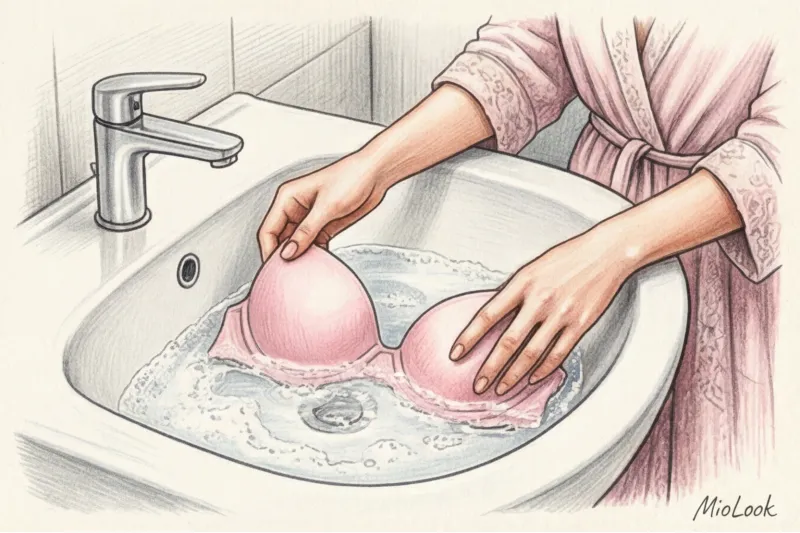
I know what you're thinking: "Emily, I don't have time to hand wash!" I used to hate this process too, until I incorporated it into my daily routine. My personal "lazy" ritual takes exactly 5 minutes.
I simply take my bra into the shower. While the mask works on my hair, the bra is soaked in cool water in the sink. The temperature is critical: 30°C is the absolute maximum. In hot water, the elastane "bakes" and loses its ability to return to its original shape.
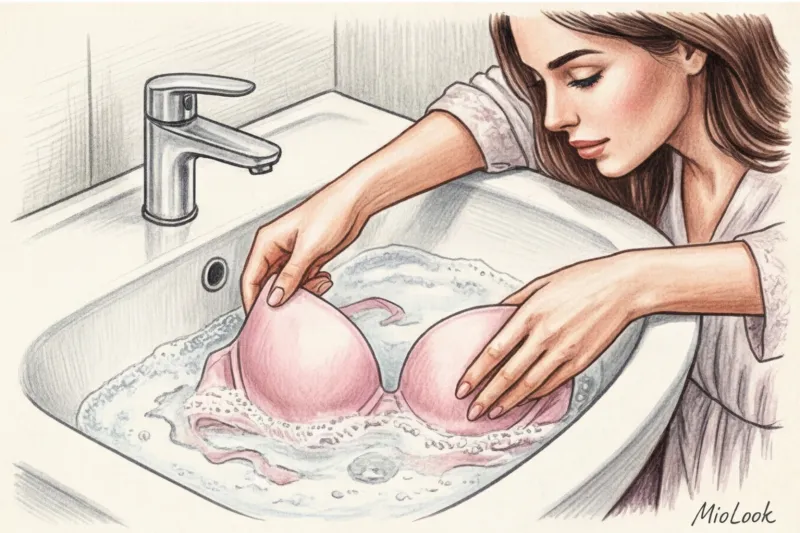
The step-by-step algorithm looks like this:
- Dissolve the detergent in cool water.
- Immerse the sconce for 10-15 minutes.
- Lightly massage the cups with your fingers (no aggressive rubbing!).
- Rinse gently under running water until water runs clear.
Choosing a detergent: spoiler alert: regular detergent kills elastane
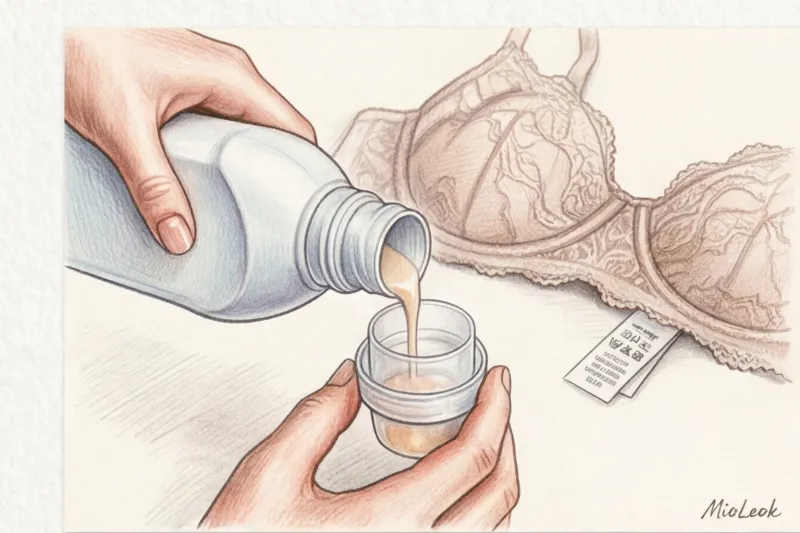
Never use regular laundry detergent. Most commercial detergents contain harsh enzymes designed to break down protein stains. The problem is that natural silk and thin elastane fibers are also protein-based. The detergent literally eats them away.
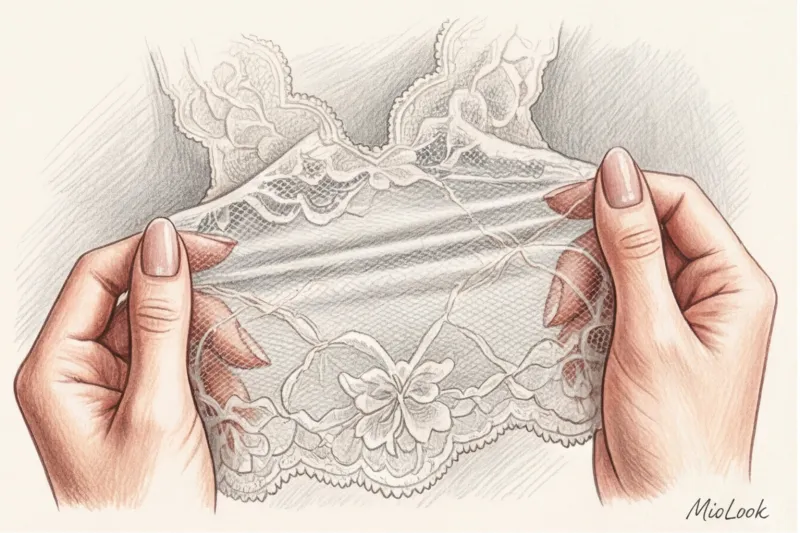
“To maintain the elasticity and pigment of the finest lace, use only liquid products with a neutral pH,” emphasize the experts at the PANTONE Color Institute in their care recommendations (2024).
What do I use? Specialized laundry shampoos or regular, mild, sulfate-free baby shampoo. Important: Rinse thoroughly, as soap suds tend to get stuck in the thick foam pads of push-up pads.
Your perfect look starts here
Join thousands of users who look flawless every day with MioLook. A smart AI stylist will select the perfect capsule wardrobe based on your wardrobe.
Get access — €0.99 onceMachine Myth: Can you wash push-ups in the drum without them losing their shape?
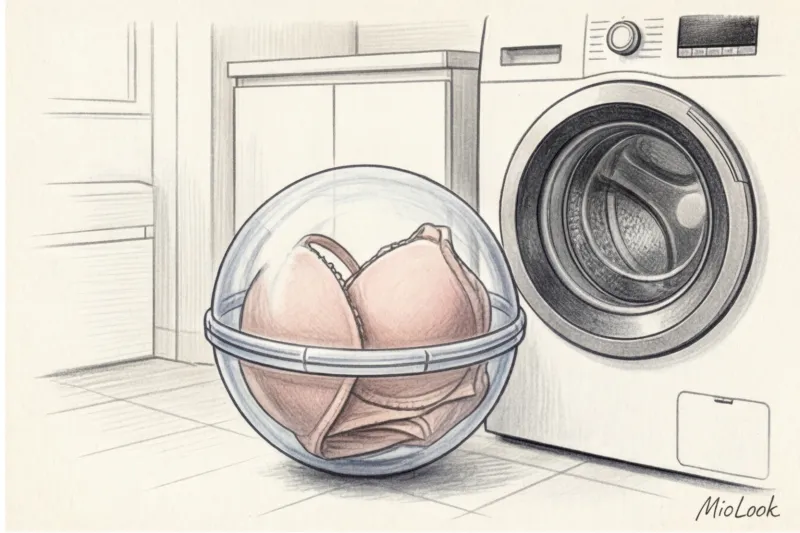
It's time to dispel the biggest fear: the myth that push-up bras can ONLY be hand-washed is long outdated. Machine washable, of course. But there's a huge "BUT" that manufacturers keep quiet about.
A counterintuitive insight from a stylist: soft mesh laundry bags are a placebo for push-ups. Yes, they protect the lace from getting caught in the zippers of nearby items, but they absolutely not at all do not protect the cups from mechanical crushing caused by the weight of wet clothes in the drum.
A year ago, I conducted a personal experiment: I bought two identical Intimissimi basic bras for €50. I washed one exclusively by hand, the other in the washing machine, but with rigid plastic sphere-frame (Bra saver). I monitored their condition for six months. The result? The wear was almost identical. The hard plastic ball absorbs all the impact of the drum, keeping the foam inside intact.
Fair Limit: This life hack doesn't work for women with an F cup or larger. Bulky underwear simply won't fit into standard protective spheres without creasing.
Safe washing machine settings
If you delegate maintenance to equipment, follow strict protocol. You can read more about the symbols on the tags in our article. "Laundry Symbols on Clothes: A Stylist's Guide" , but the basic rules are:
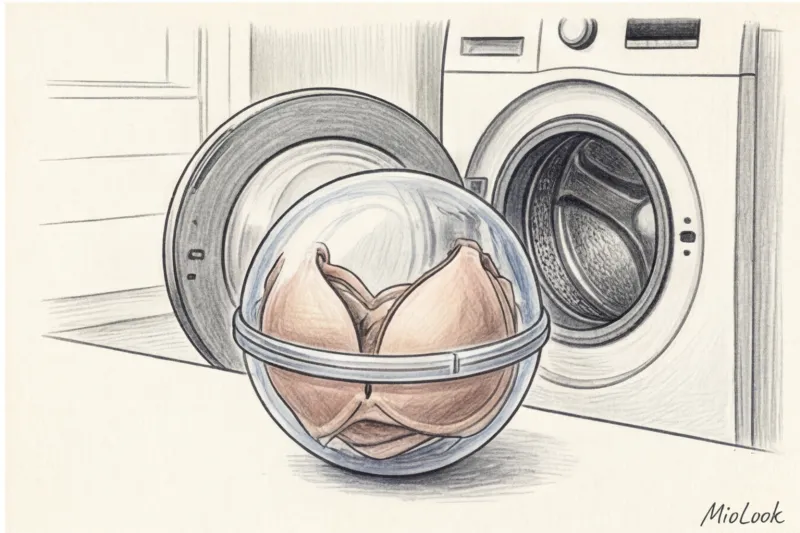
- Mode: Hand wash or Delicate only.
- Spin: Turn off completely or reduce to minimum (no more than 400 rpm).
- Neighborhood: Only wash the bra with lightweight items (T-shirts, blouses). Heavy, wet jeans or terry towels will crush the sphere and its contents.
Drying Engineering: How to Dry a Push-Up Bra Without Distorting the Cups
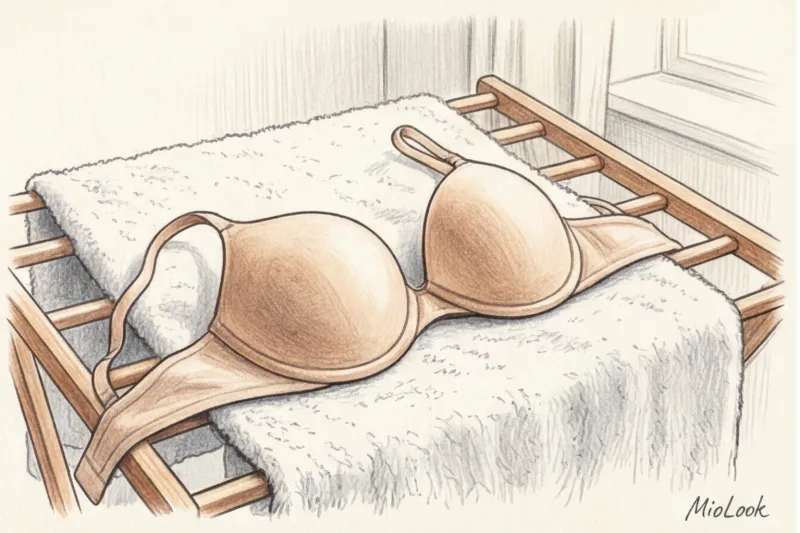
It's not enough to wash it properly; you also need to know how to dry it. Wet polyurethane foam absorbs a huge amount of water and becomes very heavy.
If you take out a wet push-up bra and hang it to dry by the straps on clothespins, gravity will do its dirty work. The weight of the wet cups will cause the elastic straps and the bra to stretch out at the same time. It's physics.
My "absorbent sandwich" method:
- Immediately after washing, place the bra on a clean, dry terry towel.
- Cover with the other half of the towel and gently press it with your palms (make a sandwich). The towel will absorb 80% of the moisture from the foam.
- To finish drying, lay the garments flat on the drying rack. The ideal position is to hang the sconce over the bar just by the bridge (the center part between the cups).
Checklist: 5 Fatal Care Mistakes That Will Turn Your Bra Into a Shapeless Wreck
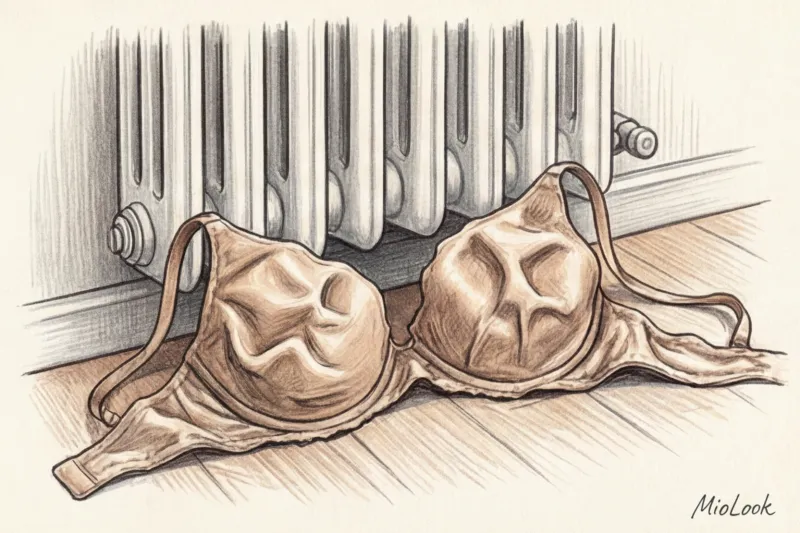
Over 12 years of cleaning out wardrobes, I've seen plenty of lingerie-related crimes. Test yourself with this checklist:
- Drying on a radiator battery. Extreme heat kills elastane and causes polyurethane to rapidly yellow. Lingerie should only dry at room temperature.
- Turning one cup inside out into another. A favorite trick for compact storage in a suitcase is to kill a molded push-up bag. You literally break the foam structure in half.
- Using fabric softener. A 2022 study in the Journal of Surfactants and Detergents demonstrated that fabric softeners leave a hydrophobic film on elastane. This causes the underwear to stop breathing and lose its ability to wick moisture away from the body.
- Aggressive twisting. Trying to squeeze out water “like from a towel” breaks the plastic frame and tears the fabric at the ends of the metal bones.
- Ignoring fasteners. Always fasten hooks before washing. Otherwise, they will turn into tiny harpoons that will tear the lace of adjacent items.
Access to MioLook for €0.99 — one-time payment
Start creating perfect looks with AI and digitize your lingerie wardrobe in just a few clicks.
Get access — €0.99 onceA systems approach: when it's too late to save your laundry
Even with perfect care, things don't last forever. It's important to recognize when it's time to retire your push-up bra. The main signs are: bulges in the cups (which show unsightly through a thin basic t-shirt), a stretched waist (when the clasp is already at its tightest, but the bra still slides up your back), and exposed underwire.
I approach my wardrobe as a data system. To avoid having to remember how old a particular item is, I use MioLook For tracking. By digitizing the database, I can see the actual frequency of wear and wash cycles. If the app shows that a basic beige bra has gone through over 100 cycles, I know it's time to plan an upgrade, even if it still looks acceptable (the elasticity has definitely been lost).
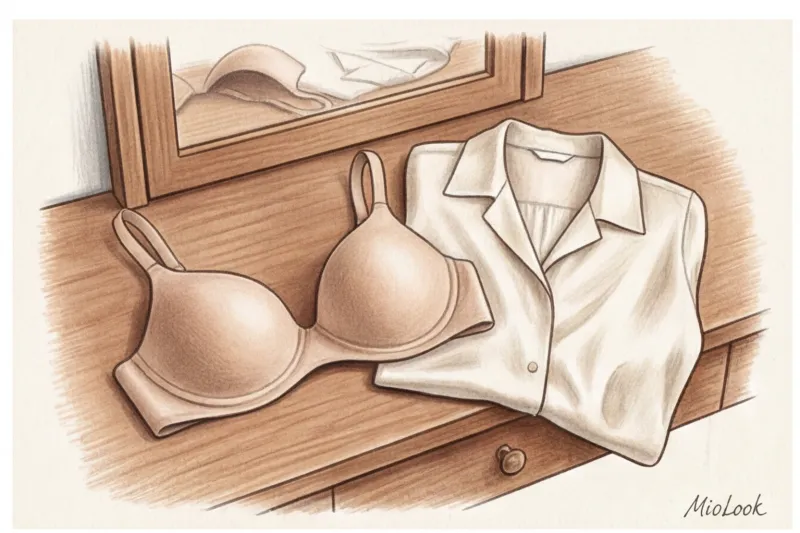
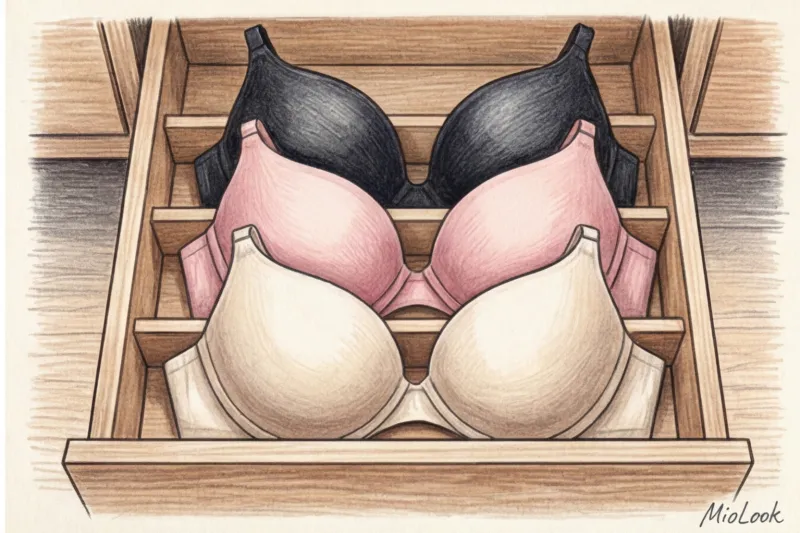
Finally, store your underwear properly. Bras with thick cups should be stored in a drawer like a "train"—nesting one inside the other like spoons. Avoid crumpled storage. As we discussed in the article. about the secrets of a long-lasting wardrobe , respect for things begins the moment you put them on the shelf.
The main conclusion: Caring for push-up bras doesn't require hours of free time; it simply requires an understanding of the physics of the materials and avoiding harsh chemicals. Buy a protective sphere for €10, ditch the hot water and fabric softener, and your bras will keep their perfect shape 3-4 times longer.