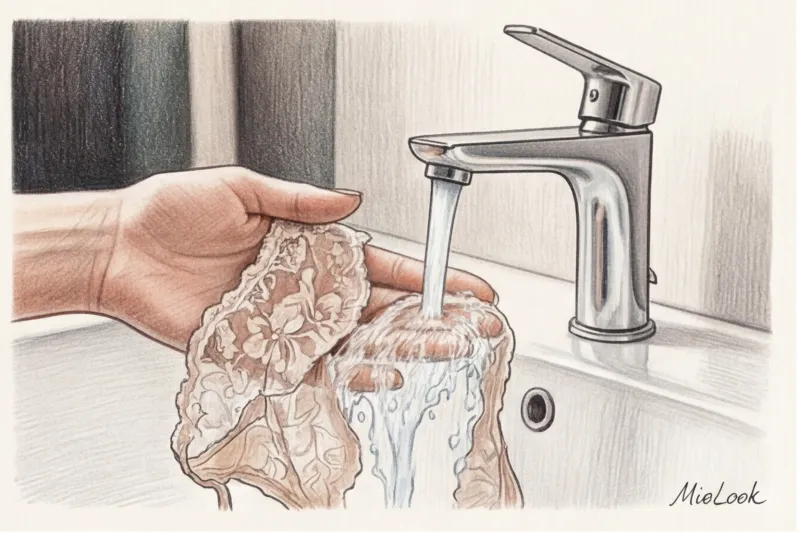
One of my clients nearly burst into tears right there in my studio. She was sure she'd have to throw out her luxurious €300 lace set from Agent Provocateur. The reason was simple, familiar to every woman, but somehow still evokes embarrassment: a sudden menstrual leak. She tried to wash the stain out with hot water, rubbing it into the fine French lace, and in a panic, decided her wardrobe investment was hopelessly ruined.
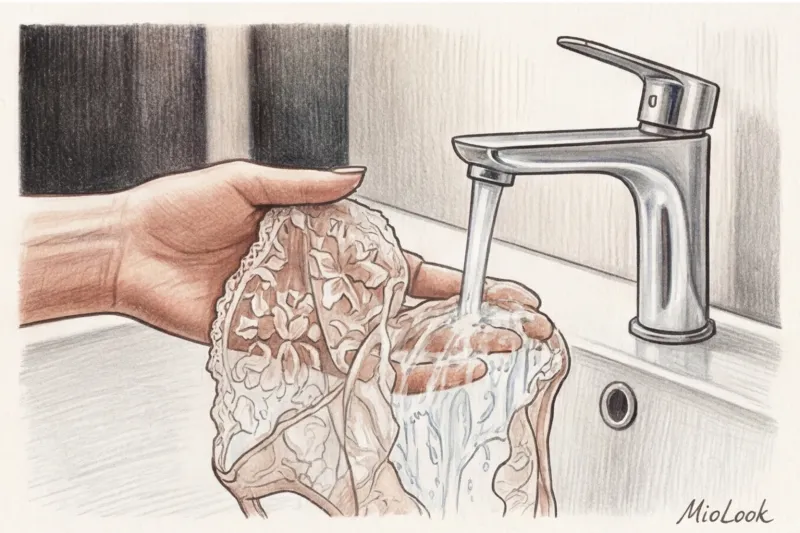
Let's agree right now: there's no shame in this. Physiology is normal. What's not normal is throwing away premium lingerie because you don't understand the basic chemistry of fabrics. Over 12 years as a stylist, I've learned one thing: removing these stains isn't a boring household chore, but a true lifesaving operation for your investment. We've covered the basic principles in more detail in our A complete guide to washing underwear and caring for delicate fabrics. , and today we will analyze the most difficult task.
In this article, we'll move away from the old-fashioned advice of vigorously washing with laundry soap until holes are left. I'll tell you how to remove blood stains from underwear so that silk retains its luster and lace and elastane retain their original shape.
The Anatomy of a Blood Stain: Why Blood Is So Difficult to Remove (and the Biggest Care Mistake)
Did you know that most women ruin their underwear within seconds? Our instinct tells us to turn the water up hot to "wash out" the dirt. This is a fatal mistake that will cost you an expensive set.
Chemically, blood is a complex protein compound, the core of which is hemoglobin. Physics is unforgiving: protein coagulation begins at 42°C. If you hold a stain under running hot water, the protein will literally "cook," permanently fusing with the fabric fibers. When washed in water hotter than 40°C, blood becomes permanently imprinted on elastane, altering its structure.
"The key to handling protein stains is strict temperature control. Using hot water will transform a temporary stain into a permanent dye," states the Drycleaning & Laundry Institute protocol.
Another consequence of improper washing is loss of elasticity. When you vigorously rub the fabric together, you stretch out the elastane threads. The panties may come out clean, but their fit will be hopelessly ruined.
First Aid: What to Do in the First 5 Minutes
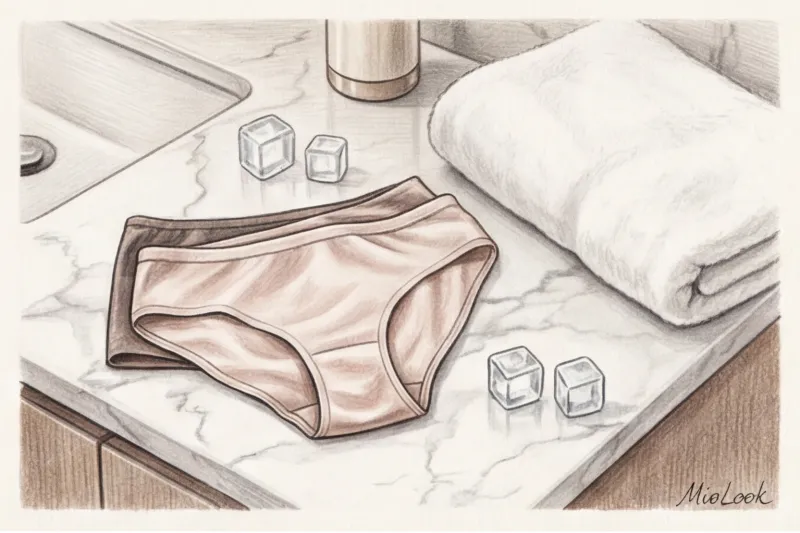
In the world of fashion and fabric care, there's a "golden hour rule." If you notice a stain right away, your chances of saving the item without using harsh chemicals are close to 100%.
Here is an emergency action plan for delicate materials:
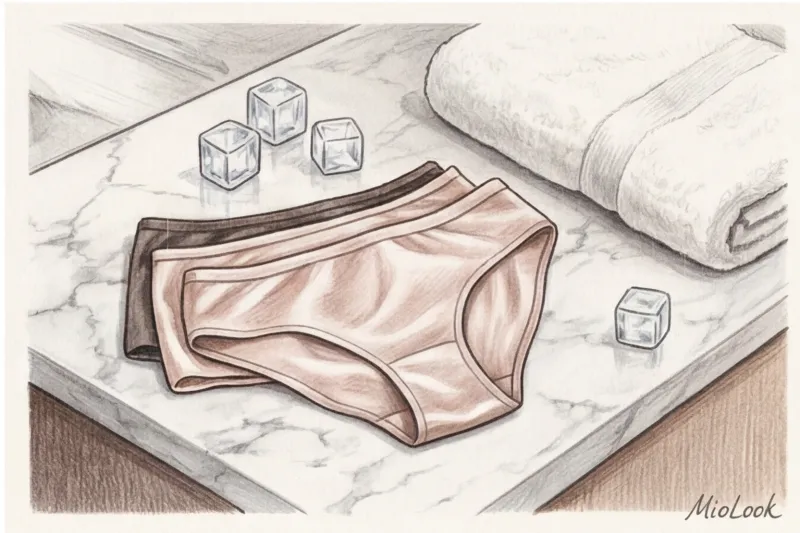
- Only ice water. The colder the better.
- Correct washing angle. Place the cloth under the stream so that the water flows through through stain from the inside out, pushing the protein out rather than driving it deeper.
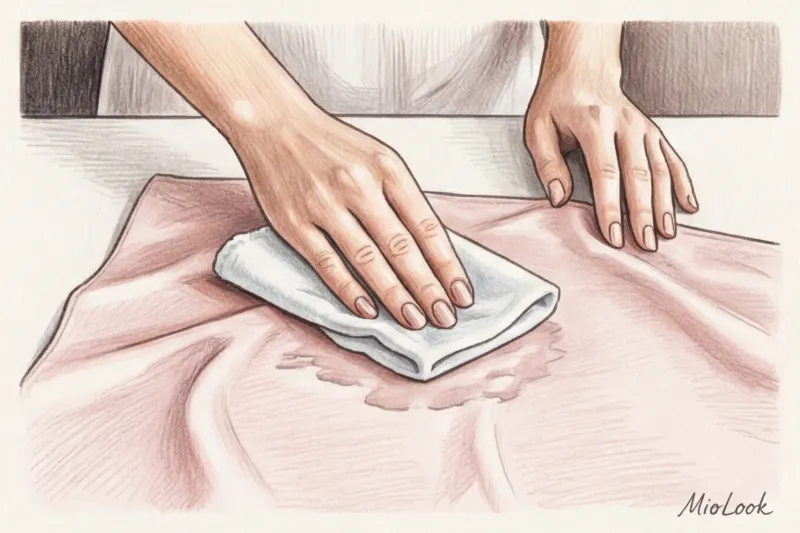
- No friction. Everyone thinks stains need to be scrubbed vigorously. In fact, vigorous rubbing destroys the microfibers of lace and silk faster than any chemical.
- Use bar soap. Glycerin or regular household soap works perfectly. Apply the soapy lather to the stain and gently blot, rather than rub.
Lifehack from the backstage: At Milan Fashion Week, one of the models suffered a leak right before going on stage in a translucent lingerie set. The complicated lacing made it impossible to remove. What did we do? We grabbed an ice cube from the catering company and rubbed it over the stain, blotting the moisture with a dry cloth. The ice froze the protein, preventing it from being absorbed, and the garment was saved.
Your perfect wardrobe starts here.
Join thousands of users who look flawless every day and manage their looks with MioLook.
Get access — €0.99 onceChoosing a method depending on the type of fabric (Secrets of stylists)
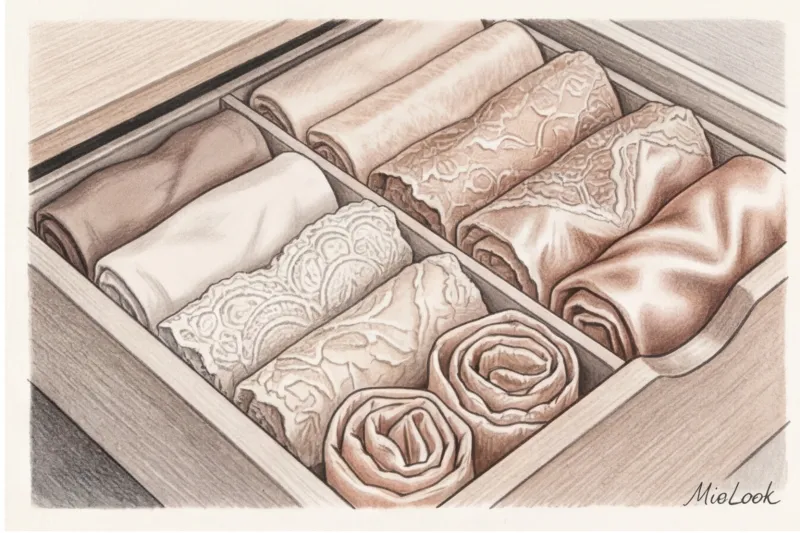
Every stylist's work with a garment begins with reading the label. There's no one-size-fits-all stain remover: what might effortlessly save heavy cotton will burn a hole in natural silk in seconds. Let's look at the specifics of these materials.
Cotton and basic microfiber
These fabrics are truly Spartan, forgiving. For light-colored cotton weighing 180 g/m² or more, 3% hydrogen peroxide from the pharmacy works great. Apply it to the stain—you'll hear a hissing sound. This is an active oxidation process that literally forces the blood molecules out of the cotton. After the foam settles, simply rinse the item with cold water.
Hydrogen peroxide is dangerous for colored cotton (it can bleach the pigment). It's better to use a concentrated solution of table salt, which acts as a safe absorbent.
Delicate silk, mesh and French lace
This is where things get really complicated. Hydrogen peroxide will leave yellow chemical burns on natural silk that won't be removed. Furthermore, it will make the fiber brittle.
For fine textures, I use less obvious but incredibly effective products:
- Contact lens fluid. Many contact lens solutions contain mild enzymes that gently break down protein deposits on lenses. They will also gently break down hemoglobin in lace without damaging the nylon.
- Aspirin paste. Crush a non-effervescent aspirin tablet (this contains salicylic acid), add a drop of water, and apply to the stain. Leave on for 15 minutes and rinse gently.
Important: Dry silk properly after spot washing, otherwise an unsightly water halo will remain. Blot the damp area with a clean terry towel and finish drying the garment horizontally, away from direct sunlight.
Top 5 Proven Remedies (From First Aid Kit to Beauty Arsenal)
If you think the best way to remove blood is to douse it with strong supermarket bleach, let me dissuade you. The key is not the strength of the chemical, but the exposure time of the enzymes. Here are my personal top picks for the most effective products:
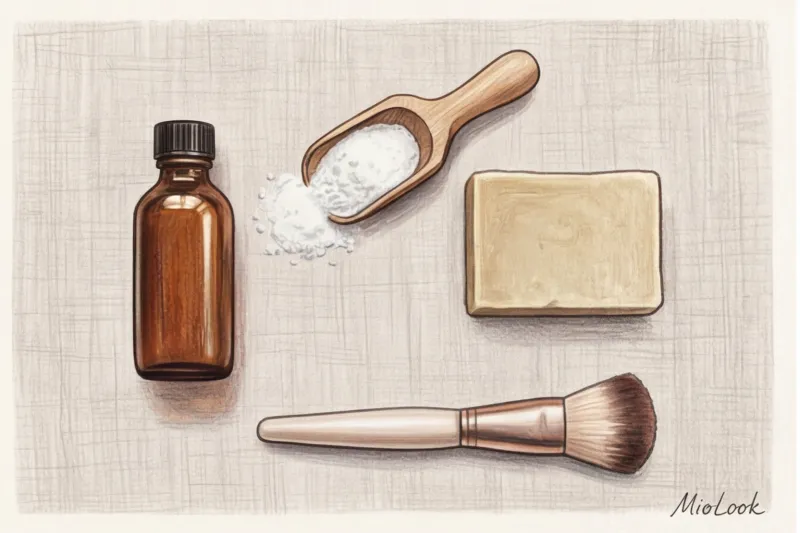
- Enzyme face washing powder. This is my favorite counterintuitive insight. Papaya enzyme powders (papain) are designed to gently dissolve protein bonds in facial skin. If you mix a pinch of this powder with water and apply it to premium lingerie, it will dissolve blood without damaging the most delicate fibers. Yes, it's not the most cost-effective method, but when you're looking at a set costing €200-300, it's well worth it.
- Hydrogen peroxide (strictly for white and light-colored fabrics). Cheap, cheerful and effective for basic cotton sleepers.
- Salt + dishwashing liquid. Dish soap breaks down the fatty film, and salt draws out liquid. A perfect combination for thick microfiber.
- Aspirin. Salicylic acid breaks down protein without corroding the dye as aggressively as chlorine.
- Oxygen stain removers without chlorine (Oxygen bleach). Look for sodium percarbonate in the ingredients. They only work when activated with warm water, so first make a concentrated paste in a separate container, let it cool (!), and only then apply it to a cold cloth.
Ready to rethink your wardrobe?
MioLook, the smart AI stylist, will help you create stylish looks from your clothes every day.
Get access — €0.99 onceOld stains: mission possible?
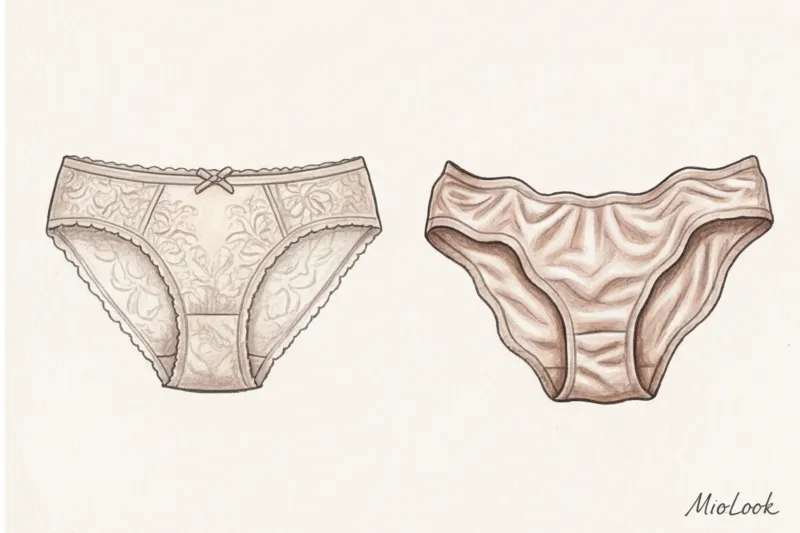
Often, we simply don't have the opportunity to wash an item right away. One of my clients was on a transatlantic flight from Paris to New York (almost 10 hours) and wrote to me in despair upon arrival: the stain on her favorite basic silky viscose panties had completely dried and caked on.
In such cases, aggressive scrubbing won't help—you need to use a long soaking method. Time works better than any brush.
Dissolve 1 tablespoon of coarse salt in a liter of ice water and soak the laundry for 10-12 hours. The salt will slowly but surely break down the bonds between hemoglobin and the fibers. If the stain has lightened after soaking but is still present, apply a couple of drops of pharmacy glycerin to the stain and let it sit for 30 minutes. Glycerin acts as a powerful softener for baked-on protein, after which the item can be washed as usual.
Fair Limit: This method won't work if you've already ironed the stained item or dried it on a hot radiator. Heat permanently alters the fabric's structure, and no stylist can help.
Stop list: what you absolutely must not do with delicate laundry
To ensure your underwear lasts a long time and maintains its proper shape, eliminate these actions from your routine:
- No hot water. I repeat this like a mantra. Only cold.
- Chlorine bleaches. According to textile laboratories, using chlorine reduces the elasticity of lace and elastic bands by 40% in a single application! The waistband of your panties will become a stretched-out wave.
- Intensive rubbing with a brush. Causes immediate pilling and pulls threads out of the lace pattern.
- Drying on a radiator. If even the slightest trace of protein remains on the fabric, a hot radiator or dryer will bake it so that it turns yellow and stays with you forever.
Checklist: How to remove blood stains from panties and maintain a perfect fit

Let's summarize the step-by-step algorithm that will help you save any delicate item:
- Instant reaction: Rinse the stain under running ice water from the reverse side.
- Selecting a product: for cotton - peroxide (if the fabric is light) or salt, for silk and lace - lens fluid or enzyme powder.
- Gentle application: Blot, don't rub. Let the product work for 15–30 minutes.
- Machine wash: After removing the stain, place the laundry in a special mesh bag and wash on a delicate cycle (not higher than 30°C) using liquid gel, not powder.
- Proper drying: horizontally, on a terry towel, away from heating radiators.
Proper care of your underwear isn't just about washing it. It's about self-love and respecting your investment. Every item in your closet deserves to last and give you confidence. To organize your underwear and always know what you have, use smart wardrobe feature in the MioLook app.
Don't be afraid of difficult stains—now you know how to approach them scientifically and stylistically. Take care of your underwear, and it will reward you with a perfect fit!