One of my clients, a top manager at an IT company, bought a luxurious silk slip dress and a premium Spanx bodysuit for €140 to create a completely smooth silhouette underneath. In the fitting room, it looked like magic. But a couple of weeks later, she wrote to me in a panic: the bodysuit had started bunching up at her hips, and her stomach had developed lumps. What had happened? It turned out she'd washed it with terry towels at 60 degrees Celsius, adding a generous amount of fabric softener. In one wash cycle, the expensive shapewear had turned into a useless rag.
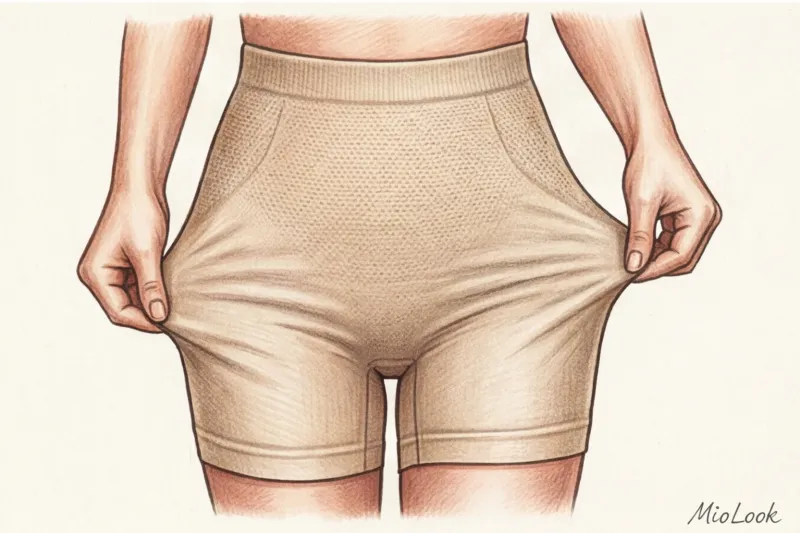
We talked about the basic rules for working with complex fabrics in more detail in our the complete guide to underwear care But compression hosiery is a science unto itself. If you don't know how to wash shapewear properly, you're literally throwing money down the drain with every load.
The Anatomy of Shapewear: Why Shapewear Is So Easily Ruined
In my work as a stylist, I constantly see the same mistake: women invest hundreds of euros in high-status pieces but skimp on the base layer or ruin it with improper care. Remember the Jil Sander suit from my previous article? The perfectly tailored jacket looked cheap because the stretched elastane underneath created unnecessary folds.
From a materials science perspective, shapewear is an engineered construction. High-quality models (from Skims to Wolford) contain 15% to 40% spandex (elastane) combined with nylon. Spandex is a polyurethane fiber that can stretch 5-8 times its original length and instantly return to its original shape.
But this superpower has a fatal weakness: thermal shock. According to research by textile industry laboratories, at temperatures above 40°C, elastane can lose up to 30% of its elasticity in just one wash. The threads literally "melt" and become fixed in a stretched state. Restoring their original shape is impossible—it's an irreversible chemical process.
The main myth: can shapewear be washed in the washing machine?
Manufacturers often write "hand wash only" on labels. After 12 years of sorting through wardrobes, I've come to a paradoxical conclusion: hand washing often damages shapewear more than machine washing. Why?
When we hand wash, we instinctively begin to wring out the wet fabric to remove the water. This aggressive twisting breaks the microscopic spandex fibers. A gentle cycle in a modern washing machine (without spinning or at minimum speed) is mathematically safer for the fabric's structure.
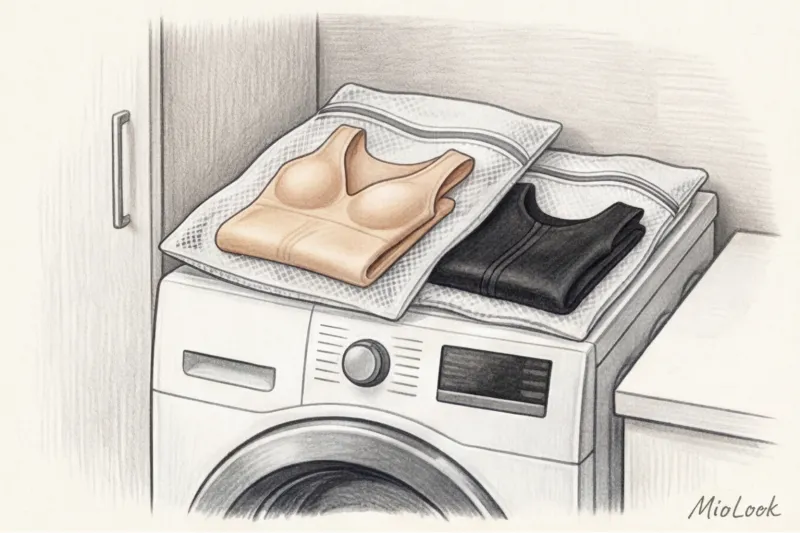
Laundry bags: your best investment
For truly safe machine washing, you need the right bag. Forget those thin, shapeless mesh bags from the supermarket for €2. Look for sturdy bags with a rigid plastic frame (cylinders or hemispheres). And most importantly: the laundry shouldn't dangle loosely inside the bag. Roll shorts or bodysuits into a roll. If the item bangs against the walls of the drum, it will stretch under the weight of the absorbed water.
Your perfect look starts here
Join thousands of users who look flawless every day with MioLook.
Get access — €0.99 onceEnemies of Compression: What Elastane Fears
Even if you've set the right temperature, one misstep with chemicals can ruin an item. The biggest enemy, which 90% of women don't even know about, is fabric softener.
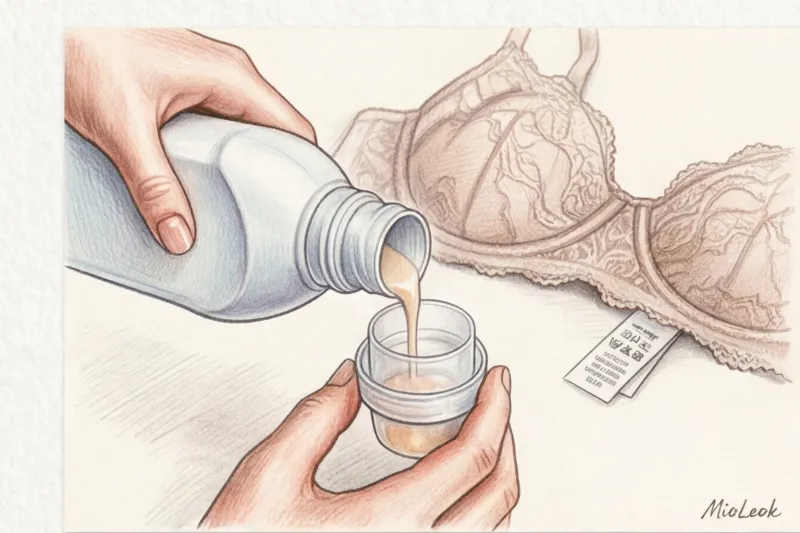
The WGSN agency's 2023 reports on innovative fabric care clearly state that what makes cotton towels soft is the killer of compression knitwear. Fabric softeners work by coating the fibers with a thin lipid (fat) film. This film is fatal to spandex—it clogs the fabric's pores, glues together the elastic threads, and permanently deprives them of the ability to stretch and return to shape. The underwear becomes unpleasantly slippery, loses its breathability, and loses its elasticity.
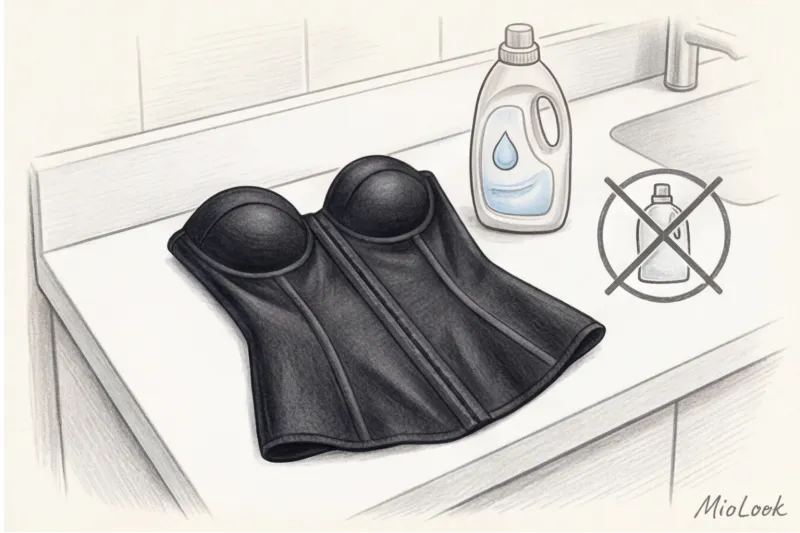
The second enemy is chlorine bleach. Even if your bodysuit is snow-white, chlorine will destroy the polyurethane in minutes, causing the fabric to yellow and become brittle. The third is radiators and direct sunlight (UV light dries out elastic bands, causing them to crack).
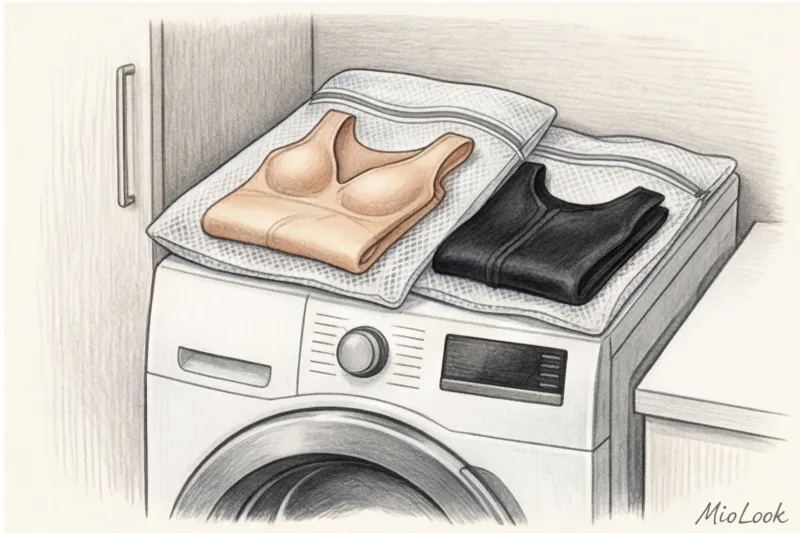
Step-by-step instructions: how to wash shapewear correctly
So, let's get down to business. If you want to know how to wash shapewear so it lasts for years, follow this algorithm:
- Sorting by color. Never wash nude underwear with dark colors or even plain white. The nylon in the compression garment acts as a dye magnet. Just throw it next to blue jeans and your beige bodysuit will permanently turn a dirty gray.
- Choosing a detergent. Use only gentle liquid gels (preferably labeled "for silk and wool" or sportswear). Avoid dry powders—their abrasive, undissolved particles will abrade the fibers.
- Temperature conditions. Strictly cold water. 30°C is the absolute maximum.
- Spin. Ideally, turn off the spin cycle completely. If the machine doesn't drain without spinning, set the spin cycle to no more than 400 RPM.
If you prefer hand washing
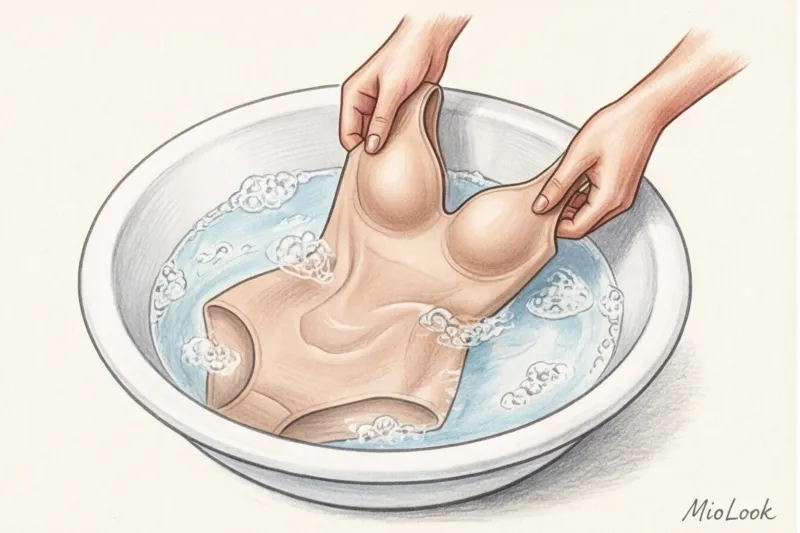
For ultra-thin shapewear shorts with laser-cut edges, hand washing is still preferable. But follow the "soak, don't rub" principle. Dissolve a drop of gel in cool water, soak the garment for 15 minutes, and gently squeeze it (like a sponge). To remove excess water, place the garment on a dry terry towel, roll it tightly, and press gently. The towel will absorb the moisture, preventing the garment from becoming misshapen. By the way, to track the lifespan of delicate items and plan their replacement, I recommend adding them to your virtual wardrobe—you can do this in the app. MioLook.
A fair clarification: this algorithm does NOT work for traditional corsets with metal or whalebone lacing. These should be professionally dry cleaned only—they should not be hand-washed or machine-washed.
Proper drying: how to stay in shape at the finish line
Tumble drying is the official death knell for your body shape. Due to the combination of high heat and mechanical friction, your bodysuit will come out a size smaller, but will stretch out the first time you wear it and never regain its shape.
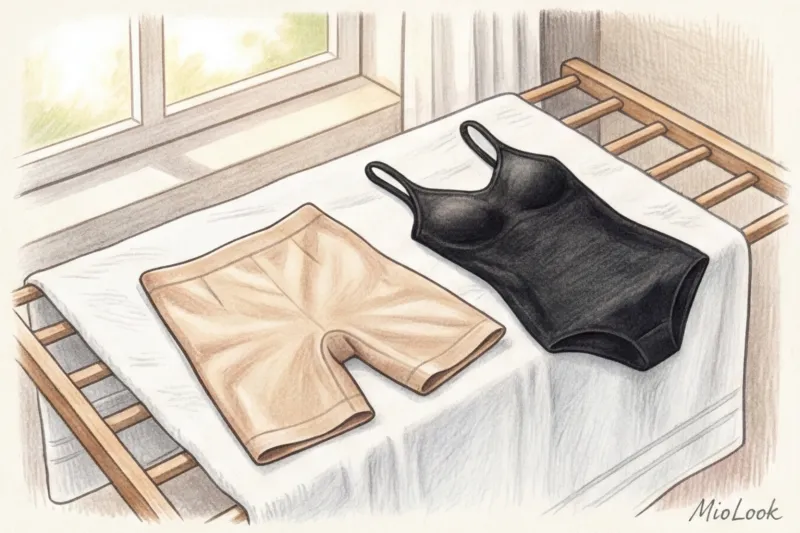
Shapewear should only be dried horizontally. If you hang a heavy, wet bodysuit by the straps on a drying rack, the water will drip down, stretching the fabric. A single drying session can stretch the straps by 3-5 centimeters, and the underwear will lose its breast-lifting effect.
Checklist: 5 Signs It's Time to Throw Out Your Shapewear
Sometimes it's too late to save the item. Wearing damaged shapewear is worse than not wearing it at all - it will ruin the fit of any garment, even the most expensive (especially if we're talking about strict dresses for the office ). Here are 5 signs from a stylist that it's time to say goodbye:
- Curled edges. If the shorts roll up on your thighs when you walk, the silicone band is damaged.
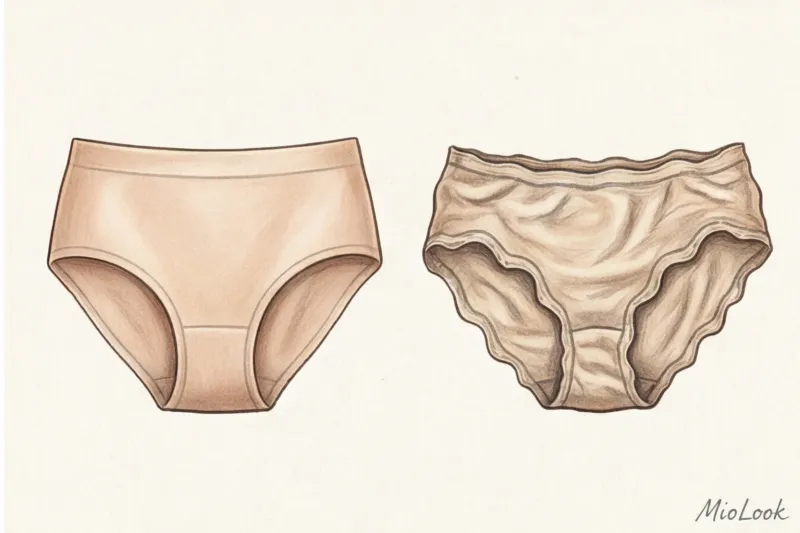
- "The Bacon Effect". The appearance of characteristic waves on the waistband or straps indicates that the elastane inside the fabric has burst.
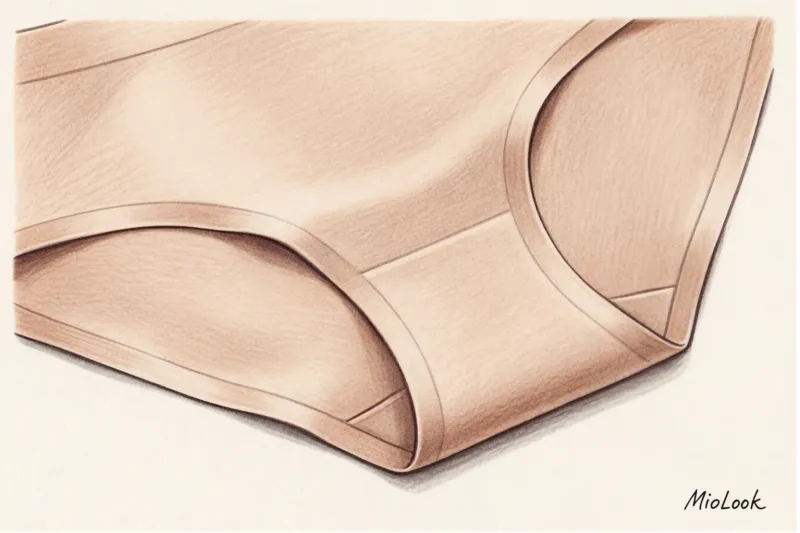
- Heterogeneity in transmission. Look at the item against the window. Do you see the more transparent "bald spots"? There's no longer any compression in those areas.
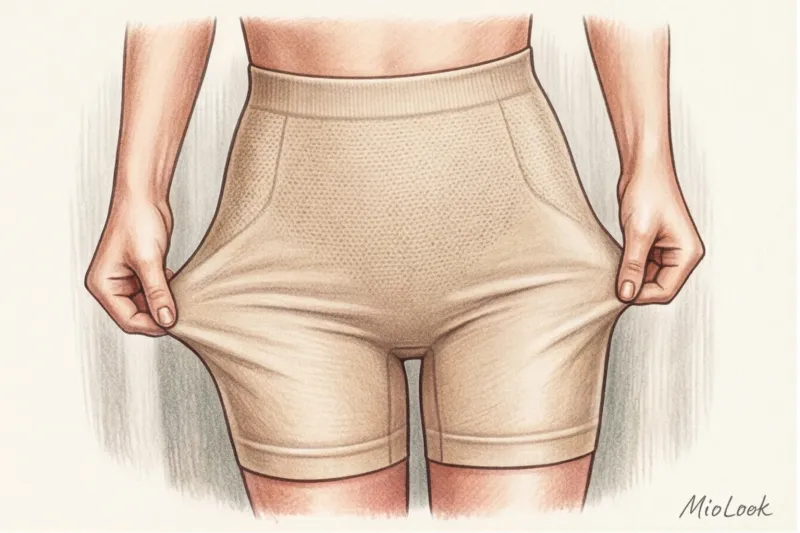
- Easy to put on. The right shapewear should be slightly difficult to put on (that's normal!). If you can slip into it as easily as you would into cotton pajamas, it's done its job.
- Pills. They will show through the thin fabric of your dress, creating the effect of a cheap, loose texture.
Investing in a Flawless Silhouette: A Stylist's Summary
Caring for your shapewear isn't just a household chore. It's a direct defense of your wardrobe investment and your self-confidence. A perfectly fitting dress starts with what's underneath.
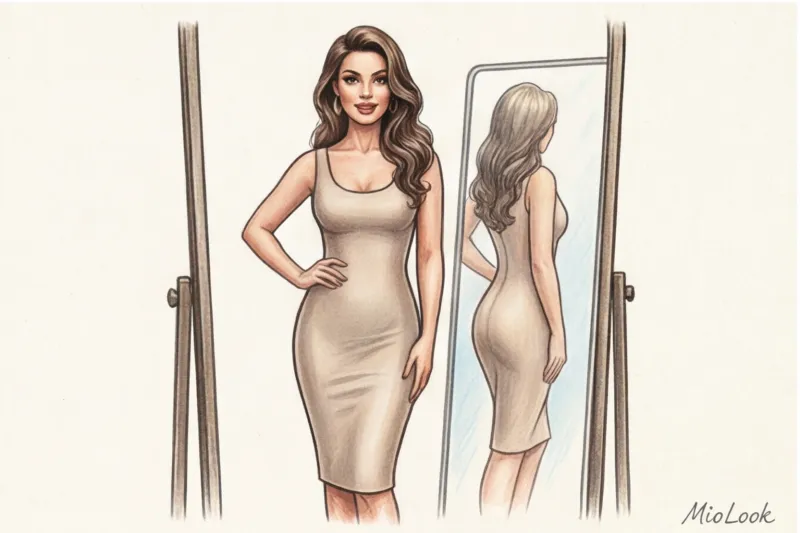
Remember the golden formula from Daryna Marchenko: cold water + liquid gel + mesh bag + no conditioner + horizontal drying.
Don't treat compression like ordinary underwear. Think of it like sophisticated sports equipment or a high-tech gadget. Follow these simple rules, and your silhouette will always remain flawless, and expensive pieces will be worth every penny.