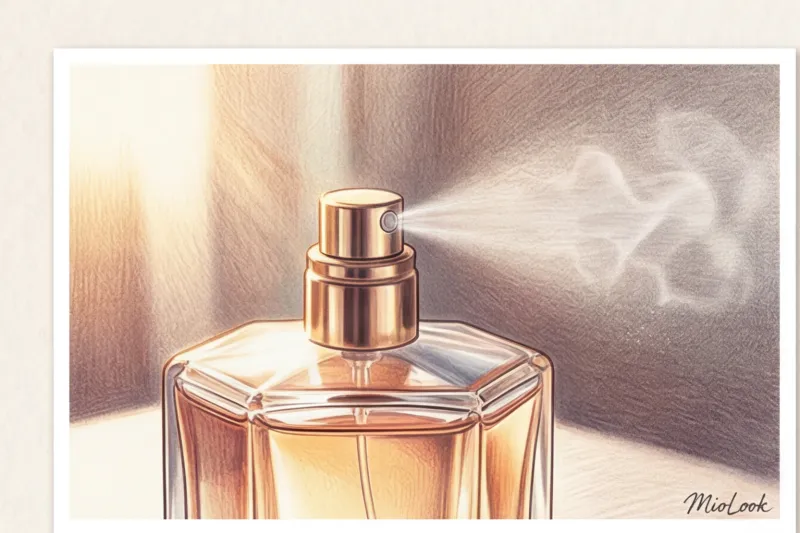
The Anatomy of Seasonality: Why Your Favorite Perfume Changes Beyond Recognition
Have you ever been in this situation: in December, you buy a luxurious bottle, fall in love with its cozy cashmere scent, and in July, you apply a few drops—and suddenly you're left with a suffocating cloud that gives you a headache? It's not that the perfume has spoiled on the shelf; it's that the laws of physics have radically changed around you. Understanding that... How to choose perfume according to the season , begins not with glossy marketing tales about "summer limited editions," but with basic chemistry and physiology. As a personal stylist, I always emphasize: fragrance is as much an invisible yet tangible layer of your wardrobe as a structured jacket or a silk blouse. And just as we wouldn't wear thick tweed in 90-degree heat, our fragrance compositions require careful seasonal rotation.
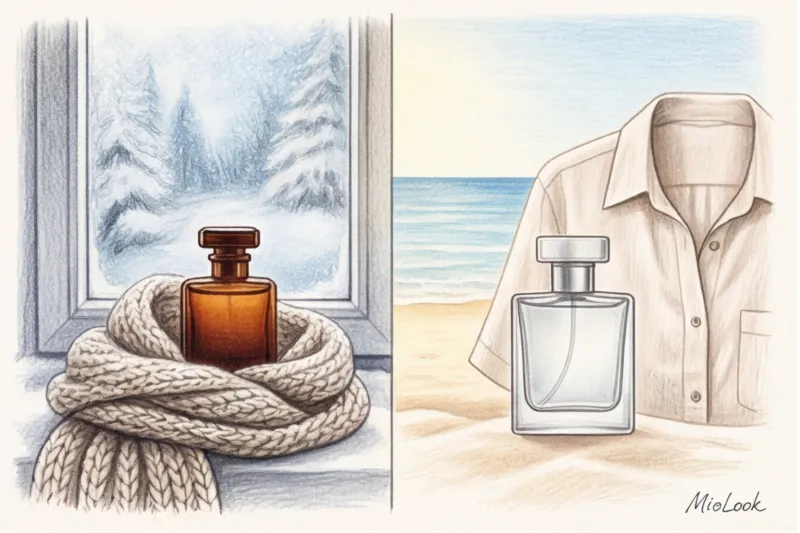
Let's examine the anatomy of seasonality from a scientific perspective. Any perfume is a complex chemical cocktail of ethyl alcohol and aromatic compounds (essential oils, absolutes, and synthetic molecules). The way a fragrance smells on your skin is completely subject to the laws of thermodynamics and the volatility of substances. Scientific fact: at 30°C, alcohol evaporates almost twice as fast as at a comfortable 20°C. As the thermometer climbs, your skin literally acts like a powerful battery, dramatically accelerating all the chemical reactions on its surface.
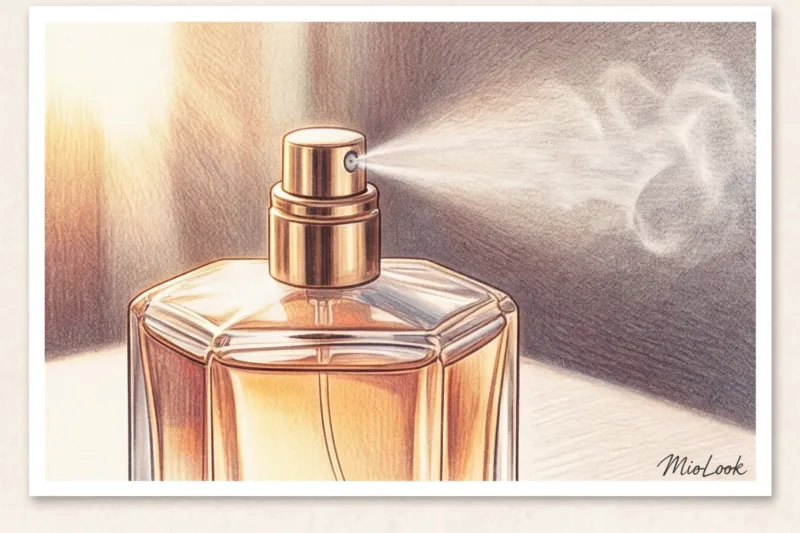
This temperature shift disrupts the classic olfactory pyramid. In summer, the light, highly volatile molecules of top notes—sparkling citruses (like bergamot or grapefruit), crisp greens, and aquatics—have such a low molecular weight that they evaporate from hot skin in 10–15 minutes instead of the recommended hour. You simply don't have time to savor them. But the heavy artillery of the base notes comes into play immediately. In the heat, large, dense molecules of amber, musk, patchouli, and vanilla begin to actively expand and evaporate, creating the very effect where the perfume literally "suffocates" you and your colleagues.
But temperature is only half the equation. Humidity is the main sillage enhancer. Last summer, I conducted a personal experiment: for a month, I meticulously recorded the longevity and volume of my three base fragrances in different climates. The results were astonishing. In the dry, air-conditioned office, the scent sat close to my skin and disappeared within four hours. But as soon as I stepped out into the humid, warm air after a rain (where the humidity reached 80%), the same perfume began to smell three times louder and denser. The secret is simple: microdroplets of water in the air act as a transport system. They capture the scent molecules and hold them around you in a dense, voluminous cocoon.
In perfumery, as in fashion, there are no bad things—there are just compositions that are not worn according to the weather. Your skin and the surrounding climate are a canvas that changes the shades of colors beyond recognition.
That's why heavy oriental perfumes sound excessive and aggressive in a humid climate, while in dry, frosty air they seem elegant and warming. If you're putting together an outfit for an important event—whether it's makeup for a business photo shoot or speaking at a conference—remember that perfume works in strict tandem with the environment. By the way, for a systematic approach to your style, I recommend using MioLook By uploading not only your clothes but also your bottles to the app, you can visually track which fragrances harmonize with your seasonal capsules and avoid annoying olfactory mistakes when your perfume clashes with the weather and rules of business etiquette.
How to choose perfume according to the season: building a smart fragrance wardrobe
Over the years of working with private clients, I've developed one ironclad rule: if you don't put away your winter wool coats for the summer, your closet becomes a chaotic mess, and you suffer every morning from the illusion of "nothing to wear." The same principle applies to perfume. Treat fragrances not as magical elixirs, but as functional elements of your style. Integrating fragrance into your overall look is like creating an invisible, yet most memorable, layer to your capsule wardrobe.
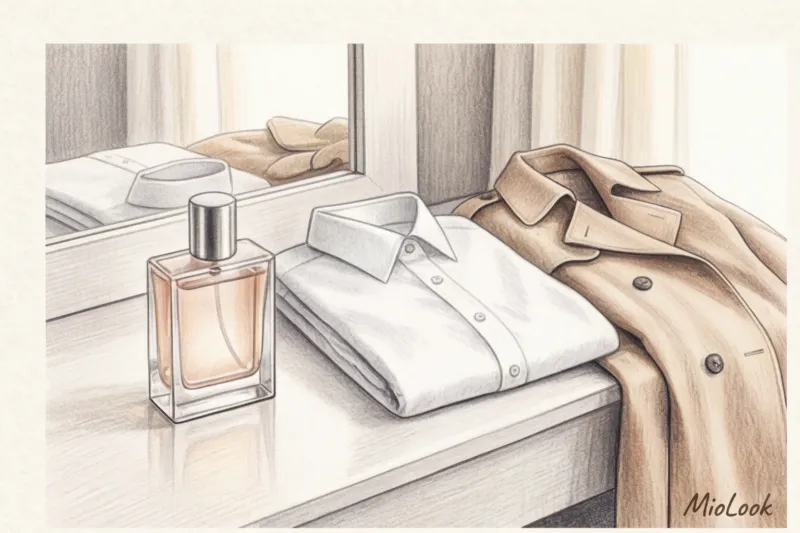
Imagine the perfect basic capsule: a loose-fitting white cotton shirt, straight jeans, and a classic beige trench coat. If you add a heavy, smoky oud perfume to this visually light look, it will create a dissonance. Those around you (and you yourself) will feel as if the image doesn't match the sound. The scent should stylistically complement the texture of the fabric, the geometric cut, and, of course, the temperature. Lightweight fabrics require transparent, volatile compositions, while dense materials perfectly withstand rich, resinous trails.
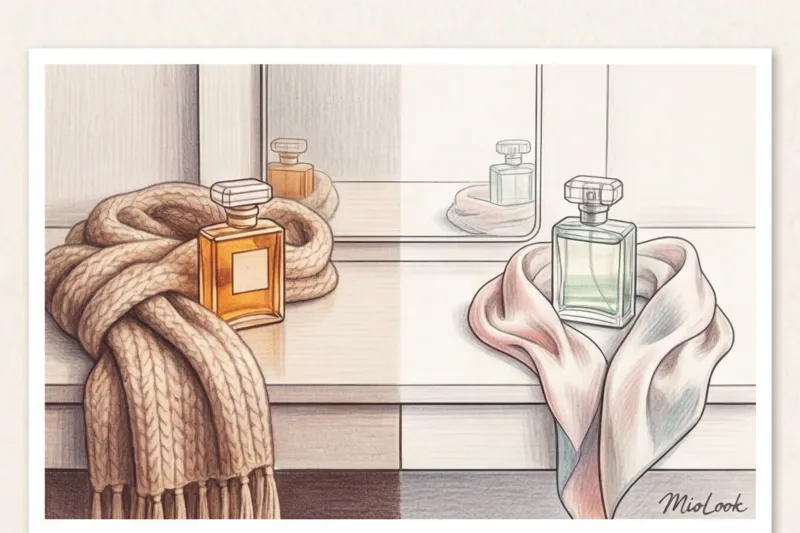
Here comes to the fore rotation principle I strongly recommend physically putting away "out-of-season" bottles out of sight—in a dark, cool closet or special cases. Why is this crucial? The main reason is to combat olfactory fatigue. Our brains are designed to block out constant, unchanging stimuli. If your nose stumbles upon the same heavy winter bottle on your vanity every day, your receptors adapt, and you stop perceiving the scent in its full glory. After putting away your favorite gourmand fragrance for six months, in November you'll experience a genuine delight upon first encountering it, as if you've bought a brand new perfume.
Physically rotating your bottles twice a year—in spring and fall—not only protects essential oils from the damaging effects of sunlight but also resets your perception. You begin to appreciate each note anew.
To make sure I don't forget what's waiting in the back of my mind, I digitize my fragrances. I simply add a perfume shelf to MioLook Just like clothes. The app lets you create complete looks, with a matching fragrance immediately paired with a specific cashmere sweater or linen suit. This saves time in the morning and eliminates the hassle of choosing.
Spring and Summer: Aquatics, Molecules, and the "Minus One Spray" Rule
Spring is a time when not only nature awakens, but also our senses after a long winter. The cool, humid air of March and April perfectly reveals green, white floral, and tea accords. Notes of lily of the valley, crystal freesia, jasmine, or crushed fig leaf literally tinkle in the breeze. They need moisture to reveal their fullness. Such fragrances harmonize flawlessly with a spring wardrobe: silk scarves, delicate cardigans, and classic trench coats.
But when the temperature rises above 25°C, the rules of the game change dramatically. In summer, I strongly recommend putting away classic EDPs and switching to lighter formats. The heat is the finest hour for traditional citrusy Eau de Colognes and molecular perfumes. Synthetic ingredients like Iso E Super or Ambroxan They create a clean, fresh-ironed effect on the skin, rather than a thick, perfume-like shell. They don't have a classic pyramid structure, but rather blend with your skin's chemistry and fade in and out without irritating you or others.
Another great summer life hack is using hair mists instead of regular perfume. They contain minimal amounts of alcohol (or none at all), which solves two problems at once. First, you don't dry out your hair in the scorching sun. Second, you avoid the risk of photoaging and pigmentation that often occurs when you spray alcohol-based perfume on your neck and step out into the sun. Hair mists leave a very subtle, delicate trail that only comes alive with a breeze or a turn of the head.
And most importantly: implement it into your daily life the "minus one puff" rule The physics of the process are simple: in hot weather, the skin's surface temperature rises, increasing the rate of evaporation of alcohol and volatile oils severalfold. A scent that sat close to the skin in winter begins to be actively projected over a distance in summer. If your norm in December is three sprays, limit yourself to exactly two in July. Even the most innocuous floral perfume, if overdosed in 90-degree heat, turns into a weapon of mass destruction, especially in confined spaces.
Access to MioLook for €0.99 — one-time payment
A smart AI stylist will select the perfect look based on your fragrance wardrobe and weather conditions.
Get access — €0.99 onceFall and Winter: Textured Fabrics and Thick Trains
With the onset of the first cold weather, our wardrobes quickly acquire complex textures: dense sheepskin, textured cashmere, heavy tweed, suede, and smooth leather. A fall perfume must visually and tactilely "rhyme" with these materials. This is the perfect time for classic chypres, dry woods, tobacco, and leather accords. Try pairing a tailored tweed jacket with a fragrance featuring earthy vetiver or oakmoss—you'll physically feel the look come together, acquiring a strong core and elegant status.
Winter, however, calls for real heavy artillery. The frosty air is dense, literally "eating" light citrus and aquatic notes, making them flat, prickly, and inexpressive. However, gourmand accords (vanilla, tonka bean, praline, cinnamon), viscous oriental resins, and amber sound luxurious in the cold. As the Grasse Institute of Perfumery notes in its 2023 study on diffusion, low temperatures slow the development of heavy base notes, allowing them to sound noble and complex, without descending into suffocating sweetness, as would happen in summer.
However, using winter fragrances carries a serious risk of ruining expensive items. I once had a client irreparably ruin a light-colored cashmere sweater worth around €800. She sprayed a thick amber extract (Extrait de Parfum) on the collar—the dark essential oils and resins left permanent yellow stains that no dry cleaner could remove.
How to safely apply perfume to winter clothing? Remember three basic rules:
- Never spray perfume directly on light-colored wool, cashmere, or silk. The richer the color of the liquid in the bottle (from cognac to dark brown), the higher the risk of getting an oil stain.
- Use the lining method. Apply perfume only to the dark lining of your coat or jacket. The lining fabric (usually viscose or polyester) is less porous, and the scent will gently waft out as you move.
- The scarf napkin trick. If you want to scent your favorite oversized scarf, spray the perfume onto a clean paper towel. Let the alcohol evaporate (literally 10-15 seconds), then lightly wipe the fabric with the towel or simply place it in your scarf drawer overnight. The scent will soak into the fibers, reducing the risk of staining.
By curating your perfume wardrobe seasonally, you're not just buying new bottles. You're building a well-designed system in which your appearance and your scent work together seamlessly, enhancing each other and creating a cohesive, luxurious look.
The myth of "winter" and "summer" fragrances: breaking stereotypes
Now let's break the rules. If you've ever stood in front of a shelf in a perfume boutique, you've likely noticed clear visual coding: sales assistants suggest transparent blue aquatic bottles for vacation, while heavy, dark glass with amber is for December. According to a 2023 Mintel research report, approximately 64% of consumers are guided by these forced associations. But as an industry insider, I have to tell the truth: the rigid division of fragrances into seasons is, in many ways, a brilliant marketing ploy, designed to trick you into buying at least two bottles at €150-€200 instead of one.
Historically, the most dense and rich resins originated in extremely hot climates. In the Middle East, thick oud, viscous incense, and earthy patchouli have been worn for centuries at temperatures above 30°C. And they smell hypnotic, not suffocating. Why? Physics comes into play: the heat forces the heavy, unwieldy molecules to unfold slowly and multifacetedly. The scent melts, merging with the skin, and transforms into a soft, enveloping aura.
There are no strict climate restrictions in perfumery, only incorrect dosage and the wrong application point. Your thermometer is your DJ's console, and the notes of your fragrance are the frequencies it amplifies or dampens.
One of my clients, a top manager of an IT company, adored her iconic Tom Ford Tobacco Vanille , but she was terrified to take it on her July business trip to Dubai. We took a counterintuitive approach. Instead of generously spraying the perfume on her collarbones, as we usually do with lighter compositions, she used strict microdosing. Just half a spray on the back of her neck (under her hairline) or behind her knees.
The result exceeded expectations. The hot Emirates air instantly softened the tobacco's harshness, leaving only a luxurious, melting vanilla-spicy haze. The aroma rose from the bottom up in delicate waves, without creating a "gas chamber" effect, whether in a taxi or at a business meeting. To help you remember these temperature hacks, I always recommend adding notes to your digital shelf in MioLook app You can write right on the card of your favorite oriental extract: "In hot weather, just one spray under the knees."

But the opposite situation—trying to wear a typically "summer" perfume in winter—often turns into a real olfactory disaster. Have you ever noticed how your favorite lemon-bergamot fresh from August suddenly starts smelling like glass cleaner in January?
In the cold, fresh citrus scents sound flat, metallic, and downright prickly. Low temperatures literally block the evaporation of base notes (musk, wood), which should normally soften and ground the composition. As a result, volatile molecules of limonene and linalool assault the nose with a sharp, chemical solo. The pyramid doesn't open, but collapses, turning an expensive niche perfume into a banal air freshener. Therefore, if you want to smell fresh in winter, choose not lemons with ice, but crisp aldehydes or cool white flowers—in the cold, they will ring like precious crystal.
Perfume capsule: minimalism on the shelf and in life
A 2023 consumer behavior study by Mintel revealed a curious statistic: 78% of women regularly wear just three fragrances from their collection, even if they have a couple dozen bottles gathering dust on their vanity. As a stylist and minimalist, I see a direct analogy here with clothing. We often buy perfume impulsively, swayed by a mood or a beautiful advertisement, and then don't know how to fit it into our daily lives. A rational solution is the concept of a perfume capsule, consisting of just 3-5 bottles, but covering absolutely 100% of your life needs.
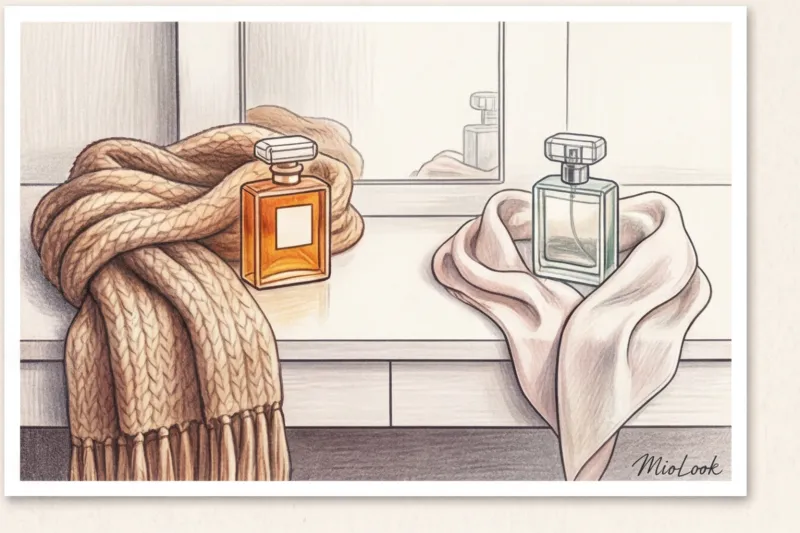
Let's apply the basic principles of smart wardrobe design to perfumery. By analyzing user habits MioLook I've noticed a clear trend: those who systematically approach the digitalization of their physical belongings, including beauty products, spend significantly less time getting ready in the morning and are less likely to complain about "having nothing to wear" (or, in this case, nothing to perfume themselves with).
The foundation of your collection is base scent (Signature Scent) It's the olfactory equivalent of a perfect white T-shirt or a quality cashmere sweater: neutral, appropriate for any season, and non-irritating to you or those around you. Look for compositions with notes of clean musk, iris, ambrette, or light woods (like molecular fragrances). This type of perfume sits close to the skin and works like your own personal scent, only slightly better.
They line up on top of the base situational fragrances — your perfume “accents,” the purpose of which is to switch your psychological state:
- For focus (work): Strict, dry, and cool compositions. Vetiver, cedar, green tea, neroli. They work like a well-tailored jacket, pulling the look together and setting the mind in a businesslike mood.
- For relaxation (rest): Soft, enveloping, or vacation-inspired notes. Fig, coconut water, lavender, chamomile. This is your favorite oversized weekend hoodie, perfect for sipping coffee on the porch.
- For status (evening events): Loud, lingering stories with tuberose, rich rose, patchouli, or spices. The equivalent of an evening gown or tuxedo, worn to make a statement and leave a mark on those around you.
Try MioLook
for free
Start creating perfect images with the help of artificial intelligence
Get access — €0.99 onceBut what if you want variety as the seasons change, but don't want to buy a sixth or tenth bottle (especially considering that a good niche perfume now costs an average of 150-200 euros)? This is where the ultimate insider lifehack comes in handy: layering of aromas.
In clothing, we wear a turtleneck under a shirt for warmth. In perfume, we do the same to change the "temperature" of a composition. If your favorite fresh floral fragrance seems too cold and harsh for a chilly November, apply a vanilla or tonka bean base underneath—the scent will instantly warm up and gain depth. And to refresh a dense, woody fragrance for warm September, spray a grapefruit mono-fragrance or Iso E Super over it. This will add airiness and reduce the heaviness.
The art of layering allows three bottles to yield at least seven unique combinations. The key rule taught to perfumers in Grasse is to always apply a denser, heavier scent (resins, woods, gourmand) to the skin first, followed by a lighter, more volatile scent (citrus, greenery). If you do it the other way around, the heavy base will simply "eat up" the fresh top notes within minutes.
Weather, Perfume, and Business Etiquette: Rules for the Office and the Stage
I had a telling example in my image consulting practice. Two years ago, a brilliant speaker—a top executive from a well-known fintech company—was speaking at a major technology conference. Her speech was impeccable, but the audience in the first three rows was clearly suffering. The reason? The liberal application of Baccarat Rouge 540 before taking the stage. Under the hot spotlights and amidst the natural stress, her body temperature rose, and a powerful amber-saffron trail literally filled the entire room, physically distracting attention from the numbers on the slides. This is a clear example of the importance of understanding the physics of fragrances in the work environment.
Heat and confined spaces—whether a cramped open-plan office on a summer day or a stuffy conference room with radiators running at full blast in winter—act as a magnifying glass for any fragrance composition. In such conditions, even a good, expensive perfume can easily become a veritable weapon of mass destruction. High temperatures accelerate the evaporation of the alcohol base, causing the molecules to diffuse more aggressively and fill the entire room. According to modern business etiquette, olfactory intrusion into someone else's personal space is now considered as bad manners as talking loudly on a speakerphone in an elevator.
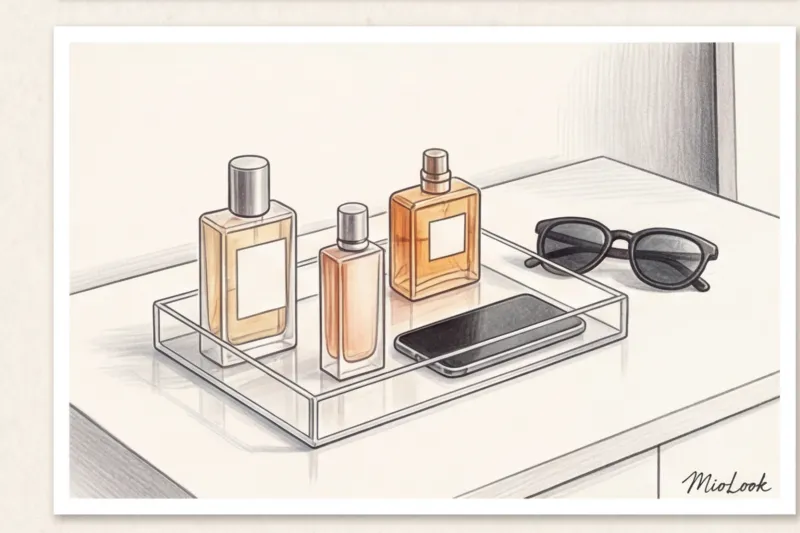
If you're facing a public speaking engagement, a pitch, or a challenging round of negotiations, your approach to fragrance should be as pragmatic as possible. Under stage lights, your pulse quickens, your skin inevitably warms, and your perfume begins to smell one and a half to two times louder than usual. For such situations, I always recommend choosing "clean scents": notes of iris, neroli, white musk, or green tea. They create an aura of well-groomedness, but sit close to the skin.
And here we come to my favorite life hack. Solid perfumes are an absolute godsend and the perfect alternative to classic sprays for business women. They contain no alcohol, only a wax or oil base that slowly melts with body heat. What does this mean in practice? You get an intimate, delicate trail that's only noticeable when you're less than half a meter away.
It's impossible to overdose on solid perfume. You can refresh it right at your desk, in a taxi, or a minute before entering the meeting room without fear of suffocating your colleagues with a cloud of alcohol.
Excellent basic options in the 40-60 euro price range can be found at Diptyque or Jo Malone—they look like elegant, heavy compacts and fit even in a jacket pocket. To avoid getting the wrong bottle in a rush in the morning, I use a tag system in MioLook app When choosing a perfume for the season, simply label simple fragrances "office-safe" or "stage-ready." A smart wardrobe will suggest them when you're putting together an outfit for an important presentation, eliminating the risk of an inappropriate trail.
Checklist: Audit your perfume wardrobe before the new season
According to statistics from the International Fragrance Association (IFRA), approximately 30% of the perfumes on our shelves lose their original properties simply because we forget about them for several years. The transition to a new temperature regimen isn't just about swapping lightweight trench coats for voluminous down jackets. It's the perfect time for an olfactory review and understanding how to choose a seasonal fragrance based on the actual physical properties of the compositions.
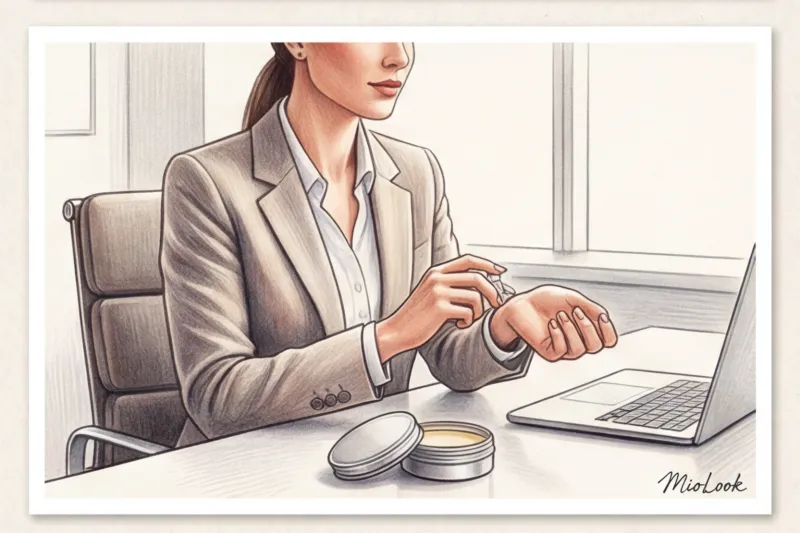
To ensure your collection works for you, rather than just taking up space on your vanity, I offer a simple four-step audit system that I regularly practice before the onset of cold or hot weather.
Step 1: Inventory and expiration date check
Start with a ruthless inventory. Remove all bottles, samples, and decanters. Pay special attention to fresh, aquatic, and citrusy compositions. Due to the high volatility and fragility of lemon, bergamot, grapefruit, and neroli essential oils, they are the first to spoil—typically, their shelf life after the first spray (when oxygen enters the bottle) does not exceed 18–24 months. If your favorite summer cologne has changed color, has sediment, or the opening notes have begun to smell like rancid oil and nail polish remover, say goodbye to it. Heavy oriental resins last for decades, but citrus is unforgiving of storage errors.
Step 2: Testing the "questionable" bottles in new weather conditions
We all have our perfume "misses"—fragrances bought in a fit of passion (perhaps for a hefty 150-200 euros) that, back home, felt too harsh, flat, or simply "not your thing." Don't rush to give them away or sell them. Give them a chance next season. That same "sultry" musk that physically irritated you in the 90-degree July heat might unfold into luxurious powder and fine cashmere in the frosty November air. Spray a test spray on your wrist before going for a walk—you'll be surprised how much humidity and temperature change the chemistry of the fragrance.
Your ideal image
it begins Here
Join thousands of users who look flawless every day with MioLook.
Get access — €0.99 onceStep 3: Bring seasonal favorites to the forefront
Space management is key. Hide out-of-season bottles in a dark, closed cabinet. The ideal temperature for storing perfume is 16–20°C, strictly without fluctuations, so the bathroom, with its steam and humidity, is the worst place for your collection. And the 3–4 fragrances you plan to wear in the coming months should be placed in the most visible place. To visualize this capsule, I'm loading current bottles into MioLook The app lets you create ready-made looks, where a tailored wool jacket is paired with a matching woody perfume. This saves a huge amount of time in the morning, eliminating choice paralysis.
Step 4: Cleansing the receptors for olfactory fatigue
If you generously apply your favorite perfume, but after five minutes you feel only a ringing emptiness, you have olfactory fatigue (professionally known as temporary anosmia). Your brain has simply "switched off" the constant background stimuli to avoid overloading your nervous system. Forget the popular myth about coffee beans—they contain their own powerful essential oils and only make your nose more stuffy. There's only one solution: a strict perfume fast. Remove all fragrances for 5-7 days. Use fragrance-free shower gel and a neutral deodorant. After this detox, your receptors will be reset, and even a single spray will once again sound like a complex, multifaceted symphony.
Conclusion: Fragrance as the finishing touch to your look
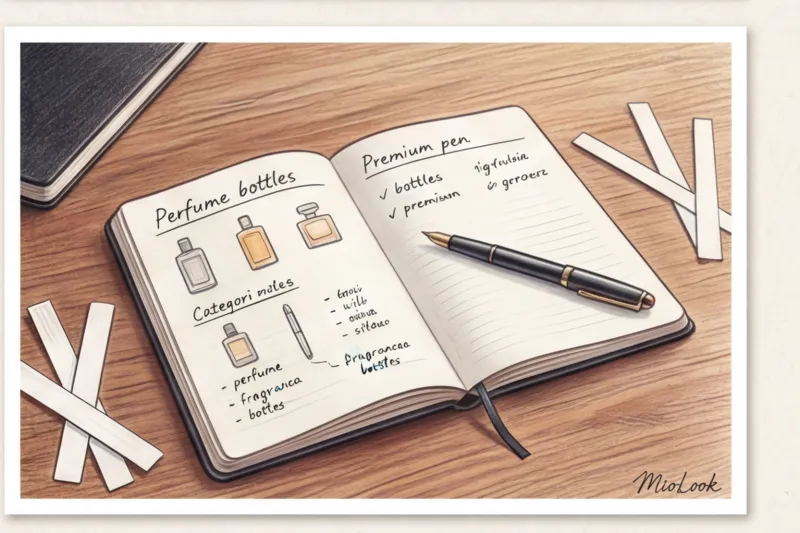
Neuroscientists have long proven a fact we stylists use every day: olfactory receptors are directly connected to the brain's limbic system, which is responsible for emotions. Smell is perceived in milliseconds—long before the other person can even appreciate the impeccable cut of your jacket or the brand of your watch. That's why perfume isn't just a scent; it's a memory anchor and a powerful tool for impression management.
When I put together capsules for clients for difficult career transitions or important business trips, we always select "perfume armor." A crisp vetiver, cool iris, or dry cedar act as an invisible framework for the look, conveying composure and status. Conversely, a soft lactonic base or delicate suede can tone down the formality of even the most formal pantsuit.
Think of fragrance as an invisible, yet most powerful accessory. It fills the space between you and your clothes, tying all the elements of your style together.
Having studied the physics of note development and understanding, How to choose perfume according to the season , you have complete freedom of movement. My main challenge to you today is to stop being afraid of your complicated bottles. I challenge you: try wearing your heaviest, thickest "winter" scent on a summer evening. Take that same lingering amber, smoky incense, or spicy vanilla you used to wear with your cashmere sweater in December, and wear them in August at 28°C (82°F).
The secret to this experiment is that you only need to change the application method. No more traditional sprays on your neck or collarbones. Just spray a tiny amount on the hem of a silk dress, or apply a drop under your knees or ankles. You'll be amazed at the results: the hot evening air will make the heavy base smell exotic, voluminous, and incredibly seductive, without the slightest hint of suffocation. The warmth will draw out the nuances of the composition that would shrink and disappear in the cold.
To track such subtle transformations and not forget successful combinations, I digitize my olfactory experiments. MioLook By tracking how a particular perfume performed at a certain temperature and humidity, you'll build an invaluable personal database in just a couple of months. The app lets you pair fragrances with specific outfits—so you can be sure that a rich oud paired perfectly with a linen suit thanks to microdosing.
To summarize our exploration of perfume seasonality, I want you to remember one rule: listen to your skin and your thermometer, not advertising posters. Cosmetics companies spend millions of euros on marketing, convincing us to buy aquatic fragrances by May and gourmand fragrances by November. But your true compass is the laws of physics, humidity, the density of your clothing, and your personal comfort.
Ultimately, a €200 bottle of niche perfume should work for you, not dictate your choices. Experiment, mix and match, vary the dosage, and remember: the perfect season for your favorite scent is the one you choose.
Guide Chapters
Winter Fragrances for Women: Choosing a Warming Perfume
In cold weather, perfume works according to the laws of physics, like an invisible layer of clothing. Learn how to choose the right warming scent for winter and avoid application mistakes.
Summer Perfumes for Women: How to Smell Expensive in the Heat
Heavy perfume can become a real chemical weapon at 35°C. We'll explain how to choose the perfect summer scent based on skin chemistry and elegance.
The Best Spring Perfumes for Women: A Stylist's Pick
Tired of your favorite perfume fading by lunchtime? Learn how to choose the perfect spring scent that will become an invisible part of your wardrobe.
The Best Fall Fragrances for Women: Cozy and Warm
Perfume is the invisible, yet most influential, layer of your fall wardrobe. Find out why summer perfumes disappear in November and how to choose the perfect warming scent.
Find out how perfume unfolds depending on the weather
Why can your favorite perfume smell strong on vacation? We explore the physics of fragrances and the impact of temperature and humidity on their development.
What time of year is best to wear sweet perfume: a guide
Why does your favorite perfume feel suffocating in the summer but luxurious in the winter? We explore the physics of fragrance and how skin and fabric temperature influences the development of notes.
Universal perfume for any season: myth or reality?
Tired of changing your perfume every three months? We'll tell you how to find the perfect scent that's appropriate for both the office and a date all year round.
How to determine your skin type for perfume: hot and cold
Why does the same perfume smell luxurious on your friend but harsh on you? It's all about skin temperature: learn how body chemistry changes the way fragrances smell.
How to properly store perfume as the seasons change
Perfume requires the same care as cashmere or silk. Find out why fragrances spoil and how to store them seasonally.
The Perfect Perfume for Hot Climates: What to Take to the Beach
Choosing a vacation perfume is a true exercise in the physics of volatile substances. We'll tell you which scents to take to the beach so they unfold beautifully and appropriately.