Olfactory Wardrobe: Why Does Niche Perfume Smell Cheap on Other Skin?
Last summer, a client came to me for a consultation in Milan, ready to ditch niche perfumes forever. She'd invested over 300 euros in the iconic Baccarat Rouge 540 because on a friend, it revealed sumptuous strawberry and burnt sugar aromas. But as soon as my client sprayed it on herself in the July heat, the scent gave off a sharp, unbearable odor of iodine and hospital bandages. The problem wasn't a counterfeit or "bad taste." It was the laws of thermodynamics.
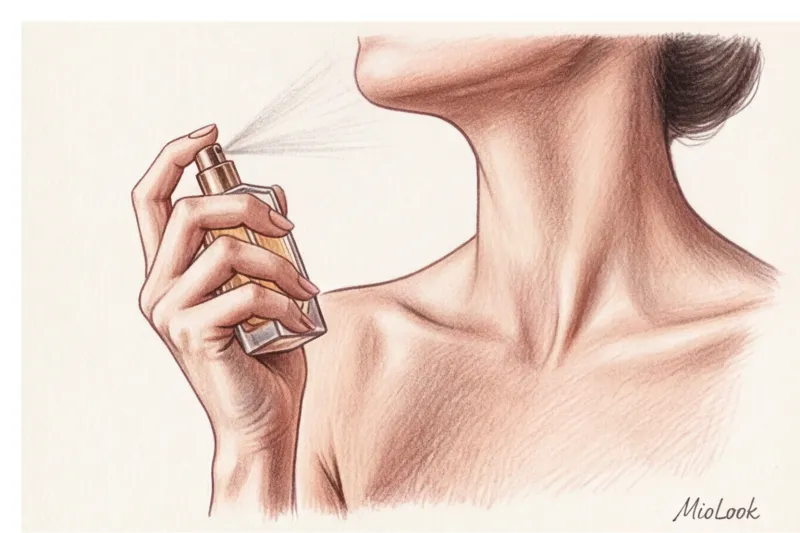
We're used to thinking of perfume as cosmetics, but in reality, it's an investment in your invisible wardrobe. Just as the density of silk determines how a dress fits, your skin chemistry (or more precisely, your blood microcirculation) is the very "fabric" upon which fragrance is deposited. Your skin temperature acts as a "cut" that can either enhance the olfactory pyramid's strengths or mercilessly undermine them.
According to the principles of Osmothèque (the main archive of perfumery in Versailles), the volatility of molecules is directly dependent on the temperature of the surface to which they are applied. The basic laws of cosmetic chemistry state that an increase in skin temperature of just 1-2 degrees increases the evaporation rate of ethyl alcohol and top notes by 40%. The difference in temperature between the wrist and the neck can be as much as three degrees, dramatically changing the scent of the same bottle.
I wrote more about how the external environment breaks or saves perfume pyramids in our complete guide. How to choose a perfume by season: rules for changing fragrances The external temperature always overlaps the internal temperature, creating a unique pattern that cannot be copied.
How to Determine Your Skin Type for Perfume: 4 Accurate Tests from a Stylist
The biggest misconception I've encountered in my 12 years as a stylist is trying to determine skin temperature by the color of the veins on your wrist. Remember: green or blue veins indicate your skin type (warm or cool undertone) for makeup and clothing selection. This has absolutely nothing to do with perfume!
When perfumers talk about How to determine your skin type for perfume They use the terms "hot" and "cold" metaphorically. In reality, they're talking about the speed of blood microcirculation and the depth of the vessels. The closer the vessels are to the surface and the more active the circulation, the faster the skin warms up. Here are four ways to test this at home.
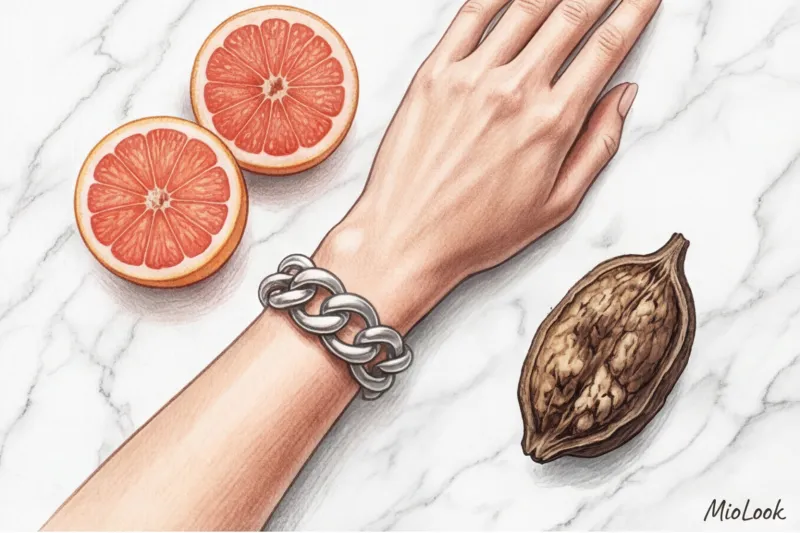
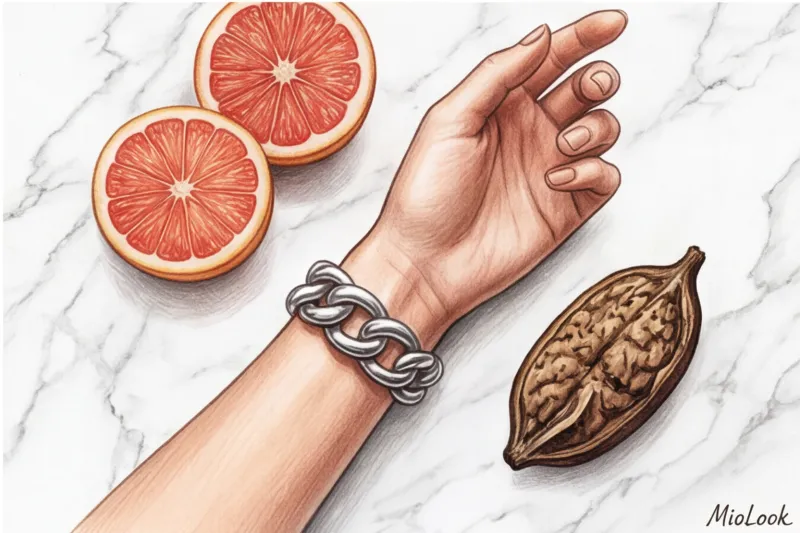
- Metal test. Place a heavy silver or steel bracelet (at room temperature) on your wrist. If the metal becomes noticeably warm, almost hot, after 5-7 minutes, you have hot skin. If the bracelet remains cool even after half an hour, you have cold skin.
- Reaction to frost. How quickly do you blush in the cold or when slightly excited? A quick blush indicates closely spaced capillaries (hot type). If your face simply turns pale in the cold, microcirculation is slow (cold type).
- Blood pressure test. Press your finger into the inner elbow for 3 seconds. If the white spot disappears immediately and the skin turns pink again in less than 2 seconds, the blood circulation is active.
Perfume Crash Test: Testing Skin with Musk and Citrus
The most reliable way is to do a hands-on test right in a perfume boutique. Spray a light citrus scent (like bergamot or grapefruit from Jo Malone) on one wrist and a heavy, dense musk (like clean musk from Narciso Rodriguez) on the other.
Time your scent. If the citrus has disappeared without a trace within 15-20 minutes, your skin is literally "burning" the light molecules—it's hot. Pay attention to your other wrist: if the musk begins to emit sharp, animalic notes or a "dirty body" smell, this is further evidence of high temperature. On cool skin, the citrus will linger for hours, while the musk may not develop at all, remaining a flat, laundry-like scent. Important limitation: This test may fail if you are taking hormonal medications that temporarily alter the chemistry of your sweat.
Your perfect look starts here
Join thousands of users who look flawless every day with MioLook. The smart algorithm takes into account your color type, style, and even the season.
Get access — €0.99 onceHot Leather: Features, Benefits, and Your Best Investment
If your skin tests show it's hot, imagine it as a heavy, luxurious fabric—velvet, brocade, or thick wool. Such materials require appropriate fittings. Hot skin acts like a powerful radiator: it quickly evaporates top notes (citrus, light berries, green tea), preventing you from enjoying them. You can buy an expensive, fresh fragrance, and within an hour there's no trace left.
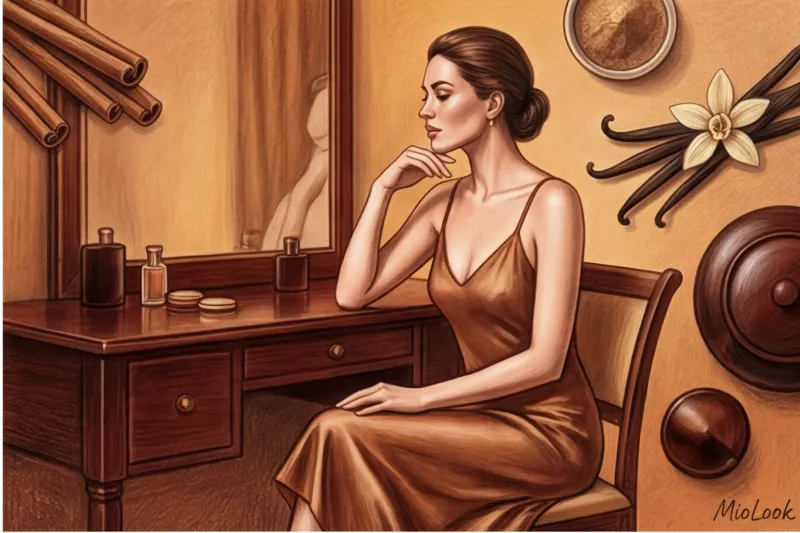
But therein lies your greatest advantage. Warm skin has a unique ability to beautifully and quickly reveal the most complex, heavy base notes. What sounds gloomy and flat on others blossoms on you.
Your best perfume investment:
- Woody notes and oud: Sandalwood, cedar, and guaiac wood become soft and creamy on you.
- Resins and balsams: Frankincense, myrrh, and benzoin lose their ecclesiastical strictness and acquire deep sensuality.
- Gourmet: vanilla, cinnamon, coffee, tonka beans.
What to avoid: Indolic white flowers (tuberose, jasmine, lily) can produce unpleasant physiological nuances when exposed to strong heat. If you're craving jasmine, look for it in cool, aquatic blends, where its ardor is artificially muted.
Cool Skin: How to Make a Status Fragrance Smell Expensive
Cool skin is like the finest silk or crisp organza. Its temperature (usually around 31°C on your wrists) isn't high enough for essential oils to evaporate quickly. A characteristic of this type is that the fragrance lingers "as if straight from the bottle." You can enjoy the top notes for hours, but the heavy base may not develop at all.
Historical fact: when Ernest Beaux created the legendary Chanel No. 5, he used synthetic molecules called aldehydes to convey the frosty freshness of the Arctic Circle. It's on cold skin that aldehydes smell as the perfumer intended—sparkling, pure, with the scent of expensive soap and freshly ironed linen. On hot skin, they often turn into a vague powder.
Your best perfume investment:
- Aldehydes and aquatics: ozone, sea salt, lotus will sound piercing and pure.
- Citrus: Bergamot, neroli, and lemon won't wear off after 10 minutes, but will stay with you until the evening.
- Delicate flowers: lily of the valley, freesia, peony, lilac.
What to avoid: Sweet gourmand notes (chocolate, caramel, praline) don't melt on cool skin. They settle into a dense, monotonous cocoon that, after a couple of hours, starts to give you a headache. If you're craving sweetness, choose a fruity scent, not a confectionary one.
Access to MioLook for €0.99 — one-time payment
A smart AI stylist will create the perfect look for you. Wardrobe analysis, capsule collection, and personalized recommendations are all in one click.
Get access — €0.99 onceThe main misconception: we confuse temperature, fat content, and pH balance.
Clients often complain to me, "I have cool skin, but my perfume doesn't last at all!" We start to investigate, and a counterintuitive insight emerges: we confuse skin temperature with its type (dry or oily). Dry skin can be "hot," while oily skin can be "cool."
When it comes to perfume longevity, oily skin is a perfumer's best friend. Sebum acts as a natural fixative (primer), locking in fragrance molecules and preventing them from evaporating too quickly. Dry skin, on the other hand, lacks this lipid barrier, so it literally absorbs perfume without leaving a trail.
"If you have dry skin, regardless of its temperature, use a stylist's life hack: apply a drop of neutral, unscented body lotion with ceramides to your pulse points. Let it soak in before spraying on your perfume. It will double the lasting power."
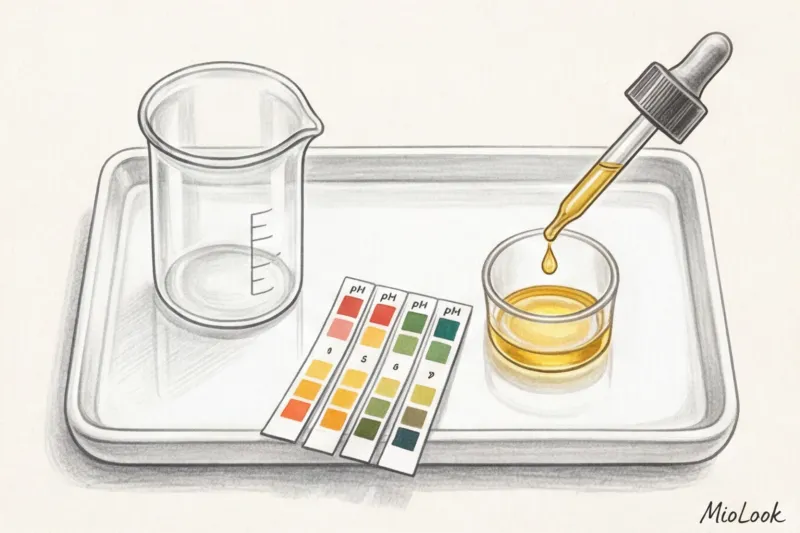
Another important factor is acidity (pH). Normally, the skin's pH is slightly acidic (around 5.5). But if it shifts more acidic (due to diet, stress, or harsh shower gels), perfumes can become acidic. Roses might suddenly smell like vinegar, and sandalwood like brine.
Seasonal Rotation: How to Adapt Your Favorite Bottle to the Climate
Remember how we talked about thermodynamics? In summer, the rules of the game change. Summer heat (25°C and above) temporarily turns cold skin into something resembling hot, and hot skin into a scorching furnace. That's why heavy oriental perfumes in July sound vulgar and stifle those around them.
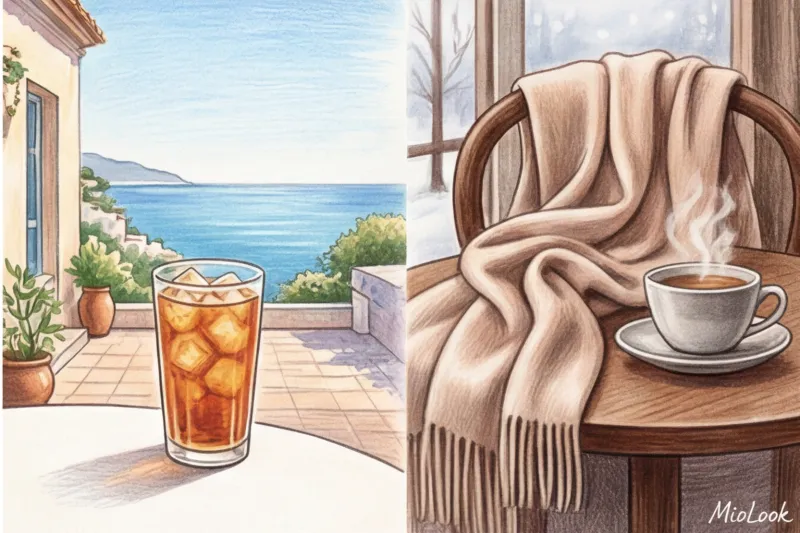
A winter wardrobe for hot skin is the perfect time for gourmands. The frosty air curbs aggressive evaporation, and vanilla and cinnamon sound as cozy as a cashmere scarf. Cool skin, on the other hand, requires crisp, crystalline scents—aldehydes ring like crystal in the cold.
The golden rule of a stylist: The warmer the outside temperature, the farther away from the pulse points we apply fragrance. In summer, avoid the neck and wrists. Apply perfume to the back of the neck (under the hair), the hem of a skirt, or the inside of a linen jacket. Fabric and hair are neutral temperatures and will preserve the scent in its original form.
Pre-purchase checklist: how to test luxury perfume
Every time I see a girl at TSUM or Sephora buying a $300 bottle after smelling a paper strip, I want to stop her. A paper blotter is always "cold." It has no pulse, no lipid layer, no temperature. It will only show you how the scent was conceived in the lab, but not how it will live on you.
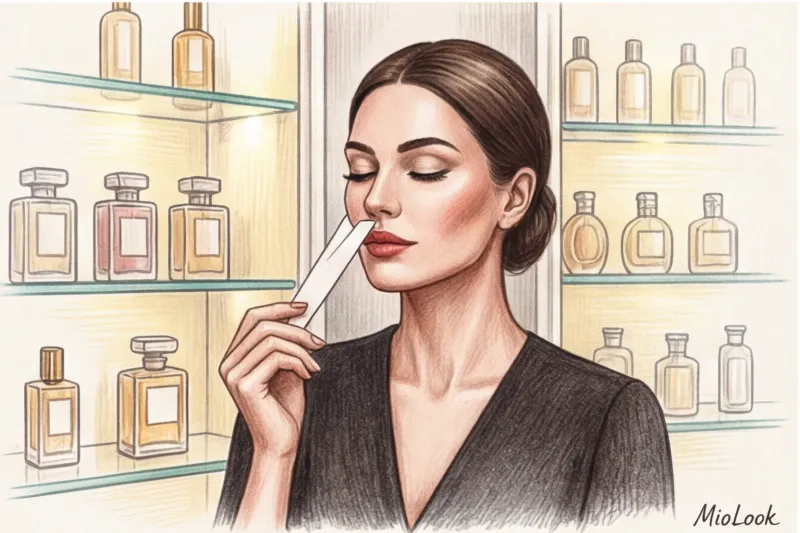
To avoid wasting money on disappointment, follow these three rules:
- The 3-hour rule and change of location. Spray the fragrance on your skin and be sure to leave the boutique for fresh air. The air in perfume shops is oversaturated with molecules, and your receptors are not as sensitive there. Allow the fragrance to develop for at least three hours.
- Testing on two surfaces. Spray the fragrance on your wrist (to test the skin chemistry) and on the cuff of your shirt (to test the longevity on fabric). This will reveal the full spectrum of sillage.
- Check for "soap". If an expensive perfume smells like cheap soap or glass cleaner on you after an hour, it's not for you. Your skin burned the top notes too quickly and couldn't absorb the base.
Choosing a perfume isn't just about finding a pleasant scent. It's about finding the perfect partner for your physiology. Understand your temperature, stop fighting nature, and then even a simple mid-range fragrance will smell like a bespoke, exclusive niche fragrance on you.