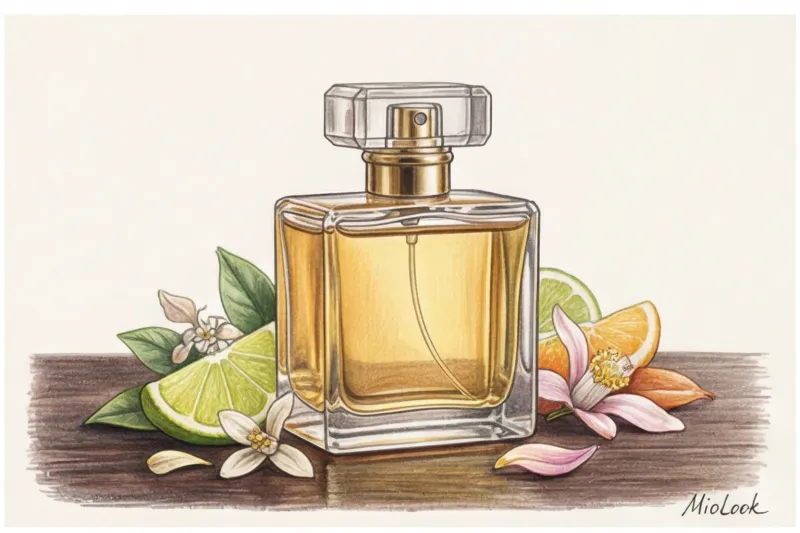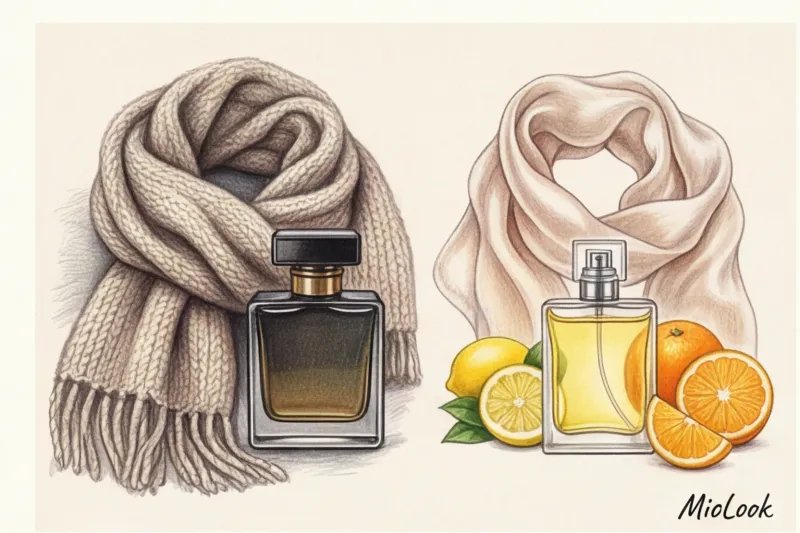
Three years ago, one of my clients, literally in tears, showed me a bottle of a $300 niche perfume. "Olena, it smells like celery and old plastic, even though I only bought it a year ago!" she complained. I walked into her bedroom and immediately understood the reason. The luxurious crystal bottle had sat on a sunlit vanity by the window all summer. What had happened inside is what chemists call photooxidation, and perfumers call "fragrance death."
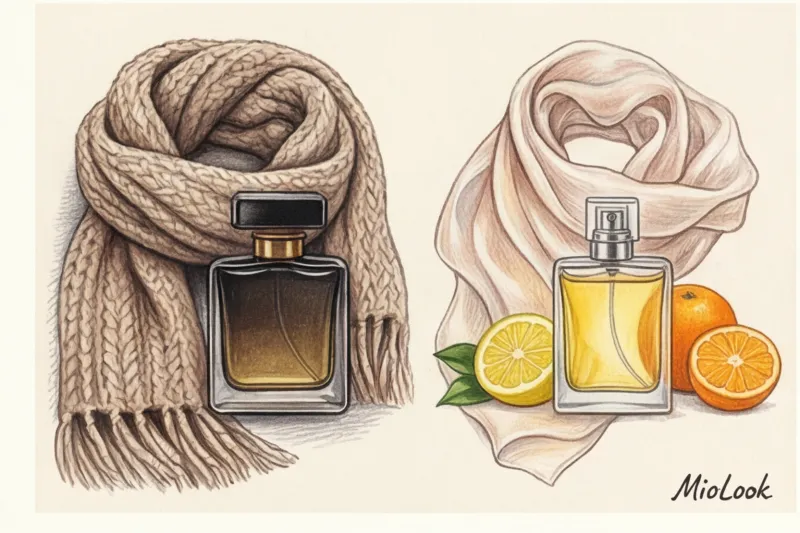
Over 14 years as a personal stylist, I've sorted through hundreds of women's wardrobes. And you know what surprises me most? We carefully pack cashmere sweaters in moth-proof bags, dry-clean silk dresses, and yet we completely forget about... How to properly store perfume After all, perfume is as much a part of your look as an expensive bag or the perfect jacket. It requires seasonal rotation.
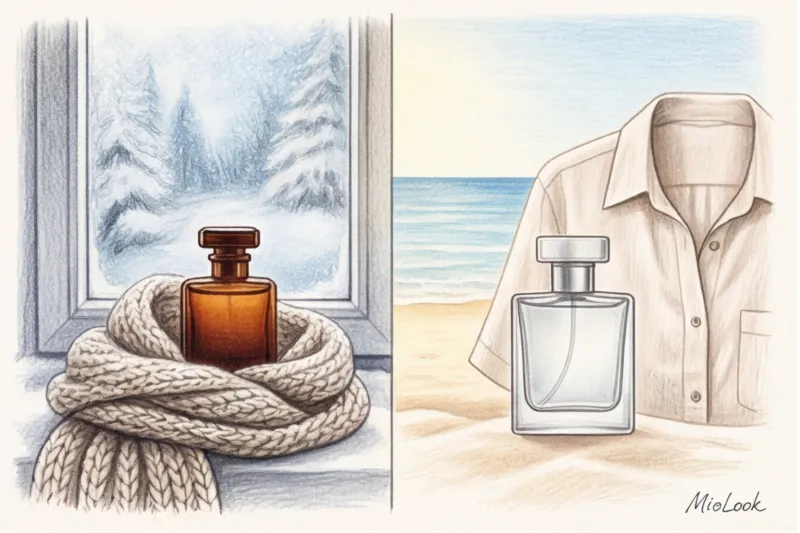
We discussed in detail in our article why body and ambient temperature dramatically changes the way notes unfold. a complete guide to changing fragrances Today we'll discuss the technical, yet vitally important, side of the issue: how to organize "winterization" for summer bottles and why your refrigerator is the worst place for your favorite perfume.
Access to MioLook for €0.99 — one-time payment
A smart AI stylist will select the perfect look.
Get access — €0.99 onceWhy does your perfume wardrobe need seasonal "preservation"?
Let's be honest: you don't store heavy wool coats mixed with thin linen shorts, do you? You put away out-of-season items to keep them from collecting dust, fading, and taking up valuable space. A perfume shelf works by the same rules.
When a heavy, resinous, oriental winter fragrance sits idle on a shelf in 90-degree summer heat, chaos ensues inside the bottle. Essential oils and absolutes heat up, and complex molecular bonds begin to break down. By the time you reach for your favorite perfume in November, its top notes may be irreparably damaged.
That's why I always introduce the concept to my clients olfactory capsule The idea is simple: only the fragrances you wear this season should be on your table or shelf. Everything else should be preserved. If you find this difficult to organize yourself, you can always use the virtual closet feature in MioLook to visually separate your fragrances and clothes by season.
How to Properly Store Perfume: 3 Main Enemies of Your Favorite Bottles
To understand how to protect your collection, you need to know your enemies. There are only three of them, but they are merciless.
Enemy #1: Ultraviolet. Direct sunlight is absolutely detrimental to perfumes. Light triggers irreversible chemical reactions. According to cosmetic chemistry research, the degradation rate of citrus notes (bergamot, lemon, bitter orange) under UV rays increases two to three times compared to woody bases. Your fresh summer cologne will turn into something indistinct after just a couple of months on the windowsill.
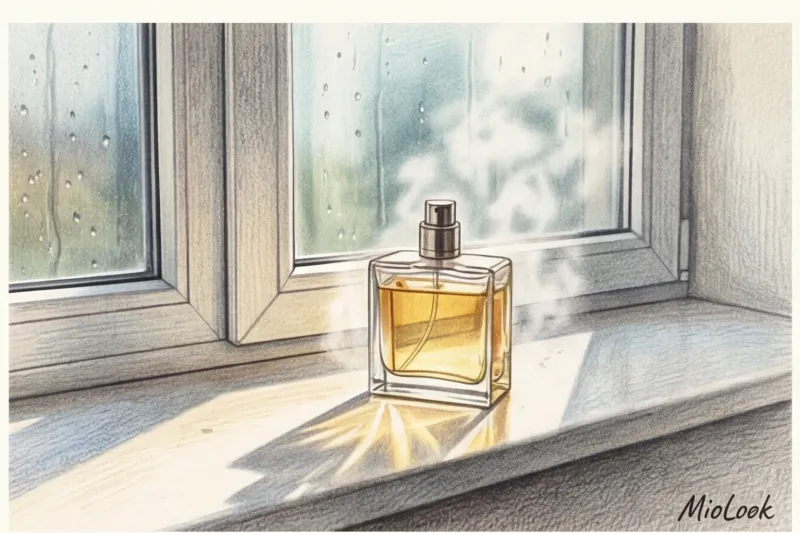
Enemy No. 2: Temperature changes. What's important isn't the room temperature itself (unless it's a sauna), but its stability. Leaving perfume near a radiator in winter or under an air conditioner in summer means subjecting the liquid to constant expansion and contraction. This disrupts the composition's balance.
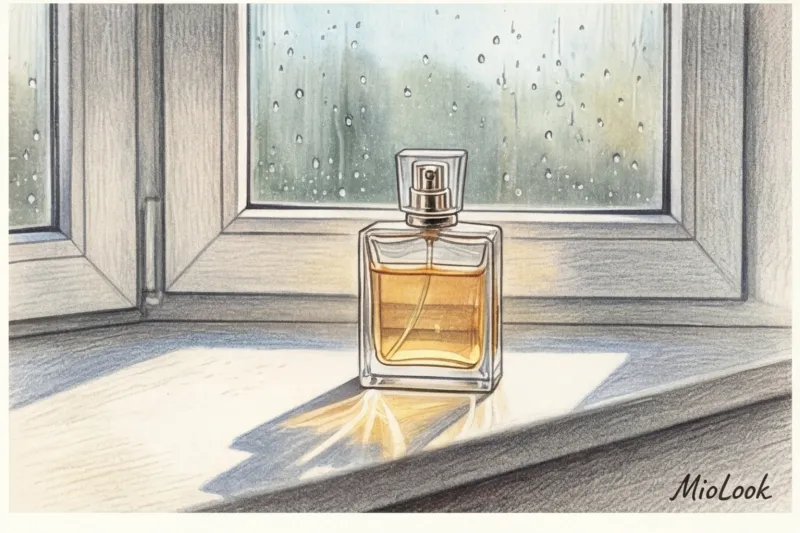
Enemy #3: Humidity. I had a client who loved displaying her Jo Malone bottles on a marble shelf right above her bathtub. Aesthetically pleasing? Very much so. But after six months, her beloved Wood Sage & Sea Salt began to smell like old laundry soap. Humidity seeps into the tiny crevices of the spray bottle, oxidizing the metal parts and slowly killing the scent.
Your perfect look starts here
Join thousands of users who look flawless every day with MioLook.
Get access — €0.99 onceThe Refrigerator Myth: Where Your Collection Really Belongs
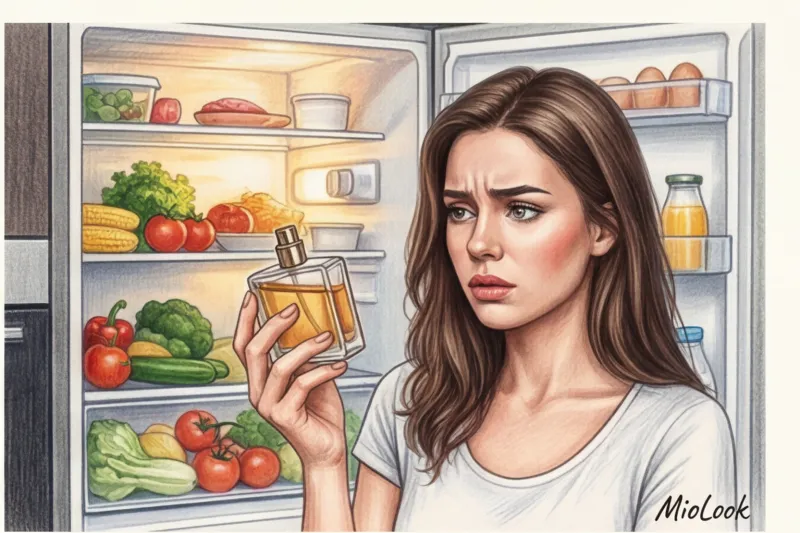
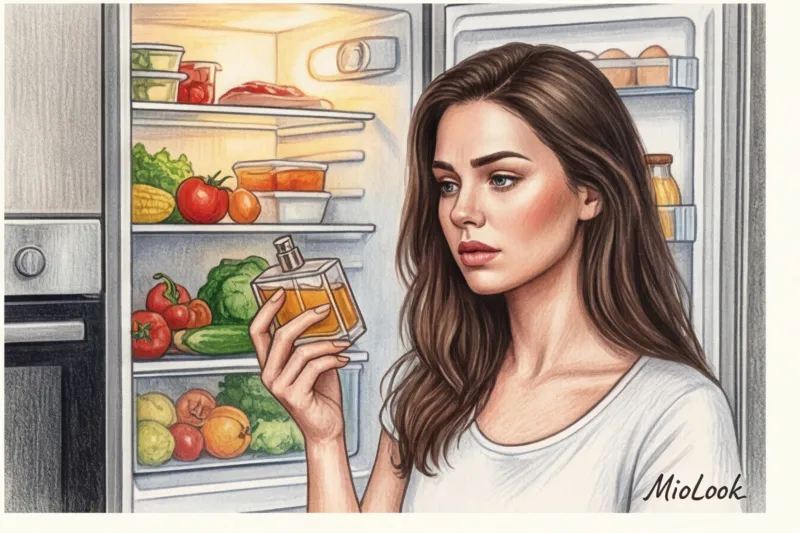
If you've ever searched online for perfume storage tips, you've likely come across the recommendation: "Put your perfume in the refrigerator!" As a stylist who carefully manages her wardrobe investments, I have a duty to warn you: Storing perfume in a household refrigerator kills the scent.
Why doesn't this popular advice work? It's all about physics. A typical kitchen refrigerator is kept at 4°C. When you take an ice-cold bottle out into a warm room (around 22°C) to apply fragrance, micro-condensation immediately forms inside the glass. The water mixes with the fragrance. Multiply this by daily use, add in food odors, and you have the perfect recipe for ruining an expensive product.
“The ideal conditions for storing perfumes are a stable temperature of 12°C and a complete absence of light,” state the standards of the Osmothèque, the world’s largest perfume archive in Versailles.
Of course, we're not in Versailles, and not everyone is ready to buy a separate wine cabinet for their perfume. What's the ideal compromise for an ordinary apartment? A closed chest of drawers in your bedroom It's dark there, there are no sudden temperature changes (like in the kitchen) and there is no humidity (like in the bathroom).
A stylist's guide: how to transition from winter scents to summer (and vice versa)
The changing seasons are a great time to take stock. Take 15 minutes on a weekend to properly preserve any fragrances you don't plan to use for the next 3-4 months.
Preparing the bottle and sprayer
The most common mistake is simply throwing the bottle back in the box as is. The perfume residue in the plastic tube and on the atomizer nozzle itself will oxidize within a few months. When you take the perfume out next season, the first two or three sprays will reveal a pungent smell of rancid oil.
What to do: Take a regular alcohol wipe (or a cotton pad soaked in rubbing alcohol) and thoroughly wipe the spray nozzle. Be sure to tightly close the bottle with the original cap. Caps aren't just for aesthetics—they prevent accidental pressing and minimize exposure to oxygen.
Packing and location selection
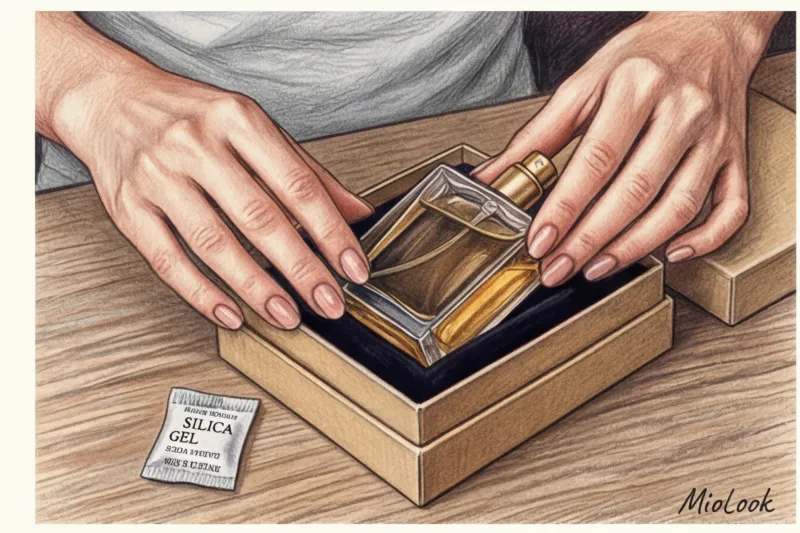
I always implore my clients: don't throw away the original boxes! Thick cardboard is the world's best insulator and 100% light protection. If you do throw away the packaging, wrap the bottle in a soft, dark cloth (like a small bag duster).
A life hack from my practice: Remember those little paper packets labeled "Silica Gel" that you get in new shoe boxes? Throw one into the bottom of your perfume box before storing it. The silica gel will absorb any moisture and protect the metal parts of the bottle from oxidation.
Ready to get started?
Try the MioLook free plan—no commitments, create capsules in one click.
Get access — €0.99 onceDiagnostics: How to tell if your perfume has gone bad over the season
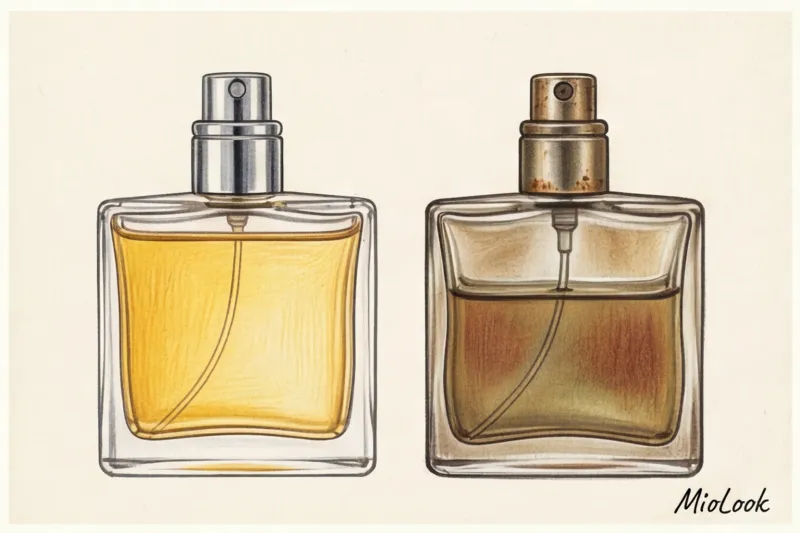
Even with proper storage, nothing lasts forever. How do you know when a fragrance has "died" and is time to toss it out to avoid ruining your look?
Let's start with visual signs. There's one important detail here: slight darkening of the liquid (especially if it contains natural vanilla or resins) is completely normal. maceration The aroma simply infuses, like a good cognac. But if the liquid becomes muddy or a flocculent sediment has appeared at the bottom - the formula has disintegrated.
The olfactory signs of spoiled perfume are unmistakable. Within the first 30 seconds of spraying, you'll notice a sharp odor of rubbing alcohol, vinegar, or burnt plastic.
Important limitation: This tip for finding "broken" notes doesn't work at all if you're testing a suspect perfume on your own skin. Body chemistry, stress levels, or even shower gel can distort your perception. It's essential to test perfumes for shelf life. only on paper blotter or a regular paper napkin.
Organizing your perfume shelf for the current season
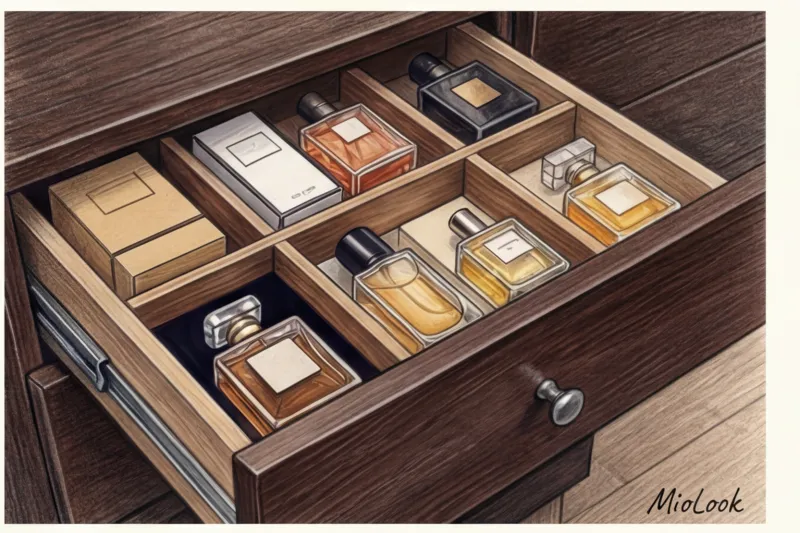
So, with your out-of-season fragrances safely stashed away, what should you keep on hand? I recommend a rule of 3-5 bottles per season. You'll need:
- One basic, everyday scent (for the office or daytime activities).
- One evening, more dense perfume.
- One fresh or accent scent to set the mood.
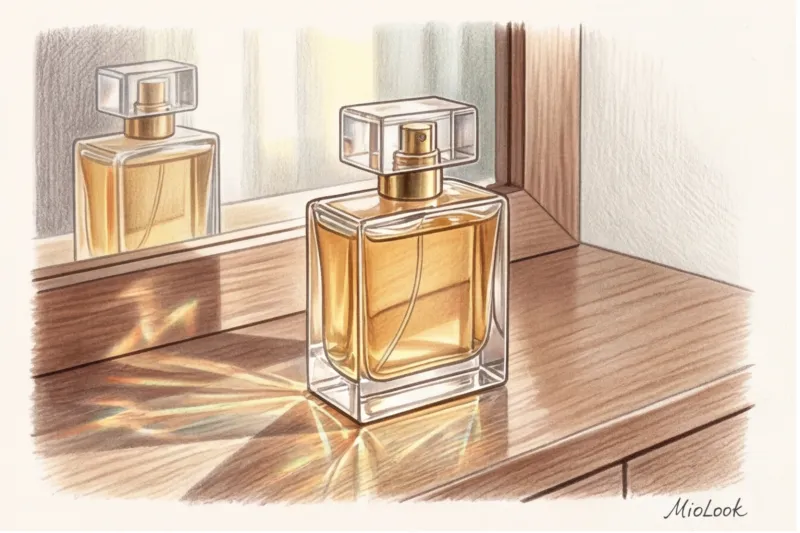
How can you organize this mini capsule beautifully without compromising its safety? If you want to display your bottles, use beautiful decorative trays (mirror or natural stone). The main rule is to place this tray in the back of the room, out of direct sunlight. If you plan your look in advance, outfit selection feature in MioLook , you can immediately mentally associate a specific scent from the tray with the chosen outfit.
Remember: the status of your look directly depends on the purity of your perfume. A luxurious look is not only about high-quality fabrics and a good fit, but also about a scent that doesn't smell of rancid alcohol. Treat your fragrances with the same respect you would your favorite cashmere coat, and they will delight you for years to come.