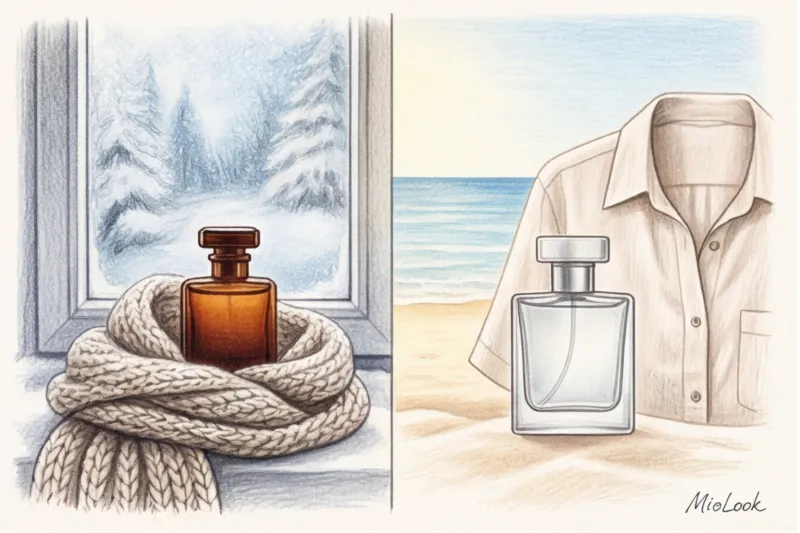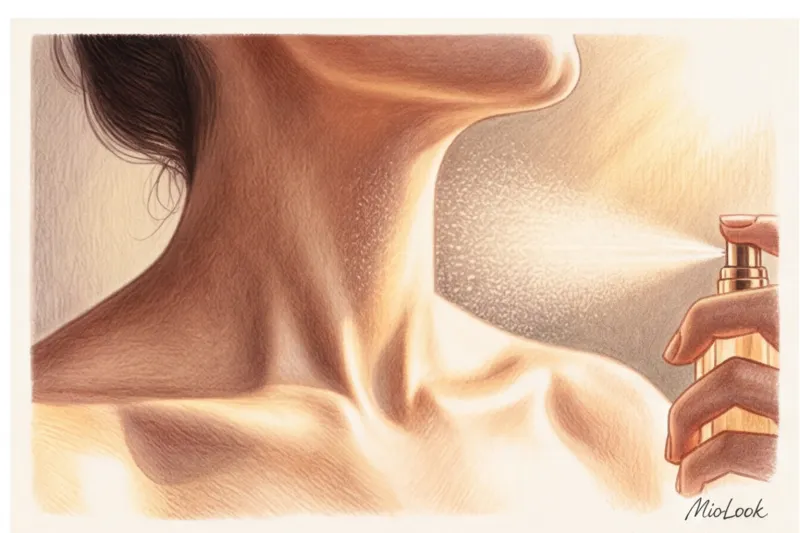
One day, a client of mine brought a bottle of expensive niche perfume to a wardrobe cleanout and said in despair, "I want to throw it away. It smells like burnt rubber and sticky syrup that gives me a headache." It was a sultry August in Moscow, and she was wearing a striking but completely non-breathable polyester blouse. I asked her to hide the bottle in a dark closet until November and try spraying it again—this time on a voluminous cashmere sweater. Spoiler alert: that same perfume became her absolute favorite in the winter.
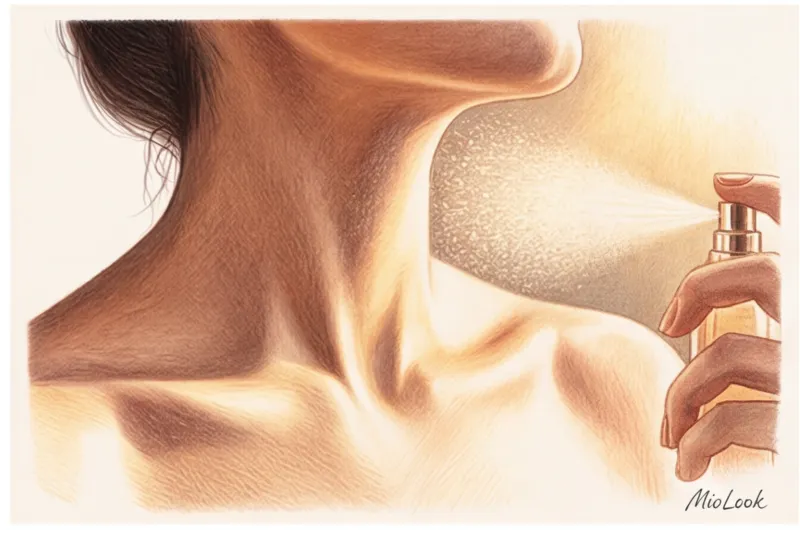
In 12 years of working as a stylist and fabric expert, I've learned one ironclad rule: perfume isn't magic or abstract "note pyramids" from press releases. It's pure physics. The way your scent smells depends 80% on the temperature of your skin, the humidity in the air, and the fiber structure of the clothes you wear.
Clients often ask me, What time of year is best to wear sweet perfume? , fresh citrus, or heavy musk. To answer this question, we'll have to forget the marketing hype and look at the fragrance wardrobe through the prism of thermodynamics and textile styling. We've covered the basic principles of developing such habits in more detail in our complete guide. How to choose perfume by season: rules for changing fragrances , and today we will delve into the chemistry of the processes.
The Physics of Scent: Why Your Perfume Changes Scent Throughout the Year
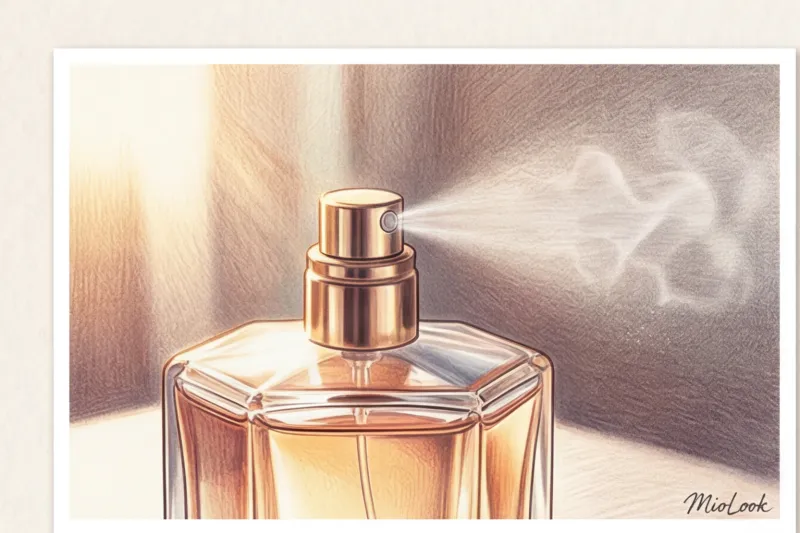
Any perfume consists of fragrance ingredients and a solvent (usually alcohol). According to the International Fragrance Association (IFRA), the rate of evaporation of these components is directly dependent on ambient temperature. Thermodynamic studies show that at 30°C, the alcohol base evaporates 40-50% faster than at a comfortable 20°C.
But the most interesting thing lies in the molecular weight of the notes themselves. Imagine a sieve through which you sift various grains.
- Light molecules (citrus, green, aquatic) — these are fine salts. They pass through the sieve instantly. They have a minimal molecular weight, so they're the first to be removed from your skin.
- Medium molecules (flowers, fruits, spices) — this is buckwheat. They linger longer, forming the "heart" of the aroma.
- Heavy molecules (resins, wood, musk, vanilla) — these are large stones. They evaporate extremely slowly, creating that long trail.
In summer, when your skin is hot, thermodynamics kicks into high gear. Light molecules literally "burn up" in minutes, and heavy ones begin to evaporate too aggressively, creating a dense, suffocating cloud. In winter, however, in the cold, evaporation slows. Light notes last longer and are more resonant, while heavy ones may not open up at all, remaining close to the skin.
Access to MioLook for €0.99 — one-time payment
A smart AI stylist will create the perfect look and suggest which fabrics will best complement your fragrance wardrobe.
Get access — €0.99 onceWhat time of year is best to wear sweet perfume: debunking the myths
If you go to any perfume forum and ask what time of year is best to wear sweet perfumes, 9 out of 10 commenters will categorically declare, "Only in winter! In summer, the sweetness will suffocate you!" As an expert, I have to disagree. This is one of the most common misconceptions, depriving us of a huge amount of olfactory pleasures.
Sweet aromas fall into two fundamentally different categories, and they behave very differently in different climates.

Winter gourmand versus summer tropical sweetness
Traditional "confectionery" gourmand fragrances feature notes of praline, burnt caramel, tonka bean, cinnamon, and dried vanilla bean. These heavy, dense molecules are designed to warm. In dry, frosty air, they sound noble, creating a cozy cocoon. But apply the thick praline at 28°C (82°F), and it blends with the skin's natural moisture, creating a "sticky" effect. It feels like you've spilled hot syrup on yourself.

And here it is tropical sweetness — it's a completely different physics. Notes of coconut milk, tiare flower, frangipani, ripe fig, and tuberose historically developed in hot and humid climates. Counterintuitively, it's precisely in the summer heat and high humidity (for example, on a beach vacation) that these sweet notes unfold most naturally. The moist, hot air acts as a diffuser, dissolving the density of the white flowers and making their trail float rather than oppressive.
"Trying to wear a coconut and tiare scent in dry, minus-20 degrees is like wearing a chiffon sundress on a ski slope. The scent will simply shrink from the cold, producing a plasticky, indistinct note." This is what I always explain to clients when sorting out their seasonal capsules.
Citrus, aquatic plants, and greenery: why they "burn" in summer and hide in winter
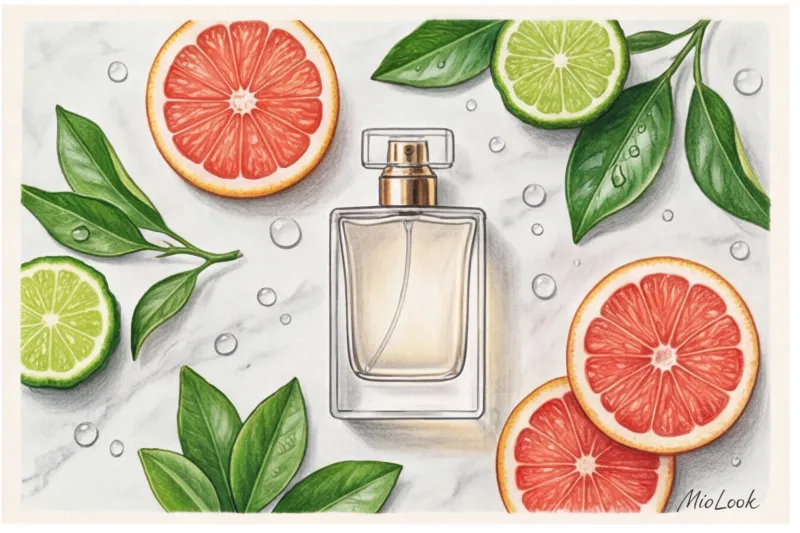
Bergamot, lemon, neroli, bitter orange—the chemical nature of these top notes is such that they are incredibly volatile. In the summer, they last only 15-20 minutes on hot skin. Many people are disappointed when buying expensive citrus colognes (like the famous Tom Ford or Acqua di Parma lines) and complain about their lack of longevity.
But the truth is, it's physically impossible to make citrus last for eight hours in the heat without adding heavy synthetic fixatives, which will kill all the natural freshness. Refreshing your perfume every two to three hours in the summer is completely normal practice, not a manufacturer defect.
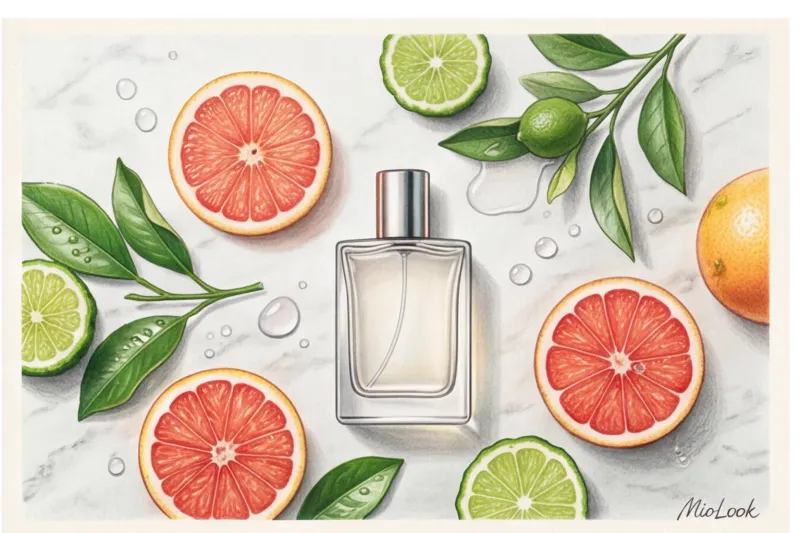
Life hack from a stylist: If you want to prolong the life of your favorite bergamot scent in July, apply it not to hot spots on your pulse, but to clothing made of natural, breathable fabrics like linen or fine cotton. Linen fibers are excellent at trapping volatile molecules without distorting their aroma.
What happens to citrus in winter? In the cold, they create a "prickly lemon" effect. The low temperature slows evaporation so much that the crisp top notes freeze, acquiring an almost metallic, piercing quality. This can be beautiful, but it often feels too harsh and cold, clashing with the need for warmth.
Your perfect look starts here
Join thousands of users who look flawless every day with MioLook. Organize your wardrobe in one click.
Get access — €0.99 onceMusk and amber: an animalic base that requires a special climate
Musk is the most capricious ingredient in perfumery. The modern industry uses synthetic musk, which is conventionally divided into "pure" (white, like a freshly washed shirt) and "animal" (bodily, slightly dirty).
One of my clients, who works at a bank, complained that her favorite musky scent from Byredo suddenly smelled like cheap Tide laundry detergent. We started investigating and discovered the cause: it was November, and the central heating had been turned on in the office. The dry, over-dried air from the radiators instantly killed the full-bodied white musk, making it flat, soapy, and itchy.
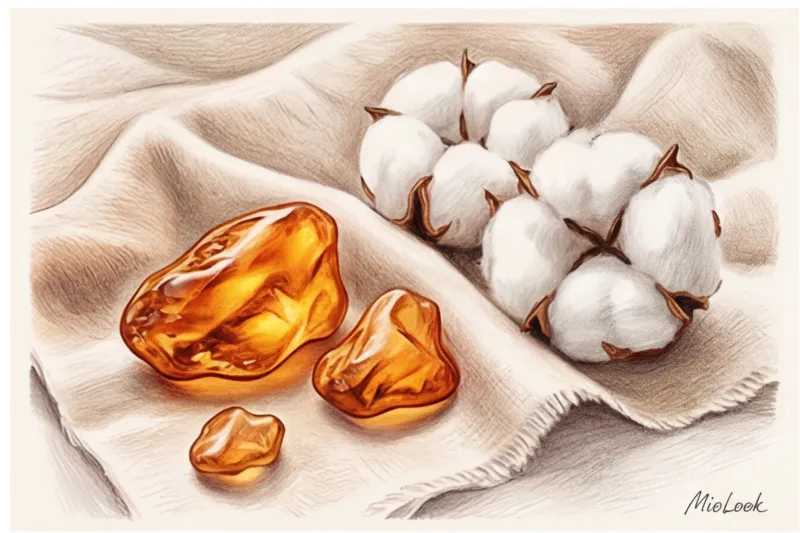
Musk needs moisture! Spring, rainy autumn, or humid summer are its ideal habitat. In humid air, musk molecules swell, creating an aura, the scent of a well-groomed, clean body.
With amber, it's the opposite story. Amber accords (a blend of labdanum, benzoin, and vanilla) have a thick, resinous texture. In hot weather, amber melts and becomes unbearably heavy. Its season is golden autumn and winter. Cool air tames its density, allowing rich, woody-sweet nuances to unfold.
Perfume Wardrobe: How to Pair Fragrances with Seasonal Fabrics
As a sustainable fashion expert, I always view perfume as an invisible yet tangible layer of clothing. There's a golden rule of styling: the density of the aroma should correspond to the density of the fabric.
The structure of the fiber directly affects how the scent will last on your clothes:
- Winter (wool, tweed, cashmere). Natural wool has a scaly structure under a microscope. These microscopic scales perfectly capture and hold heavy molecules of resins, oud wood, and vanilla. A cashmere sweater can retain the base notes of your winter perfume for weeks, releasing them softly and delicately.
- Summer (silk, linen, cambric). The smooth fibers of silk and the loose weave of linen harmonize perfectly with volatile citrus, aquatic notes, and light greenery. The fabric breathes, allowing the scent to diffuse smoothly into the air.

Important caveat: This rule does NOT apply to synthetics (polyester, acrylic). Synthetic fibers cannot absorb oils. The alcohol evaporates instantly, and the perfume composition breaks down, leaving a flat, often distorted, chemical base on the surface of the fabric. This is why expensive perfume often smells like air freshener on a cheap polyester blouse.
Also, never spray perfume directly on light-colored natural silk—the alcohol and essential oils are guaranteed to leave yellow stains that no dry cleaner can remove. For delicate fabrics, use the "cloud entry" method.
Ready to get started?
Try the MioLook plan for free—no commitments required. Create seasonal capsules and find the perfect fragrances to pair with them.
Get access — €0.99 onceChecklist: How to adapt your favorite perfume to the "wrong" season
What if you adore heavy gourmands, but it's June? Or if your favorite fresh cologne is completely lost in December? You don't need to buy 50 bottles. A smart wardrobe philosophy requires just three or four well-chosen compositions and the right techniques for pairing them.
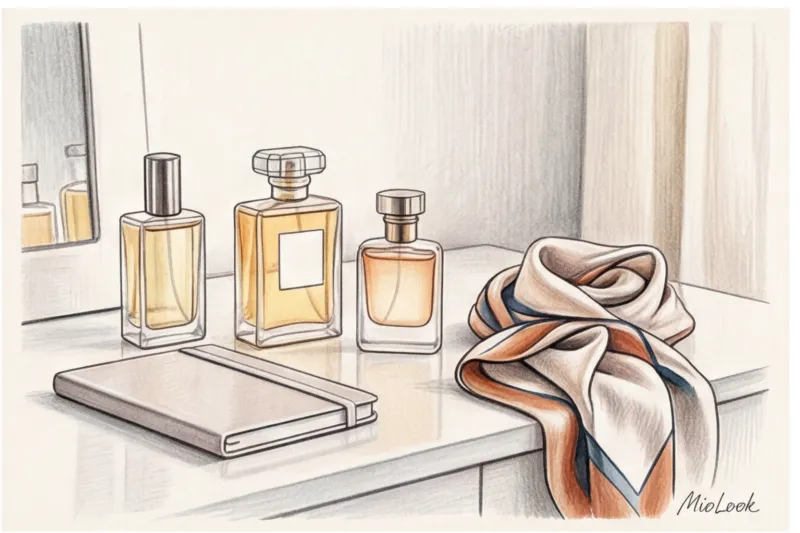
Here are 3 proven ways from stylists to “cheat” seasonality:
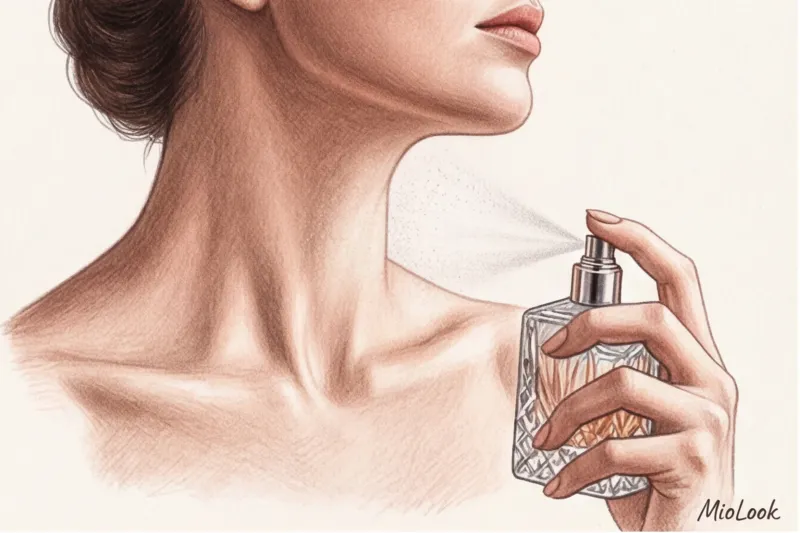
- Cloud technique for heavy perfumes in summer. Never apply heavy vanilla or oud to hot spots (neck, wrists, elbows) in hot weather. Spray the fragrance in a cloud in front of you and step into it. The molecules will settle evenly and delicately on your hair and clothing. Hair doesn't heat up as much as skin, so the scent will be more subtle and subtle.
- Layering for summer fragrances in winter. To "warm up" your favorite summer citrus in January, use a base. Apply vanilla, sandalwood, or almond-scented body lotion to your skin, then spray your fresh perfume over it. The thick base of the cream will slow the evaporation of the top notes and add wintry depth to the composition.
- Application to the hem of the skirt. If the scent seems too loud and overpowering for the office, spray one spray onto the hem of your skirt or trousers (if the fabric allows). The scent will rise in gentle waves as you walk, without irritating you or your coworkers. Please note: This tip is not suitable for oil-based perfumes (attars) as they will leave greasy marks on fabric.
A conscious approach to style isn't just about the clothes we wear, but also the sillage we leave behind. By understanding the physics of fabrics and the temperature at which notes unfold, you can manage your fragrance wardrobe as skillfully as you manage a basic clothing capsule. Ultimately, the best fragrance is one that harmonizes not only with your mood but also with the reality around you.