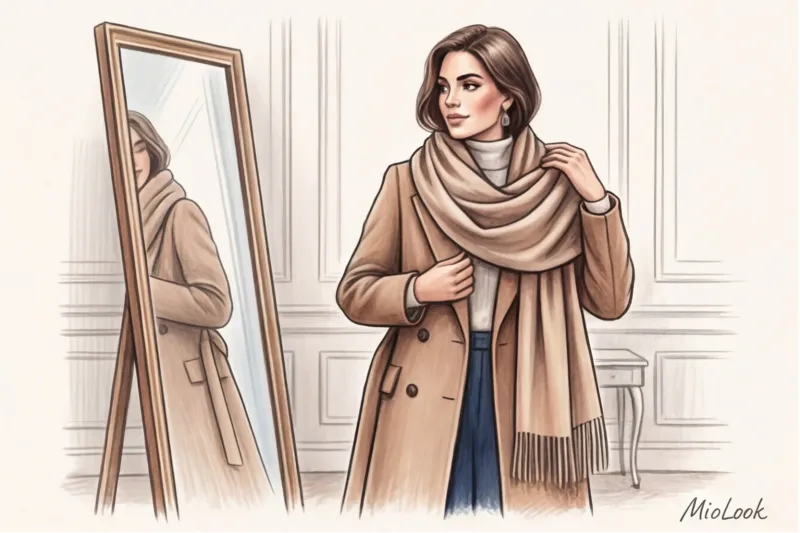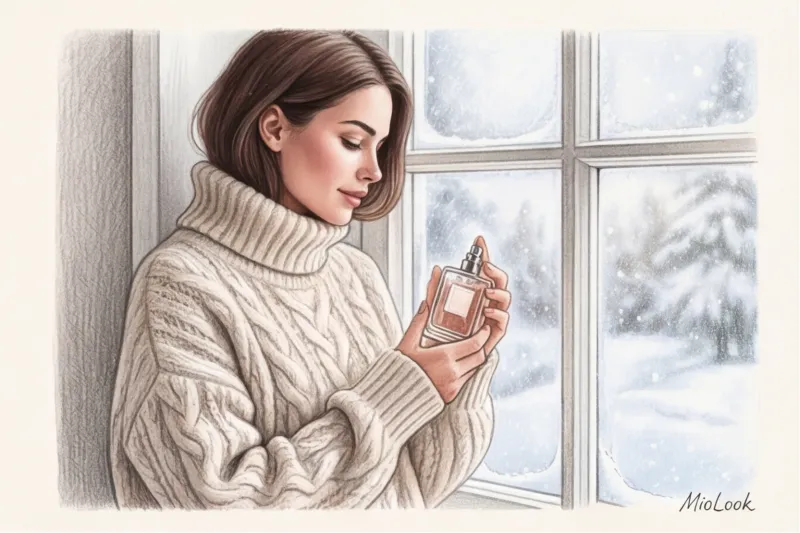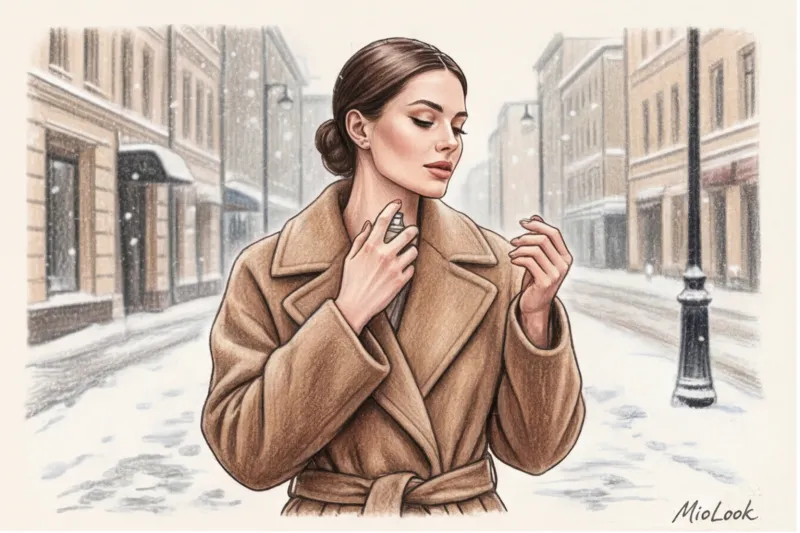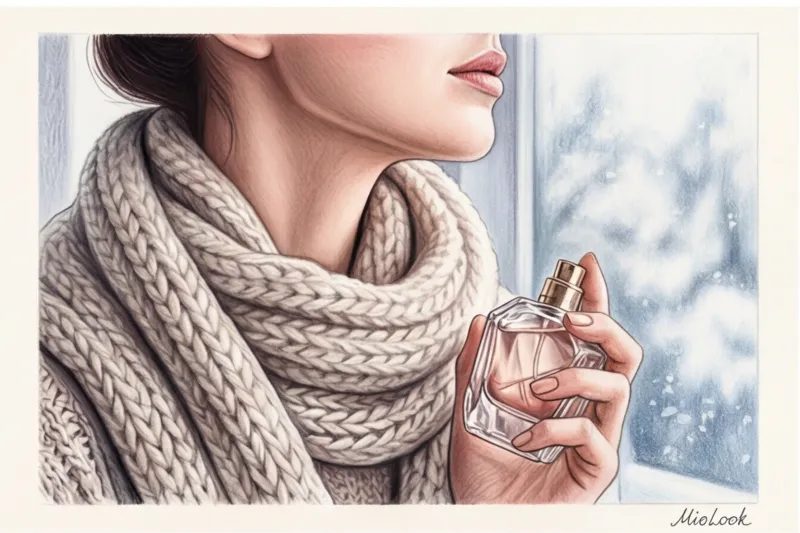
One of my clients once almost threw away a bottle of expensive niche perfume. She bought it in July, falling in love with its luxurious sillage, but in December she called me in dismay: "Olena, it's gone bad! It smells like rusty metal and broken glass." I asked her to do one simple thing: stop spraying it on her icy wrists before going outside and instead spray a couple of times on the inside of her cashmere scarf. The next day, she wrote back that the magic had returned.

Over 14 years of working as a stylist, I have understood the main thing: correctly selected winter fragrances for women It's not just a scent. It's a complete, albeit invisible, layer of your wardrobe. Perfume operates according to the same laws of physics as thermal underwear or a down jacket. We discussed in more detail why temperature so radically changes the sound of compositions in our The complete guide to seasonal perfume changes.
Today, we'll explore the anatomy of a winter fragrance wardrobe. Let's put aside marketing hype and look at fragrances through the lens of styling, fabric textures, and thermodynamics.
The Physics of Cold: Why Your Favorite Perfume Hides in Winter
The fragrance lives and breathes through the evaporation of alcohol and essential oils. At 20°C, this process occurs gradually: first, the light citrus notes fade, then the floral heart unfolds, and by evening, a dense base remains on the skin. But what happens at -5°C?
Cold literally "freezes" the volatility of molecules. The rate of evaporation drops several times. Light floral, aquatic, and citrus notes that provide freshness in summer shrink in the cold. They can't detach from the skin, causing receptors to perceive them as harsh, flat, and sometimes downright metallic scents.
Perfume doesn't deteriorate in winter. The physical conditions of its diffusion change. Just as a silk blouse doesn't keep you warm in January, a light cologne can't create an olfactory cocoon in the cold.
This is where your skin temperature comes into play. If you have naturally "cold" skin (often accompanied by low blood pressure and perpetually cold hands), it becomes icy cold in the cold. Any perfume will simply lose its scent on exposed skin. This is why, in winter, we physiologically require compositions with a different structure.
Winter fragrances for women: which notes really warm you up?
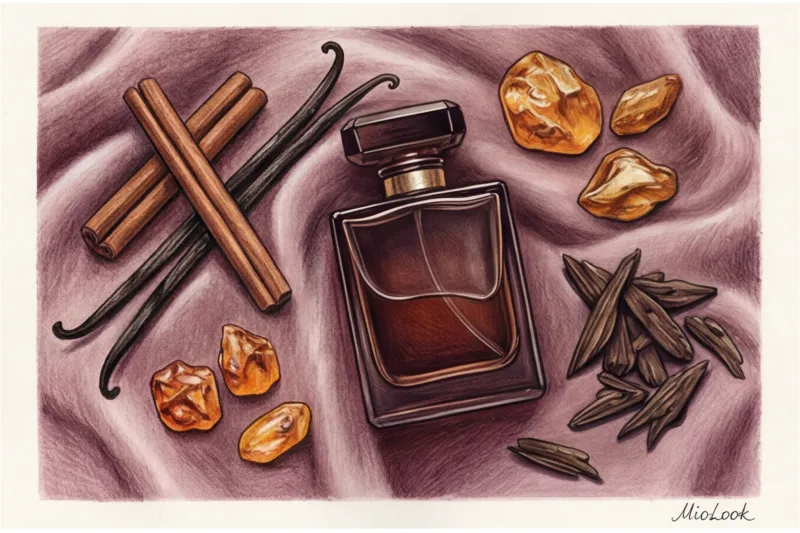
The secret to the perfect winter perfume lies in the molecular weight of its ingredients. According to the International Fragrance Association (IFRA), the heaviest molecules are found in resins, woods, and balsams. They require more time and warmth to develop, but they are the ones that can penetrate thick layers of clothing and frosty air.
Woody and resinous accords: cashmere in a bottle
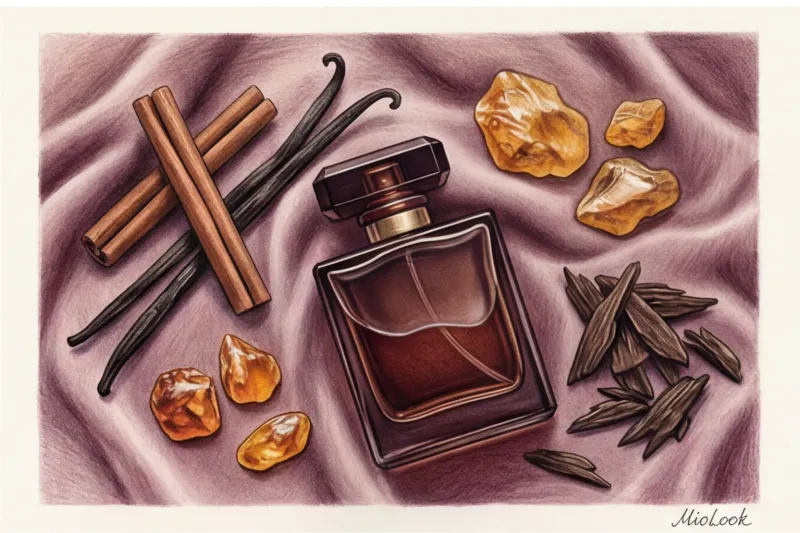
Sandalwood, Virginia cedar, and oud work like a chunky knit sweater, creating the sensation of a dense, impenetrable cocoon. The key winter ingredient is amber (both natural and synthetic, like ambroxan). It imparts that animalic warmth, comfort, and a slight saltiness that contrasts luxuriously with the frosty air.
Gourmet: When Sweets Sound Expensive, Not Childish
Winter is a legitimate time for gourmand profiles. But let's immediately distinguish between cheap bakery vanilla (which smells like a bakery) and prestigious bourbon vanilla bean with its noble woody bitterness. In the premium segment of women's perfumes, the warming effect is achieved through notes of dark chocolate, freshly roasted coffee, and expensive alcohol—rum, cognac, or whiskey.
Your perfect look starts here
Join thousands of users who look flawless every day with MioLook. A smart AI stylist will help you create a capsule look to match any perfume.
Get access — €0.99 oncePerfume Wardrobe: How Winter Fabrics Change the Perfume Scent
As a stylist, I often work not only with cuts but also with textures. And here's some insight, confirmed by research from Textile Exchange (2024): natural animal fibers (wool, cashmere, alpaca) have a scaly structure. They capture perfume oils and hold them for an incredibly long time. On a natural cashmere sweater, heavy base notes can last up to 3-4 weeks, whereas on the skin they disappear after 4-8 hours.
But 100% synthetics (acrylic, polyester) behave differently. Smooth synthetic fibers don't absorb oils, but cause them to evaporate quickly and aggressively, often distorting the scent beyond recognition. That same sandalwood on an acrylic scarf might give off a burnt plastic note.
My favorite technique for winter is the “under a sweater” technique. Don't spray perfume on the top of your neck. Apply the scent to your collarbones or jugular notch. to After you put on a wool turtleneck, your body heat will act as a slow diffuser, and the scent will gently permeate through the collar throughout the day.
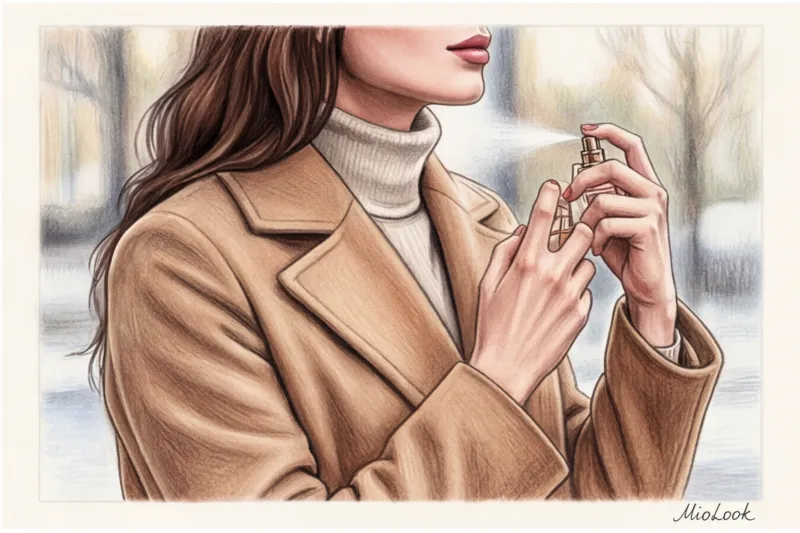
Important limitation: Never spray perfume directly onto light-colored cashmere or silk. Resinous fragrances often darken the liquid (due to vanilla and absolutes) and leave yellow stains that no dry cleaner can remove.
The Myth of "Heavy" Perfumes: Why Not Every East Is Suitable for Frosty Weather
It's time to dispel the main stereotype of sales associates in chain stores: "For winter, buy the heaviest Oriental fragrances." It's counterintuitive, but many thick, resinous Arabian perfumes smell terrible in the cold.
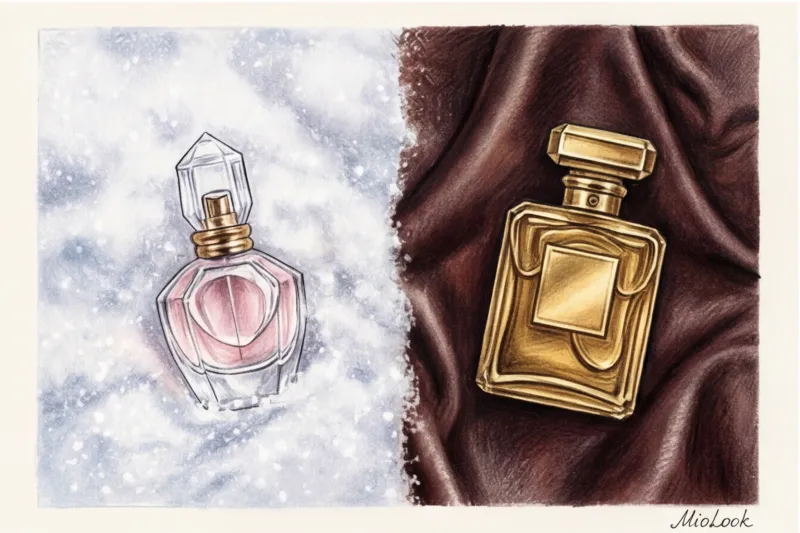
The thing is, heavy resins (like frankincense or myrrh) require warmth to survive. If you apply a thick oriental fragrance and step outside into -15°C, it will shrink. Without warmth, it won't reveal its sweet nuances, but will instead produce a flat, prickly, often medicinal or camphorous note.
What to choose instead? Aldehydes and powder. Last year, I experimented: I applied a classic aldehyde fragrance (in the vein of Chanel No. 5), which many consider "age-inducing" and sultry in summer, on a frosty January day. In the cold, the aldehydes rang like crystal. They smelled like clean, crisp snow, expensive skincare, and absolute elegance.
Access to MioLook for €0.99 — one-time payment
A smart AI stylist will create the perfect look for you. Upload your items and get ready-made combinations for every day.
Get access — €0.99 onceA Stylist's Checklist: How to Test and Apply Perfume in Winter
Buying perfume in winter is a quest. If you walk into a warm shopping mall from the cold and immediately start smelling fragrances, you'll buy a pig in a poke. The sudden temperature change causes blood vessels in the nose to constrict, distorting your sense of smell.
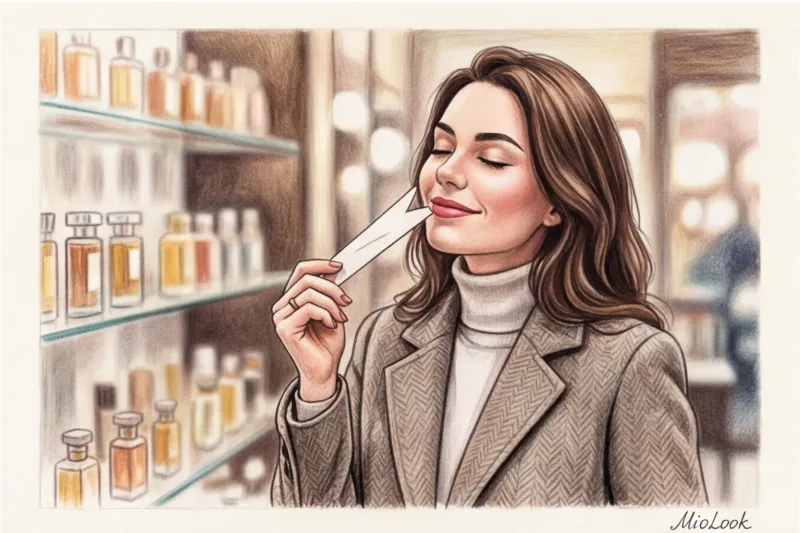
- The 15-Minute Rule: Once you've entered the boutique, take off your scarf, drink coffee, or just take a stroll. Let your taste buds adjust to the room temperature.
- The 30-minute skin rule: In winter, a blotter (paper) is completely useless. Apply the fragrance to the crook of your elbow, put on your outerwear, and go outside. Listen to how it smells in the cold. Then return to a warmer place and check if it's become overpowering.
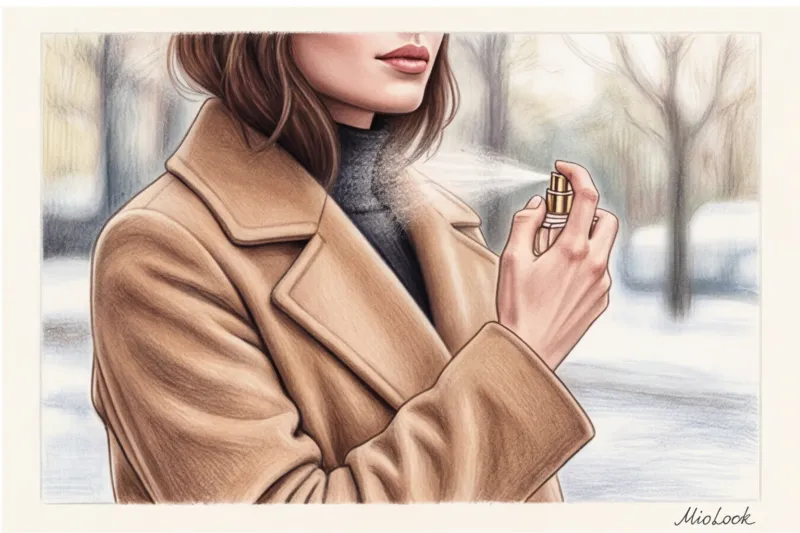
- Application strategy: In winter, bare wrists are useless—they rub against jacket cuffs and gloves. Apply perfume to the back of your neck, under your hairline (the warmest spot, hidden by a scarf), or to the crook of your elbow under a thick sleeve.
Perfect combinations: perfume + winter look
Compiling winter capsules for clients in MioLook I always consider the olfactory profile. A dissonance between clothing and scent ruins even the most precious image.
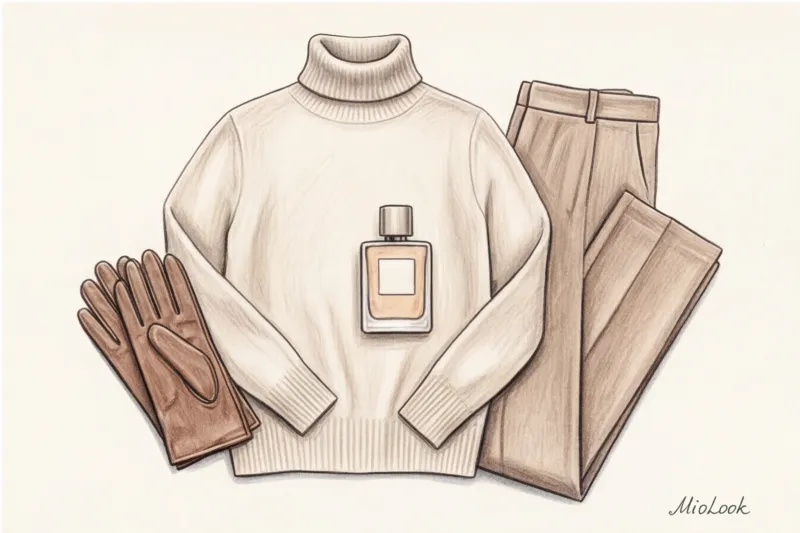
- Business style (office): A formal suit made of heavy wool (from 180 g/m²) or a tweed jacket demands poise. Dry woody notes (vetiver, cedar, juniper) are ideal here. They respect the privacy of colleagues while conveying a sense of status. Limitation: Gourmet is out of place here; in an overheated office, sweet vanilla will suffocate both you and those around you.
- Smart casual (weekends): A chunky, chunky merino sweater, wide-leg jeans, and suede boots. This scent calls for soft powder, almond, tonka bean, or a light, alcoholic gourmand. It's the scent of comfort and relaxation.
- Evening outing: A velvet jacket or a thick silk dress. This is where you can bring out the heavy artillery—thick amber accords, tuberose, spices (cardamom, cinnamon), and patchouli.
Winter perfume is your personal armor against the grayness and cold. Don't chase universality. Find the scent that makes you sit up straight and smile, even when it's blizzard and minus twenty degrees outside.