Last month, a client came to me for a wardrobe review with a typical problem: fifteen bottles of perfume on the shelf, but nothing to "wear." In the summer, her favorite gourmand scents choked her colleagues at the office, in the winter, citrusy colognes drifted off on the way to the subway, and spring florals seemed out of place at formal business meetings. We put fourteen bottles in a drawer and left one—a complex molecular scent that became her perfect olfactory signature. That's when we started talking about universal perfume for any season.
As a stylist and textile specialist, I often see women spend huge budgets on their seasonal fragrance wardrobe. But is it really necessary? We've covered the rules for changing fragrances in more detail in our complete guide to choosing perfumes according to the season , but today I want to challenge the established rules. Let's explore the concept of an all-season fragrance through the lens of molecular chemistry and the properties of the fabrics in your basic wardrobe.
Is There a Universal Perfume for Every Season? Physics vs. Marketing
The beauty industry convinces us to buy separate bottles for vacation, office, winter, and summer. It's a great business plan, but from a physics perspective, it's a complete illusion. The key to versatility lies in the fact that a fragrance shouldn't resist the ambient temperature, but adapt to the temperature of your skin.
The olfactory pyramid is disrupted by temperature fluctuations. According to the International Fragrance Association (IFRA), the evaporation rates of ethyl alcohol and essential oils differ dramatically between 10°C and 30°C. In hot weather, top notes burn out within minutes, revealing a heavy base. In cold weather, the base shrinks, giving the fragrance a prickly quality.
I like to compare this process to choosing a fabric. You wouldn't wear sheer chiffon in -20 degrees, would you? It's the same with perfume. The "perfume capsule" concept involves searching for a scent with the texture of dense silk or fine cashmere—materials that have excellent temperature regulation and are comfortable year-round.
Access to MioLook for €0.99 — one-time payment
A smart AI stylist will select the perfect look based on your perfume and basic wardrobe.
Get access — €0.99 onceThe architecture of an all-season fragrance: which notes are consistent year-round
To understand why some perfumes disappear without a trace, while others last for days, you need to look at their molecular weight. Light citrus molecules (such as limonene, which has a molecular weight of about 136 g/mol) evaporate quickly. Heavier base note molecules (resins, musks, and woods—over 230 g/mol) cling to the skin like glue.
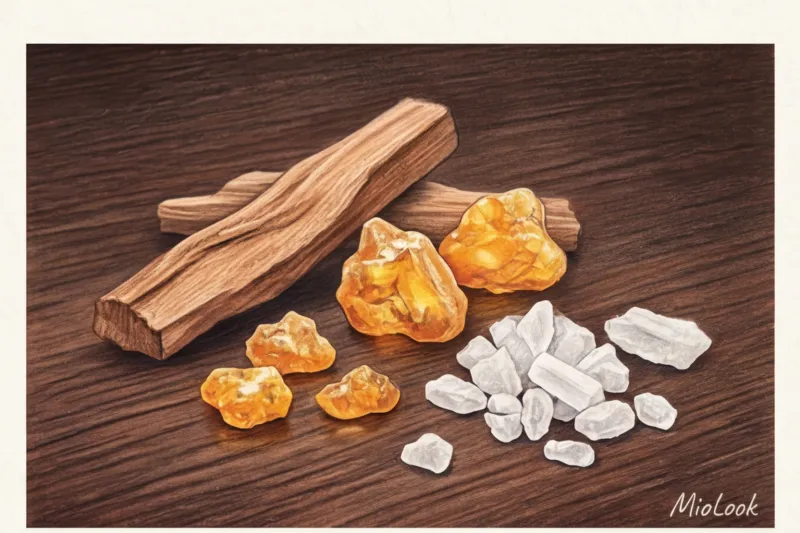
Modern chypres are a classic example of perfect balance. The bergamot-floral-oakmoss (or patchouli) structure works in any weather. In summer, sparkling top notes take center stage, while in winter, a warming, mossy base takes center stage. The proportion of heavy and light fractions in chypres makes them incredibly stable.
Another secret to stability is aldehydes. These synthetic compounds create a "starchy clean" effect that's refreshing in hot weather and crystal-clear in cold weather, reminiscent of the scent of frosty air.
Molecular Perfumery: Chameleons in the World of Fragrance
If you're looking for a truly versatile fragrance for any season, consider molecular perfumery. Synthetic molecules like Iso E Super (woody-cedar notes), Ambroxan (mineral-amber notes), or Cashmeran (wet concrete and musky notes) behave completely differently than natural extracts.
What makes them unique is that they respond to your heart rate and body temperature, not the weather outside. They have the ability to "quiet down" when you're calm or cool, and "wake up" when you're moving or in a warm room. They're perfect chameleons that never sound flat.
"Molecular fragrances don't have a classic scent pyramid. They create an aura that blends with your natural scent, making them suitable for both the beach and the ski slope," confirms research from modern olfactory laboratories.
Anti-rating: the worst candidates for a perfume signature
Now let's bust the biggest myth in perfumery: fresh aquatic and citrus scents suit everyone, all the time. This is the worst choice for a universal perfume. In my 12 years as a stylist, I've saved many a client's look ruined by the wrong choice of fragrance.

In winter, the light aquatic molecules are "eaten away" by the cold within 15 minutes. All that's left on the skin is a harsh synthetic base (often cheap musk), which creates a "metal bucket" effect in the cold. One time, a client of mine applied a popular summer "freshener" before a winter walk at -15°C—half an hour later, we were both suffering from headaches due to the piercing chemical note that literally drilled into our brains.

Other things to avoid when looking for an all-season base:
- Heavy gourmand (praline, vanilla, burnt sugar). In winter it's a cozy cashmere sweater, but in summer at +30°C these notes turn into a suffocating sticky syrup that makes those around you feel sick.
- Distinctive white flowers. Jasmine and tuberose contain indole. In cool weather, these are beautiful creamy flowers, but in extreme heat, the indole aspects can reveal animalic, almost physiological (or even fecal) notes.
Your ideal image begins Here
Join thousands of users who look flawless every day with MioLook. Manage your wardrobe smartly.
Get access — €0.99 onceStylist Secrets: How to Make a Fragrance Smell Beautiful in Any Weather with Fabrics
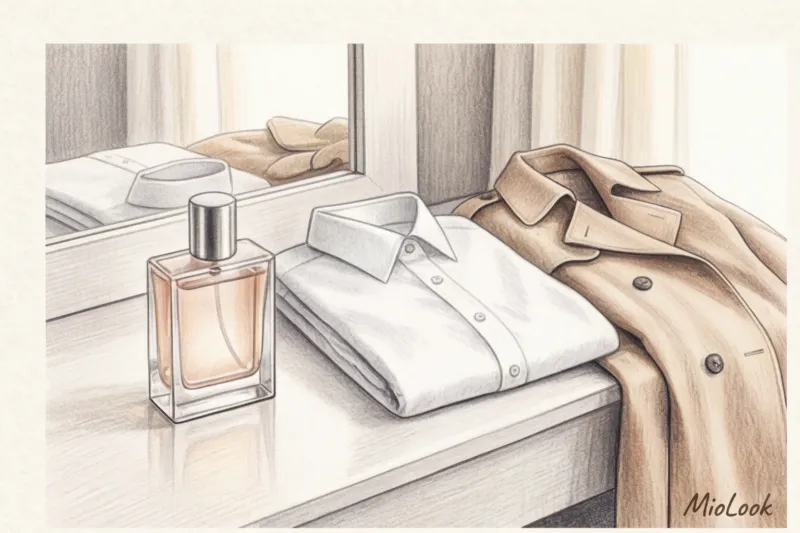
What if your skin "eats" your perfume in the heat or distorts it in the cold? Transfer it to your clothing. As a textile expert, I use this trick all the time. Fabric acts as a passive diffuser, smoothing out temperature fluctuations.
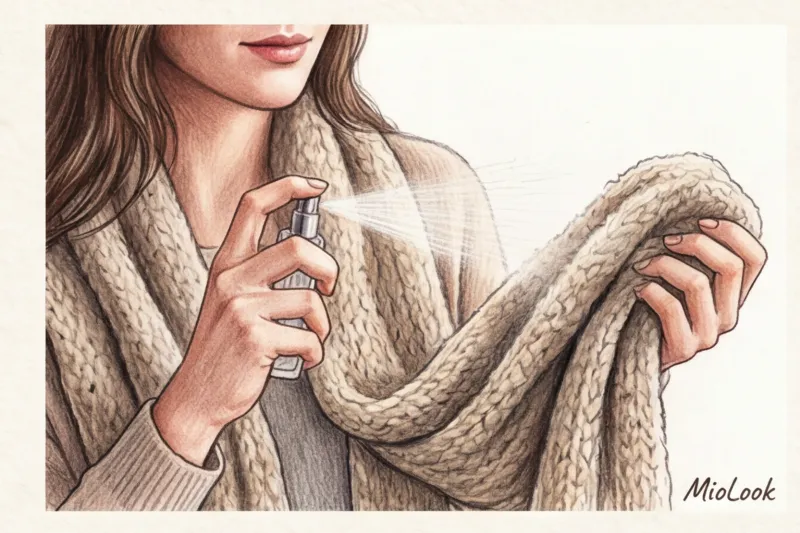
But there's a strict rule: perfume only works with natural fibers. Keratin, which is the constituent of natural wool or silk, bonds beautifully with essential oils. I personally tested the longevity of a complex chypre: on my wrist, it faded after four hours, but on a wool jacket, it lingered subtly for three days without losing its middle notes.
Cellulose (cotton and linen), thanks to its porous structure, absorbs aroma and releases it evenly, preventing the alcohol from evaporating too aggressively, even in hot weather.
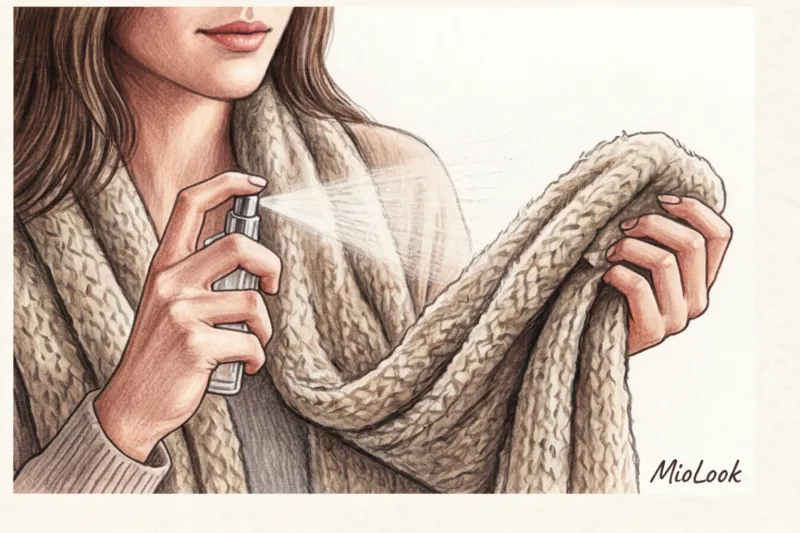
Synthetics, however, are the enemy of perfume. Polyester, acrylic, and nylon lack a porous structure capable of retaining oils. Perfume remains on the surface of the plastic fiber, quickly oxidizing and beginning to smell flat, cheap, and sometimes even sour. If you're wearing a 100% polyester blouse, apply perfume only to your skin or hair.
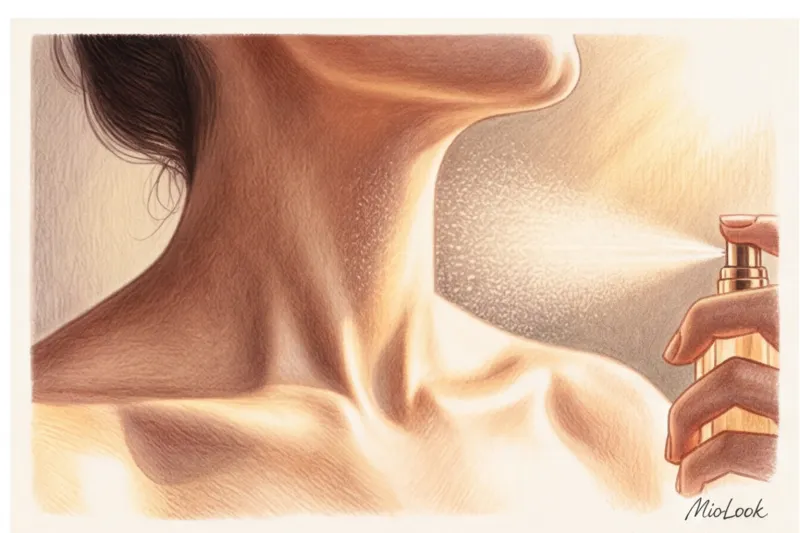
My favorite life hack: Spray perfume on the inner lining of your jacket (if it's viscose) or the hem of your skirt. The warm air from your body will rise, creating a subtle, "smart" trail that won't overwhelm your companion, even in a cramped elevator.
Checklist: How to choose your universal perfume for any season
Buying an all-season fragrance is an investment. Don't give in to impulse buying at the checkout. Use this approach the next time you visit a perfume boutique.
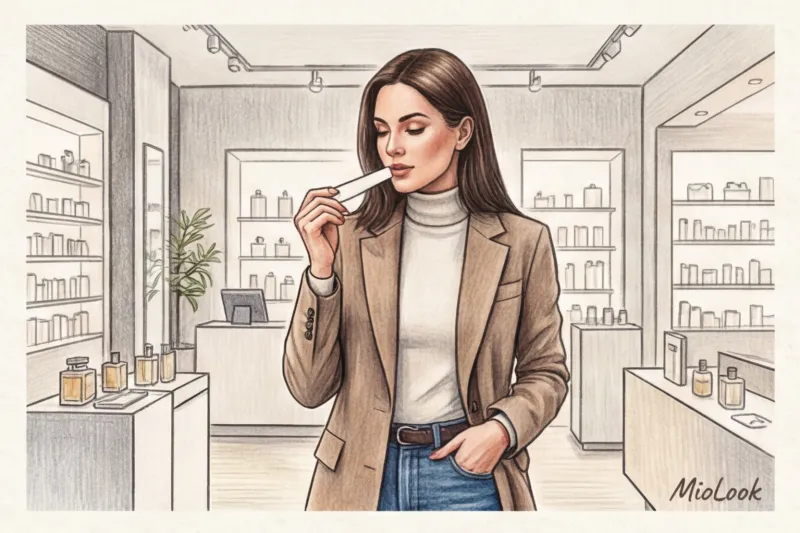
- The three-test rule. Spray the fragrance on your wrist. Experience it in the air-conditioned store. Then, go outside (in cold or hot weather). Finally, smell it in a warm car or cafe. A versatile fragrance shouldn't fall apart in any of these environments.
- Choose the right concentration. Eau de Parfum is the most balanced format. Colognes are too volatile for winter, and extrait sits too close to the skin and can be too heavy for a summer office.
- Wait for the base. Don't make a purchasing decision until after 6-8 hours. The top notes sell the perfume, but you'll have to live with the base. If by evening all that's left on your skin is a vague soapy residue, it's not for you.
Of course, this approach has its limitations. If you suffer from partial anosmia (insensitivity) to large molecules like ambroxan, molecular perfumery will feel like water in a bottle. In that case, look for your ideal among modern neo-chypres or woody compositions.
Perfume minimalism isn't a limitation, but the highest form of style. By finding your one, flawlessly crafted scent, you'll no longer be dependent on weather forecasts or marketing gimmicks. You'll simply smell like yourself—expensive, appropriate, and elegant, any day of the year.