

Facial Architecture: Why Makeup Based on Face Shape Is More Important Than Fleeting Trends
Do you know what surprises me most during my first consultation with new clients? Statistics show that about 70% of women completely misjudge their bone structure. We watch viral tutorials, buy a luxurious contouring palette from Charlotte Tilbury or Tom Ford, obediently draw dark diagonal lines under our cheekbones, and the result... is a tired look with a dirty cheekbone effect. That's because makeup for face shape This isn't a paint-by-numbers project. This is real architecture.
As a stylist, I always repeat one golden rule: stop trying to paint someone else's face over your own. There's no point in sculpting Bella Hadid's sharp cheekbones if your natural jawline is soft and Mediterranean-feminine. True art lies in working with your unique natural features. Proper makeup is akin to the work of a restorer—it should reveal the pristine beauty of the surface, not obscure it with a thick layer of modern, "plaster" contouring.
Over 12 years of practice, I've seen hundreds of makeup bags filled to the brim with trendy cool-toned contouring foundations and shimmering bronzers that were objectively unsuitable for their owners. When you understand your makeup architecture, magic happens: you stop buying random jars. You know for sure that your specific face needs, say, just one warm-toned cream tint. As a result, your morning routine shrinks from forty minutes to seven. Knowing your proportions is your best financial advisor. By the way, to track which makeup schemes work best with different portrait zones of your wardrobe, I recommend using MioLook — the application is great for helping you visualize the entire image.
And here we come to the most interesting part: the psychology of perception. The lines on our faces literally convey certain signals to others. Have you ever noticed that those with pronounced, angular cheekbones and a defined jawline are subconsciously perceived as more powerful and decisive? Sharp angles always convey distance and status. Meanwhile, soft, rounded lines (like Selena Gomez's) are read as friendliness, openness, and empathy.
By understanding this psychology, we can manage impressions. With the right adjustments, you can visually soften excessive sternness before important negotiations. Or, conversely, add character and "toughness" to your face if you're stylish makeup for work in the office and complete the look by applying status perfume to be sure.
How to correctly determine your face shape (without compasses or complicated measurements)
Forget complicated math calculations and tailor's tape. To find your body type, we need to evaluate just two basic parameters: the length-to-width ratio and the balance of the three key horizontal dimensions.
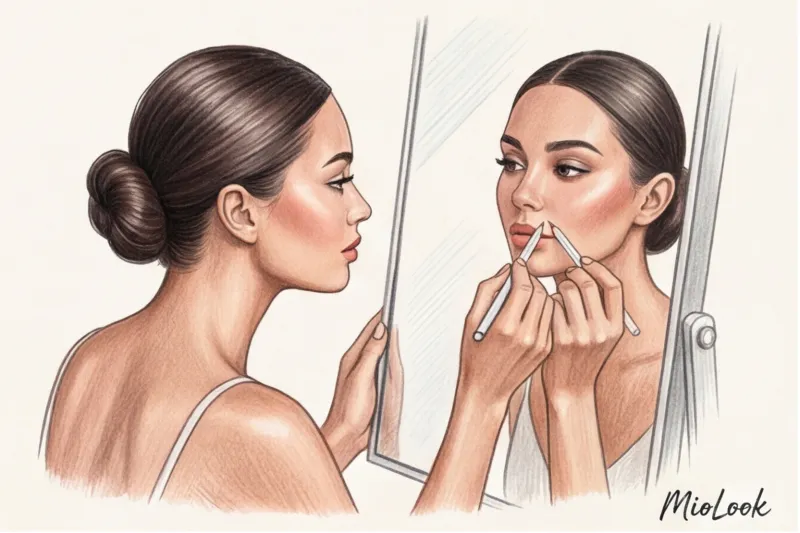
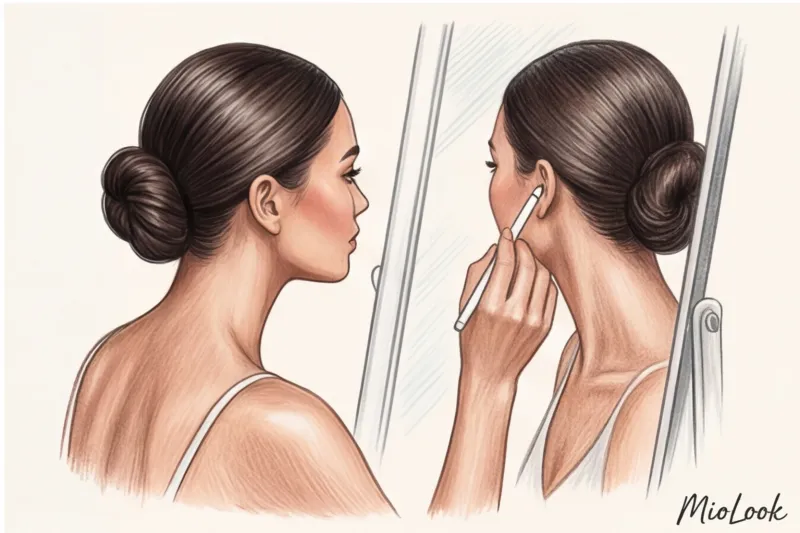
Let's try my favorite practical test. You'll need a large mirror (necessarily in daylight to avoid distorted shadows), slicked-back hair, and an old lipstick or a soft eyeliner pencil that easily rubs off the glass. Stand directly in front of the mirror, at arm's length. Close one eye—this is crucial to eliminate binocular vision distortion—and faithfully trace the outline of your reflection in the mirror: strictly along your hairline, temples, jawline, and chin.
Step back and look at the resulting figure. Now evaluate three key measurement points:
- Forehead width: We measure along the widest part along the hairline.
- Cheekbone line: the distance between the most protruding points under the outer corners of the eyes.
- Angle of the lower jaw: how massive is the lower third of the face compared to the upper.
Next, the "length versus width" rule comes into play—it's these proportions that determine everything. If the height of your face (from the hairline to the bottom of the chin) is noticeably greater than its width, we're working with an elongated, oval, or rectangular face shape. If the width and height are visually almost equal, we're looking at a circle or square. And the difference between the width of the forehead and jawline will unmistakably indicate a triangle (wide forehead, narrow chin) or diamond shape.
The resulting image on the glass is your personal relief map. Study it carefully, as it will tell us where to add volume with light in the next steps, and where to create the illusion of soft shadow.
The Biggest Contouring Myth: Why We're No Longer Striving for the "Perfect Oval"
Open any old makeup textbook, and you'll see the same categorical dogma: "The ideal face is an oval, and all other shapes should be visually corrected and brought closer to it." This is perhaps the most toxic misconception in the beauty industry, which for decades has made women feel insecure about their natural features. Today, we officially say goodbye to this outdated paradigm. The desire to "file down" the luxurious square angles of the jaw or to fill in the wide cheekbones of a diamond-shaped face with dark contouring is literally erasing your individuality. An oval is a beautiful shape, but it's far from the only one worthy of admiration.
Look at the modern runways and Vogue covers of recent years: high fashion standards have shifted radically toward strong, angular bone structure. Square, rectangular, and diamond-shaped faces are now king. Who would think that Taylor Hill's chiseled "square" jawline, Zendaya's distinctive diamond-shaped cheekbones, or Bella Hadid's predatory geometry need to be refined into a soft, characterless oval? On the contrary, leading makeup artists deliberately enhance these lines, because geometry exudes stateliness and strength.
The roots of the mass obsession with heavy contouring lie in 2016—the era of heavy Instagram makeup. Back then, the internet was flooded with viral schemes that encouraged people to apply thick layers of creamy concealers to their faces, turning living skin into a mask. But if we go back to the origins—to the theory of light and shadow ( chiaroscuro ) from legendary makeup artist Kevin Aucoin and his iconic book Making Faces (1997) – we will see a completely different approach. Okoin taught working with halftones. Shadows should only delicately deepen the natural relief, not reshape the anatomy of the skull.
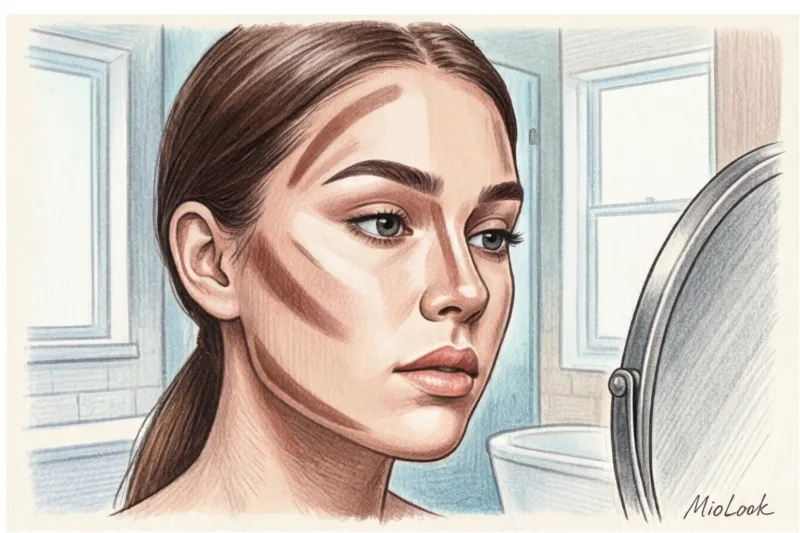
It was in 2016 that the destructive "troika" method came to us - when bronzer or sculptor is applied in a single sweeping motion in the shape of the number 3 from the sides of the forehead to the cheekbone and then down to the jawline. Why does this technique hopelessly ruin half of people's faces? Because it completely ignores your actual bone structure. On a round face, this notorious "three" creates the effect of dirty spots, visually pulling the cheeks down. On a square or rectangular face, applying dark pigment to the corners of the lower jaw only draws unnecessary attention to them, creating the effect of stubble. You're not sculpting your features—you're simply dirtying the skin in places where there's no natural shadow.
My stylistic philosophy is deeply rooted in the Mediterranean approach to beauty. It's a complete shift from aggressively concealing flaws to carefully accentuating their best features. Imagine the aesthetics of Italian or Spanish women: their makeup evokes life, sun, and freshness, not hours spent in front of the mirror with a palette of dense concealers. We don't need to paint over someone else's hollows with matte taupe pigment. We use subtle shadows, transparent textures, and soft highlights to let your own architecture shine through. A prominent jawline or a wide forehead is a sign of aristocracy. The goal of modern makeup is to make you look like the best version of yourself, not like a Photoshopped clone from social media.
Access to MioLook for €0.99 — one-time payment
A smart AI stylist will select the perfect look based on your individual facial features and proportions.
Get access — €0.99 onceInstructions and formulas: the right makeup for your face shape
Let's be honest: one of the most common reasons why makeup looks foreign and heavy isn't the quality of your products, but a simple misunderstanding of the laws of physics. When clients come to me asking, "Teach me how to do makeup," the first thing we do is go through their makeup bags. And eight times out of ten, I find a shimmering, warm bronzer that's being stubbornly used to highlight cheekbones. This is a fundamental mistake that instantly ruins the entire facial architecture.
Before we get into the specific diagrams, it's important to understand basic rules of chiaroscuro , which is the basis for absolutely any makeup for your face shape. The rule is: Anything light visually brings things closer, increases their volume, and attracts attention. Anything dark recedes, reduces, creates depth, and draws attention into the shadows. Imagine your face as a canvas, and the brush and sculptor as a chisel with which you cut away the excess.
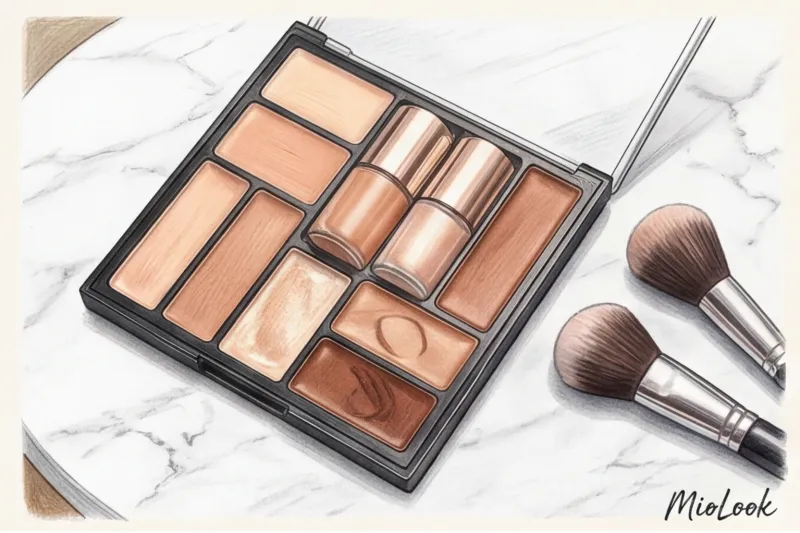
"The key difference between a contouring powder and a bronzer is the difference between a shadow and a sun-kissed complexion. A contouring powder is a matte, cool, taupe-toned shadow that creates a hollow. A bronzer is a warm, often satin-finish product that mimics the kiss of the sun on the high points of the face."
Here I want to share the most important professional advice from makeup artists that will save any makeup look: Always choose a sculptor with a neutral olive undertone, not a red one. Natural shadow on human skin is never orange. A red pigment under the cheekbone looks like a dirty spot or a burn, while a cool gray-olive (like the famous Fenty Beauty stick in Amber or Kevyn Aucoin powders) perfectly imitates the natural shadow cast by bone structure. Learning to distinguish between these products will take your makeup to a whole new, salon-quality level.
Round Face: Creating Structure and Elegant Angles
Women with round faces often complain to me about a lack of definition. The main goal in your case is to visually elongate your proportions vertically, remove excess volume from your cheeks, and add those elegant, sculpted angles that make your look more dramatic and sophisticated.
When working with shading, we concentrate on the periphery. The contour is applied to the sides of the forehead (drawing width into the shadow) and, most importantly, under the cheekbone. The brush stroke should follow a clear diagonal line: from the tragus of the ear toward the corners of the lips, stopping at the level of the outer corner of the eye. Never apply the shadow too close to the nose, otherwise the face will look gaunt.
Highlighting areas are no less important for a round face. Apply a light concealer or matte highlighting powder strictly along the central axis: the center of the forehead, a thin line along the bridge of the nose, a sharp inverted triangle under the eyes, and an accent line on the center of the chin. This light vertical line acts as an optical illusion, instantly making the face appear narrower.
For my clients with soft features, I have developed a fail-safe rule that I call "Isabella Formula": Vertical lines in sculpting + arrows drawn toward the temples = an instantly slimmer and toned face Avoid applying blush in round spots on the apples of your cheeks. Instead, blend the blush diagonally just above your cheekbones, drawing the color toward your temples. This will create a stunning lifting effect.
Square and rectangular face: play of light and softening
A square or rectangular jawline is a sign of aristocracy and stateliness. Think of Keira Knightley, Angelina Jolie, or Olivia Wilde—their faces are captivating precisely because of their strong bone structure. Therefore, our goal here is not to hide this beauty, but rather to slightly soften the sharp angles, adding a smoother, more feminine touch.
The most fatal mistake beginners make, which I regularly see even on the red carpet, is trying to aggressively fill in the entire jawline with a dark contouring product. This usually involves expensive palettes costing €40-50, but the result is a disastrous "dirty neck effect," which is especially noticeable in daylight and when turning the head. Remember: we're not drawing a new jawline!
Proper application requires pinpoint precision. Take a medium-sized fluffy brush and apply a tiny drop of product exclusively to the most protruding corners The lower jaw. Blending should be done softly, gently pushing the pigment under the neck bone to blur the line. Do the same at the corners of the forehead (along the hairline), rounding out the square shape.
The secret weapon for softening facial contours is proper blush application. Unlike a round face, here we need circular, softening lines. Apply a refreshing peach or soft pink blush in voluminous, circular motions directly to the apples of your cheeks. This simple technique instantly removes excessive severity, creating a more youthful, fresh, and Mediterranean-inspired look.
Triangle (heart) and diamond: balance of proportions
Here we are dealing with individuals who have a pronounced imbalance between the upper and lower parts. A heart-shaped face (inverted triangle) is dominated by a wide forehead and a very narrow, pointed chin. A diamond-shaped face has prominent cheekbones as its widest point, while the forehead and chin are narrower. In both cases, makeup tailored to the face shape helps restore harmony.
If you have a heart-shaped forehead, the goal is to visually narrow your forehead and add volume to the lower third. Using a sculpting tool, we delicately darken the sides of your forehead and temples. Conversely, we want to visually widen your chin and jawline. How do you do this? With light!
My personal secret and favorite trick: using a very light, tightly pressed matte powder (1-2 shades lighter than your skin tone) on the sides of your jaw. Apply the light powder from the corners of your lips down to your jaw. The light shade will visually "pull" this area forward, creating the illusion of a wider, more balanced jawline.
For a diamond-shaped face, the main goal is to soften overly sharp, prominent cheekbones. We apply contouring product directly to the protruding part of the cheekbone (not underneath!) to slightly "push" this volume. Highlighter is applied to the center of the forehead and chin to draw attention to the vertical axis. By the way, when experimenting with proportional balance, it's helpful to take selfies in daylight. You can upload your images to MioLook To see how the new facial geometry matches with different cuts of your clothes, the program is a great way to look at yourself from the outside.
Oval and elongated: emphasis on the center and a lifting effect
The oval face shape has long been considered the ideal, as it requires minimal correction. If you're the lucky owner of an oval face, your goal is simply to preserve your natural features. A light, translucent shadow just under the cheekbones will suffice to subtly highlight the contours. Avoid aggressive baking or harsh contouring—keep your face fresh and vibrant.
An elongated face requires a completely different approach. In such women, the vertical axis significantly exceeds the horizontal, making the face appear narrow and long. If we apply the Isabella Formula with its diagonals to an elongated face, the face will visually transform into an endless straight line. Our goal here is to optically "cut" this length with horizontal vectors.
The first rule for an elongated face: completely avoid applying products diagonally. Blush and bronzer (which would be very appropriate here!) are applied in a straight horizontal line: from the center of the cheek directly to the middle of the ear. This horizontal line visually "pulls" the face outward, restoring its harmonious proportions.
The second step is to shorten the vertical line using shadow. We apply contouring fluid along the very top of the forehead's hairline, as if lowering the hairline, and gently darken the very bottom of the chin. Light concealer is blended horizontally, toward the temples, rather than in a downward triangle. These seemingly insignificant touches can radically alter the appearance of the face, making it appear more compact and youthful.
Texture is everything: cream or dry correction?
On set, when technicians set up professional studio lighting, the biggest makeup mistake is immediately revealed: poorly chosen texture. According to research into the optical properties of cosmetics (in particular, L'Oréal lab reports for 2023), completely matte powder products can absorb up to 80% of light. Meanwhile, creamy and satin emulsions reflect it, creating the illusion of healthy, hydrated skin. When developing "Business Makeup" for my clients—a specific, demanding dress code where the face must appear fresh under the merciless overhead lighting of offices—I first analyze not the shape of the cheekbones, but the skin type.
Dry products (classic pressed powders) are a fundamental foundation. Their main advantage is their phenomenal ability to absorb moisture and control sebum production throughout the day. If you have oily or combination skin, a high-quality dry foundation will be your reliable ally. However, there is a significant drawback: on dry or mature skin, such products act like a magnifying glass, mercilessly highlighting flaking and settling into fine lines. I strongly recommend reserving dense dry foundations for evening outings, when dim artificial lighting can blur the skin's microrelief.
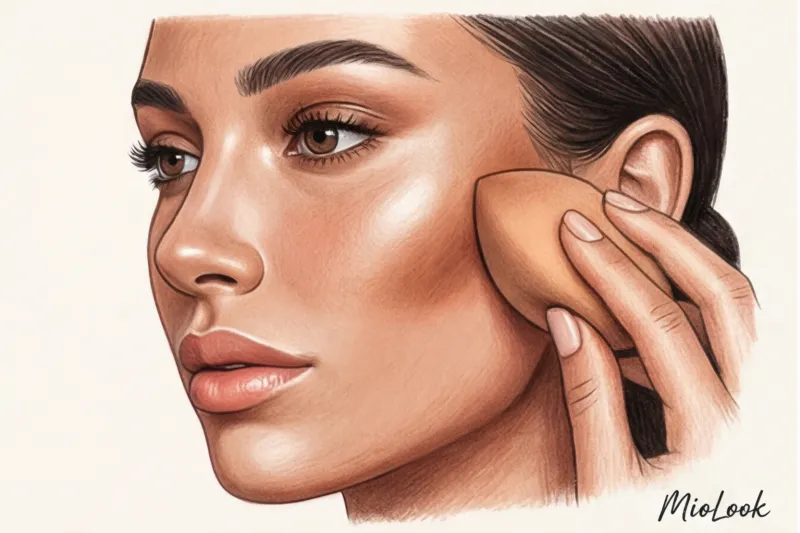
For daylight, age-defying makeup, and those with dry skin types, I use only cream sticks and liquid emulsions. Modern formulas (think Westman Atelier or Fenty textures) literally melt with the warmth of your fingers and blend seamlessly with your foundation, creating that precious "second skin" effect. No blotches or harsh edges—just soft, translucent shadow.
Let's examine the mechanics of volume perception. Why does a face generously covered in matte contouring often appear unnaturally flat? Matte textures absorb the natural highlights that the human brain interprets as markers of contouring and youthfulness. Integrating a lightweight satin finish instantly restores this lost volume. Skin looks as if you just returned from a relaxing weekend on the Costa Brava, rather than spending an hour in front of the mirror.
Access to MioLook for €0.99 — one-time payment
Start creating perfect images with the help of artificial intelligence
Get access — €0.99 onceBut what if you need flawless makeup for a long event, and your skin craves creamy products? This is where my favorite "sandwich" technique comes in. First, you build the architecture of your face with a creamy foundation, gently blending it with a damp sponge. Wait a minute or two for the formula to set, and then, with the lightest touch of a fluffy brush, apply a dry foundation in the same area with a matching undertone. The creamy foundation ensures a natural look and maximum adhesion, while the powder acts as a protective barrier. This professional combo guarantees 12-hour, rock-solid wear: your makeup won't budge, even on a sweltering summer terrace at 30°C.
Draping and strobing: modern alternatives to harsh contouring
If you've been closely following the recent Milan and Paris fashion weeks, you've likely noticed one key detail: heavy taupe stripes across the cheekbones have officially left the runways. Designers have opted for clean, airy faces. Aggressive geometric shapes have been replaced by two stunning techniques with a distinctly Mediterranean feel: draping and strobing.
Draping Draping is essentially a facial contouring technique using only blush. This aesthetic harks back to the '70s and legendary makeup artist Way Bandy, who created Cher's iconic looks. Today, draping is experiencing a true renaissance. The technique is simple yet ingenious: instead of creating artificial hollows with a matte sculptor, we create fresh volume with color.
I'll let you in on a professional secret: for women over 35, draping is the absolute best anti-aging makeup technique there is. When you apply a refreshing peach or berry blush not just to the apples of your cheeks, but sweep the color diagonally across the high points of your cheekbones and gently blend it toward your temples, pure magic happens. You achieve an instant, non-surgical lifting effect. Facial lines are visually lifted, erasing signs of fatigue and gravitational drooping.
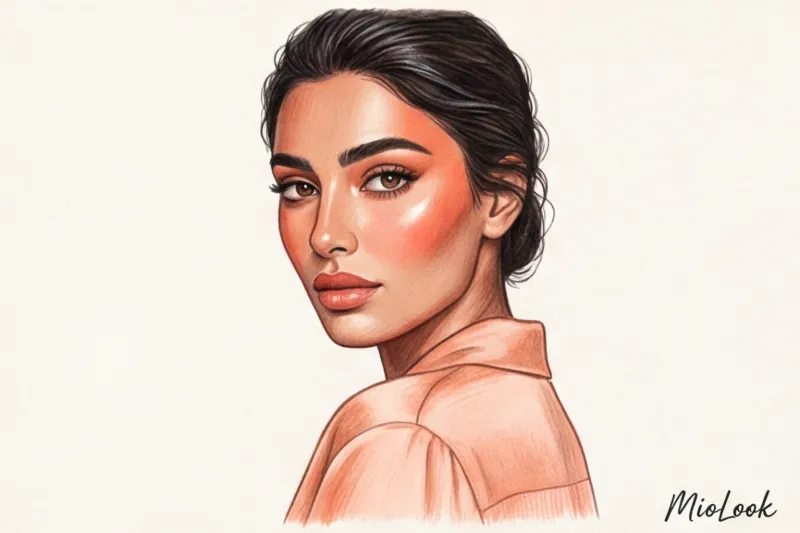
The second technique, strobing , suggests sculpting the face solely with light. No dark spots or artificial shadows. We use a highlighter with a dewy, satin finish (strictly without large shimmer particles!) to highlight prominent features: the bridge of the nose, the top of the cheekbones, the lip line, and the center of the chin. This is the very same Mediterranean beauty philosophy: we don't hide imperfections in shadow, but rather highlight their best features, creating the illusion of dewy, sun-drenched skin.
The effect of proper strobing and draping changes proportions so much that it directly affects the perception of your wardrobe. When I help clients put together looks in the app MioLook , I always emphasize: a fresh, “tightened” oval face with blush allows you to wear even the most complex, high collars and oversized jackets without weighing down your neck.
Who should use these easy techniques in practice and how?
- For an elongated and oval face: The draping is applied more horizontally, with a light haze across the bridge of the nose (a "sun-kissed" effect). This helps visually widen and balance a narrow oval face.
- For round and square faces: A strict diagonal line of blush from the top of the cheekbone to the temple will elongate the face and create those missing angles, but will do so in an extremely soft manner.
- For diamond and heart-shaped faces: Strobing is your best friend. By highlighting the center of your forehead and chin, you shift the focus away from wide cheekbones or a strong upper body, restoring perfect harmony to your face.
Both techniques require delicate texture manipulation. Forget about dense, graphic brushes—use a damp sponge or the warmth of your fingers to literally press the product into your skin, making it a part of you, not a mask.
Stylist's Secret: How to Match Your Makeup to Your Neckline
I bet you rarely think about what blouse to wear when you're standing in front of the mirror, blush brush in hand. And you should. As a personal stylist working at the intersection of fashion and beauty, I regularly see the same thing: flawless makeup for a face shape suddenly starts to look heavy and out of place as soon as a woman changes from loungewear to a formal business suit or evening gown. The secret to elegance, which few people know, is that makeup doesn't exist separately from your wardrobe. The lines of your face should be in perfect harmony with the geometry of your portrait area.
V-neck: geometry and statics
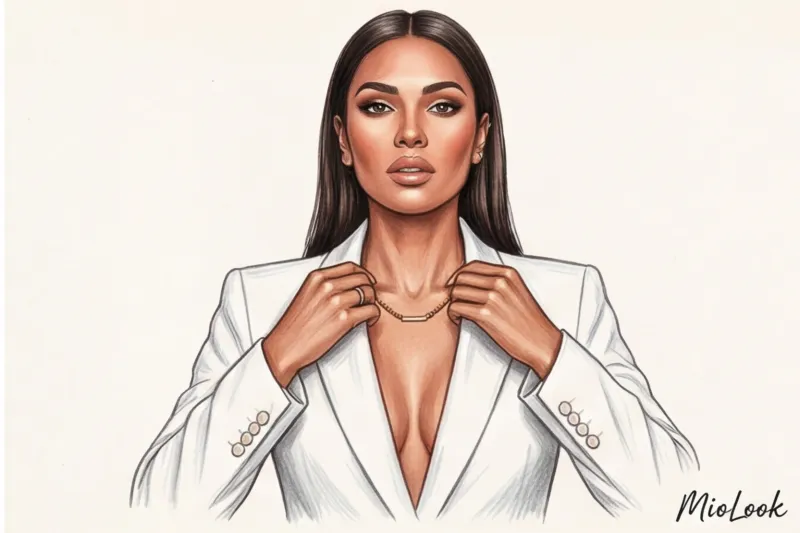
A V-neckline (whether it's a plunging dress, a slightly unbuttoned silk shirt, or a classic blazer) always creates a strong, strict vertical line. This architectural detail visually elongates the neck and requires proportionate support on the face. A V-neckline unquestionably calls for accentuated cheekbones and elongated, upward lines in makeup.
If you're wearing a structured jacket, your contouring should "speak" to its lapels. The formula for harmony here is crystal clear: Diagonal sculpting shading to the temples + elongated arrows This visually continues the pointed neckline, making the entire look dynamic, collected, and truly expensive.
Crew neck: soft and fresh
Basic cashmere jumpers, T-shirts, and crew necks operate under entirely different rules. The round neckline softens the face, creating a more relaxed silhouette. Adding harsh, graphic contouring with dark hollows under the cheekbones to such a sweater will make the face appear too predatory and disconnected from the body.
A round neckline pairs beautifully with a soft jawline and draped brows. A translucent cream blush applied with a wide brush to the apples of the cheeks, blending softly toward the temples, will create the illusion of youthful freshness and perfectly balance the simple, flowing neckline.
High collar (turtleneck): shifting focus and hidden threat
This brings us to my favorite professional insight, which is usually glossed over in glossy tutorials. Turtlenecks and sweaters with high, tight collars completely conceal the neck, which inevitably makes the lower jaw appear larger. Many women's instinctive reaction is to generously apply dark bronzer or contouring powder to trim away the excess volume. But beware: contouring the lower jaw with a high collar is downright dangerous.
In 2021, during a lookbook shoot for a European brand, we learned this lesson the hard way. The model slightly lowered her chin while posing, and a thick layer of creamy foundation immediately imprinted on the snow-white collar of her premium merino wool, which cost around $800. The garment was irreparably ruined, and the shoot was ruined. To prevent your collar from getting stained by jawline sculpting, completely avoid darkening the lower third of your face when wearing a turtleneck.
"Makeup is as much a part of your wardrobe as your shoes or bag. It should work in tandem with your wardrobe, not try to overpower it."
So how do you balance proportions with a hidden neckline? We use the principle of shifting emphasis: shifting the focus to the upper part of the face—the eyes and forehead. Highlight the center of the forehead with concealer, brush your brows upward with gel, and opt for bold eye makeup. Thickly coated lashes or a shimmering highlight on the inner corner will draw attention away from the hidden neckline and visually elongate the face.
To understand in advance how a specific beauty look will fit into your outfit, I recommend thinking through everything holistically. After uploading your items to MioLook , you can create capsules of your portrait zone and instantly mentally create makeup schemes to go with them. This protects you from mistakes and saves a phenomenal amount of time on your morning routine.
Your ideal image begins Here
Join thousands of users who look flawless every day with MioLook. Plan your wardrobe and beauty looks in one smart app.
Checklist: 5 Fatal Mistakes in Facial Correction That Make You Look OlderEven the most exquisite €500 silk jacket won't lift your look if your face artificially looks heavy and tired. Before a shopping trip, I always ask women to wear their usual daytime makeup. And in the natural light by the window, I regularly observe the same thing: an attempt to "reshape" the face, which visually adds five to ten years. Let's look at the main anti-patterns that mercilessly ruin your natural proportions.
- Mistake 1: Using a red bronzer instead of a cool/neutral sculptor in the natural shadow area. A person's shadows are never warm brick-red or orange—they always have a grayish, slightly olive, or neutral-cool undertone. Applying a warm, shimmering bronzer under your cheekbone creates the illusion of a dirty spot rather than a defined contour. Reserve bronzers for the edges of your forehead and the high points of your cheeks (where the sun naturally hits), and use the right matte contouring products for hollows.
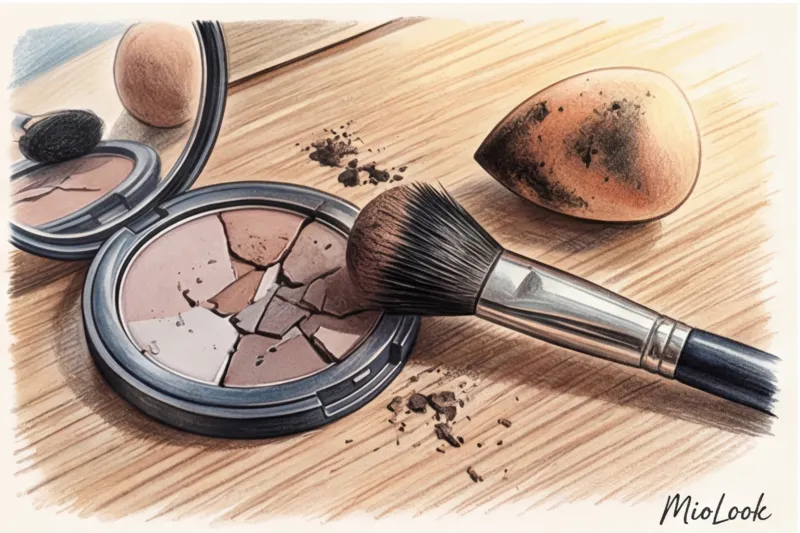
- Mistake 2: The cheekbone shadow line is too low (the effect of “sunken” cheeks). Gravity already works against us, so why help it? If you draw the dark contour line below the imaginary horizontal line under the tip of your nose, you visually pull your cheeks down, creating the appearance of jowls. Your face instantly becomes heavier. My golden rule: always apply the product just above the natural hollow and blend. only up , towards the temples to achieve a lifting effect.
- Mistake 3: Highlighter on textured skin (acne, enlarged pores). We often forget the basic law of optics: shimmering textures act like a magnifying glass. By applying a powerful pearlescent highlighter to areas with breakouts, acne scars, or large pores, you magnify every micro-imperfection threefold. If there's pronounced texture in the cheekbones, ruthlessly remove shimmer. Highlight the raised areas with a matte concealer half a shade lighter than your skin tone.
- Mistake 4: Harsh, unblended edges in daylight. What looks graphic and bold in the dim light of a restaurant looks like war paint in an office or sunny environment. Insufficient blending is the bane of the morning rush. To avoid streaks on your cheeks, after completing the application, go over all the edges with a clean, fluffy brush or a slightly damp sponge with the remaining foundation. The color transition should literally melt into the skin.
- Mistake 5: Copying makeup from social media without taking into account your own bone structure. Viral tutorials featuring harsh contouring are designed for a specific face type and, let's be honest, for a ring light. What perfectly accentuates the angular micro-features of a model like Bella Hadid will turn a soft Slavic or round face into a caricature. Your bone structure is unique, and the geometry of your makeup should be built around it. yours anatomy.
To stop guessing and buying makeup that doesn't suit you, I recommend taking an honest, makeup-free selfie in daylight. Upload it to MioLook and objectively analyze your proportions and facial features. Understanding your base is the first and most important step to making makeup your main accessory, not a mask.
Summary: How to Make Makeup Your Main Accessory
I recently came across a 2024 study by the global agency WGSN, dedicated to the evolution of beauty trends. Do you know which search query showed the biggest decline among women? "How to completely change your face shape with makeup." And this, in my opinion, is the best news for the industry in the last decade. The era when we tried to erase our unique bone structure for the sake of a standardized template on social media is finally over.
"Your face isn't a blank canvas to be primed and repainted. It's a stunning sculpture that just needs the right lighting." This principle from legendary makeup artists is more relevant today than ever.
Stylistically correct makeup for face shape — This isn't a set of strict restrictions prohibiting you from using a certain blush shade. On the contrary, it's a tool for your absolute freedom. According to analysts, women spend approximately €200-300 annually on harsh contouring palettes that they ultimately don't use because they make their face look "dirty." Knowing your contouring instantly eliminates these impulsive spending habits. You start buying only those products that work for you.
Once you recognize where your natural curves and hollows are, you stop fighting your reflection. You begin to use makeup like an elegant silk scarf or statement earrings—to accentuate your mood. For example, if you're wearing a tailored menswear suit, you might intentionally soften the look with a rounded blush. Or if you're wearing a flowing, romantic dress, you might add a touch of grace to your face with a slightly more defined, upward curve to your cheekbones.

So today I want to give you a practical exercise. It'll take exactly five minutes, but it will change your daily routine forever:
- Remove all makeup and gather your hair into a tight ponytail, leaving your hairline, forehead, and ears exposed as much as possible.
- Stand by a window on a cloudy day or in soft morning light (strictly avoid direct sunlight and artificial ring lights).
- Take a selfie facing straight ahead with a completely relaxed face.
- Now look closely at the picture. Notice where already where natural shadows fall and where your skin catches the light.
These natural lines are your only true guide. You no longer need online diagrams where bronzer is applied in the shape of a number "3." Your goal is simply to slightly enhance the light and shadow that nature has already created.
In Mediterranean culture, which is so close to my approach to style, there's a golden rule. We sincerely believe that healthy, vibrant, radiant skin and absolute self-confidence are always more important than perfect mathematical proportions. Slight asymmetry, a slightly protruding chin, or wide cheekbones aren't natural flaws; they're your signature aristocratic style.
Your entire look is always perceived by others. A perfectly chosen sculpted shade loses its charm if it clashes with the neckline of your jacket. To masterfully create cohesive looks where clothing, hair, and makeup harmonize, try MioLook It's a wonderful intellectual assistant that allows you to visualize your ideas before you waste time getting ready in front of the mirror.
Stop trying to reshape yourself to fit someone else's ideals. Invest in quality skincare, find your perfect creamy product for a subtle tint, and let your face breathe. After all, the most luxurious thing a woman can wear every day is a bold and joyful embrace of her own unique beauty.
Guide Chapters
Correcting lip shape with makeup: working with proportions
How can a few millimeters of lip contouring visually age or alter the shape of the face? We reveal the architectural secrets of makeup and working with proportions.
How to apply blush according to your face shape: diagrams
Forget the old makeup rules of focusing on the apples of your cheeks. Learn the latest blush application techniques that will accentuate your facial proportions.
Makeup for a Square Face: Softening the Angles
A square face shape is a sign of aristocracy and incredible photogenicity. Learn how to highlight your natural features without harsh contouring.
How to determine your face shape for perfect makeup
About 70% of women don't understand their anatomy and waste hours on unsuitable makeup. Learn how to identify your natural features and reduce your getting ready time.
Frequently Asked Questions
What style mistakes do you make?
Honest Quiz: Find Out Your Wardrobe Weaknesses and How to Fix Them
About the author
Unlock MioLook
for €0.99
Start creating perfect outfits with artificial intelligence
Get access — €0.99 onceRelated Articles
Contouring by face shape: patterns for oval, round, and square faces
Modern contouring is about the architecture of light, not the concealment of imp...
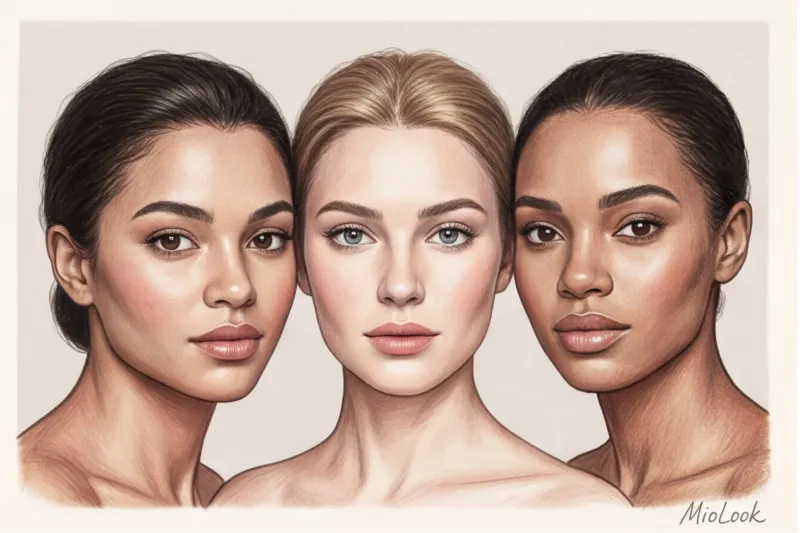
How to determine your face shape for perfect makeup
About 70% of women don't understand their anatomy and waste hours on unsuitable ...
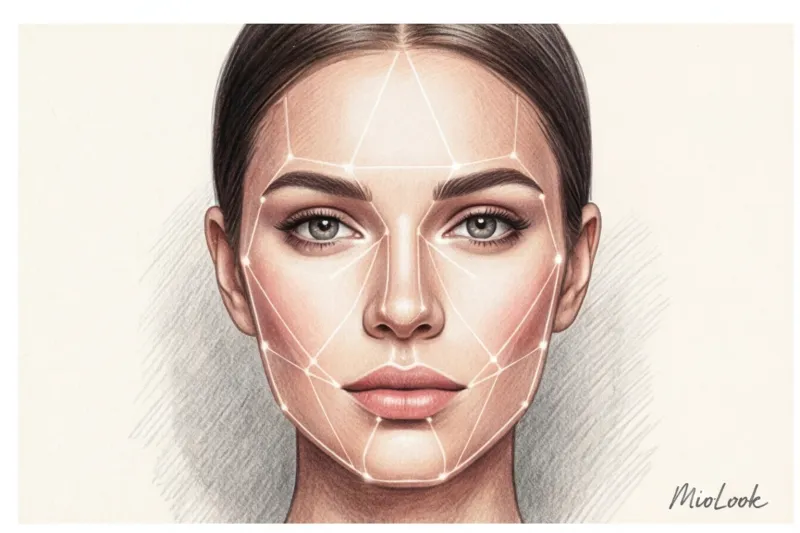
How a neural network selects makeup based on face shape: contouring
Classical facial shape theory is hopelessly outdated. Learn how AI algorithms se...
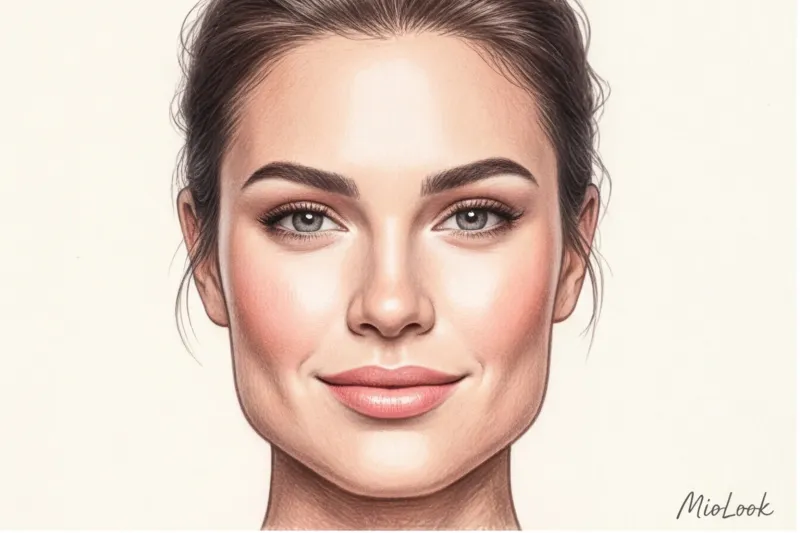
Makeup for a Square Face: Softening the Angles
A square face shape is a sign of aristocracy and incredible photogenicity. Learn...