

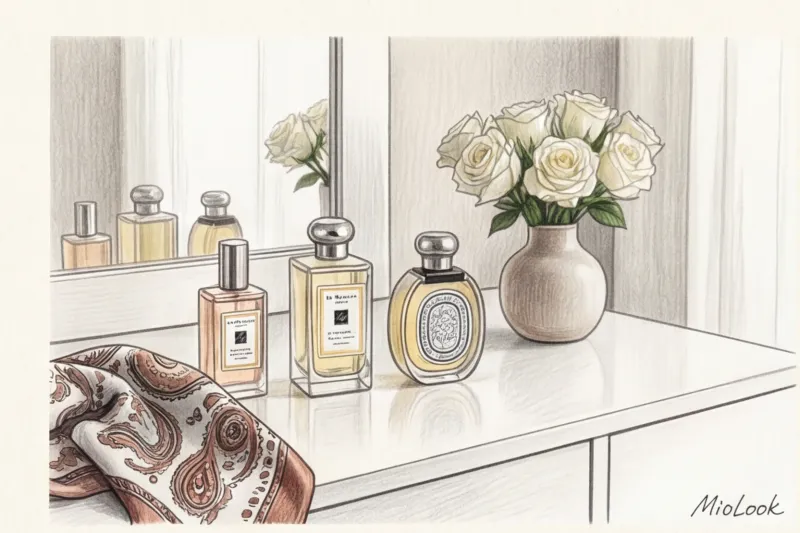
What is a perfume wardrobe and why is it needed?
Remember the moment when someone walked past you, and their scent made you turn around. You hadn't yet noticed the cut of their coat or appreciated the quality of the leather on their bag, but you've already formed an opinion. Scent works faster than sight. In 12 years of working as a stylist, I've learned one important thing: a visual image always remains incomplete without the right olfactory accompaniment. That's why today the query "how to put together a perfume wardrobe" has become one of the most frequent in my personal consultations.
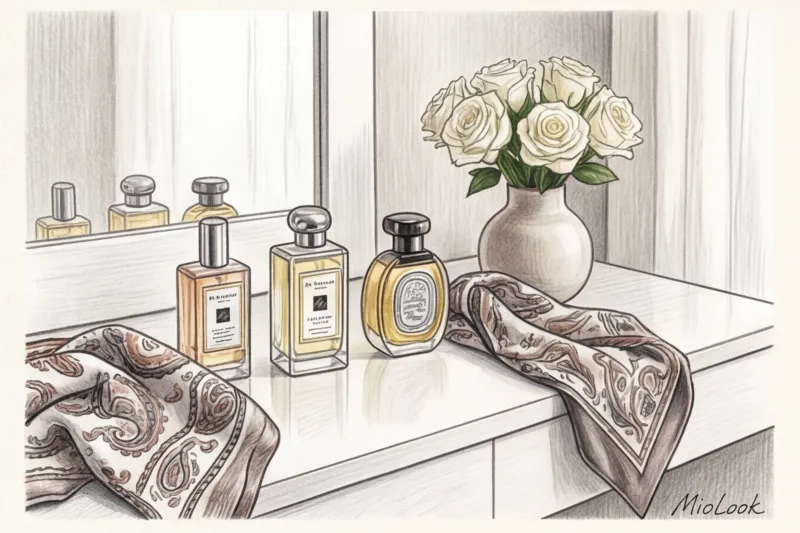
What does this mean in the modern sense? A perfume wardrobe isn't a random collection of thirty bottles, haphazardly bought at sales or gifted by relatives for the holidays. It's a conscious, curated collection of fragrances, where each composition fulfills a specific social role and purpose. As an advocate of conscious consumption, I always emphasize: it's better to have three perfect bottles that work for you 100% than twenty random fragrances gathering dust on your vanity.
Science explains this magic through physiology. Our sense of smell is directly connected to the brain's limbic system—an ancient structure responsible for emotions, instincts, and memory. According to a large-scale study by Rockefeller University (2014), a person can reliably recall 35% of what they smell, compared to a measly 5% of what they see. Olfactory memory is the strongest and most enduring. Your scent forms a first impression in a split second, long before you even utter a word. For example, the brain subconsciously interprets strong notes of vetiver or dry cedar as a signal of stability, while overly sweet gourmands are a marker of relaxation and childishness.
In my practice, I call perfume "invisible clothing." It's that final touch that brings the entire look together or, conversely, mercilessly destroys it. Imagine: you're wearing an impeccable architectural pantsuit in the spirit of Jil Sander, you've created the perfect business makeup , but you smell like frivolous strawberry syrup. Dissonance is guaranteed, and the perception of your expertise will inevitably diminish. By the way, when my clients use MioLook When planning their weekly looks, I always encourage them to mentally (or in the comments section of the outfit) add a specific scent. This instantly changes their inner sense of self and posture.
The Myth of the Signature Scent
For years, glossy magazines have been selling us an incredibly romantic, yet completely unworkable idea: finding your "Signature Scent" (your one and only, unique scent) and remaining faithful to it for life. The idea was for people to literally recognize you by your scent before you even walked into the room.
This concept dates back to the mid-20th century, when a bottle of good French perfume cost half a salary (around 300-400 euros in today's money) and was bought once a decade. Today, the idea of a single fragrance for all occasions is hopelessly outdated. Let's draw a direct analogy with your wardrobe: you wouldn't wear a full-length silk evening gown for a morning jog or a formal tweed jacket to the beach, would you? Our lives are too dynamic and multifaceted. We play different roles: a collected executive during the day, a relaxed friend in the evening, a caring mother on the weekend. And each of these roles requires its own, appropriate olfactory code.
"Trying to wear the same perfume for the office, a date, and the gym is like trying to live your whole life in the same loafers. Practical, but completely ineffective for different purposes."
But there's also a purely physiological, medical reason to give up wearing the same perfume every day: olfactory blindness, or receptor adaptation. When you wear the same scent day after day, your brain begins to perceive it as safe, familiar background noise and simply "turns off" its perception. You stop hearing your own perfume.
What happens next? One of my regular clients once complained, "I thought my favorite perfume had been reformulated and wasn't lasting at all. So instead of the usual two sprays, I started using five or six." She ended up literally "suffocating" her colleagues in the cramped open space, completely unaware of it. Rotating fragrances within a well-designed fragrance wardrobe is the only effective way to maintain a sharp sense of smell, enjoy your perfume, and respect the privacy of others.
A Basic Perfume Wardrobe: How to Create the Perfect Capsule
According to a large-scale consumer habits study conducted by International Flavors & Fragrances (IFF) in 2023, the average woman has seven to nine bottles of perfume on her vanity, but only uses two regularly. The rest are either waiting for a "special occasion" that never arrives, or were purchased on a whim and are completely out of place in her lifestyle. This brings us to the main question: How to put together a perfume wardrobe in such a way that each composition works for you, and not just decorates the shelf?
This is where the strict principle of minimalism comes into play. You don't need dozens of bottles. The optimal olfactory capsule consists of just 3-5 carefully selected fragrances. This number is enough to cover 95% of life's scenarios without creating a chaos of choices in the morning. A high-quality perfume wardrobe follows the same rules as a basic clothing capsule: you should have items for work, for leisure, and for going out.
Before we move on to specific categories, it's important to consider a crucial physical factor: climate and seasonality. Temperature and humidity radically alter the rate of evaporation of essential oils and synthetic molecules. Imagine putting on a thick wool sweater at 30°C. Absurd? But that's exactly what happens when you apply a heavy oriental perfume with notes of amber and resins in hot weather. In the heat, the molecules evaporate rapidly, turning the complex composition into a suffocating cloud. Summer and humid climates call for volatile, light structures: citrus, aquatic, and green notes. In winter, on the contrary, cold air "freezes" light floral accords, making them prickly and inexpressive. This is where spices, woods, and gourmand notes come into their own, requiring body warmth to fully develop.
White Shirt Scent (for work and focus)
Every woman's wardrobe contains that perfect white shirt made of thick cotton poplin: it's crisp, holds its shape, and conveys cleanliness, composure, and professionalism. There's a perfect equivalent in perfumery. It's your work, everyday scent, whose primary purpose is to help you focus and create a respectful distance without violating others' personal boundaries.
The main technical characteristic of such perfume is minimal sillage (sillage). The scent should only be detectable at arm's length, within your personal space. If your scent lingers in the elevator after you exit, it's considered bad manners for a business environment.
Look for compositions built around notes of purity and freshness. Citrus (especially bitter grapefruit and bergamot), neroli, green tea leaves, and dry, earthy vetiver are ideal. Aldehydes—synthetic compounds that, in small doses, create the scent of freshly ironed linen or frosty air—deserve special attention. Research in cognitive psychology shows that these austere, unsweetened notes stimulate concentration.
When I consult with clients on creating a business image, we always select this olfactory anchor. By the way, when you plan your work week in MioLook The app helps you create a sleek, minimalist look—the "white shirt" scent pairs perfectly with just such outfits, completing the image of a confident professional.
A cocoon aroma (for yourself and relaxation)
If the previous category was about social connections and productivity, then the cocoon scent is your voluminous cashmere sweater. It's an introverted perfume, created exclusively for your personal comfort, relaxation, and grounding. We often forget that perfume can (and should) be worn at home, for ourselves.
These compositions are distinguished by their intimacy: they sit very close to the skin, merging with your natural scent. They lack harsh opening notes; they immediately envelop you in softness. The olfactory pyramid is dominated by warm, textural components: creamy sandalwood, dry vanilla, fluffy white musk, and lavender. The molecule is particularly interesting. Cashmeran — a unique synthetic substance whose smell is described as a tactile sensation of warm wool, damp wood, and clean skin.
A smart wardrobe on your smartphone
Not sure what to pair your favorite pieces with? MioLook's AI stylist will analyze your clothes and create stylish looks for every day.
Get access — €0.99 onceA cocoon-like fragrance performs a vital psychotherapeutic function. Olfactory receptors are directly connected to the brain's limbic system, which is responsible for emotions. Applying a familiar, soft scent after a stressful day physiologically reduces cortisol levels and helps you switch from "achievement mode" to relaxation mode. It's an investment in your mental health: a bottle of a high-quality niche fragrance in this style can cost 150-200 euros, but its calming effect is worth every cent.
Statement fragrance (evening and special occasions)
Statement aroma (from English. statement (A statement) is your tuxedo, your luxurious velvet dress, or your statement earrings. You don't wear it every day. You put it on when you want to be noticed, remembered, and when you need the ultimate boost of confidence. This is the perfume for evening outings, special occasions, or dates.
Unlike a "white shirt," this requires a pronounced sillage, a complex, multifaceted structure, and high longevity (often in the Eau de Parfum or Extrait concentration). These fragrances develop on the skin for hours, revealing one facet after another. They are based on heavy, rich notes: predatory tuberose, dense patchouli, mystical oud, animalic leather, hot spices, and lingering amber.
The main problem with statement fragrances is the risk of suffocating others and yourself. As a stylist, I often see a great look ruined by an overdose of heavy perfume. The secret of the pros lies in the correct application technique. Never spray heavy oriental or chypre perfumes on the front of your neck or décolleté—your nose will quickly adapt (olfactory blindness will set in), and you'll think the scent has disappeared, prompting you to reapply. Apply complex fragrances to the back of your neck, under your hairline, on your lower back, or even behind your knees. Warm air from your body will rise, creating a subtle, intriguing aura around you, rather than a thick smokescreen.
The Anatomy of a Quality Perfume: What to Look for When Choosing
Last year, at a closed symposium on sustainable development in Paris, one of the leading perfumers posed a provocative question to the audience: "Why do you think a €400 fragrance can disappoint you more quickly than a €50 one?" The answer lies not in the brand or the beauty of the bottle, but in a simple ignorance of the physics and chemistry of fragrances. As a fabric expert, I'm accustomed to assessing the quality of clothing by the composition of the threads and the density of the weave. The same principle applies to perfume: to assemble a functional wardrobe, you need to understand how the fragrance is "tailored."
Any classical composition is built on the principle olfactory pyramid This is the architecture of a fragrance, which determines how it will unfold over time:
- Top notes (intro): This is the first impression, which lasts from 10 to 30 minutes. Typically, these are volatile, light molecules—citrus, green leaves, aquatic notes, pink pepper. To use a textile analogy, top notes are like a weightless silk scarf. They evaporate quickly, so never make a purchasing decision within the first few minutes of spraying.
- Middle notes (heart): They open up as the opening fades and last for 2 to 5 hours. Here, florals (jasmine, rose, tuberose), fruits, and light spices reside. This is the foundation of the perfume's character—your basic cashmere sweater.
- Base notes (sillage and fixation): The heaviest molecules, which remain on the skin for up to 24 hours and on clothing for weeks. Wood, resins, vanilla, musk. The base acts like a thick wool coat, warming and holding the entire structure together.
The second, and perhaps most critical, aspect is concentration. The industry has strict standards for the percentage of fragrances in an alcohol or oil base. This percentage determines how the fragrance will behave on your skin.
- Eau de Cologne (Cologne): 2–5% fragrances. Ideal for hot summer days or morning invigoration. Lasts on the skin for 1–2 hours without leaving a lingering scent.
- Eau de Toilette (Toilet Water): 5–15%. The most popular daily format.
- Eau de Parfum (Eau de Parfum): 15–20%. The golden mean of density and durability, the optimal choice for cool climates and evening outings.
- Extrait de Parfum (Perfume): 20–40%. The top league of perfumery, thick and rich consistency.
"A paradox I constantly encounter during consultations: women buy Extrait de Parfum for 300-400 euros, expecting a kilometer-long sillage, and are genuinely disappointed when the scent lingers. This is a gross misunderstanding of the physics of perfume."
Remember this important rule: Longevity and sillage are not the same thing. The higher the concentration of oils (Extrait) and the lower the alcohol content, the closer the fragrance sits to the skin. Alcohol acts as a diffuser—actively evaporating from body heat, it captures perfume molecules and disperses them throughout the room. Perfume contains little alcohol, so it has an intimate, dense, and long-lasting scent (up to 24 hours), creating an aura exclusive to those allowed into your personal space. Eau de toilette (EDT), on the other hand, due to its high alcohol content, produces the most voluminous, ethereal, and resonant trail, although it fades within 4-5 hours.
That's why in the app MioLook When you're digitizing your wardrobe, I strongly recommend taking notes on the concentrations of your bottles. A light, diffuse Eau de Toilette is the perfect complement to flowing viscose summer dresses, while a dense, skin-friendly Extrait blends luxuriously with textured fabrics like tweed, thick wool, or velvet in winter looks.

Eco-friendliness and safety: natural vs. synthetic
"I only want 100% natural perfume!"—I hear this request almost every week. As a specialist deeply immersed in sustainable fashion, I'm forced to debunk this beautiful yet dangerous marketing myth time and time again.
The idea that everything natural is good and everything synthetic is evil is hopelessly outdated. Natural perfumes are not only a rarity in today's market but also pose a colossal health risk. Natural absolutes and essential oils (especially oakmoss, Peru balsam, and unrefined citrus oils) contain hundreds of complex chemical compounds, many of which are severe allergens and phototoxins (can cause sunburn). That's why the International Fragrance Association (IFRA) strictly regulates, and often completely prohibits, the use of certain natural extracts for your own safety.
Modern, truly high-quality perfumery is impossible without synthetic molecules. Famous components like Iso E Super (creates a woody, velvety, pulsating aura) or ambroxan (clean, salty corporeality) are not only hypoallergenic but also impart a modern, flowing volume to the composition. Without a synthetic framework, 100% natural perfumes often sound dull, heavy, and reminiscent of a pharmaceutical mixture that dissolves on the skin within an hour.
Moreover, let's look at this through the prism of ecology. Synthesizing a molecule of sandalwood, musk, or ambergris in a lab is the only ethical solution. This saves ancient sandalwood forests in India from being cut down and stops the poaching of musk deer (an animal whose glands were historically used to extract musk). Today, responsible brands are focusing on sustainable sourcing (ethical and sustainable sourcing) of ingredients that can be grown without harming the planet—for example, vetiver from Haiti or patchouli from Indonesia, where farmers are provided with fair working conditions. Rare, endangered ingredients are replaced with high-tech, safe, and pure laboratory-produced analogues.
How to Properly Test and Wear Fragrances
The most expensive mistake when building a perfume wardrobe is an impulse purchase. How many times have you or someone you know brought home a coveted bottle, purchased in a fit of excitement, only to realize the next day they can't wear it? This usually happens when the decision is made after five minutes of sniffing at the display.
Perfume brands are well aware of consumer psychology. That's why the top notes of a composition—the ones you smell in the first few minutes—are crafted to be as bright, commercial, and appealing as possible. But the problem is, they only last 15 to 30 minutes on the skin. For a beautiful citrusy opening, you might pay 150 euros, only to find yourself two hours later with a heavy, suffocating base of synthetic musk that leaves you with an unbearable headache.
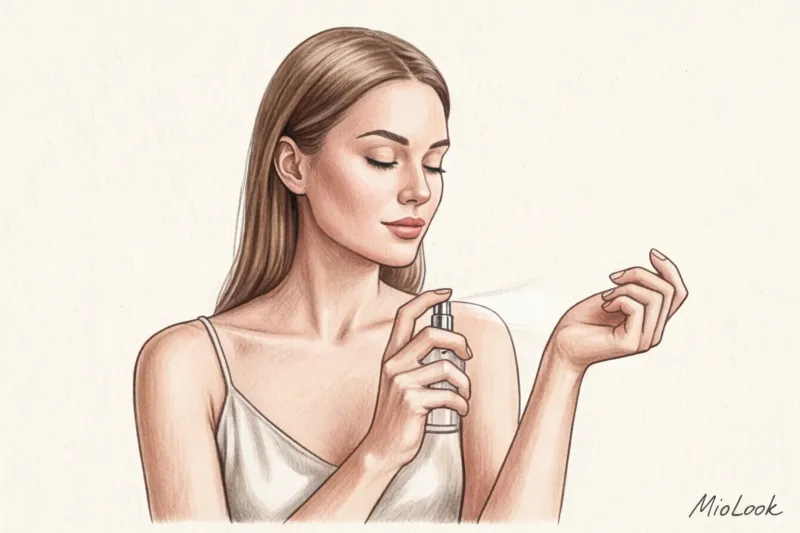
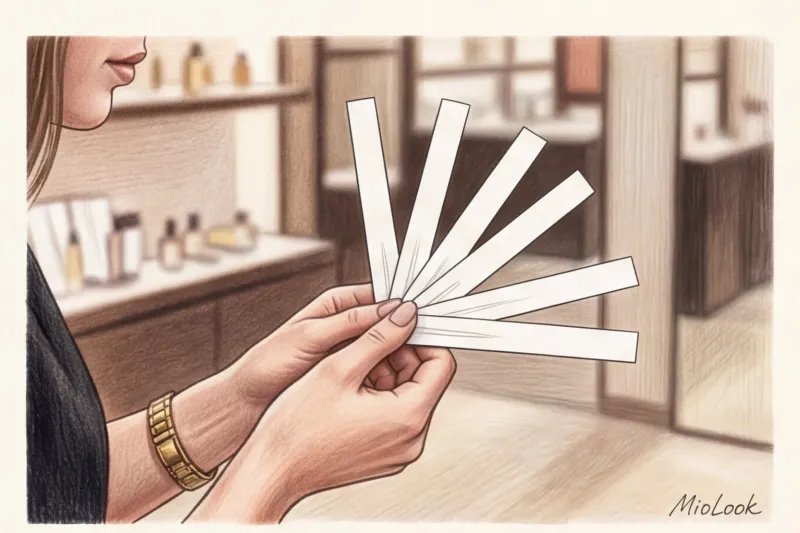
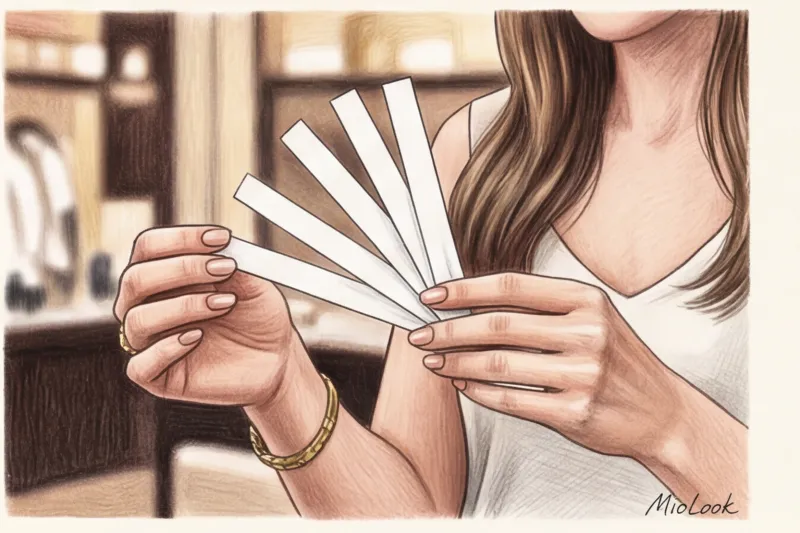
To avoid disappointment, it's important to understand the fundamental difference between paper and living tissue. A blotter is a dead material. It's only needed for initial screening: to determine whether you like the scent's direction. Real chemistry (literally) only occurs upon contact with your skin.
A number of physiological factors influence how a perfume unfolds:
- pH level: The acidity of the skin can make delicate floral notes “acidic” or, conversely, make them more voluminous and sweeter.
- Body temperature: On the so-called "hot skin," dense resins, ouds, and spices unfold in minutes, quickly moving into the base, while on the "cold skin," even light fruits can sound loud and monotonous for hours.
- Hormonal background: On different days of your cycle, the same perfume may seem like divine nectar to you, or like an irritating scent.
I always recommend my clients to use the professional approach of evaluators - The Three-Test Rule Never jump to conclusions on the first day. Try the fragrance in different weather conditions: a damp autumn rain can draw incredible depth from a classic chypre, while dry indoor heat can turn it into a flat soap. Try wearing it in different moods—what seemed cozy on a lazy weekend will be unbearably distracting on a stressful work Tuesday.
This leads to the main rule of conscious consumption: avoid blindly buying full-size bottles, even if all the bloggers sing their praises. According to statistics from European resale platforms last year, over 60% of practically new 100 ml bottles are resold with the label "didn't fit my skin."
"Instead of buying a pig in a poke, make it a rule to start getting to know a brand through discovery sets (sets of official samples) or high-quality decants in 2-5 ml volumes."
This simple life hack accomplishes two things. First, you save money: by investing 35-50 euros in a set of miniature perfumes (almost every reputable house, from Maison Margiela to niche indie labels, now produces them), you can wear the fragrances for weeks. Second, it's truly eco-friendly—you buy only a bottle you're guaranteed to use to the last drop, avoiding the waste of glass on your shelves.
By the way, when wearing samples, it's very helpful to match them with your clothes. I often use MioLook I use it to visualize my looks for the week ahead, and I can evaluate which fragrances I'm testing best complement a particular outfit right in the app. This helps me understand whether a perfume truly fits my lifestyle.
Access to MioLook for €0.99 — one-time payment
Start creating perfect looks with the help of artificial intelligence and select the perfect perfume accents for them.
Get access — €0.99 onceIntegrating perfume into your business image and personal brand
Scent speaks louder than words. In a business environment, where every detail plays into your status, the wrong perfume can ruin a carefully crafted image faster than a wrinkled shirt or an inappropriate joke. Corporate fragrance etiquette is based on respect for others' privacy and the understanding that in the office, your scent is a communication tool, not a means of self-expression.
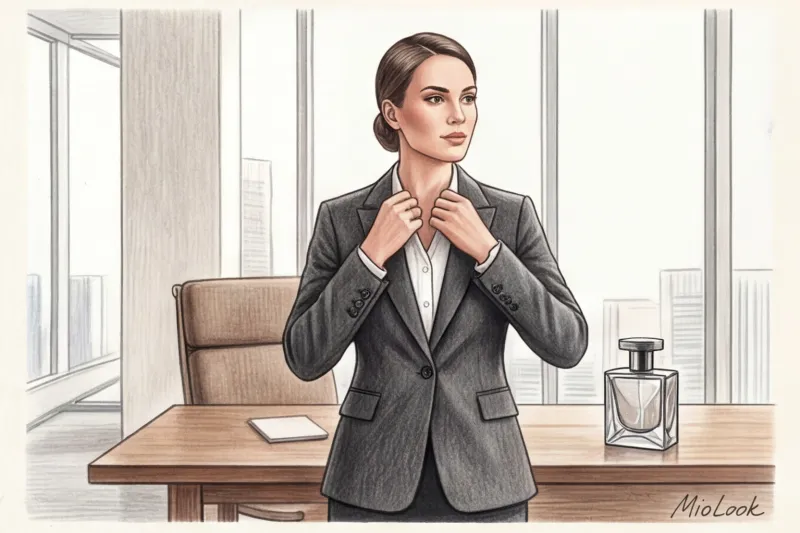
The gold standard of office etiquette is arm's length rule Your scent should only be noticeable when the person you're speaking with is closer than 50-70 centimeters. Anything beyond this invisible physical boundary is considered an aggressive invasion of your colleagues' personal space. Heavy ouds, dense amber, and indolic white flowers (tuberose, jasmine) are absolutely unsuitable for closed spaces and open-plan offices. The optimal choice is Eau de Toilette or light hair mists that sit as close to the skin as possible.
Interviews and complex negotiations require a special approach. In moments when you need to prove your competence, perfume should never distract from your expertise. A scent that's too strong and lingering is subconsciously perceived by others as either an attempt to dominate or a disguise of insecurity. The ideal olfactory profile for such situations is dry woody notes, vetiver, neroli, or cool, powdery iris. They create an aura of composure, purity, and the right amount of distance. When composing capsules for important meetings, MioLook I recommend that clients pair these "cool" scents with formal suits—it helps them get into the work mood even at the wardrobe planning stage.
"The discrepancy between the visual image and the aroma causes cognitive dissonance in others, which subconsciously reduces the level of trust in you."
When examining the mistakes of business image, I can't help but recall a real-life case. One of my clients, a brilliant financial analyst, was preparing to present at a major European fintech forum. We had chosen an impeccable architectural tuxedo, but at the last moment before going on stage, she decided to apply her favorite gourmand fragrance with rich notes of burnt sugar, praline, and vanilla. The result was disastrous: in the heated hall, the confectionery scent created a powerful dissonance with her rigorous, analytical presentation. The sweet scent literally lowered the level of seriousness—the audience reacted to her more as the owner of a cozy bakery than as a tough expert managing budgets worth millions of euros.
This case brings us to the most important rule of speaker's fragrance. Public speaking is always physiologically stressful. The adrenaline rush and increased body temperature cause even a familiar perfume to unfold faster, louder, and sometimes release unexpected, sharp notes. If you're standing on stage or giving a tense presentation to a board of directors, The best solution is to avoid perfume altogether. A high-quality, unscented antiperspirant and freshly ironed clothes (the subtle scent of pure cotton or fine wool) will boost your credibility far more effectively than a €300 bottle of niche perfume. In this case, olfactory silence is a sign of the highest professionalism.
Proper Storage: How to Extend the Life of Your Collection
Have you ever noticed how beautiful those perfume trays look on sun-drenched vanities on Pinterest? Aesthetically, they're impeccable. Chemically, they're a slow killer of your scents. A perfume composition is a complex and fragile balance of volatile compounds that is very easily destroyed.
High-quality perfumes have four main enemies: ultraviolet light, sudden temperature changes, high humidity, and oxygen. When a bottle is exposed to direct sunlight, a photochemical reaction triggers the breakdown of molecules. The formula begins to degrade.
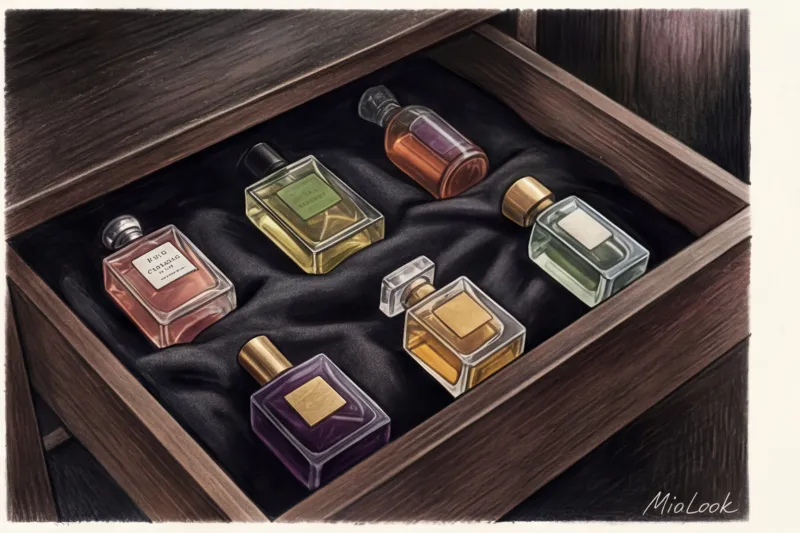
That's why the worst thing you can do with your collection is put it on a shelf in the bathroom. Regular temperature fluctuations from a hot shower and constant humidity will destroy the fragrance's structure in a matter of months. The ideal storage location is a dark, closed closet in a bedroom or dressing room, where a stable temperature of around 16–20°C is maintained. Serious collectors always keep the original cardboard boxes—they provide an additional and very effective shield from light.
The official shelf life of perfume, according to standards, is usually 3-5 years. But in practice, a properly stored bottle can last for decades. Under the right conditions, the process maceration (Infusion) – ingredients, especially natural resins and absolutes, are deeply mixed with alcohol, resulting in a more rounded and dense aroma. However, if the conditions are not met, the aroma oxidizes and becomes "broken."
"Oxidation primarily affects the most volatile top notes—citrus and aldehydes. If, upon first spray, you smell a sharp odor of nail polish remover, rancid oil, or celery, and the liquid itself in the bottle has noticeably darkened, the process is irreversible; the perfume is ruined."
The physics of oxidation leads us directly to the main rule of mindful consumption: buy 30 ml bottles, not 100 ml. From a marketing perspective, buying larger quantities seems more cost-effective: 100 ml can cost €150, while 30 ml costs €80. But let's be pragmatic. With each spray, the displaced liquid is replaced by oxygen. The more empty space (air) in the bottle, the faster the oxidation process.
A huge bottle of "100" that you use occasionally will spoil faster than you can use half of it. A small bottle ensures the fragrance stays fresh until the last drop. Plus, it's eco-friendly—you don't throw away spoiled product or store half-empty glass jars gathering dust on the shelves for years.
Your ideal image begins Here
Join thousands of users who look flawless every day with MioLook. Plan your wardrobe and match fragrances to your looks with just one click.
Checklist: Audit Your Current Perfume ShelfAccording to consumer research from the analytics agency Mintel (2022), the average European woman owns eight bottles of perfume, but only uses two regularly. The rest sit idle for years, slowly losing their potency. If you're wondering how to build a perfume wardrobe from scratch, my professional answer is always the same: don't rush to the store. Start with a ruthless audit of what you already own.
Just as we clean out our closets before a new season, we need to do an olfactory audit. Set aside 30–40 minutes of your free time and follow this simple process.
Step 1: Inventory (collect all bottles and samples)
Get out absolutely everything. Not just the beautiful full-size bottles on your vanity, but also travel-size versions from travel cosmetic bags, decants forgotten at the bottom of bags, and gift samples from dresser drawers. Place them on a table in a well-lit area (but avoid direct sunlight). Visualizing scale is the first step to mindfulness. One of my clients recently found 14 (!) half-opened samples of niche fragrances simply by emptying all her work tote bags and clutches. Often, we buy new things simply because we've forgotten about the old.
Step 2: Condition Test (Check for color change and broken notes)
Perfume lasts a long time, but not forever. First, conduct a visual inspection: if a clear perfume has turned yellow, or an amber one has turned a cloudy brown or has a sediment, that's the first warning sign. Now move on to the olfactory test.
An important nuance: Liquid trapped in the plastic tube of a spray bottle is constantly exposed to microdoses of oxygen and oxidizes the fastest. Spray 3-4 times into the sink to clear the pump, and only then apply the fragrance to a blotter (or a clean sheet of paper). If, instead of the usual sparkling citrus or fresh flowers, you smell a sharp odor of rubbing alcohol, vinegar, rancid oil, or burnt plastic, the fragrance is "damaged." Throw it away without mercy, even if it's an exclusive bottle for 250 euros. A damaged perfume smells flat, leaves an unpleasant sourness on the skin, and can physically cause a headache.
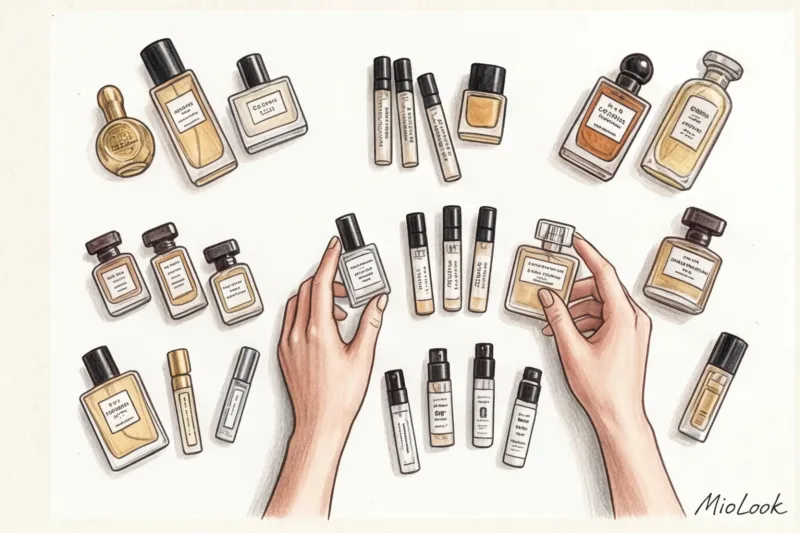
Step 3: Categorization by function (work, rest, evening)
Divide the surviving bottles into working groups. Take each perfume and honestly ask yourself, "Where and in what mood will I wear this tomorrow?" You should have three main piles:
- Work and focus: strict, restrained, non-lingering compositions (green tea, vetiver, neroli, aldehydes).
- Rest and cocoon: cozy, close-to-the-skin scents for yourself (soft musk, lavender, unsweetened vanilla, sandalwood).
- Evening and statement: loud, complex, assertive perfume (dense tuberose, leather, resins, patchouli).
If a bottle doesn't fit into any category, raises doubts, or makes you think, "I'll keep it, maybe I'll need it for a trip to the dacha," feel free to put it in a box to give to friends or sell on specialized resale platforms.
Step 4: Identifying gaps (which olfactory group is missing)
Look at the resulting groups. What's missing for complete balance? The human psyche is designed to intuitively buy similar items. In my experience, I often see shelves filled with five variations of sweet gourmands, but absolutely no austere chypre or cool fougère for business meetings. Or, conversely, a completely office-friendly "sterility" and not a single luxurious oriental fragrance for an evening out. By identifying this gap, you'll understand which olfactory group to look for on your next trip to the perfume boutique.
Once the audit is complete, I highly recommend digitizing your updated database. Add the current bottles to MioLook The app not only lets you manage your clothes but also create complete looks. Pair a crisp, woody fragrance with your architectural jackets, and an enveloping amber scent with silk slip dresses. This saves time in the morning and protects you from embarrassing styling mistakes.
Remember, the perfect fragrance wardrobe isn't measured by the number of bottles. It's measured by how accurately each scent reflects your social roles and inner state. Choose your perfume as thoughtfully as you would select quality cashmere or silk, and your scent will always speak volumes about you. This concludes our guide—we wish you exciting olfactory discoveries and conscious shopping!
Guide Chapters
The Perfect Everyday Perfume for Girls: How to Choose
Forget boring clichés. We'll tell you how to choose the perfect base scent that will become your invisible calling card.
The Ideal Office Perfume for Women: Etiquette Rules
A well-chosen fragrance is a powerful tool for personal branding. Learn the rules of business perfume etiquette and learn how to choose a fragrance for work.
How to Choose an Evening Perfume for Women: A Stylist's Guide
A well-chosen fragrance is a functional accessory, governed by the laws of chemistry and etiquette. Learn how to consciously choose a perfume for evening outings.
Summer Fragrances for Women: How to Choose a Perfume for the Hot Weather
Choosing a perfume for the hot season isn't just a matter of taste, it's a true chemistry. Let's figure out how to find the perfect summer scent that will last.
Winter Perfumes for Women: Warming Scents
Why do your favorite perfumes disappear in the cold? Learn how to choose the right warming fragrance to make it the perfect addition to your winter wardrobe.
How to Properly Test Perfume: Tips from a Stylist
Buying a fragrance in a hurry often leads to disappointment. Learn the secrets of choosing the perfect perfume from a professional stylist.
A Capsule Fragrance Wardrobe: How to Choose 3 Fragrances
How can you stop hoarding perfume and keep only the best? We'll show you how to create a minimalist fragrance collection that will garner maximum compliments.
How to choose a long-lasting perfume and make it last longer
Why do some perfumes last for 24 hours, while others disappear within an hour? We explore the physics of molecules, skin chemistry, and learn how to choose truly long-lasting fragrances.
Niche Perfumery: Where to Start
Your fragrance is an invisible garment that can either enhance or detract from your look. Let's explore why it's worth switching from mass-market luxury to select fragrances.
How to choose a perfume to suit your style: secrets to the perfect look
Fragrance is an invisible garment that shapes your first impression. Learn how to pair your perfume with your wardrobe.
Fragrance Groups in Perfumery: How to Find Your Direction
Your perfume speaks volumes about you faster than you can speak. Learn how to choose the right scent so it enhances your personal brand, not detracts from it.
Status perfume for women: elegant fragrances
Fragrance is your invisible garment, capable of either enhancing your status or ruining your image. Learn how to choose a perfume worthy of a successful woman.
Frequently Asked Questions
What style mistakes do you make?
Honest Quiz: Find Out Your Wardrobe Weaknesses and How to Fix Them
About the author
Unlock MioLook
for €0.99
Start creating perfect outfits with artificial intelligence
Get access — €0.99 onceRelated Articles
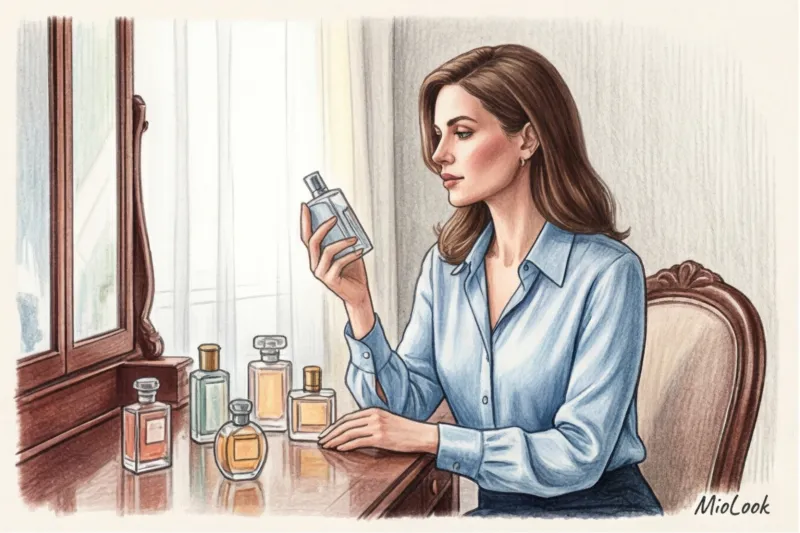
Basic Perfume Wardrobe: What Every Woman Should Have
Trying to find a single scent to last a lifetime is a mistake. A personal stylis...
What is a perfume wardrobe and how many fragrances do you need?
The concept of one fragrance "for life" is hopelessly outdated. Learn how to con...
Perfume Wardrobe: How to Build a Basic Collection
The concept of one fragrance for life is hopelessly outdated. Learn how to consc...
A Capsule Fragrance Wardrobe: How to Choose 3 Fragrances
How can you stop hoarding perfume and keep only the best? We'll show you how to ...