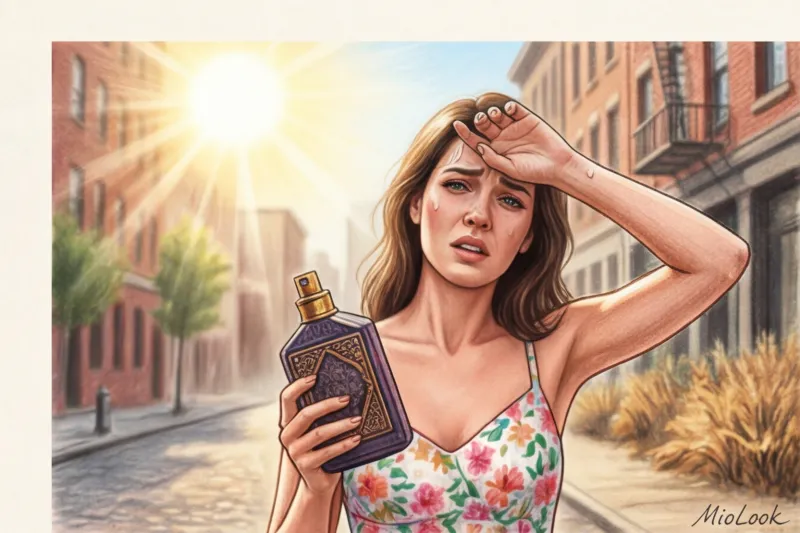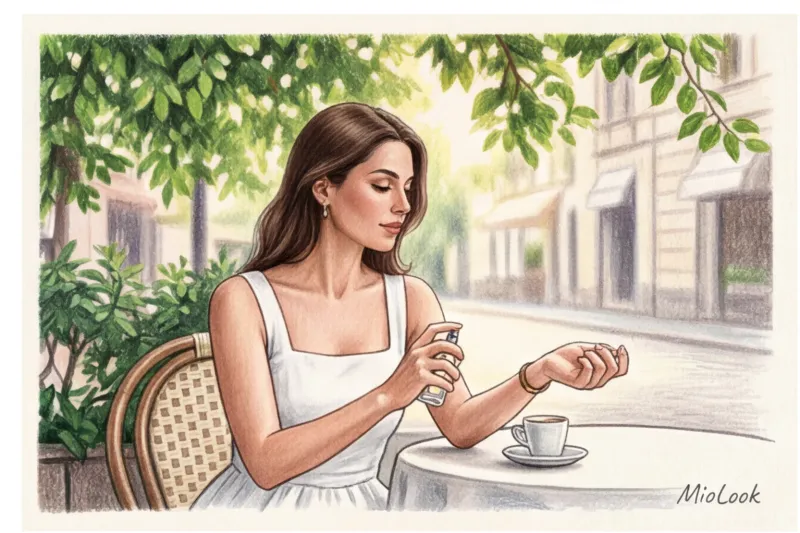
Do you know what 90% of women who buy perfume at the beginning of June have in common? They're looking for "something light and lemony," and a week later, they're disappointed to find the scent disappearing on their way to work. In 12 years of working as a fashion journalist and stylist, I've learned one thing: choosing a perfume for the hot season isn't just a matter of taste. It's pure physics and chemistry.

When we were discussing how to assemble basic perfume wardrobe , I already mentioned that seasonality dictates its own rules of the game. But it is precisely summer fragrances for women require the most thoughtful approach. Heat, intense sun, and high humidity can turn your favorite elegant sillage into a weapon of mass destruction or, conversely, destroy it in twenty minutes.
Let's forget the banal advice from glossy magazines of the 2000s about "fresh water" and figure out how fragrances actually work at temperatures above +25°C.
The Chemistry of Heat: Why Summer Fragrances for Women Require a Special Approach
A few years ago, during Milan Fashion Week in June, one of my clients decided to wear her favorite spring floral perfume with a prominent tuberose note. It was 35°C (95°F) outside, with typical Lombardy humidity. By mid-afternoon, this beautiful, delicate scent had warmed up on her skin and transformed into such a thick, suffocating cloud that we had to urgently find wet wipes to wash it off her wrists. It was a vivid lesson in olfactory physics.
What happens to perfume in summer?
- Accelerated evaporation: According to the laws of thermodynamics, as the temperature rises from 25°C to 35°C, the rate of evaporation of volatile substances increases three to four times. The top notes vanish instantly, and the fragrance immediately "falls" into the heavy base.
- Changing skin pH: Due to increased sweating, our skin's pH balance shifts. This is why your favorite winter perfume suddenly starts to taste unpleasantly sour or metallic in the summer.
- Diffusion in a humid environment: Water molecules in the air act as microscopic lenses for scent, amplifying its scent trail several times over. What sat close to the skin in winter will fill an entire subway car during a summer thunderstorm.
Your perfect look starts here
Join thousands of users who look flawless every day with MioLook. Our smart AI stylist will match your outfit to your fragrance wardrobe.
Get access — €0.99 onceThe Anatomy of Freshness: Debunking the Citrus Myth
If you ask a store assistant about summer fragrances for women, you'll immediately be offered bergamot, lemon, or grapefruit. This is the biggest and most expensive illusion of perfume marketing.
"Myth: Citrus scents are the most long-lasting and lingering for summer. Fact: Citrus oil molecules (limonene, linalool) have the lightest molecular weight. At temperatures above 25°C, they are physically unable to linger on the skin for more than 20-30 minutes."
True, long-lasting summer freshness lies in completely different ingredients. The modern alternative is molecular perfumery Synthetic molecules like Ambroxan or Iso E Super (known to many from the brand Escentric Molecules) have a heavy molecular weight. They don't evaporate in hot weather, but rather blend with the skin, creating a "clean body after a shower" effect.
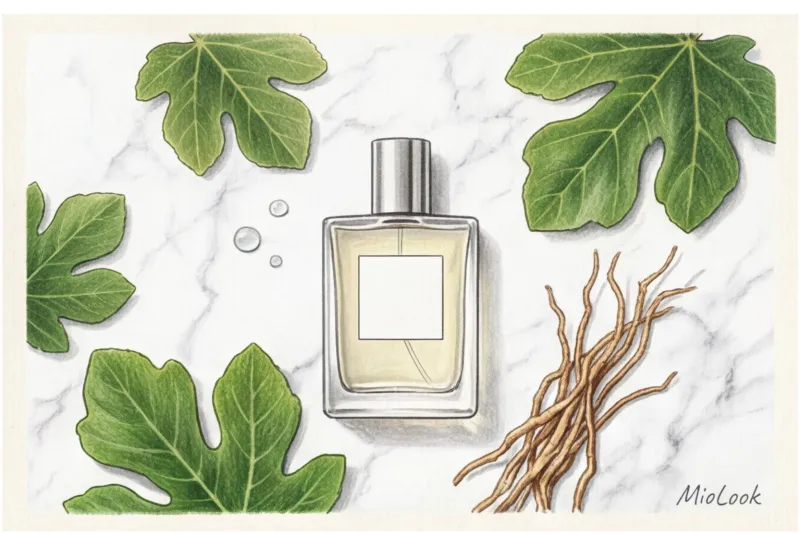
If you're not a fan of synthetics, look for green notes: fig leaf, galbanum, crushed tomato tops, or vetiver. These ingredients are considered heart and base notes; they're heavier than citrus, but the brain perceives them olfactorily as coolness and shade. A great example is the classic Diptyque Philosykos, which smells not of sweet fruit but of the cool shadow of a fig tree.
Summer Capsule: 4 Roles in Your Perfume Wardrobe
As a stylist, I advocate the principle of conscious minimalism. You don't need to buy half the perfume store. For a full summer season, three or four bottles are enough to cover all social roles.
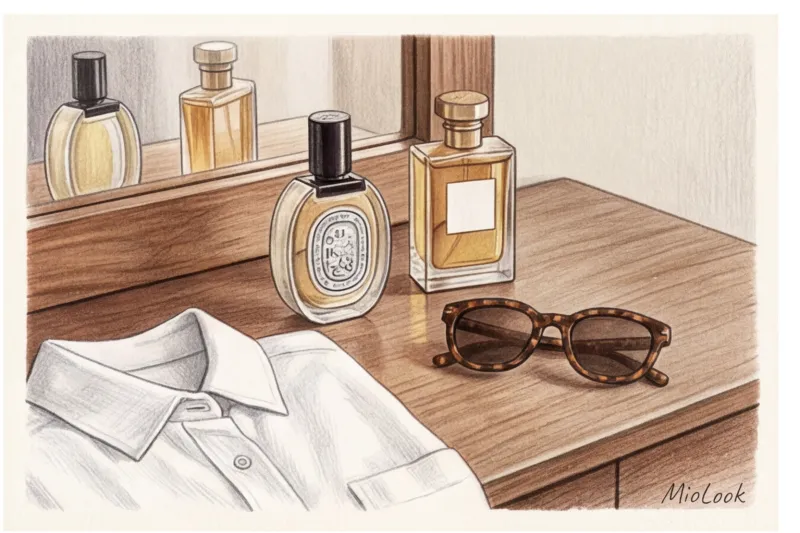
Morning and office: the scent of a "white shirt"
In an air-conditioned office, perfume etiquette is as strict as proper etiquette. business makeup: The main rule here is appropriateness. Look for compositions with aldehydes and white musk. They smell like freshly washed cotton, ironing, and frosty cleanliness (for example, Byredo Blanche or Maison Margiela Lazy Sunday Morning). They don't intrude on your colleagues' personal space, but create an aura of composure.
Sultry midday: saving aquatic and mineral waters
Forget the sweet, melon-flavored aquatics of the early 2000s (hello, L'Eau d'Issey). Modern aquatics are all about minerality. The scent of sea salt on tanned skin, ozone before a thunderstorm, wet stones on the beach. These fragrances are often complemented by notes of mint, basil, or sage, which provide a truly cooling effect on the receptor level.
Summer evening: dry wood and spicy trails
For summer evenings on the open veranda, I categorically avoid gourmand scents (vanilla, praline, caramel)—they become sticky in the warm air. Ideal evening choices: dry cedar, sandalwood, pink pepper, and cardamom. In the cool of a summer evening, spices lose their aggressiveness and sound very intimate and expensive.
Access to MioLook for €0.99 — one-time payment
Start creating your perfect looks with the help of artificial intelligence. Upload your items and receive ready-made capsule collections for every day.
Get access — €0.99 onceConcentration Matters: From Colonial to Hair Mist
If you look at the historical archives of the famous Osmothèque in Versailles, you'll discover that the first colognes (Eau de Cologne) were created in the 18th century not for beauty, but for hygiene and cooling the body in hot weather. They were functional products with a concentration of aromatic substances of only 2-5%.
In summer, I strongly recommend going down a notch in your usual concentration. If you wear Extrait de Parfum (perfume) in winter, switch to Eau de Parfum. If you prefer Eau de Parfum, try Eau de Toilette.
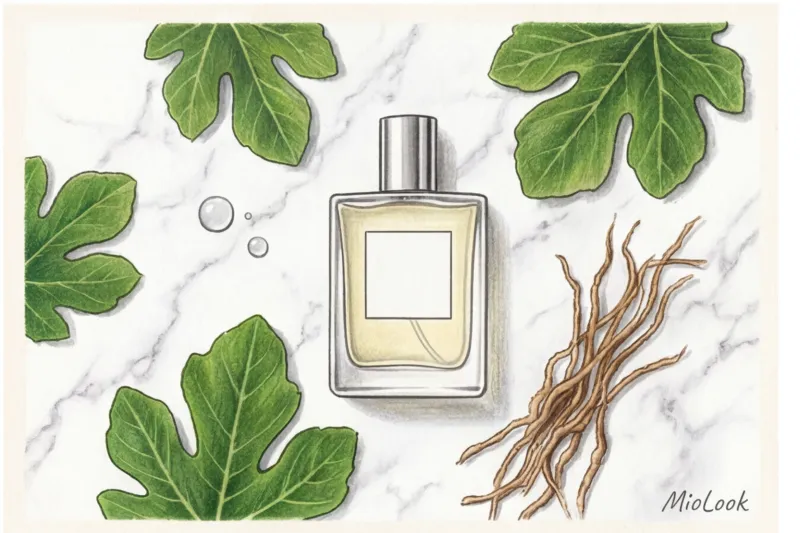
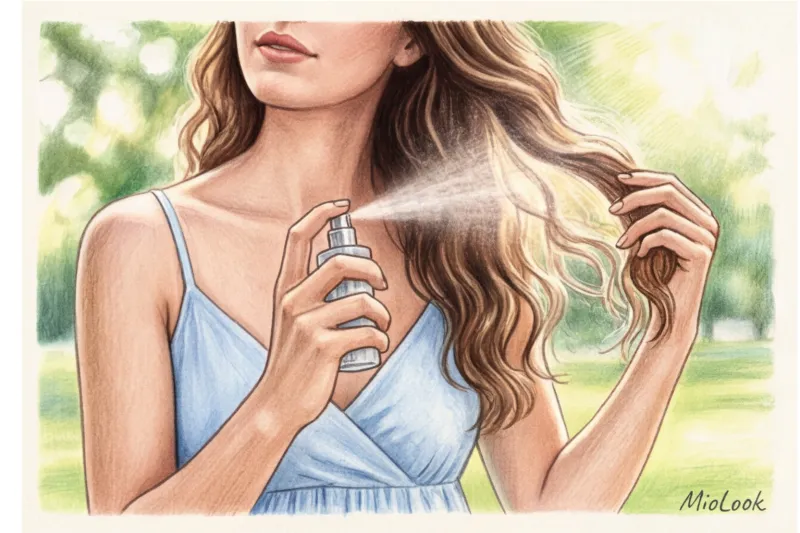
But my personal favorite for extreme heat is hair mists They contain minimal (or no) alcohol, are enriched with nourishing oils, and don't dry out hair. Hair is porous, so it retains fragrance beautifully and releases it in small amounts every time you turn your head. A small caveat: if you have completely blonde and severely damaged hair, even alcohol-free mists should be applied with caution, after moisturizing the ends with a leave-in cream.
Safety Rules: Perfume, Active Sun Exposure, and Pigmentation
This is something bloggers rarely talk about, but dermatologists constantly warn about. Many essential oils are highly phototoxic. According to the International Fragrance Association (IFRA), the absolute record holder for phototoxicity is partially refined bergamot oil.
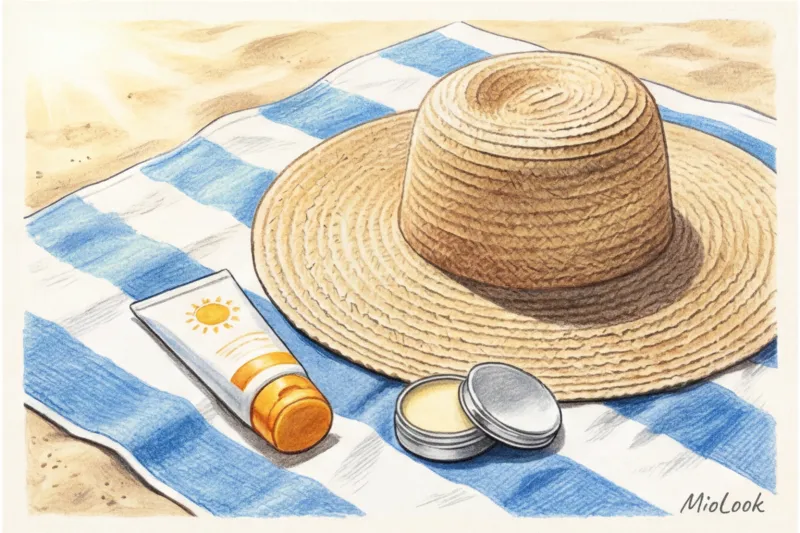
If you apply such perfume to your neck or décolleté and go out into the sun, the risk of developing permanent brown pigmentation spots (called "Berloch's dermatitis") is close to 100%. Removing them afterwards is extremely difficult.
Where to apply perfume in summer:
- Avoid applying to exposed areas of skin (neck, décolleté, shoulders).
- Apply the fragrance to the back of your neck (under your hairline) – it’s protected from direct sunlight and is less likely to evaporate from sweat.
- Use the inside hem of your skirt or dress - the scent will rise as you walk.
- Switch to wax-based solid perfumes—they're alcohol-free and completely sun-safe.
Olfactory Styling: How to Pair Summer Fragrances for Women with Fabrics
At the intersection of fashion and perfumery, there's the concept of olfactory styling. Over the years of testing looks, I've noticed that different fabrics act as completely different diffusers for perfume.
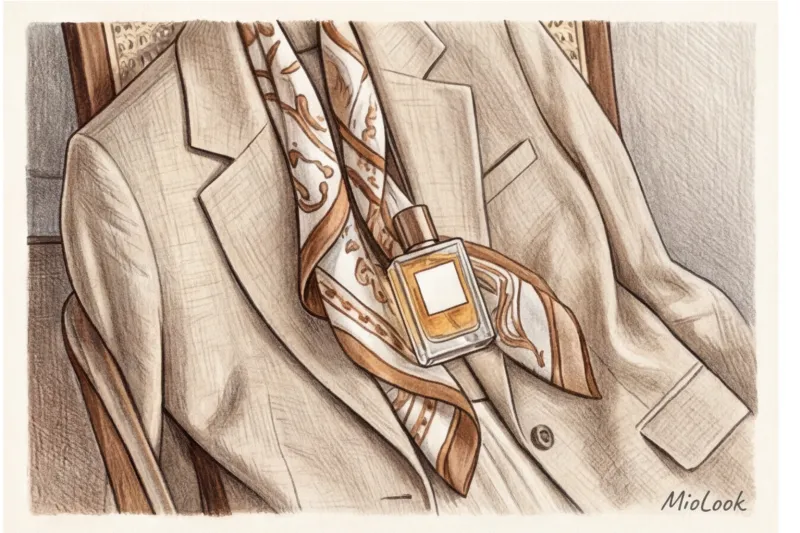
Flax. The loose, breathable structure of linen perfectly absorbs and retains dry woody, herbal, and vetiver notes. If you wear a linen suit and spray it with a fragrance containing notes of hay or dry wood, the fabric will release the scent very softly throughout the day.
Silk. The smooth, cool texture of silk phenomenally highlights the mineral, aldehyde, and subtle white floral compositions. Silk seems to enhance the fragrance's clarity and transparency.
An important warning from my practice: Never spray perfume directly onto light-colored silk or fine cotton. Fragrances high in natural resins (especially vanilla, which darkens over time in the bottle) are guaranteed to leave yellow, oily stains. Spray the fragrance as a cloud and step into it, or apply it to the inside seams of clothing.
Ready to get started?
Organize your summer wardrobe with the MioLook app. Try the free plan—no commitments.
Get access — €0.99 onceChecklist: Reviewing and Preparing Your Summer Perfume Wardrobe
Preparing for summer isn't just about buying new things, it's also about properly storing the old ones. Dense winter fragrances (oud, rich gourmands, heavy resins) should be put away. Store them in a dark closet, away from sunlight and temperature fluctuations—they'll be a joy to behold again in the fall.
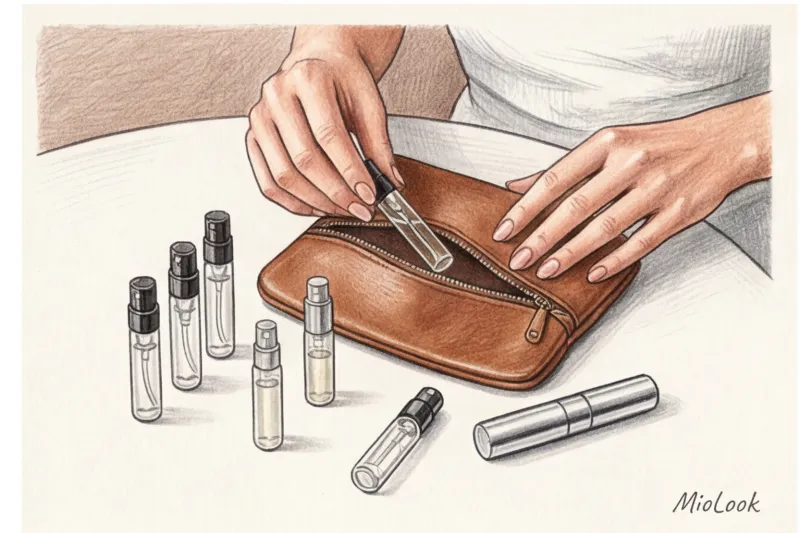
If you're looking for a new summer scent, remember this golden rule: never make a purchasing decision inside a store Boutiques have powerful air conditioners, making the air dry and cool. Apply the fragrance to your skin, go outside on a hot day, and take a walk for at least 30 minutes. This is the only way to understand how the composition will perform in real summer conditions. By the way, to help you remember which bottles you already have in your rotation, I recommend adding them to your database. MioLook — this way you can visually select a fragrance to match a specific look right on your phone.
A summer fragrance wardrobe doesn't require a huge investment. The secret lies in understanding the physics of fragrance and judiciously assigning roles. Save volatile citrus for shower gels, invest in a high-quality molecular base for the office, add a touch of minerality for hot days and dry woods for long August evenings. This approach transforms a simple pleasant scent into your own personal, invisible, yet impeccable style.