Did you know that people remember 35% of smells and only 5% of what they see? Imagine: you've spent an hour putting together a flawless look, choosing the perfect trousers, and matching loafers to your bag. But when you walk into the room, your perfume tells a completely different story. In my 14 years as a stylist, I've seen hundreds of situations where an expensive, carefully crafted outfit was completely ruined by the wrong scent.
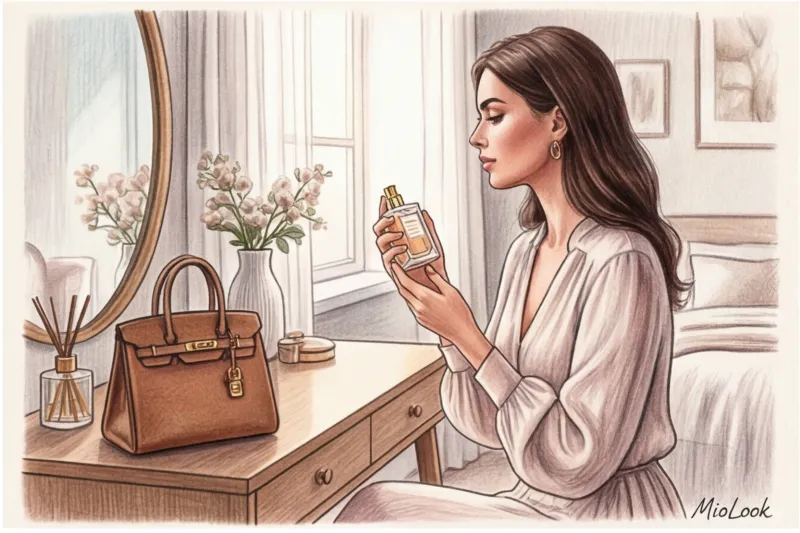
My name is Olena Kovalenko, and today we'll talk about something that even the most discerning fashionistas often forget. I'll tell you, How to choose a perfume to suit your style clothes so that they work for your image, not against it.
Invisible Clothing: Why Perfume Is as Essential a Wardrobe Item as a Bag or Shoes
In 2014, researchers at Rockefeller University proved something incredible: our olfactory memory is directly linked to our visual perception. In other words, the way we smell literally changes how people see our clothes. Scent shapes first impressions in a split second—even before someone has time to assess the quality of your fabric or the brand of your bag.
That's why the concept of "one perfume for all occasions" is hopelessly outdated. A modern woman needs a fragrance wardrobe. You wouldn't wear a silk evening dress to the office or a formal jacket to the beach, would you? We've covered this in more detail in our The complete guide to creating a basic fragrance collection.
Access to MioLook for €0.99 — one-time payment
A smart AI stylist will select the perfect look based on your style and mood.
Get access — €0.99 onceThe main rule of a stylist: the principle of similarity versus the principle of contrast
The most common mistake I see is blindly following the "butter-butter" principle (similarity). Many people think: if I'm wearing a romantic pink floral dress, I need a sweet floral perfume. No. This is a surefire way to create a caricatured, childish image.
The best styling is always built on contrast. It's a stylist's secret weapon.
"A scent shouldn't duplicate your clothes, but rather balance them. Hard lines require soft notes, and a relaxed silhouette requires an inner core."
I had a very revealing case in my practice. A client, a senior executive, came to me. Her wardrobe consisted of formal pantsuits (mostly dark blue and gray), and her favorite perfume was a cool, prickly chypre with a bright vetiver note. The problem was that her colleagues and subordinates perceived her as too rigid and unapproachable.
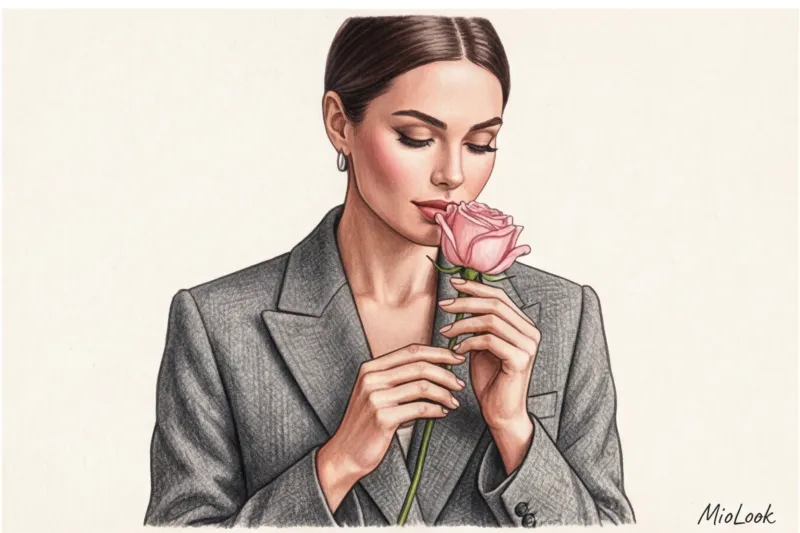
We didn't change her business attire—the company dress code didn't allow it. But we did change her perfume. I suggested a soft, powdery scent with notes of violet and suede. This olfactory contrast worked brilliantly: the formal suit maintained her authority, and the soft scent added a human touch and endeared her to the team.
How to choose a perfume to match your clothing style: an analysis of the main trends
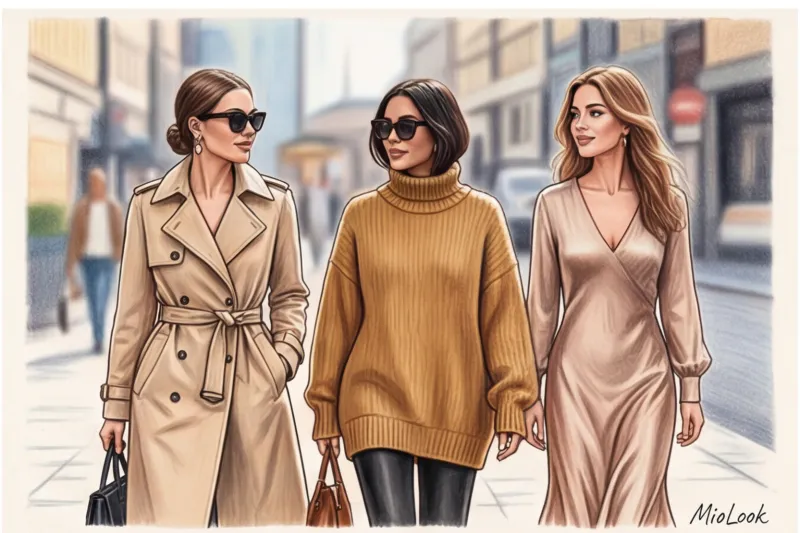
To avoid getting lost in the thousands of bottles, I always recommend that clients use Michael Edwards's famous classification (Fragrance Wheel). Let's look at how the main fragrance families fit together with the basic styles.
Business Dress Code vs. Smart Casual: Status and Distance
If your uniform consists of structured jackets, heavy cotton shirts, pleated trousers, and leather loafers, your goal is to project a sense of poise and professionalism. You can read more about the nuances of such attire in the article about business dress code for women.
- Ideal notes: Citrus (bergamot, grapefruit), green tea, dry woody notes (cedar, sandalwood), and aldehydes. They sound clean, fresh, and create the right intellectual distance.
- What to avoid: Heavy gourmands (vanilla, chocolate, praline) and suffocating white flowers like tuberose or jasmine. In a closed office space, they violate your colleagues' personal boundaries and diminish your expertise.
Your perfect look starts here
Join thousands of users who look flawless every day with MioLook.
Get access — €0.99 onceRelaxed casual and minimalist: comfort and cleanliness
Imagine a basic capsule: straight-leg jeans in heavy denim, a white T-shirt, and an oversized cashmere sweater in a neutral shade. Nothing to prove here.
- Ideal notes: molecular perfumery (Iso E Super, ambroxan), white musk, cotton accords, fig, light powder.
- The task of perfume: Create a "my skin, only better" effect. The scent should blend with you, emphasizing the clean lines and quality of the materials.
By the way, it is for such everyday looks that I recommend using the "smart wardrobe" feature in MioLook The app will help you create a minimalist base that will perfectly complement minimalist fragrances.
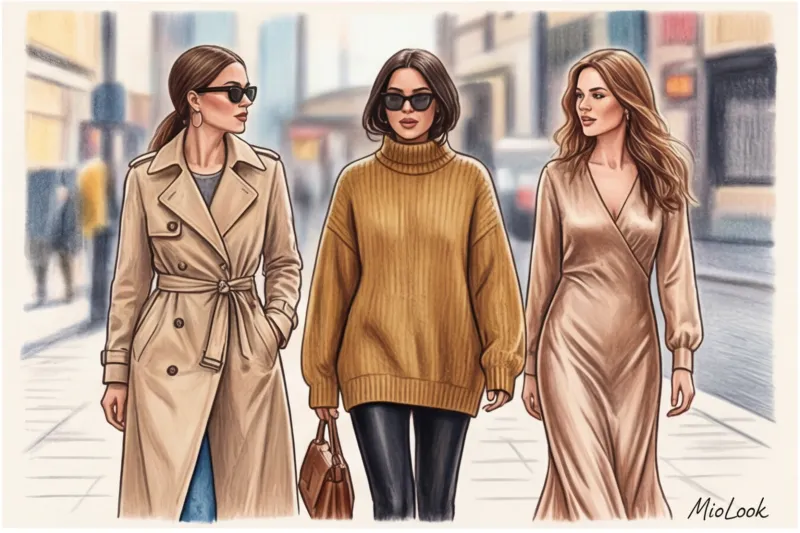
Romantic, boho, and evening looks: sensuality and sillage
Flowing fabrics, flowing silk, velvet, complex draperies and deep necklines require perfume support.
- Ideal notes: classic chypres, oriental spices (amber, patchouli), rose with pink pepper, leather and tobacco accords.
- Balance rule: If you're wearing a complex dress with a bold print (like a boho style), choose a simple, single-scent fragrance. However, a simple silk slip dress in a lingerie style calls for a complex, multi-layered, and "expensive" fragrance.
Fabrics and Fragrances: The Physics and Chemistry of a Stylish Look
Few people realize that the texture of a fabric can dramatically alter the scent of a perfume. Over the years of testing, I've developed a clear pattern of how scent chemistry interacts with fibers.
Natural wool (especially thick, textured wool) is the ideal base material. It can retain the heavy notes of a perfume for up to 3-4 weeks! On a wool coat or cashmere sweater, fragrances are warmer, more voluminous, and more cozy. On smooth, natural silk, however, the fragrance unfolds loudly, sharply, and quickly.
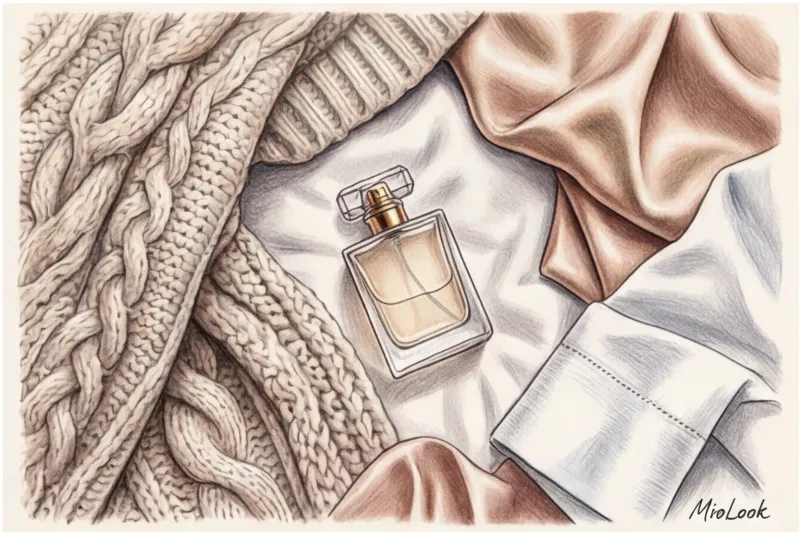
But there is one important “BUT” that I always warn my clients about. Synthetics are the enemy of good perfume. Polyester, acrylic, and nylon are non-porous, leaving scent molecules with nothing to cling to. As a result, synthetics distort the development of top notes by approximately 40%, making even expensive niche perfumes appear flat and cheap.
Practical advice: Never spray perfume on the front of a silk blouse—it will leave oil stains. Apply the fragrance to the lining of a jacket, the inseam of a coat, or the back of the neck under the hair.
Ready to get started?
Try the MioLook plan for free – no commitment, just perfect style.
Get access — €0.99 onceCommon Mistakes: How Perfume Can "Cheaper" an Expensive Look
Even if you're wearing a Massimo Dutti suit or a premium COS cashmere jumper, using the wrong fragrance can ruin everything. Here are the three biggest mistakes I constantly see.
- Mismatch of season and texture. It doesn't work when you're wearing a light linen sundress in 30°C weather and generously dousing yourself with a heavy, oriental oud fragrance. Linen is airy and light, while oud is dense and wintery.
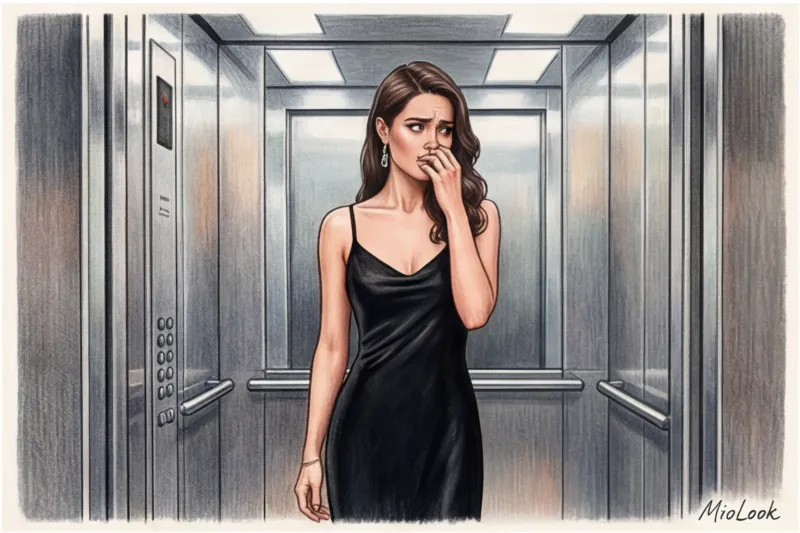
- Overdose (overdose). A train that enters the room a minute before you and remains there for an hour after you leave is bad form. Elegance whispers, not shouts.
- Conflict of smells. My personal pet peeve as a stylist. I was once sorting through a client's wardrobe: stunning basics, expensive niche perfumes. But all the clothes smelled of the harsh chemical fabric softener "Alpine Meadows." This scent clashed with her Baccarat Rouge perfume, creating an unbearable cacophony. Wash your basics with neutral, fragrance-free detergents!
A practical checklist: how to test the clothing + fragrance combination
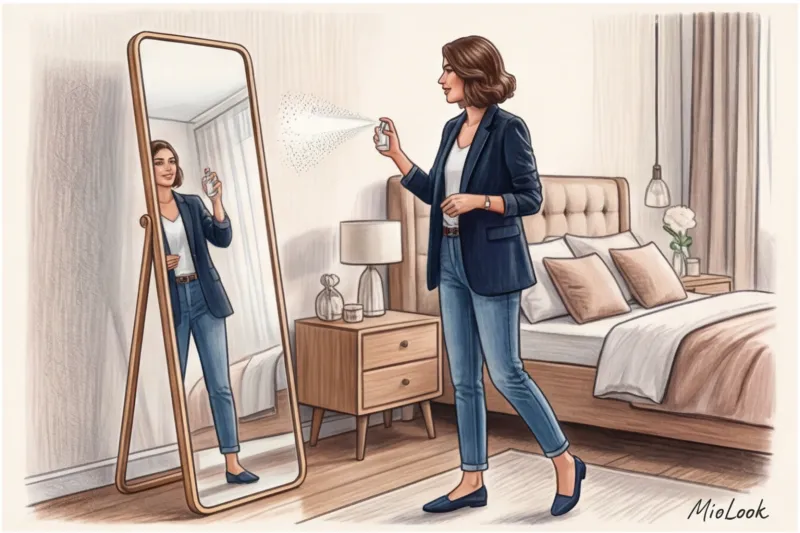
So, you're standing in front of the mirror, your look complete. How can you ensure your perfume is the perfect finishing touch? Follow these 4 steps:
- Step 1: Define the task. What do you want to convey today? State your status at a meeting? Opt for woody notes and a tailored cut. Want to make a lasting impression on a date? Soft knits and a touch of powder are your choice.
- Step 2: Choose a soloist. There can't be two main characters in a look. If you have a complex, avant-garde outfit, perfume should be a quiet background. If your look consists of a basic white shirt and jeans, let the fragrance be the main accent.
- Step 3: Evaluate the texture and application method. For dense fabrics (tweed, wool), apply the perfume to the inner seams. For flowing looks, use the "cloud" method: spray the fragrance into the air and step into it.
- Step 4: Do the "elevator test." Ask yourself: If I were to step into a cramped elevator with three strangers right now, would my image suffocate them? If there's any doubt, you've applied too much.
Perfume is the final point of your style statement. It shouldn't overpower you; it should leave a pleasant aftertaste when you leave the room. Choose your fragrance as thoughtfully as you would the perfect coat, and your style will always be impeccable.