The anatomy of a fragrance: why do some perfumes last a day, while others last an hour?
One of my clients almost threw the bottle away. Baccarat Rouge 540 worth over $300. "Emily, it's a fake, it falls off in ten minutes!" she fumed in a voicemail. Spoiler alert: there was nothing wrong with the perfume. Her brain simply "turned off" the scent to save her nervous system from overload.
If you too are tired of wasting money on bottles that disappear by lunchtime and are trying to figure out, How to choose a long-lasting perfume Forget the clichéd advice from glossy magazines in the 2000s about "applying it with Vaseline." Longevity isn't magic; it's pure molecular physics, your skin's chemistry, and a little bit of neurobiology.
Before we delve into the molecular weight of ingredients, a reminder: a conscious approach to fragrance starts with the base. We've already covered this in more detail in our the complete guide to your perfume wardrobe , and today we will focus exclusively on the technical characteristics - longevity and sillage.
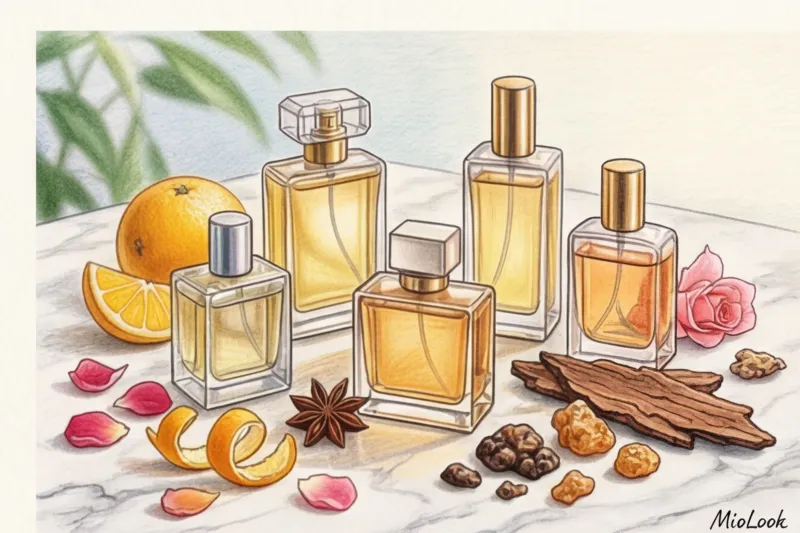
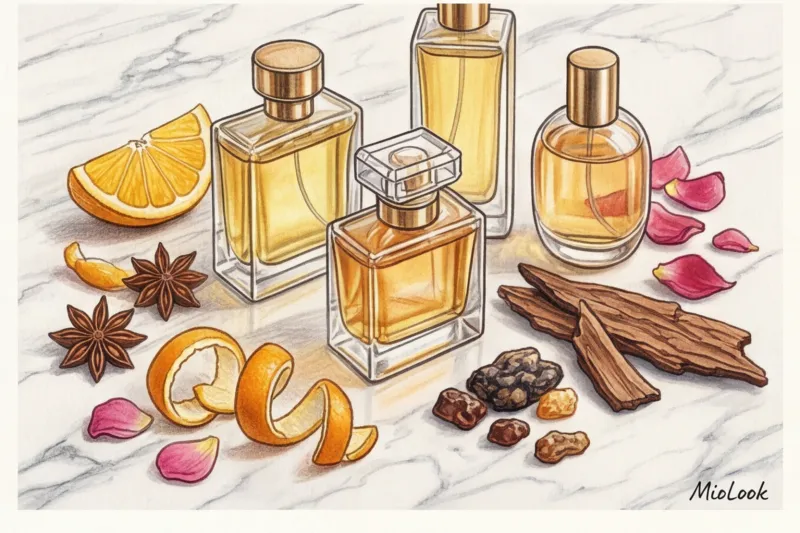
The longevity of a fragrance on your skin is determined in the lab. According to technical data from the International Fragrance Association (IFRA), the rate of evaporation of components is directly related to their molecular weight. Citrus and aquatic notes are sprinters. They have the lightest molecules, evaporating in 15–30 minutes. You simply won't find a fresh, natural lemon cologne that will last until evening without a powerful base of synthetic fixatives.
But resins (myrrh, frankincense), oud wood, patchouli, and musk are marathon runners. Their molecules are heavy and unwieldy. They warm up slowly on the skin and can linger for up to 24 hours. So, when you're looking for a "long-lasting fresh scent," you're looking for a perfume oxymoron.
Concentration: Breaking the Main Stereotype
In my 12 years as a stylist, I've heard the phrase hundreds of times: "I'll buy perfume, not EDT, so it smells like heaven." This is the biggest misconception in perfumery.
Yes, in concentration Extrait de Parfum contains from 20% to 40% aromatic substances, and in Eau de Toilette — only 5–15%. But the paradox is that perfume sits very close to the skin. It contains little alcohol, and it is alcohol that "pushes" the fragrance molecules into the air as they evaporate. Eau de toilette contains more alcohol, so it evaporates faster, creating a huge, ethereal trail, but lasts only 3–4 hours on the skin. If you want density and longevity, choose Parfum. If you want to fill a room, choose EDT.
Your perfect look starts here
Join thousands of users who look flawless every day with MioLook.
Get access — €0.99 onceSillage and Longevity: What's the Real Difference?
In the perfume world, there are two terms that marketers often conflate into one, although they are completely different physical phenomena.
- Longevity — This is the time a fragrance physically lingers on your skin. You can press your nose to your wrist after 10 hours and smell the base.
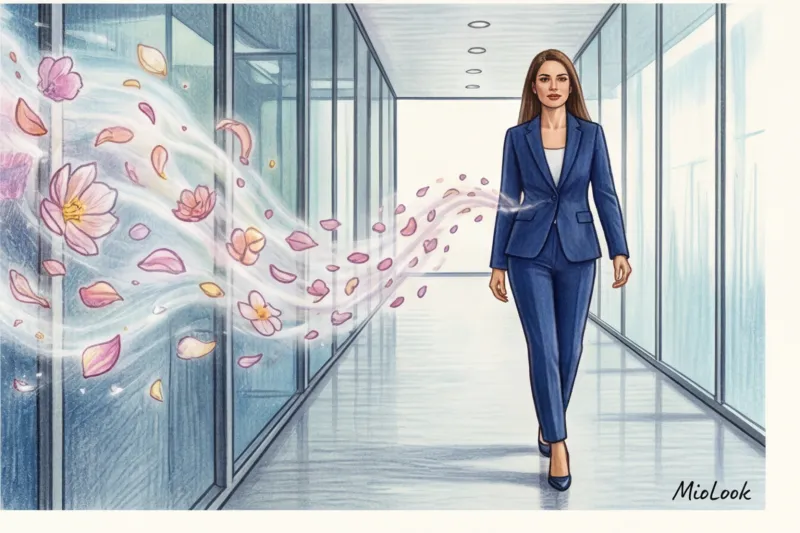
- Sillage - is the ability of a scent to leave an invisible trace in the air when you move.

A scent can be incredibly long-lasting, but absolutely lack sillage (intimacy). And vice versa—a diffuse scent that fills a stadium but fades within two hours. In my experience, it's precisely the lack of understanding of this difference that ruins a business image. For the office and important meetings, you need something long-lasting, but strictly not a train aroma. As well as business makeup Your perfume shouldn't violate your colleagues' privacy. Save diffuse, "tailed" scents for outdoors and parties.
How to Choose a Long-Lasting Perfume: A Pre-Purchase Checklist
Never judge a fragrance's longevity by a paper blotter. Paper is cold and non-porous. A scent might last a week on it, but on your hot skin, it'll burn out in an hour. Here's my personal testing algorithm to save you from wasted effort:
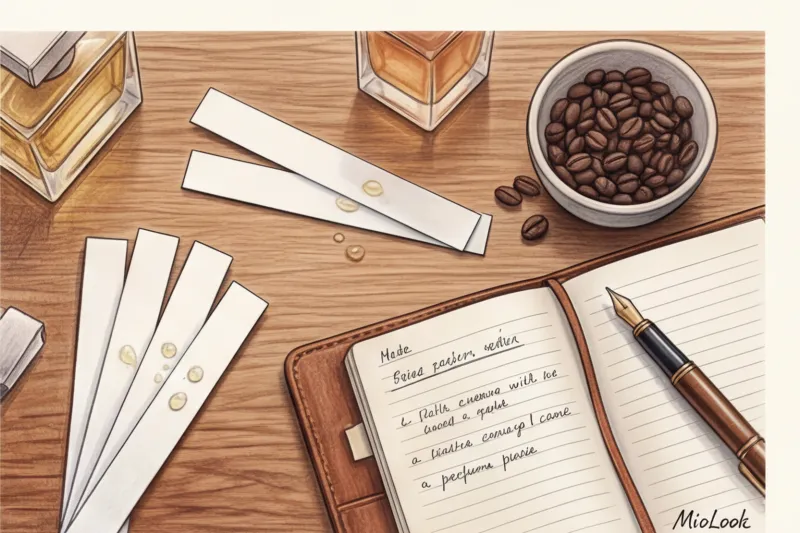
- The 8-hour rule. Spray the perfume on your wrist and... leave the store. For the first 15 minutes, you'll smell only the top notes, which will fade anyway. The true "face" of the fragrance and its longevity will only reveal themselves in the evening.
- Learn the basics, not the highs. If the base of the pyramid contains amber, oak moss, vetiver or synthetic supermolecules (for example, Iso E Super or Ambroxan ), the chances of the fragrance lasting a long time increase many times over.
- Monitor the temperature outside. In hot weather, alcohol evaporates faster, and even the most durable compositions can “fade” twice as fast as in winter.
Access to MioLook for €0.99 — one-time payment
A smart AI stylist will select the perfect look based on your wardrobe and preferences.
Get access — €0.99 onceSkin Chemistry: How Your Body Eats Fragrance
You bought that same perfume that lasts a day on your friend, but disappears on you in a couple of hours. It's not a faulty bottle, but a problem with your skin's lipid barrier.
Last year, I conducted a personal experiment using a digital skin moisture meter. I applied a light cologne. Jo Malone Wood Sage & Sea Salt onto dry skin on my forearm. The scent completely disappeared within an hour and a half. The next day, I pre-moisturized the same area with a base cream containing fragrance-free ceramides. The result? The same cologne lingered for over four hours.
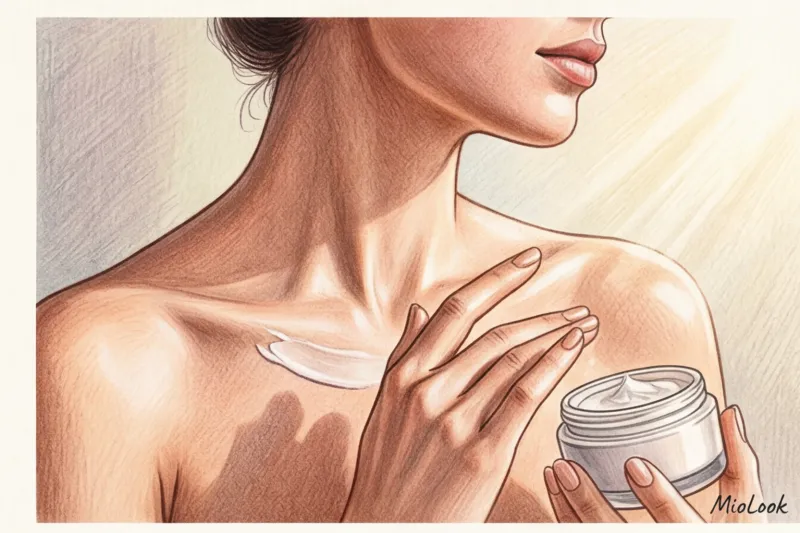
Dry skin literally "drinks up" perfume oils, trying to compensate for the lack of its own lipids. Furthermore, body temperature influences the release of fragrances. On "hot" skin (close blood vessels, a tendency to blush), fragrances release more intensely and quickly, but also last shorter. On "cool" skin, fragrances may smell monotonous, but last one and a half times longer. Don't forget about pH, which changes depending on hormone levels, diet, and even stress levels—all of these factors affect how molecules adhere to the epidermis.
5 Smart Hacks from a Stylist: How to Make Any Fragrance Last Longer
If you want to get the most out of your favorite bottle, use these pro tips:
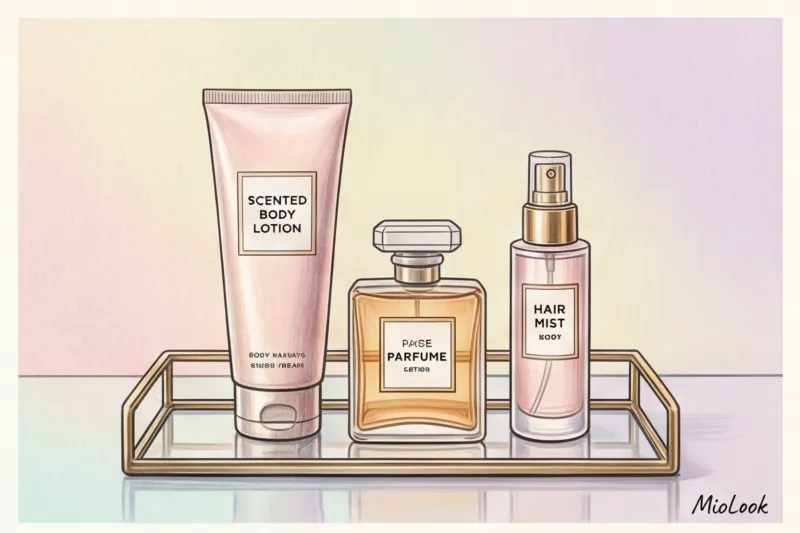
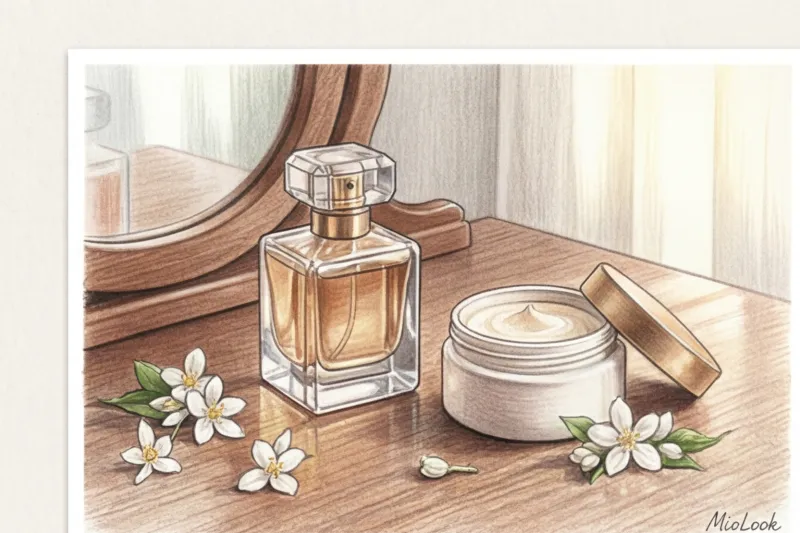
- Layering. Use a shower gel and body lotion from the same line as your perfume. The lotion's oil-based base "locks" the fragrance onto the skin, increasing its longevity by 30-40%.
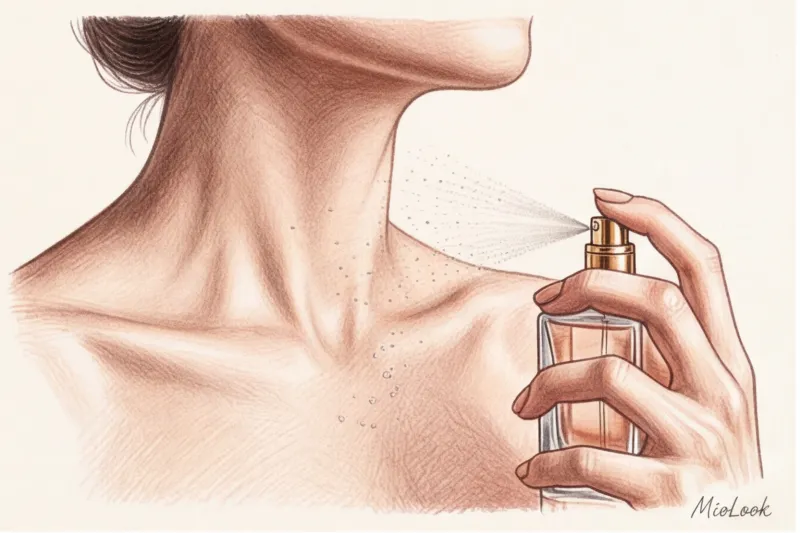
- Correct points and taboos on friction. Apply perfume to pulse points (wrists, jugular notch, back of neck). And most importantly - Never rub your wrists against each other! This way, you don't "drive" the scent into your skin, but rather create micro-heating from friction, which breaks down the fragile molecules of the top notes.
- Hair trick. Hair retains scents better than skin. However, don't spray regular perfume on your hair—the alcohol will dry out the cuticle. Use hair mists or spray perfume on a massage brush before combing your hair.
- Application to clothing (with reservations). Natural fabrics (wool, thick cotton) can retain their scent for weeks. But there is a hard limitation here: Never spray perfume on light-colored silk or fine viscose! Perfume oils will leave yellow stains that no dry cleaner can remove.
- Molecular primers. Use scent enhancers (eg. Escentric Molecules 01 ) as a base layer. The Iso E Super molecule in their composition acts like a magnet, holding any other perfume on top.
Olfactory Blindness: Maybe You're Still Wearing Perfume?
Let's return to the story from the beginning of this article. Why did my client lose her sense of her perfume? The answer lies in the phenomenon of neuroadaptation. According to research from the Monell Chemical Senses Center, our brain scans odors to detect dangers (smoke, spoiled food). If the scent is consistent and safe, the brain simply "turns off" the receptors to avoid wasting energy processing it.
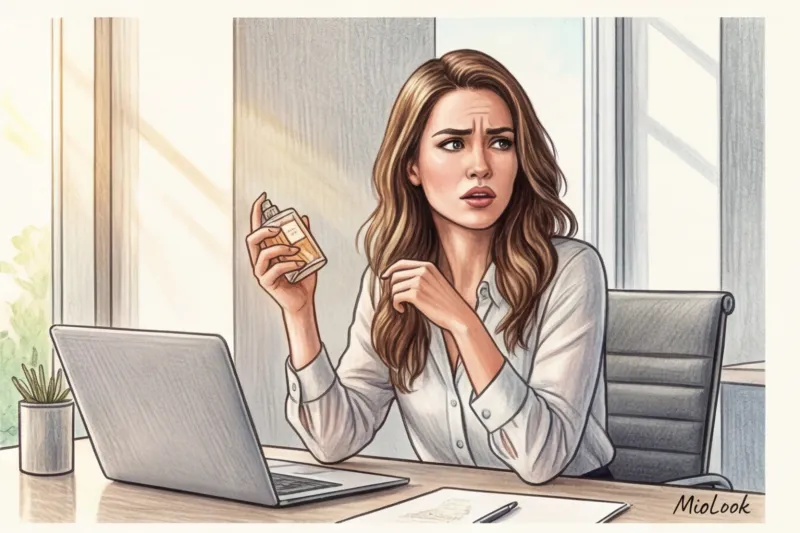
If you wear the same scent every day, you'll stop smelling it after a couple of weeks. The worst thing you can do in this situation is increase the dosage from two sprays to five. You'll suffocate the entire office, even though you still won't notice a thing.
How can you tell if your perfume has worn off? Ask someone who just entered the room. And if you want to reset your nose in a store, avoid sniffing coffee beans—they'll only overload your receptors further. Instead, sniff your own clean skin on the crook of your elbow (where there's no perfume). This will reset your sense of smell to its default settings.
Integration into your perfume wardrobe: each scent has its own task
In the appendix MioLook We often talk about a capsule approach not only to clothing but also to fragrances. A conscious fragrance wardrobe doesn't require dozens of bottles—three to five compositions that cover different needs are enough.
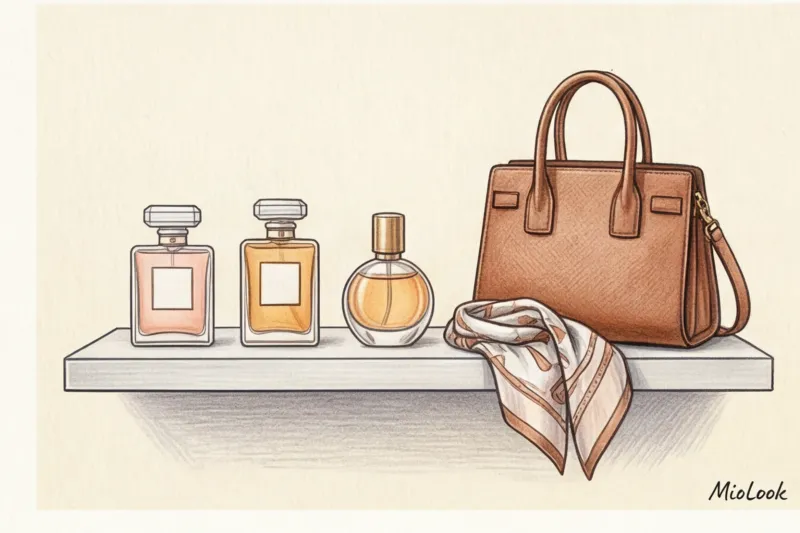
Don't expect a light morning cologne with green tea notes to last 24 hours—its purpose is to invigorate you after a shower and fade quietly by the time you arrive at the office. For work, choose long-lasting, yet close-to-the-skin woody-musky compositions. Save powerful, trailing extracts with oud and rich amber for evenings outdoors.
Longevity isn't an indicator of a perfume's quality or "eliteness." It's simply a physical characteristic of its ingredients. Understanding how molecules work will save you from disappointment and help you choose fragrances that perfectly match your expectations and lifestyle.