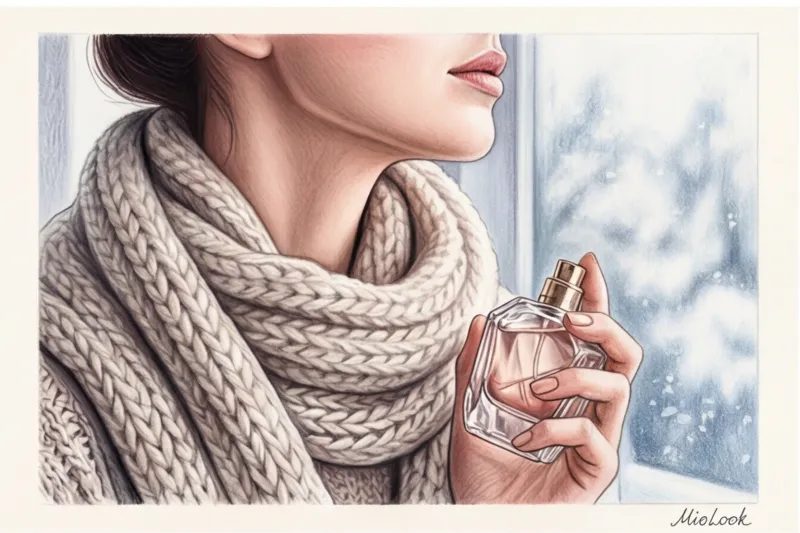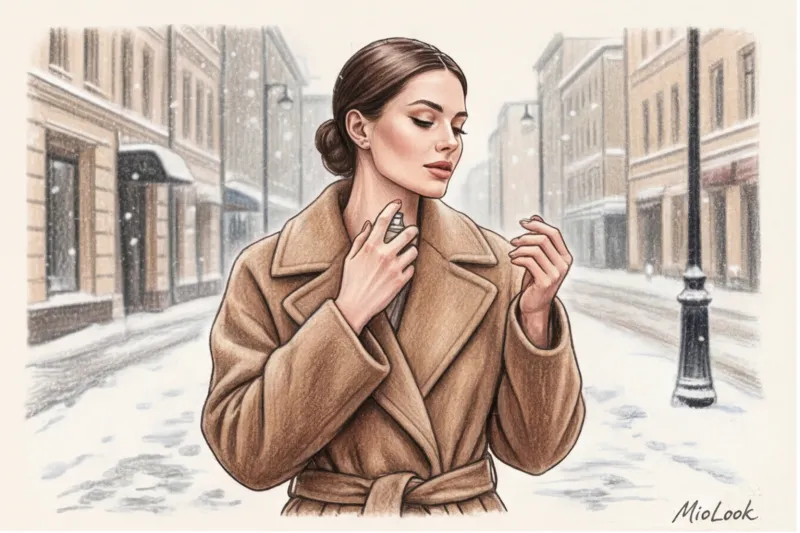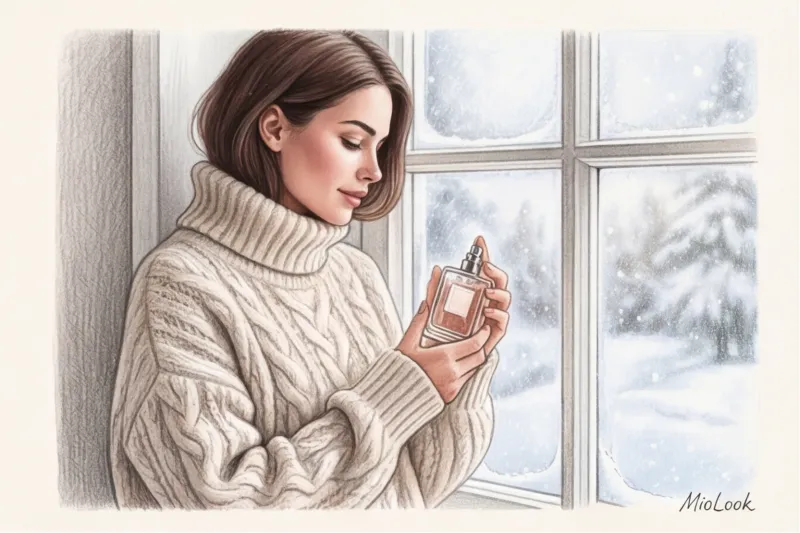
Have you ever noticed how the same bottle of perfume behaves completely differently in August than in December? In the summer, it sparkled and garnered compliments, but with the onset of the first frost, it suddenly began to emit harsh, almost metallic notes, or, conversely, disappeared without a trace from the skin within half an hour.
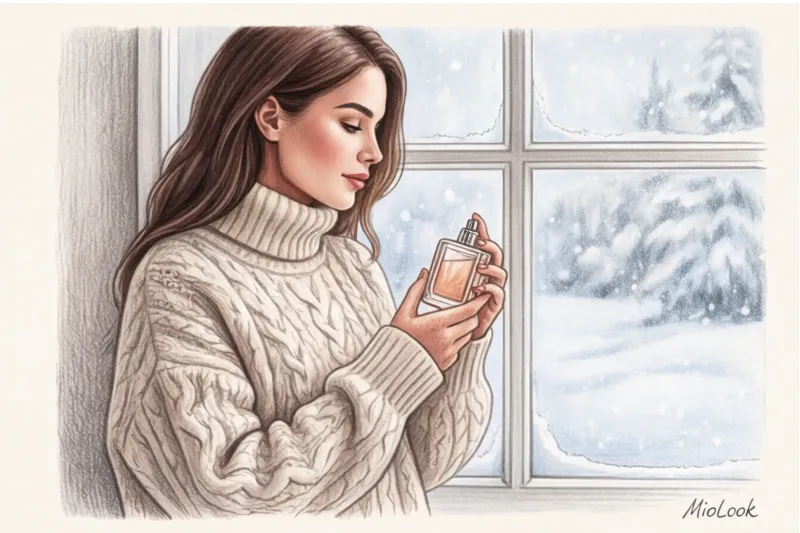
Over 14 years of working as a personal stylist, I have realized one important thing: a well-chosen winter perfume for women It's more than just a "delicious scent." It's a full-fledged, albeit invisible, layer of clothing. It must complement the dense textures of your sweaters, withstand temperature fluctuations, and fit your lifestyle.
By the way, we discussed the fundamental rules for selecting fragrances for different tasks in detail in our guide. Perfume Wardrobe: How to Build a Basic Collection And today we will talk exclusively about the cold.
Why Winter Perfume for Women Smells Different: The Physics of Cold
Let's start with physics. The development of any fragrance is a process of evaporation of alcohol and essential oils from the warm surface of our skin. And the ambient temperature dictates its own strict rules here.
According to olfactory studies, the evaporation rate of perfume molecules decreases by up to 30% at subzero temperatures. What does this mean in practice? The top, most volatile notes (citrus, light berries, aquatic notes), which evaporate in 15 minutes in summer, can linger on your skin for several hours in winter. This is why summer "fresheners" brought back from a seaside vacation often smell flat, chemically harsh, and reminiscent of air freshener in the city in January.
The second problem with winter is the extreme temperature contrast. It's -10°C outside, but in the office it's 25°C and the radiators are blazing. This shocks your perfume, causing the base to unfold in an unpredictably muddy or overly aggressive way.
Access to MioLook for €0.99 — one-time payment
A smart AI stylist will select the perfect look based on the season, textures, and your personal style.
Get access — €0.99 onceTextures and Scents: How to Pair Perfume with Your Winter Wardrobe
In my experience, I've seen countless cases where a luxurious, expensive cashmere sweater lost all its luster due to a discordant, harsh sports perfume. Conversely, a basic jumper from a mass-market store like Zara or Uniqlo can look like a million bucks if paired with the right, enveloping scent.
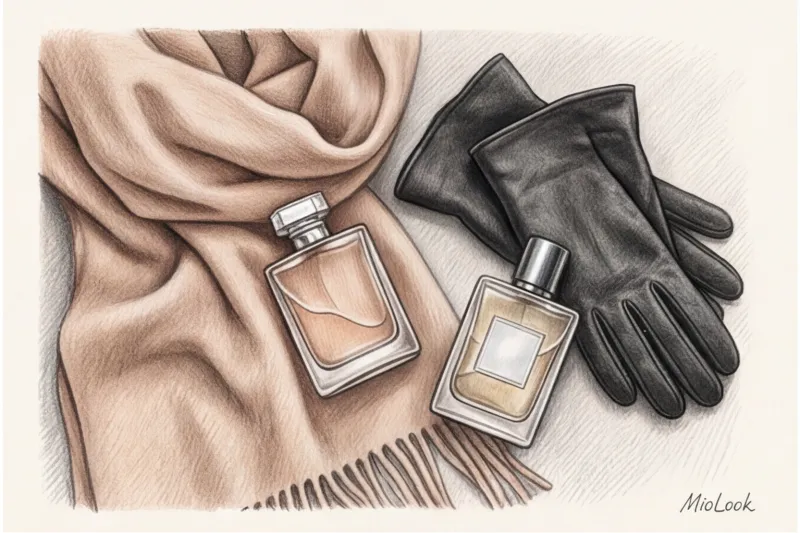
Perfume operates according to the same stylistic rules as accessories: we use either the rule of similarity or the rule of contrast.
Cashmere, Angora and Thick Wool: Gourmand and Softwood
Fluffy, tactile textures require equally rounded, soft notes. Tonka bean, sandalwood, almond, and woody vanilla work perfectly here, creating a cocooning effect.
"Never spray perfumes with a high oil content directly onto light-colored cashmere or alpaca wool. Oil stains are almost impossible to remove from such delicate fabrics. Apply the fragrance directly to the skin or, as a last resort, to the inside hem."
Smooth leather and dense denim: spices and resins
Aggressive, rugged textures—a leather aviator jacket, a sheepskin coat, thick raw denim—call for a perfume with character. Oud, tobacco, black pepper, incense, and leather accords are appropriate here.
Keep one thing in mind: genuine leather acts like a sponge for base notes. Your favorite leather jacket can retain the scent of heavy oud for years, blending with new perfumes. Therefore, it's best to choose one signature scent for leather items and not change it too often.
The Biggest Myth: Do You Really Only Need Sweet Scents in Winter?
If you open any glossy magazine's winter perfume catalog, you'll be offered the scent of a bakery: praline, chocolate, caramel, baked apples. This is a gross oversimplification.
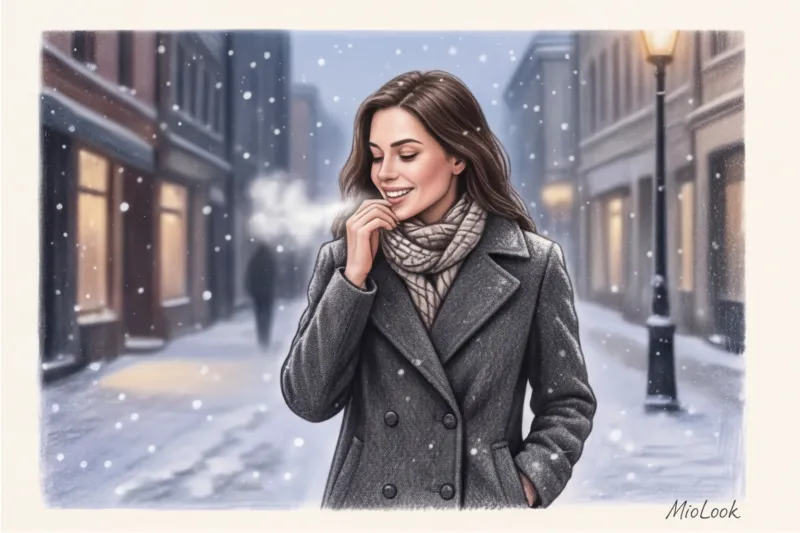
A counterintuitive fact that perfume maniacs know, but ordinary users rarely realize: in very cold weather (from -5°C and below), the most prestigious and expensive ones become cold aromas.
- Crystal aldehydes: The famous Chanel No. 5 or the modern Byredo Blanche lose their "soapy" quality in the cold and begin to literally ring, creating the effect of pure snow and starched collars. It's the pure aesthetic of the Snow Queen.
- Prickly white flowers: Tuberose and jasmine, which can be suffocating with their indole in summer, shrink in winter and produce a subtle, aristocratic trail.
- Classic chypres: Oakmoss exudes a stern, composed, and incredibly elegant tone in cold weather. It's the perfect choice for a formal coat with a sharp shoulder line.
Sweet gourmands are great for cozy weekends, but for the image of a successful, confident woman, frosty aldehydes and chypres work much more effectively.
Your perfect look starts here
Join thousands of users who look flawless every day with MioLook. Upload your wardrobe and get ready-made looks for every day.
Get access — €0.99 onceAutumn Blues vs. Winter Wonderland: Separating the Seasons in Your Perfume Wardrobe
Many people make the mistake of buying one "warm" bottle for the period from October to March. But the damp slush of November and the dry frost of January are two different olfactory universes.
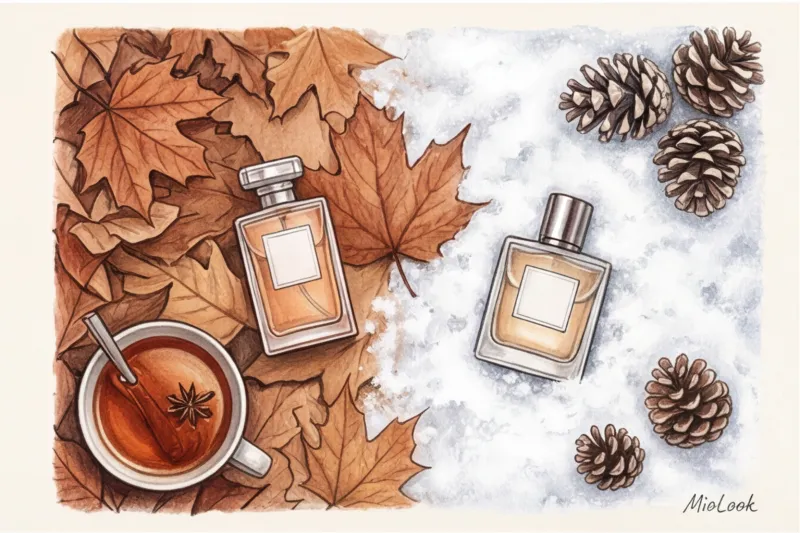
Patchouli, amber, and earthy notes blossom beautifully in the damp, crisp autumn air. The moisture helps them develop a rich, immersive scent, evoking the atmosphere of a walk through an autumn forest. However, the dry January frost will destroy these notes. For midwinter, it's best to reach for dense resins, powdery accords, and pronounced woody notes.
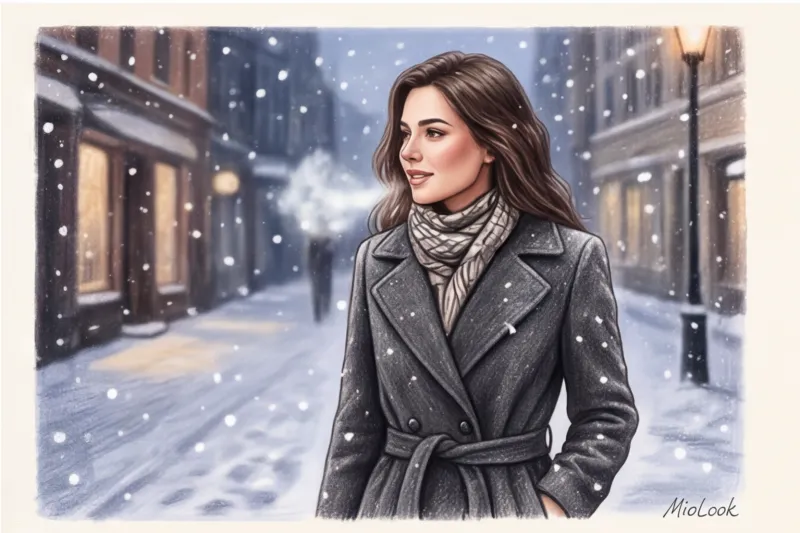
A separate pain is winter offices. One of my clients, a top manager at an IT company, once complained that her colleagues had started avoiding her office. It turned out she'd bought a luxurious, heavy oriental fragrance with oud and was spritzing it liberally before work. In the cold, it smelled divine. But when she entered the overheated office (with the radiators cranked up), the scent would literally suffocate those around her.
For indoor use in winter, always choose skin scents with notes of musk, iris, or light tea. Save heavy orientals for outdoor walks.
How to apply perfume in winter so it lasts longer
Statistically, central heating dries our skin 40% more than the summer sun. And dry skin is the main enemy of perfume longevity. It instantly absorbs oils, causing the scent to fade twice as fast.
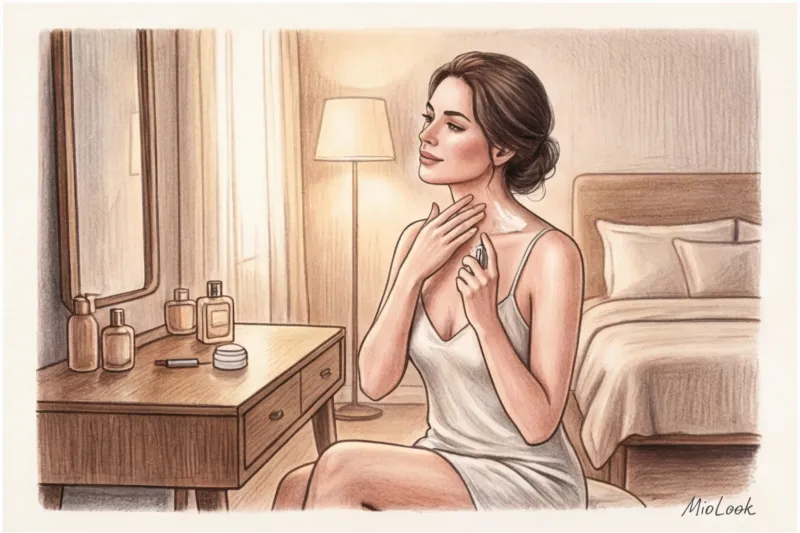
According to the recommendations of IFRA (International Fragrance Association) experts, in order to prolong the life of a fragrance in dry air conditions, it is necessary to create a base.
- Moisturizing Rule: After showering, apply a basic, fragrance-free moisturizing lotion to your body (pharmacy brands like CeraVe or Lipikar work well). Let it soak in for 5 minutes before spraying on your perfume. The lipid film will trap the fragrance molecules.
- Hidden Pulsation Points: In winter, we wear closed clothing, so applying perfume to our wrists is pointless—it will rub off on the cuffs of our sweaters. Apply perfume to the back of your neck (under your hair) and to your stomach. Body heat will slowly waft the scent upward throughout the day.
- Be careful with hair and fur: Alcohol mercilessly dries out hair and destroys the structure of natural fur and silk. If you want your scarf to smell fragrant, spray the perfume into the air and gently move the fabric through the mist, rather than blasting it directly.
Checklist: Putting together a winter fragrance capsule (3 bottles)
Just as we build a capsule wardrobe, I recommend my clients create a capsule perfume collection. Just three carefully chosen bottles will be enough for a full winter.
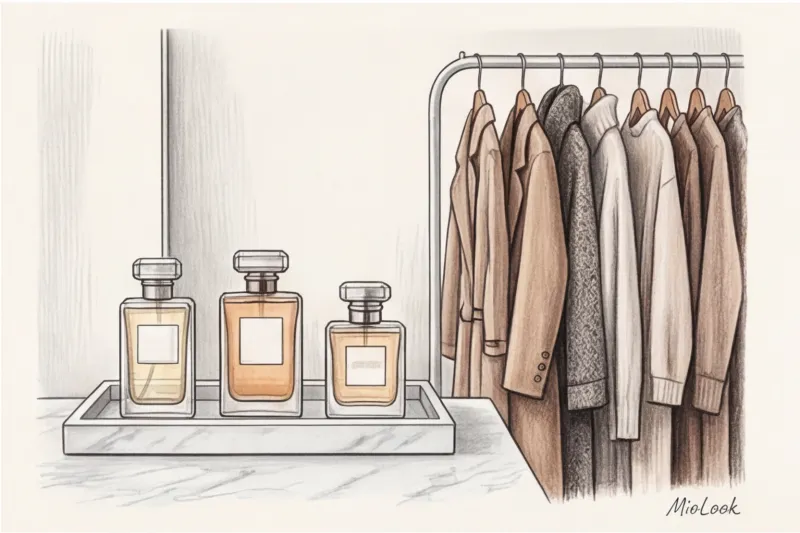
- Bottle No. 1: Daytime Basic (Office/Everyday). Neutral, close to the skin. Musk, iris, light woods. It shouldn't leave a mile-long trail and irritate coworkers in a warm room.
- Bottle No. 2: Walking “warming” (Street/Weekend). Your personal "mulled wine in a bottle." Vibrant gourmand notes, cherry, cinnamon, tobacco, and vanilla. A scent with a long sillage that will pierce the frosty air as you stroll through a snowy park.
- Bottle No. 3: Status evening (Theater/Restaurant). A complex, multifaceted perfume for special occasions. Those same sharp aldehydes, austere chypres, or deep rose with patchouli. A scent that demands heels and a perfect hairstyle.
By the way, to avoid confusion in combinations, I recommend using the "smart wardrobe" feature in MioLook When you visualize your winter looks in the app, it's much easier to understand what mood your capsule needs—strict elegance or relaxed coziness—and choose a scent to match.
Your perfume is an invisible coat. It can warm you, it can impart a touch of status, or it can hopelessly ruin the impression of even the most expensive outfit if chosen inappropriately. Stop buying perfume simply because it "smells good on the blotter at the store." Test it on your skin, go out into the cold, stop by a warm café—and only if the scent survives this temperature crash test should you add it to your winter wardrobe.