One of my clients once bought a bottle of expensive, high-end perfume for $300 after spending exactly five minutes in the boutique. She found the scent incredibly fresh and classy. But by two o'clock in the office, she was dealing with a terrible migraine and desperately trying to wash it off her wrists with unscented soap in the restroom. Why did this happen? Because choosing a fragrance isn't just like buying cosmetics. It's like trying on invisible clothing. And if you don't know, How to test perfume correctly , the risk of buying the wrong size or style approaches one hundred percent.
Over 14 years of working as a personal stylist, I've learned one important thing: a look doesn't end with a perfectly fitting jacket or the right shoes. Fragrance is the finishing touch that can either make or break your entire personal brand. I wrote more about the basic principles of creating such a foundation in our guide. Perfume Wardrobe: How to Build a Basic Collection.
Today, we'll explore the mechanics of choosing a fragrance. I'll explain why popular advice from glossy magazines of the 2000s no longer works, and I'll share a professional algorithm that will save you from impulse purchases.
Why Paper Blotters Lie: Skin Chemistry and Fragrance Development
The first and most important rule I tell all my clients is: never make a purchasing decision based solely on the scent of a paper strip. Buying perfume based on a blotter is like buying an expensive wool suit after looking at it on the hanger, without trying it on.
A paper blotter is porous cellulose at room temperature. It's neutral. Your skin is a living, warm organ with a unique pH level, its own lipid layer, and a temperature of approximately 36.6°C. The release of essential oils and synthetic molecules is influenced by everything from your diet to the proximity of blood vessels to the skin's surface.
"In the perfume world, there are concepts of 'hot' and 'cold' skin. On hot skin (when blood vessels are close and hands are always warm), fragrances unfold rapidly, quickly skipping through the top notes and settling into a dense base. On cool skin, a perfume can linger monotonously and resonantly for hours, never reaching the deep woody accords."
The Perfume Pyramid in Practice
To understand exactly what you're testing, you need to understand the physics of molecular evaporation. According to the International Fragrance Association (IFRA), a perfume composition unfolds in stages, and what you smell in the first minute will disappear very quickly:
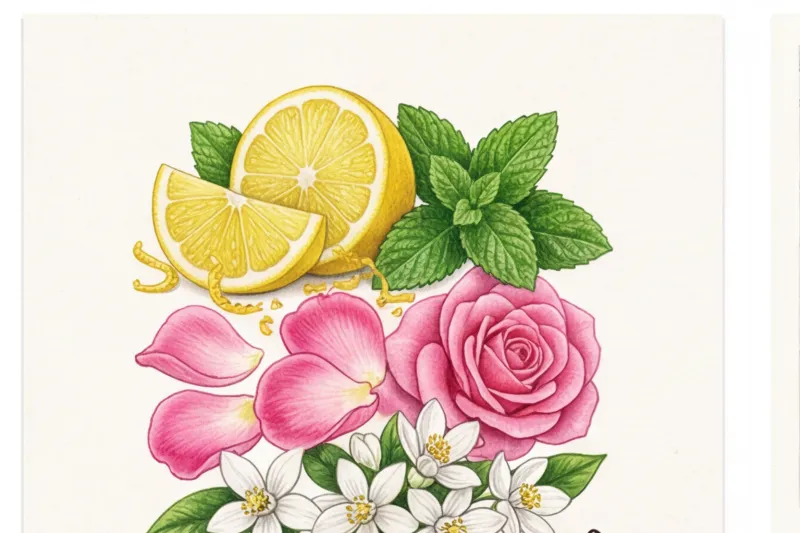
- Top notes (last 15-30 minutes): These are citrus, light berries, and aldehydes. I call them "marketing notes." Their job is to sell you on the bottle within seconds of your first encounter.
- Heart notes (sound 2-4 hours): Floral, spicy, and fruity accords. This is the true character of the perfume.
- Base notes (up to 24 hours on skin, up to several weeks on clothes): Wood, musk, amber, vanilla. This is the scent you'll be living with all day. And it's the base that a blotter often fails to adequately capture.
Preparing for a Boutique Visit: The "Blank Canvas" Rules
If we're taking a client perfume shopping, preparation begins at home. You won't be able to appreciate the subtleties of a new fragrance if you're already covered in a layer of scented shower gel, mango-scented body lotion, and hairspray.
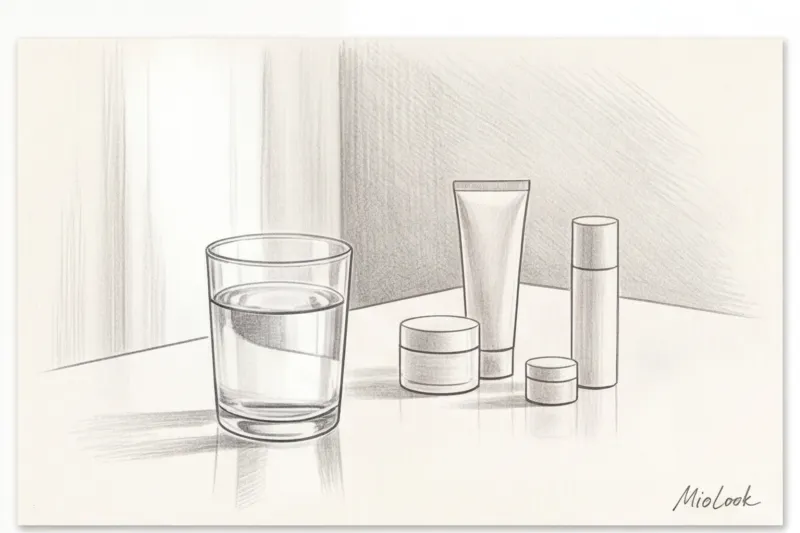
On the day of testing, use neutral, fragrance-free products. This is your "blank canvas."
Another important detail is the time of day. I never take clients to choose perfume on a Friday evening. After a hard day at work, stress, and city smog, our olfactory receptors are exhausted. The ideal time is first half of the day, preferably on a weekend, when you're well-rested and relaxed.
Important limitation: This testing algorithm won't work (or will give skewed results) if you're experiencing severe hormonal imbalances, are pregnant, have a cold, or are taking a course of strong antibiotics. During these periods, your body chemistry and your brain's perception of odors change beyond recognition. It's best to postpone purchasing perfume for a couple of weeks.
Your perfect look starts here
Join thousands of users who look flawless every day with MioLook. Our smart algorithm will help you create a capsule to match any fragrance.
Get access — €0.99 onceStep-by-step instructions: how to properly test perfume in a store
So, you've arrived at the boutique. Hundreds of beautiful bottles, bright lighting, and helpful salespeople surround you. The main rule here is a strict limit. The human nose (unless you're a professional perfumer) can adequately perceive no more than 3-4 complex compositions in a single visit. After that, the olfactory chaos begins.
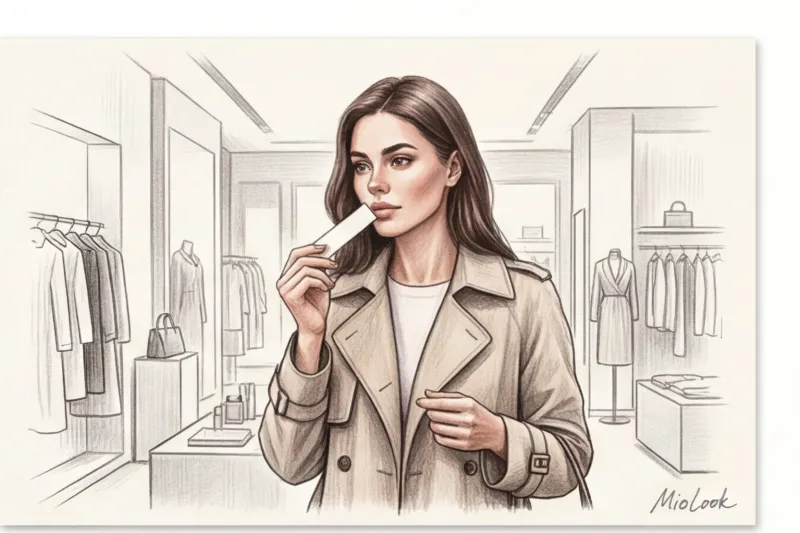
Here's how to test perfume correctly to avoid mistakes:
- Stage 1: Introduction on the blotter. Take a paper strip. Spray the fragrance from a distance of 15-20 centimeters. Be sure to wait 10-15 seconds! Don't hold the blotter to your nose immediately—let the alcohol evaporate, otherwise you'll simply burn your receptors.
- Stage 2: Tough selection. Smell 3-4 scents on paper. Set aside any you absolutely dislike. You should be left with a maximum of two favorites.
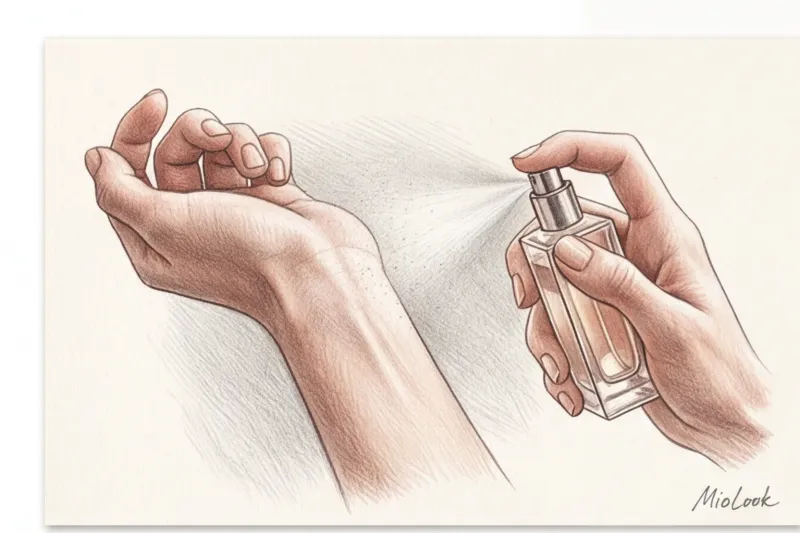
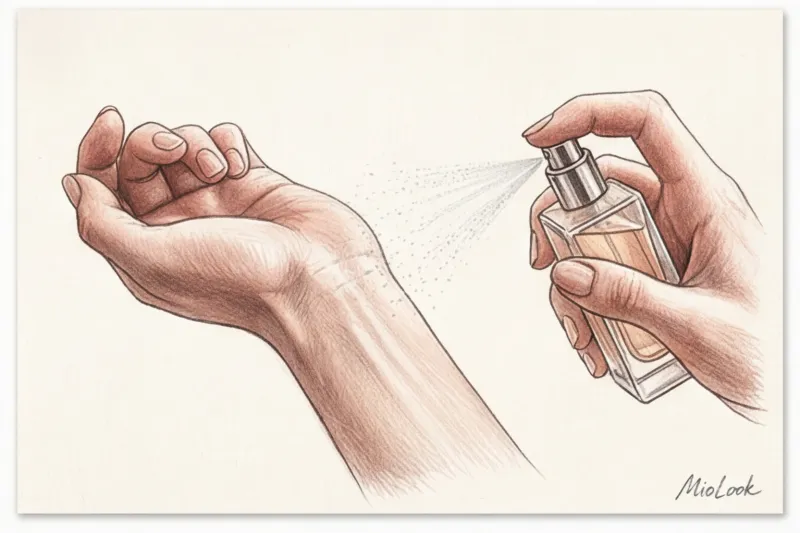
- Step 3: Apply to pulse points. Now we transfer the scent to your skin. Apply one perfume to your left wrist and the other to your right (or to the inside of your elbow if your wrists are covered).
And here I must warn you about the most common mistake I see in stores. Never rub perfume between your wrists! Friction increases the skin's temperature and literally "breaks" the fragile molecules of the top notes. The fragrance will collapse and unfold distorted. Simply allow the liquid to dry naturally.
The Biggest Myths About Aroma Testing (And Why Coffee Doesn't Work)
Walk into any chain perfume store, and you'll see jars of coffee beans on the shelves. The salespeople will offer you a sniff to "clear your nose." As a stylist who deeply studies the physiology of image perception, I urge you: don't do this.
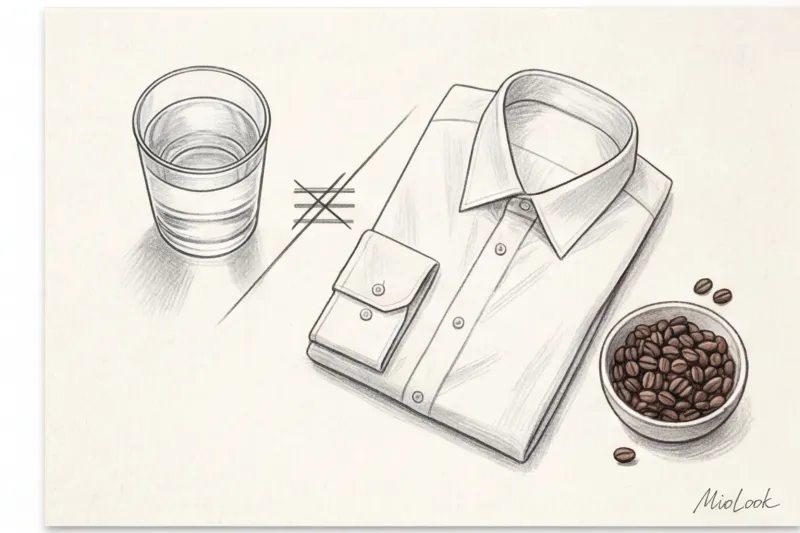
Neurobiological research into olfactory adaptation (for example, work by the Monell Chemical Senses Center) proves that coffee doesn't cleanse the receptors. Coffee beans contain a huge amount of heavy, volatile essential oils. Sniffing coffee between perfume tests is like trying to take a break from loud techno by blasting heavy metal. You're simply overloading your nervous system.
How to really reboot your sense of smell:
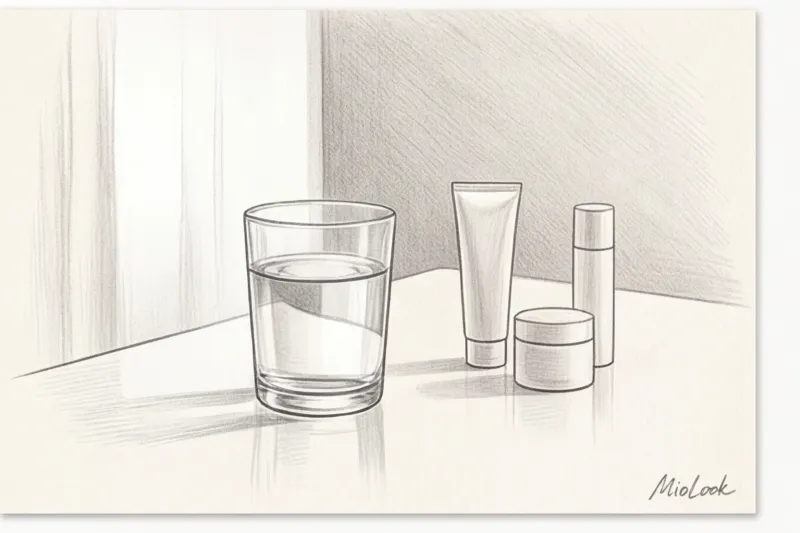
- Drink a few sips of pure still water.
- Go out into the fresh air for 5 minutes.
- Smell your own clean skin (for example, the inside of your forearm or shoulder). Your own scent is your brain's only "prime meridian."
Another dangerous myth: "If I can't smell a scent on myself, it's perfect for me." No, it means you've developed olfactory blindness (anosmia) to certain molecules (often large molecules like musk or ambroxan). Your brain has simply shut off the perception of this irritant to avoid going crazy. But your colleagues in the office will choke. If you can't smell the perfume, don't buy it; you won't be able to control the dosage.
Access to MioLook for €0.99 — one-time payment
A smart AI stylist will find the perfect look to suit your mood and a new fragrance. Organize your wardrobe in one click.
Get access — €0.99 onceBreak-in Before Buying: A Stylist's "Three-Day" Rule
You've sprayed the fragrance on your wrists. What next? Go to the checkout? Absolutely not. Thank the salesperson and leave the store.
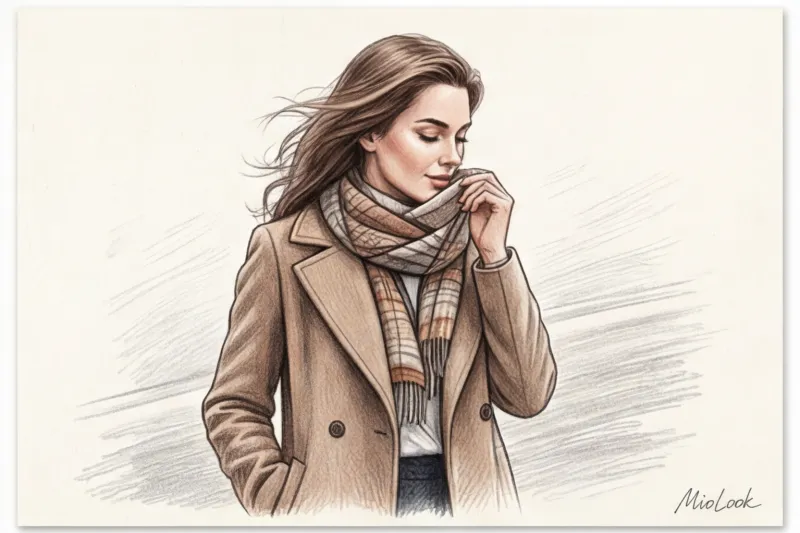
My professional rule for clients is the "three wears" rule. The base notes will only reveal themselves after 2-3 hours. You should be able to live with the fragrance all day. How does it perform on a cold street? In a stuffy taxi? Does it make you feel nauseous by the evening?
The ideal option is to purchase an official 1.5-2 ml sample or decant. This will allow you to fully test the perfume in different conditions.
We were once selecting a fragrance for a top manager. She needed a strict, high-status chypre for difficult negotiations. In the store, the scent seemed perfect: composed, with notes of oakmoss and patchouli. The next day, she sprayed it from a sample on a silk blouse—the scent remained sharp and businesslike. But the day after, she put on a voluminous cashmere sweater. And surprise: the wool brought out a heavy, retro-animal note in the scent that was completely at odds with her modern look. Clothing fabric dramatically changes the way a perfume holds and develops: cotton with a weight of 180 g/m² or more holds the base neutrally, silk adds a crispness, and wool "warms" and adds weight.
How to incorporate a new perfume into your fragrance wardrobe
Perfume doesn't exist in a vacuum. It should support your social goals and visual style. Before purchasing a full-size bottle, take stock of your existing collection.
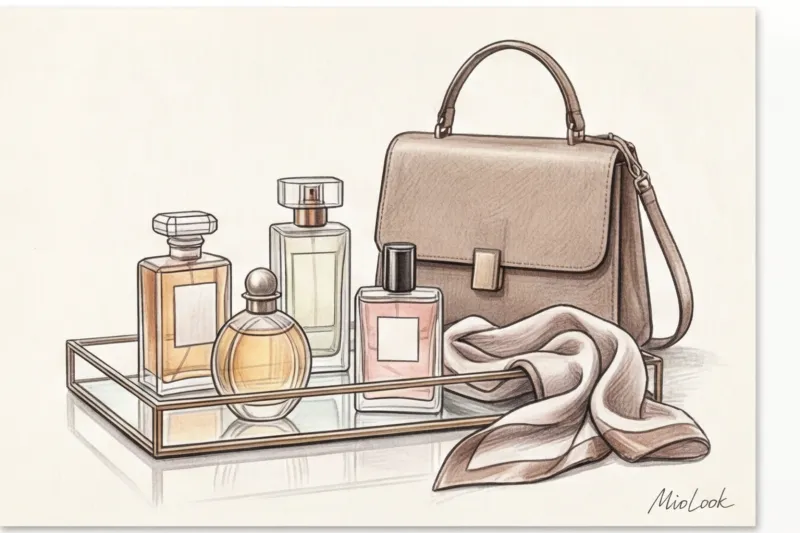
We often unconsciously buy a fifth identical sweet gourmand fragrance, leaving "blind spots" in our wardrobe. For example, you might have perfumes for dates and parties, but absolutely nothing to wear to the office with a strict dress code or on a Sunday stroll in jeans and a white T-shirt.
By the way, it is for such cases that I recommend using visualization function in the MioLook app When putting together your weekly capsule wardrobe, consider what scent will logically complete your look. A heavy oriental oud with leather notes will create a discordant effect if you're wearing a lightweight summer linen suit from Massimo Dutti. A clear, citrusy cologne, however, will be a perfect match. The scent should complement the texture of your fabrics.
Checklist: 5 questions to ask yourself before you take out your card
If you've tried a sample and are ready to return to the boutique for a bottle, ask yourself these five questions. If you're unsure about any of them, postpone your purchase.
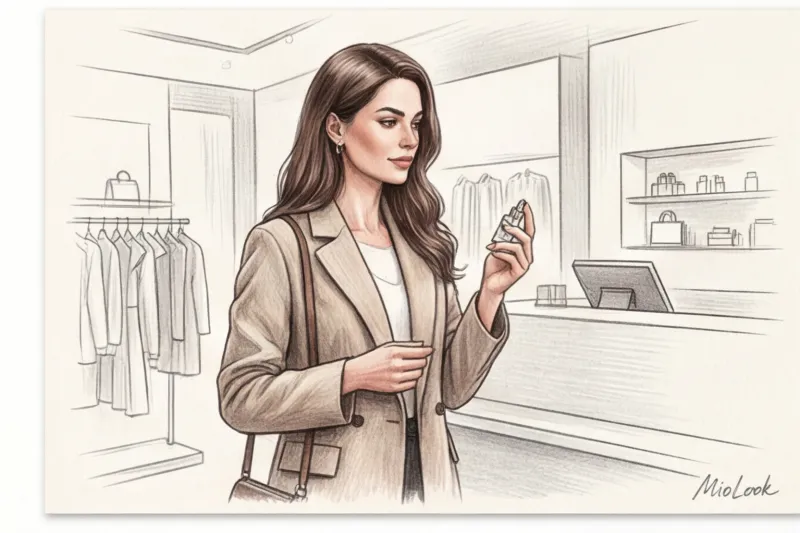
- Did the fragrance last at least 4-6 hours on my skin? (If it wears off in an hour, are you prepared to constantly renew it and carry the bottle with you?)
- Does it cause headaches or mild nausea if I am in a closed space (car, small office)?
- Does it fit my current lifestyle? (There's no point in buying a fancy evening extract if you work from home or hang out with your baby 90% of the time.)
- What specific clothes from my closet will I wear it with? (Imagine at least 3 finished images).
- Does it reflect the impression I want to make on people right now?
Choosing a perfume is an intimate and unhurried process. Treat it with respect for yourself and your body. Don't let marketing and pretty bottles rush you. The perfect scent is one that you slip on like a second skin and makes you sit up straight before you even leave the house.