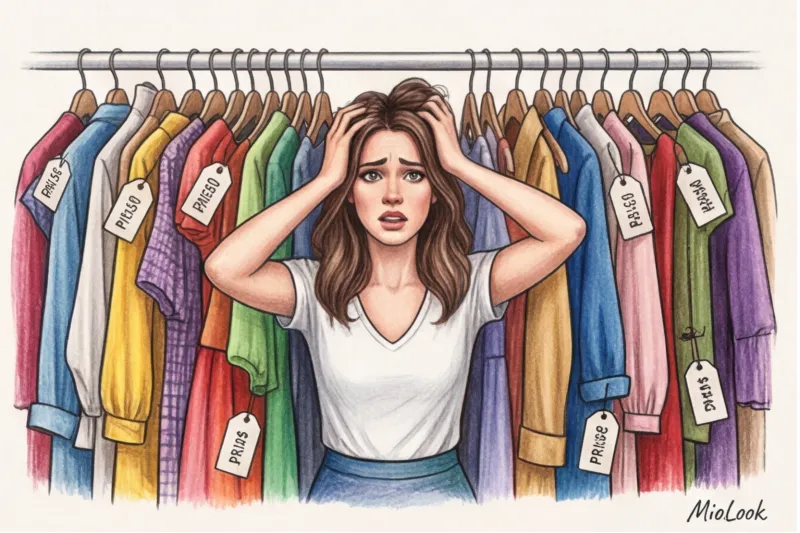
The "Lonely Thing" Syndrome: Why We Buy Things We Never Wear
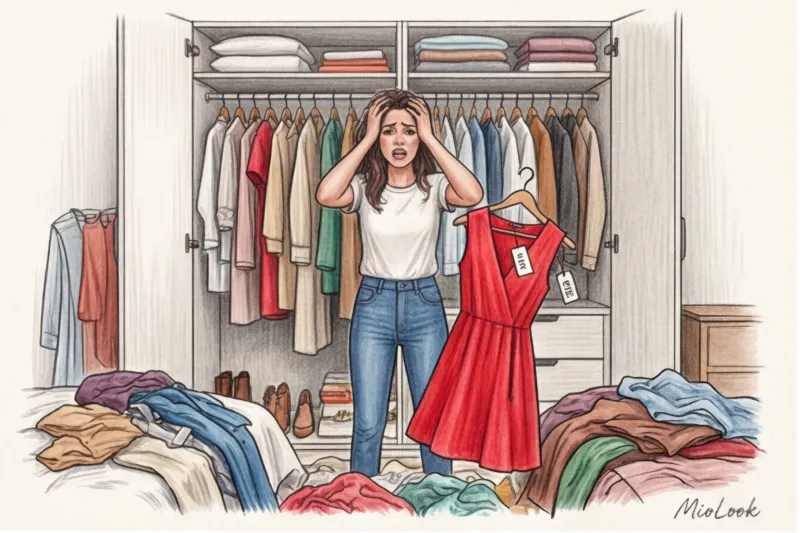
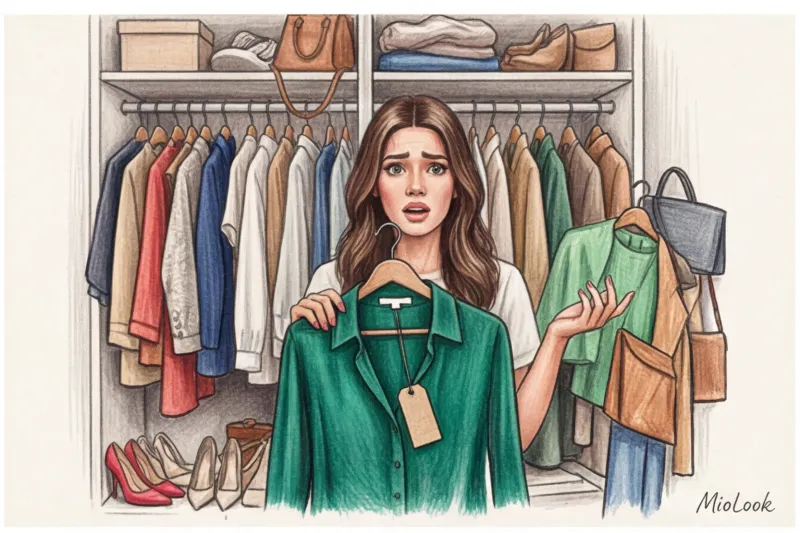
You're standing in front of your open closet. Dresses, jackets, and blouses hang in neat rows on hangers. You randomly pull out an emerald silk top—and immediately notice the cardboard tag on it. Again. It's at this moment that most women realize they urgently need something. an app for mindful shopping , because their wardrobe has turned into an expensive but completely useless museum of things that they have nothing to wear with.
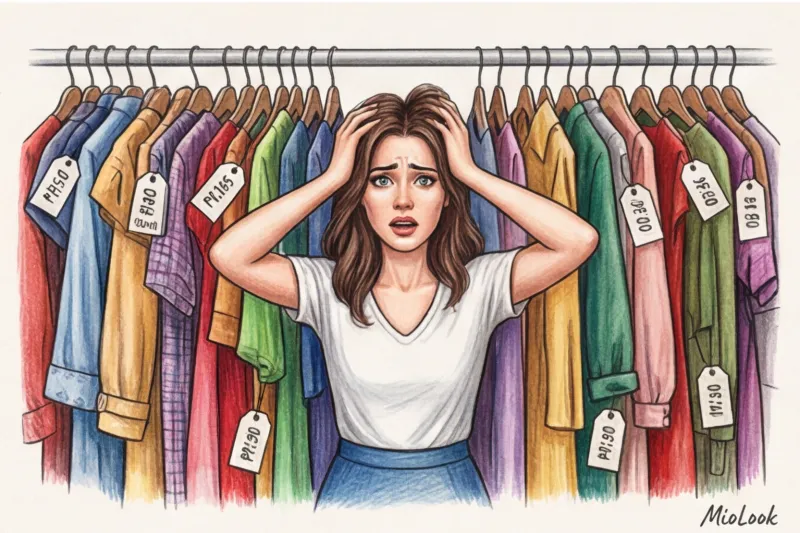
In professional stylist jargon, this problem is called "lonely item syndrome." Over 12 years of practice, I've encountered this phenomenon hundreds of times. Last month, I audited a client's wardrobe whose closet was overflowing with premium brands. Of the 120 items, exactly half were "lonely items"—we counted 60 items with labels, totaling over €3,500! There was a luxurious asymmetrical skirt with a complex print that couldn't be paired with a single neutral top, and statement ankle boots that required a completely different trouser length. She was buying gorgeous pieces, but she hadn't given any thought to how they would interact with her closet.
Why do we make this mistake time and time again? The psychology of impulse buying is rooted in pure physiology and clever marketing. When we see the perfect jacket in a Zara or Massimo Dutti window, displayed under the right light, our brain receives a powerful dopamine surge. At that moment, we're not buying a piece of fabric—we're buying a fantasy of ourselves. We imagine the confident woman sipping espresso on the terrace wearing that jacket. Euphoria clouds critical thinking.
But the harsh reality sets in at home, in front of your ordinary bedroom mirror. It turns out that this jacket requires high-waisted trousers (which you don't have), and its texture clashes mercilessly with your usual basic T-shirts. The dopamine rush subsides, the item is sent to the hanger, and you utter the sacramental phrase again: "The closet is full, but there's nothing to wear.".
"We don't wear things individually. We wear them in ensembles. Buying a piece without understanding its role in an ensemble is like buying an expensive steering wheel for a car you don't own."
This isn't just a personal pain, it's a global industrial problem, according to a large-scale study. Ellen MacArthur Foundation (2017), over the past 15 years, the average number of times an item is worn before being thrown away has decreased by 36%. We buy more, wear less, and the lifespan of clothing is rapidly decreasing. And this isn't always due to the low quality of mass-market clothing—often, we simply don't know how to incorporate new items into our current wardrobe. Incidentally, I've written in detail about how to choose the right fabrics when trying them on. How to choose quality clothing: a stylist's guide.
Emotional Shopping vs. Mindful Shopping App
The main difference between emotional shopping and strategic shopping is the focus. Emotional shopping is always about buying a "pretty thing" in a vacuum. A conscious approach is an investment in the "perfect look."
To break this vicious cycle and stop collecting labels, we need a physical barrier—a saving pause between the thought, "How lovely!" and the ping of the checkout terminal. This is where the digitalization of the wardrobe comes into play. Using a smartphone right in the fitting room breaks the destructive habit of buying based on emotion.
How does it work in practice? You're standing in a booth with that alluring terracotta sweater. Instead of giving in to the euphoria, you open MioLook This visualization of your real closet on your phone works like a bucket of cold water on a dopamine rush, but in the most positive way: it instantly reduces anxiety and restores control.
You don't try to recreate the shade of your favorite pants from memory (our brain always distorts colors in the artificial lighting of shopping centers). You simply place the new item against the existing database on the screen. The app gives you those same 60 seconds of mindfulness before the checkout. And if the sweater doesn't form at least three complete outfits (for example: sweater + silk midi skirt + loafers or sweater + straight jeans + ankle boots ), you leave it in the store with peace of mind, saving yourself €100 and shelf space.
The Formula for Ideal Integration: The Golden Rule of 3 Images
In architecture, there's the concept of a load-bearing structure—an element that supports the entire framework of a building. In personal styling, functionality plays this role. My main filter, which I ruthlessly apply during every shopping experience, is this: golden rule of three images.
The essence of the rule is uncompromising: if you are holding a hanger with a new item in your hands and cannot visualize at least three fundamentally different outfits with it in ten seconds from what already hanging in your closet—return it to the rail immediately. There are no exceptions here.
My signature formula, which saves clients from morning closet panic, is built on contrasts and multitasking. Let's explore this principle with a specific example. Let's take a bold statement—a structured red straight-cut jacket. It might seem like a demanding and complex piece. But with the right wardrobe architecture, it integrates seamlessly:
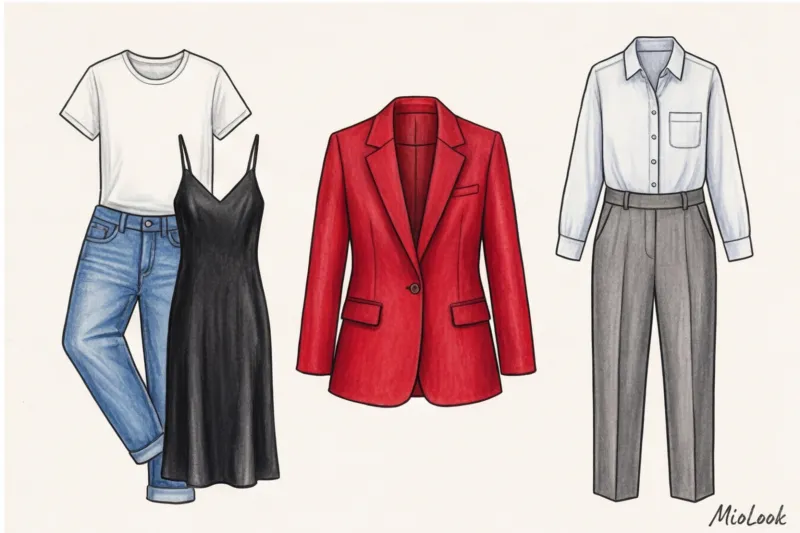
- Relaxed casual (for weekends): A red jacket + a basic white T-shirt + vintage straight-leg jeans in heavy denim + leather loafers. We're taking the classic cut down a notch with the relaxed texture of the denim.
- Strict business dress (for important meetings): The same jacket + a deep graphite A-line midi skirt + a tailored shirt. Here, the jacket serves as a marker of confidence and leadership.
- Elegant evening (for dinner or theatre): A jacket casually draped over the shoulders, paired with a flowing silk slip dress and slingbacks with slender heels. The play of textures—the crisp shape of the jacket against the delicacy of the silk—creates that effortless Mediterranean chic.
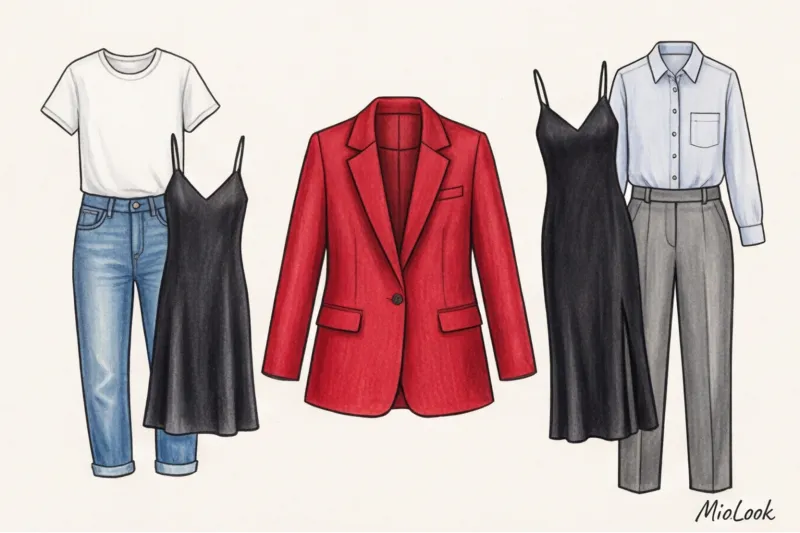
The transition from buying individual items to buying ready-made capsules — this is the key marker of a status-conscious, mature approach to one's image. A closet assembled from random, emotional purchases resembles a noisy crowd where everyone is shouting, but no one is listening. A capsule approach transforms a wardrobe into a well-coordinated orchestra.
True luxury today is conveyed not through flashy logos on bags, but through visual coherence. When a turtleneck perfectly matches the undertone of a coat's lining, and the length of a skirt flawlessly matches the height of a boot, it betokens a woman who values herself and her time.
Mentally assembling such capsules while standing in the middle of a crowded shopping mall is a challenging task even for a professional. That's why modern mindful shopping apps like MioLook , is becoming an indispensable tool. It allows you to upload a photo of an item from the fitting room and instantly "try it on" in your virtual database.
Access to MioLook for €0.99 — one-time payment
A smart AI stylist will select the perfect look for any occasion and check the compatibility of new purchases.
Get access — €0.99 onceHow to Calculate Cost-Per-Wear Before Buying
Fashion and style are inextricably linked to emotions, but smart wardrobe management is pure math. In a professional environment, we always rely on metrics. Cost-Per-Wear (CPW) — the cost of one output.
The calculation formula is extremely simple and should become your habit before every transaction at the checkout:
CPW = (Item Cost + Care and Fitting Cost) / Estimated Number of Outlets.
The psychology of pricing often traps us: it's psychologically easier to spend a small amount right now than to invest in an expensive item. But let's look at the numbers I often show during wardrobe reviews.
Scenario one: emotional purchase. You buy a trendy polyester top with a bold print at a high-street store for €45. You wear it to a work party and a friend's birthday party. By the third time, it either loses its shape after washing or simply gets boring because it's too recognizable.
Total: 45 € / 2 exits = 22.50 € per session.
Scenario two: strategic investment. You buy a high-quality cashmere sweater in a neutral shade from a brand like COS or Massimo Dutti for €180. Add dry cleaning (around €40 per season). You wear it twice a week for six cold months for three years straight—that's about 144 times.
Total: 220 € / 144 exits = 1.52 € per exit.
The mathematical proof is clear: a high-quality, perfectly fitting basic item costs you 15 times less than an affordable mass-market item on sale. Cheap, disposable trends only create the illusion of savings, draining your budget with unnoticeable microtransactions. By applying the CPW formula, you stop buying things and start investing in your personal comfort and status.
MioLook in the Fitting Room: A Step-by-Step Guide to Smart Shopping
The harsh artificial light of a fitting room, fatigue after an hour of searching for the right size, and a treacherous human memory—these are the three main contributors to our wardrobe failures. When you stand in front of the mirror with a new item in hand, your brain starts actively generating illusions. You sincerely think that this terracotta top will perfectly complement those beige trousers hanging at home. Spoiler: most likely not.
Why does this happen? A 2015 study by cognitive psychologists at Johns Hopkins University demonstrated an interesting feature of our perception: visual memory doesn't retain precise shades. It "rounds" them down to basic categories. Your brain simply remembers "beige," completely ignoring the fact that your trousers have a cool, grayish undertone, while a terracotta top requires a warm, rich palette. As a result, after spending €120 on a beautiful silk garment, you discover at home that the colors in the set are clearly at odds with each other.
The most valuable skill in modern styling is the ability to stop in your tracks and stop trusting your visual memory. That's why my ultimate advice to every client is: always rely on digital data, not your imagination.
Here comes the stage an app for mindful shopping The introduction of smart technology into your shopping routine is a game-changer. Instead of hesitating and guessing, you can pull out your phone, access your existing wardrobe, and create outfits right on the screen, without leaving the store.
Step 1: Digitize your database before going to the store
The foundation for a successful and speedy shopping experience is laid long before you even step foot in the mall. For the virtual fitting room to work for you, the app must have high-quality source material. In my experience, eight out of ten women initially resist this step. "Isabella, photographing every single T-shirt takes so long!" I hear constantly. But let's be honest: one evening spent digitizing will save you dozens of hours of morning suffering and hundreds of euros in returns for unsuitable items.
To start, you don't need to photograph your entire closet. Focus on the "framework"—your essential "bottoms" (pants, jeans, skirts), basic "tops" (jackets, shirts, heavy t-shirts), and, crucially, seasonal footwear. Footwear often dictates the length and style of new clothes.
To MioLook To cut out the background as accurately as possible and preserve the true colors of your items, use these proven life hacks for quick digitization:
- Catch the right light: Photograph items in diffused daylight, ideally between 10 a.m. and 2 p.m., placing them in front of a window. Avoid yellow indoor lamps, as they will distort the colors beyond recognition.
- Create a contrasting background: There's no need to build a photo studio. Simply hang the item on a hanger on the handle of a white door or lay it out on a smooth, solid-color sheet. Contrast is key. Shoot a light blouse against a dark background, and dark pants against a light background.
- Straighten your silhouette: The camera should see the actual cut. If it's palazzo pants, lay them out so the leg width is clear. If it's a fitted jacket, button it.
Step 2: Virtual Compatibility Check
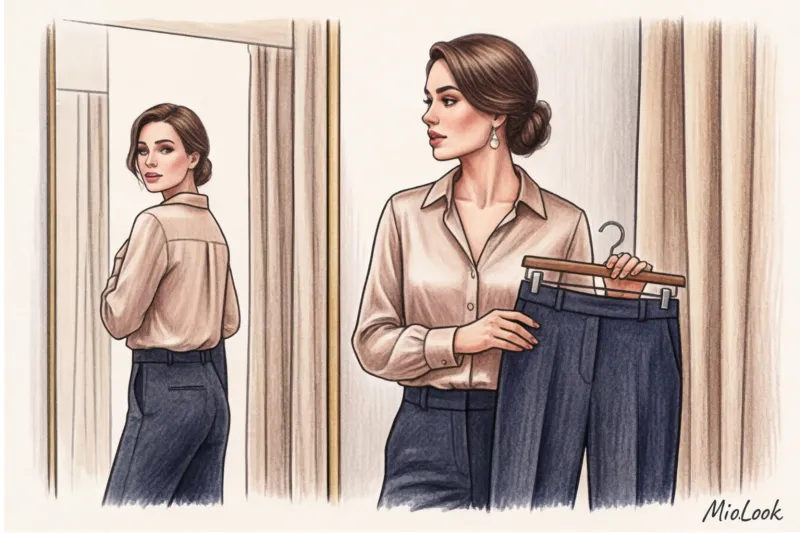
Now let's return to our fitting room scenario. You've put on a luxurious midi skirt, the fabric flows, the fit is perfect. Your hand is already reaching for your card. Stop. Pause.
Take a photo of the skirt on yourself in the mirror (or on a hanger, if that's more convenient) and quickly upload it to the app. Now the real styling magic begins—testing the item in real time. Start adding your digitized sweaters, jackets, and shirts to this skirt on the app canvas.
This insider method instantly highlights two critical areas:
- Real palette and proportions. On the screen, you'll immediately see that the midi length absolutely clashes with your favorite long cardigan—they'll cut your figure into disproportionate blocks. But the skirt looks stunning with that same cropped cashmere sweater you've always worn with jeans.
- Analysis of missing elements. This is the main filter for conscious consumption. Let's say you've chosen the top. But what about the shoes? In the app, you compare your loafers, ankle boots, and sneakers to the look. And suddenly you realize: this skirt requires elegant pointed-toe shoes, which you simply don't have. The chunky boots that make up 90% of your shoe collection ruin the elegance of the silk.
It's at this moment that the magic of mindfulness happens. You realize that buying one skirt for €80 will automatically necessitate buying new boots for another €150 just to have something to wear with it. Are you ready for such an investment? If the answer is "no," the item stays in the store, and you leave with peace of mind, having avoided the addition of yet another "lonely" item to your closet.
Compatibility Matrix: How to Check Proportions, Textures, and Color
Have you ever noticed that sometimes two objectively beautiful, expensive items worn together suddenly make your figure look heavy, squat, and completely shapeless? Let me reassure you: the problem is definitely not your body. The problem lies in a disrupted "compatibility matrix"—that invisible framework of any stylish look that rests on three pillars: precise proportions, texture, and color management.
When I go shopping with my clients, I categorically forbid them from evaluating a new item in isolation. A beautiful dress on a hanger is an abstraction. The mathematics of the silhouette is important to us. How can you avoid getting the cut wrong? In personal styling, there's an unwavering rule of volume balance: a narrow bottom always requires a wide top, and vice versa This is pure physics of visual perception.
Imagine you've found a luxurious, oversized, chunky knit sweater. To make it look stylish and not make your figure look monolithic, it needs to be balanced. Open your virtual database on your phone and check: do you have a simple pencil skirt, straight-leg jeans that fit your figure, or a flowing slip dress? If your closet is dominated exclusively by wide, relaxed palazzo pants and full midi skirts, this sweater will become another "stand-alone" item, despite its beauty and €250 price tag. Only a handful of fashion influencers can style two super-voluminous pieces together; it's too risky for real life.
The same goes for the perceived safety factor when choosing colors. Wardrobe color management isn't about mindlessly buying every neutral item in sight. You know what I typically see in 80% of wardrobes during my first wardrobe audit? It's buying the tenth black turtleneck or the fifth pair of gray trousers. Our brains are incredibly lazy: in the stressful environment of a shopping mall, they nudge us toward the safest, most familiar choices. It seems like a basic item definitely won't sit idle.
But here's the harsh truth: buying another duplicate won't solve the "I have nothing to wear" problem. It will only create an expensive illusion of renewal. You may have the perfect cashmere turtleneck from COS, and it's a wonderful basic. But if you buy another, almost identical one in a viscose blend for €40, you're simply cluttering up your space and wasting money. Your stylistic arsenal isn't expanding one millimeter. The next time you reach for another black basic, take a look at your digital closet. If you already have two high-quality items in that category, feel free to put them back. Your closet needs a new function, not a clone.
Texture contrasts as the secret to an "expensive" look
Now I'll share with you the main professional secret of Mediterranean style. It's that elusive quality that makes luxurious Italian and Spanish women look stunning even in simple clothes, and something that's rarely written about by ordinary fashion writers. The contrast of textures is always more important than the contrast of colors.
You can dress head to toe in a single, unremarkable shade of gray or camel and still look like a million bucks if you juxtapose materials wisely. Depth and dynamism are born precisely where opposites meet. The classic formula for classy minimalism is a mix of smooth, cool silk and dry, coarse wool; matte, grained leather and soft, fluffy cashmere.
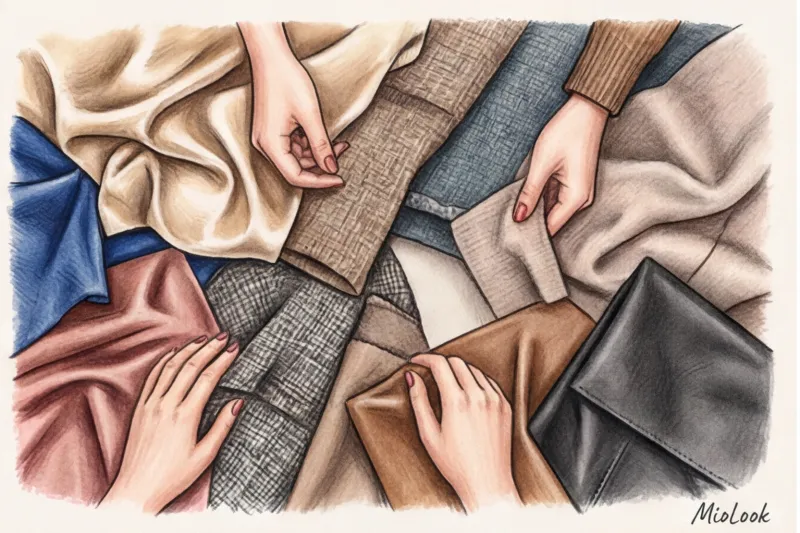
Imagine a pair of straight trousers and a jumper. If both pieces are made of a flat, light-absorbing fabric (like heavy cotton and acrylic), the eye glides over them without lingering. The look becomes dull. But swap the trousers for leather and the jumper for mohair. The colors remain the same, the silhouette unchanged, but the outfit instantly becomes luxurious.
How do you check if your wardrobe has enough texture variety? This is where Smart wardrobe at MioLook Browse through your digital wardrobe: if you see a continuous stream of flat cotton, fine knits, and uniform polyester, you're desperate for tactile accents. On your next shopping trip, specifically look for textured corduroy, flowing satin, textured tweed, or suede.
Access to MioLook for €0.99 — one-time payment
Start creating perfect looks with the help of artificial intelligence and forget about the problem of “nothing to wear” forever.
Get access — €0.99 onceColor wheel and your palette in the app
While textures create depth in a look, color ensures its absolute harmony. And it's precisely in color combinations that shoppers fall prey to the most insidious fitting room trap, which stylists call the "almost match" effect.
In my practice, women often try to put together an elegant monochrome look by buying items from memory. The result is a disastrous detail: a pair of new €150 beige trousers has a cool, slightly grayish (taupe) undertone, while a favorite beige trench coat is overtly warm, with a peachy undertone. Wear them together, and the two different shades of beige begin to clash. The warmer one looks dirty and worn against the cooler one, and the look loses all its intended aristocratic appeal.
To avoid this annoying mistake forever, every new item should be tested using the classic Itten color wheel right in the store. Open the app, display a photo of the item you plan to pair with, and hold your smartphone against the fabric in the store in good, preferably daylight, light.
Run the color through three filters:
- Does this shade complement my base palette according to the analogous triad rule (adjacent, related colors on the color wheel)?
- Is it a bright, complementary (opposite) accent to my main pieces?
- Does its “temperature” (warm/cold pigment) match the temperature of the capsule it is implanted into?
If you're unsure, the virtual canvas try-on feature lets you place two items side by side. You'll immediately see how the green pigment in one gray shade visually "kills" the blue pigment in the other. This simple yet technologically advanced step saves hundreds of euros previously spent on items that never found their perfect match.
Stylist's Stop Signs: When an Item Should Be Left in the Store Immediately
According to the Ellen MacArthur Foundation's 2023 analytical report, we wear each item we buy 36% less often than we did just fifteen years ago. This isn't because trends change so quickly, but because we stubbornly ignore obvious red flags right in the fitting room. As a stylist, I want to immediately debunk one of the most dangerous myths of modern consumerism: discounts don't save you money. They simply skillfully provoke the creation of "dead capital" on the shelves.
Let's do the math. If you see a dress with intricate draping marked down from €250 to €70 and buy it solely because of the attractive yellow price tag, you haven't saved €180. You've simply thrown away €70. An item is expensive not because it has a high price tag, but because it hangs around with the tag for years.
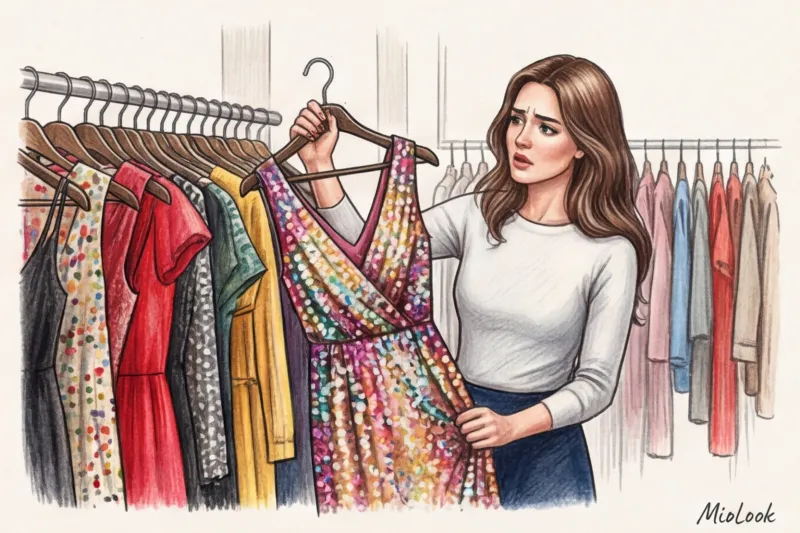
To make shopping less of a gamble, I've developed a system of four hard stop signs for my clients. If you notice even one of them, return the hanger to the rail immediately.
- An item requires the purchase of three more items (domino effect). You've fallen in love with an asymmetrical top with a complex neckline. Beautiful? Absolutely. But when you get home, you discover you need a special invisible bra, wide palazzo pants in a specific milky shade, and minimalist mules. One spontaneous €50 purchase instantly turns into a €300 quest. If you can't put together three complete outfits with your new top right now, open your Smart wardrobe at MioLook - Feel free to leave it in the store.
- Uncomfortable cut or material "for the sake of beauty". The secret of the famous Mediterranean elegance lies in absolute ease. A woman looks luxurious only when her body is free. If the armholes dig into your armpits, the pencil skirt rides up with every step, and 100% polyester makes you feel suffocated right under the mall's air conditioning—these are a categorical no-no. No aesthetic, even the most fashionable, is worth your physical discomfort and restricted movement.
- The item duplicates what already exists, but in worse quality. Our brains thrive on comfort zones and familiar patterns. You already have a flawless double-breasted trench coat made of thick gabardine hanging at home. But in the mass market, your hand automatically reaches for a similar silhouette, even if it's made of thin, wrinkle-prone fabric, because "it's totally my style." Buying a lower-quality duplicate is deliberately cheapening your look. Check the digital database: if you already have a premium-quality equivalent, pass it on.
- The Sale Trap: Would You Buy This at Full Price? This is my favorite and most ruthless filter, which sobers you up in a second. Cover the red 70% off sticker with your finger. Look at the original price. Are you willing to pay full price for this blouse? If the honest answer is "no," then you're buying the dopamine rush from the "good deal" and not the clothes themselves.
"Personal style isn't formed by what you add to your wardrobe, but by what you have the courage to say no to. Saying "no" to a compromised item today is an investment in your perfect look tomorrow."
Implementing these four filters reduces impulse purchases by an average of 60%. The remaining 40% becomes the foundation that works for you for years, without requiring constant budgetary investments.
Investing in wardrobe architecture: basic, accent, and connecting pieces
The biggest lie of the fashion industry for the last ten years has been: "Just put together the right basics—a white shirt, a beige trench coat, and straight jeans—and you'll always have something to wear." If that were true, the streets would be full of impeccably dressed women, not an army of clones in identical sand-colored coats.
In reality, a wardrobe consisting solely of basic items looks flat and lacking in personality. According to the architectural styling methodology taught at the Istituto Marangoni, a functional closet isn't built on a monolith of plain T-shirts, but on a strict three-tiered system. Before you take a single item to the checkout, you must clearly define its future function. Is it your foundation or your decor?
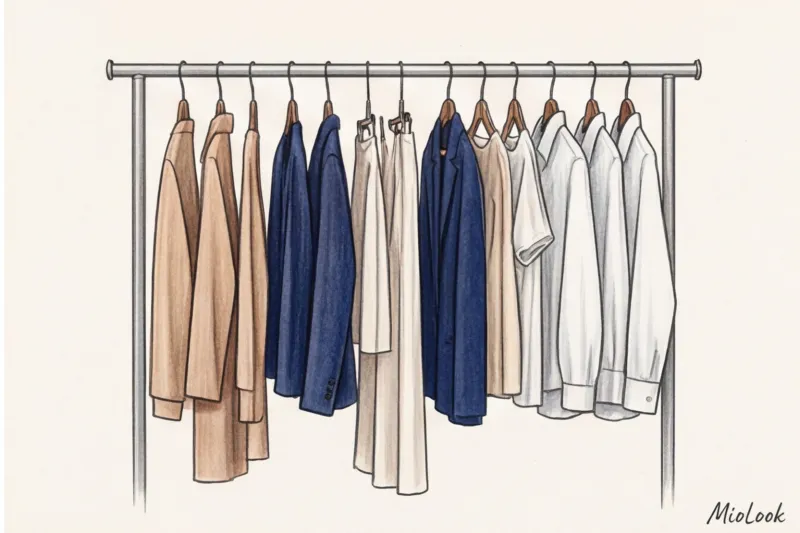
Basic things (foundation) — are the canvas. They feature clean cuts, neutral shades, and smooth textures. Perfectly tailored trousers or a high-quality cashmere jumper for €150 are an investment in the underlying structure. The philosophy of designers like Phoebe Philo is built on a flawless foundation. Without it, a wardrobe will fall apart.
Accent items (decor) — these are visual spices. A fuchsia blouse, a skirt generously embroidered with sequins, or an extravagant asymmetrical bag. Their sole purpose is to attract attention. The mistake many women make is that, in search of "something new," they buy only decorative items that are then impossible to integrate into a calm base.
It's at this stage that the mindful shopping app becomes your personal style auditor. By opening MioLook right in the store, you can objectively assess your closet's pie chart. If more than 15% of your closet is decorative, it's time to stop and rethink your strategy.
The role of binding materials (wardrobe adhesive)
But the real secret of French and Italian stylists lies in the third level, which glossy magazines often forget about. We are talking about connector pieces , or, as we call them in professional circles, "wardrobe glue." The introduction of this concept completely changes the way we view shopping.
What are connective pieces? They're bridging elements that physically unite basic and accent pieces into a single capsule. They incorporate characteristics (colors, prints, or textures) from several individual pieces in your closet.
The most obvious example is two-tone shoes. The iconic Chanel slingbacks, where the beige base transitions to a contrasting black toe, aren't just a pretty pair. They're a brilliant connecting element that instantly pairs your beige trousers with your black accent jacket, creating a flawless color vertical without a jarring effect.
Another powerful tool is a printed silk scarf. Imagine your wardrobe is dominated by navy blue, terracotta, and off-white shades. Wearing blue jeans and a terracotta top, you might feel like your outfit is split into two rigid blocks. But add a scarf around your neck, with a pattern that intertwines blue, terracotta, and off-white, and the ensemble comes together. The scarf acts as a visual translator between the different colors. A well-crafted tweed jacket, woven from threads of different shades, does the same.
"If the things in your closet are the bricks, then the binding elements are the cement. You can't build a house out of bricks alone; they'll just crumble."
In 2023, I curated the wardrobe of a top manager at a large European company. Her closet was a classic illustration of the problem: 50 formal basics and 15 extravagant statement pieces, bought in a fit of passion. The pieces literally screamed at each other. We didn't buy new boring suits. Instead, we invested about €450 in just five unifying elements: a belt with a mixed-metal buckle (gold and silver to complement any jewelry), loafers with a subtle animal print in the colors of the base, and a couple of intricate blouses. The capsule collection was a 100% success.
When using a mindful shopping app, be sure to test new items for their "glue" properties. Use MioLook to look at random items you rarely wear and ask yourself, "What print or texture should this new purchase have to tie them together?" Finding such a unifying element will give life to several otherwise lonely items in your collection.
Your perfect look starts here
Join thousands of users who look flawless every day with MioLook. Digitize your wardrobe, find complementary pieces, and make smart purchases.
Get access — €0.99 onceYour Mindful Shopping Checklist with MioLook
Imagine standing at the checkout, holding a seemingly perfect wool jacket from Massimo Dutti or a stylish asymmetrical skirt from COS. At that moment, your heart used to beat a little faster in anticipation of the purchase, but in the background, there was always a nagging thought: "What will I even wear with this?" Now, everything is different.
Over the years of working with clients, I've developed a rigorous algorithm we call the "checkout filter." Before you even touch your smartphone to the terminal, you must run your potential purchase through five merciless questions. And this is where your an app for mindful shopping transforms from a simple catalog of things into a strict but fair personal stylist.
The Golden Rule: 5 Questions to Ask Before Checking Out
Open your virtual wardrobe and answer yourself honestly:
- Do I see at least 3 completed sets right now? Not "in theory," not "if you buy those same pants," but literally—can you put together three collages in the app with the things that are already hanging in your closet.
- Does the item pass the texture contrast test? If you're buying a fifth smooth cotton top, it won't add depth to your look. Look for what your base is missing: perhaps you need a textured knit, flowing satin, or crisp leather.
- Does the shade fall within my digital palette? Compare the color of the item in the fitting room with photos of your basic bottoms in natural light. Avoid undertone clashes (when a cool beige looks "dirty" against a warm, creamy shade).
- What function does this object perform? Is it a solid foundation (base), wardrobe glue (binding piece), or pure emotion (accent)? If your closet is already 80% accents, put the piece back.
- Does Cost-Per-Wear Justify the Price Tag? Would you buy this sweater at full price if it was currently 50% off? If the answer is "no," it's a sales trap.
In my practice, I have a mandatory "coffee break" rule that I require all customers to follow when making purchases over €150. Leave the item at the checkout, grab a cappuccino to go, and open the app. Ten minutes alone with your digital database is enough for the dopamine storm to subside and the cool logic of style to kick in.
Your action plan for your next shopping trip
To put the "closet full, nothing to wear" syndrome behind you once and for all, transform your next shopping trip from a chaotic stroll into a sniper mission.
- Step 1: Home inventory. Don't leave home until you've digitized at least the basics: your favorite jeans, pants, skirts, and outerwear. This is your "starting point."
- Step 2: Create a shopping list. Analyze your MioLook capsules and identify specific gaps. Go to the store with the query "I'm looking for a chocolate belt with a gold buckle to pair with brown shoes and black pants," not "I'm going to look at something new."
- Step 3: Test drive in the fitting room. After putting on a new item, take a photo of yourself in the mirror and immediately upload it to the app. Create 2-3 collages using your digital database. Your brain will stop imagining things and see the real picture.
- Step 4: Final filter. Go through the five-question checklist above.
A beautiful, functional wardrobe isn't built on unlimited budgets or blindly copying runway trends. It's born of discipline, a keen eye, and the ability to say "no" to random items. Technology has already given us the tools to stop making costly mistakes. All that's left is to start using them.
Guide Chapters
Conscious Clothing Consumption: Creating an Eco-Wardrobe
The most harmful item to the environment is the one you don't wear. We'll tell you how to overcome your shopping addiction and build a smart wardrobe without spending too much.
How to Buy on Sale: A Stylist's Guide
A sale is a chance to buy premium items at mass-market prices. Learn how to avoid the "lone item" syndrome and shop smart.
Guide: How to Buy Items for a Capsule Wardrobe
Stop wasting money on clothes that hang in your closet for years. Learn the math behind mindful shopping from a professional stylist.
How to Create a Pinterest Look: Stylist Secrets
Blindly copying clothes from pictures is a major mistake. Learn how to properly analyze a photo's vibe and tailor stylish looks to your body type.
Smart Clothing Wishlist: Wardrobe App
The "lonely item" syndrome can eat up to 50% of your shopping budget. Learn how to turn your wishlist into a reliable filter against impulse purchases and save money.
Cost Per Wear: How to Calculate the Cost to Wear an Item
An inexpensive item can cost more than an expensive coat. We'll explore the Cost Per Wear formula, which will change your shopping experience forever.
Try on clothes online: tips from a stylist
Up to 40% of clothes purchased online are returned to the store. We explain how digital avatars can help avoid disappointment and find the perfect item.
How to Stop Buying Unnecessary Clothes: 5 Steps
Is your closet overflowing with clothes and nothing to wear? Learn how to overcome impulse buying and start building a smart wardrobe.
How to check if clothes match right in the store
Buying the perfect item, but it doesn't look right at home? A stylist explains how to test out how to pair your items before you even get to the checkout.