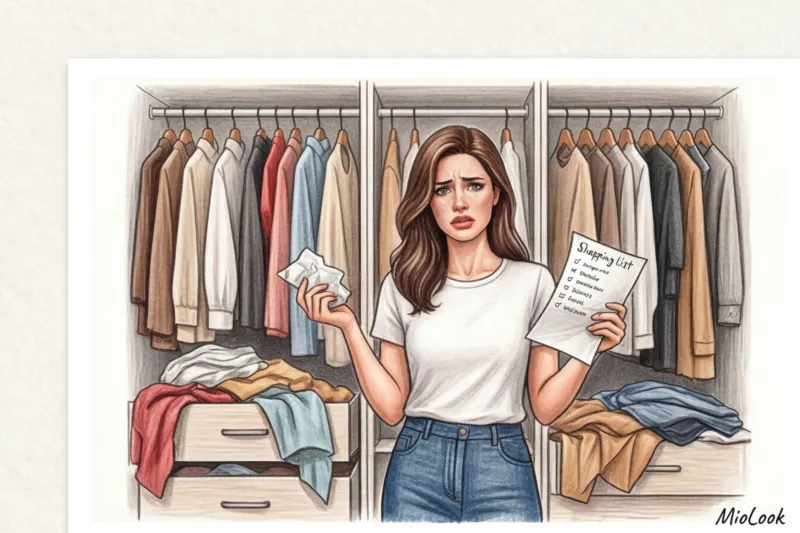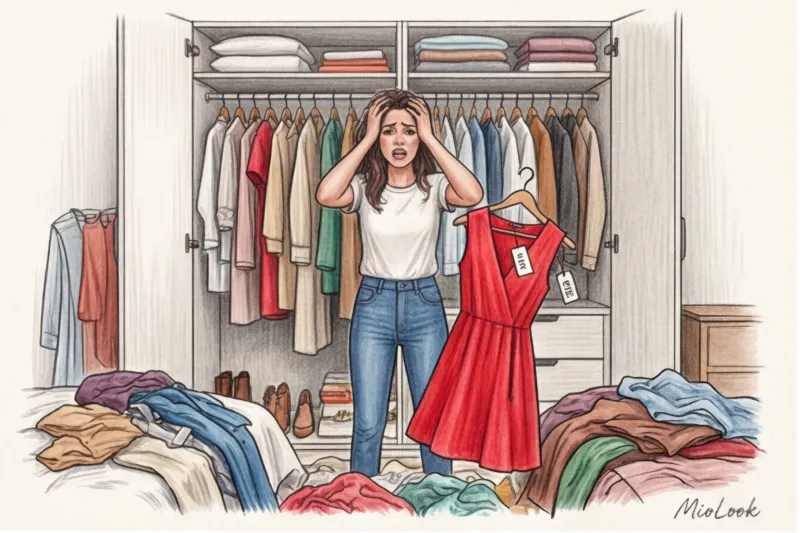
Last month, I sorted through a new client's wardrobe. Of the 140 items in her closet, 60 still had tags. We sat down on the bedroom floor and calculated the total cost of this "museum of unfulfilled ambitions"—it came out to just over €4,500. Most of these dresses, tops, and pants were bought at 2 a.m., spurred on by flash sales or slick, targeted ads.

The "lonely item" syndrome, where you have nothing to wear, silently eats up to 50% of your clothing budget. We've already covered the mechanics of this phenomenon in more detail in our A complete guide to the MioLook app and mindful shopping Today, I want to go further and explore preventative measures. I'll show you how a properly configured clothing wishlist app transforms from a simple wish list into a strict "quarantine zone" for your dopamine rush.
The Dopamine Trap: Why Online Shopping Carts Don't Work
The shopping cart in any online store is designed with one goal in mind: to get you to part with your money right now. Brands spend millions on UX design to shorten the process from "see" to "pay" to just a few seconds.
According to a McKinsey analytical report (2024), implementing countdown timers in the shopping cart and "only 1 left in your size" signs increases impulse purchase conversion by 42%. The store artificially creates stress and scarcity. At this point, your brain switches off logic and engages the hunter instinct.
An independent wishlist works completely differently. Its purpose is to force you to think. When you bring something from the aggressive marketplace environment into your personal space, you reset the timers and relieve the psychological pressure. You regain control of the process.
The Illusion of Ownership: How Wishlists Replace Shopping
Over 12 years of working as a stylist, I've made one counterintuitive observation. Adding an item to a wishlist isn't the first step to purchasing it. For our brain, it's a complete substitute.
Research into the neuroscience of shopping shows that the biggest dopamine hit comes not from putting on a new item, but from deciding whether to own it. By clicking "save to your list," you virtually claim the item. Your brain ticks the "loot claimed" box, the urge to buy immediately subsides, and you can calmly evaluate the item from the perspective of your wardrobe's mathematics.
Clothing Wishlist: The App as a 'Quarantine Zone'
Regular notes on your phone with a list of links don't work—they become a digital graveyard. A dedicated clothing wishlist app acts as a customs checkpoint at the border of your closet. Not a single item should be allowed to hang without first passing through quarantine.
In my practice, the "7-day quarantine" rule works great. As part of an experiment, I asked 15 of my clients not to click the "pay" button for an entire month. Any "wish listing" was submitted to the app for exactly one week. The results surprised even me: after seven days, 60% of the items were deleted by the women themselves, with comments like "Why do I even need this neon skirt?" This simple hack saved them an average of €300 per month.
Your perfect look starts here
Join thousands of users who look flawless every day with MioLook. Transfer your wishlist to the smart app.
Get access — €0.99 onceTo make quarantine work, sort your saved items into three strict categories:
- Base: Items that replace worn-out items (white T-shirt, straight blue jeans). These can be purchased after 48 hours of quarantine.
- Trends: Seasonal accents. Quarantine for at least 7 days. If after a week you still can't get the item out of your head, go for it.
- Emotional outbursts: Everything is shiny, transparent, and intricately cut. Quarantine is 14 days. Only a few survive.
3 Smart Shopping Filters Before You Hit the Buy Button
Let's say an item has been on the wishlist for a week. Does that mean it's time to get out the credit card? No. Now we're turning on the tools of buyers and professional stylists.
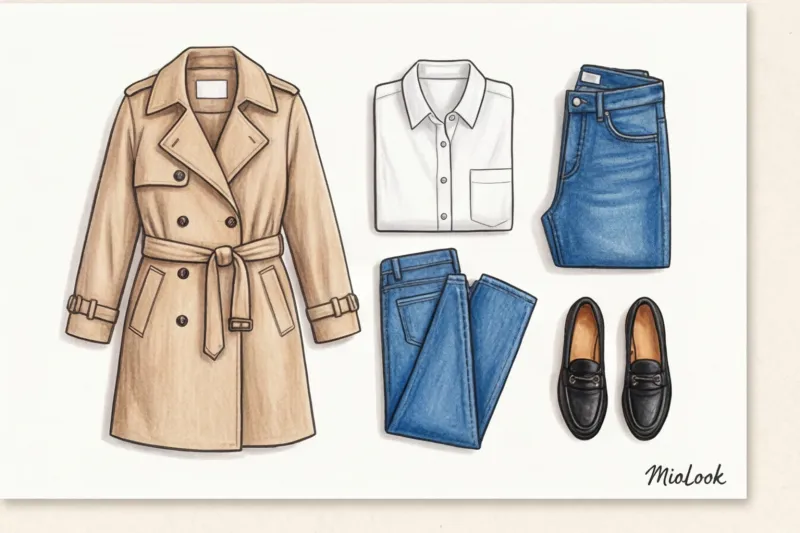
The first thing I check is lifestyle allocation. Does the item fit your actual schedule, not just an imaginary one? If 75% of your time is spent working on your laptop at home and walking the dog, and 80% of your wishlist consists of silk slip dresses and tailored jackets, you've lost your goal-setting. You're planning a wardrobe for a woman who doesn't exist.
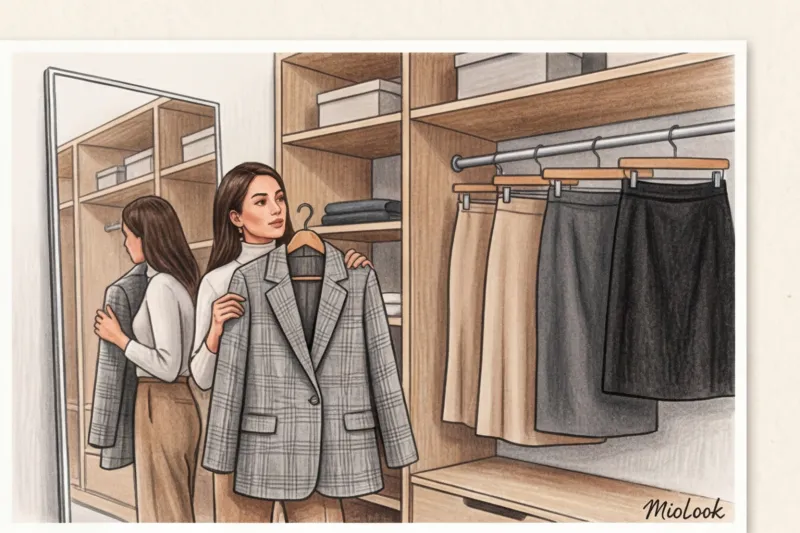
The rule of three images
The gold standard of style: a new item from your wishlist must be stylistically and physically compatible with at least three items that ALREADY hang in your closet.
Buying something that requires two more items to go with it (for example, buying a complicated green dress that now requires special nude shoes and a new handbag) is a financial failure. It's not an investment in style; it's creating a new problem at your own expense.
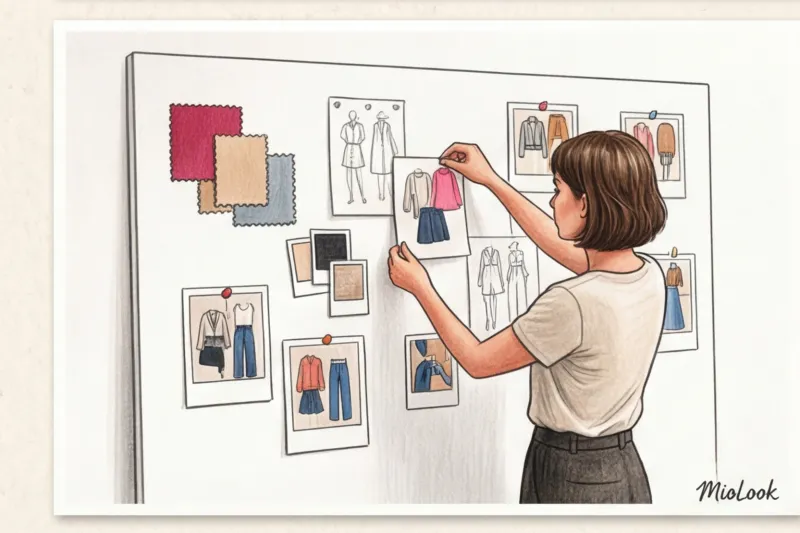
Cost Per Wear (CPW) formula
CPW (Cost Per Wear) is the cost per wear. A professional metric that's more sobering than any financial advisor. It's calculated simply by dividing the item's price by a realistic (not ideal!) number of wears.
"The cheapest thing is often the one that costs us the most. We don't pay for the cotton or polyester, we pay for how often we use it."
Let's compare two purchases. A basic, heavy cotton shirt from COS for €90 and a statement asymmetrical dress from Zara for €40. You'll wear the shirt to the office, brunch, and the theater at least 60 times a year. CPW = €1.50. You'll wear the dress for one birthday and then hang it in the closet because it's too memorable. CPW = €40. The €90 shirt is 26 times better value.
How MioLook turns your "wish list" into a functional capsule wardrobe
Technology has changed the rules of the game. Before, we had to keep track of our closet contents in our heads while standing in the fitting room. Today, I use MioLook not just as a wish list, but as a wardrobe analytics center.
The real magic happens thanks to the visual overlay feature. You upload a photo of the item you want into the app, and artificial intelligence lets you try it on with your digital wardrobe. You can literally see on the screen whether that new cardigan will pair well with your favorite palazzo pants or if the proportions are hopelessly off.

MioLook's recommendation algorithms also act as your personal stylist. The app can suggest that your top and bottoms are missing a connecting element (like a structured belt or loafers) and suggest adding that specific category to your wishlist.
And most importantly, preventing duplicates. If you try to save a fifth black turtleneck to your wishlist, the smart system will gently remind you of the four you already own. This brings us back to reality faster than any persuasion.
Ready to get started?
Try the MioLook free plan—no commitments required. Start digitizing your wardrobe and creating a smart wishlist.
Get access — €0.99 onceList Clearing: The Swipe Left Technique for Your Style
A common mistake beginners make is turning their wishlist into an archive of unfulfilled desires, which each time triggers a slight feeling of guilt and financial insolvency. A wishlist needs not only to be updated, but also ruthlessly purged.
Of course, there are exceptions to this rule. If you collect vintage couture or hunt for a rare Hermès bag at auction, the "delete after a month" rule will deprive you of a unique item. But for 99% of our everyday wardrobes, purging is essential.

I recommend auditing your desires on the first of each month. Feel free to delete an item if:
- It's been on your list for over 3 months, but you still haven't found the budget for it (which means you don't really need it).
- The trend for which the item was saved has declined (WGSN research shows that the life cycle of a microtrend has now been reduced to 3-5 months).
- This is a "I'll buy it when I lose weight/get in shape/change jobs" item. Your wardrobe should cater to you today, not your ideal future self.
Checklist: 5 Steps to a Conscious Wishlist Today
From theory to practice. Here's a concrete action plan you can implement in the next 15 minutes:
- Aggregation of chaos. Gather all those scattered screenshots from your phone gallery, saved Instagram posts, and open browser tabs. Transfer them into one app.
- Zero-day rule. Make a promise to yourself: from now on, you will not buy anything on the day it is discovered. No exceptions.
- Tagging. Add tags to each saved item. Organize them by life area: #office_strict , #weekend_outside_the_city , #base_replacement.
- Stress test. Run each item through the "Rule of Three Looks." If an item doesn't go with your current outfit, discard it without hesitation.
- Financial forecast. Calculate the CPW for your top three most expensive desired items. Write this amount in euros next to the item. A figure of €80 for a single outing will quickly dampen your enthusiasm.

Summary: From chaos of desires to a strategic wardrobe
Managing a wishlist isn't about restrictions and boredom. It's about managing your lifestyle and budget. A perfect wardrobe doesn't happen overnight; it's a living process that requires adjustments. But modern technology makes this process predictable and mathematically precise.
Use your wishlist not as a storage space for images, but as a testing ground. Let items prove their worth in your closet. Start digitizing your clothes today, create a smart quarantine list, and you'll forever forget the paradox of a full closet with absolutely nothing to wear.
Access to MioLook for €0.99 — one-time payment
A smart AI stylist will create the perfect look for you. Digitize your wardrobe and save on your purchases.
Get access — €0.99 once