What is Cost Per Wear and Why is the Price Tag Misleading?
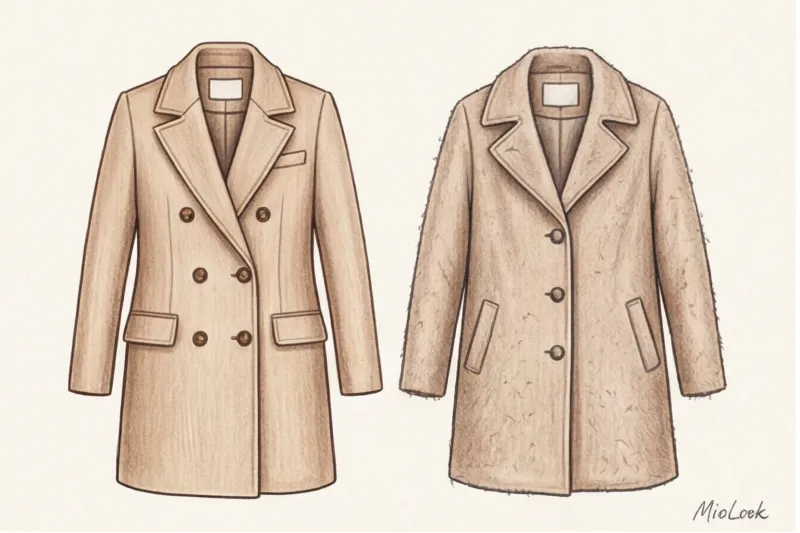
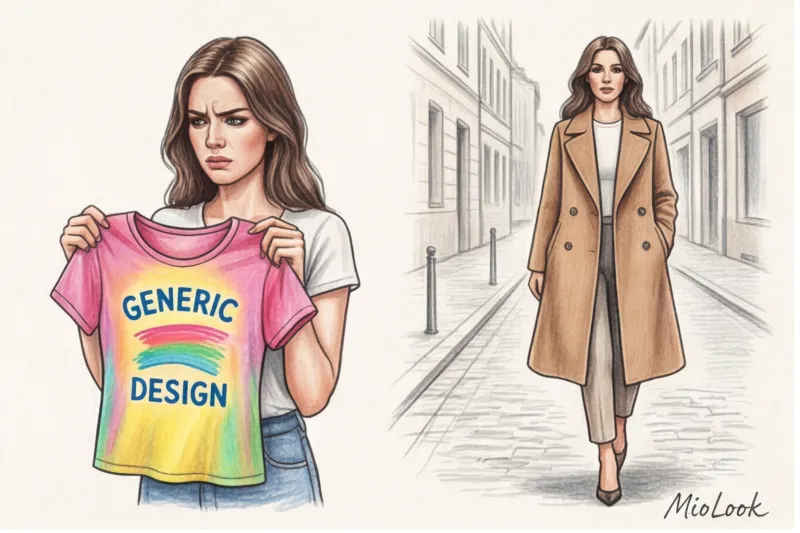
One of my clients was delighted with an incredible stroke of luck: she found a thin black turtleneck from a mass-market store on sale for just €15. It seemed like the perfect investment piece. But after the first wash, the neckline had stretched into a loose ruffle, and the side seams had become treacherously crooked. The result? The turtleneck was worn exactly once. The actual cost of this item was €15 for that one outing. In the same closet, she had a classic camel wool coat for €450, which she had worn nonstop for three seasons (about 180 days). Its cost per outing was a paltry €2.50.
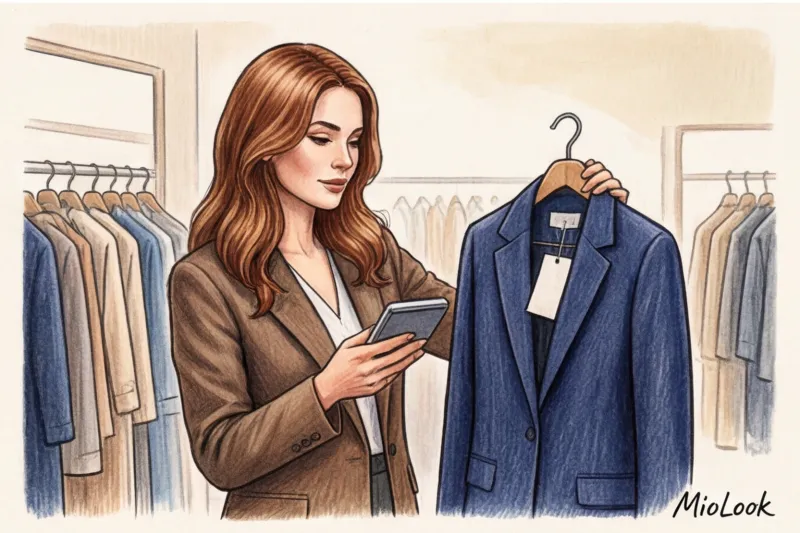
If you want to understand, How to calculate the cost of wearing an item , you'll have to forget about price tags forever. Cost Per Wear (CPW) is a fundamental metric in conscious consumption, reflecting the true cost of a wardrobe item based on how often it's used. Our brains easily fall into the trap of red "-70%" labels because they evaluate benefits in the moment, without considering the future.
According to a 2021 report by the Ellen MacArthur Foundation, the lifespan of clothing has decreased dramatically: the average modern item is worn only 7-10 times before ending up in a landfill. We buy a €100 dress for a single party, and its CPW is €100. This is a colossal hidden hole in our budget. We've covered the psychology of such purchases and a systematic approach to clothing in more detail in our A complete guide to the MioLook app for mindful shopping and wardrobe planning.
Cheap clothes with untouched labels, gathering dust on the back shelves, are the most expensive items in your closet. To stop subsidizing the textile industry with our own money, we need new, more honest math.
Access to MioLook for €0.99 — one-time payment
A smart AI stylist will select the perfect look.
Get access — €0.99 onceThe Hidden Costs of Maintaining a Wardrobe: The Unobvious Math
The basic formula for CPW is as follows: Price / Number of outputs But as a practicing stylist and textile expert, I insist on an expanded, predictive formula: (Tag Price + Grooming Cost + Tailoring Fee) / Expected Number of Outings.
Over 12 years of reviewing wardrobes, I've noticed a pattern: items with complex cuts and delicate materials drain money after the checkout. One day, a client and I were reviewing her "bargain" silk jacket with contrasting trim, purchased for €120. Due to the specific cut and the risk of dye bleed, it couldn't be washed—only specialized eco-cleaning every three months (about €25 per session). Over two years, the jacket required €200 in maintenance, almost double its original price.
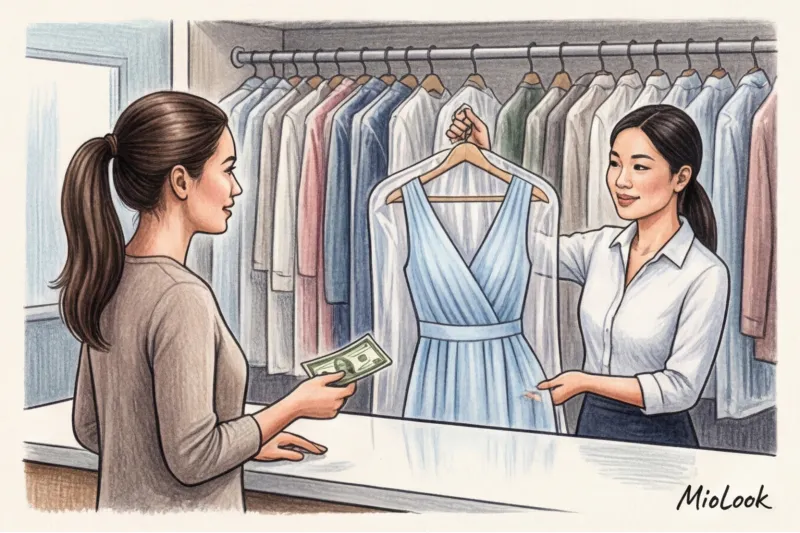
Dry cleaning, repairs and specialized care
Let's say you buy a light-colored wool coat for €250. Over three years of active wear, it will require at least two dry cleanings per season (approximately €20-30 per cleaning). This will add another €120-180 to the base price.
What about tailoring? A perfect fit is the secret to a classy look. If you buy trousers for €50 but need the length shortened (€10) and the waist taken in (€15), the actual starting price is €75. All these factors need to be factored into the calculation before you even reach the checkout.
Emotional wear and tear and microtrends
Beyond physical wear and tear, there's emotional wear and tear. An item may be in perfect condition, but you no longer want to wear it. Ultra-trendy details artificially reduce the denominator in the CPW formula.
"Microtrend fashion is a tax on those who can't count. A neon pink Barbiecore top might last 50 washes, but you'll only wear it three times because the trend faded in one season."
By choosing items with hyper-accented details (huge shoulder pads, acid colors, recognizable prints of a particular season), you knowingly agree to a high Cost Per Wear.
The "base" and "accents" myth: what you should really invest in
Perhaps the most damaging myth propagated by fashion magazines is: "Save on simple basics (white T-shirts, jeans, socks) and invest your budget in statement evening dresses, statement jackets, and bags." From the perspective of CPW's textile engineering and mathematics, the opposite is true.
Basic items have the highest wear and tear potential. You wear a white T-shirt under a cardigan, with jeans for a walk, or with a formal suit for an interview at a casual IT company. It's exposed to friction, sweat, frequent washing, and the heat of an iron.
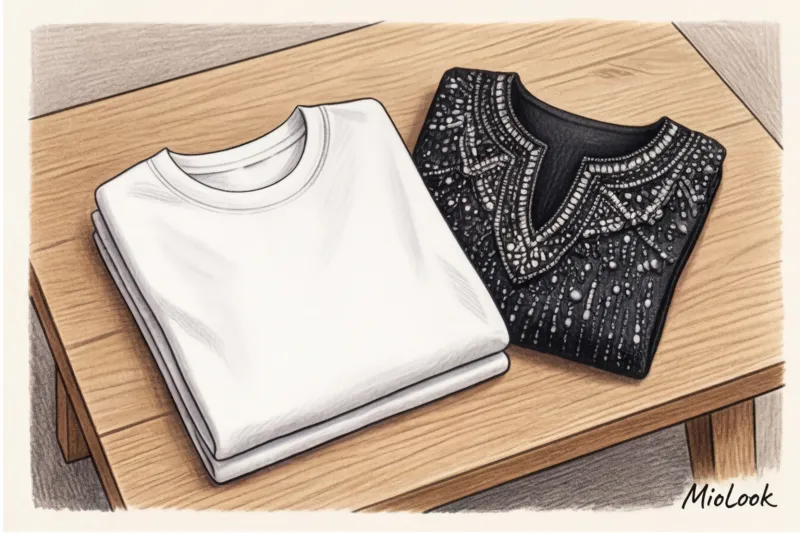
Let's compare. A €10 white T-shirt made of loose jersey will lose its shape after three washes. Its CPW is €3.33. A heavy cotton T-shirt (from 180 g/m²) for €60 made of mercerized cotton will survive 60 washes without losing quality. Its CPW is €1. Meanwhile, the €60 T-shirt will look expensive every day, while the cheap one will look sloppy by the second week.
As a textile expert, I explain this phenomenon simply: cheap cotton jersey is knitted on machines with extreme tension to save raw materials. When you wash the garment at home, the thread relaxes and tends to settle into its natural position. The result is lopsided stitches and side seams that sag into your belly. You should invest in items you wear every day.
Your perfect look starts here
Join thousands of users who look flawless every day with MioLook.
Get access — €0.99 onceHow to Predict the Durability of a Item Before Buying: A Textile Expert's Perspective
For the CPW formula to work for your economy, you need to be able to predict the actual lifespan of a fabric right in the store. Brand and price no longer guarantee quality. According to a global study by Textile Exchange (2023), fiber resistance to pilling depends on the fiber length and thread twist, not the logo on the label.
Composition analysis is your most important tool. 100% naturalness doesn't always equate to durability. For example, a 5-10% polyamide or nylon blend in a wool sweater is a technological advantage. The synthetic thread acts as reinforcement, increasing the yarn's durability by 30% and preventing elbows from stretching. However, 70% acrylic is a waste of money. Acrylic consists of short, smooth fibers that immediately fray and tangle into stiff pellets within the second day of wearing under outerwear.
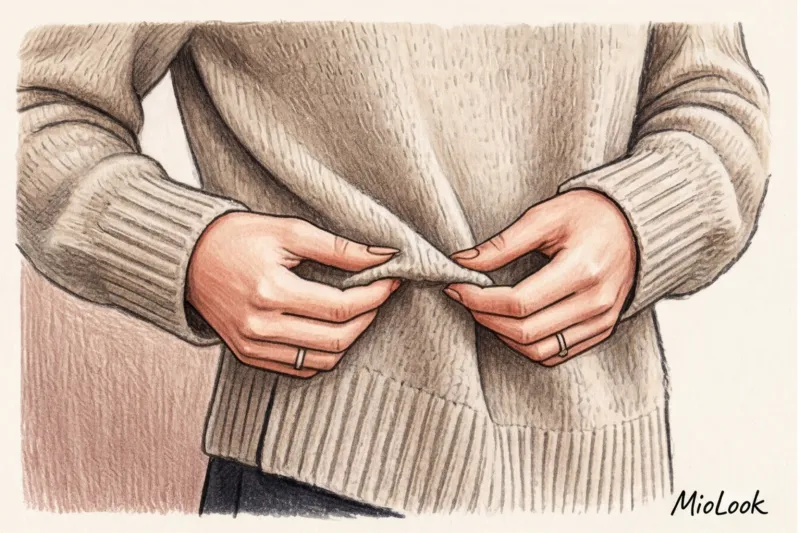
Low quality visual and tactile markers (high CPW guaranteed):
- Transmission test: Hold the knitwear up to the light of a store lamp. If the texture is loose, uneven, or has gaps, the item will become misshapen after its first exposure to water.
- Compression test (crumbling): Squeeze the edge of a piece of fabric (like the hem of a dress) in your fist for 10 seconds. If the fabric is still wrinkled like paper after you release it, you'll look untidy by the end of the workday.
- Print docking: Look at the side seams of a plaid shirt or striped top. If the lines don't match where they meet, it means the manufacturer cut corners.
- Seam density: Gently tug the fabric apart at the seam. If you see any gaps or threads that hold the pieces together, the seam will come apart with the slightest tension.
Compatibility Index: Why Things Become "Lonely"
To be fair, the CPW math doesn't apply to everything. If we're talking about a wedding dress or Elbrus climbing gear, the formula loses its meaning—they're paying for a unique feature or pure emotion. But in everyday wardrobes, a strict rule applies: even the highest-quality item will have a disastrously high CPW if you don't have anything to wear it with.
In styling, we call this phenomenon the "lonely thing" syndrome. You buy a stunning emerald asymmetrical skirt. You bring it home and realize there are no suitable shoes (sneakers are acceptable, but classic pumps make the look outdated), no suitable top (all sweaters are too bulky), and no trench coat can be thrown on top because of the skirt's odd length.
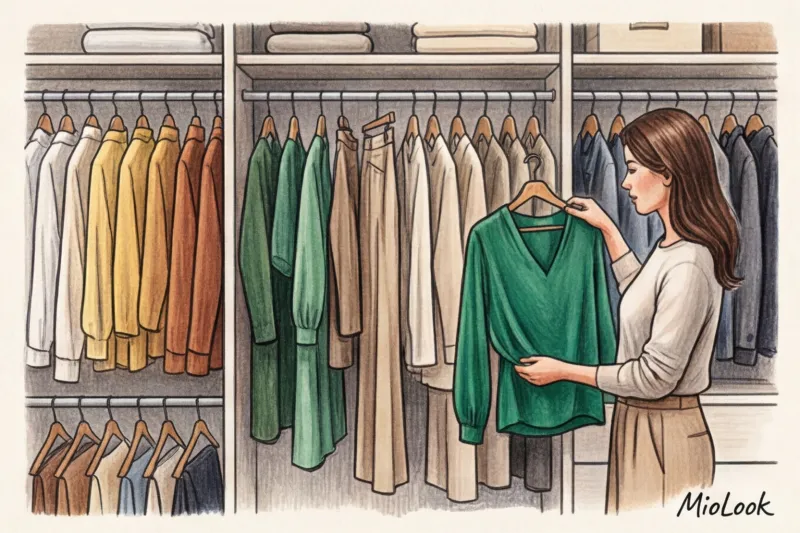
To make the thing work, use The Rule of Three Images While standing in the fitting room, mentally scan your closet. If you can't immediately, without any effort, come up with three complete outfits with the new item from what you ALREADY own, you should postpone the purchase. A lack of compatibility instantly negates any investment in fabric quality.
Forecasting Formula: 5 Questions to Ask Yourself in the Fitting Room
I teach this technique to my clients to permanently wean them off impulse shopping. Before you take an item to the checkout, ask yourself these five questions. If the answer to at least two of them is no, return the hanger to the rail.
- Where exactly am I going to wear this in the next 14 days? If the answer is "someday for an exhibition" or "when I lose weight," don't buy it. The item should integrate into your CURRENT life.
- Can I wash this at home or does it need to be dry cleaned? Check the label. If it says dry clean, mentally add €30–€50 to the price right now. Ready?
- Do I have the right shoes and outerwear for this silhouette? Wide palazzo shoes require a certain heel length or a chunky sole. Voluminous puff sleeves won't fit into a classic coat.
- Have the seams passed the wrinkle and stretch test? (See the point about fabric examination above).
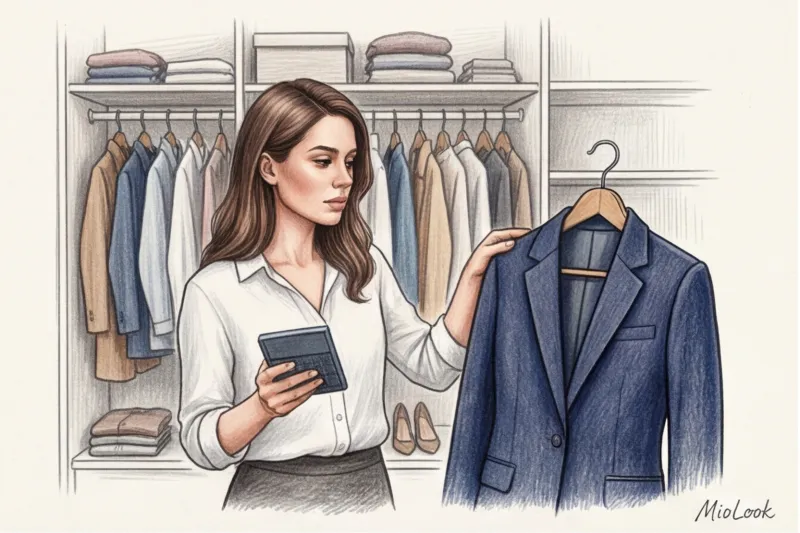
- What is the expected CPW? Use the calculator on your phone. It costs €120. I'll wear it about 10 times a season. That's €12 per outing. Is it worth it?

How AI and Smart Apps Help Reduce Cost Per Wear
Keeping your entire wardrobe in mind while staring at a tempting display at Zara or Massimo Dutti is practically impossible. Our brains tend to forget about that 50% of our budget that's consumed by impulsive, isolated items. That's why the future of styling lies in wardrobe digitization.
Using the "smart wardrobe" feature in MioLook , you can visualize a new purchase alongside your existing items before you spend. Simply upload a photo of a potential new item from the fitting room to the app, and an AI stylist will analyze its compatibility with your digital wardrobe.
Algorithms help create mathematically precise combinations. You can immediately see whether this sweater goes with those wide-leg trousers and midi skirt. If the app generates fewer than three successful combinations, the system will objectively predict that the item will be a stand-alone item, saving you money from an investment with an exorbitant CPW.
Summary: From impulse purchases to mathematically calibrated style
Wardrobe mindfulness doesn't mean giving up shopping or buying only gray, baggy clothes. It's about understanding the hidden meanings behind shiny displays and price tags. A low price tag doesn't guarantee savings, just as a high price doesn't promise impeccable fabric quality for decades.

The true measure of a successful personal style is a minimal Cost Per Wear ratio combined with maximum enjoyment from each item. When you open your closet, you see not a hoard of forgotten labels, but a well-oiled machine where every item earns its full value.
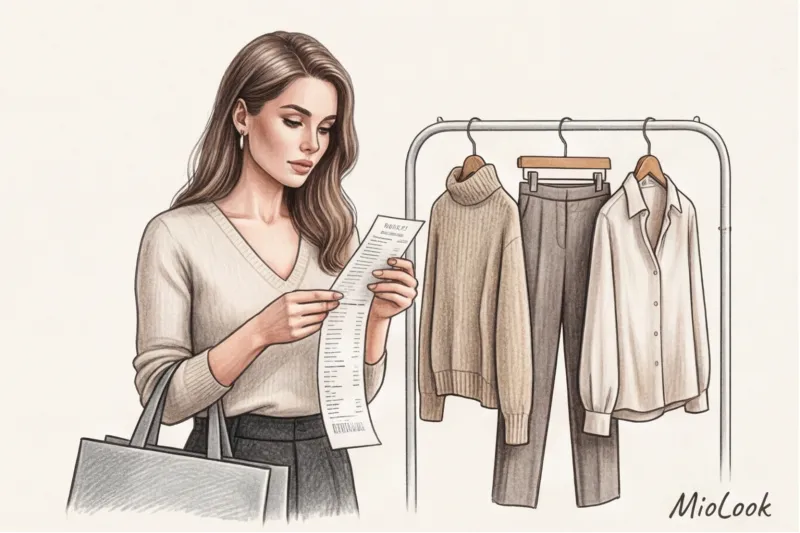
As a practical homework assignment, I suggest you do an audit this evening: calculate the CPW for the three most expensive and three cheapest items in your closet. I promise the results will surprise you and forever change your approach to shopping.