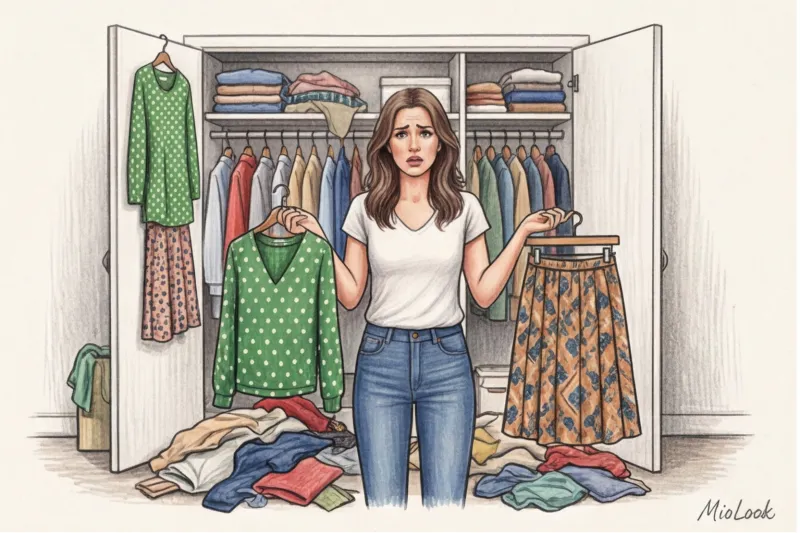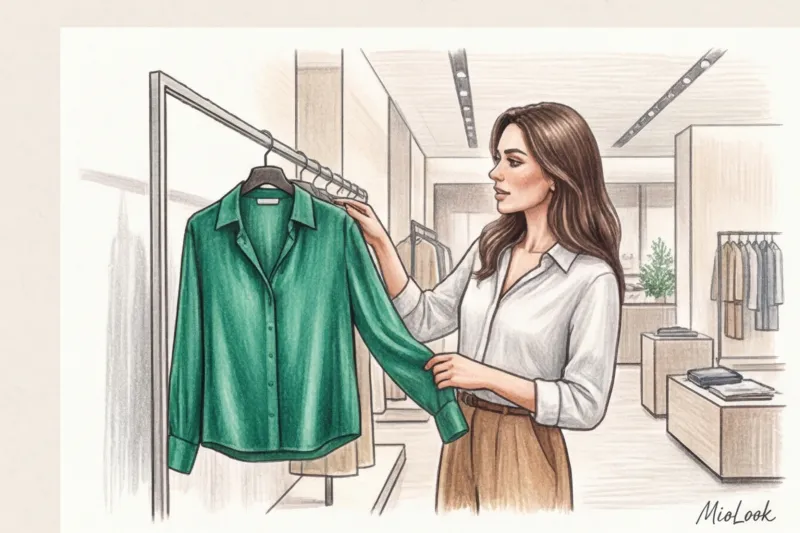
You're standing in front of the mirror in the fitting room. In your hands is the perfect emerald blouse of flowing silk. Your mind instantly conjures up a glossy image: you'll wear it with those black wide-leg trousers, add pumps, and rake in compliments at the office. You go to the checkout, cut the tags off at home, put the blouse on with the trousers, and... the magic is gone. The look looks sloppy, the fabric is bunched up, and your body proportions seem distorted. Sound familiar?
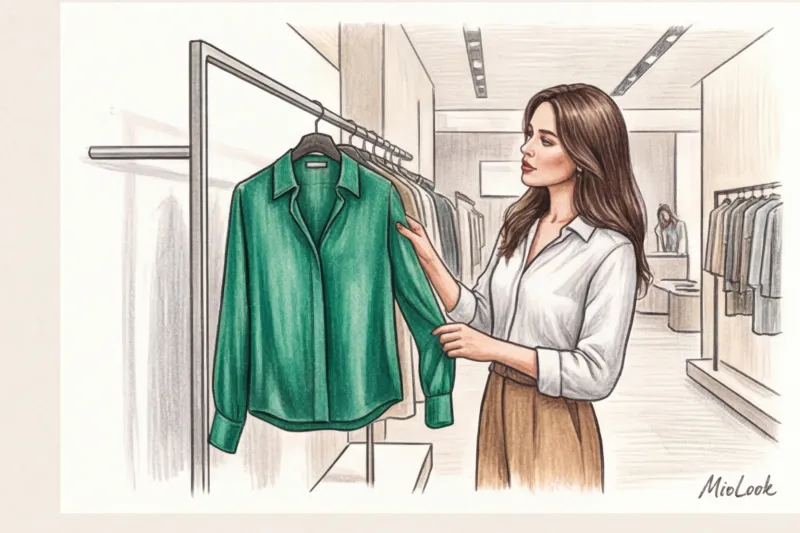
In my 12 years as a fashion journalist and stylist, I've seen hundreds of such disappointments. The problem is that for decades, glossy magazines have been teaching us the wrong approach to shopping. We've been told: if you can create three looks with an item in your head, buy it. But fantasies don't take the laws of physics into account. We've covered the psychology of such purchases in more detail in our The complete guide to mindful shopping and wardrobe management.
Today we will talk about How to check if clothes match Not in your imagination, but in the harsh reality of the fitting room. We'll replace emotional shopping with an engineering approach to styling.
The Anatomy of an Impulse Buy: Why Stores Trick Our Brains
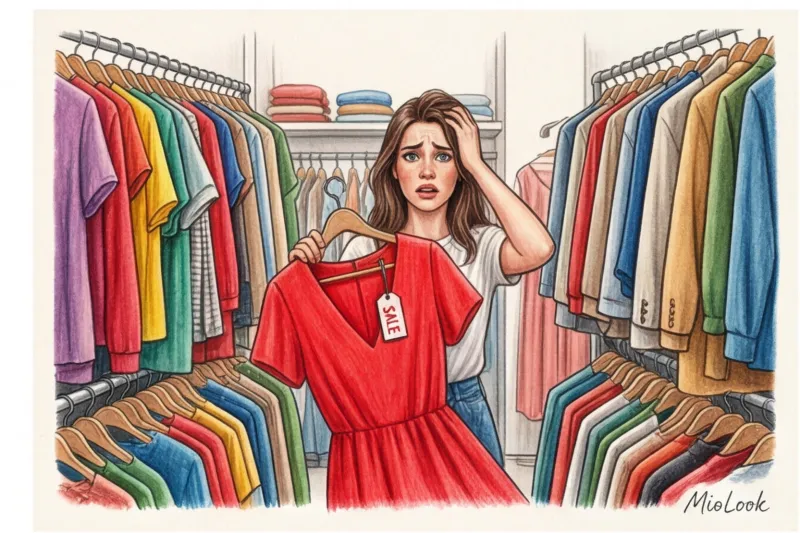
According to statistics we often discuss in the industry, about 50% of a clothing budget is spent on items that are only worn once or twice. This leads to the so-called "lonely item syndrome"—when a wardrobe item is beautiful on its own, but categorically refuses to be part of your closet.
Why are we so easily mistaken? The answer lies in the psychology of retail. In his classic 1999 study, Why We Buy Paco Underhill brilliantly described how the physical environment of a store suppresses our critical thinking. We become victims of dopamine blindness.
Think of Massimo Dutti or COS boutiques. Subdued warm lighting, directional spotlights that smooth out the texture of fabrics, and a relaxing lounge background. Added to this is the powerful halo effect (halo). You see an item on a mannequin, styled with expensive belts, the right bag, and layering. Your brain automatically projects this finished, expensive look onto you, forgetting one tiny detail: you don't have those specific pants, that belt, and that light at home.
You're not buying the item itself. You're buying a fantasy of what you'll look like wearing it.
How to check if your clothes go together before you reach the checkout: the "fashion architect" rule
The biggest mistake nine out of ten of my clients make when shopping is judging only by color. "Green goes with black, so I'll buy it." But clothes aren't paintings. They're soft architecture.
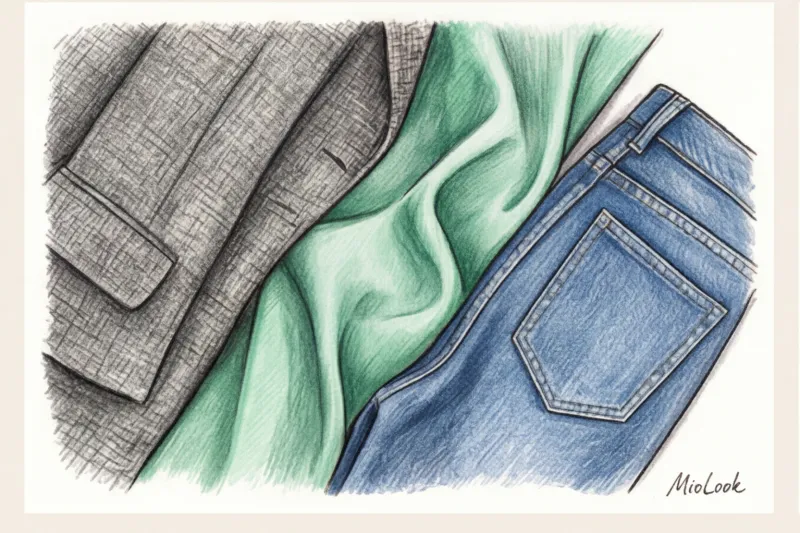
Remember the famous silhouette? New Look , created by Christian Dior in 1947. Why did it become iconic and look so harmonious to this day? Dior exploited the principle of architectural balance: a rigid, structured, corseted top (a bar jacket) was balanced by the colossal volume of a flowing bottom. The contrast of shapes and density worked.
In styling, the 3-second rule of visual harmony applies: the human eye detects dissonance in volumes and geometry much faster than an error in color scheme.
Texture conflict: fabric weight is everything
Every fabric has its own visual and physical "weight." Ignoring this weight is the source of most unsuccessful looks.
Imagine a heavy, structured tweed jacket. You wear a cheap, thin viscose top with a weight of less than 100 g/m² underneath. What happens? The heavy tweed literally crushes the thin fabric. The top bunches up, looks washed-out against the refined texture, and the whole look cheapens.
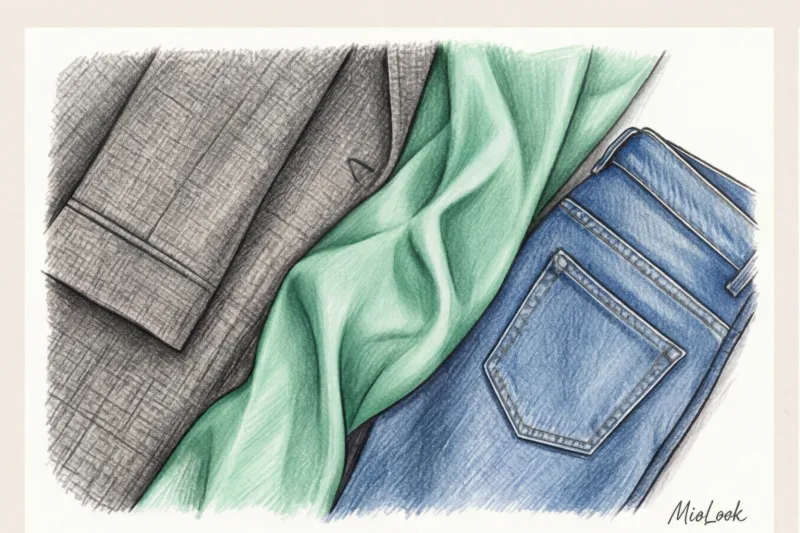
The iron rule of layers: The inner layer should always be thinner or equal in density to the outer layer. A coarse knit requires support in the form of heavy denim (12 oz or more) or leather. Fine silk (such as 19 momme) requires either the same delicacy or a sharp, deliberate contrast with the smooth wool.
Practical advice: Right in the store, squeeze the fabric of your new item and the one you're wearing. The difference in elasticity under your fingers will immediately indicate how these materials will behave under dynamic friction.
Geometry of lengths and hidden traps of cutting
There are some styles that physically can't coexist in the same space without clashing. My favorite wardrobe "mortal enemies" are:
- Low armhole sleeves (batwing) + narrow classic jacket. You just can't give up.
- Cropped top + mid-rise trousers. If you don't plan on showing a strip of belly fat, this is a fiasco.
- Wide palazzo trousers + voluminous long down jacket. You turn into a rectangle.
Before that How to choose trousers or a skirt to go with a new top, check the "matching test." Does the top's hem line up with the waistband of your regular bottoms? Where does the edge of the garment end?
The 'Three Looks Rule' Myth: Why Styling in the Mind Doesn't Work
It's time to debunk the biggest myth of glossy magazines. The rule "if you can come up with three looks, buy them" is hopelessly outdated in 2025.
Why is this a trap? We imagine ideal proportions. We don't imagine how a thick cashmere sweater will create an unsightly roll on our stomach when tucked into thin silk pants. We think in colors, not in the physics of bodies.
Access to MioLook for €0.99 — one-time payment
A smart AI stylist will create the perfect look based on your actual clothes and measurements.
Get access — €0.99 onceI have a personal story to back this up. During Milan Fashion Week 2022, I succumbed to the general euphoria and bought a Jacquemus micro top for €350. I mentally "tried it on" with all my wide-leg trousers and maxi skirts. In my head, it was a 10 out of 10.
Reality hit me in the hotel room. The top required ultra-high-waisted trousers. The waistband of my tallest palazzo sandals was exactly 2 centimeters too low. Those unfortunate 2 centimeters of exposed skin ruined the entire architectural design of the piece. The top remained in my suitcase.
Test Drive in the Fitting Room: 4 Physical Steps to Check
To avoid such mistakes, I make all my clients (and myself) conduct rigorous crash testing of their items right in the store booth. Here are 4 steps that will save you thousands of euros.
Step 1: The "base background" rule. Never go shopping in casual clothes. Wear your most perfect, well-thought-out basics (your favorite pair of jeans with the right fit, the perfect white T-shirt made of thick cotton). Any new a thing, be it a jacket or a cardigan, should work flawlessly with your base.
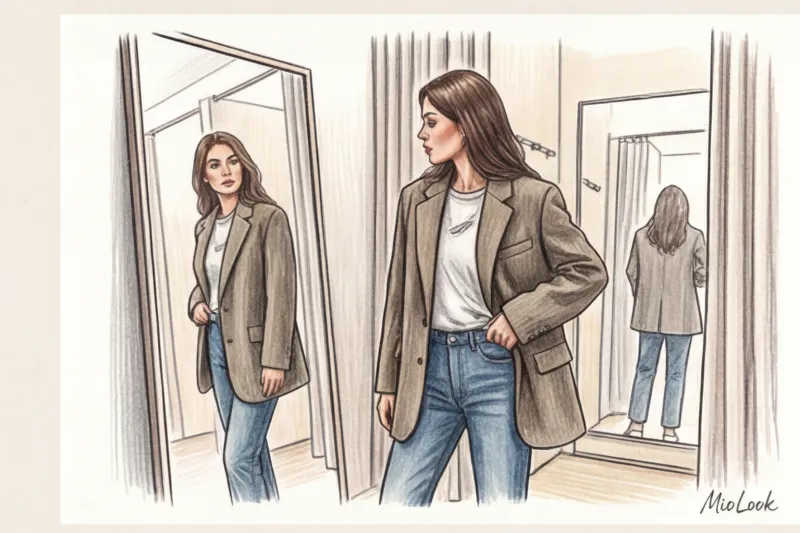
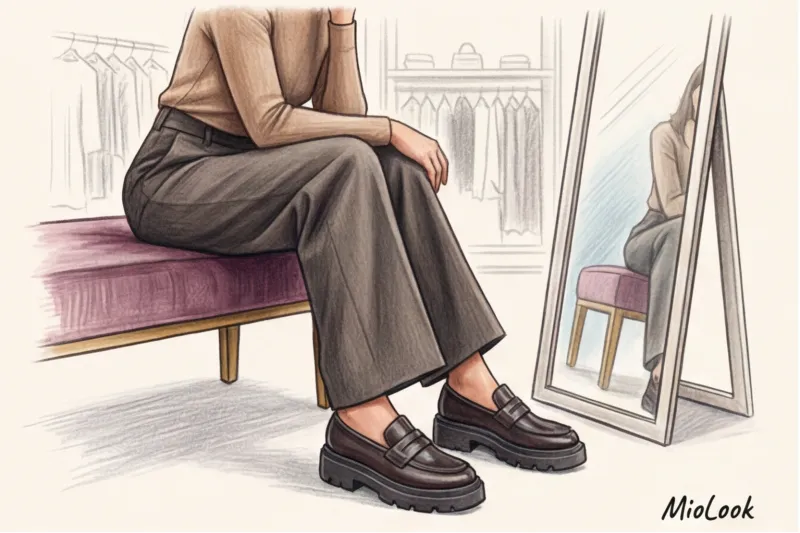
Step 2: Dynamic test. Clothes in a static position and clothes in motion are two different things. Sit on the ottoman in the fitting room. Raise your arms as if reaching for a coffee. Bend over. Are there any creases where the garment meets your base layer? Does the hem ride up so much that it exposes your lower back?
Step 3: Test the filling. If you're trying on a blouse or shirt, be sure to tuck it into your pants. Is it long enough to keep it from bulging out as you walk? Does the tightness of the fabric create excess bulk around your stomach, visually adding 5 kilograms?
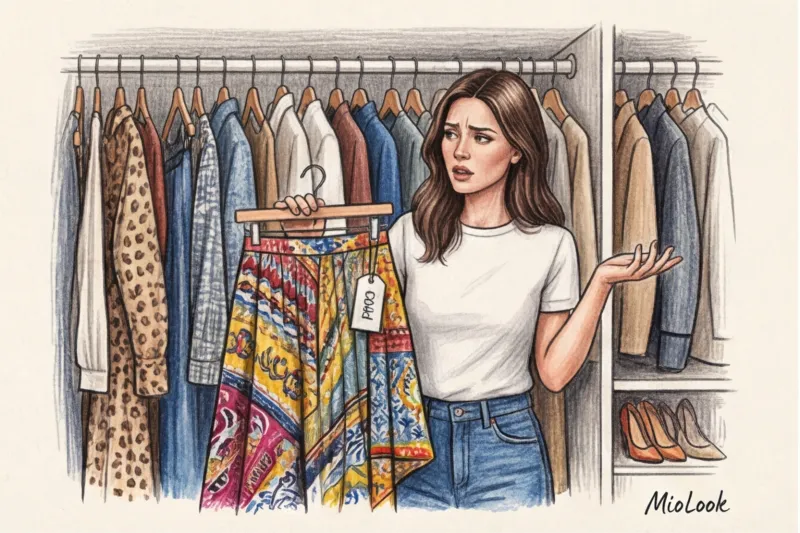
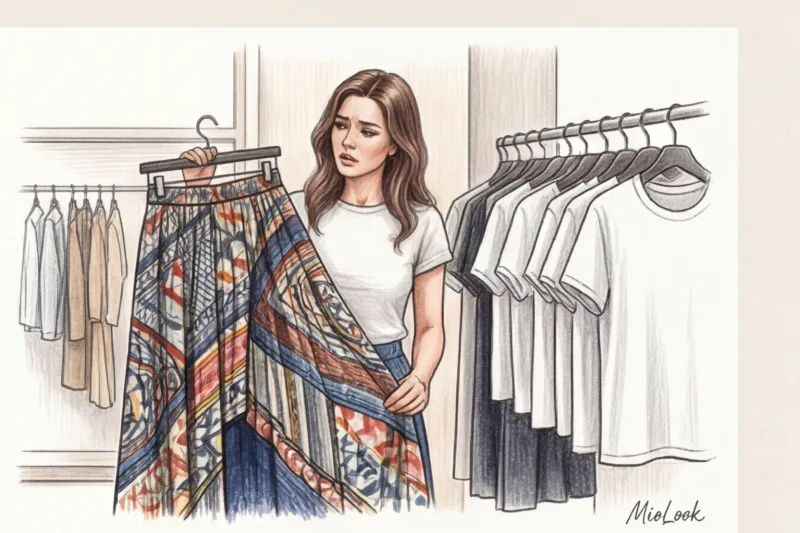
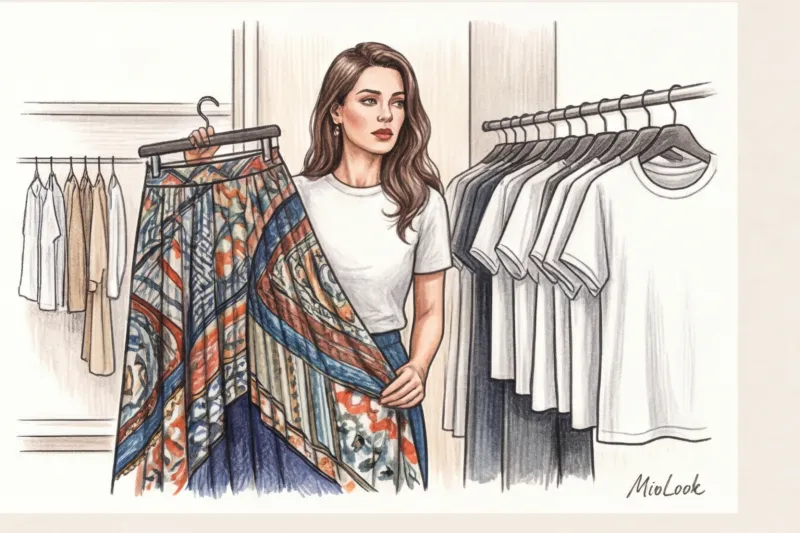
Step 4: Test outerwear and footwear. Take off your store-bought shoes and put on your own. Throw your coat over your new item. Recently, during a wardrobe audit, a client and I were examining a "lone" asymmetrical skirt with an intricate print that cost €800. In the store, it looked like a work of art. But its midi length clashed with the length of all her other coats (midi), creating a "cabbage" effect.
Fair limitation: These architectural rules apply to elegant, casual, and business styles. If you're a fan of Comme des Garçons-style deconstruction or grunge, where distorted proportions are a goal, not a mistake, you can break these rules deliberately.
Digital Insurance: How Digitizing Your Wardrobe Cures "Lonely Item Syndrome"
Relying on your memory in a store is a bad idea. Our brains tend to idealize things we already have in our closet. We forget the exact shade of red, the exact lapel width, and the exact waist height.
Your perfect look starts here
Join thousands of users who look flawless every day with MioLook. Digitize your closet and forget about the "nothing to wear" problem.
Get access — €0.99 onceThe future of smart shopping is a virtual fitting room in your pocket. The concept is simple: instead of wondering if that €150 jacket will match your trousers, you can visually check it before paying.
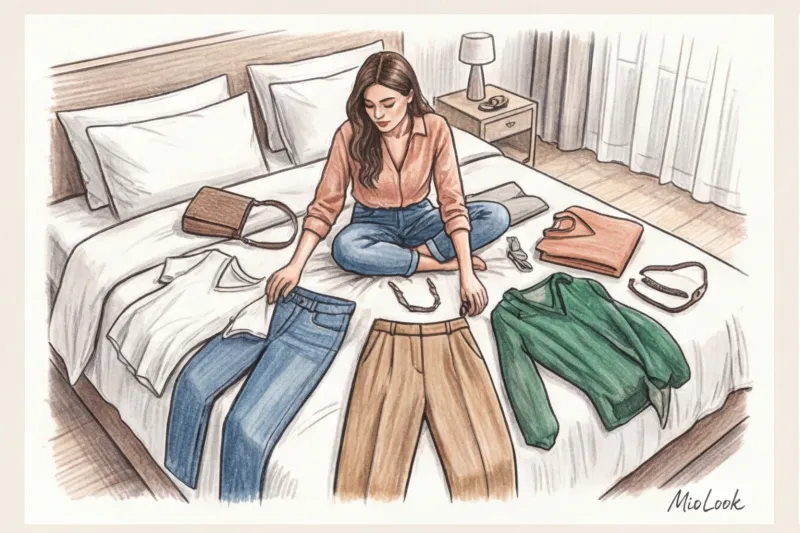
This is where it comes to the rescue MioLook app Once you've digitized your wardrobe, you gain a powerful filter against impulse purchases. You stand in the store, take a photo of a new item, upload it to the app, and ask the AI stylist to create looks that complement yours. real items. The program takes into account colors, styles, and seasonality. If the system can't create at least 3-4 strong looks with your current base, feel free to return the item to the hanger.
Checkout Checklist: Final Filter
Let's say the item passed the architectural crash test in the fitting room. It fits perfectly in length and texture. Before you pull out your bank card, ask yourself three tough questions.

- Is the temperature regime consistent? You've found a stunning linen top, but you're planning to wear it with heavy wool trousers in the fall. The temperature clash (summer texture versus winter texture) always looks out of place unless you're a master of sophisticated styling.
- Do I need special underwear? If this dress requires silicone bras, a seamless bodysuit, or a specific type of panty that you don't have, put it aside. Experience shows: we're too lazy to look for the right kind of underwear, and the item sits for years waiting for its right moment.
- Am I ready for such a departure? Silk that requires dry cleaning only, or intricate pleating that cannot be ironed. A garment should serve you, not you, its maintenance staff.
My main conclusion from years of working in the industry: a harmonious wardrobe is built not on boundless imagination, but on strict physical compatibility. Stop buying images from your head. Buy what fits seamlessly with the reality of your body and the clothes on your hangers today.