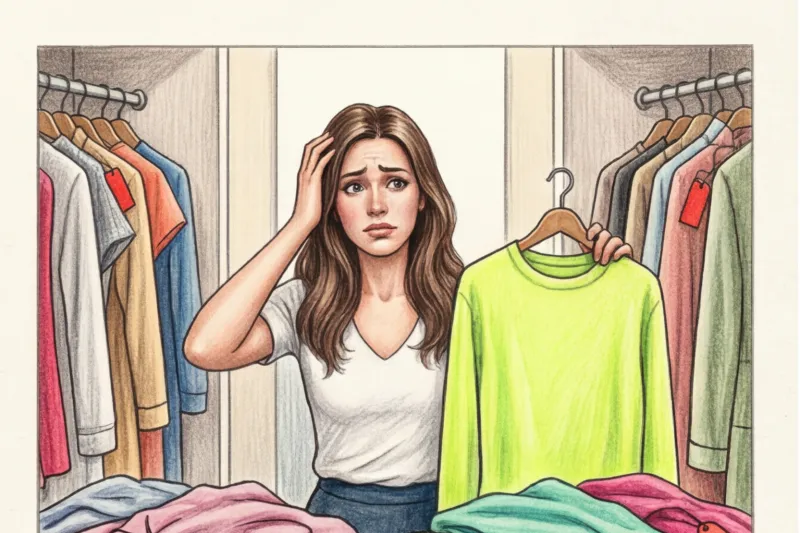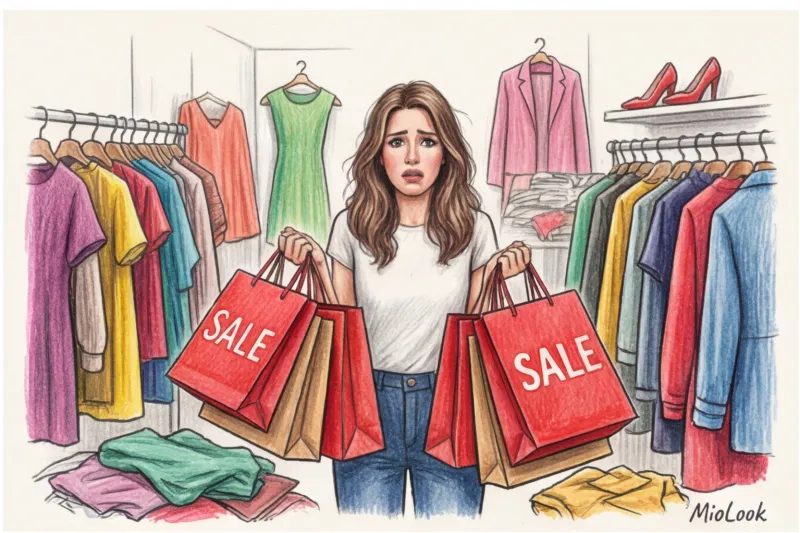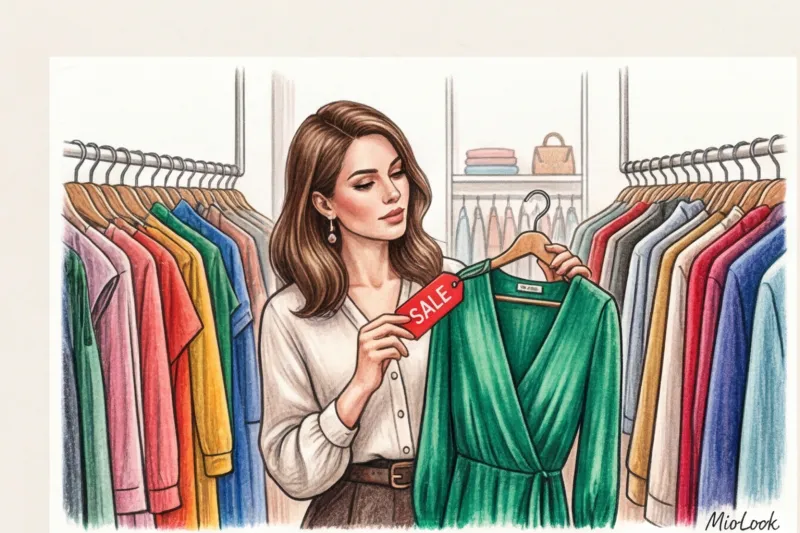
Last Tuesday, I was sorting through a client's wardrobe in Munich. Five identical Massimo Dutti silk skirts in different shades lay on the bed, the tags still intact. "They were only €70 at the final sale instead of €150! How could I pass them by?" she explained. Ultimately, these "bargain" purchases turned into dead weight worth €350, which we couldn't find a single top to go with.
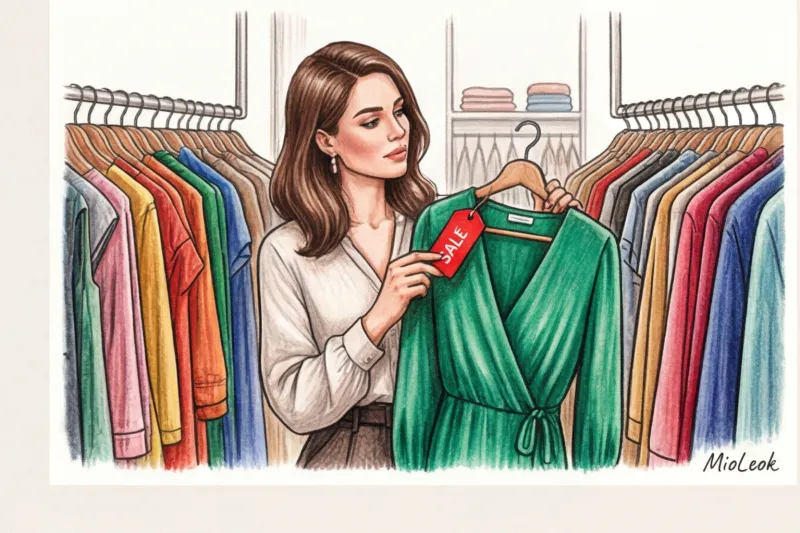
This situation is a classic "lonely thing" syndrome, which can eat up to 50% of your budget. We discussed the mechanics of this problem in more detail in our The complete guide to mindful shopping and wardrobe management If you ask me, How to buy things on sale correctly , I'll answer categorically: forget everything you've been told about shopping for savings. A sale is not the time to stock up on cheap T-shirts. This is your only chance this season to legitimately upgrade your wardrobe by buying premium fabrics at the price of a typical mass-market item.
The Red Price Tag Trap: Why Our Brains Tell Us to Buy What We Don't Need
Have you ever noticed your heart beat faster at a discount store? It's not a metaphor. According to a behavioral psychology study published in the Journal of Consumer Psychology (2023), the sight of a crossed-out red price triggers a powerful release of dopamine, the hormone that anticipates reward. At this moment, the prefrontal cortex, responsible for logic, switches off.
Retailers are well aware of our physiology. Large fast-fashion brands build a huge margin into the starting price. When you see a jumper for €30 instead of €100, you're not buying a jumper. You're buying discount size The illusion of value makes us overlook crooked seams and cheap hardware. At home, when the dopamine rush subsides in front of your mirror, a severe hangover sets in: you realize the item doesn't fit, doesn't match your basics, and is simply unnecessary.
Access to MioLook for €0.99 — one-time payment
A smart AI stylist will select the perfect look right in the fitting room, so you don't buy too much.
Get access — €0.99 onceThe biggest myth among stylists: why you shouldn't buy essentials on sale
"Sales are the best time to update your basic white tees and straight jeans." This advice has been passed around from blog to blog, but after 12 years of practice, I've learned that it's the worst strategy you can come up with.
Let's face it. Perfect a quality basic T-shirt Thick cotton jeans or classic blue jeans with a perfect fit are snapped up even before the sales start. The items that survive until the final sale in the basics departments are those with poor fit, stretched necklines, or made of thin, translucent knits that will pill after the first wash.
What should you really invest in? In the upgrade of textures.
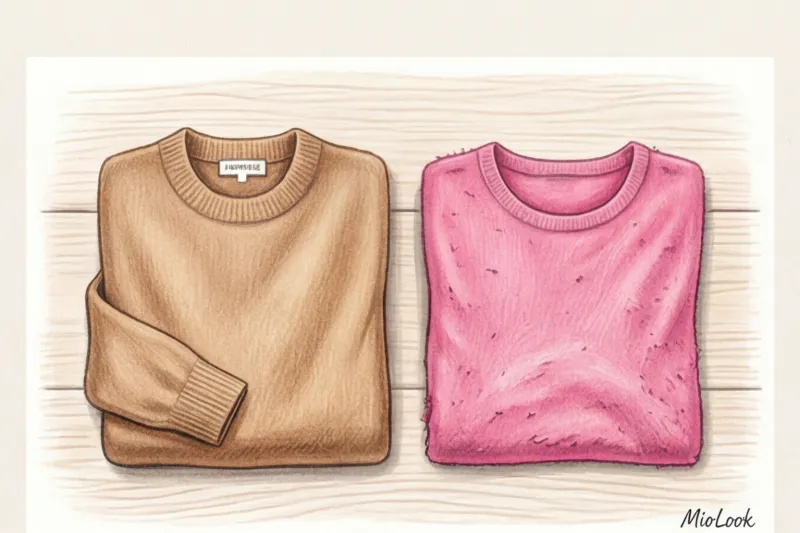
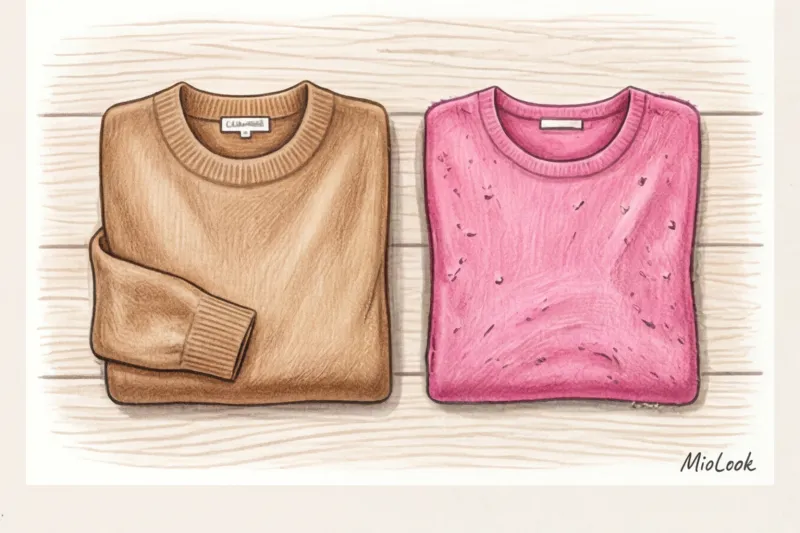
Instead of buying five acrylic sweaters for €15, find one quality sweater Cashmere or merino wool for €75. These discounts allow you to enjoy thick linen, natural silk, and soft leather at the price of ordinary polyester.
Wardrobe Math: The Three-Look Rule and the CPR Formula
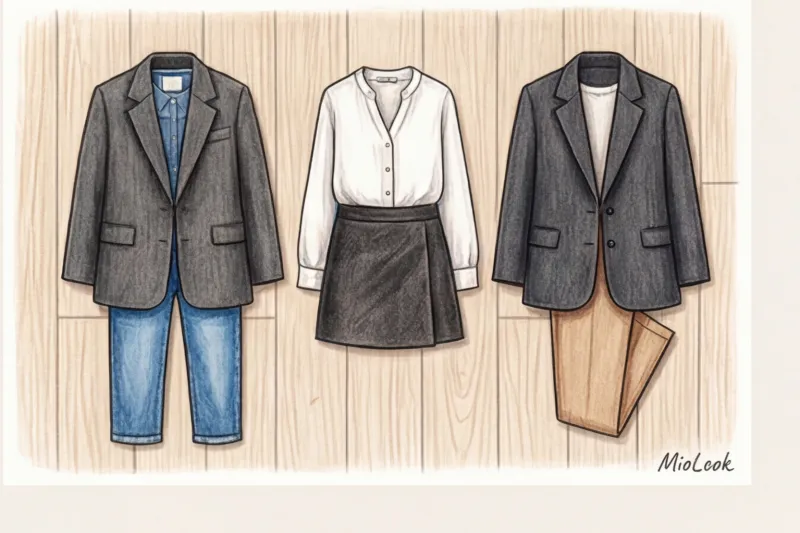
My main rule in the fitting room is this: if you can’t immediately, right now, come up with three outfits with a new item from what already hanging in your closet—leave it at the store. No "I'll buy shoes to go with it later."
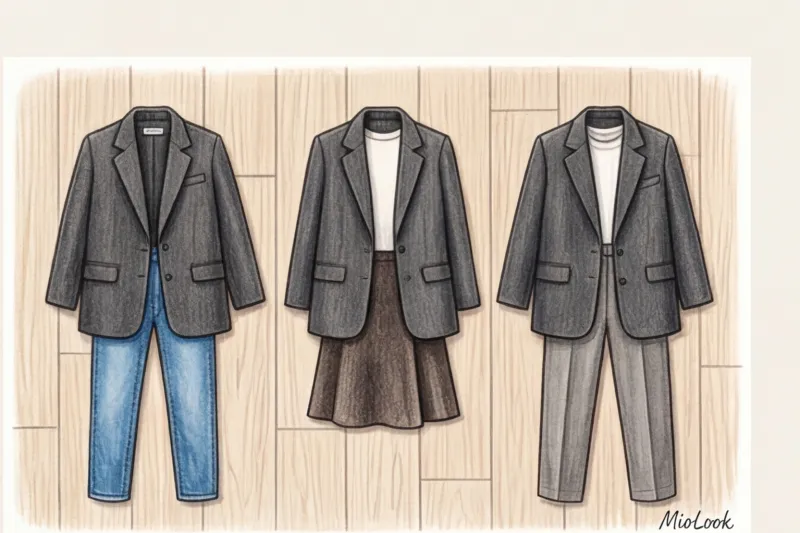
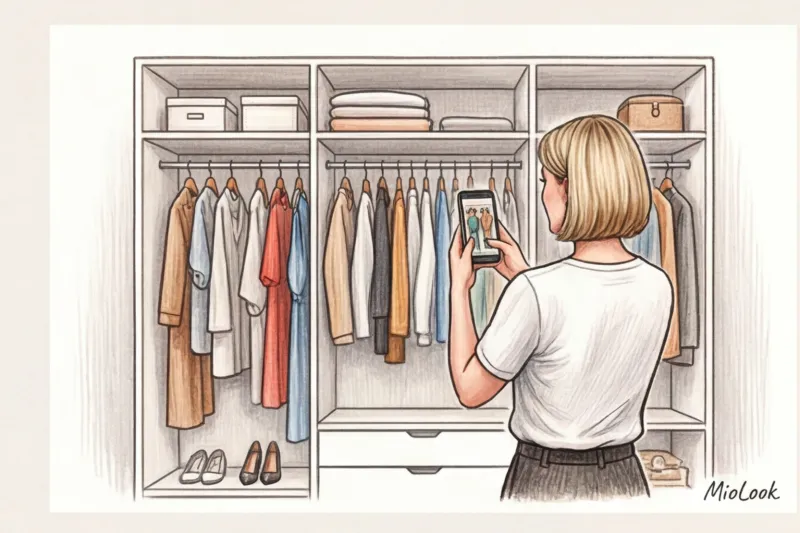
To avoid this process turning into a painful attempt to remember what exact shade of pants yours are, use an app MioLook Once you've digitized your wardrobe, you can attach a photo of a new item to your real-life wardrobe right in the fitting room and see if the puzzle fits together.
How to calculate Cost Per Wear (Cost per Wear)
The most expensive item in your closet isn't the one you paid the most for at the checkout. It's the one you wear exactly once. In styling, we use the metric CPW (Cost Per Wear)—the cost per wear.
CPW Formula: Item Price ÷ Number of Planned Outputs.
Let's compare two purchases:
1. Trendy polyester crop top with rhinestones: originally €40, now €15 on sale. You wore it to a party. CPW = 15 €.
2. Classic silk blouse by Massimo Dutti: originally €150, now €80 on sale. You've worn it to the office and meetings 40 times this year. CPW = 2 €.
It's a paradox, but the silk blouse cost you 7.5 times less than the cheap top.
Your perfect look starts here
Join thousands of users who look flawless every day with MioLook. Digitize your closet and calculate your CPW automatically.
Get access — €0.99 onceKatarzyna's Strategy: How to Buy Things on Sale Step by Step
Never approach a sale as a casual stroll. It's a strategic operation that requires preparation.
- Inventory. According to McKinsey (2024), modern women regularly wear only 20-30% of their closets. Before leaving the house, open MioLook and analyze your blind spots. We often reach for more pants when we're desperately short on neutral tops.
- Timing of discounts. The European sales calendar runs like clockwork. The first wave (20-30% discounts) is the time to buy signature pieces: classic coats, leather shoes in popular sizes, and suits. The third wave (up to 70% off) is the time for trendy accessories and those premium finds in unusual colors that others haven't dared to buy.
What to Look for at H&M, Zara, COS, and Massimo Dutti (Brand Guide)
Not all mass-market products are the same. Here's my personal shortlist of where and what to look for on sale:
- COS: Come here for architectural cuts, chunky knits that hold their shape, and minimalist wool coats. Their merino wool basics last for years.
- Massimo Dutti: Your goal is leather accessories (belts, bags), silk shirts and an impeccable suit group.
- Zara (Origins / SRPLS lines) and H&M (Premium Selection): Don't waste time in the main store. Look for the racks with premium lines. There you can find cashmere, genuine suede, and excellent denim at very reasonable prices.
5 Signs That an Item Needs to Be Returned to the Hanger Immediately
Even if an item passes the fabric quality check, there are five red flags that I'll have customers leave the store empty-handed for.
- "I'll lose weight by summer." Buy clothes only for the body you have right now. Clothes that wait until the right time only make you feel guilty.
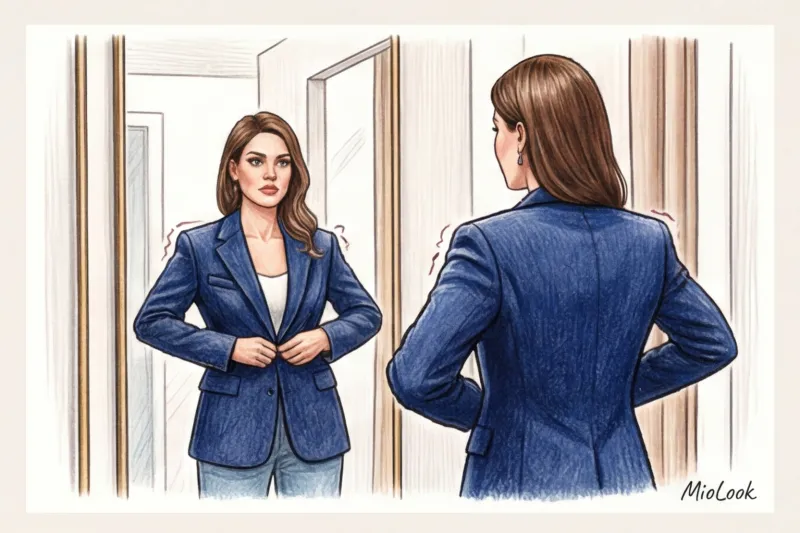
- Compromise fit. "It's a little tight in the shoulders, but at least it's 70% off!" – no. An ill-fitting item always looks cheap, regardless of the brand.
- Complex care. You buy a pair of pants for €20, but the tag says "dry clean only." If dry cleaning costs €15 after every two wears, those pants will ruin your money in a season.
- A fantastic reason. A luxurious velvet floor-length dress bought for a cruise you don't even plan to go on yet.
- Another duplicate. You already have a grey jumper, but this one is "a little lighter". Fair Limit: This rule doesn't apply to basic opaque tights or perfectly fitting jeans if you wear them five days a week and need a physical change. But for jackets, sweaters, and dresses, it's an absolute no-no.
Smart Shopping Checklist: A Checkout Reminder
While standing in line at the checkout, ask yourself just three questions that will save you hundreds of euros:
- Would I buy this item right now at full price? (If the answer is "no," you're only buying the discount.)
- Will I be able to wear this tomorrow morning?
- Am I prepared to care for this fabric (iron silk, hand wash wool)?
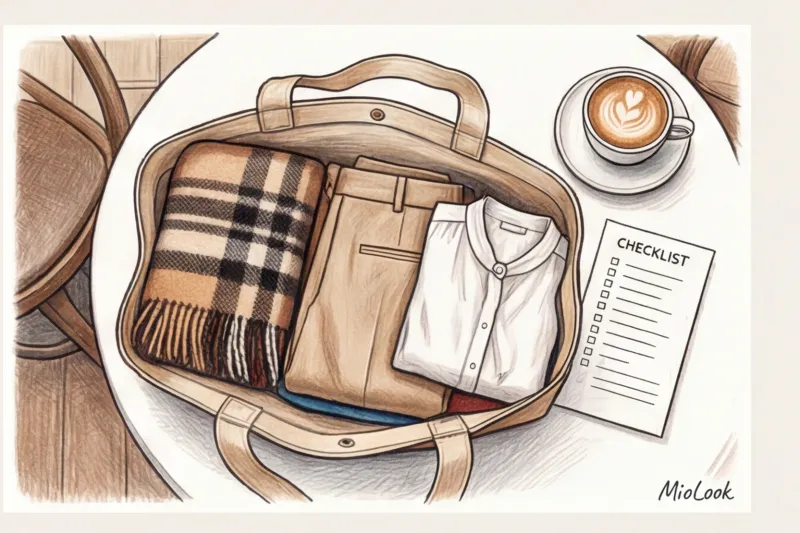
Sales are a powerful stylist's tool, but only if you use it with a cool head. Your goal isn't to bring home a huge bag of cheap items, but to snag those gems that will elevate your entire wardrobe. And if you want to stop making impulsive mistakes, transfer your closet to your smartphone. Use MioLook to digitize your database—believe me, when you can clearly see how many things you have, your hand automatically reaches out to return another unnecessary T-shirt to the hanger.