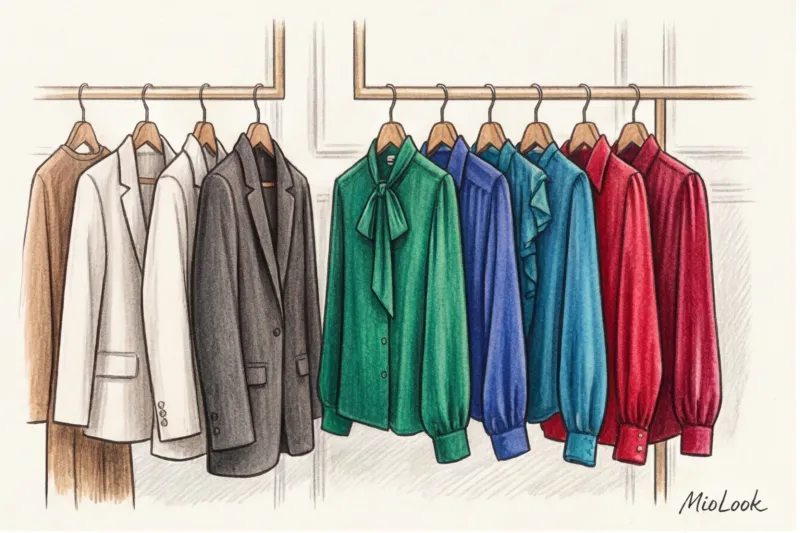
Resale, vintage, second-hand: a conscious shopaholic's dictionary
When a top manager from a major IT company came to me for a wardrobe review wearing an impeccable Chanel tweed jacket, I instinctively estimated the look at at least €4,000. Imagine my surprise when she proudly announced, "I got it on a platform for €850, and it even came with authentication!" It was then that I was finally convinced: the secondary market has forever ceased to be a compromise. Today, a smart person clothing resale — it's a marker of high fashion IQ, not a way to survive on a limited budget.
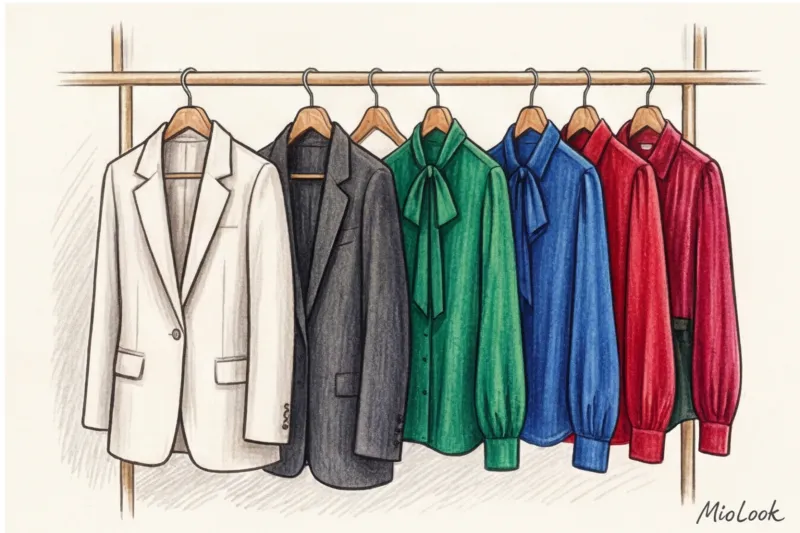
In my 12 years as a stylist and colorist, I've constantly encountered the same psychological barrier. Whenever I mention buying something with a story, my client wrinkles her nose: "Darina, I don't want to rummage through my grandmother's chest and wear someone else's aura!" Let's clear up the air and clarify the terminology so you understand exactly what treasures we're searching for.
There is a huge difference between the formats that many people mistakenly lump together:
- Second-hand — this is the mass market of used goods. These are the same stores where items are often sold by weight, and you have to spend hours searching through hundreds of polyester T-shirts to find something decent. If you're interested in this type of hunting, I've already written about it. How to shop at a second-hand store But professional resale is in a completely different league.
- Resale — is a resale site for mid-up and premium items. Items are sold in perfect condition, sometimes even with tags, and undergo a rigorous inspection. You won't find stretched-out H&M sweaters here, but you'll easily find the perfect Max Mara cashmere coat.
- Vintage — is clothing that's at least 20 years old, but the main condition is that it vividly reflects the spirit and aesthetic of its era. A basic gray turtleneck from 1999 is just that, an old turtleneck. But a structured jacket with exaggerated shoulders by Thierry Mugler from the '80s is a true, investment-grade vintage.
- Archival items These are iconic, historically significant pieces from specific collections of great designers (for example, Marc Jacobs's controversial grunge collection for Perry Ellis in 1993). They are coveted by collectors worldwide, and their prices can reach tens of thousands of euros.
"Modern resale is no longer associated with a flea market or a thrift store. Forget the smell of mothballs. Today, it's a trip to an elite boutique with impeccable service."
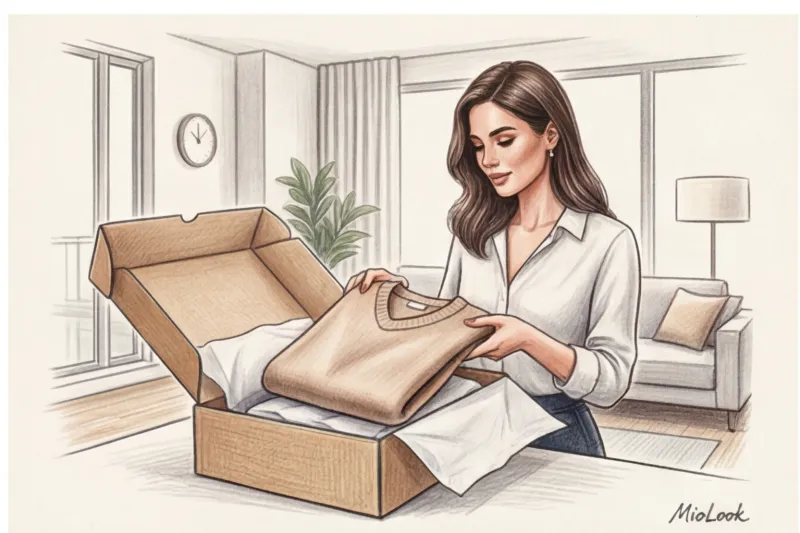
At offline stores, you're greeted by white-gloved consultants, items hang on velvet hangers, and the air is filled with the scent of niche perfume. If you order online, your item arrives in a branded dust bag, with a certificate of authenticity, and carefully packaged in crisp tissue paper. You're paying for rigorous selection, professional dry cleaning, and an absolute guarantee that you're looking at the original.
What is clothing resale and how is it changing the fashion industry?
Major international platforms like Vestiaire Collective and The RealReal have literally revolutionized the fashion industry. They've transformed buying used luxury goods from a shady transaction on semi-legal forums into a transparent, systematic, and secure process. Now you don't have to meet a stranger in a cafe to buy a Prada bag—you order it through an app, knowing that a dedicated team of experts has checked every seam, hardware, and font on the tags.
According to the ThredUp Resale Report (2024), the secondary clothing market is growing three times faster than traditional retail. And this phenomenal growth isn't driven by those simply looking to save money. The main buyers are Zoomers and millennials, for whom resale has become the new norm for two reasons: a desire for uniqueness and conscious consumption. In their worldview, finding a rare, archived Jean Paul Gaultier top that no one else has is far more prestigious than buying another recognizable item from a recent collection that half the city will be wearing.
The math here is crystal clear. It's much more cost-effective to invest €250-300 in a high-quality silk trench coat or a perfectly fitted 100% wool jacket that will last for years than to spend the same amount on three fast-fashion polyester throwaways. To clearly assess the true benefits of such a wardrobe investment, I always recommend using cost per wear formula.
But before diving headfirst into the exciting world of resale, it's important to understand one thing: haphazard shopping of even the most luxurious brands will only lead to a beautifully cluttered closet. To avoid this, digitize your items before you start shopping. MioLook — this way, you'll clearly see exactly which structured jacket or statement bag is missing from your wardrobe, and you won't buy a fifth pair of similar Jil Sander trousers just because they were incredibly discounted.
Why stylists recommend resale: the mathematics of status
Have you ever calculated the real cost of your clothes? Not the number they ring up at the checkout, but the cost of each wear? In professional styling, we call this Cost Per Wear (CPW) — the cost per release. And it's this formula that shatters the myth that mass-market advertising is profitable.
Let's do the math. Imagine a trendy new jacket from a popular fast fashion store for €90. It's made of a polyester-viscose blend. After 10 washes or dry cleanings, the adhesive on the lapels will bubble and the fabric will lose its shape. You'll wear it 15 times before it's ready for the dacha. The total cost per wear is €6.
Now let's take a vintage Max Mara 100% virgin wool jacket, purchased on a resale platform for €250. Thanks to the impeccable cut, double-stitched seams, and high-quality materials, you'll wear it at least 100 times over the next five years. The cost? Just €2.50. By buying something that seems more expensive at first glance, you're actually leaving money in your wallet.
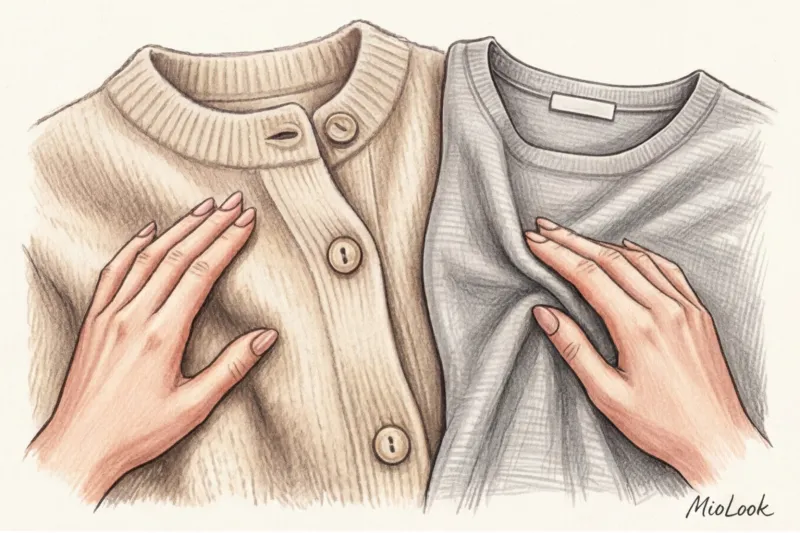
The phrase "it used to be better" in the context of fabrics isn't an old man's grumbling, but rather dry textile analysis. Modern brands, in an attempt to maintain retail margins, are forced to skimp on raw materials. Vintage silk from the 1990s often has a density of 22–30 momme (a unit of measurement for fabric density); it flows, is opaque, and drapes luxuriously. The modern equivalent in the mid-price segment is a measly 14–16 momme, which is prone to static and clings to the slightest imperfections on the skin.
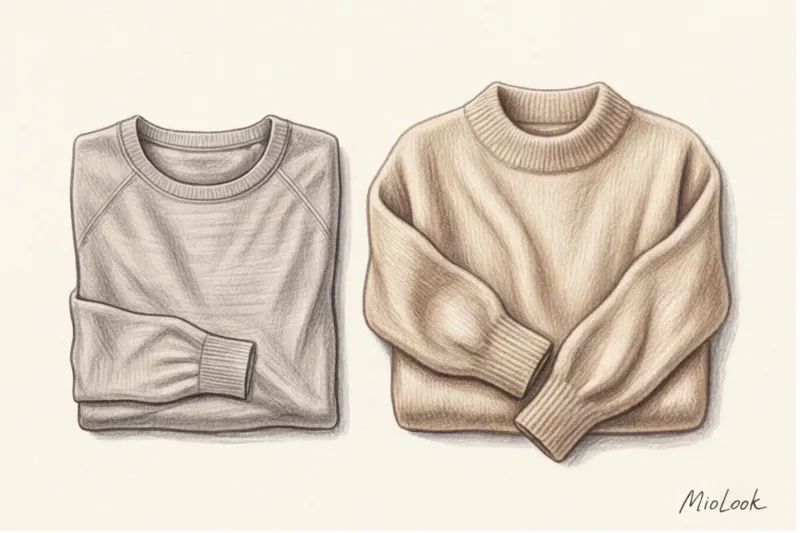
The same goes for knitwear. Vintage Scottish cashmere is usually spun from two or four threads (2-ply or 4-ply) with a high knit density. It is virtually pilling-free. A modern sweater from the mass market for €80 is often a loose single-ply knit that loses its appearance the first time it rubs against the strap of a crossbody bag.
In addition to uncompromising quality, resale offers us a powerful tool: individuality. Are you familiar with the "incubator effect"? It's that awkward moment when you walk into the office and three colleagues are wearing identical vests from the latest collection at a popular chain store. Vintage and archival pieces have unique details: specially cut horn buttons, unusual lapel geometry, or a distinctive lining texture. These nuances make your look completely unreadable given the price. No one will be able to guess whether your outfit cost €100 or €2,000. It always looks bespoke—tailored to your individual measurements.
According to a 2023 study by the Ellen MacArthur Foundation, producing one new cotton shirt requires approximately 2,700 liters of water—the equivalent of the amount of water a person drinks in two and a half years.
The mathematics of status are inextricably linked to the environmental aspect. By purchasing a designer item on the secondary market, you reduce its carbon footprint by an average of 82% with each wear. You don't fund overproduction or waste natural resources, but rather extend the life of already-created masterpieces of sartorial art.
Access to MioLook for €0.99 — one-time payment
A smart AI stylist will select the perfect look and help calculate the cost per outfit for each item in your digital wardrobe.
Get access — €0.99 onceThe illusion of savings in the mass market
Fast fashion is a brilliant marketing ploy. It tricks us into spending more, constantly buying things that won't last. Based on years of wardrobe review, I regularly see the same scenario. A woman is thrilled to have bought five trendy acrylic jumpers for €30 each during a seasonal sale. But within a month, three of them are hopelessly stretched out, one is unbearably itchy, and the last one simply has no match because its shade isn't in the basic palette.
Bottom line: €150 wasted, and the famous “closet full, nothing to wear” problem only gets worse.
Let's compare this to a real-life case. One of my clients' annual budgets for impulse purchases in mass-market fashion was around €1,200. For the new season, we completely overhauled our strategy: we allocated €800 for premium resale clothing and €150 for a good tailor (for fine-tuning vintage pieces). For this money, we bought just six items, including a perfect double-breasted wool coat and a structured leather bag. In the long run, this "precious secondhand" purchase saved her €250 in the first year alone, while visually elevating her wardrobe to the level of "quiet luxury." Stop buying compromises—invest in quality that has stood the test of time.
The Biggest Myths About Buying Used Clothes (And Why They're Keeping You From Looking Expensive)
It's a paradox of the human psyche: we're ready to spend hours discussing conscious consumption, but when we see the perfect cashmere coat in a resale boutique, we suddenly start talking about mysticism. Over the years, I've collected a whole collection of attitudes that prevent women from having a truly luxurious wardrobe. Let's examine these barriers from the perspective of aesthetics and common sense.
I'll start with the most common fear: "I can't wear things that aren't mine; they have a foreign energy." As someone with an analytical approach to style, I always explain to my clients the physiology of this sensation. What we subconsciously perceive as a "foreign aura" is actually our reaction to unfamiliar olfactory markers—microscopic traces of someone else's perfume, dust particles from another house, or a specific fabric softener.
This psychological barrier can be resolved with a single visit to the dry cleaner. Professional treatment with solvents (such as perchloroethylene) literally breaks down any organic compounds at the molecular level.
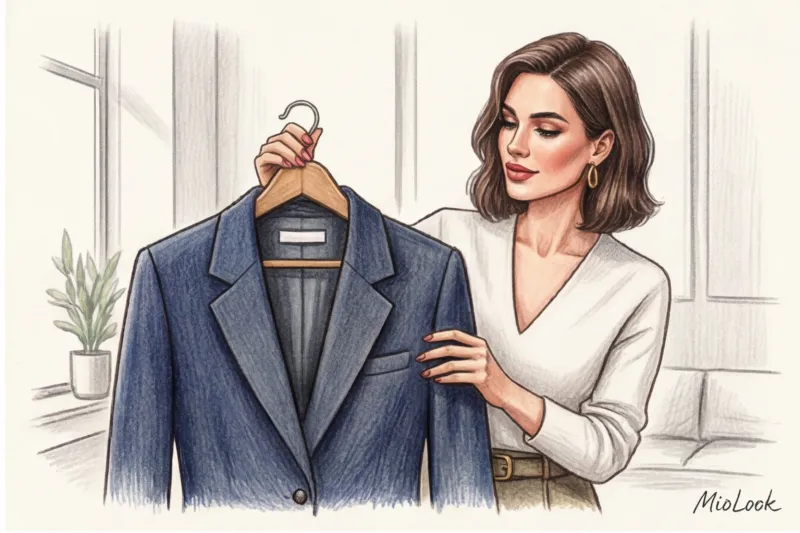
From a hygiene standpoint, a properly dry-cleaned garment is cleaner than one that hung in a mass-market store and was tried on by thirty people before you. You take home a clean canvas—the texture of the fabric and the cut, without any trace of the previous owner.
The second pitfall is the fear of looking "out of stock." The myth that reselling clothes automatically makes an outfit outdated stems from a misunderstanding of the difference between a dated cut and fine vintage. A dated garment is a short, fitted jacket made of thin synthetic material straight from 2011. Fine vintage is a structured Yves Saint Laurent wool jacket from the 1980s with an exaggerated shoulder line.
The difference lies in the garment's architecture. Vintage always has a distinctly period character, high-quality fittings, and a fabric density that holds its shape. As a colorist, I'll add: fabrics from past decades were often dyed differently. The complex, deep emerald green we find in '90s silk is simply unheard of in the mid-price segment today—modern, budget-friendly dyes often produce a flatter undertone.
But here we come across the third, most insidious myth of our time: “buying vintage is always eco-friendly.”
The industry has convinced us that by buying secondhand, we're automatically saving the planet. This is a dangerous half-truth. Mindless overconsumption is just as harmful as an addiction to fast fashion.
Sustainability isn't determined by the purchase itself, but by how often an item is used. If you order ten vintage dresses from different countries (which already leaves a huge carbon footprint) and they just hang in your closet, you're not helping the environment—you're bringing textile waste into your closet.
I went through this phase myself. When I first started diving into resale, I bought everything I thought was a good deal. Eventually, I accumulated two dozen compromised items that seemed like they were worth pennies but didn't fit together at all. Today, my strategy has changed radically: five perfect resale finds are always better than 20 spontaneous ones. I recently bought a flawless, minimalist Jil Sander trench coat for €280 instead of buying five no-name coats for €50 each. I wear it almost every day, and it's this consistency that makes my purchase truly sustainable.
To avoid the "cheap vintage" trap, I always ask my clients to visualize their future outfits. This is incredibly helpful. MioLook — your smart wardrobe planner. Before checking out on a resale platform, upload a photo of the item to the app. If you can't create at least three trendy looks with it from what you already have on your virtual shelves, feel free to close the store tab, no matter how tempting the price.
Image Maker Strategy: What to Look for in a Resale Market and What to Avoid
The foundation of any functional wardrobe is built according to the laws of strict architecture: there are the supporting structures that hold the entire look together, and then there are the consumables. As an image consultant, I regularly observe the same mistake: when first discovering resale clothing, many people start buying basic T-shirts or nondescript cardigans simply because they have a famous brand tag attached. This is a dead end.
The secret to smart pre-owned shopping is finding pieces with a high degree of durability. We're not just looking for a designer's name; we're hunting for cutting techniques and quality materials, which in today's industry have become an unaffordable luxury for the mid-range segment.
Resale gems: what you should buy without hesitation
The absolute hit of the secondary market is outerwear and structured jackets. If you see a vintage Burberry trench coat (especially one made of heavy gabardine, produced before 2010) or a legendary Max Mara camel coat, it's a reason to take a closer look. Why? Ten to fifteen years ago, manufacturers used interfacing materials (borders) of a completely different level. Such a jacket literally "sculpts" the figure, maintains the shoulder line, and doesn't shrink after the first dry cleaning. Today, you can find a similar cut only in luxury stores with price tags starting at €2,000, while a great example on the resale market will cost you a modest €200-400.
I always pay special attention to the composition. Look for 100% cashmere and pure silk. Vintage cashmere fibers are typically longer, so it's less likely to pill than its modern mass-market counterparts. As for silk, as a colorist, I can assure you: vintage silk absorbs and reflects dyes completely differently. The deep, complex shades of vintage silk blouses illuminate the complexion and create that luxurious leather effect that's impossible to achieve with modern polyester.
Access to MioLook for €0.99 — one-time payment
Start creating perfect looks with the help of artificial intelligence and integrate vintage finds into your wardrobe.
Get access — €0.99 onceStatus Accessories: Micro-Investments in Style
If you're still hesitant to buy clothes, start with accessories. They're the safest and most effective way to elevate your look. These include, first and foremost, rigid bags, brooches, and designer silk scarves (such as Hermès or Celine). Accessories are size-independent, easily incorporated into any modern outfit, and they're timeless. A silk scarf tied to the handle of a modern, minimalist bag instantly elevates your outfit from "boring office" to "intellectual chic."
Stylist's Stop List: What to Avoid
There are certain categories of things that I absolutely forbid buying second-hand, no matter how tempting the prices:
- Basic knitwear group and underwear. T-shirts, tank tops, and thin turtlenecks are consumables. Cotton absorbs sweat and deodorant and quickly loses its shape. We always buy these items new.
- Shoes. This isn't a matter of disgust, but rather a matter of anatomy. Any leather insole and sole will completely adapt to the anatomy of the first owner's foot after just 5-7 wears. Someone else's last will deform your foot, alter your weight distribution, and inevitably affect your gait. The only exception is brand-new shoes with tags.
- Last season's hottest trends. Don't confuse noble vintage with yesterday's hype. If you buy the neon micro-bag that was all the influencers were wearing a year ago, you'll look less like a fashion connoisseur and more like someone wearing outdated trends.
Investment or Waste: How to Evaluate Designer Bags
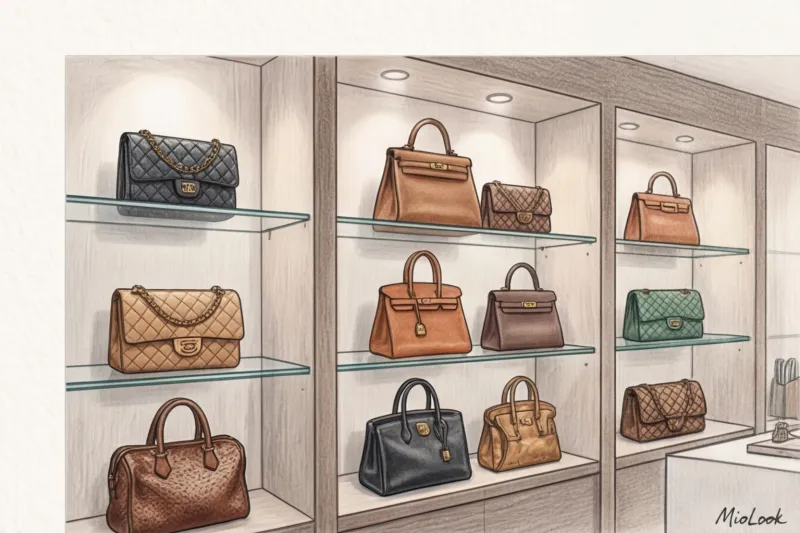
For decades, the glossy magazine industry has sold us the beautiful myth that buying any designer bag is an investment. It's time to face the facts and look at the hard numbers. According to the Knight Frank Luxury Investment Index, only a few models appreciate in value over time: the classic Chanel Flap Bag, select Hermès models (Birkin, Kelly) in basic colors, and rare limited editions.
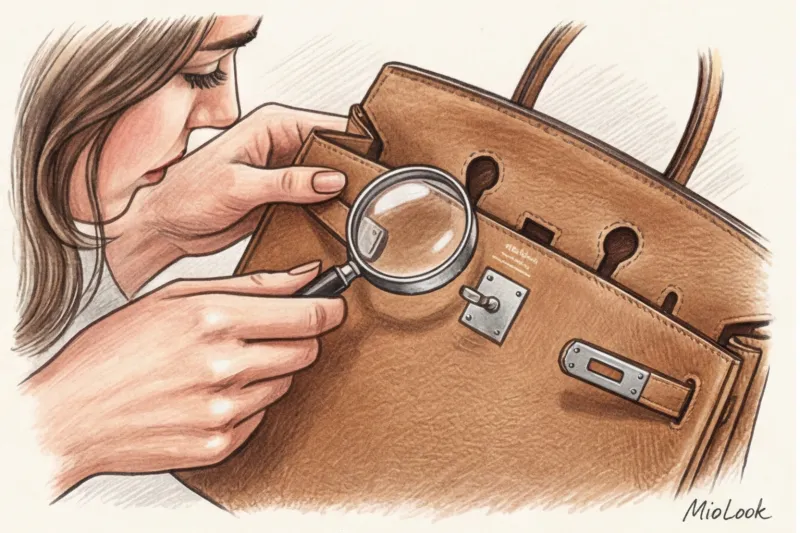
The remaining 95% of luxury bags are a liability. They lose 30 to 50% of their original value the moment you take them out of the boutique. But that's precisely the main advantage of reselling! You let the original buyer absorb this financial loss, while you acquire a luxury item at a reasonable price.
"When buying a business bag on the secondary market, eschew flashy logomania in favor of architecture."
How to choose a resale bag that complements your status? For a business look, look for smooth or grained leather models with minimal hardware. A rigid tote bag from, say, Loewe, Valextra, or vintage Prada will cost you between €400 and €800, but it will look a hundred times more respectable than a shapeless tote bag from the nearest mall for the same price.
Before clicking the "Buy" button on a resale platform, I always advise clients to do a mental test drive. To avoid making a mistake, Use the smart wardrobe feature in MioLook Add a photo of your desired vintage item to the app and try to create at least 3-4 outfits based on what's already hanging in your closet. If the puzzle fits together, the item is yours. If not, we'll leave it for another buyer to enjoy.
Safe shopping: how to avoid counterfeit items and choose the wrong size
According to an independent report by the analytics service Entrupy (2023), the quality of modern "superfakes" has reached such a level that it's nearly impossible to visually distinguish a premium copy from an original in 40% of cases without specialized equipment. Therefore, the first question every second client asks me when deciding to buy a used item is: "How can I tell if it's a fake?"
The answer begins with where exactly you're making your purchase. The entire secondary market is roughly divided into three levels of trust:
- Large platforms with authentication (For example, Vestiaire Collective). Here, items are inspected by experts before being shipped to the buyer. This is the best option for beginners, although you pay a platform fee for the guarantee of authenticity.
- Curated concept stores and vintage boutiques. These are small projects where the founders personally select every item. A designer jacket can cost anywhere from €150 to €400, but that price includes dry cleaning, repairs, and complete assurance of authenticity.
- Private ads (local websites and apps). This is the highest-risk zone. It's perfect for finding a basic high-street trench coat for €20, but buying an iconic Prada bag here without authenticator skills is a gamble.
The Anatomy of Authentication: What the Pros Look for
If you do decide to check the item yourself, the devil is in the details. As someone with a design background, I check first. kerning — the spacing between letters in the logo on tags. Underground factories often lack access to the brand's original typographic matrices, so their fonts either "dance" or appear too bold.
Hardware is another ruthless marker. Luxury brands rarely use generic zippers. They order hardware from Swiss (riri) or Italian (Lampo) manufacturers, or cast their own with engravings. Genuine hardware always has a noticeable weight, as it's made of solid brass, while counterfeits are made from cheap hollow alloys that jingle like tinfoil.
Be sure to check serial numbers and date codes. If you're holding a vintage bag whose database code indicates a 2021 production year, even though the model was discontinued fifteen years ago, the conclusion is clear.
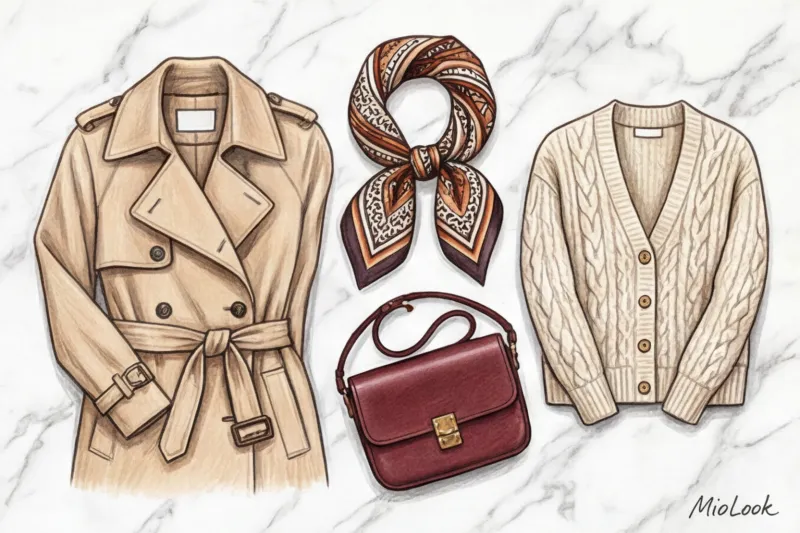
The Vanity Sizing Trap: Why You Don't Know Your Vintage Size
While authentication can be handled through platforms, shoppers are often left alone with their sizes. And here they face a cruel disappointment, known in the industry as vanity sizing (flattering size chart).
Historical fact: fashion houses have been deliberately changing their size labels for decades to make customers feel slimmer. An Italian size 42 (IT 42), manufactured in 1990, barely matches today's IT 38 in actual physical measurements. If you wear a comfortable medium-size jacket today and order a vintage Armani jacket in a medium-size, you'll likely be unable to even close the buttons.
How to take measurements correctly
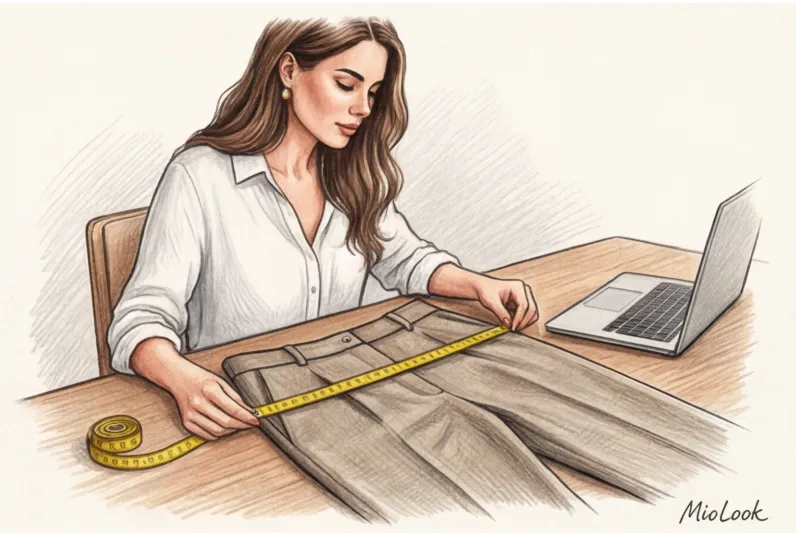
The number one stylist rule for reselling: We don't measure our bodies, we measure our things Why can't you just measure your bust with a tape measure? Because that way, you don't account for ease—that air between the fabric and your body that makes a tailored fit.
Take your favorite item that fits perfectly, lay it out on a flat table and take three key measurements:
- Pit-to-Pit (P2P) — the width from armpit to armpit. The most important measurement when buying vintage clothing.
- Shoulder width - from one shoulder seam to the other.
- Sleeve length - from the shoulder seam to the edge of the cuff.
Ask the seller for these exact measurements in centimeters. The S, M, or L on the tag is simply a marketing trope from a bygone era, while 54 centimeters at the chest is a physical fact.
By the way, to avoid running around with a measuring tape before every purchase, I advise you to measure your reference base once and enter this data into MioLook smart wardrobe With the exact measurements of your ideal garment at hand, you can compare them with the seller's measurements in a couple of clicks, completely eliminating the risk of an unpleasant return.
The 80/20 Rule: How to Incorporate Vintage and Resale Clothing into a Modern Look
Have you ever noticed why vintage looks like a trendy statement in street style photos from Paris or Milan Fashion Week, but in real life, it often turns women into tired librarians? The answer lies not in the items themselves, but in their surroundings. In my styling practice, I follow one ironclad principle: context and accompanying details completely change the perception of the shape of the same item.
The main rule of professional stylists is this: to avoid looking like an extra from a period film, mix eras thoroughly. If you wear a pussy-bow blouse from the '70s, flared trousers from the same era, and accessorize with a retro clasp bag, your look will read like a theatrical costume. By integrating clothing resale In our everyday wardrobe, we must play on contrasts.
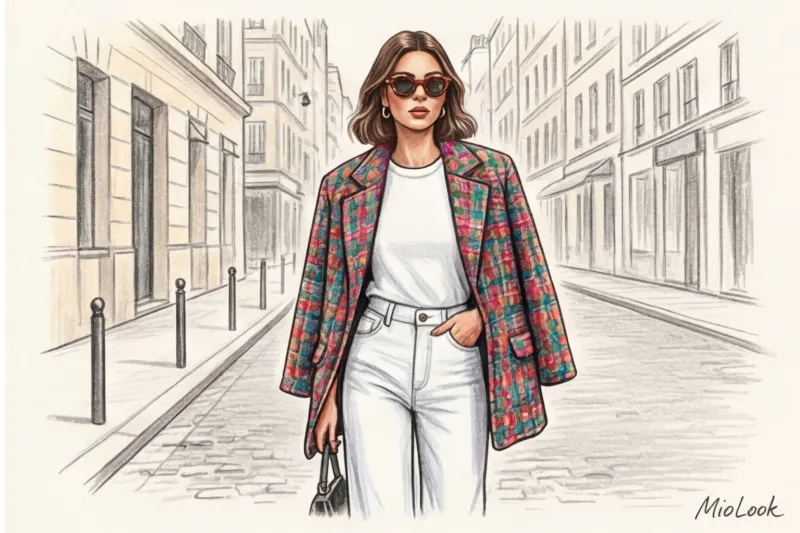
The ideal formula I recommend to all my clients is 80% modern, absolutely on-trend essentials and 20% vintage accents. Modern essentials (basic straight-cut tees, architectural jeans, minimalist shoes) act as a blank canvas, grounding complex cuts, bold hardware, or a distinctive print on a piece with a history.
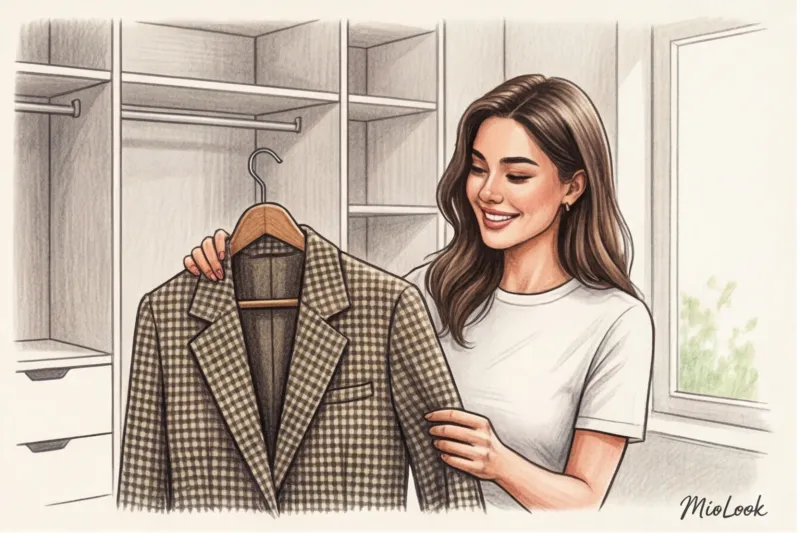
Let's look at some examples of successful combinations. Take a sophisticated vintage tweed jacket with textured gold buttons (those 20%). Wearing it with a classic knee-length pencil skirt will inevitably add 10-15 years to your age. But pair it with modern wide-leg jeans with a raw hem, a simple white T-shirt, and sneakers (80%), and you'll get a relaxed look straight out of a glossy magazine. A similar effect works with an airy retro blouse with bold lace or ruffles: it requires pairing not with a romantic skirt, but with simple, masculine palazzo pants made of thick suiting wool, the kind you can find today at COS or local minimalist brands.
To avoid racking your brains in front of an open closet, I always recommend digitizing your laconic base using the "smart wardrobe" feature in MioLook When you have 80% of your modern items right in front of you on your phone, it's much easier to figure out exactly what that extravagant vintage piece will work with right in the store or on a resale platform.
“Clothes are only half of the image. The real magic happens in the neck and face area."
Modern hair and makeup (grooming) play a huge role in "taming" vintage pieces. If you're wearing an '80s-era jacket, forget the meticulously styled hair or the heavy matte makeup of the era. A fresh, radiant complexion, slicked-back eyebrows, a casual low bun, or a wet-hair look instantly take the edge off any period piece. Similarly, if you wear a '50s New Look dress and winged red lips, you're cosplaying Dita Von Teese. But if you pair the same dress with bare makeup and a casual haircut, you look like a modern it-girl with impeccable taste.
Your ideal image
it begins Here
Join thousands of users who look flawless every day with MioLook. Manage your wardrobe smartly.
Get access — €0.99 onceVintage tailoring
Another professional tip: when planning your budget for pre-owned clothing, always allow an extra €20-40 for a visit to a reputable tailor. I often see women turn down stunning cashmere coats or thick silk shirts simply because they don't fit perfectly. But vintage isn't supposed to fit perfectly right away! People's bodies, posture standards, and fits have changed over the decades.
It's crucial to understand the fine line between what's easily altered and what a competent tailor simply won't tackle. Removing the oversized shoulder pads from a '90s jacket or shortening the length of trousers is a basic and inexpensive procedure that instantly modernizes and lightens the silhouette. It's also quite simple to rearrange the buttons on a double-breasted trench coat or slightly narrow the waist with darts.
But altering the shoulder, armhole, or sleeve cap is a definite red flag. In my experience, attempts to reshape the shoulder band of a structured coat always ended in a ruined garment and a waste of €100-150. The entire structure of such garments rests on the shoulder cap. If the garment is catastrophically large in the shoulders, or the armhole is too narrow and digs into the armpits, feel free to leave it to another buyer. No tailor can completely alter the armhole geometry without distorting the sleeve fit.
Checklist: 5 steps before paying for an item on a resale platform
The dopamine trap of the "Buy Now" button works just as relentlessly on fast fashion websites as it does when searching for unique items. ThredUp's consumer behavior research (2024) shows that up to 30% of used clothing remains hanging in the closet with the tags attached due to sheer impulsiveness. To prevent resale clothing from becoming a warehouse of beautiful but completely unwearable artifacts, I require all my clients to complete a rigorous five-step screening process before every transaction.
- Wardrobe analysis. Ask yourself: “What would I wear this with right now?” You should mentally create at least 3 complete looks with the items that they're already hanging in your closet. If you need to buy a top, the right trousers, and shoes to complement a new textured jacket, it's not a bargain, but a financial funnel. The most convenient way to test potential purchases is through the "smart wardrobe" feature in MioLook: Simply upload a screenshot of an item from the marketplace to the app and see if it fits with your current capsule.
- Checking the fabric composition. Never take the seller's description at face value. Ask for a clear photo of the sewn-in tag indicating the composition. As a colorist, I always pay attention to this detail: the color of an item depends crucially on the fiber texture. 100% wool or dense cotton will acquire a refined matte finish over time, while even 15% cheap polyester can create an unpleasant, flat sheen under artificial light. No photo of the tag means no deal.
- Request for precise measurements. We avoid relying on the size charts of brands from decades past. Ask the seller for exact measurements in centimeters: chest, waist, hips, sleeve length, and back length. Then, take your ideal-fitting garment of a similar cut and compare these measurements.
- Defect assessment. It's important to clearly understand what's critical and what's not. Pills on a sweater made of high-quality yarn can be removed with a machine in 10 minutes. A broken button or a snagging zipper on a €150 jacket is a trivial matter for a visit to a tailor. But yellow underarm stains on a light-colored blouse are a death sentence. Sweat irreversibly destroys the structure of the silk protein fibers, and dry cleaning is useless. Also, avoid items with broken branded hardware. A client of mine once purchased an iconic baguette bag for a great price, but having the original clasp repaired at a specialist tailor ended up costing her more than the purchase itself.
- Checking the possibility of return. Unlike traditional retail, private sellers and some vintage shops don't accept returns. If there's no return option, ask yourself honestly: are you prepared to resell the item yourself? If the item is too extravagant or of a specific micro-size, its liquidity on the secondary market approaches zero, and your money will simply be frozen.
This simple action plan eliminates the vast majority of ill-considered purchases. As my experience shows, by the time you're requesting additional photos and checking measurements, the initial euphoria subsides, giving way to a cold, stylistic calculation.
Summary: Resale as a sign of high fashion IQ
A telling fact: according to the 2024 Business of Fashion report, over 60% of fashion industry executives prefer to buy iconic pieces from past collections rather than the latest season's arrivals. The resale market has ceased to be a stigma and has become the main marker of your fashion expertise and impeccable taste. Wearing a dress from a current mass-market collection to a social event is perfectly acceptable. But showing up in an archived 1980s Yves Saint Laurent jacket with a perfect shoulder line is the ultimate in style, demonstrating your high class. fashion IQ.
Developing a unique personal style isn't a sprint through the mall during sales season, but a marathon that requires observation, time, and a deep understanding of one's appearance and coloring. As a stylist, I often observe women spend years searching for "that" shade of burgundy or the perfect cool beige in modern stores, finding nothing but flat chemical dyes. Clothing resale makes this process of self-discovery incredibly creative and cost-effective.
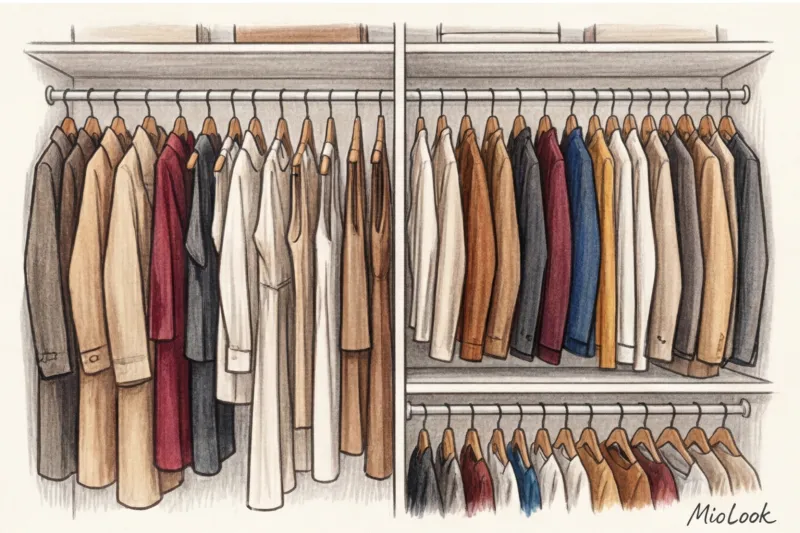
The main metamorphosis that must occur in your consciousness is a change of focus. You stop thinking in categories. "I save money by buying used" and go to the level "I invest in uncompromising quality as a professional image maker." To ensure this investment works for you and doesn't just sit there collecting dust, every new vintage find needs to be carefully integrated into your current database. To do this, I recommend digitizing your items using smart wardrobe feature in MioLook When you see all your clothes on your smartphone screen, it's much easier to figure out exactly what texture or color element your capsule wardrobe is missing.
"Treat your closet like a curated collection: each piece should have its own character, purpose, and history. Only then can a truly individual style be born."
I remember my very first conscious secondhand purchase, back in college: it was a heavy silk scarf with a hand-rolled edge. I paid a considerable amount for it at the time, but it taught me how real fabric should flow. If the prospect of buying an expensive coat or a prestigious bag on the secondhand market still leaves you a little apprehensive, my main recommendation is to start small. Don't try to overhaul your entire wardrobe at once.
Invest in a perfect silk scarf (for example, a vintage Hermès square or a prestigious geometric from Celine) or a quality leather belt with a cast brass buckle. On trusted international platforms, such accessories in immaculate condition can be found for a comfortable €80–€150. Vintage silk is distinguished by its incredibly dense weave and deep color rendition, while a high-quality 90s belt made of full calfskin will retain its shape even after ten years of heavy wear.
This small but powerful detail will allow you to physically experience the magic of resale. Tie this scarf on the handle of a basic black bag, drape it over your shoulders over a white T-shirt, or wear a vintage belt with classic straight-leg jeans. You'll instantly see how one well-crafted accessory brings an entire look together, making it appear more expensive and sophisticated. True elegance always lies in an intelligent approach to clothing selection. By transcending imposed stereotypes, you discover a whole new level of engagement with fashion—conscious, selective, and truly luxurious.
Guide Chapters
Conscious Consumption in Fashion: Why Resale is Better
The green labels of mass-market fashion are often just a marketing gimmick. We explore why true style and caring for the planet begin with resale and vintage.
Buying Vintage Jewelry: A Complete Guide from a Stylist
Is your basic wardrobe starting to feel like a boring uniform? Find out how vintage jewelry can help you create a luxurious look without breaking the bank.
The Best Branded Bags on Resale: What to Invest in
Not every expensive bag is a good investment. Ask a stylist which models are truly worth buying on the pre-owned market.
What is the difference between vintage, second-hand, and resale?
Buying clothes on the secondary market is a sign of a high fashion IQ. Let's explore the key terms: vintage, resale, and secondhand.
Vintage Clothing Sizes: How to Choose Without Trying Them On
The tag on a vintage item is often a trap, as old patterns differ greatly from modern ones. We'll figure out how to avoid mistakes when shopping online.
How to Get Rid of the Second-Hand Smell: Stylist Tips
Have you bought a unique vintage item, but are bothered by the distinctive chemical scent? Learn professional methods for eliminating odors without damaging the fabric.
How to sell used designer clothing: fast and at a good price
Turn the idle capital in your closet into real money. We'll break down the process of reselling branded items as a micro-business with clear math.
How to distinguish genuine shoes from fakes: rules
Sniffing the glue and checking the barcode are long-outdated verification methods. We'll explain how to spot a "superfake" and verify the authenticity of brand-name shoes.
How to wear vintage clothes without looking dated
We'll break down the main mistakes made when styling retro pieces. Discover the secret formula for modern vintage that will make your look truly unique.
How to check the authenticity of a branded bag: tips
Buying luxury goods at a resale store? Find out why receipts and dust covers no longer guarantee authenticity, and learn how to spot even the highest-quality counterfeits.
How to Find Designer Items on Avito: A Stylist's Secrets
80% of the best resale deals are snapped up by resellers within minutes. Learn insider stylist techniques to find luxury pieces for pennies.
The Best Clothing Resale Platforms: Where to Buy Brands
How to buy luxury brands at mass-market prices and avoid counterfeits? We explore the technical underbelly of the secondary clothing market with a stylist.