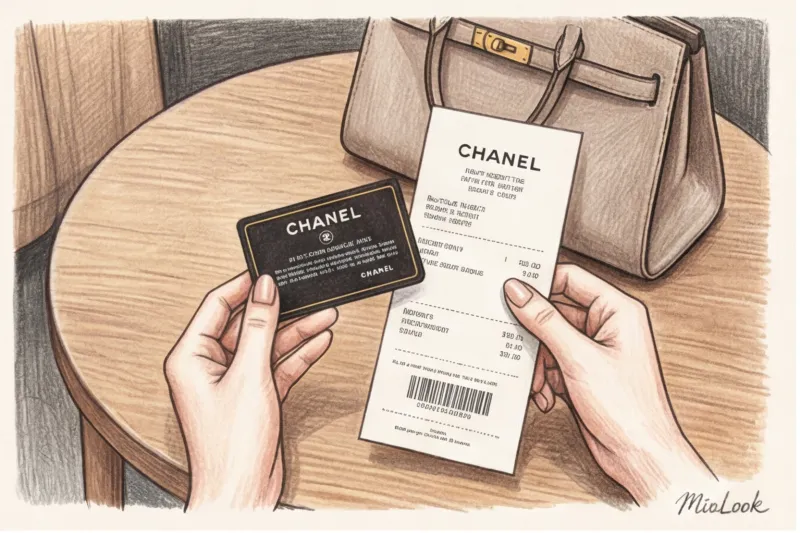
No Paperwork: Why Old Luxury Check Methods No Longer Work
"It's 100% genuine. Look, here's the receipt from the Milan boutique and a plastic card with the number!" a client insisted to me during a wardrobe review, showing me a "perfect" vintage Celine bag. She'd paid €2,000 for it on a popular resale site. Visually, the bag looked stunning: clean edges, a heavy chain, a full set of scrap paper in the box. But as soon as I opened the inside zippered pocket, I was hit by the sharp, unmistakable chemical smell of polyurethane glue. It was very expensive, high-quality, but still a fake.
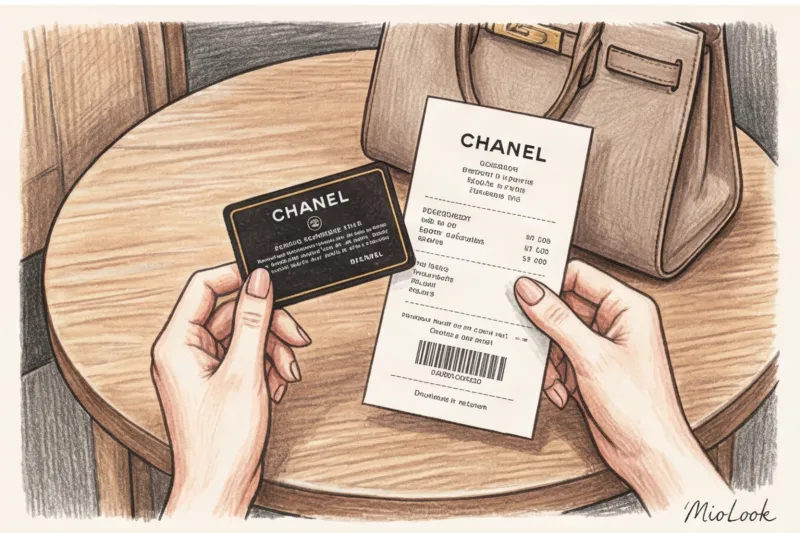
After 12 years of working as a personal stylist, I've realized one thing: scammers have long since shifted their focus. If you want to know, How to check the authenticity of a branded bag , first of all, put aside receipts, tags, and dust bags. In our The complete guide to clothing resale and vintage We've already discussed the basic architecture of smart shopping, and today I'll show you the inside story of the counterfeit market. You'll learn why perfect seams are a cause for concern and how to spot a scam before you even pay the seller.
The Biggest Misconception in Resale: Why Checks and Cards Are a Lull
According to a 2023 report by Entrupy (developer of an AI authenticator), over 60% of seized "superfakes" were accompanied by perfect receipts. The technology for counterfeiting cardboard and paper costs pennies compared to the cost of producing the bag itself.
There's a huge underground market for genuine packaging. Fraudsters buy genuine empty boxes, bags, and dust bags from Gucci or Prada on eBay for €50-€100. They then stuff a €200 fake inside, and this "boutique set" is sold to a gullible buyer for €1,500. The psychology of deception is built on an abundance of branded glitz: when we see ribbons, envelopes, and booklets, our brains automatically reduce critical thinking.
It's a thousand times easier to counterfeit a 10-cent piece of cardboard than to imitate calfskin leather. Never buy into the story or the packaging—evaluate only the product itself.
How to check a branded bag for authenticity: a stylist's step-by-step guide
When I do an initial inspection of an item before adding it to a client's capsule (by the way, the ideal way to organize such capsules is MioLook smart wardrobe ), I use a strict physical algorithm. And I always start not with the logo, but with tactile sensations and smell.
Genuine vegetable-tanned leather (like Louis Vuitton's famous Vachetta leather) smells of tannins, oak bark, or specific natural oils. Counterfeit factories use cheap chemical solvents and glue—this pungent, slightly sweet aroma is impossible to erase for years. Next comes the bend test: if you gently squeeze an authentic structured bag, it will instantly regain its shape thanks to its high-quality internal frame made of leatherboard and membranes. A fake will either crumple or leave micro-creases on the surface.
Access to MioLook for €0.99 — one-time payment
A smart AI stylist will select the perfect look based on your real wardrobe and help you avoid unnecessary purchases.
Get access — €0.99 onceHardware, zippers and engravings: the devil is in the details
Real hardware is always heavy. Luxury houses use solid brass, palladium, or gold-plated (like electroplating). Take a Chanel chain in your hand: it should feel cool and weighty, not jingling like hollow aluminum.
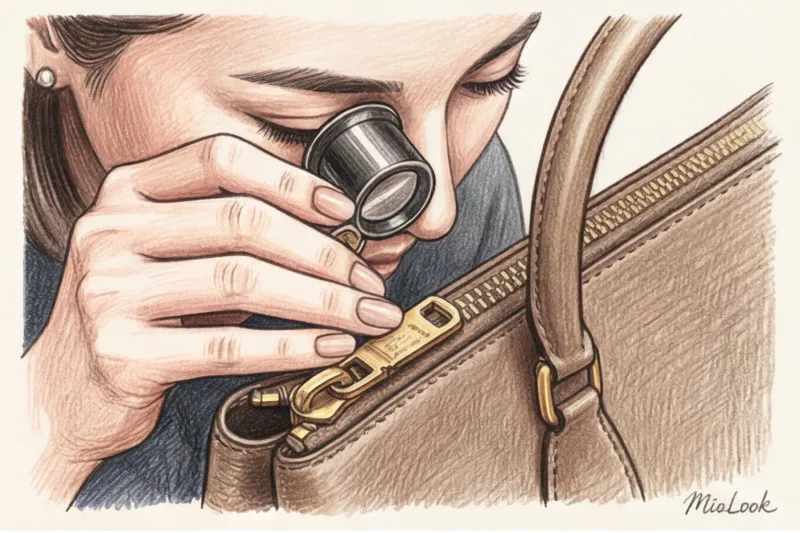
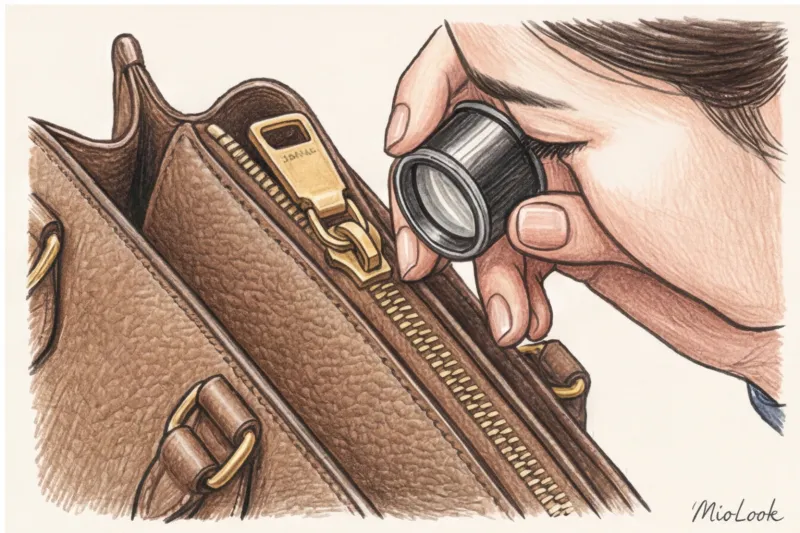
Open and close the zipper five times in a row. Well-known brands don't skimp on zippers—they order premium lines from YKK, Lampo, or riri. The movement should be smooth, like butter. Be sure to use a jeweler's loupe (or your smartphone's macro lens) and examine the logo engraving on the metal. On genuine products, the letters are stamped—their edges are sharp and deep. On counterfeit products, the hardware is often cast entirely in molds, so the edges of the letters are "melted," with microbubbles at the bottom of the engraving.
Seams and Symmetry: Looking for the "Human Factor"
And here lies the most paradoxical insight. If you see an absolutely perfect, arrow-straight machine stitch, there's a 90% chance it's a fake. Luxury brands (and especially Hermès) pride themselves on handcrafted work. Their famous saddle stitch is made with two needles simultaneously, ensuring each stitch lies at a subtle, natural angle.
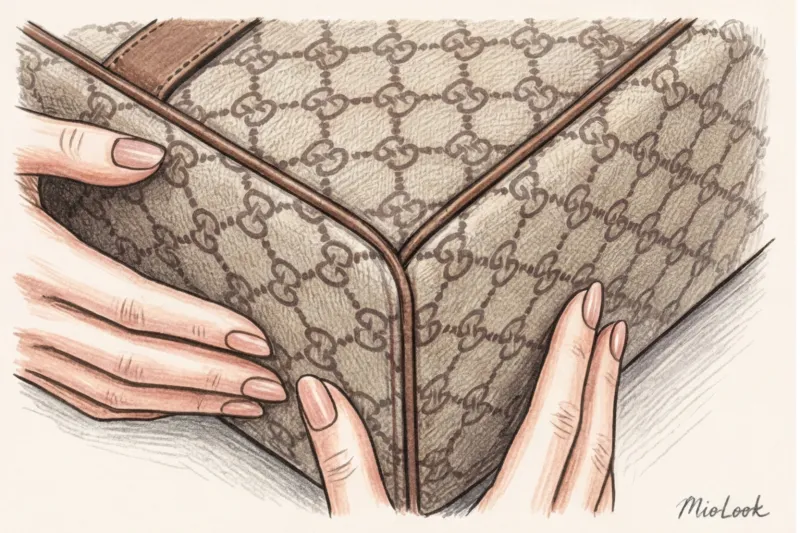
Mass-market and shady factories sew on modern programmable machines that stitch alarmingly smoothly. Also, keep a close eye on the stitch count. For example, classic Chanel bag handles always have a strictly defined number of stitches per inch (usually 10-12)—this ensures durability. Another marker is the pattern's alignment. On an authentic Louis Vuitton, the monogram will flow perfectly across the seam from one piece to the next, creating a continuous pattern.
The Anatomy of a "Superfake": How Fraudsters Imitate Luxury
Forget about those crooked fakes with loose threads that sell for €20 in subways. Today's biggest threat to the market is "superfakes" (1:1 mirror replicas). Their prices range from €500 to €1,000, and even seasoned buyers can't spot them without specialized equipment.
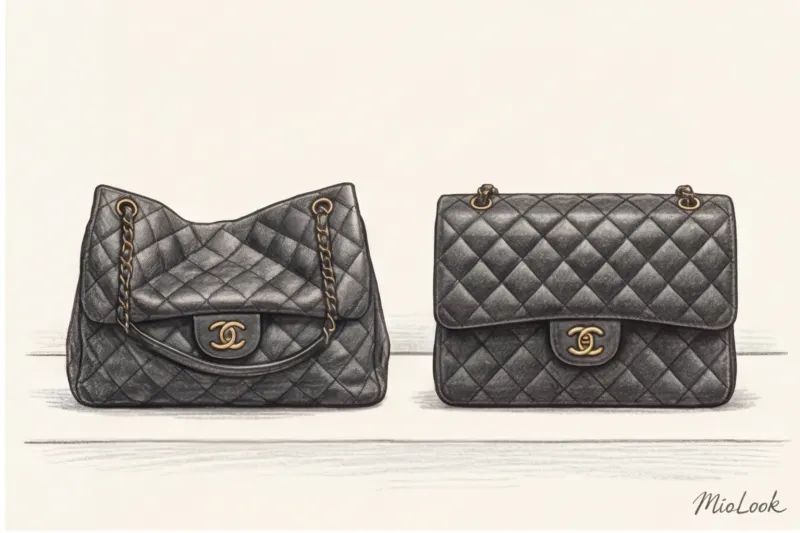
How are they made? Shadowy syndicates buy an original bag in a boutique for €3,000–€5,000, completely dismantle it, and take precise patterns. They source leather from the same Italian tanneries as official brands. But such factories always have "blind spots"—areas where they skimp to maintain margins. The trick lies within: the quality of the lining fabric, the finish of the inner pocket seams, the thickness of the threads in hidden areas. This is where the superfake sheds its perfect mask.
Secret Codes: What to Look for at Chanel, Louis Vuitton, and Hermès
Every fashion house has its own labeling system, which changes every few years. If a seller assures you that a bag from the 2022 collection comes with a plastic authenticity card, they're lying.
- Chanel: In 2021, the brand completely abandoned holograms and physical cards. Now, bags are equipped with tiny metal plates containing an NFC microchip.
- Louis Vuitton: The famous date codes (a combination of factory letters and week/year numbers) were discontinued in March 2021. The brand now uses invisible RFID tags. If you're offered a new 2023 LV bag with a date code printed inside, it's a fake.
- Hermès: The brand uses a "blind stamp" system. This is an embossing on the inside of the strap, indicating the year of production (letters in a square, circle, or without a frame for recent years) and the maker's code. The stamp must be pressed carefully, without cutting through the top layer of leather.
Your perfect look starts here
Join thousands of users who look flawless every day with MioLook. Upload your items and get ready-made combinations in one click.
Get access — €0.99 onceRed Flags of a Seller: How to Spot a Scam Before Meeting
Remember: you're not just buying a thing, you're buying from a specific person. A seller's behavioral patterns can give away a fake faster than the bag itself. I once talked a customer out of buying a €1,200 Dior Saddle because the saleswoman was telling a sob story about "a gift from a cheating ex-boyfriend that she wanted to get rid of as soon as possible." It's a classic social engineering ploy that plays on female solidarity and greed.

Here are the main red flags when communicating online:
- The price is too low. A perfect Chanel 2.55 in good condition can't cost €500 or €800. The resale market operates according to strict rules—miracles don't happen.
- Blurry photos. The seller displays beautiful general shots, but when asked to send a macro photo of the zipper pull or seam join, he replies: “I’m away right now” or “The camera on my phone is bad.”
- Legends of origin. "Bought it at an outlet in Milan with an 80% discount" – top-tier brands (Chanel, Hermès, Louis Vuitton) don't have outlets. None. They incinerate or dispose of unsold inventory to preserve their brand's exclusivity.
Should you rely on authenticators and AI apps?
In short, yes, it's a must-have investment. In the age of superfakes, relying solely on your own eye (even a trained one) is presumptuous. Professional buyers use Entrupy technology. This is a special cylinder scanner with a macro lens that connects to a smartphone. It takes images of skin texture at hundreds of times the magnification and compares them with a huge database of originals via a neural network. The device's accuracy is 99.1%.
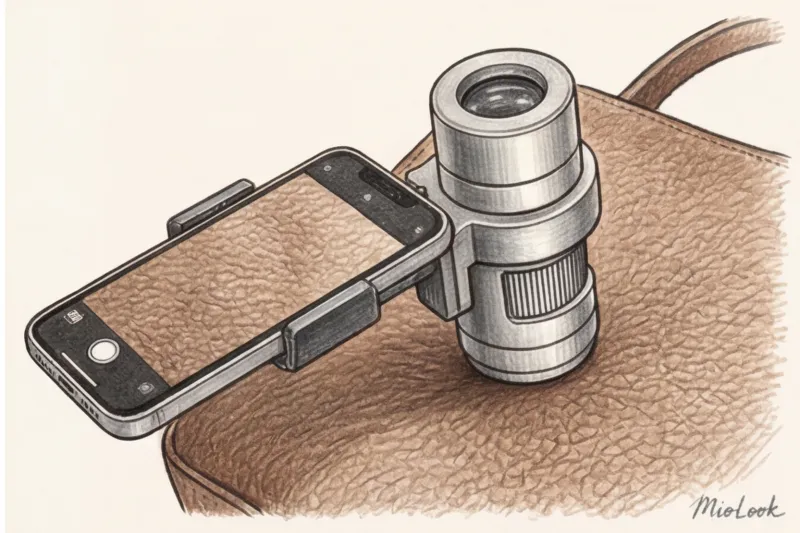
If you don't have access to a physical scanner, use online services like LegitGrails or Real Authentication. For €30-€50, their experts will check your macro photos and deliver a verdict within 12-24 hours. Always budget for this €50. Losing this amount in the event of an error is less of a bummer than spending €2,000 on a well-made replica.
A Mindful Shopper's Checklist: 5 Steps Before Buying a Handbag
So, let's recap. To ensure a successful deal, rather than a disappointing one, go through this list. to transfer of funds.
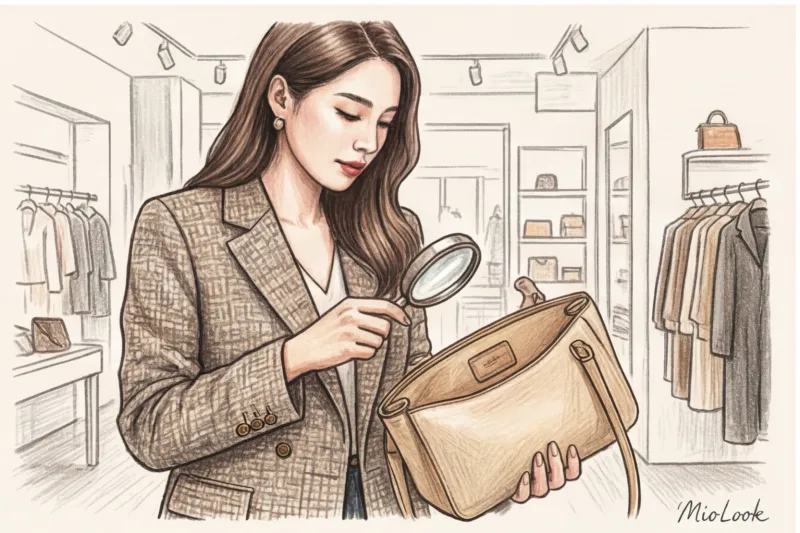
- Step 1: Ask the seller for at least 10 close-up photos: hardware, zipper pull on both sides, interior seams, engravings, tags, and bag corners.
- Step 2: Check the price. Visit international sites like Vestiaire Collective and see the average price for your model in similar condition.
- Step 3: Order a paid online photo authentication (for example, at LegitGrails) before your in-person meeting.
- Step 4: Make sure to schedule your appointment during daylight hours or in a well-lit café. Artificial yellow light hides imperfections in the dyeing of the edges of the leather.
- Step 5: At the meeting, check the smell (no glue!), the weight of the fittings, and how the bag holds its shape when lightly pressed.
Buying vintage or resale is a fascinating process that allows you to discover unique items with a story. But in this game, the winner is the one armed with knowledge, not the one who believes fairy tales about generous exes. Treat luxury purchases as an investment: verify the facts, don't be afraid to ask sellers tough questions, and trust only the physical properties of the item, not the cardboard receipts.