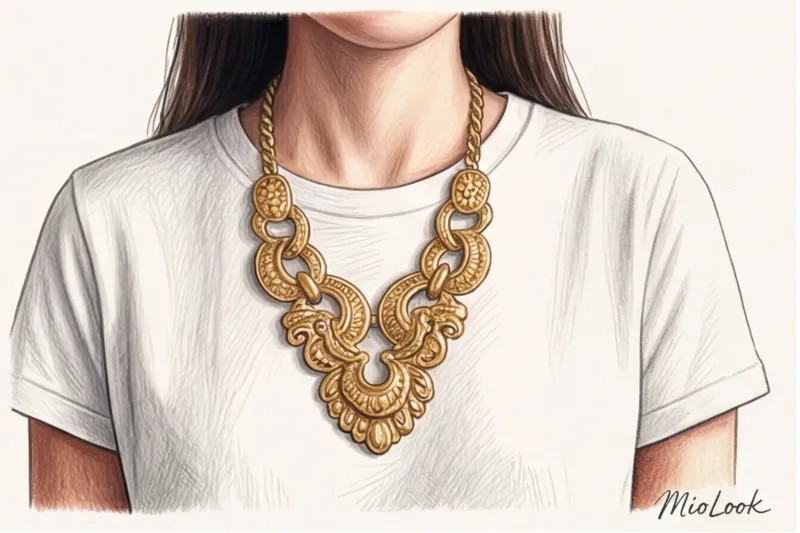
Investing in Uniqueness: Why a Basic Wardrobe Demands Vintage
Over 12 years of working as a stylist, I've noticed a paradoxical thing. When a woman assembles a perfect, millimeter-perfect minimalist wardrobe—white shirts, tailored jackets, perfect jeans—she often starts to look... boring. The basics become a uniform. It's at this point that I ask my client one question: "Isn't it time we added a little story?"
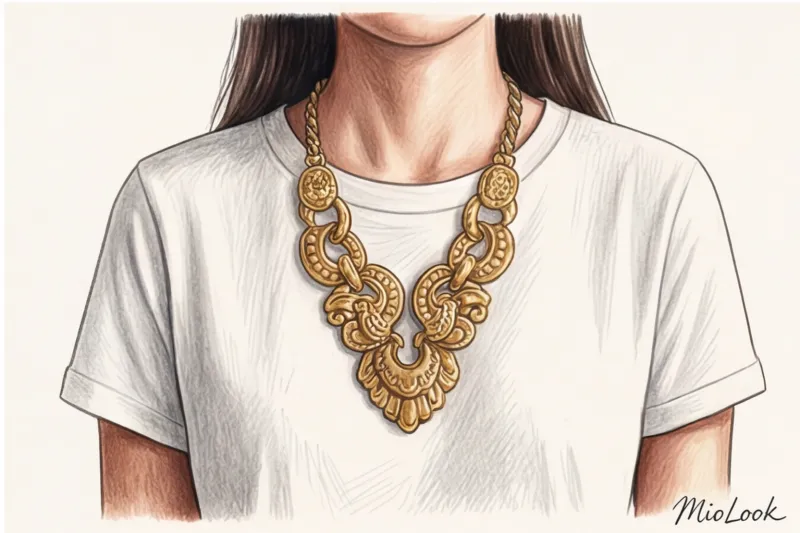
Instead of viewing jewelry from bygone eras as antique curiosities for collectors, I suggest viewing them as the perfect "smart hack." If you're thinking about Buy vintage jewelry By incorporating these into your style, you're taking a step toward creating luxurious looks without a huge investment. We've covered the mechanics of the secondary market in more detail in our the complete guide to resale and vintage.
In this article, I'll explain why clip-on earrings from the 80s are technologically superior to modern mass-market ones, how to read hallmarks, and why Austrian glass shines brighter than cubic zirconia.
Why buying vintage jewelry is the best ROI for your capsule wardrobe
In styling, as in finance, there's the concept of ROI—Return on Investment. And when we consider Cost Per Wear, vintage wins hands down.
Let's do the math. A modern, trendy mid-price chain necklace costs around €40-50. After a couple of months of heavy wear, it will inevitably darken due to the ultra-fine coating of 1-2 microns. It'll have to be thrown out. A vintage Trifari necklace from the 1970s in excellent condition can be found for €100-150. Thanks to triple gold plating, it will last for decades. The wardrobe math is clear.
"Vintage isn't just eco-friendly. It's the only way to get fine jewelry quality at a modern mass-market price."
I had a telling case in my practice. My client, a top manager at an IT company, complained that her formal turtlenecks looked too plain on camera during endless Zoom calls. We decided not to buy more gold stud earrings for hundreds of euros, but instead found massive gold-plated Givenchy clip-on earrings from the 1980s for €65. The effect was immediate: colleagues started asking what kind of designer piece it was, and her profile in the portrait section skyrocketed.
Access to MioLook for €0.99 — one-time payment
A smart AI stylist will create the perfect look with your vintage finds.
Get access — €0.99 onceTerminology: How Vintage Differs from Retro and Old
Not everything gathering dust in grandma's jewelry box is vintage. The fashion industry has fairly strict classification guidelines, which are important to understand to avoid overpaying for ordinary secondhand items.
- Vintage: An item created at least 20 (or 30, according to strict guidelines) years ago that vividly reflects the style of its era. This means that today, jewelry from the 1990s and even the early 2000s (before 2004) has officially been classified as vintage.
- Retro: A modern piece, styled to resemble a bygone era. If Zara makes clip-on earrings in the '80s style, it's retro, not vintage.
- Antiques: Items older than 50-100 years (depending on the country and classification).
According to The RealReal's 2024 analytical report, demand for vintage jewelry without gemstones has grown by 42%. Millennial and Gen Z shoppers have realized that authentic vintage is not only unique design but also part of the global trend toward eco-friendly resale.
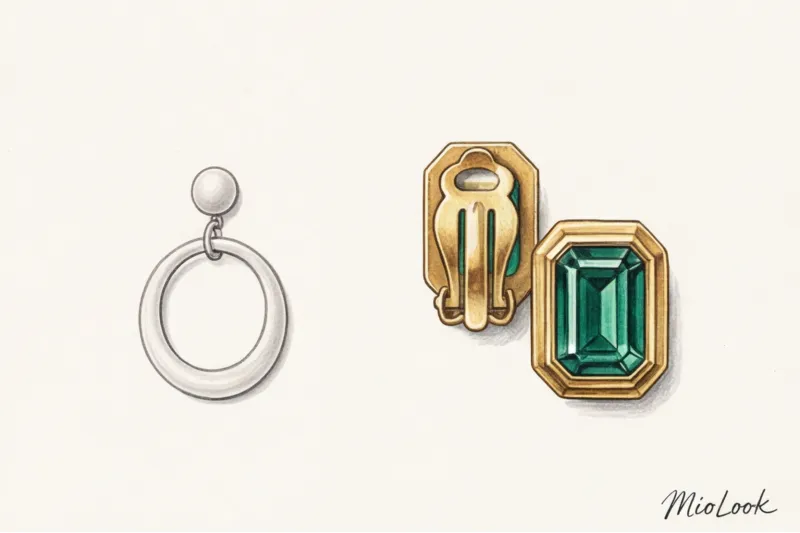
Top 5 Brands to Consider If You're Buying Vintage Jewelry for the First Time
If you're just starting your collection, don't immediately go after the rarest Chanel pieces (the risk of buying a fake is too high). Start with a confident "golden mean."
1. Monet and Napier. The absolute kings of basic architectural gold leaf from the 70s and 80s. Their chains, large knots, and sleek clips fit perfectly with today's minimalist trend. Average price: €40–€90.
2. Trifari. A legendary brand. In the mid-20th century, they developed and patented their own alloy, "trifarium," which imitated the color of platinum and was completely resistant to oxidation. Their crown brooches and floral motifs are considered the epitome of taste.
3. Givenchy and Christian Dior. Luxury vintage from the 80s and 90s, paradoxically cheaper today than the modern plastic equivalents from the same fashion houses. It's all about chunky geometry, heavy metal, and impeccable logomania.
4. Coro. A brand for creative professionals. They specialize in romantic pieces, intricate enamel, and figurative brooches (the famous Coro Duette).
Digitizing customers' wardrobes in MioLook , I often tag these things with the "statement" tag—they become the core around which the rest of the basic look is built.
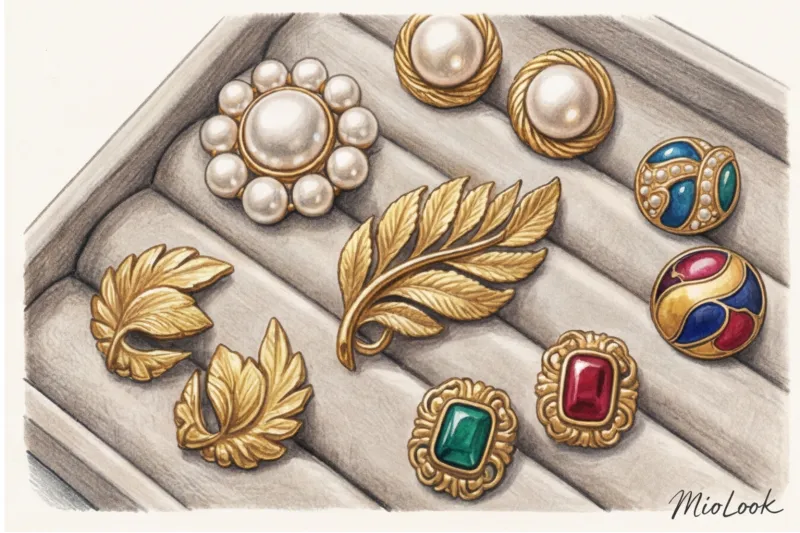
Debunking Myths: Why Vintage Glass Jewelry Is Better Than Modern Gold
The most damaging myth I encounter is that "costume jewelry is cheap." The truth is that vintage costume jewelry from the mid-20th century is technologically superior to many modern fine gold jewelry pieces.
As a personal experiment, I wore a modern brass chain from a popular mid-range brand (€45) and a vintage Monet necklace from the 1970s (bought for €80) almost every day for six months. The modern chain peeled and began to smell of brass after three months. The Monet remained pristine. Why?
It's all about technologies that are unprofitable today. In the 1950s–1970s, triple galvanic gold plating (gold-filled) was used. The gold layer thickness on Trifari pieces reached 10–20 microns. In today's mid-range segment, a 1–2 micron deposition (so-called flash plating) is considered the norm.
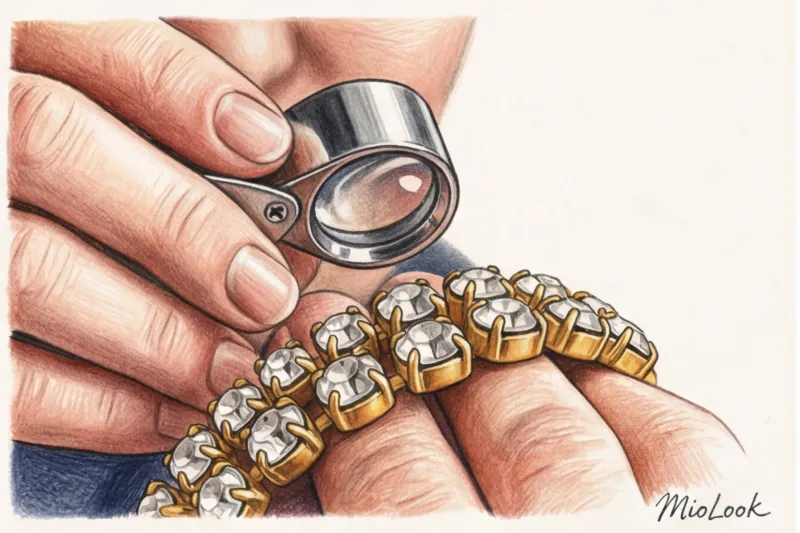
The second difference is the setting. Modern brands often use glue to set rhinestones. Vintage jewelry used genuine jewelry techniques: each Austrian glass crystal was secured with metal claws. This is why Austrian glass in jewelry from 60 years ago sparkles more brilliantly than modern cubic zirconia, which has clouded the glue underneath.
Your perfect look starts here
Join thousands of users who look flawless every day with MioLook.
Get access — €0.99 onceAuthentication Checklist: How to Read Hallmarks and Clasps
If you want to buy vintage jewelry online and avoid buying a modern fake from AliExpress, you need to master basic detective skills. The US patent archives and the authoritative hallmark directory Illusion Jewels are a collector's best friend.
What to look at first:
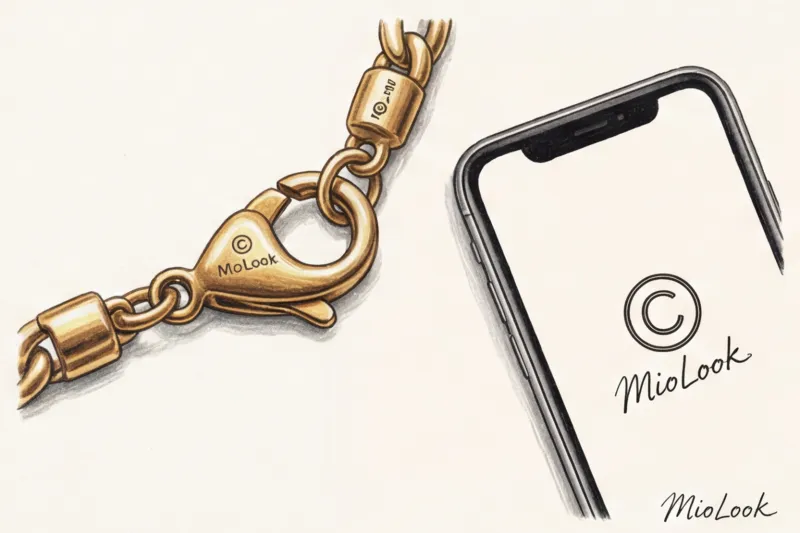
- Copyright symbol (©). This is the main dating marker. The US Copyright Amendment took effect in 1955. If you see the "Trifari ©" stamp, the item was definitely made after 1955. If it just says "Trifari" without the stamp, it was made before.
- Product weight. True vintage jewelry is heavy. It used brass, copper, and tin-based alloys. If a necklace looks massive and weighs nothing, it's made of modern acrylic or plastic.
- Type of brooch clasp. Until the 1930s, a simple C-shaped clasp without a safety catch was often used. Later, the trombone clasp (mainly in Europe) and the roll-over clasp appeared.
Life hack: Always ask the seller for macro photos of the back of the item. Counterfeiters most often counterfeit the "front," and skimp on the back. If in doubt, upload a photo of the stamp to Google Lens—the algorithm will quickly find similar stamps in archives.
Modern Integration: How to Wear Vintage to the Office and on Calls
Vintage requires careful styling, otherwise you risk looking like you've robbed a theater costume department. Strict guidelines apply here. rule of contrast.
We mix complex, detailed vintage with minimalist, modern, and even slightly masculine pieces. A massive gold Dior brooch looks stunning on the lapel of an oversized, menswear-inspired jacket (in asphalt or camel) or on the collar of a simple, crisp white shirt.
But be careful - this does NOT work when: Wearing a vintage 1950s floral brooch with a polka-dot dress or a ruffled blouse will immediately create a "mothball" effect and add 10 years to your age. A formal dress code will neutralize excessive jewelry.
For online conferences, there's nothing better than vintage ear clips. They don't weigh down your earlobe (thanks to clever mechanisms with adjustable screws), but they create a striking accent in the portrait area that's easily captured by the webcam.

Ready to get started?
Try the MioLook plan for free—no commitments required. Plan looks with your new accessories.
Get access — €0.99 onceWhere to safely buy vintage jewelry online
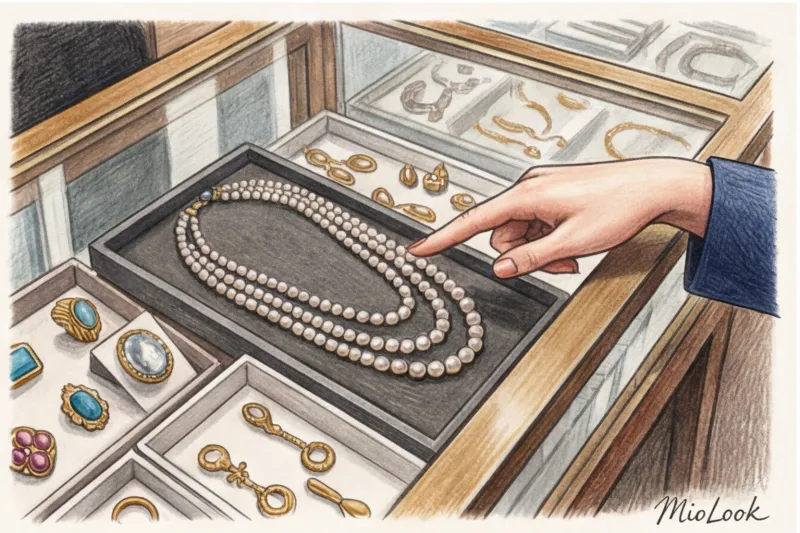
Flea markets in Paris or London are a fantastic and romantic experience, but in terms of secure shopping and authentication, online platforms are now more reliable (especially if you're not a seasoned shopper).
- Etsy and eBay. The world's leading storage facilities. Pay attention to the seller's rating (at least 98%) and reviews. Don't hesitate to send a private message and ask for photos of the item in natural light, without filters.
- Specialized Instagram projects. Choose curated stores where the owner describes the history of each piece in detail, specifies its condition (Mint, Excellent, Good), and doesn't hide minor defects, such as fading patina. Good curated stores price basic pieces in the €50–€120 range.
The biggest mistake beginners make is buying an item based on a single, beautiful photo of the model. Without a clear photo of the clasp and the stamp on the back, buying turns into a lottery.
Smart Care: How to Extend the Life of Jewelry from Past Eras
You've found the perfect item, waited for delivery, and now the main challenge is not to ruin it within the first month. Vintage has survived half a century, but modern chemicals can destroy it in seconds.
What is vintage jewelry so afraid of?
- Perfume and hairspray. Alcohol dissolves the top layer of enamel and damages the foil-coated amalgam on the back of the crystals (causing the stones to "blind" and become cloudy). The rule is simple: put on jewelry last, before leaving the house.
- Hand sanitizers. Remove vintage rings before using sanitizer!
- Ultrasonic baths. Modern jewelers love to clean gold in them, but for vintage gold with an adhesive or foil backing, this is a death sentence.
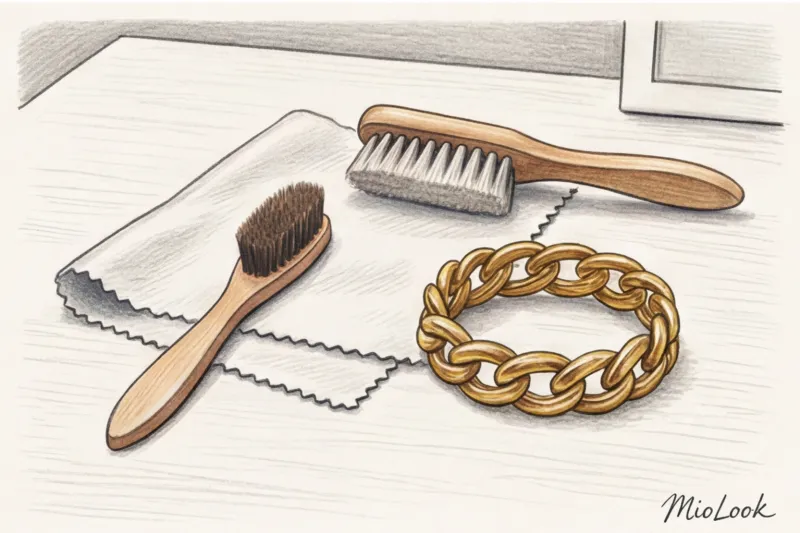
Use only a dry, soft microfiber cloth for cleaning. Store items in closed boxes or zip-lock bags: exposure to oxygen accelerates metal oxidation. Save those beautiful open-top stands for inexpensive, modern acrylics.
Incorporating vintage jewelry into a modern wardrobe is a sign of high fashion sophistication. It's not just buying another accessory; it's curating your own style. By replacing a handful of disposable necklaces with one authentic piece with a story, you'll not only save money in the long run but also acquire that elusive sense of status that can't be replicated in the mass market.