Have you ever wondered why you find either outright fakes or items priced almost as high as official boutiques on resale platforms? According to statistics from international platforms like The RealReal (2024), approximately 80% of the best deals are snapped up by professional buyers within the first 15-20 minutes of being posted. Regular buyers only see what's left after this "hunt." I'm Giulia Rossi, and over 12 years of working in luxury styling, I've learned how to bypass the resellers. My clients often ask how to search for branded items on Avito and other resale platforms so they don't overpay for logos and find real treasures. The secret is simple: you need to think not like an ordinary consumer, but like a professional quality hunter. We discussed the basics of conscious consumption in more detail in our The complete guide to clothing resale and vintage , and today I'll share my insider search techniques.
Why We Don't Search by Brand: The Biggest Mistake a Newbie Makes
When a woman decides to buy a prestigious item, her first instinct is to search for "Chanel bag" or "Max Mara coat." This is the most fatal mistake in the secondary market. Such a straightforward search will lead you straight into the arms of professional resellers with a 200% markup or, even worse, sellers of high-quality knockoffs.
One of my clients, a top manager at a large IT company, was convinced that the secondary market was either a scam or just boutique prices. We completely changed her approach when I introduced her to the concept of a "pre-owned investment wardrobe." We stopped looking for labels and started looking for quality. To understand the exact textures and silhouettes you need, I always recommend first digitizing your current pieces. Upload your database to MioLook — this way you'll clearly see what's missing for ideal combinations, and you'll stop impulsively searching for random brands.
The Art of Typos and Misnomers
The lowest prices for genuine luxury items are set by people who have no fashion sense. This could be a husband clearing out his ex-wife's closet, or a girlfriend who received a gift that doesn't fit her style. Such sellers rarely know how to spell the brand name correctly. They won't check every letter.
Instead of "Jimmy Choo," type "jimi choo," "jimichu," or even "jimi shoes." Instead of "Dolce & Gabbana," type "dolce gabana" (with one "b"), and search for "Max Mara" as "maxmara" (all in one word). Over the years, I've noticed: the more ridiculous the typo in the title, the higher the chance that the item is being sold by a private individual at a bargain price simply to free up closet space. Resellers often miss such items because their automated parsers are tuned to correctly spell brands.
Searching by fabric composition is a stylist's secret weapon.
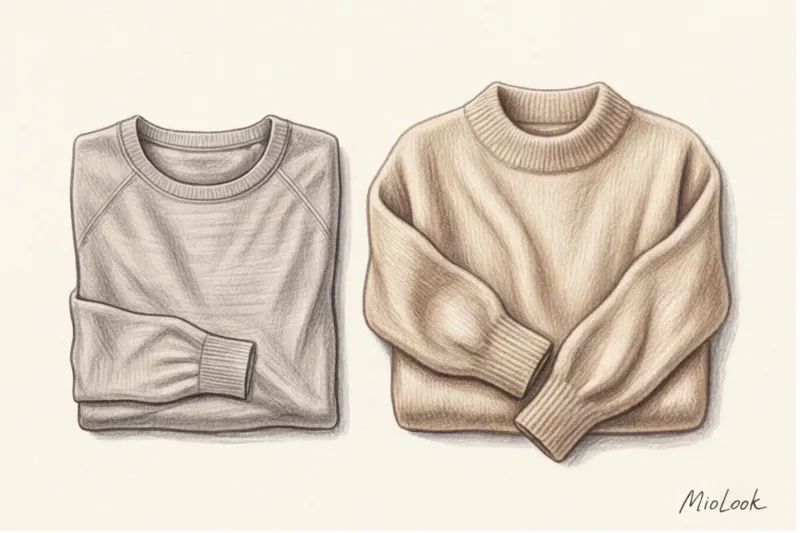
"Quiet luxury" brands often have no identifying marks on the front at all. They can only be identified by their unique materials. My personal triumph was a Loro Piana cashmere sweater I found for a client for just €45. The seller listed it as an "Italian wool sweater." The neck tag had been cut off (probably because it was itchy), but the inner tag stating "100% baby cashmere" and the distinctive seam finishes screamed out the item's origin.
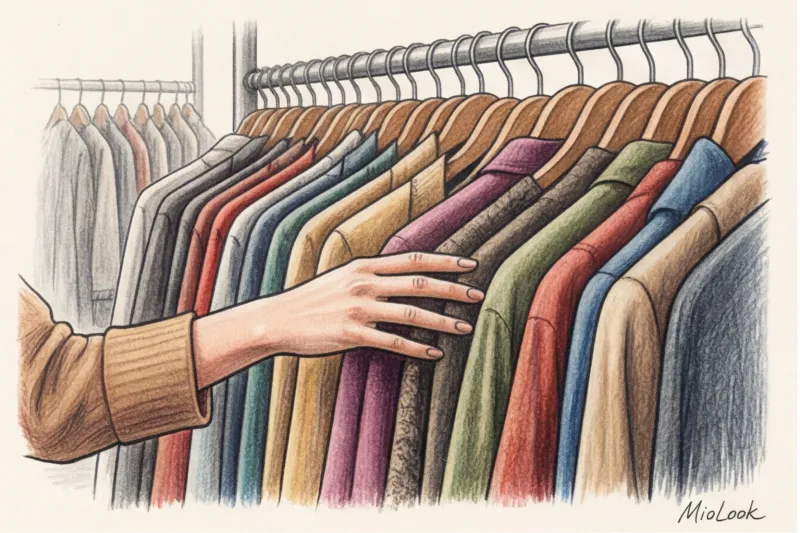
Use search queries: "100% cashmere", "thick silk", "merino wool", "Italian alpaca" This method takes time, but it allows you to snag premium items for next to nothing. Of course, this method has its limitations: it doesn't work if you're looking for a specific, recognizable best-selling bag (you'll never find one because of the fabric), but it's indispensable for building a luxurious base.
Access to MioLook for €0.99 — one-time payment
A smart AI stylist will select the perfect look based on the items in your closet and suggest what's missing.
Get access — €0.99 onceHow to search for designer items on Avito: setting up smart filters
Platform algorithms love to throw you junk. To get to the real gems, you need to fine-tune the sieve. The main rule I teach in my workshops is: always set a minimum price.
Set a filter from €30–€50 (or the equivalent in your currency). Why not start at zero? Because the price range under €30 is cluttered with ultra-fast fashion and cheap replicas from markets. No one in their right mind would sell an original Prada bag for €10, even if they urgently need the money. By setting a minimum threshold, you filter out 90% of visual noise with one click.
The second tool is negative keywords. In the search bar, add: -copy -replica -in style -luxury -premium (Yes, counterfeit sellers love to write "premium quality"). This will clear your search results of stores selling counterfeit goods. And most importantly: save these complex search queries and turn on notifications. The best items are sold in the first 20 minutes. If you check your feed in the evening after work, you'll only see what the resellers have deemed unprofitable.
Bad Photo Syndrome: Where Real Diamonds Hide
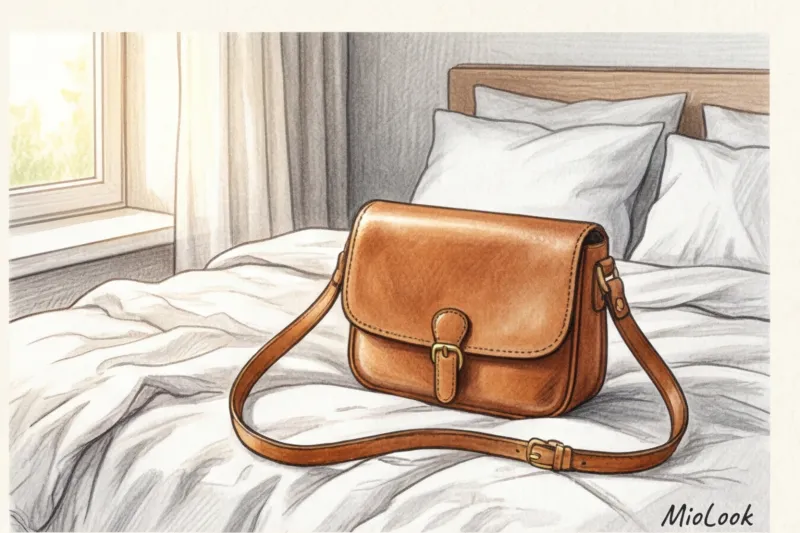
I'm going to say something that goes against all the rules of aesthetics: perfect, beautiful photos on resale sites are your biggest red flag. An item steamed to perfection, photographed on a professional mannequin under studio lighting with a beautiful background—that's 99% a sign of a professional store or buyer.
Real treasures lie in "bad" photographs. A dark frame, an item carelessly thrown on a sofa or a rumpled sheet, a piece of carpet or a sleeping cat caught in the frame—that's your client. The average person is too lazy to adjust the lighting; they want to snap a photo in three seconds and forget about it.
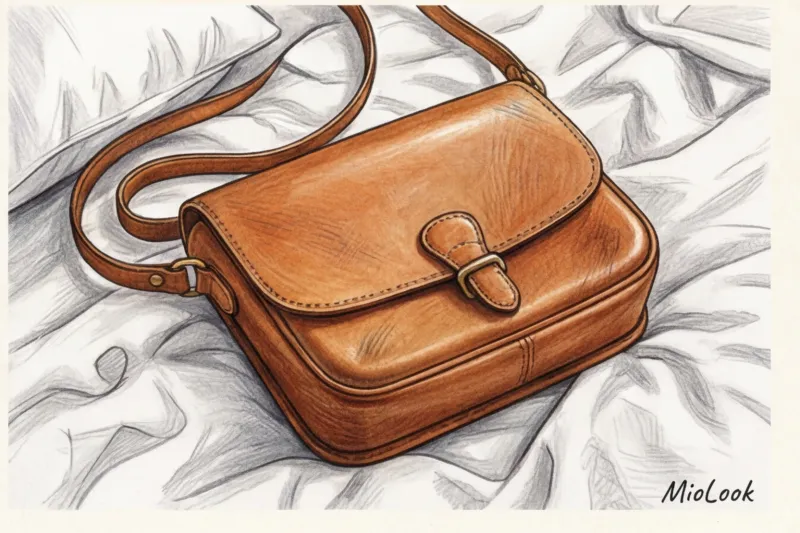
I teach my students to "read" a garment in poor light. Pay attention to how the fabric drapes. Cheap polyester always looks stiff or has a cheap, plasticky sheen from a smartphone flash. Natural silk, even when wrinkled, folds into heavy, elegant folds. High-quality leather doesn't have creases like crumpled cardboard. If the silhouette looks expensive even in the dark on a chair, don't hesitate to request additional photos in daylight.
Your perfect look starts here
Join thousands of users who look flawless every day with MioLook. Digitize your wardrobe in just a few clicks.
Get access — €0.99 oncePhoto Authentication: What to Look for Before Contacting a Seller
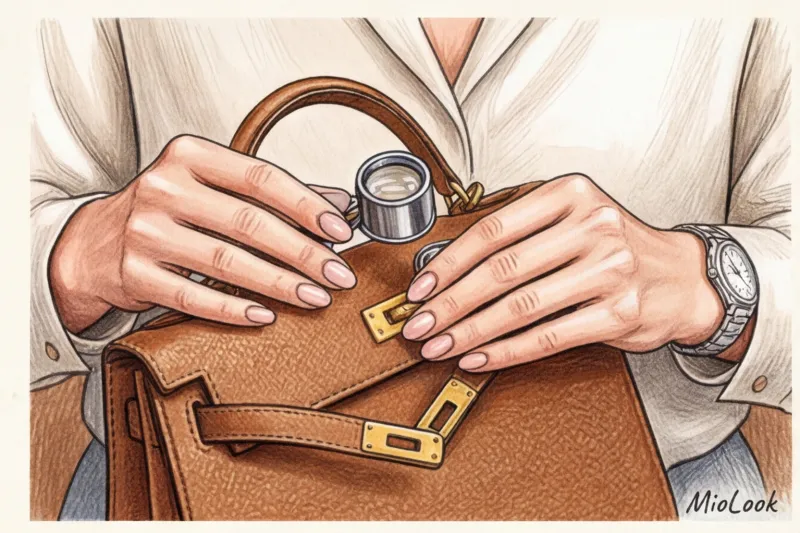
Before contacting the seller, conduct a mini-investigation. Start by analyzing the profile. If the account was registered a month ago and has 50 identical bags in different colors, it's a replica store. If the profile is five years old and its completed transactions include children's clothes, winter tires, an old toaster, and one designer bag, it's a real person.
The second rule is to never trust receipts or dust bags. According to authentication technology experts (such as Entrupy), receipts and boxes are counterfeited several times more often and with greater accuracy than the products themselves. An empty box from a luxury brand is sold separately for €20–€40 precisely for the purpose of being used to complete a counterfeit.
Ask for macro photos of subtle details. Luxury items always have a flawless backing. Ask to see the back of the zipper pull (authentic items will often have marks from high-end hardware manufacturers, such as Riri, YKK, or Lampo). Learn the "inside tag rule": many brands have hidden micro-prints or serial numbers on tags in the side seam of the lining. Counterfeit tags are often sewn on crookedly or made of cheap, shiny material that scratches the leather.
Bargaining is appropriate: etiquette for communication on resale platforms
Regular salespeople hate arrogance. Phrases like "I'll pick it up right now for €15" (When an item costs €60) only make you want to be banned. Resale is a human interaction, and politeness here translates into real discounts.
To justify a price reduction in an environmentally responsible manner, point out objective factors. For example, if an item is light-colored, you can politely mention that it will require dry cleaning. I give my clients this template message:
"Hello, Anna! This is a very beautiful coat; I've been looking for exactly this cut for a long time. I see it's been hanging in my closet for a while and will need to be dry-cleaned (we charge about €15), plus shipping. Could you please tell me if I place my order right now, without further questions, could you lower the price to [your price]? Thank you in advance!"
This approach works 8 times out of 10. You present yourself as a reasonable, polite buyer who is willing to negotiate quickly. And to ensure the item truly fits your look before you negotiate, use the "smart wardrobe" feature in MioLook - this way you won’t buy another unnecessary thing, even if the price is very attractive.
Checklist: A Step-by-Step Guide to Safe Luxury Buying
Systematization is the main enemy of impulse buying. Save this algorithm and go through it every time your hand reaches for the "Buy" button:
- Create a narrow search query: search by composition ( 100% silk ) or use intentional typos of famous brands.
- Set up barriers: set a minimum price (for example, from €30) and enter negative keywords ( -copy, -replica ).
- Check the seller's history: Make sure you're dealing with a real person with a history of selling common household items, and not a serial bag salesman.
- Request 3 required photos: A macro photo of the fittings, an internal label with the composition and serial number, and a photo of the seams from the inside in daylight.
- Use secure transaction: Always make your purchase through the platform's built-in delivery service, which allows 15 minutes to inspect the item at the pickup point. Never transfer money directly to your card upon first request.
The secondary market isn't a flea market, but a boundless fashion archive where, with the right know-how, you can assemble a wardrobe worth tens of thousands of euros for a fraction of that amount. Stop looking for perfect images and flashy logos. Look for beautiful photographs, fine fabrics, and honest sellers—that's where true, genuine luxury lies.