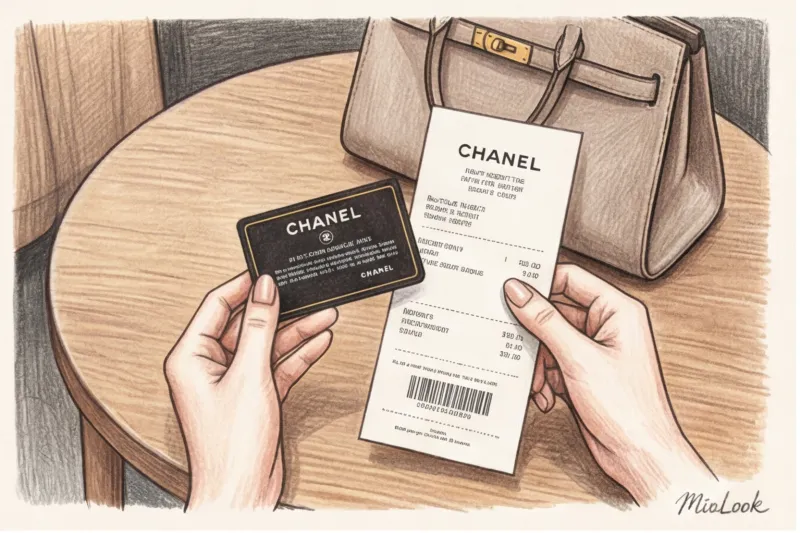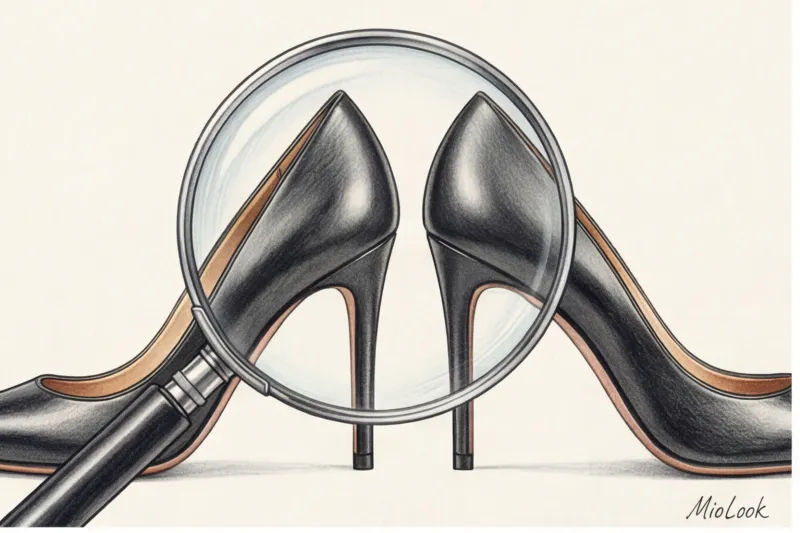
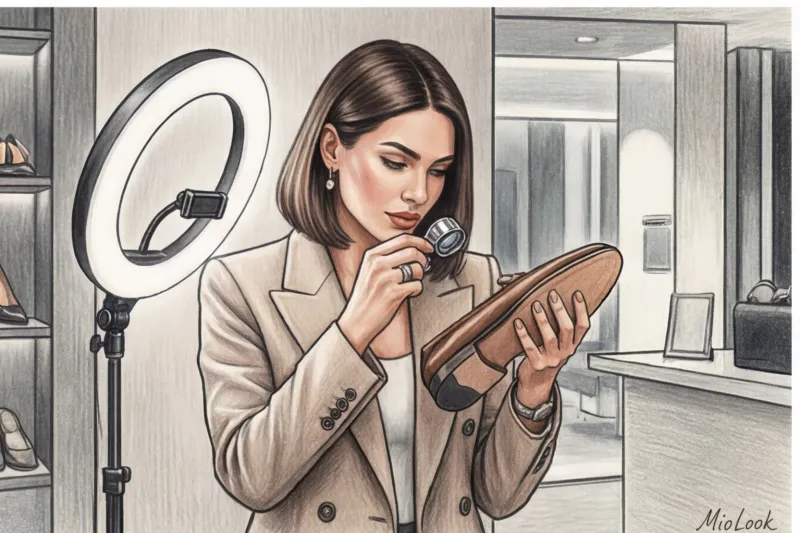
One of my clients proudly brought in a pair of "vintage" Chanel slingbacks for a wardrobe review. The sale price on a popular resale site was €850. The shoes came with a perfect matte box, a thick dust bag, and even a faded receipt from the Paris boutique on Rue Cambon. There was just one catch: when I took a jeweler's loupe and examined the kerning (the spacing between letters) of the logo on the sole, it became clear they were a high-end replica. A superfake.
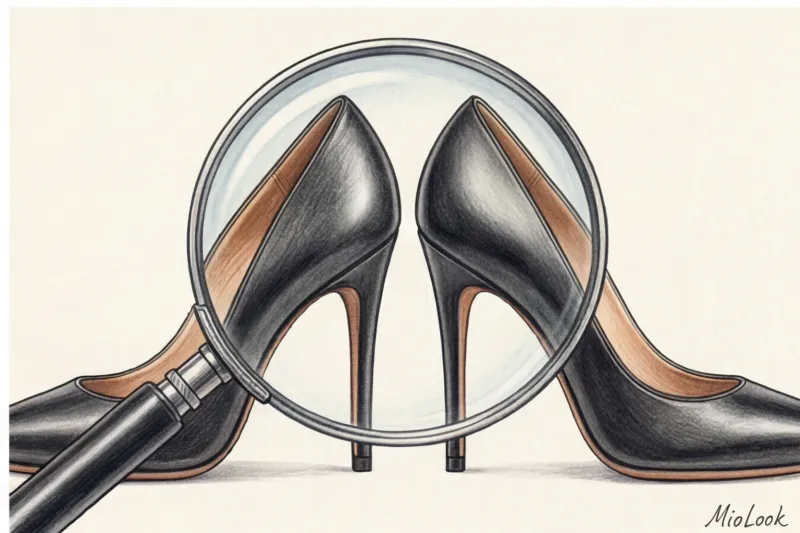
We talked about the secondary market architecture in more detail in our The complete guide to conscious reselling of clothing and vintage , but today I want to talk specifically about shoes. Most online articles still recommend "sniffing the glue," "checking the barcode," or looking for loose threads. Forget it. These methods became obsolete ten years ago. The main question for buyers today is: How to distinguish original shoes from fakes , if outwardly they seem absolutely identical?
The Anatomy of a "Superfake": Why the Old Rules No Longer Work
A common myth holds that counterfeits are always cheap leatherette, the toxic smell of Chinese glue, and crookedly sewn-on logos. Perhaps this applies to the €30 mass-market product. But when it comes to luxury eyewear, the rules of the game change dramatically.
Modern factories in Guangzhou, specializing in AAA-grade knockoffs, source the same patterns, and sometimes the same leather, from the same Italian tanneries as renowned fashion houses. According to a 2024 analytical report by technology company Entrupy, the quality of counterfeit goods in the premium segment has increased by 35% in just three years. Visual inspection at arm's length is no longer sufficient.
From mass-market to shadow luxury: classification of counterfeits
The global counterfeit market is valued at over $500 billion (OECD data), and footwear consistently tops the list of the most copied products. According to statistics from major authenticators, approximately 20% of "branded" shoes sold secondhand on non-specialized online platforms are fake.
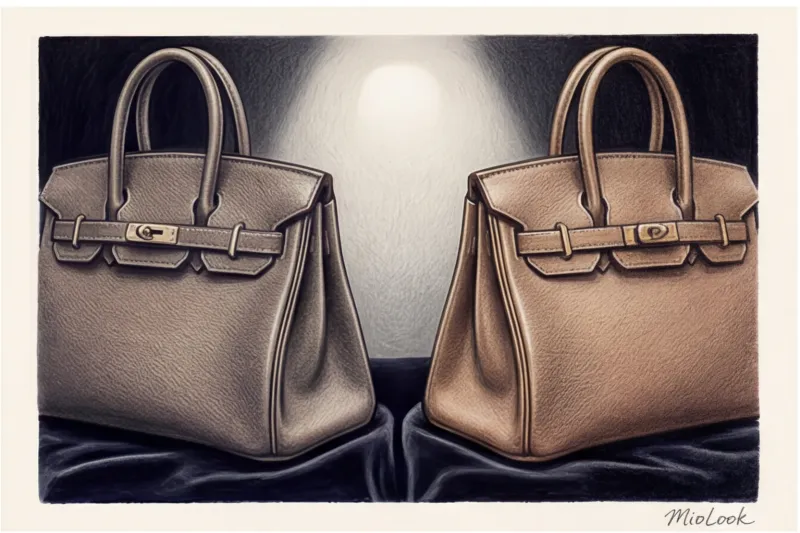
There's a hierarchy within the illegal copying industry. At the top are so-called "mirror" replicas (superfakes or 1:1). Their retail price ranges from €300 to €800. These are the ones most often found in the wardrobes of wealthy individuals: sometimes the buyer is deliberately saving money, but more often, they fall victim to scammers selling the copy as the original at a discount.
Access to MioLook for €0.99 — one-time payment
A smart AI stylist will find the perfect look for your new pair of shoes and help you organize your wardrobe.
Get access — €0.99 onceArchitecture and the last: what cannot be copied
In 2018, I spent several days at shoe factories in the Italian Marche region, observing the creation of authentic luxury lasts. The main difference between the original and the counterfeit lies not in the logo, but in the engineering. Shoes are architectural objects. Craftsmen calculate the heel's center of gravity and the arch support's curvature with millimeter precision.
Counterfeit tire manufacturers copy the appearance, but almost never reproduce the complex internal construction (for example, the classic Goodyear welt), as this requires expensive equipment and time.
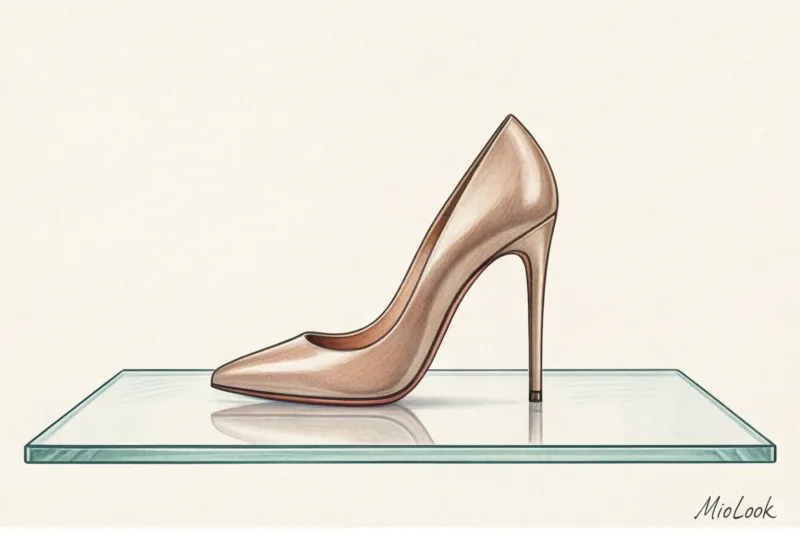
Perform a balance test. Place a pump (such as a Jimmy Choo or Christian Louboutin) on a flat glass or wooden surface and lightly press the toe with your finger. The original shoe may wobble slightly, but the heel will remain firmly pressed to the table. Counterfeit shoes, due to an improperly molded arch support, often have the heel "shoot back," lifting several millimeters off the surface. Imagine what would happen to your back after eight hours of standing in shoes with such an imbalance.
The Perfect Seam Paradox: Why Handmade Sewing Isn't Perfect
Here lies my favorite counterintuitive fact, which shatters the stereotypes of newbies. Many people believe that luxury shoes costing €1,500 must have absolutely flawless, mathematically even seams. In fact, it's the opposite.
Perfectly parallel stitches, identical down to the micron, are a sign of machine-assembled fabric. However, true handcrafted work (especially from brands like Hermès or Loro Piana) always has microscopic deviations.
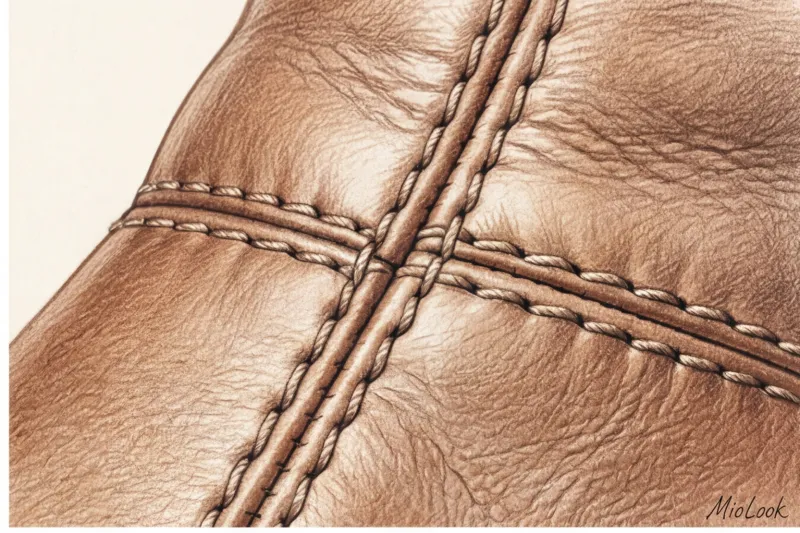
The famous saddle stitch is made with two needles simultaneously. This allows each stitch to be placed at a subtle angle, creating a subtle herringbone pattern. Thread tension also varies slightly depending on the density of the leather in a given area. If you see stitching on expensive leather loafers that looks like it was laser-applied, there's a 99% chance you're looking at a Chinese production line machine.
"Authenticators always examine the threads under a macro lens. Genuine waxed linen thread has a distinctive texture and darkens slightly over time. Counterfeiters almost always use thin synthetic nylon—it's cheaper, doesn't tear at high machine speeds, and has an unnatural sheen in the light."
Materials and tactility: what true luxury sounds and smells like
Leatherworkers use specific terminology: mereya (the natural pattern on the grain of the leather), bakhtarma (the reverse side), and patina (the natural aging of the material). To distinguish the original, you need to use your senses of touch, smell, and even hearing.
Tactile test: Premium calfskin or nappa leather has a unique memory property. If you gently squeeze the toe of an original shoe, the leather forms soft, natural wrinkles, and when released, it quickly returns to its original shape. Leather coated with a thick layer of polyurethane (a common practice among replica makers to conceal defects in cheap materials) crumples roughly, like cardboard, leaving creases.
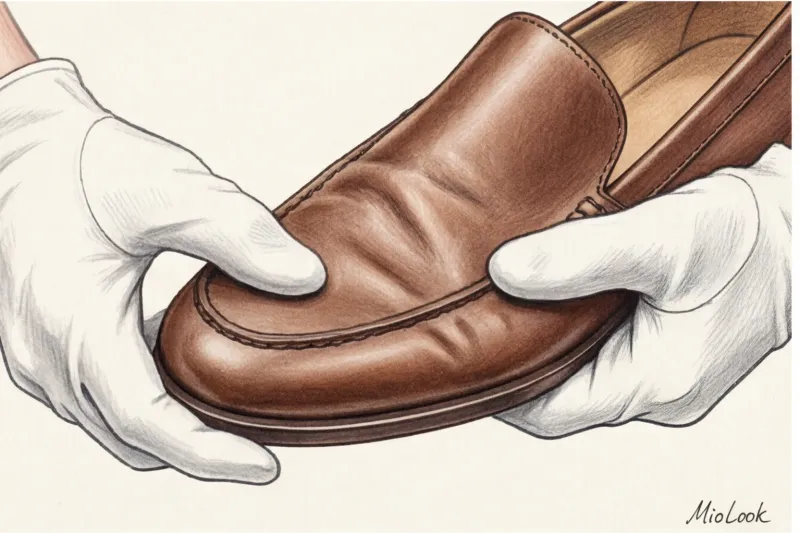
Olfactory test: Expensive shoes smell complex. The vegetable-tanning process takes months, using oak and chestnut bark extracts and natural oils. The resulting aroma is deep, woody, and earthy. Counterfeits are treated with harsh chemicals and chromium to speed up the process (2-3 days). Even if the glue smell dissipates, the pungent chemical odor of the dye lingers forever.
Sound test: Drop a shoe with a solid leather or wooden heel onto a tiled floor from a height of 10 centimeters. The original will produce a dull, heavy, solid thud, like a solid object. A fake, with a hollow plastic heel covered in leather, will produce a loud, rattling "clunk." There is, however, an important limitation: this test does not work with shoes with microporous rubber soles (such as Vibram), which naturally dampen sound.
Your perfect look starts here
Join thousands of users who look flawless every day with MioLook's smart recommendations.
Get access — €0.99 onceMicro-details and fittings: where replica manufacturers fail
The creators of fake products are businessmen. Their goal is to maximize profits. Therefore, they cut corners where the average buyer would least likely look: in hidden areas and on the inside.
Pay attention to the hardware. Luxury houses never use generic zippers. In 90% of cases, they'll be Swiss Riri, Italian Lampo, top-of-the-line YKK (Excella), or in-house hardware with deep, clear engraving. If €1,200 ankle boots have a thin, sticking zipper with no markings on the puller, that's a red flag.
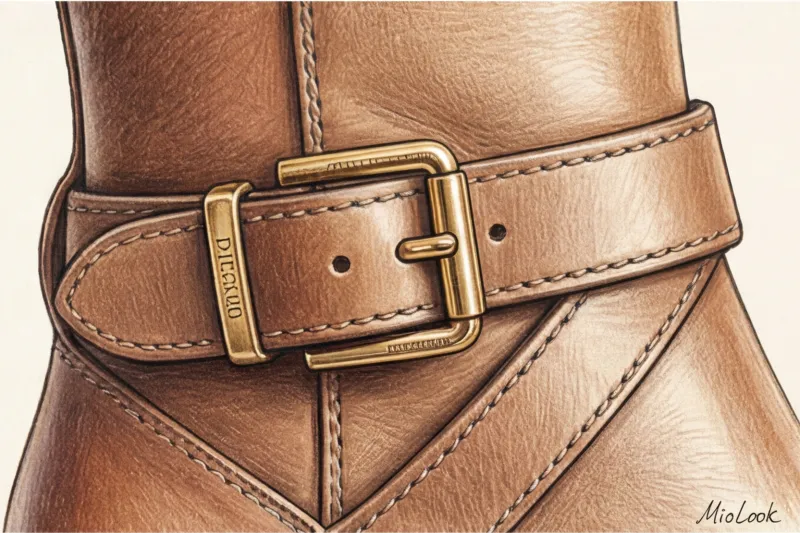
Logo embossing (foiling) on the insole is another Achilles' heel for counterfeits. On authentic shoes, the foil is imprinted deeply and evenly into the leather, with perfect kerning. On fakes, the foil often simply "lies" on the surface and begins to wear off after the first try-on, and the spacing between the letters can be uneven.
Packaging, dust bags, and receipts: the main trap for beginners
Let's get back to my client with the fake Chanel. Her main mistake was that she bought a "story," not an item. Having a box, a boutique receipt, and a QR code today means absolutely nothing.
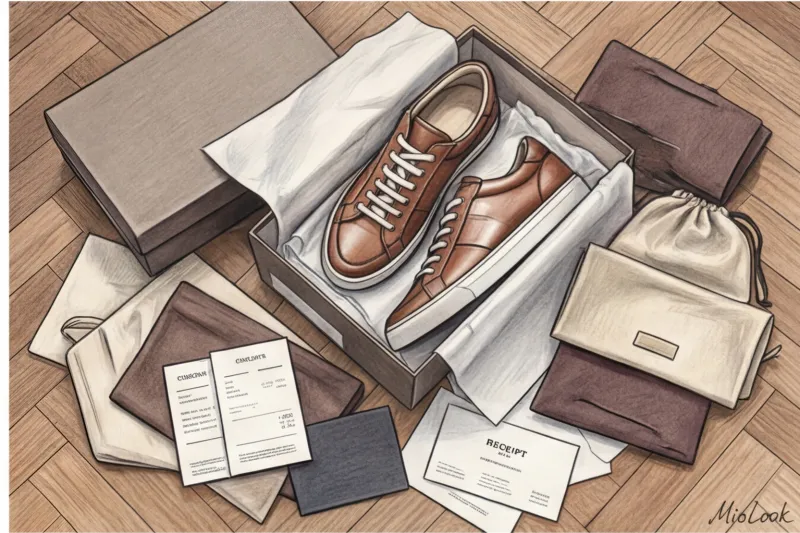
Fake receipts from TSUM, Galeries Lafayette, and Harrods are printed on thermal printers for €5. Furthermore, there's a popular scam: a seller buys an empty, original luxury shoe box at a resale site for €50-100 and places a Chinese replica inside. The buyer sees the real box, relaxes, and lets down their guard.
Instead of the receipt, look at the dust bag (storage pouch). Luxury brands make dust bags from thick cotton flannel, twill, or silk blends. The prints are applied perfectly evenly. Replicas often have dust bags made of cheap, static-prone synthetics, and the logo is printed with blurred edges.
Technology Guarding Your Wardrobe: Should You Trust AI?
Today, professional authenticators rarely rely solely on their eyes. Machine learning technologies are used. Systems like Entrupy use macro cameras that photograph leather at 260x magnification. Artificial intelligence analyzes the porosity of the material and compares it with millions of original images in a database.
AI is changing not only the verification process, but also the way we wear our things. Once you've verified the authenticity of your investment, upload it to MioLook smart wardrobe — the app will help you integrate your new pair into dozens of everyday looks, maximizing the return on your purchase (reducing your cost per wear).
The Informed Buyer's Checklist: 5 Steps to a Resale Deal
Buying branded shoes secondhand is always a risk, but it can be minimized by taking a methodical approach. Here's my five-step protocol:
- Check the platform's reputation. Buy only from places that have built-in authentication or buyer protection with the option of a refund if a counterfeit is detected.
- Request correct photographs. Scammers like to send beautiful wide shots in poor lighting. Ask for close-up shots: the inside of the tongue, the zipper pull, the heel attachment, the welt seam, and the size markings.
- Compare weights. Fakes are generally lighter than the originals due to savings on metal insoles, the use of hollow heels and thinner soles.
- Use independent experts. If you buy shoes over €300, spend €20–€30 on online authentication through specialized services (e.g. Legit Check) before transferring money to the seller.
- The "too good to be true" rule. New Prada loafers can't cost €150. No one sells original luxury items in perfect condition for 10% of the boutique price, even if they "need cash urgently" or "they're the wrong size."
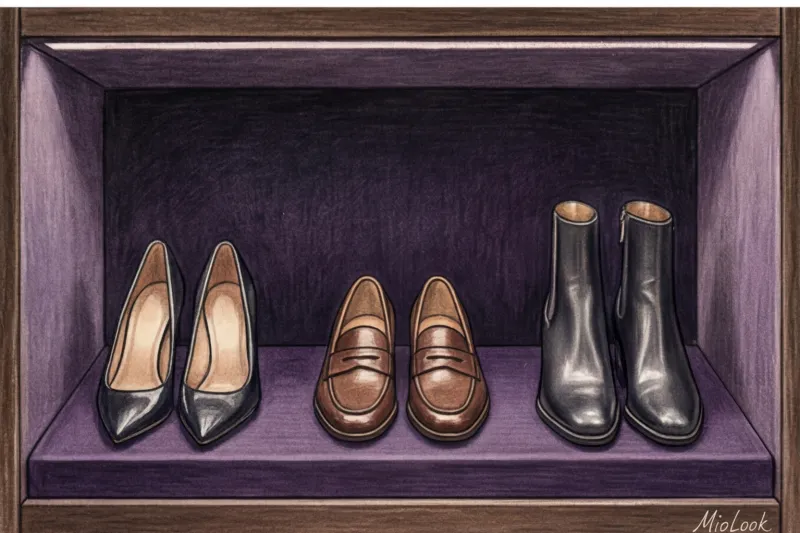
Counterfeits aren't just copyright infringement. These are shoes that haven't been tested by orthopedists, are made from toxic materials, and will never give you the confidence we seek from big brands. If your budget currently doesn't allow for authentic Saint Laurent pumps, don't feed the counterfeit industry. Choose a great, high-quality pair from the mid-range for €150-200 from brands like Massimo Dutti, COS, or local labels. Authentic style always begins with honesty—first and foremost, with yourself.