What is virtual photo try-on in the MioLook app?
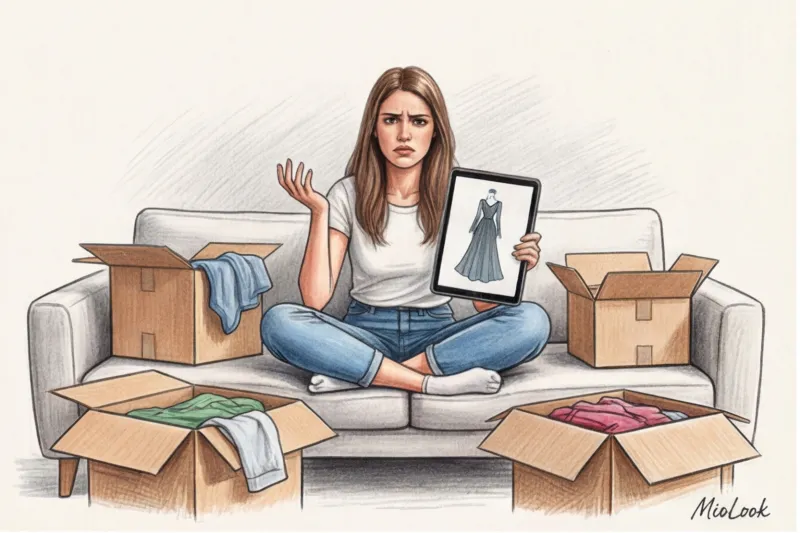
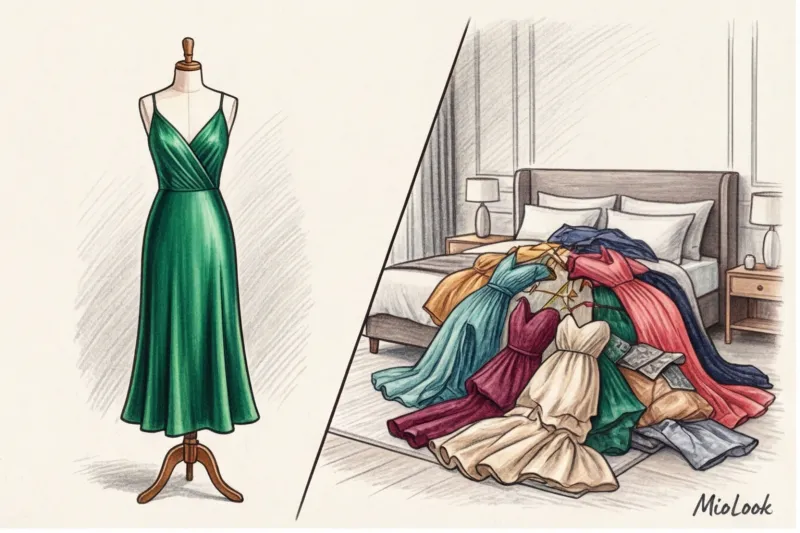
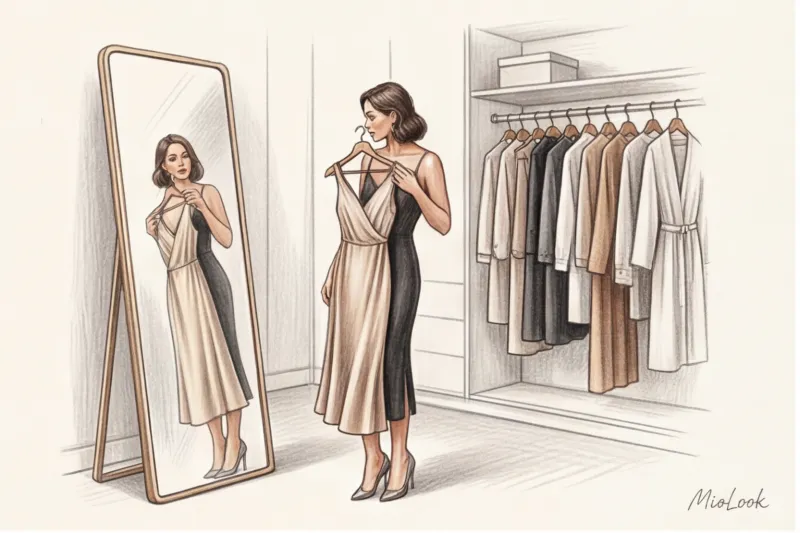
I remember my client Elena's disappointment when she took the €600 silk slip dress she'd ordered from Nili Lotan out of its luxurious box. On the model in the online catalog—a 180 cm tall woman with a size 0 bust—the fabric flowed like a perfect cascade. On Elena, who has a feminine figure with defined hips and bust, the same dress stretched and hung like a rectangular sack, mercilessly throwing off all her proportions.
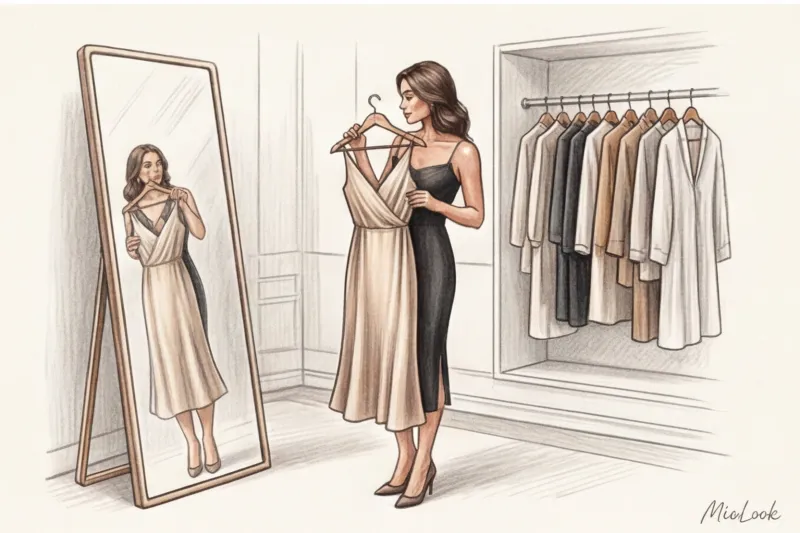
Over 12 years of styling experience, I've encountered this problem hundreds of times. Perfect studio lighting and professional pinning (when stylists discreetly pin garments to the model's back during a shoot) sell us a beautiful illusion. That's why today Virtual clothing try-ons using photos It's no longer just a pastime. For my clients, it's an absolutely essential tool, filtering out visual noise and protecting them from costly mistakes.
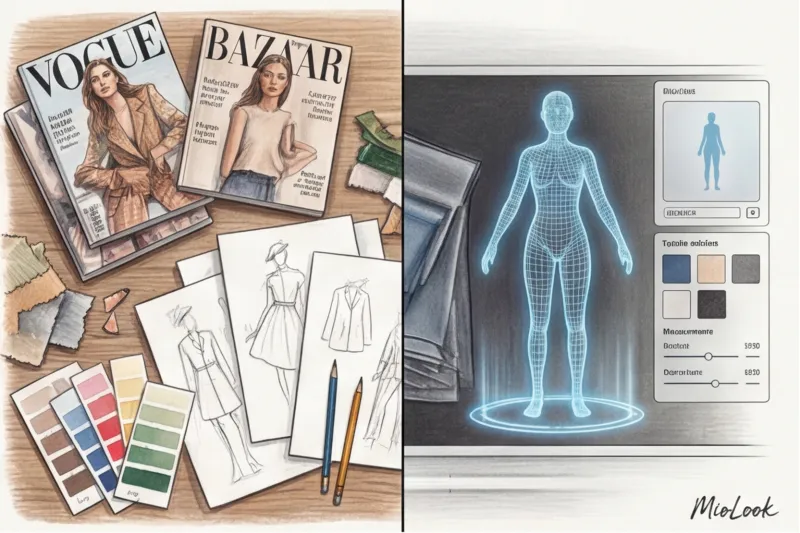
Remember the first attempts by brands to implement AR fitting rooms five years ago? Technically, it was reminiscent of the paper doll games of our childhood: a flat, lifeless image of a jacket or dress was simply "glued" over your photo. The AI didn't take into account body curves or fabric physics. It looked comical and offered no practical benefit for making a purchasing decision.
Today, a quantum leap has occurred. The modern generative neural networks on which the application is built MioLook , work in a completely different way - they have finally learned to understand human anatomy and the laws of clothing design.
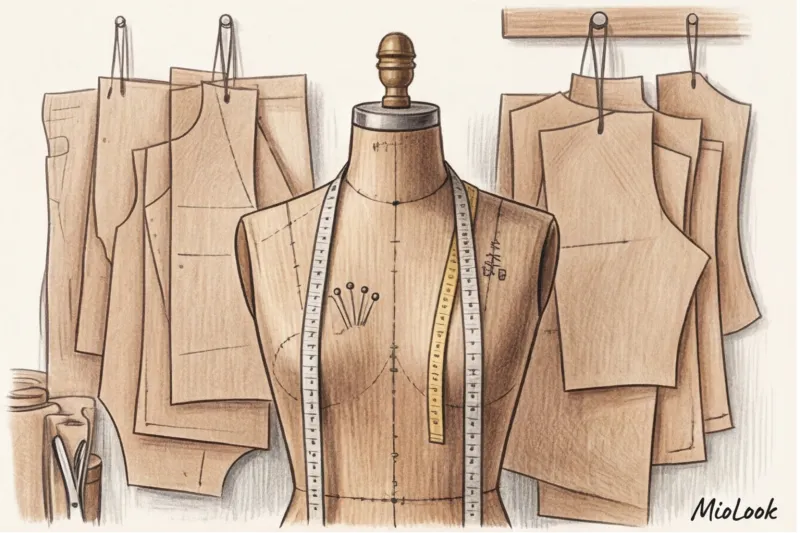
As an investment wardrobe expert, I know: when it comes to the premium segment, the devil is always in the patterns. The perfectly constructed armhole of a French tweed jacket, the precise bias cut of a silk skirt, the shoulder line of a Max Mara coat—it's these millimeters that define the silhouette's status. The MioLook algorithm works more like an experienced tailor than a graphic editor. It analyzes your photo and doesn't simply stretch a 2D texture over the shoulders, but performs a highly complex emulation:
- Reads individual volumes: The neural network understands where your collarbones are, what your shoulder slope is, and where your waistline begins.
- Recognizes tension points: AI calculates how a specific texture will behave. The algorithm "knows" that stiff tweed will hold its architectural shape, while viscose will softly contour to the body.
- Works with light: The system applies realistic shadows to the folds of fabric, taking into account the original lighting in your photo, creating the effect of the item being present in the real world.
"Visualizing a garment on your own body is a confrontation with reality. It instantly sobers you up and removes the haze of flawless catalog styling, forcing you to evaluate the garment critically."
How neural networks are changing the rules of buying status items online
Buying a basic T-shirt for 20 euros is a zero-risk financial decision. But when it comes to an 800-euro cashmere cardigan or a complex designer trench coat, a powerful psychological barrier arises. "What if this cut makes my broad shoulders look bulky?" "Will this length make my legs look shorter?" The fear of making a mistake prevents us from buying truly worthwhile items, forcing us to return time and again to safe but boring basic sweaters.
Virtual fitting dramatically reduces this barrier. You can see the actual geometry of a premium product in your own proportions even before entering your card details. I discussed in more detail how this approach helps businesswomen create a status capsule in my article about AI wardrobe for managers.
This technology also has a subtle but extremely important macroeconomic effect—an environmental one. Before the advent of accurate virtual fitting, the fear of getting the size wrong gave rise to the toxic habit of bracketing. This is when a buyer orders an expensive item in three sizes at once (for example, 36, 38, and 40), only to choose one at home and send the other two back by courier.
According to a 2023 Vogue Business analytical report, online order returns generate a colossal carbon footprint in the fashion industry. The logistics of endless returns burns fuel, and premium brands often choose to dispose of returned items, as quality checks, dry cleaning, and repackaging are more expensive than the item itself. Avoiding ordering "a la carte" with AI try-ons not only saves you time but is also a real step toward conscious, sustainable consumption.
Digitize your style with MioLook
Stop buying clothes that only look good on models. Upload your photo to MioLook and try on any look online with a realistic fit.
Try a virtual fittingWhy a successful woman needs a virtual fitting room: an investment approach
According to a 2023 McKinsey research report, today's consumer spends approximately 140 hours a year online shopping, trying on, and returning unsuitable items. For my clients—business owners, senior managers, and managing partners—this is an unaffordable waste of resources. Time has long since become a new luxury, and a wardrobe should function like a well-oiled Swiss machine, without requiring constant manual intervention.
Over 12 years in styling, I've observed how exhausting women are from tedious trips to boutiques to find that one perfect pair of basic trousers. Equally irritating are the endless waits for couriers with giant boxes of "choices," 80% of which inevitably end up back in the warehouse. Now, three of my regular clients in the IT sector have completely changed their shopping algorithm: they save 3 to 4 hours a week by running all their style desires through an AI fitting room beforehand. This frees up time for what's truly important.
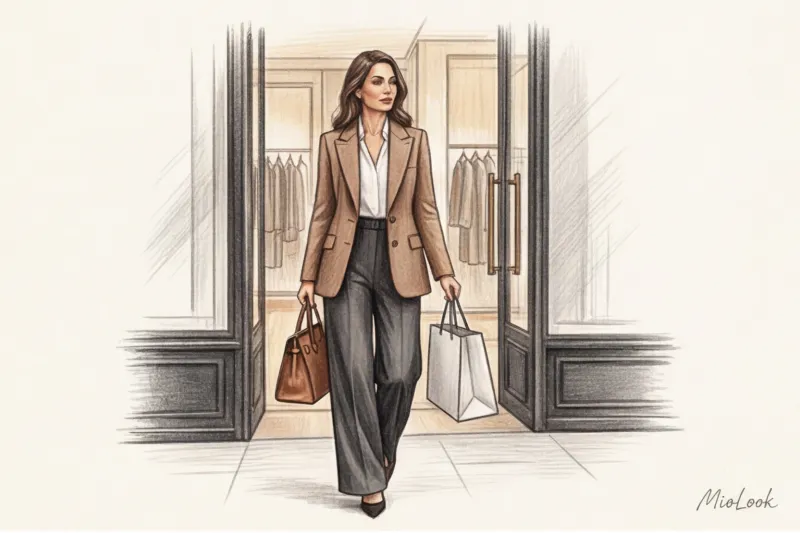
The second most important function of this tool is to create a powerful psychological barrier, a reliable defense against "emotional purchases." The luxury industry masterfully sells us not fabric, but a dream. When you see a flawlessly photographed €1,200 jacket on a 180 cm tall model in perfect studio lighting on a retailer's website, your brain immediately releases dopamine. The "Add to Cart" button clicks almost reflexively. But the opportunity to see the same complex, architectural cut on your own body is like a life-saving cold shower.
The algorithm is ruthlessly honest. If an item has problematic proportions or a poorly cut sleeve, you'll see it before the money is debited from your card. In my experience, the opportunity try on clothes online using your photo In 7 out of 10 cases, it instantly dampens the impulse to buy things that only look good in a static display in a professional catalog. As one client recently told me: "I saw in the render how this collar completely 'ate' my neck, and the desire to pay disappeared on its own.".
Finally, a true investment approach to a wardrobe is unthinkable without a rigorous assessment of combinations. A new item shouldn't hang in the closet in splendid isolation—it must become a working cog in an existing capsule wardrobe. Imagine this scenario: you've found a stunning silk blouse with a bow in a sophisticated olive shade. But will it pair well with your favorite camel-colored cashmere coat from Max Mara, which you invested in last season? Will the collar clash with the wide lapels?
Instead of buying something at random and trying to put the puzzle together in front of your home mirror (with the risk of missing the return deadline), you simply upload the reference image to MioLook You visually layer the new blouse over your digitized outerwear and immediately appreciate how the textures of delicate silk and thick cashmere harmonize or clash.
This is a conscious, mature approach to shaping your personal image. You no longer fund your closet with beautiful but useless museum pieces with their tags still attached. Smart visualization transforms the shopping process from an impulsive lottery to a precise financial and stylistic calculation.
Access to MioLook for €0.99 — one-time payment
A smart AI stylist will select the perfect look, help you integrate new items into your wardrobe, and protect you from emotional spending.
Get access — €0.99 onceStep-by-step guide: how to try on clothes online using your photo
Have you ever wondered why a garment looks like an architectural masterpiece on Net-a-Porter or in a luxury brand's lookbook, but in reality, it sometimes fits like a shapeless slipcover? The answer is simple: on the catalog models, the clothes are expertly pinned from the back, the studio lighting is sophisticated, and the body proportions are adjusted to a narrow standard. We, on the other hand, buy clothes for real life, movement, and comfort.
That's why I always insist in my consultations: before you spend €800 on a structured Khaite jacket or even €150 on a basic COS trench coat, you need to try it on. And today, you don't need to go to a boutique to do that. Let's walk through the virtual fitting process as if you were attending my investment wardrobe masterclass.
Interacting with AI doesn't require the skills of a professional retoucher. The algorithm MioLook smart wardrobe It is built intuitively, but behind the apparent simplicity lies complex mathematics:
- Downloading source code. You add your base photo (we'll discuss the rules for creating it below).
- Selecting a reference. Upload an image of the item you want.
- Generation. The neural network doesn't just plaster a flat image over your body. It analyzes your actual volumes and creates a 3D texture for the fabric, taking into account how the material will behave—where the hard creases of wool form, and where the soft drapes of silk.
Where can I find high-quality reference images for comparison? For flawless AI results, I need a clean frame without visual noise. My main sources:
- Official brand catalogues. Look for a photo of the item on a transparent or white background (the so-called flat lays ) or shots where the model stands up straight, without blocking her silhouette with crossed arms or a large bag.
- Pinterest. An indispensable tool for searching vintage or archival collections. Enter precise English-language queries, such as: "vintage Celine trench coat front view".
- Photo from the fitting room (Mirror Selfie). If you've been to the store and tried on an item but aren't sure, take a photo of it right on the hanger in steady light. At home, you can calmly "put it on" your digital avatar and decide whether it's worth returning.
There's a golden rule in styling: a garment that's not your style not only steals your money, it also steals your confidence. A virtual try-on allows you to spot this discrepancy before your card is charged.
Once you've received a finished look from the neural network, turn off the emotions generated by a beautiful brand and turn on your inner critic. Here are three markers I look for first when assessing fit:
1. Shoulder line and armhole. If a jacket's shoulder seam extends too far beyond your natural shoulder line (and it's not a deliberately oversized, Balenciaga-style fit), the garment will immediately make your upper body look bulky. AI is excellent at showing how fabric sag when the pattern doesn't align with your bone structure.
2. Length proportions. Look carefully at where the hem of a skirt, jacket, or pant leg ends. The most common and insidious mistake is a horizontal line that cuts into the widest part of the calf. This visually adds a couple of pounds and shortens the height. The correct length should always end at the narrowest point of the silhouette.
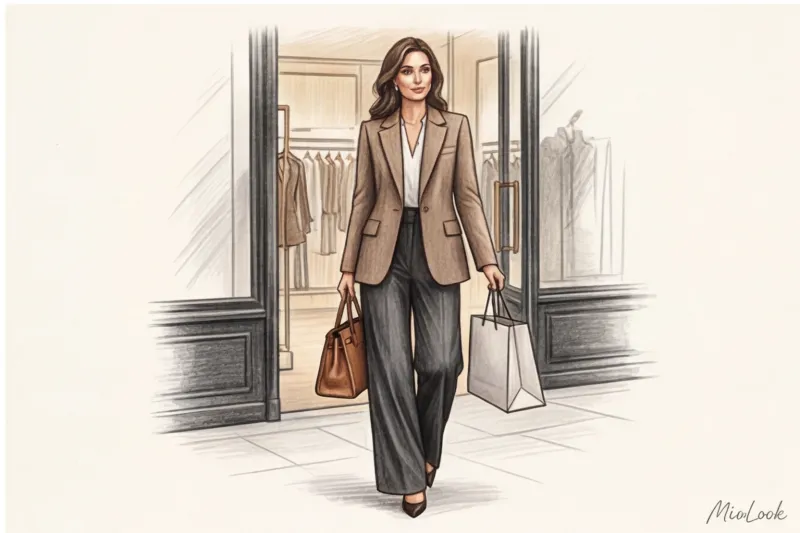
3. Color harmony. How does the fabric shade interact with your complexion? A sophisticated dusty rose shade may look elegant on a computer screen, but in a virtual try-on, you'll immediately notice if it draws out sallow or sallow undertones from your skin.
How to take the perfect photo for maximum AI accuracy
Any neural network is just a tool that works with the data you provide it. If you give the algorithm distorted proportions, the result will be just as distorted.
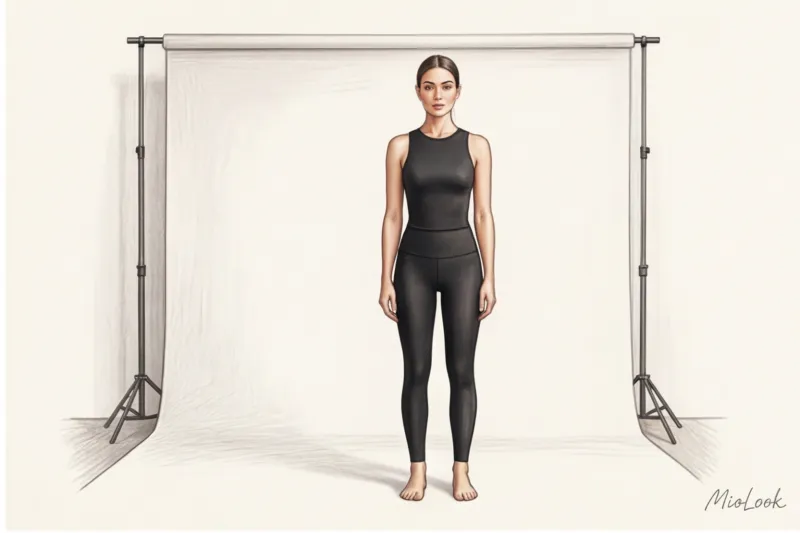
Proper lighting. Forget about artificial overhead lighting in the bathroom or hallway. Ceiling lights create harsh shadows under the eyes and, worse, create unrealistic volume at the waist and hips due to downward shadows. Ideally, stand facing a window during daylight hours. Soft, diffused light will ensure accurate color rendering of your skin and hair, which is crucial for evaluating future clothing shades.
Clothes for the "basic" shot. To ensure the algorithm accurately calculates your body structure, take photos wearing the most form-fitting clothing possible. Thick leggings and a basic top or bodysuit in a contrasting color are the ideal uniform. If you take a photo in a bulky sweater or loose jeans, the AI will mistake their contours for your actual measurements. As a result, the new elegant dress will sit on this “frame” like an unnatural bubble.
Camera angle and height. I repeat this rule to my clients at every session: the lens should be positioned exactly at the level of your belly button, perpendicular to the floor. If you ask your husband to photograph you from his height, the camera will look down, visually shortening your legs by 10-15 centimeters, and making your head appear disproportionately large. If you position the phone too low, your hips will appear bulky.
Professional secret: A standard smartphone camera at 1x zoom slightly distorts the edges of the frame, stretching them. Mount your smartphone on a tripod or shelf at waist level, move 2-3 meters away, turn on 2x zoom, and use the timer. You'll get perfect, undistorted proportions that the algorithm will easily work with.
By spending just 15 minutes creating one flawless basic avatar, you'll have a personal mannequin that will save you hundreds of hours of shopping and thousands of dollars in bad purchases in the future.
The Mathematics of Style: How Virtual Try-On Reduces Cost-Per-Wear
Have you calculated the true cost of that stunning sequin dress you bought for €400 just for a single New Year's Eve party? The answer: exactly €400 for a single outing. Now compare that to a quality €600 cashmere sweater you wear twice a week throughout the fall and winter. Its cost per wear is close to the cost of a cup of coffee.
In professional styling we always rely on the index Cost-Per-Wear (CPW) — the cost per wear. The formula is crystal clear: the price of an item is divided by the number of days you actually wear it. But let's be honest: the human brain is prone to self-deception. Standing in front of a mirror in a boutique under complimentary lighting, we often fervently convince ourselves, "I'll definitely wear this statement jacket every week." In reality, it hangs on a hanger for years. This is where artificial intelligence algorithms act as your impartial financial analyst.
My "conscious premium" concept is based on an ironclad rule: a cheapskate pays twice, constantly scooping up bargains on sale, while a smart person tries things on virtually. We stop guessing and start mathematically predicting the profitability of our wardrobes.
How can you test combinability in practice? There's a gold standard in fashion consulting: any new item must fit into your current wardrobe. If a store-bought item doesn't create at least three complete outfits with what you already own, it's absolutely not worth buying. Previously, this process required either a phenomenal visual memory or grueling home fittings with the risk of forgetting to process a return on time. Today MioLook It allows you to digitize your closet and instantly pair that coveted silk blouse from COS or an asymmetrical top from The Row with your everyday pieces. See three flawless looks on the screen? Take them. Can't find any of them? You just saved your budget from a complete waste.
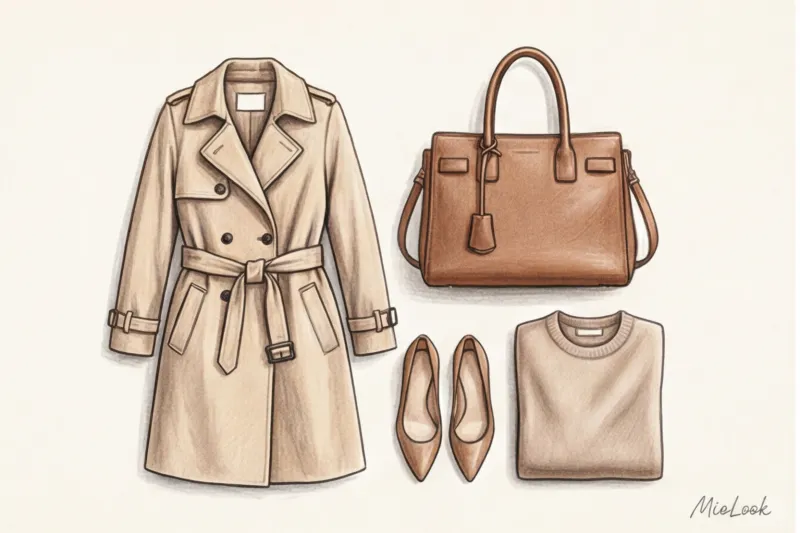
This math is especially effective when justifying investments in expensive basics. Let's say you're eyeing a pair of perfectly tailored wool palazzo pants for €900. It's a significant sum, and it's psychologically difficult to part with it without a 100% guarantee. After uploading a photo to generate your look, you check the most important factors—the fit and the interplay of textures. Is the waistline correct? Does the cut distort the proportions of your legs given your height? How does the texture of the dense English wool compare to the smooth silk of the tops you already own?
When the screen shows you that these premium trousers look luxurious in a formal business look with loafers, elegantly complement an evening out with pumps, and create a relaxed chic look with basic sneakers, your doubts disappear. You're clearly convinced that this item will become a true wardrobe staple. Its high starting price is entirely justified, as with regular wear, the cost-per-wear ratio will drop to a minimum.
Access to MioLook for €0.99 — one-time payment
Start creating perfect looks with the help of artificial intelligence and reduce the cost of each wear of your clothes.
Get access — €0.99 onceCommon Mistakes to Avoid During a Virtual Dress Fitting (A Stylist's Warning)
Let's be honest: even the most advanced neural networks haven't yet learned to convey tactility. I always tell my students that any visualization technology has blind spots, and this is where your personal taste and sense of style come into play.
The first and most destructive trap is ignoring the texture of the fabric Algorithm MioLook It flawlessly reads the geometry of a cut and adapts it to your proportions, but it can't override the laws of physics. On screen, flowing mass-market polyester may look like fine, dense silk, forming graceful folds. However, in reality, cheap synthetics will either stiffen or become staticky and cling to the body, mercilessly cheapening the entire look.
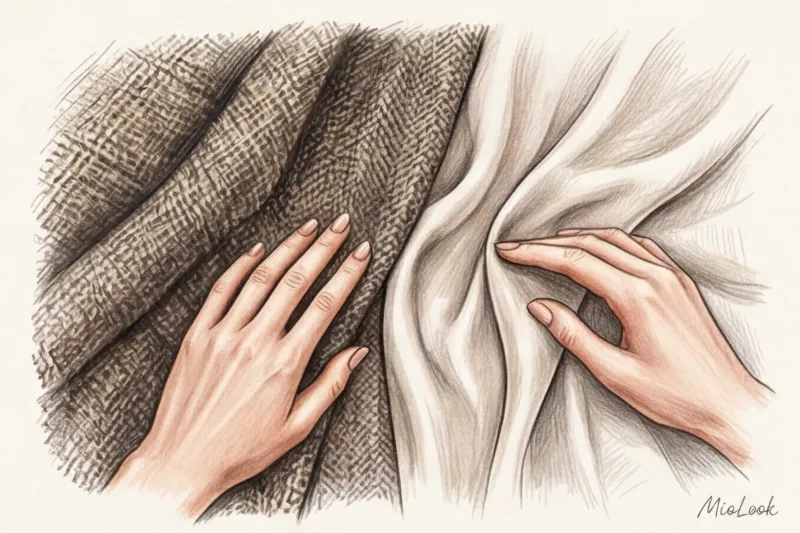
In the premium segment, materials science plays a crucial role. For example, genuine Italian Super 120s suiting wool possesses unique flexibility: it retains its shape, breathes, and drapes gracefully as you move, concealing figure nuances. If you're trying on a complex jacket online, be sure to check the composition on the store's website. No neural network can make a 100% acrylic garment fit as flawlessly as it does in a generated render. Assessing the physical properties of the material is your personal responsibility.
The second common mistake is trying on styles that are obviously at odds with your body structure A virtual fitting room shouldn't be used as a tool for self-deception. If you have a pronounced body type with voluminous hips and sloping shoulders, and you upload a photo of a Jil Sander straight tube dress cut for a narrow, androgynous silhouette, miracles won't happen. The program will faithfully apply texture to your curves, but in real life, the garment will begin to bunch up in untidy horizontal folds. Use technology not to squeeze yourself into someone else's silhouette, but to quickly find patterns that work. on your figure.
Finally, the third warning concerns misconceptions about color It's dangerous to blindly trust the shade you see on your monitor. Your smartphone's display, your laptop's factory calibration, and photo compression algorithms inevitably distort the original tone of a garment. That same deep shade of Pantone 19-4052 Classic Blue on your monitor and in the yellow-lit fitting room are two completely different colors.
Here, knowledge of modern color type theory will save you. On-screen rendering can smooth out disharmonies, but in daylight, the wrong undertone will mercilessly highlight signs of fatigue and add a sallow complexion.
If you know your natural complexion calls for clean, cool, "winter" shades, don't order a warm mustard cashmere sweater just because it seemed like a fun experiment during a virtual fitting. Always check your choice against your personal palette. AI is great at narrowing down your search and eliminating obviously unflattering cuts, but the final decision should be based on your intelligence and understanding of clothing design principles.
Mythbusting: Why AI Try-On Is a Tool for Slow Fashion
There's a common stereotype that digital innovations in retail are designed with one goal in mind: to make us consume more. It seems perfectly logical: if the selection process becomes like an addictive game with just a few clicks, we'll inevitably end up with mountains of impulsive purchases. But the paradox is that in the premium segment, this technology works exactly the opposite. It's not a stimulant for consumerism, but a brutal filter for mindfulness.
The reality is this: preliminary visualization on one's own body ruthlessly eliminates up to 80% of the visual junk we would previously have discarded under the influence of beautiful styling on a model or aggressive marketing. When the magic of studio lighting and professional posing disappears, all that remains is the bare essence of the garment and how it interacts with your individual anatomy.
Artificial intelligence, oddly enough, fosters a kind of snobbery in us. When images no longer sell you illusions, you begin to demand genuine quality in the design and patterns of clothing.
This is where a powerful focus on quality comes into play. When you can't touch the fabric, construction takes center stage. Cheap tailoring can't be disguised even by the most advanced image generation. If the patterns are primitive, the bust darts are missing, and the armholes aren't designed with movement in mind, the garment will look flat and awkward in a virtual rendering. Seeing this effect time and again, you begin to truly appreciate the intricacies of tailoring. It becomes clear why The Row's asymmetrical bias-cut skirt fits perfectly even on a digital copy, while its $30 mass-market counterpart looks like a shapeless rag.
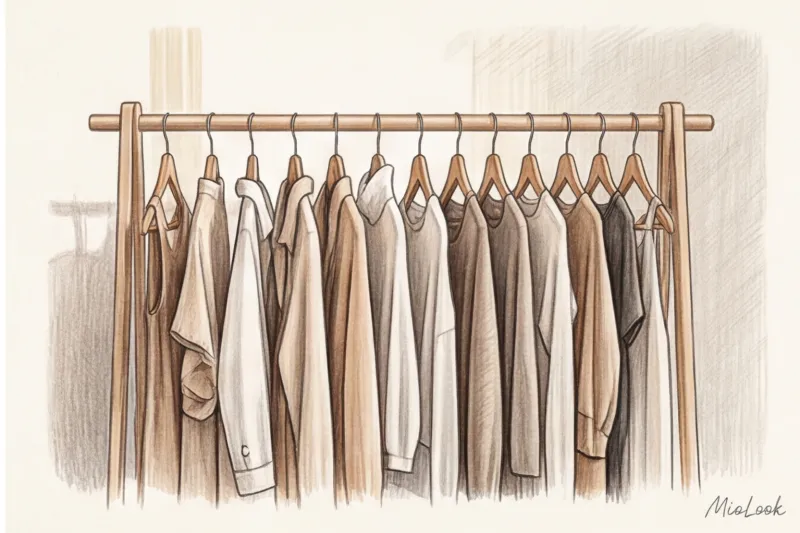
Instead of randomly acquiring microtrends, my clients are adopting a strategy of curating their own gallery. Technology allows for thoughtful curation of a personal archive—creating a mood board of "future purchases." You simply save coveted items from platforms like Farfetch or Moda Operandi and "try them on." MioLook app and leave this virtual capsule to rest for a couple of weeks.
This pause offers a colossal advantage: consciously anticipating discounts on specific items. You'll be surprised how quickly the urge to buy the season's fleeting hit fades, and how much your confidence in a classic, well-structured jacket strengthens. And when you know for sure that this jacket fits your proportions perfectly, all you have to do is calmly wait for Black Friday or a summer sale to pick up your well-thought-out investment for €600 instead of the original €1,200. This is the quintessence of slow fashion—buying rarely, planning ahead, and hitting the mark.
Your perfect look starts here
Join thousands of users who look flawless every day with MioLook. Plan your purchases wisely and invest in your style without making mistakes.
Get access — €0.99 onceYour Personal AI Stylist: A Checklist Before the Final Purchase
The era of impulse online shopping is officially over. For decades, marketers at major e-commerce platforms have been structuring sales funnels to deprive us of time to think: aggressive discount timers, one-click purchases, promises of free and easy returns. As a result, closets are overflowing with clothes with tags still attached, and there's still nothing to wear. Every size ordered "on a whim," every box that has to be returned by courier—it's a hidden tax on your time. And for a successful woman, time is often more valuable than the most exclusive handbag.
That's why MioLook technology fundamentally disrupts the established system, moving us from the neurotic and environmentally irresponsible "buy-try-on-return" cycle to the elegant, balanced "try-on-think-invest" paradigm. Artificial intelligence here acts as an impartial analyst, unswayed by the hypnotic price tag.
In my consulting practice, my clients and I call the final stage of the shopping experience "cart quarantine." Before a transaction is approved, the item must pass a rigorous reality check. Now that you have a realistic rendering of the garment on your own body, you can conduct this audit yourself. Here's my professional 5-question checklist:
- Does this item fit my lifestyle? You see a luxurious, loose-fitting three-piece pantsuit. It fits perfectly during the virtual fitting. But if 80% of your week consists of managing projects from a home office and active weekends in the countryside, this €1,200 tailored masterpiece will hang in a bag for years. Buy for the life you live now, not for a fantasy one.
- Does the color match my face in the virtual photo? This is a critical point that 9 out of 10 shoppers forget. Max Mara's elegant camel shade looks expensive on a studio model with a warm undertone. But if the render shows that this color accentuates under-eye circles against your cool-toned porcelain complexion, delete the item immediately.
- Does the silhouette fit my body architecture? Assess the generated image from a distance, as if looking at a stranger. Has that ultra-fashionable long jacket shortened your legs? Has that chunky knit sweater made your shoulders look too massive? Geometry is unforgiving.
- Will I be able to wear this at least three different ways? You've tried on a statement skirt. Right in the app, pair it with your basic silk top, a tailored men's shirt, and a cashmere turtleneck. If a skirt only works with one specific top, it's a cost-effective purchase.
- Am I willing to pay full price for it? Virtual fitting eliminates the magic of studio lighting. You see only the item and yourself. If the reflection on the screen doesn't make you feel like "this is 100% me," and you're only buying it because it's 40% off, close the tab.
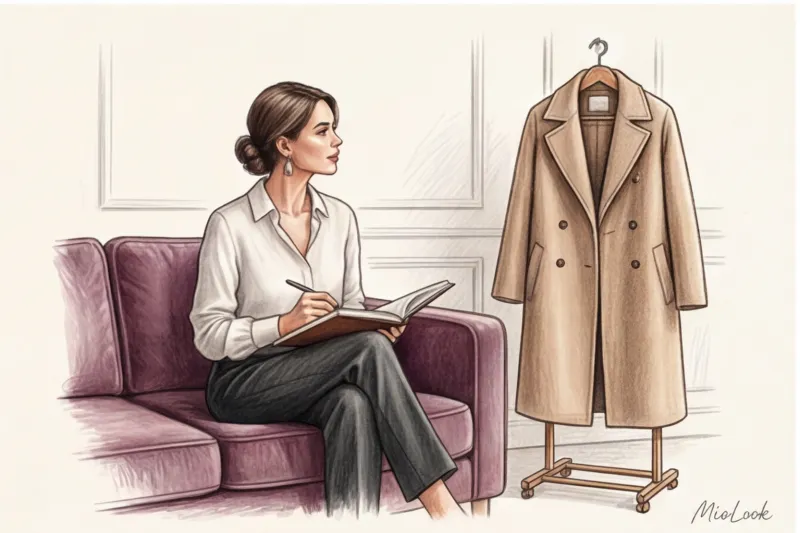
The secret to impeccable style lies not in the amount of budget spent, but in the number of stylistic mistakes you avoid. Visualization technologies are your main risk management tool.
Artificial intelligence isn't a magic wand that will instantly make you a style icon without your input. It's a powerful tool that requires careful tuning, and that tuning starts with the foundation. Don't wait until you urgently need a dress for an important event.
I encourage you to digitize your essential capsule wardrobe today so you can make only precise, targeted purchases tomorrow. Pull out your favorite perfectly-fitting jeans, that structured jacket, and your tried-and-true basic tops. Take high-quality photos in daylight and upload them to MioLook Once your personal database is digitized, adding any new item becomes a mathematically predictable process. You stop wasting your energy on returns and start building a status wardrobe that works for you.
Guide Chapters
How to Try on a Suit Online from a Photo: Stylist Tips
A business suit is a complex architectural design. Learn how artificial intelligence can help you choose a tailored style and avoid costly mistakes when shopping.
How can I check if a clothing color suits me online?
Tired of being disappointed by unsuitable colors after online shopping? Find out how a virtual fitting room can help you choose the perfect color without fail.
Capsule: How to put together a look, online fitting with AI
The classic approach to basic items often fails due to incompatible textures. Find out how AI helps you create the perfect capsule wardrobe without spending too much.
How to try on a coat online from a photo without making mistakes
Buying outerwear online can often be a disappointment. Learn how virtual fittings can help you find the perfect fit before you pay.
How does a neural network that tries on clothes from photos work?
90% of the perfect fits in catalogs are fake, with clips in the back. Learn how AI and virtual fittings are solving the problem of clothing returns.
How to try on a wedding dress online without going to a salon
Exhausting trips to wedding boutiques are a thing of the past. Discover how virtual fittings can help you find the perfect dress without stress or unnecessary expenses.
Plus-Size Virtual Dress Try-Ons: A Plus-Size Guide
Forget shapeless tunics. Find out how artificial intelligence helps plus-size women find and buy the perfect clothes, even with complex cuts.
Try on clothes before buying online: no returns
Tired of online shopping that doesn't fit perfectly? Find out why a virtual fitting room will eliminate returns forever.
How to try on a dress online from a photo before buying
The perfect picture in catalogs is often created by hidden pins. Discover how a virtual fitting will reveal the true fit of a dress before you pay.
Guide: How to Take a Photo for a Virtual Fitting
Camera angles can greatly distort your body proportions. Learn how to take the perfect photo so the virtual fitting room produces a realistic result.