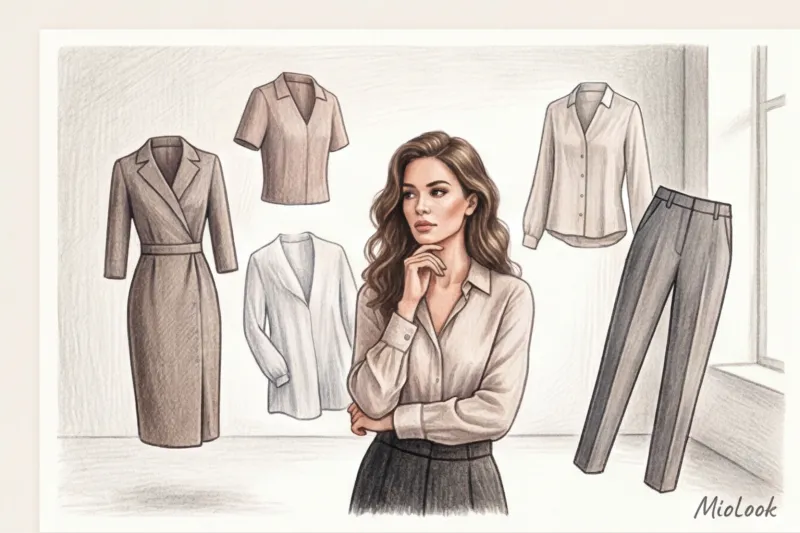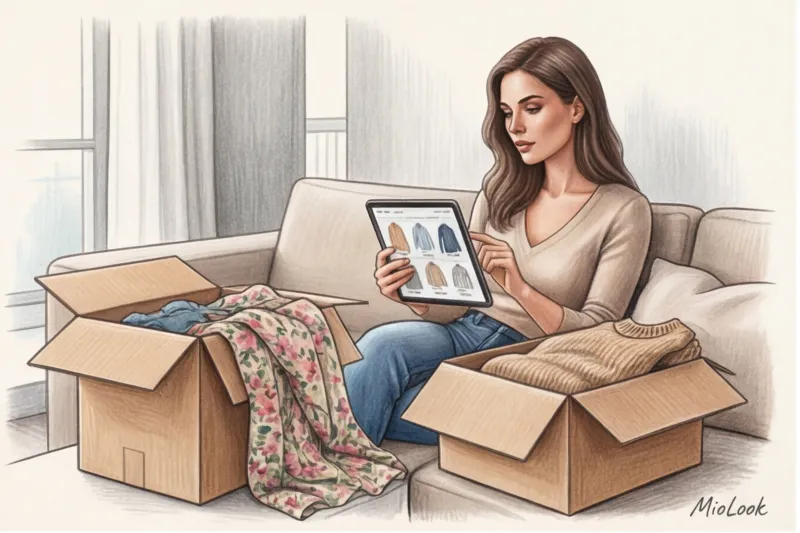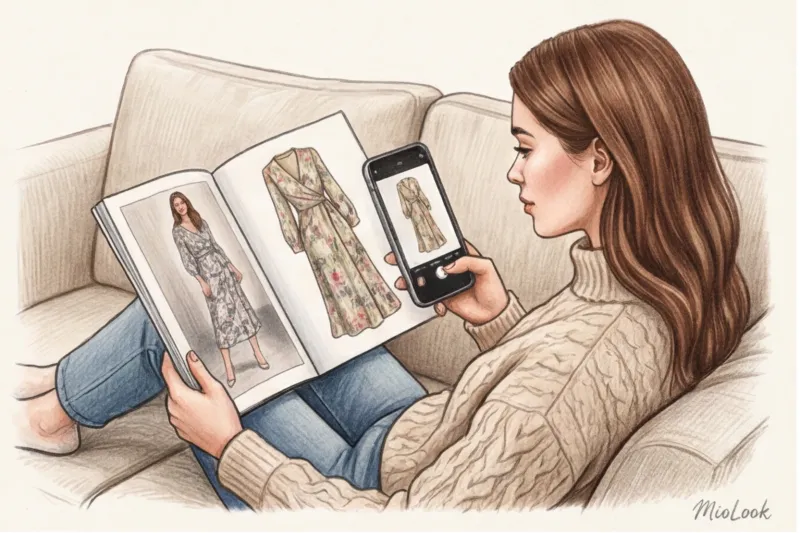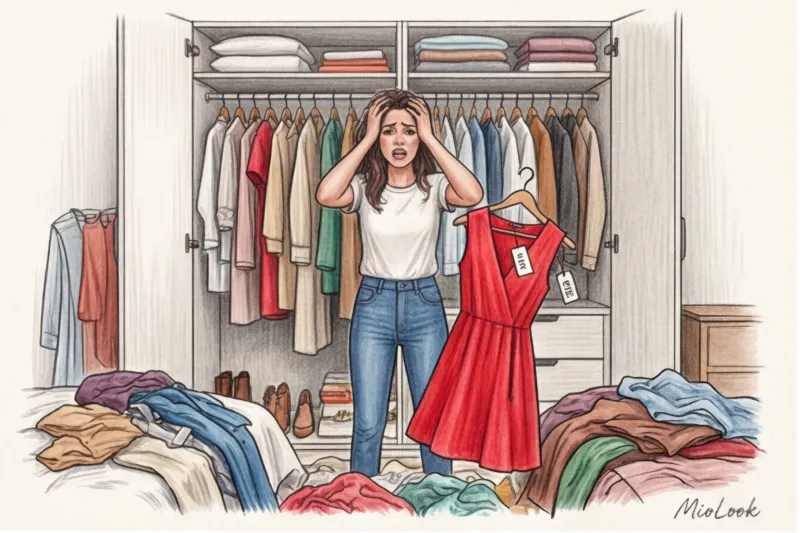
In 14 years of working as a personal stylist, I've learned one brutal truth: there's nothing more damaging to a woman's self-esteem than a garment that looked divine on the model but treacherously misaligned on your hips. That moment of unboxing, when the dopamine-fueled anticipation gives way to a heavy sigh in front of the mirror. We're used to blaming our figures, but the truth is, modern e-commerce isn't selling us clothes, but a masterfully crafted illusion. That's why Trying on clothes before buying online Today, it's not just a convenient feature, but the only way to protect your budget and your nerves. We've already covered how these algorithms work in more detail in our A complete guide to virtual photo try-ons at MioLook , and today I want to talk about why without this technology we are doomed to endless returns.
The Catalog Illusion: Why We're So Often Disappointed When Unpacking
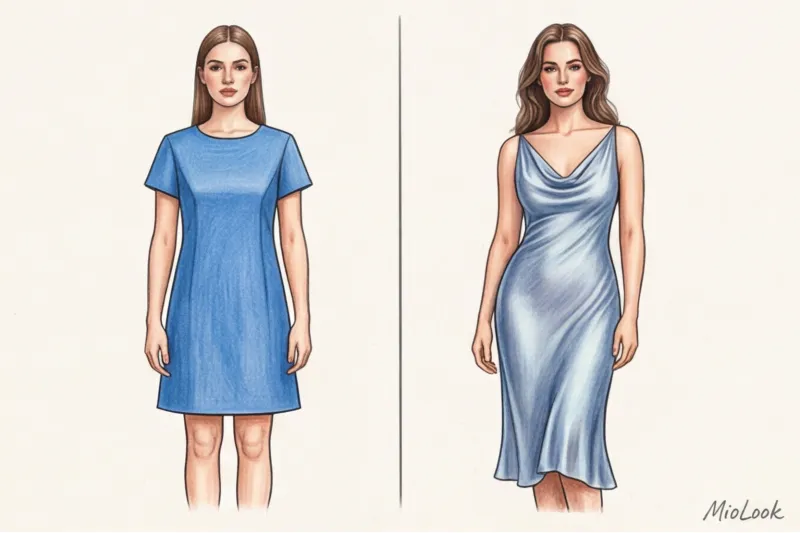
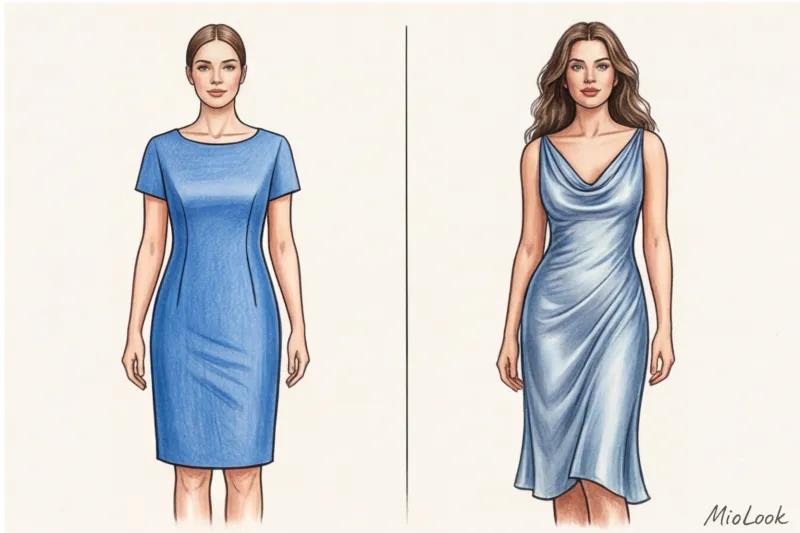
Let me tell you the story of my client Elena. Last fall, she ordered a silk slip dress from Nili Lotan for 600 euros. In the online store photos, the flowing silk created a flawless, relaxed silhouette on a tall, petite model. When the package arrived, Lena (she's 165 cm tall with a feminine pear-shaped figure) tried it on and... the proportions were all out of whack. The fabric stretched across her hips, sagged at the neckline, and the length cut her legs off at the widest part of her calves.
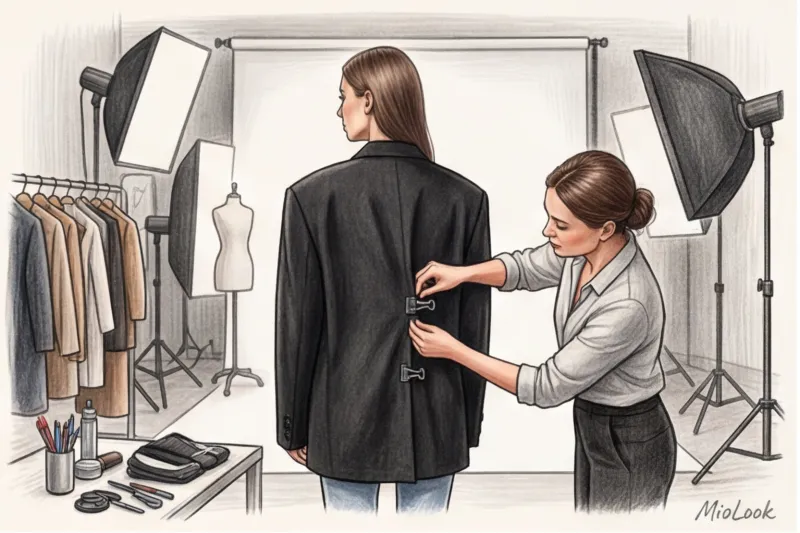
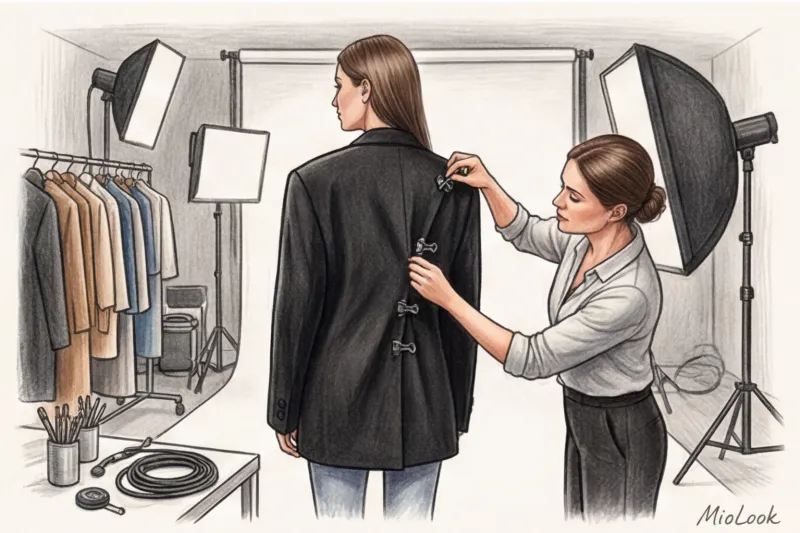
Why does this happen? Having worked on dozens of commercial fashion shoots, I regularly observe the same process. What you see on screen is the result of studio lighting, the perfect pose of a 180 cm tall model, and... some ordinary paper clips.
"In the industry, it's called 'pinning.' We take a standard-size garment (usually a medium), put it on an incredibly thin model, and then firmly pin the fabric at the back with metal pins to create the illusion of a perfect fit at the waist. You're buying this image, not the actual pattern."
Once you realize this fact, it becomes clear: ordering clothes blindly is like playing roulette with a catalog. Precisely trying on clothes before buying online ruins the magic of studio lighting and reveals the harsh truth about how a particular armhole will fit your shoulders before the money is debited from your card.
From Paper Dolls to AI: How Online Try-Ons Have Evolved
Many people are still skeptical about virtual fitting rooms, remembering the AR technologies of five years ago. Remember those silly masks that simply superimposed a flat photo of the dress over your silhouette? It was a "paper doll" effect that gave no indication of the actual fit.
Today, a quantum leap has occurred. Generative neural networks, on the basis of which MioLook smart wardrobe , they no longer stick stickers on them. They've learned to understand anatomy. The algorithm doesn't just read your contours; it understands the volume, depth, and physics of the tissue.
As a stylist, physics is crucial for me. 180 g/m² cotton will stand upright, creating a rigid silhouette, while viscose with 5% elastane will softly hug curves. Modern AI can calculate the tension on the hips, the drape, and how the material will react dynamically. This isn't just a joke; it's a precise engineering calculation of your style.
Your perfect look starts here
Join thousands of users who look flawless every day with MioLook. Check the fit before you buy.
Get access — €0.99 onceThree main reasons for returns that a virtual fitting room can eliminate
According to the National Retail Federation (NRF) in 2023, an average of 38% of clothing purchased online is returned to warehouses. But the most interesting thing is that up to 70% of these returns are not due to defects or the wrong color. The number one reason is fit issues. A brand's sizing chart is simply a set of numbers that says nothing about the garment's geometry.
1. Mismatch of patterns with body architecture
A size M at Zara and a size M at COS are two different universes. Moreover, a garment in your exact size can distort your figure if its pattern doesn't align with your body shape. Key indicators are armhole depth, darts, and shoulder seam angle. If you have sloping shoulders and a jacket is cut straight, it will bunch up at the back. A virtual fitting instantly highlights these geometric conflicts.
2. Distortion of proportions and length
Have you ever noticed how an elegant midi dress in a picture turns into a vaguely ankle-length cut? Or how trendy jeans visually shorten your legs because the waistline is 2 centimeters below your natural height? A neural network projects the garment to your actual height, saving you from any unpleasant proportional surprises.
3. The "lonely thing" syndrome: the compatibility error
You bought a stunning fuchsia jacket, it fits perfectly. But here's the problem: it doesn't match any of the pants in your closet. The purchase gets returned or (worse) hangs with the tags for years. The AI fitting room allows you to put together a complete look: you "put on" the new jacket using a photo of your favorite jeans and a basic T-shirt before you even check out. It's the foundation for any outfit. status wardrobe.
The Hidden Cost of the "Order Three Sizes and Return the Extra" Tactic
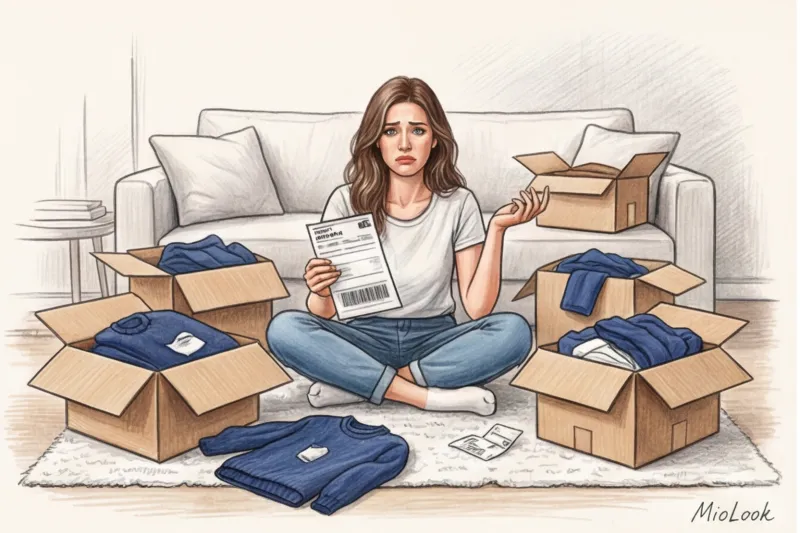
I often hear from clients: "Olena, why do I need all this technology when I can just order sizes S, M, and L, try them on at home, and return two?" This is the biggest misconception of modern shopping.
First, the abundance of choice is paralyzing. In psychology, this is called decision fatigue. When you stand in front of the mirror wearing three nearly identical sweaters, your brain goes into overdrive. You start making compromises and end up keeping the one that fits "okay" instead of searching for the one that fits "perfectly."
Secondly, the forgetfulness trap. Two unsuitable items are put back in the bag, placed in the hallway, and... left there for 15 days. The return deadline expires, and you end up with things you don't need.
And finally, the carbon footprint. According to a large-scale McKinsey study (2024), reverse logistics (returns) generates millions of tons of CO2 emissions annually. Smart shopping is about making one precise sniper shot, not queuing up your wardrobe in the hopes that something will fit.
Access to MioLook for €0.99 — one-time payment
Start creating perfect images with the help of artificial intelligence and forget about returns.
Get access — €0.99 onceStylist's Checklist: How to Properly Use the MioLook AI Fitting Room
I'm always honest with my readers: any neural network is just a tool. It has its limitations. If you upload a top-down selfie taken in a dark hallway over a bulky sweatshirt, even the most advanced algorithm will produce a distorted result. To achieve flawless fit generation, you need to create the right "source."
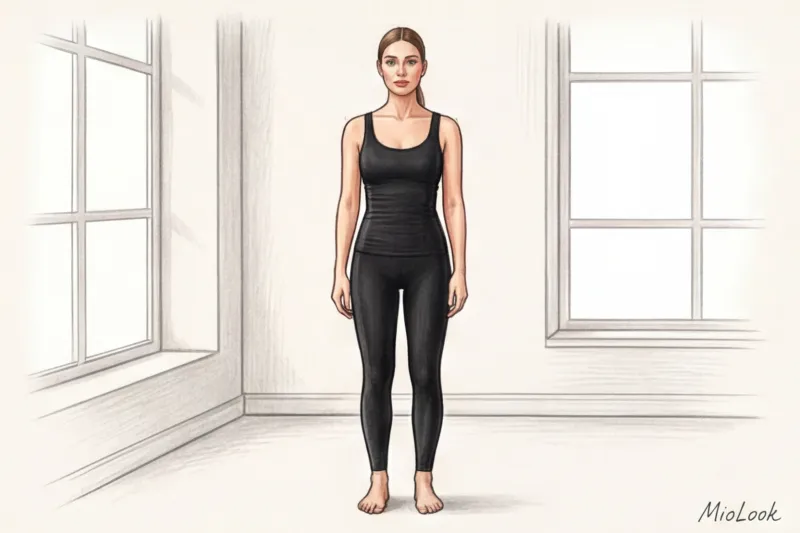
Here's my professional guide to the perfect avatar:
- Light without shadows: Take photos during the day, facing a window. Harsh artificial light creates deep shadows that the algorithm might mistake for folds in your figure.
- Canvas clothing: The ideal base is black matte leggings and a form-fitting top. The AI needs to see your real anatomy to properly "fit" the virtual fabric.
- Honest perspective: The camera should be positioned exactly at waist or chest level. A photo taken from the bottom up will make you look taller and wider in the hips, while a selfie taken from the top down will disproportionately enlarge your head and make your legs appear shorter.
- What to look for as a result: When evaluating a generated photo, first check the shoulder seam (it shouldn't hang down unless it's oversized) and the presence of horizontal folds in the groin area (a sure sign that the pants will be too small in the hips).
Risk-Free Investments: Buy Premium Online with Confidence
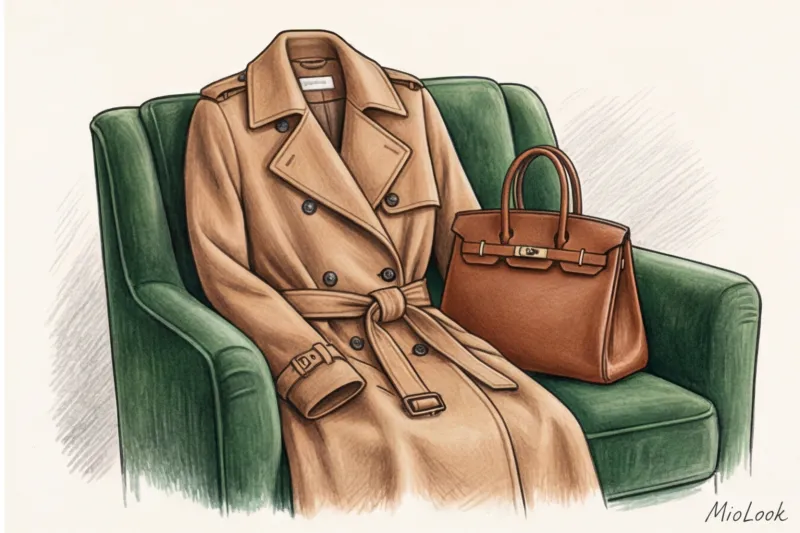
Fear of getting the wrong size is the main reason we're hesitant to invest in high-quality, expensive items online. Getting a wrong size on a €20 cotton T-shirt from a mass-market store is unpleasant. Getting a wrong size on a €2,000 Max Mara coat is a real pain.
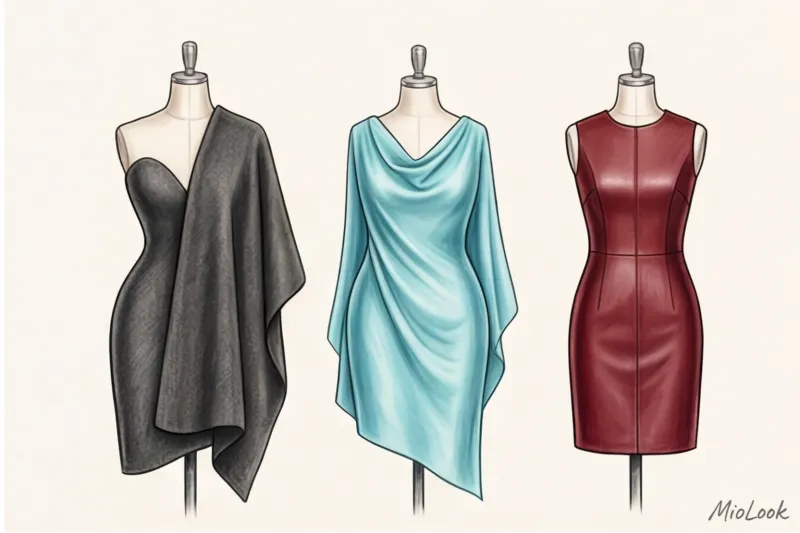
In the luxury segment, fit is everything. Take, for example, a classic French tweed jacket. Tweed is a stiff, structured material. If the armhole is cut even a centimeter above or below your normal size, you won't be able to lift your arms. Or a bias-cut silk skirt: this luxurious cut is designed to softly envelop the figure, but the slightest tension will highlight even the slightest imperfections.
Virtual fitting dramatically reduces the stress of purchasing such items. You can calmly assess how the complex design of the garment interacts with your body. This gives you the confidence to click "Pay," knowing you're buying a masterpiece, not a headache.
The Future of Smart Shopping: Fewer Mistakes, More Style
A virtual fitting room in an app isn't just a fun social media filter for playing with looks. Today, it's your personal digital stylist, a stern critic of poor fits, and a reliable protector of your bank account.
We live in an era of overconsumption, and the most elegant way to escape this race is to start shopping mindfully. A smart wardrobe isn't one with dozens of items "to choose from" on the shelves. It's one that contains only those items that were truly made for you. Spend 15 minutes creating the perfect reference photo, and you'll forever save yourself from those tedious trips to the post office to collect returns.
Ready to get started?
Try a free plan—no commitment. See how your clothes fit before they even hit the cart.
Get access — €0.99 once