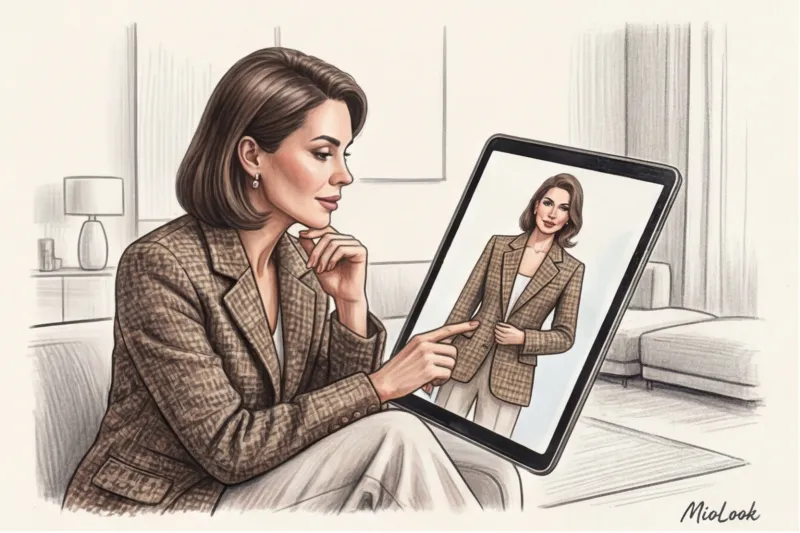
Over 12 years of shooting commercial fashion shoots in Paris and Milan, I've learned one ironclad rule: 90% of the perfect fit you see in online catalogs is fake. We call this process "pinning." While the model poses for the camera, dozens of paper clips and pins on her back tighten the fabric so that the garment appears tailored. And then you order that jacket, put it on at home, and are sorely disappointed.
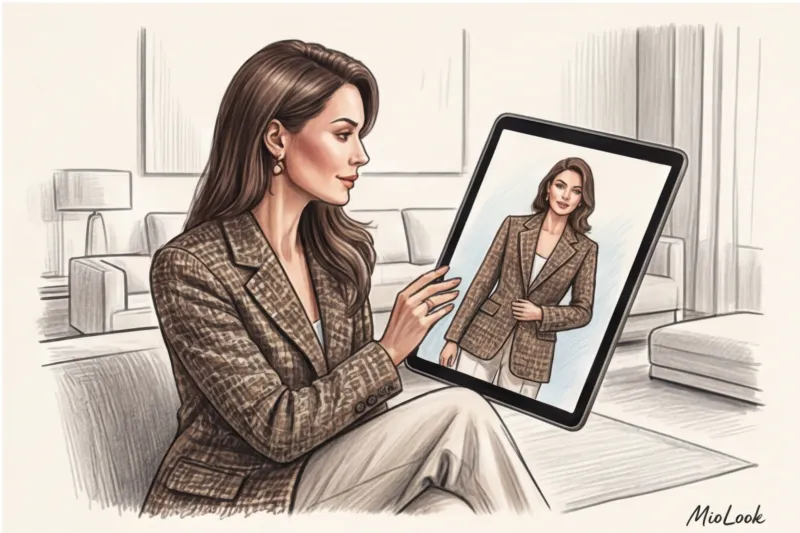
That's why, according to a Vogue Business report (2024), the e-commerce return rate has reached a disastrous 30–40%, with the main reason being "the item didn't fit." The industry needed a solution that wouldn't deceive the customer. A neural network that tries on clothes from photos has ceased to be a fun toy for zoomers and has become a serious analytical tool. We discussed the basic mechanics in more detail in our a complete guide to virtual fittings , but today I want to talk about something else: how artificial intelligence has learned to understand the laws of tailoring and why this will forever change the way you approach shopping.
From Paper Dolls to Sartorial Physics: The Evolution of Technology
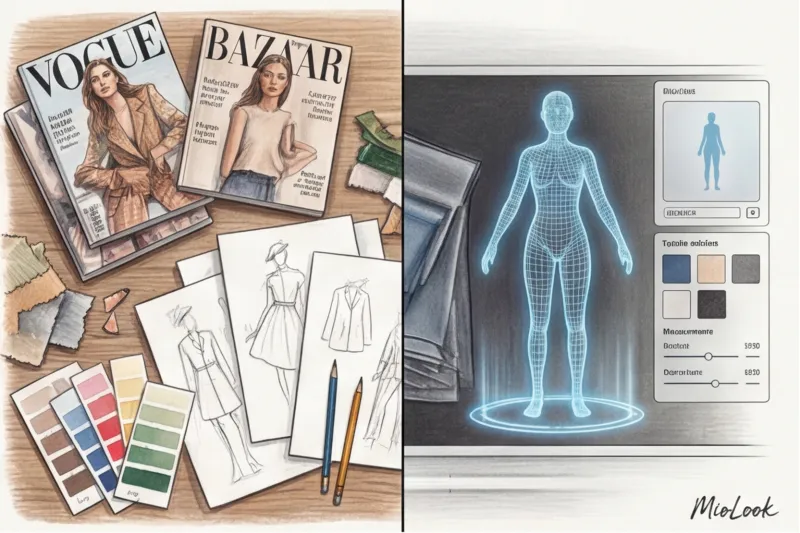
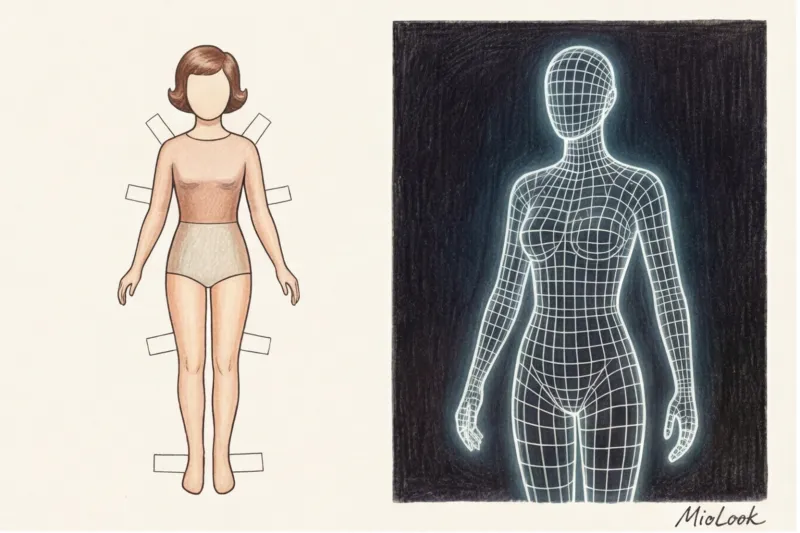
Remember the first attempts by brands to introduce AR fitting rooms five years ago? They were met with condescending smiles. The programs worked on the principle of 2D overlay: they simply "glued" a flat photograph of a dress onto your silhouette. It was like a cardboard doll with a strangely proportioned, drawn-on outfit on top.
To get rid of the "flat sticker" effect, developers had to make a quantum leap from simple pixel manipulation to generative AI. Modern algorithms think in categories. sartorial physics (tailor's physics). They no longer superimpose an image—they regenerate each fold as if the garment were physically worn on your body in three-dimensional space, taking gravity and volume into account.
How exactly does a neural network that tries on clothes from photos understand your body?
Standard size charts (S, M, L) are hopelessly outdated. They describe a person as a cylinder with three circumferences: chest, waist, and hips. But two people with the same measurements (90-60-90) can look completely different in the same dress.
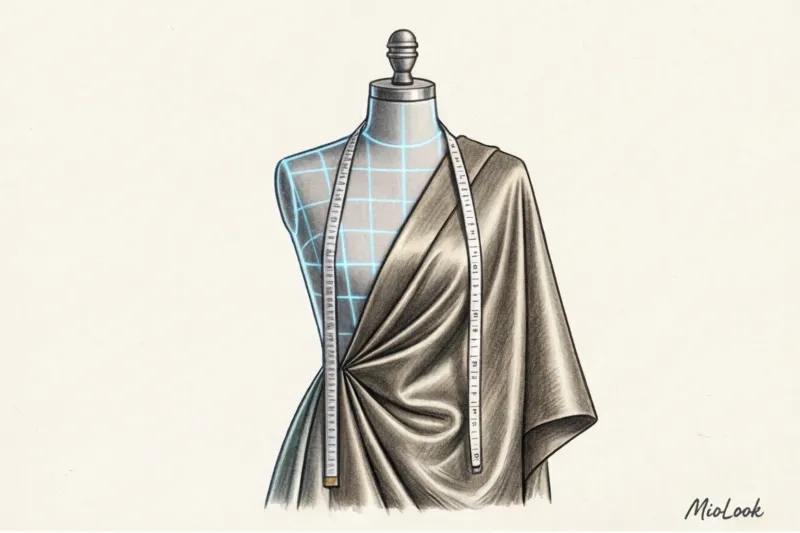
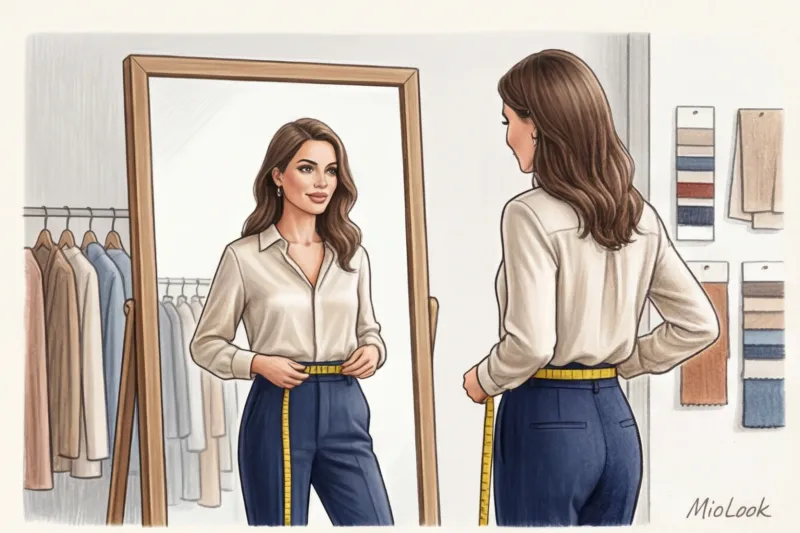
An advanced neural network analyzes body architecture. It captures shoulder angle (sloping or straight), hip height, volume distribution, and even posture. This is as close as possible to the process of taking measurements in a bespoke tailoring studio, where a specialist takes up to 30 measurements to create the perfect pattern.
Fabric Physics: Drapery, Tension, and Bias
The most challenging part for the algorithm is understanding the differences in material behavior. Why does a stiff, 400 g/m² British Harris tweed hold its shape like armor, while flowing charmeuse silk hugs every curve?
Modern AI models are trained to calculate tension. They "see" where fabric will gather into natural folds under its own weight and where it will shrink tightly.
Historical background: In the 1920s, the brilliant Madeleine Vionnet invented the bias cut, cutting fabric at a 45-degree angle to the warp thread. This allowed dresses to hug the body without darts, creating a fluid silhouette. Until 2023, no computer program could reliably simulate the behavior of a bias cut on a non-standard figure. Today, neural networks can handle it.
Access to MioLook for €0.99 — one-time payment
A smart AI stylist will select the perfect look based on your individual proportions and fabric fit.
Get access — €0.99 onceMyth 1: AI idealizes your figure like beauty filters
There's a common misconception that online fitting rooms work like social media filters—stretching your legs, slimming your waist, and making you look a couple of sizes slimmer. This is fundamentally wrong.
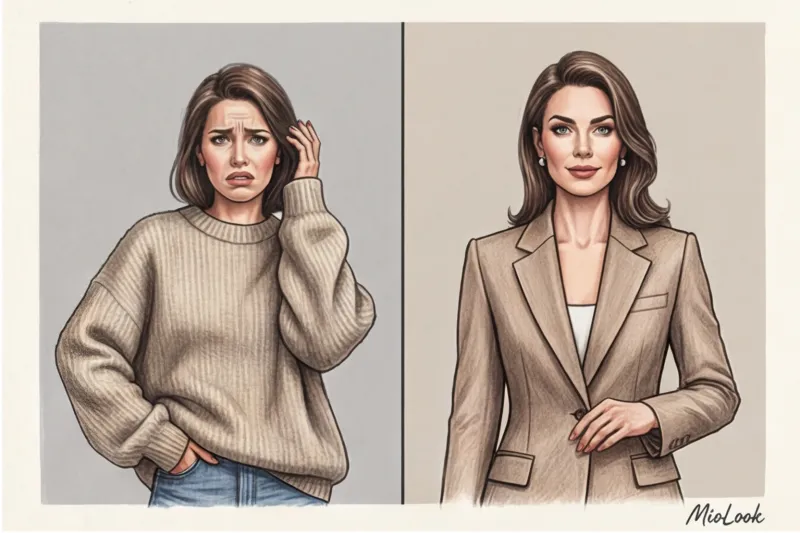
True luxury styling isn't about making a woman look thinner. Its goal is perfect proportions. The app's algorithm is designed to achieve this. MioLook — not to flatter you, but to show you a completely honest picture of the pattern fit. If a straight-cut jacket makes you look boxy, you'll see it on the screen before the money is debited from your card.
This psychological aspect is incredibly important. Honest fittings protect us from frustration and body blaming. Ever notice that guilty feeling in front of the mirror when the skirt you received in the mail doesn't zip up? The problem isn't your body; it's the pattern of a particular brand. AI allows you to understand this in advance, preserving your raw data without distortion.
Myth 2: Virtual fitting is only necessary for fast fashion
I often hear the question: "Why do I need AI to buy a T-shirt at Zara?" My answer: a virtual fitting room reveals its true potential in the premium segment and when investing in complex cuts, where the cost of error is exponentially higher.
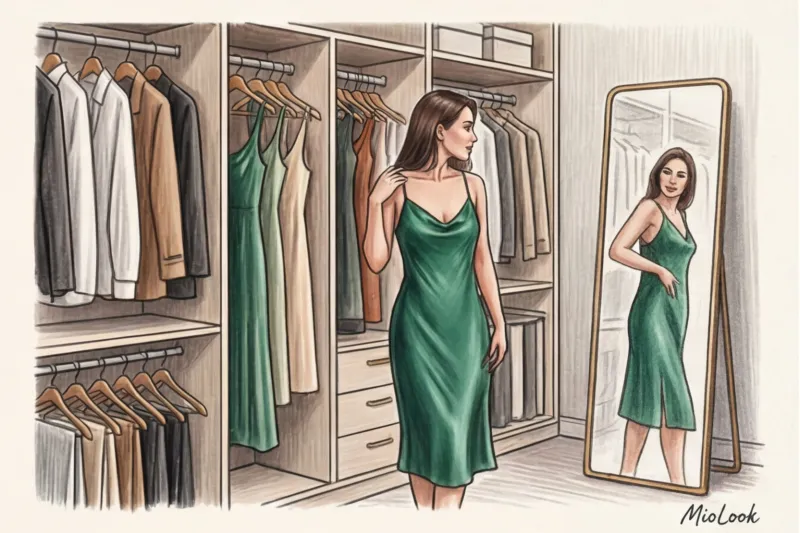
One of my clients, Elena, fell in love with a €600 silk Nili Lotan slip. On the tall, androgynous model in the catalog, it looked bohemian and casual. Elena ordered the dress blind. In reality, the armhole depth and shoulder angle were completely at odds with her feminine figure—the fabric stretched treacherously across the chest, and the hem was askew.
A structured Max Mara coat or a Chanel-style tweed jacket require a meticulous assessment of the shoulder structure. A millimeter's difference in sleeve placement can separate the prestigious "old money" aesthetic from the "I borrowed my older brother's jacket" look. This is where AI acts as your personal insurance against fashion faux pas.
Your perfect look starts here
Join thousands of users who look flawless every day with MioLook. Create a smart, error-free wardrobe.
Get access — €0.99 onceA Stylist's Perspective: Unconventional Ways to Use MioLook
As a practicing stylist, I use neural networks for more than just style testing. For me, it's primarily an analytical hub.
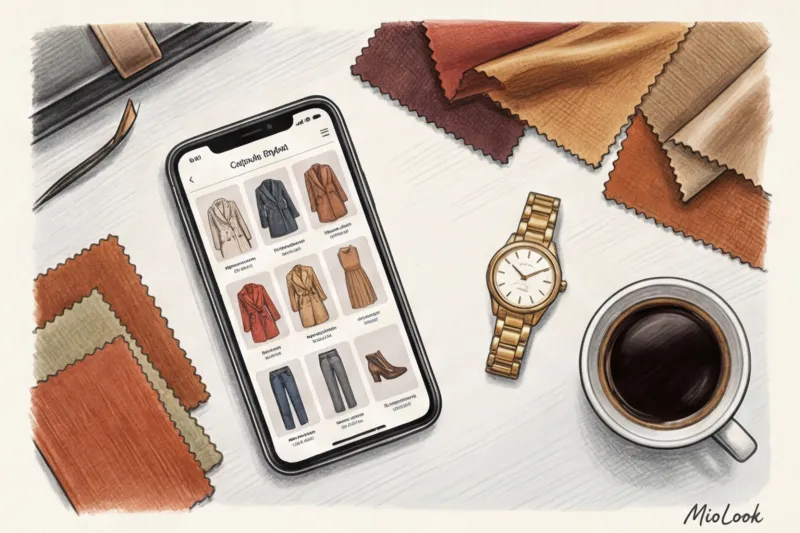
- Color testing: Complex shades like dusty rose or chartreuse are incredibly tricky. They look elegant in photos, but can give your skin a sickly, sallow tone. AI allows you to apply the color to your face in natural light.
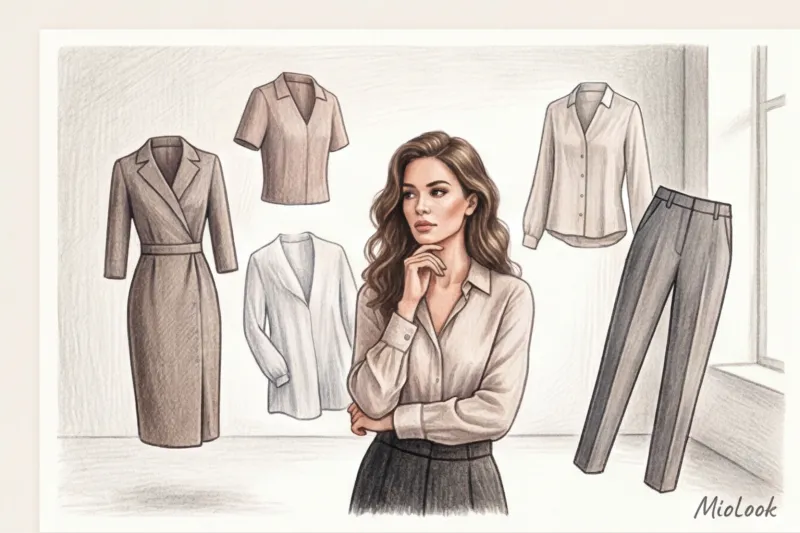
- Combinatorics check: Before approving a client's purchase, I "try" the new item on the architecture of her existing wardrobe. Will this oversized sweater pair well with her favorite palazzo pants, or will the two together create the effect of a shapeless mountain?
- Reducing emotional purchasing: AI works like an ice shower for a shopaholic. It's a filter between a momentary impulse ("I want that sequin dress!") and a real wardrobe investment. Seeing the item on yourself digitally often gives the brain a needed hit of dopamine, and the urge to make a pointless purchase disappears.
Anatomy of Limitations: What Neural Networks Can't Do Yet
For objectivity, it's important to understand the limits of technology. No algorithm, even the most advanced, can replace physical contact with an object.
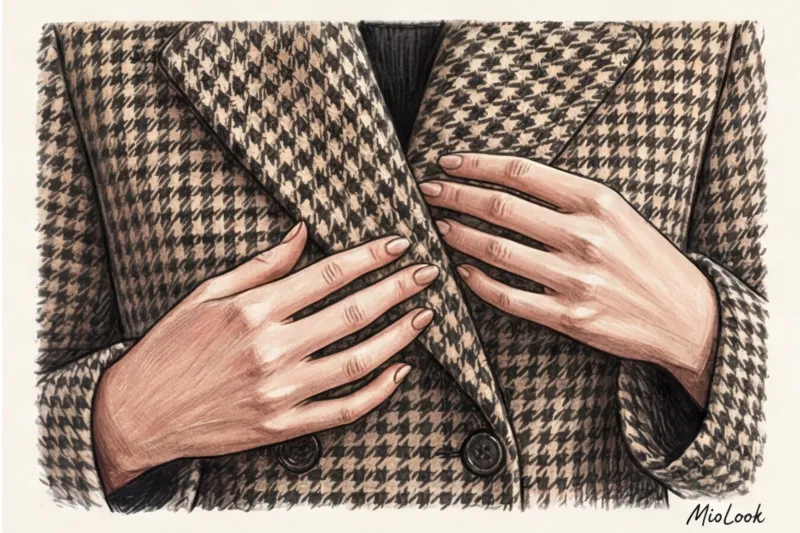
In my experience, AI is brilliant at visualization, but it struggles with the following nuances:
- Tactility and weight: A neural network will show how beautifully a cashmere coat drapes, but it won't convey its softness, warmth, or how heavy it feels on the shoulders.
- Micro-textures and light: Algorithms have difficulty conveying the difference between matte and semi-matte 19m/m² silk as the lighting angle changes.
- Size chart to the millimeter: AI shows visual landing style on your figure. But it doesn't eliminate the need to check the specific brand's sizing chart. If a brand is known for running small (vanity sizing in reverse), you'll still need to read reviews about the fit of a specific item.
Checklist: How to Take the Perfect Photo for Accurate AI Performance
To A neural network that tries on clothes from photos She delivered a result that would be considered a luxury studio, but she needed the right source material. Junk in means junk out. Here are three rules I insist all my clients follow:
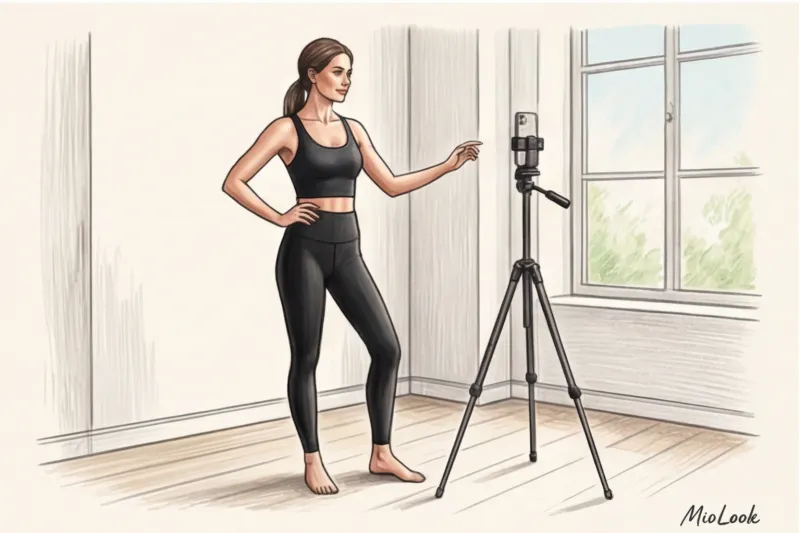
- Even daylight: Avoid yellow bathroom lights or harsh shadows from a ring light. Stand facing a window on a cloudy day—the diffused light will perfectly capture your skin tone and true volume.
- Anatomical canvas: Wear the most form-fitting basic clothing possible. Black seamless leggings and a smooth, form-fitting top will allow the algorithm to accurately calculate your body contours, avoiding inflating volume where it doesn't exist.
- Statics and the right angle: Forget about complicated Instagram poses with crossed legs. The smartphone camera should be positioned strictly at waist level, at a 90-degree angle to the floor. Any tilt of the phone from top to bottom will visually shorten your legs in the original image, and the AI will distort the proportions.
Ready to get started?
Try the MioLook free plan—no strings attached. Upload your photo and see how any trend will look on you.
Get access — €0.99 onceSummary: Why blind shopping is becoming a thing of the past
Technology has completely erased the boundaries between the physical and digital worlds. Neural networks have transformed from a mere entertainment function into a powerful analytical tool for building a smart, curated wardrobe.
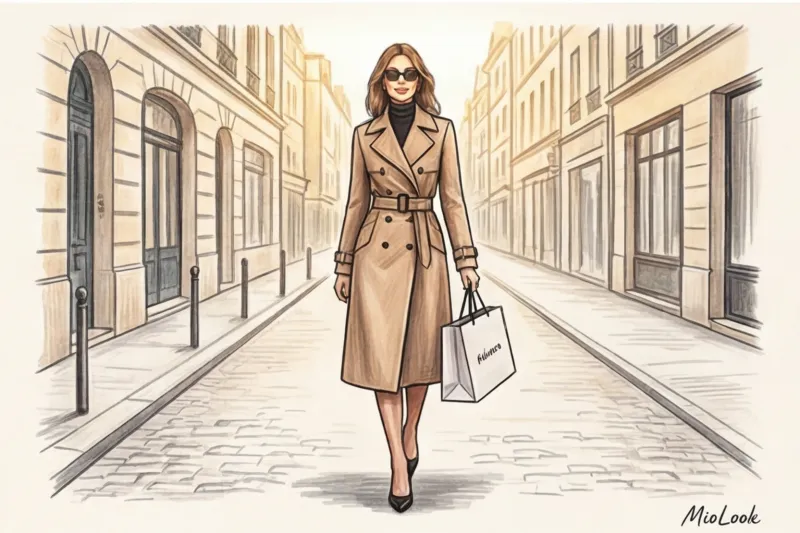
Using AI before purchasing isn't a fad, but an investment in predictability. It's a way to regain control of your style and budget, eliminating the need to fund logistics companies with endless returns of unsuitable items.
Upload your base photo right now application And test the fit of that "complex" architectural style you've been afraid to try on in the store for years. You might discover it was made just for your figure.