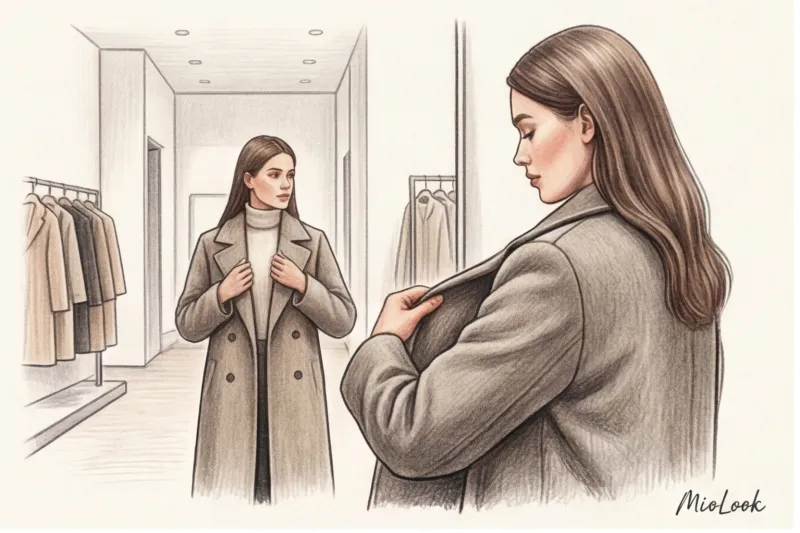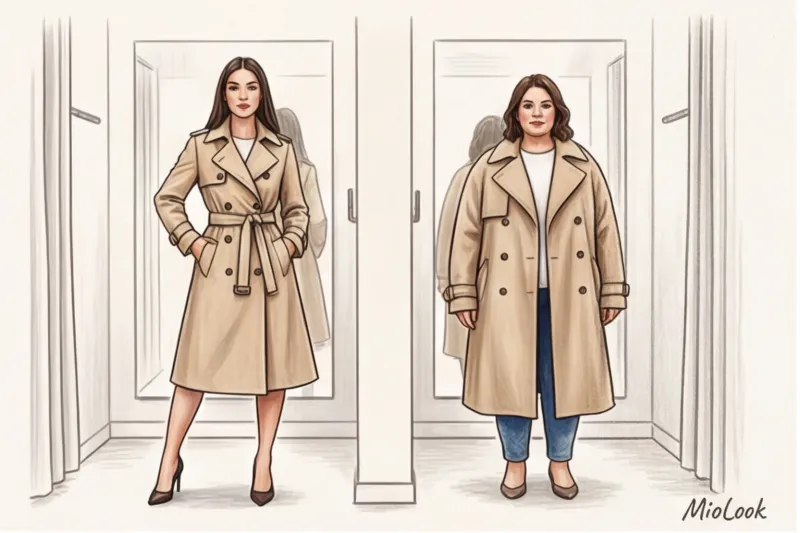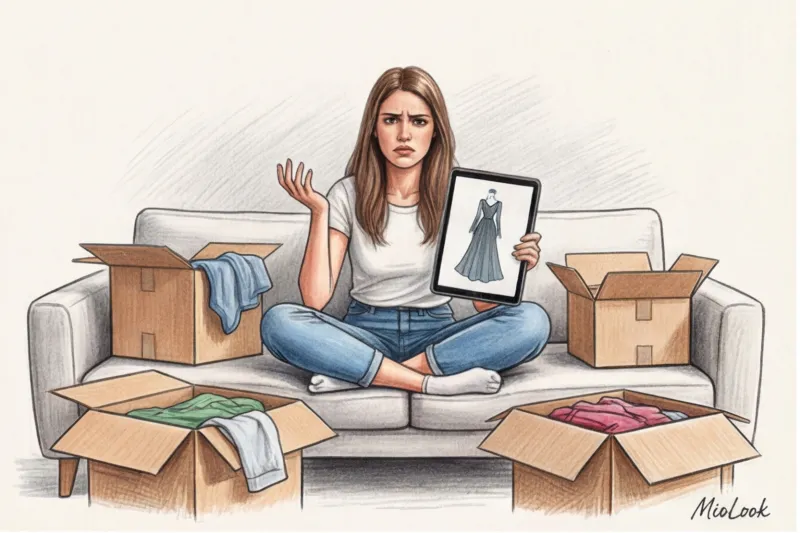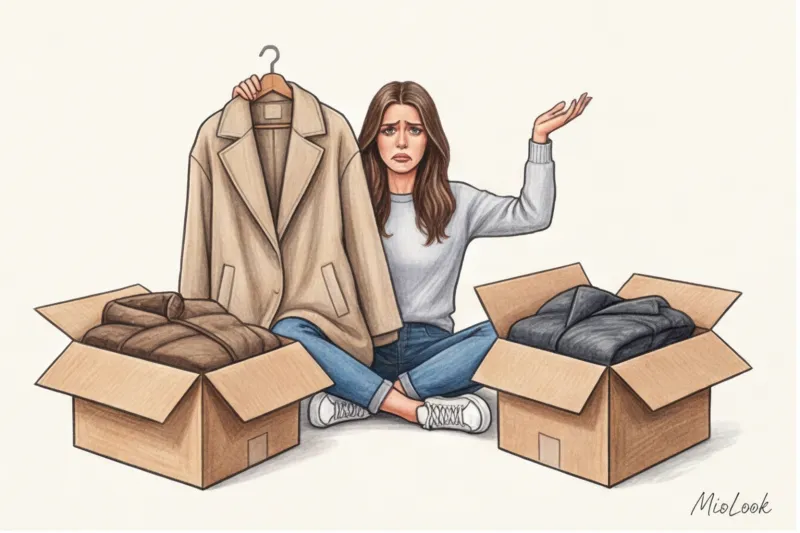
How many times have you experienced this disappointment? You order a luxurious wool coat from COS or Massimo Dutti. In the studio photo, it looks flawless, flowing over the model's figure. But when the courier delivers the coveted box, what you see in the mirror isn't an elegant street style heroine, but a sad, shapeless rectangle.
I'm Darina Marchenko, a stylist and colorist. And I constantly hear the same phrase from my clients: "Nothing fits me." It's not about your figure. It's about buying heavy items blindly—it's like playing roulette with size charts. Luckily, technology has changed the game, and now it's possible Try on a coat online from a photo Using neural networks, it solves the problem of poor fit before the money is debited from your card. We discussed the mechanics of this process in more detail in our a complete guide to virtual fittings.
Why outerwear is the hardest thing to buy online
According to a 2023 McKinsey report, outerwear returns in e-commerce reach a disastrous 40%. The main reason isn't defective items, but rather poor fit. Why does this happen?
After 12 years of working as a stylist on commercial lookbooks, I'll let you in on a key professional secret: the perfect fit on a website is often artificially created. We mercilessly pin down jackets, coats, and jackets with special pins from the model's back. We shape waists where there aren't any in the patterns and remove excess volume from the armholes. You're buying an illusion.
Furthermore, outerwear is a rigid form. Unlike knitwear, which adapts to the body's curves, wool, tweed, and drape have their own physical properties. Brand size charts only show static measurements (chest, waist, hips), but they never specify allowance for ease of fit Your usual size 44 might fit like a glove in one brand, but in another it might turn out to be a giant bag.
This is why standard online fitting rooms with "flat stickers" on photos don't work. To understand a garment, an algorithm must calculate the interaction between heavy fabric and your anatomy. Generative neural networks in MioLook We learned to calculate the volume and weight of fabric, showing how a specific cut will fit on your shoulders.
Access to MioLook for €0.99 — one-time payment
A smart AI stylist will select the perfect look and show you how clothes will fit on your body.
Get access — €0.99 onceCutting Architecture: How to Try on a Coat Online from a Photo and Avoid Mistakes
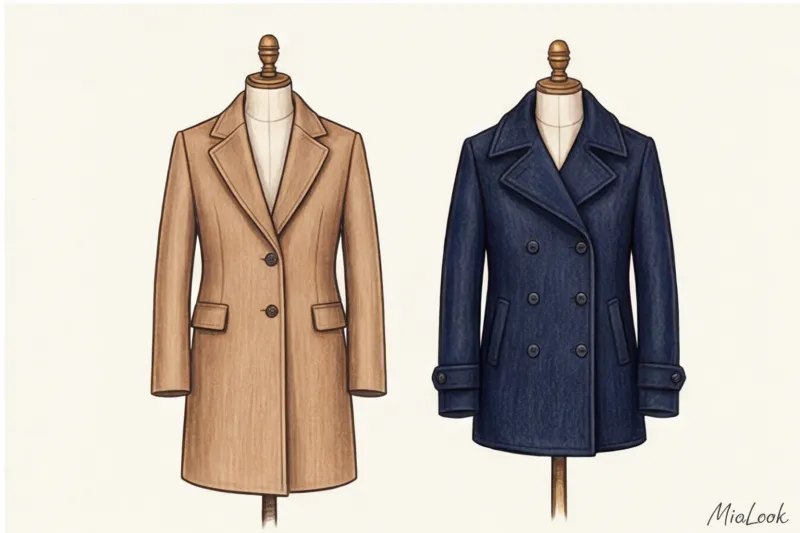
A coat is constructed according to the laws of architecture. If the foundation (the shoulder line) is laid incorrectly, the entire structure will collapse. During virtual fittings, I always recommend clients look at four key areas.
- Shoulder line. This is your main indicator. A set-in sleeve requires millimeter precision—the seam must lie directly on the boning. A dropped shoulder creates a relaxed look, but can visually "lower" the bust. A raglan sleeve (without a shoulder seam) saves broad shoulders, making them appear more sloping and soft.
- Armhole. A winter coat should fit over an imaginary jacket or thick sweater. If you see tightness in the armpit area when generating a photo, in reality, you won't be able to lift your arms in this garment.
- Length of the product. The most dangerous length is mid-calf (the widest part of the leg). It visually cuts off the silhouette. Safer options are either a confident midi (a hand's breadth below the knee) or a maxi.
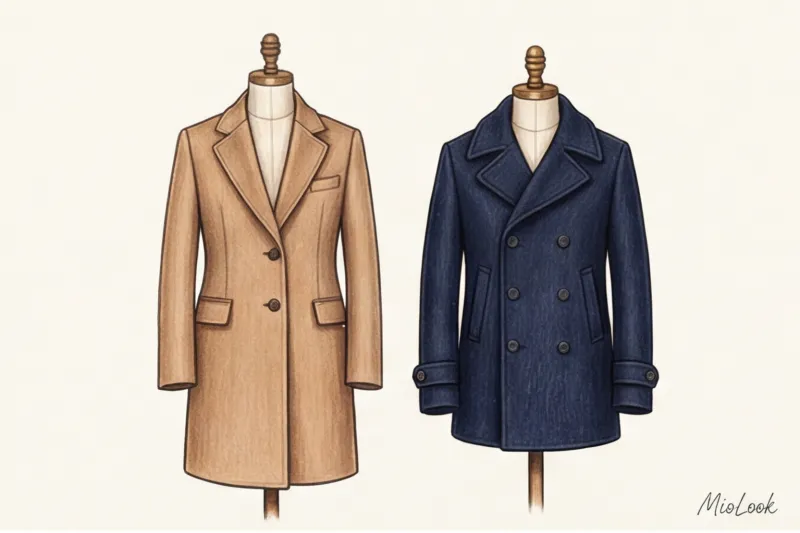
"Coat lapels act as vectors, directing the gaze of others. Wide English collars on a petite woman (up to 160 cm tall) will visually squash her frame. Conversely, narrow lapels on a statuesque figure will create disproportion, making the shoulders appear broader." This rule of proportionality works flawlessly.
The Oversized Myth: Big Doesn't Mean Fit
The most common misconception I encounter is: "I'll buy a regular coat two sizes too big, and it will be fashionably oversized." No, it won't.
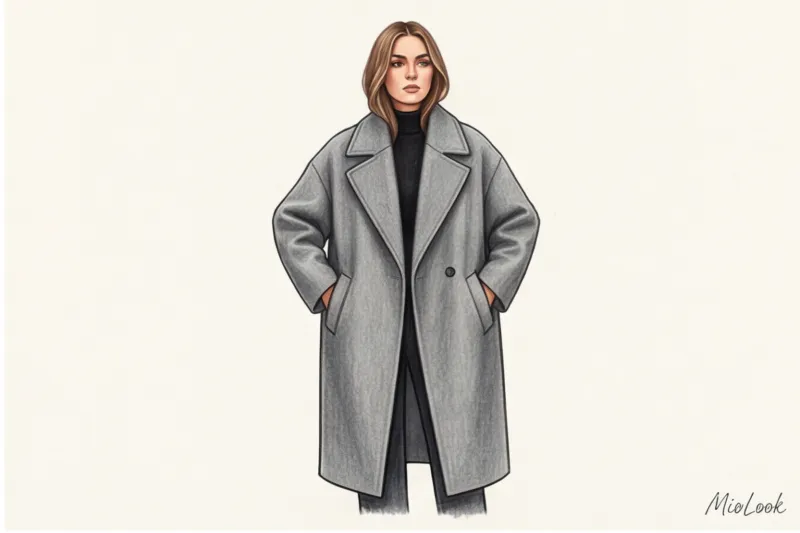
Oversize is a design choice. In a properly oversized coat, the darts are repositioned, the armholes are deepened from the start, and the front-to-back length balance is adjusted to accommodate the extra volume. If you simply go oversize, you'll end up with a dull, baggy back, an armhole that hangs at the elbow, and a "misplaced" look.
Your perfect look starts here
Join thousands of users who look flawless every day with MioLook. Check out the fit of oversized styles before you buy.
Get access — €0.99 onceJackets and down jackets: managing visual volume
Down jackets are tricky. They're supposed to keep you warm by trapping air inside, but that same air turns us into balls on legs. When trying on jackets virtually, pay attention to the texture and stitching.
We were once choosing a winter wardrobe for my client Elena (a confident size 10, with an apple-shaped figure). She fell in love with a trendy glossy down jacket with wide horizontal stitching. I suggested she run the photo through an app. The result was sobering: the glossy sheen acted as a highlighter, reflecting light and enlarging her figure, while the horizontal stripes added a visual 10 kilograms.
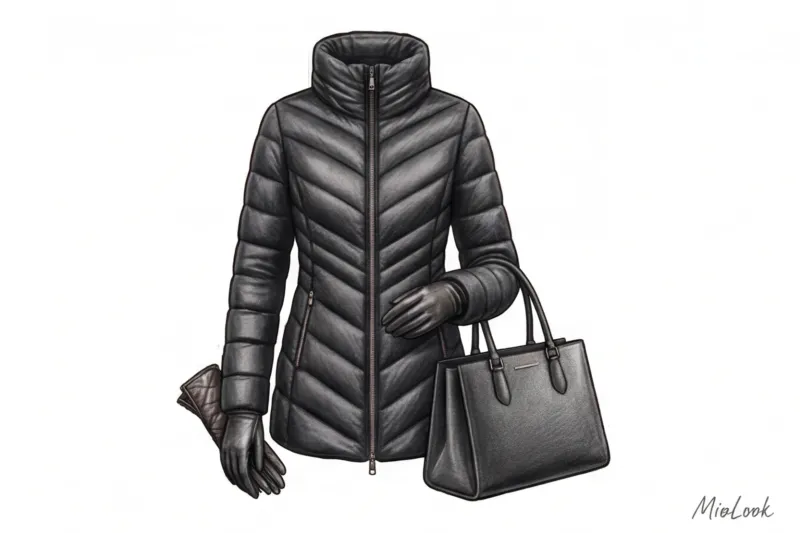
How AI helps manage volume:
- Stitch analysis. Remember the rule: horizontal lines widen, diagonal lines (herringbone) and small diamonds elongate the silhouette and make you look slimmer.
- Texture of fabric. Matte surfaces absorb light and conceal volume. The neural network perfectly conveys the difference between matte raincoat fabric and patent nylon, showing how the highlights fall on your shapes.
- Bottom edge. Pay attention to where the jacket ends. If the horizontal hemline cuts across the widest part of your hips, your thighs will appear oversized.
Color Types and Outerwear: Debunking the "Basic Beige" Myth
The color of your outerwear is crucially important than the color of your dress or pants. Why? It's a huge area of color that's right next to your face. And in winter, we often wear coats in poor lighting, with tired skin and minimal makeup.
Open any "10 Essential Wardrobe Items" list, and the iconic Camel Coat will top the list. As a certified colorist, I can officially say this is the biggest fashion myth ruining the looks of millions of women.
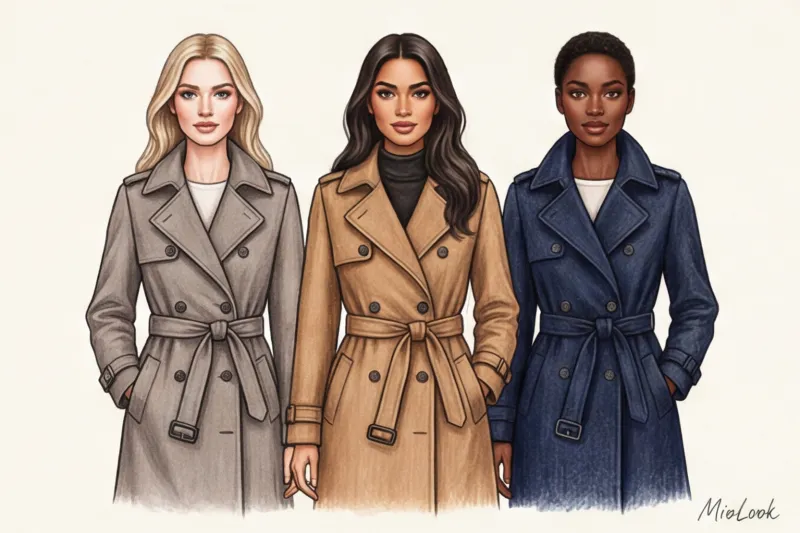
The warm, reddish shade of camel looks gorgeous on women with Autumn and Spring skin types (warm skin undertones). However, statistics show that most Slavic and European women have cool skin tones (Summer and Winter). What does a warm beige coat do to them? It draws out all the grayness from the skin, highlights dark circles under the eyes, and makes the face look sickly yellow.
Alternative base for cool types:
- Graphite gray (instead of warm beige)
- Deep navy (dark blue, instead of black, which makes you look older)
- Cool taupe (grey-brown)
- A shade of dark chocolate
Trying on a coat online from a photo allows you to test the effect of complex shades on your skin tone before you spend half your paycheck on something that will make you look sleep-deprived.
Ready to get started?
Try MioLook's free plan—upload your photo and find the perfect outerwear color, no strings attached.
Get access — €0.99 onceChecklist: How to Take Photos for the Perfect Outerwear Try-On
I have to be honest here: technology has its limitations. Artificial intelligence isn't a mind-reading wizard. If you upload a top-down selfie taken in a dark hallway wearing a stretched-out hoodie to an app, you'll be disappointed. The algorithm calculates the volume of the hoodie as your actual body.
To ensure the virtual fitting works 100%, prepare the correct source:
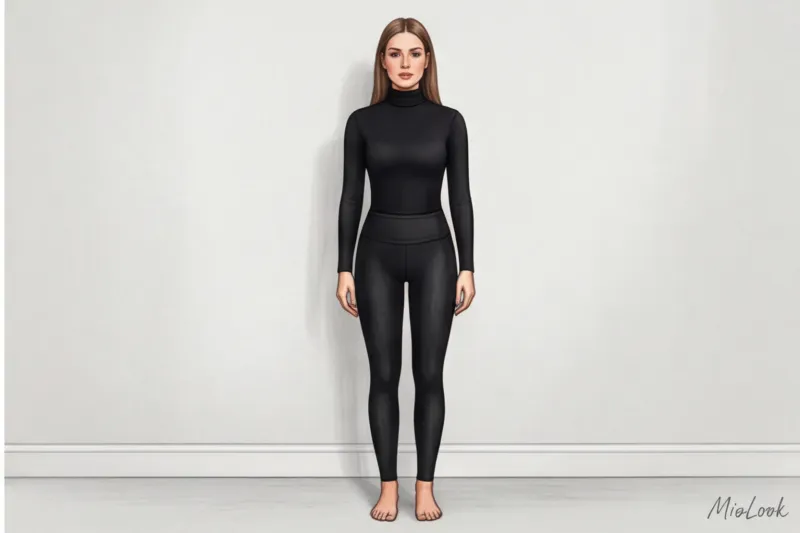
- Form-fitting base layer. Wear a smooth turtleneck or a form-fitting top and leggings. The AI should see your actual shoulder, waist, and hip measurements.
- The right shoes. This is critical for assessing the coat's length! Take photos in the shoes (or heel height) you plan to wear with the outerwear. A maxi coat with sneakers and with heeled ankle boots will create completely different proportions.
- Even light. Stand facing a window (natural daylight). Harsh shadows from artificial lighting will distort your skin tone, and the neural network won't be able to accurately analyze whether the color of the item suits you.
- Perspective. The phone should be exactly at the level of your chest or waist, parallel to the floor.
Risk-Free Investment: Why AI Is the Future of Online Shopping
Good outerwear is perhaps the most expensive item in a wardrobe. According to 2024 retail reports, the average price of a quality investment coat ranges from $300 in mass-market stores (Zara, Massimo Dutti) to $3,000 in the premium segment. The cost of a mistake here is the highest.
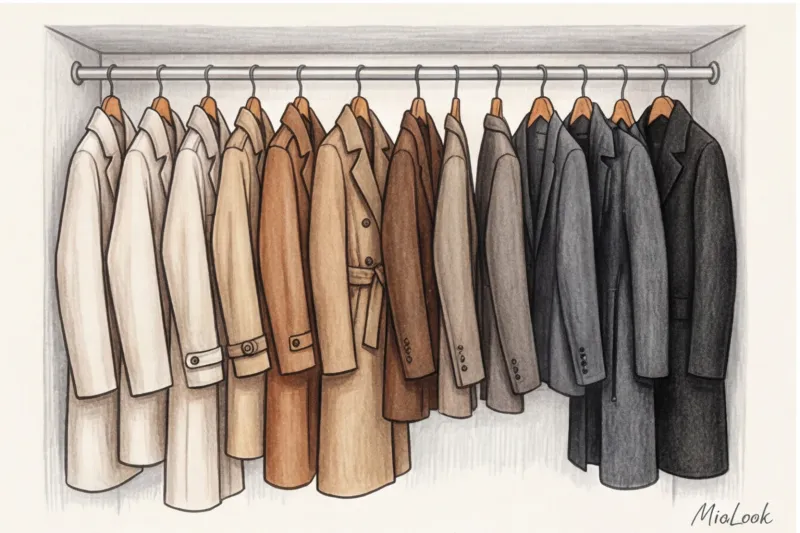
Why waste hours traveling to shopping malls, sweating in cramped fitting rooms, or freezing your card waiting for a refund for the wrong size from an online store? Trying on a coat online from a photo is no longer a fantasy, but a practical tool for a smart wardrobe.
Upload your prepared photo to MioLook , try out several silhouettes (from the classic double-breasted to the relaxed cocoon) and find the very architecture that will make your figure flawless.