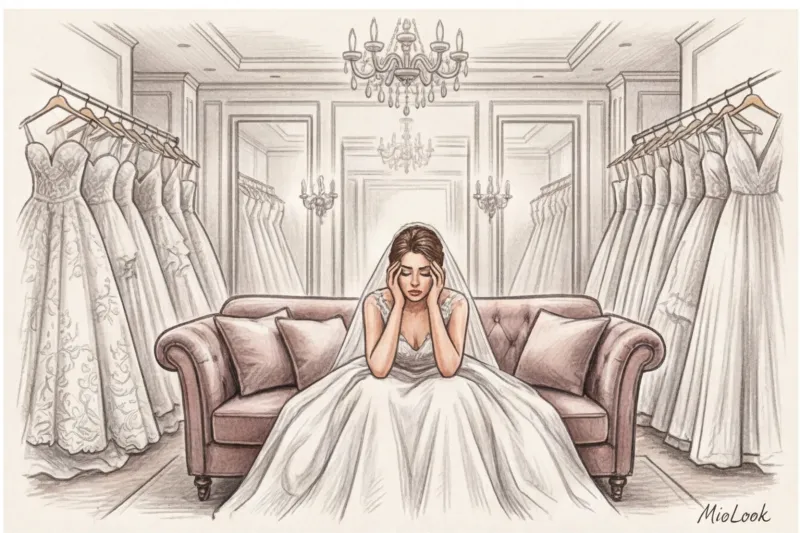
You're standing on the round podium of a bridal boutique, blinded by the cold light of the spotlights. Consultants bustle around with armfuls of tulle, your mother is wiping away tears of emotion, and your friends are shouting in unison, "This is it!" Sounds like a familiar movie scene, right? But let's be honest. In 12 years of working in premium styling, I've learned one thing: this romanticized "fitting marathon" is the worst enemy of your taste and wallet.
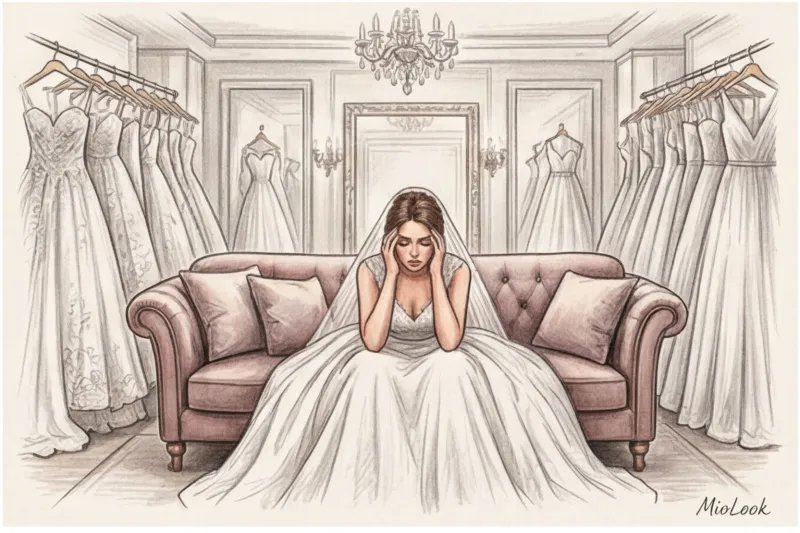
The stereotype is that you have to try on half the city's selection to find "the one." In reality, too much choice kills objectivity, and emotional pressure forces women to buy things that look great on the mannequin but mercilessly ruin their personal proportions. Today, I want to offer you a completely different, strategic approach. We'll discuss why the opportunity try on a wedding dress online — this isn't a fun toy with filters, but a powerful pre-selection tool for thoughtful investments in your evening wardrobe. We've already covered the technical side of things in more detail in our A complete guide to virtual photo try-ons at MioLook.
The Bridal Salon Illusion: Why Traditional Fittings Lead to Mistakes
The wedding and eveningwear industry is built on emotion. Salons use special mirrors to elongate the silhouette and directional lighting to conceal the nuances of fabric texture. In such conditions, it's easy to lose touch with reality.
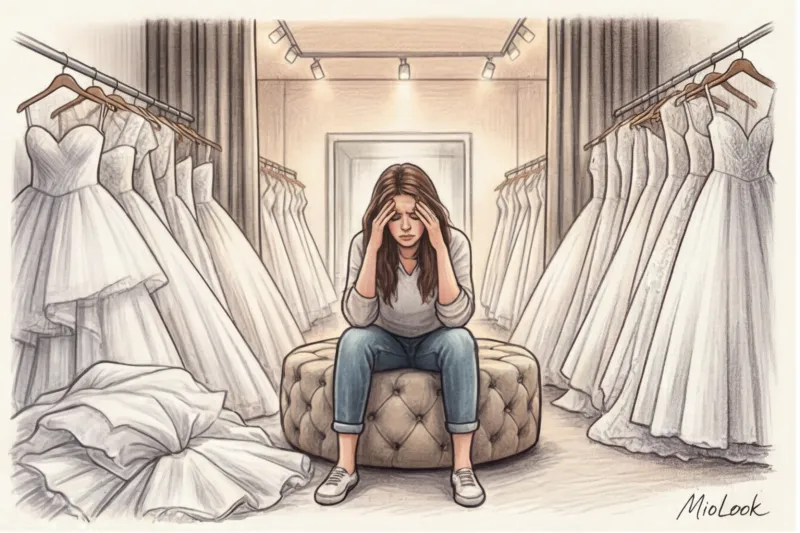
Behavioral psychology research, particularly Barry Schwartz's classic "Paradox of Choice," proves that the more options we have, the higher our anxiety levels and the lower our satisfaction with the decision we make. The average bride tries on 15-20 dresses before buying. Have you noticed how your perception changes after the fifth outfit? It's on. decision fatigue — decision fatigue. Your vision blurs, you lose sight of the difference between ivory and champagne shades, and most importantly, you lose your understanding of your own body geometry.
My client Anna once called me in tears from the fitting room. After trying on twenty dresses, succumbing to pressure from her mother and the consultant's entreaties ("Look how richly embroidered the corset is!"), she bought a heavy mermaid dress. The problem was that her body shape—pronounced shoulders and narrow hips—absolutely demanded a minimalist A-line silhouette. The "crowd effect" in the salon forced her to invest a substantial amount of money in a dress that physically didn't suit her.
Access to MioLook for €0.99 — one-time payment
A smart AI stylist will select the perfect look and help you avoid making mistakes.
Get access — €0.99 onceHow to Try on a Wedding Dress Online: From Fun to Precise Architecture
Forget the apps of 2018 that superimposed flat images of dresses on your figure like cardboard outfits on a paper doll. According to a McKinsey report (2024), the development of generative neural networks in the fashion industry has made a quantum leap. Modern AI no longer just "glues" an image together—it analyzes your anatomy.
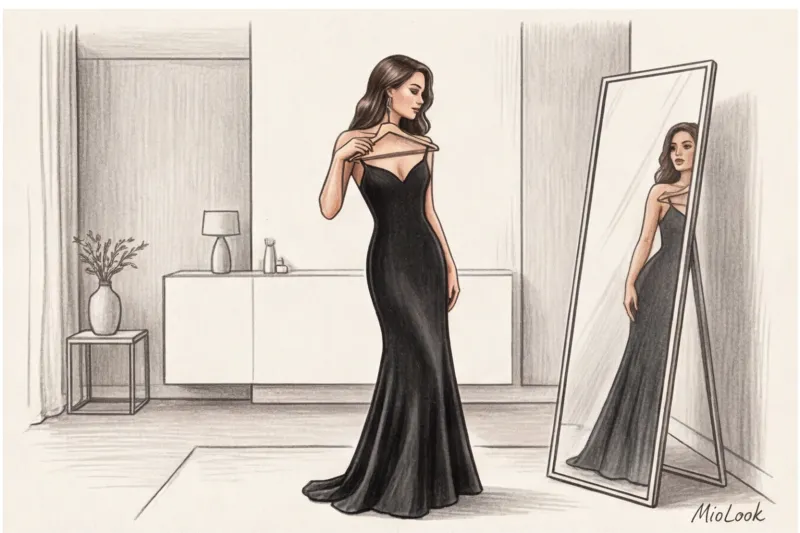
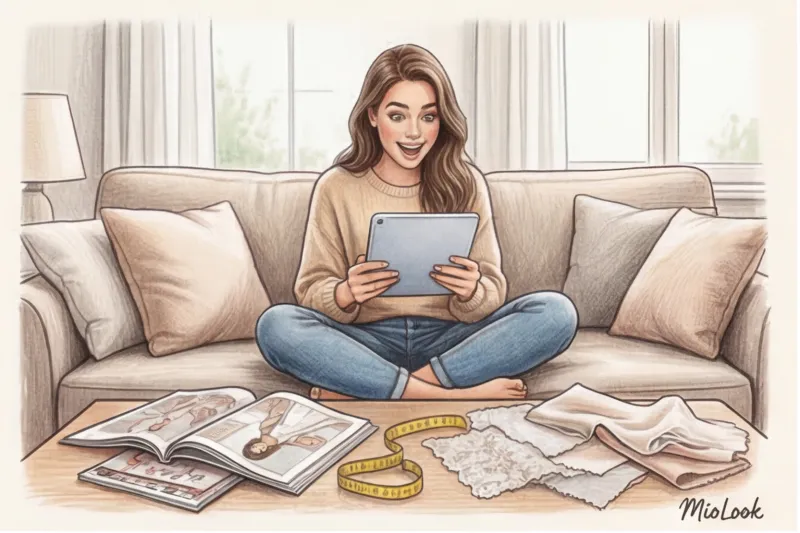
When you decide to try on a wedding dress online in an app MioLook Algorithms calculate volume, posture, and weight distribution of the fabric. It's the perfect filter for visual noise. You're left alone, in a familiar setting, with a cup of coffee in hand. No pushy consultants offering to "try on that tulle cloud, just for fun." You save your emotional resources for the celebration itself.
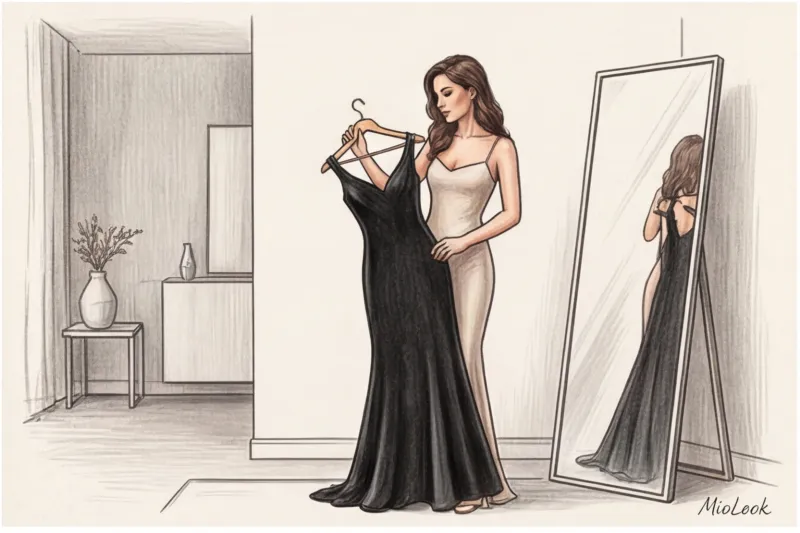
Fabric Physics: Mikado Silk vs. Flying Tulle
Any haute couture artist will tell you: fabric dictates form. It's not enough to simply draw a beautiful silhouette; you need to understand how the material will behave in both dynamic and static situations.
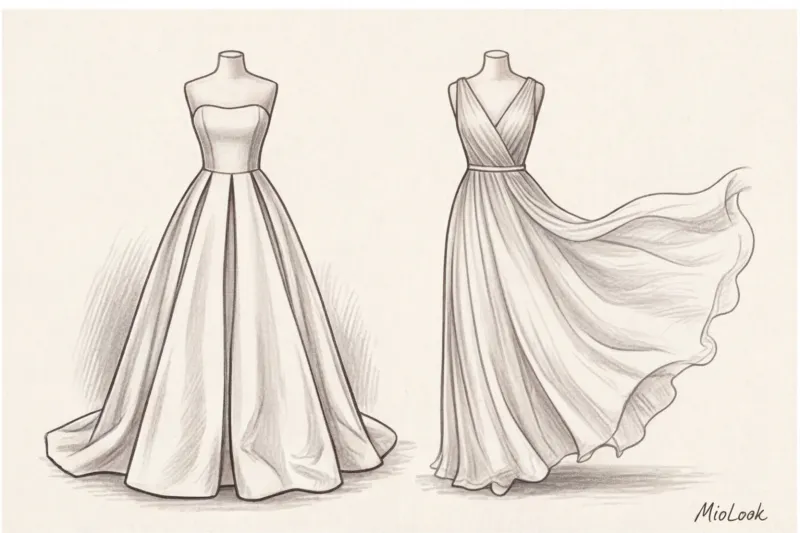
Heavy, architectural fabrics like dense mikado silk, taffeta, or brocade hold their shape naturally, but can visually add volume around the hips if folded improperly. Flowing chiffon or the finest French Chantilly lace, on the other hand, softly envelop the figure, accentuating every curve. Modern neural networks have learned to calculate this physics: they generate the correct light and shadow on the folds of dense satin and the transparency of layers of organza.
Pre-selection strategy: a stress-free way to choose an evening look
My strict rule for all my clients: we only go to a physical boutique with two or three clearly established silhouettes. No on-site experimentation. And this is where the digital fitting room truly reveals its potential.
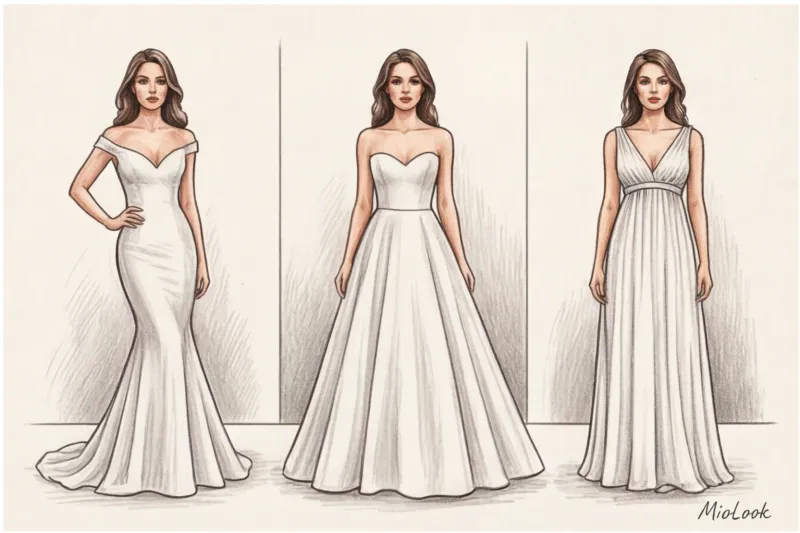
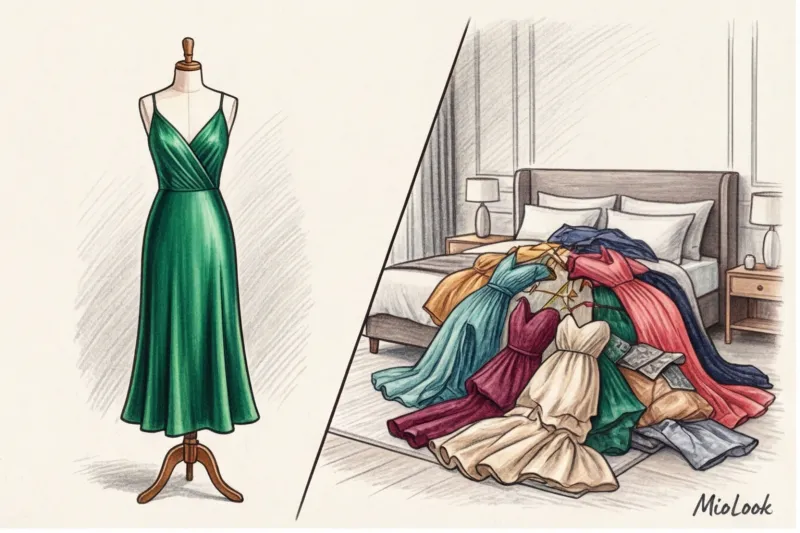
Creating a digital mood board takes 15 minutes. During this time, you can test radically different shapes: an empire waist, a strict sheath, or a dramatic ball gown. Pay special attention to neckline shapes—V-necks, boat necklines, and bobs dramatically change the perception of neck length and shoulder width.
Moreover, virtual fittings allow you to be bold. You can try on a minimalist tuxedo or a dress with an extremely low back—things you might be embarrassed to ask a consultant for in a salon. It's a safe environment for discovering your true self.
Your perfect look starts here
Join thousands of users who look flawless every day with MioLook.
Get access — €0.99 onceInvesting in Evening Wardrobe: When to Buy Custom Made Dresses
Buying an evening or wedding gown is a classic example of investment dressing. In the premium segment, we always count on Cost-per-wear (cost per outing). And here, minimalism always wins over excessive embellishment. A perfectly cut dress made of high-quality crepe or silk, without rhinestones or lace appliqués, will still be relevant in 10 years.
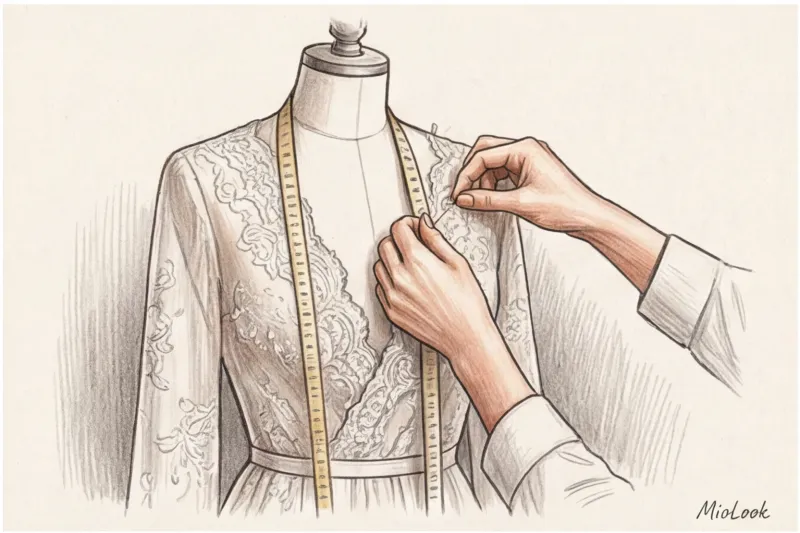
If you want a flawless piece, I highly recommend a custom-made dress. A simple slip dress, custom-made to your exact measurements (with the right darts and perfect armholes), will always look far more expensive than a ready-made dress from a famous brand that's bulging at the back. Use an online fitting to coordinate your design with the tailor. This eliminates the main fear of custom tailoring—the "expectation vs. reality" syndrome.
Checklist: How to Prepare the Perfect Photo for the MioLook Virtual Fitting Room
For artificial intelligence to build a correct anatomical model, it needs the right input data. Garbage in, garbage out. Here are four steps to perfect generation:
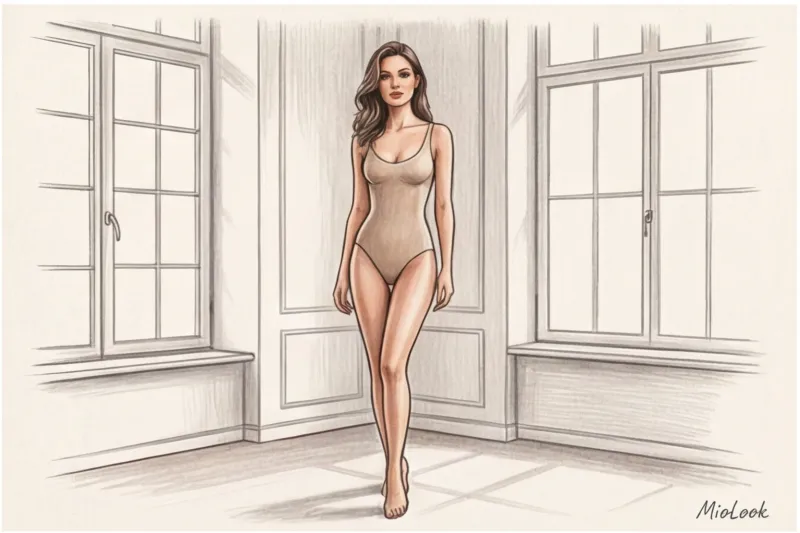
- Lighting: Forget the yellow light from indoor lamps. Stand facing a window during daylight hours. Natural, diffused light is your best stylist; it doesn't distort the contours and tones of your skin.
- Basic clothing: No baggy T-shirts or jeans. Wear form-fitting, neutral-colored clothing: bike shorts with a tank top, a bodysuit, or smooth underwear. The AI should "see" your actual contours.
- Posture and perspective (Critical): Ask someone to take your photo or place your phone on a tripod. The lens should be exactly at waist level! This is a limitation of technology: if you are photographed from a top-down perspective, the angle will mercilessly distort your proportions, shorten your legs, and the fitting result will be completely unreliable.
- Hair and shoes: Pull your hair into a sleek bun or ponytail to reveal your neck and shoulders (this is important for neckline analysis). Be sure to wear heels that match the height you plan to wear for the event—this changes your foot placement and posture.
The Future of Haute Couture: Trying on Wedding Masterpieces at Home
Luxury today isn't just about zeros on a dress's price tag. It's the privilege of managing your time and saving your nerves. Technology doesn't replace the skill of tailors or the tactile pleasure of touching natural silk. It takes away the most exhausting part of the process—the chaotic search.
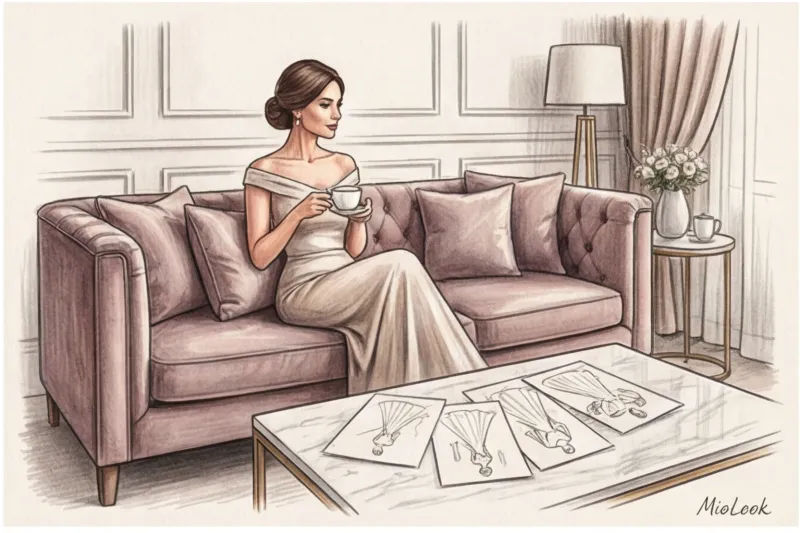
The transition from a grueling marathon of boutiques to a conscious pre-selection brings back the most important thing: the joy of preparing for the celebration. Upload your photo to MioLook , pour yourself a glass of your favorite drink, and start creating your dream evening wardrobe, relying solely on your own taste and impeccable algorithms, not on the opinions of random people in the fitting room.