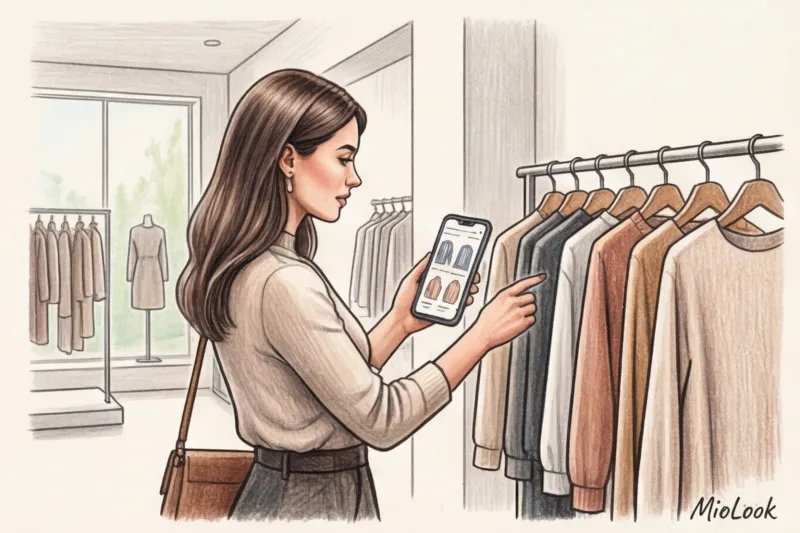
What is true omnichannel retail (and why "Click & Collect" isn't enough anymore)
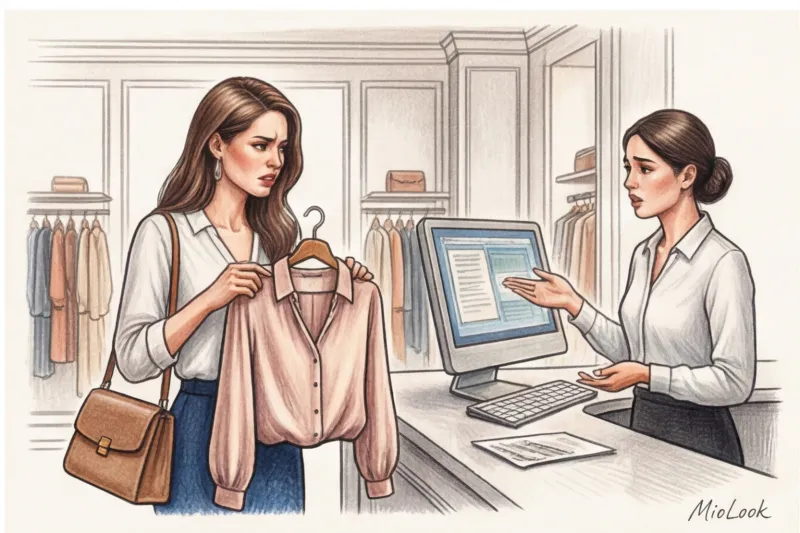
Have you ever noticed how often shopping turns into an obstacle course? You order a jacket from your favorite brand's app, wait for delivery, try it on at home—and the sleeves are too long. On a weekend, you go to the mall just to get a size change, and the cashier at the register coldly says, "I'm not sure I'm okay with that." "The online store and the retailer are different legal entities. Please process your return through the website; the money will be returned to your card within two weeks." Sound familiar? As a practicing stylist whose focus is saving clients time, this sounds like a disaster to me.
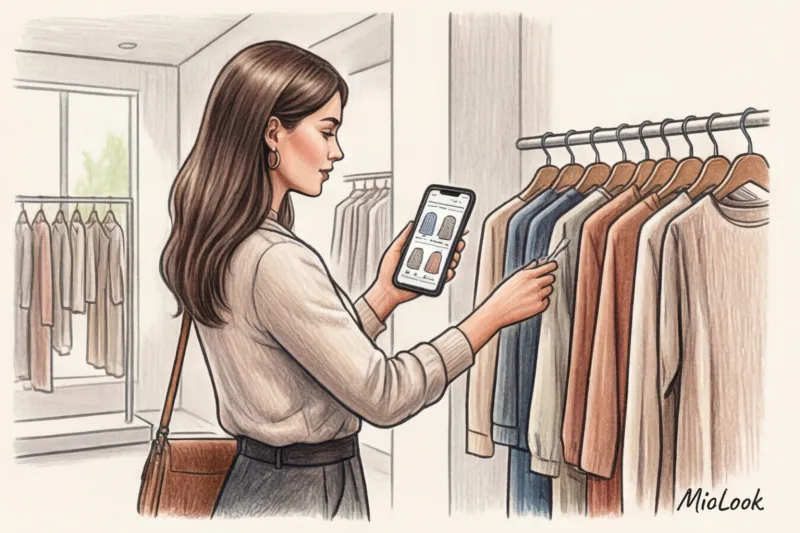
In 2024 omnichannel in retail — this is no longer a trendy buzzword for top management presentations, but a question of the banal survival of brands in a highly competitive market.
Let's get this straight and separate the concepts. Many brands still confuse multichannel with omnichannel. Multichannel is when a company has a physical store, a beautiful website, and an app, but they exist in parallel, isolated universes. They have separate warehouses, unconnected databases, and, most disturbingly for customers, different loyalty programs. You may be a VIP customer on the website, but to the cashier at the brick-and-mortar store, you're just a stranger.
True omnichannel is a completely seamless customer experience. It's a unified ecosystem where the boundaries between a smartphone screen and a physical retailer are completely erased. Modern shoppers no longer divide your brand into "website" and "store location." For them, the COS app on their phone and the COS flagship store on the main street are one and the same.
And businesses benefit from such integration. According to a large-scale study by Harvard Business Review, which examined the behavior of 46,000 shoppers, customers who use multiple channels of interaction with a brand spend an average of 4% more per in-store visit and 10% more online than single-channel consumers. Moreover, they demonstrate the highest brand loyalty six months after the omnichannel experience.
Why does this work so well? Because a successful omnichannel strategy addresses every customer's biggest pain point— fear of making a mistake when choosing something You'll agree, buying a €250 wool coat or the perfect pair of leather boots online is always fraught with doubt. "How will it fit in the shoulders? What does the fabric feel like? Will the color cheapen the look?" By giving customers the option to reserve an item online, try it on in person, and, if in doubt, easily return the online purchase to their nearest store without having to print out a return form, the brand completely removes this psychological barrier.
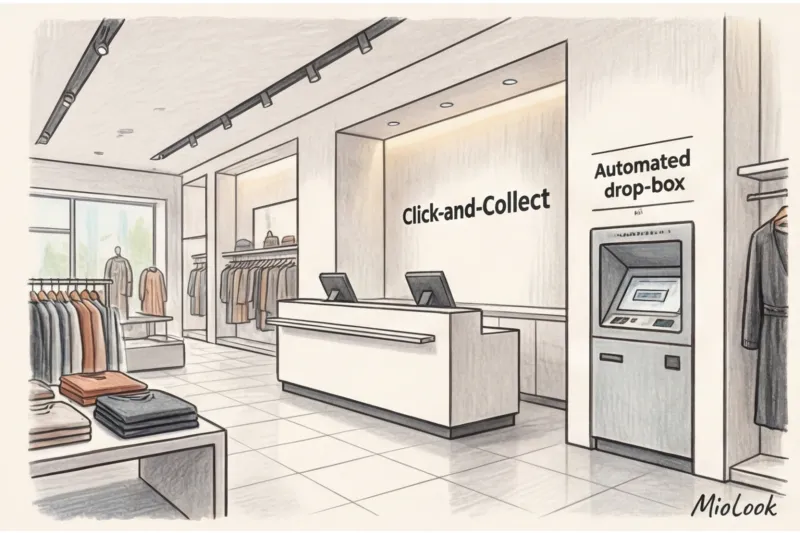
That's why the "Click & Collect" option (order online, pick up the box at the checkout) is just a basic hygiene measure, which is woefully inadequate today. Customers don't just need a parcel pickup point; they need a comprehensive service that combines the convenience of digital and the tactile experience of the real world.
The Evolution of Client Expectations: A Personal Stylist's Perspective
Over 12 years of working as a personal shopper, I've seen consumption patterns change dramatically. In my experience, the ideal shopping itinerary no longer revolves around "let's go to the mall and see what's on the racks." My clients value every minute of their time.
Today, I plan shopping itineraries based strictly on the retailer's inventory transparency. What does this look like in an ideal omnichannel world? We select items in advance using the brand's app, I check the availability of a specific size 38 pants at a specific store through their system, reserve a fitting room, and we arrive for exactly 45 minutes to simply try on the pre-designed looks. If the app "lies" about availability and the desired size is actually out of stock, that brand is forever crossed off my list.
The client wants to start the fitting process on the couch with a cup of coffee, flipping through a catalog, and finish it in a physical fitting room with good lighting and mirrors.
Moreover, the expectation of deep, almost intimate personalization has grown. If a woman ordered a pair of wide-leg gray trousers for €90 from your website last week, then an offline salesperson scanning her profile in-store should see that story. The ideal service sounds like this: "We received a stunning oversized jacket in the same fabric yesterday to go with your gray trousers. Would you like to try it on as a suit?" It's not magic, it's how a competent system should work. analytics for the fashion business.
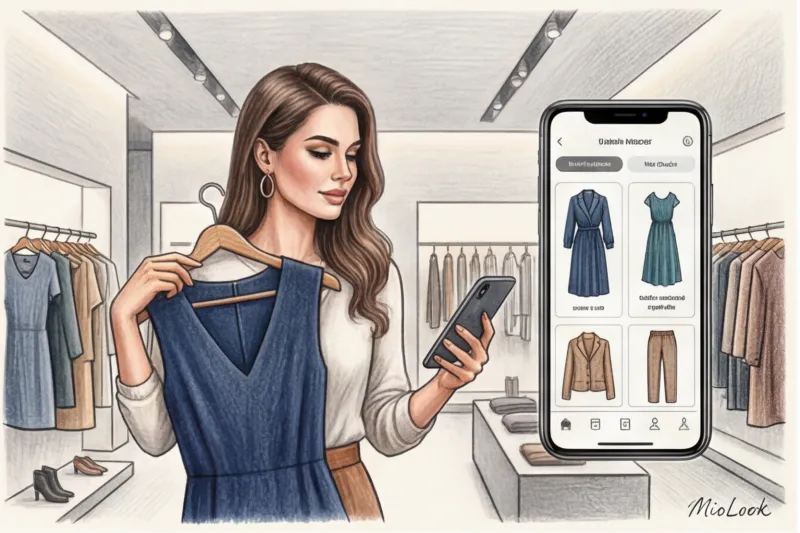
The shift from impulse buying to conscious wardrobe planning is a fact of life. Women no longer want a closet filled with random items from seasonal sales. By putting together a thoughtful wardrobe business capsule clothing , they plan their budget months in advance. Using tools such as MioLook , shoppers are digitizing their items and knowing exactly what items are missing. It's crucial for them that their favorite brand "remembers" their size range, fit, and previous purchases, regardless of where the transaction was made—on a smartphone at night or at the checkout on a Saturday afternoon.
The main barriers between an online storefront and an offline fitting room
Do you know what irritates today's shoppers more than a poorly fitting item? The digital illusion of choice. When a brand loudly proclaims its innovative approach and customer care on its homepage, but in reality, the underlying logistics are falling apart, and the customer experience becomes an obstacle course.
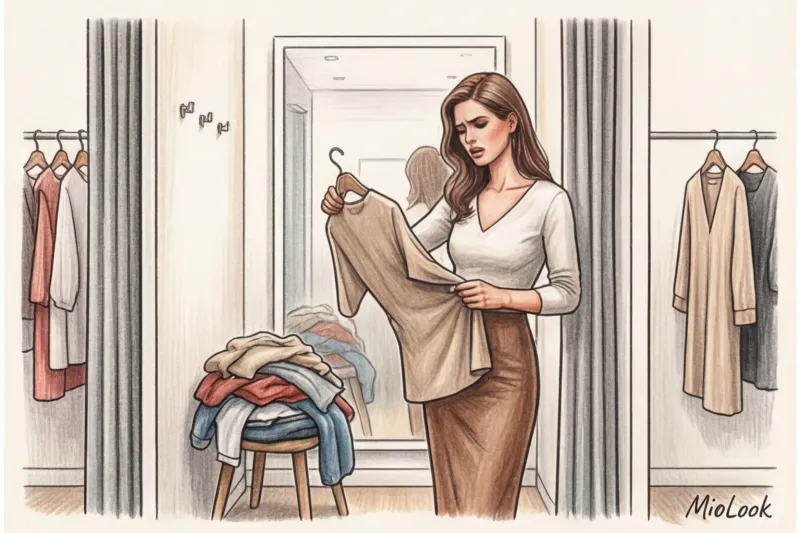
True omnichannel retail is often thwarted by the harsh reality of outdated IT infrastructure. The most common scenario in my client work is: desynchronization of residues We put together a mood board in advance, find the perfect basic cardigan on a popular European brand's app, and see an encouraging green checkmark: "In stock at your shopping center: 2 items." We arrive forty minutes later, but the rack is empty, and the sales assistant just shrugs. It turns out that the online display and the physical store's POS system sync at best once a day. For the retailer, this is an "acceptable technical error," but for the customer, it's deception and wasted time.
The other extreme, which creates artificial barriers, is difference in assortment We're talking about so-called "website exclusives." Brands love to offer premium lines (Studio, Conscious, or limited collaborations) exclusively online to avoid crowding their showrooms and save on merchandising. But let's face it: how can I convince a client to invest €250 in a complexly tailored jacket if we can't assess the quality of the lining, the weight of the fabric, or the stiffness of the lapels? Such online exclusives, without the opportunity for preliminary tactile evaluation, often become "dead weight" in the catalog for a discerning audience.
But the critical point of no return that kills brand trust forever is problem of returns The complex logistics of delivering an online courier order to a physical store is where businesses lose money. I'll never forget the story of one of my clients, let's call her Anna. She decided to update her business attire and ordered a three-piece suit and a silk blouse from a respected premium European brand (the total bill was about €850). The trousers didn't fit properly due to a specific pattern. We arrived at the brand's flagship boutique in the city center with a branded box just to return the ill-fitting item and, hopefully, find the right size on site.
"Sorry, the online store is a completely different legal entity. We don't accept courier orders from boutiques. You must fill out a paper form, go to the post office, and send the return at your own expense to the central warehouse in Italy," the manager's response sounded like a death sentence for the service.
The client spent an hour dealing with bureaucracy at the post office, experienced extreme stress, and her LTV (Lifetime Value) for this brand instantly dropped to zero. Customers don't care how your franchise, legal entities, or accounting department are structured internally. They see a single logo and rightly expect a unified, seamless service.
Access to MioLook for €0.99 — one-time payment
A smart AI stylist will select the perfect look based on your preferences and help you avoid mistakes when choosing clothes online.
Get access — €0.99 onceShopping Cart Abandonment Syndrome in Real Life
In e-commerce, an abandoned cart is simply a closed browser tab due to high shipping costs. In brick-and-mortar retail, it's much more dramatic: a pile of clothes, inside out, left on a fitting room ottoman. And the main reason for this phenomenon is the simple lack of availability of the right size in the store, which cold-bloodedly kills conversions at the very last stage of the purchase funnel.
Imagine this: a woman finds a great pair of jeans, tries on a size 40, but realizes she needs a 38. If the fitting room doesn't have a smart mirror or a call button for a consultant (and most brands don't), she has to get dressed, go out into the store, find an available employee, and ask to check the inventory. In my experience, 70% of the time, the client simply drops the item and leaves. The dopamine boost from shopping fades within seconds, turning into fatigue.
Moreover, tactile contact with fabric is critical to closing high-value transactions. According to the analytical agency WGSN (2023), for goods priced over €150, the ability to physically interact with the product before purchase increases the likelihood of a transaction by almost three times.
In the high-end segment, we pay not just for patterns, we pay for the "hand of the fabric"—a professional term that describes the tactile sensation of the density, texture, and drape of the material. No 360° video can convey the tightness of the twist of Scottish cashmere or the precise, crisp stiffness of Japanese denim. A customer can keep an expensive wool-blend coat on their virtual wishlist for weeks. But it is the visit to a physical store, the fitting, and the physical sensation of high-quality gabardine that become the final trigger for paying for an online order. If this connection is severed, omnichannel becomes mere multichannel, which no longer works.
Digital Wardrobe Integration: The Future of Fashion
According to McKinsey's analysis of the fashion industry, over 60% of impulse purchases end up at the bottom of the closet or returned to the store within the first 14 days. As a practicing stylist, I deal with this backlog daily: women invest substantial sums in beautiful, high-quality pieces that don't fit their current wardrobe at all. But now we're on the cusp of a tectonic shift. True omnichannel retail is no longer limited to convenient delivery—it's firmly embracing personal styling. And the key bridge between the store shelf and your real life is digital wardrobe integration.
Let's take a look at how smart wardrobe apps (like MioLook ) are fundamentally changing consumption patterns. Just a few years ago, shopping often served as a quick emotional release. You'd see a complex asymmetrical skirt for €90 on a mannequin in a store, fall in love, and head straight to the checkout. Today, thanks to the habit of digitizing their closets, customers think in formulas and strict wardrobe mathematics.
The modern shopper opens an app right in the fitting room and asks herself a tough, pragmatic question: "Will I be able to create at least three different looks with this skirt using the things I already own?" Using a virtual wardrobe ruthlessly kills mindless, impulsive shopping. However, in return, it creates something far more valuable for any retailer: rock-solid loyalty based on confidence in the choice and the absence of post-purchase disappointment.
The next logical step in the market's evolution is direct interaction between retailers and consumers' virtual wardrobes. This gives brands a unique opportunity to see in advance what a customer will wear with a new item. At closed customer service workshops in Stockholm, we actively discussed the concept of "Clienteling 2.0." Imagine: an online store's algorithm doesn't just guess blindly when suggesting popular new items, but takes into account the real context of your closet.
If the system (with your permission) sees that you already have five pairs of loose, wide-leg trousers hanging in your digital capsule, it will stop spamming you with ads for similar oversized styles. Instead, the brand will selectively suggest a structured cropped jacket in thick wool or a fitted knit top that will perfectly balance those oversized pieces. This is no longer a banal, aggressive sale; it's a ready-made solution to a problem before the customer even realizes it.
For businesses, this intelligent approach solves their most pressing problem—the colossal cost of reverse logistics. Processing a single return costs a European brand an average of €12 to €25, including condition inspection, repackaging, dry cleaning, and subsequent markdown. This leads to the key economic benefit: a radical reduction in return rates thanks to a precise understanding of the customer's wardrobe.
Let me explain the mechanics using real numbers. According to statistics from the implementation of predictive models in European retail, integrating past purchase history and personalized digital capsules reduces returns by 15–20%.
Why is there such a dramatic decline in refusals? The mechanism is extremely simple: people are no longer ordering things "on a whim" or out of touch with reality. If a woman buys a cashmere sweater for €140, she's doing so to match specific straight-leg jeans and loafers, which are already listed in her profile. The customer creates a digital collage in advance, sees how textures, proportions, and colors work together, and the fear of making mistakes disappears. There's no need to order three different items to choose from, only to return two to the courier.
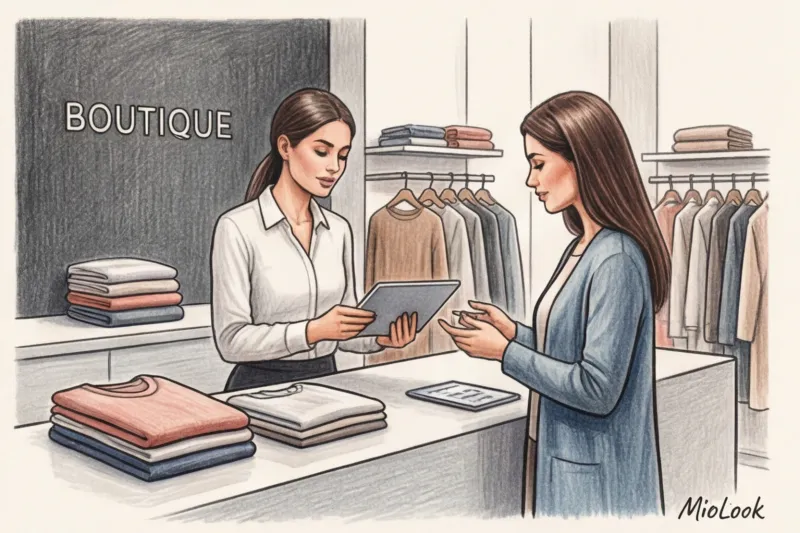
From a one-time purchase to a long-term capsule
Understanding the wardrobe context is a game-changer, even in the physical store. What strict marketers call "Omnichannel Upselling and Cross-Selling" should actually look like genuine care, not an attempt to push unnecessary items. The key question is: how to sell three items instead of one without making the smart shopper feel like they're being used to fulfill a sales quota? The answer lies in personalized data.
Let's consider a classic scenario. You're shopping for a basic cotton shirt for €50. If the checkout assistant follows a script and offers you three pairs of socks on sale, it'll only irritate you. But if the store has a well-established IT infrastructure, offline consultations based on online data come into play. The assistant, having identified you through your loyalty card on their tablet, immediately sees your purchase history and preferences.
Instead of clichés, he says: "I see you purchased a graphite pantsuit from us last season. The white shirt you chose will make a great base layer. But to avoid the look looking too dry and formal, let me show you a silk scarf with a geometric print and a statement leather belt—they're currently on sale and will perfectly complete your business capsule wardrobe.".
It's a pinpoint sniper shot. You came in for one utilitarian item and left with a complete stylistic capsule of three elements, because their functionality and 100% compatibility with your own clothes were clearly demonstrated to you right in the fitting room. An offline consultant, armed with a digital database, is no longer just a polite cashier. They become your personal stylist and assistant, and a one-time, non-binding transaction develops into a long-term, trusting relationship. This kind of smart, empathetic, and seamless experience is the future of the entire fashion sector.
European Experience: How Mass-Market and Premium Brands Are Blurring Boundaries
For a long time, the industry believed that installing a couple of touch panels on a sales floor was the height of innovation. In practice, however, the real omnichannel in retail It only works when technology becomes invisible. Customers simply stop noticing where their smartphone ends and the physical hanger begins. Let's look at real-life examples from European market giants that are currently setting global standards.
As a stylist, I spend 20 hours a week in shopping malls, and the differences in brands' technological approaches are immediately obvious to me. For example, at COS or &Other Stories, beloved by many minimalists, finding the right size can sometimes turn into a classic quest: the consultant goes off to the warehouse and disappears for 15 minutes. That's time, time I could use to put together another complete look for a client. But at Inditex's flagship stores, the situation is fundamentally different—their digital solutions genuinely save hours of shopping, rather than remaining just a pretty, conceptual press release.
Function integration Store Mode Zara's Store Mode app is a game-changer for those who value their time. When I enter the flagship store, the app redesigns itself: now I can see the availability of items at that specific location. Furthermore, the built-in map shows the exact location of the sweater I'm looking for, down to the rack number. But my favorite feature is remote fitting room booking. You select an option on your smartphone, continue walking around the store, and the system notifies you when a stall is available. No more tedious lines with a mountain of heavy items in your hands.
If Zara is betting on automating huge flows of people, then Massimo Dutti uses technology to enhance the premium nature of their service. Their strategy is a carefully crafted symbiosis of a personalized approach and RFID tags. Interactive mirrors are installed in the fitting rooms: thanks to RFID chips on the tags, the mirror instantly recognizes all items brought in. Imagine this: a customer finds a pair of €120 trousers that doesn't fit. She doesn't have to get dressed, go out into the store, or find a consultant. A single touch of the screen is enough, and the employee brings the right item directly to the fitting room. This seamless experience transforms a simple fitting into a closed receipt.
A completely different, but no less effective approach is demonstrated by H&M Group The core of their omnichannel experience isn't so much the hardware in their stores as a deeply integrated loyalty program. The H&M app connects every touchpoint: from scanning an item's barcode in the store (to check if a different color is available on the website) to creating a unified database of digital receipts. It's a brilliant customer experience system. The brand knows exactly when you bought a basic €15 T-shirt in-store, and a week later, the algorithm will suggest the perfect pair of jeans to go with it via email.
This transparent digital purchase history is a real boon for smart wardrobe organization. Electronic receipts make it easy to transfer items to smart spaces without the hassle of taking photos. For example, by uploading purchase data to MioLook app , you instantly see how a new skirt from H&M pairs with a Zara jacket you bought six months ago. This is the logical conclusion of the omnichannel journey, when an item doesn't just hang in your closet but begins to function in your personal digital catalog.
Access to MioLook for €0.99 — one-time payment
Start creating perfect images with the help of artificial intelligence
Get access — €0.99 onceTechnologies that actually work (and don't just burn through the budget)
According to internal reports from many European retailers for 2023, a huge portion of investments in so-called "innovations" simply don't pay off. Marketers often confuse visual wow-factors with real solutions to customer problems. True omnichannel retail is built not on futuristic storefront design, but on technologies that save time and reduce stress during shopping.
"Innovation is pointless if it forces the customer to click or take more actions than they are used to in everyday life" – this is a rule I often hear at industry conferences, and it is 100% true for the fashion industry.
Take for example, RFID inventory (Radio Frequency Identification System). This technology is invisible to the customer, but it is the ironclad foundation of any omnichannel experience. Without microchips in tags, the entire system crumbles at the seams. Imagine this: an app shows you a €140 cashmere sweater waiting for you in the store. You arrive, and the item is gone—someone accidentally hung it up with their summer dresses. Finding it with a traditional barcode is impossible. With an RFID scanner, a sales associate can find the sweater in twenty seconds because the terminal "senses" the item within a radius of several meters, acting like a metal detector. Without precise inventory synchronization, there's no trust in the brand.
Now about the sore point - smart mirrors in fitting rooms Several years ago, many mid- and premium-segment brands rushed to install huge interactive panels. And most of these initiatives in Europe failed miserably. A critical look is essential: why are they now either disabled or operate like regular glass? Because their interfaces turned out to be too cluttered.
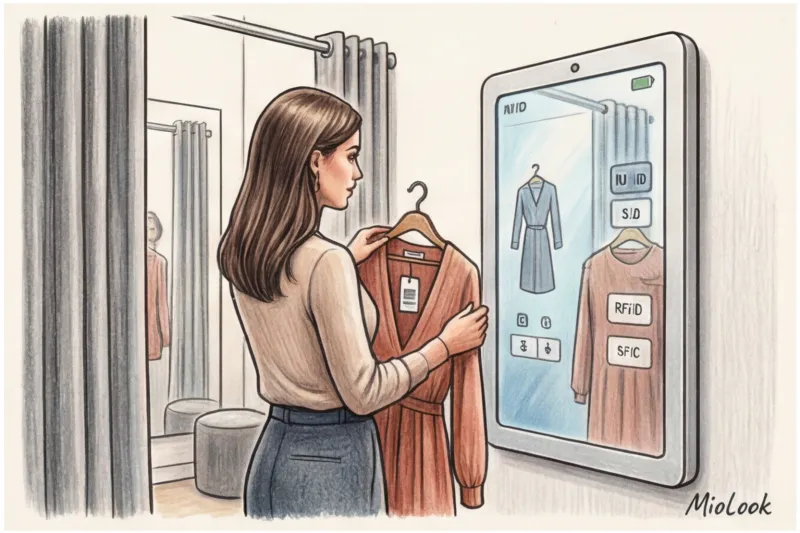
A customer standing in a cramped booth wearing nothing but tights has absolutely no desire to scroll through lookbooks, study the brand's history, or watch commercials on a freezing screen. They only need one option: requesting a different size without going into the store. In practice, radical minimalism works. You hold the item number of the ill-fitting item to the scanner, and two buttons appear on the screen: "Bring size M" and "Bring another color." Pressing a button sends a signal directly to the consultant's smartwatch. This truly premium service level saves the sale when the customer is simply too lazy to get dressed again for a trip to the rails.
Another invisible hero of effective retail is mobile cash registers (mPOS) I call them the biggest killers of queues and abandoned purchases. You've probably encountered this situation: you've got the perfect basic trench coat in your hands, the price is great—€180—but there's a line of fifteen people snaking at the checkout. Statistics are merciless: if the visual wait exceeds 5-7 minutes, the impulse to buy drops sharply, and the item remains on the nearest shelf. mPOS terminals, which allow sales associates to check you out right in the fitting room, remove the magnetic barrier, and send you an electronic receipt by email, transform the frustration of waiting into the joy of a quick purchase.
AI and virtual fitting rooms
It's logical to move from physical barriers to online fears. The main problem with online shopping is the inability to predict the fit. Palazzo pants look flawless on a 178 cm studio model, but on a 160 cm woman, they could throw off all her figure proportions and turn into a disaster.
This is where machine learning algorithms come into play. How does AI help customers understand the fit before arriving in-store? Deep integration of virtual fitting into the product page allows you to upload your exact measurements and see how a specific fabric will perform on your body type. Algorithms analyze not only the size chart but also the stiffness of the material, revealing where the garment will be snug and where it will flow freely.
For those who approach shopping strategically, these technologies work brilliantly in conjunction with digital planners. If you want to ensure that a new item doesn't become dead weight in your closet, try MioLook The service allows you to digitize your database and use smart wardrobe functionality to visualize in advance how a planned purchase will look with your favorite jackets or shoes. This level of awareness allows artificial intelligence to safeguard your investments, while the brand saves colossal amounts on returns of unsuitable items.
The Biggest Myth: Why Sales Associates Are Sabotaging Omnichannel
"If you think omnichannel retail breaks down because of software bugs or complex logistics, you're sorely mistaken. It dies when a salesperson is tired and simply doesn't find it profitable to work with you." This harsh truth was voiced by the retail director of one of H&M Group's brands during a specialized workshop I recently attended. And it's perhaps the most carefully suppressed insider information in the industry.
Imagine a typical scenario: you bought a basic trench coat for €120 online, but when you get home, you realize you got the wrong size or cut. You bring it to your local mall for a return. It's a seamless, convenient experience for you, but on the store's end, a real drama unfolds. The root of the problem is... KPI problem A brick-and-mortar store almost never receives a bonus for picking up or returning an online order. Worse, some outdated incentive systems directly deduct this return from the daily sales plan for a specific shift.
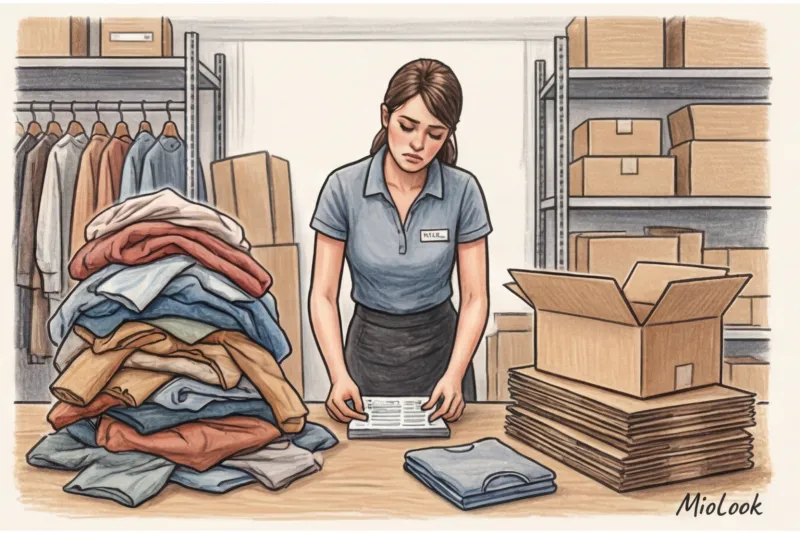
An employee spends 15 minutes of their time checking the condition of an item, filling out delivery notes, processing a cash register transaction, and repackaging the goods for shipment to the regional warehouse. They don't earn a cent for this work. Naturally, the staff will quietly sabotage and hate this process.
It is unfolding in parallel channel conflict , where the website becomes not a partner but a ruthless competitor to the physical store. A classic example from my experience: a client and I arrive at the store, and the salesperson spends almost an hour with us, bringing sizes to the fitting room and expertly selecting accessories. At the end, the client says, "Thanks for your help, I took pictures of everything and will order these items tomorrow in the app—I've got a personal discount there." At this point, the salesperson literally loses a commission of €400–€500 on the check. Naturally, in the future, they will do everything they can to dissuade the customer from using their smartphone in the store.
How can we remotivate staff so they become ambassadors of omnichannel rather than its hidden enemies? Retailers need to completely rewrite the rules of the game.
First, we need to implement a service reward. Every transaction involving returning a return or delivering a package should be converted into a fixed micro-bonus for the employee, compensating them for their time.
Secondly, actively utilize the "endless aisle" technology with proper attribution. If the desired jacket size is unavailable in the store, a consultant should be able to place an order directly through their terminal for home delivery. The transaction amount (say, €90) should immediately be reflected in their personal sales plan. Massimo Dutti has been successfully implementing this system for several years, and the results are astounding.
Third, it's important to train staff to use the customer's digital tools. Modern shoppers increasingly come to the store with a pre-planned shopping experience. If sellers see that the client is using MioLook For a virtual capsule collection, their job isn't to blindly push random items on a client, but to professionally help fill gaps in her digital wardrobe. When a consultant is confident they'll receive their fair share, regardless of where the receipt is physically processed, they transform from a pushy salesperson into your most valuable style assistant.
Your ideal image
it begins Here
Join thousands of users who look flawless every day with MioLook.
Get access — €0.99 onceFashion Brand Checklist: An Audit of Your Customer Journey
According to WGSN's 2024 analytical reports, 73% of consumers use multiple channels to interact with a brand before making a purchase. However, in practice, the elegant corporate promise of "seamless" often falls apart when faced with the harsh reality of the retail floor. As an independent consultant, I regularly audit retailers, helping them develop a strategy where every square meter of floor space contributes to retention rather than disappointment.
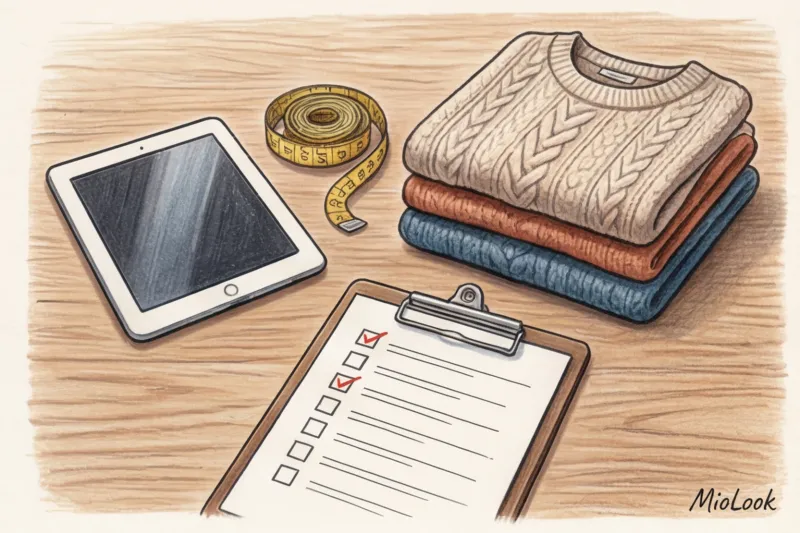
Let's put aside the glossy presentations about the future of the industry and take your current infrastructure for a rigorous test drive. Here are four basic questions, answering "no" to which will cost you loyalty and money every day.
- Are online and offline loyalty databases synchronized?
Imagine this: a customer regularly orders clothes from your website, accumulating VIP status and substantial cashback. She visits a physical boutique to buy a basic T-shirt for €30, but the POS software doesn't recognize her online profile using her phone number. She's asked to "create a plastic card from scratch." The result? The customer feels devalued. Customers want to be recognized at every touchpoint, regardless of where they left their money yesterday.
- Is it possible to return an online order to any physical store without printing out paper forms?
Last quarter, I conducted a mystery shopping operation for a popular European mid-market brand. Returning a skirt purchased through their app took 25 minutes, requiring three handwritten forms and a physical passport check. In today's consumer paradigm, this is unacceptable. If a return can't be processed by scanning a single barcode from the app (as mass-market giants have long implemented), your omnichannel approach exists only in top management reports.
- Can the checkout assistant see what's in the customer's online shopping cart (Wishlist)?
This is an area of enormous missed potential for upselling. When a customer pays for jeans, the mobile POS interface should prompt the salesperson: "This customer has a cashmere sweater in their favorites for €120, but they haven't yet decided to pay for it. This sweater is currently available at the next stand." Understanding the digital context is critical, especially today, when conscious shoppers are pre-packaging their capsules through apps like MioLook — without seeing their “deferred” desires, the seller works blind.
- Are your staff trained to handle customers who come to you for a specific item from the app?
This new type of shopper rarely wanders aimlessly through a shopping mall. They arrive with a specific screenshot, having checked the availability of their size beforehand. Your team must be able to read product numbers from someone's smartphone screen in seconds and have a precise understanding of the warehouse layout. The worst part is when, in response to the phrase, "The app shows you have this jacket in size 38," the salesperson wearily replies, "Well, look where the new arrivals are; maybe someone moved it."
Micro-conclusion: every negative answer to the questions in this checklist is a hole in the sales funnel, through which your marketing budget is leaking. Impeccable hygiene of basic processes is always more important than installing expensive technological gadgets in display cases.
Conclusion: Business Outcomes and the Future of Personalization
Let's look at the raw numbers: according to a 2023 Harvard Business Review study, customers who use multiple channels to interact with a brand spend an average of 4% more per visit in a physical store and 10% more online. Today, competition for consumers' wallets has reached an all-time high. Thousands of new collections flash across social media feeds every morning. In such a reality, omnichannel in retail — this is not just a convenience for show; it is a powerful tool for retaining customers in an era of market saturation.
If your customer can't return an ill-fitting jacket they ordered overnight on their tablet at the nearest corner store on their way to work without stress, they'll switch to a competitor. The cost of acquiring a new lead is too high today to squander loyalty due to poor logistics or disjointed databases.
Let me summarize all of the above from the perspective of a practicing personal stylist. I analyze daily how modern women's decision-making logic is changing. My prediction is clear: brands that shift their focus from aggressively selling a single item to helping clients organize their entire closet over the next five years will undoubtedly win the market. That's why The implementation of AI and the integration of smart wardrobes are the next stage in the evolution of retail..
How does this work in practice? When my client digitizes her capsule in MioLook , she stops buying random things. Imagine your brand being able to work with such data. A customer walks into your flagship boutique, and a consultant, having scanned the loyalty QR code, sees her overall wardrobe palette. Instead of randomly suggesting the season's hits, the salesperson hits the mark: "Elena, I see that you prefer warm autumn shades. We just got a terracotta cashmere sweater for €140 that will perfectly complement the three skirts you left in your virtual shopping cart last week." This is no longer pushy; it's high-quality service.
A reduction in return rates is another hidden business benefit of this integration. In the European segment, the rate of online order returns remains stable at 25–30%, which eats into a significant portion of margins. When algorithms help customers understand exactly how to wear a new item, the risk of returns drops dramatically.
Brief summary: Invest in a seamless experience and team motivation The most advanced RFID scanners will become expensive toys if your employees sabotage them. Review your KPI system. If a sales associate spends half an hour helping with a fitting, and the purchase is ultimately made online that evening, that employee should receive a bonus. Online and offline are no longer competitors; they are partners, creating a unified ecosystem around the customer.
What can you do tomorrow? Put aside your reports and go through your customer journey manually. Buy an item on your own website, try changing the shipping address through customer support, then try exchanging a size in a physical store without a receipt. Any delay, any unnecessary phone call, or paper return form is a hole in your sales funnel, a drain on your money. The future of the fashion business belongs to those who make wardrobe management as natural as your morning cup of coffee.
Guide Chapters
Click and Collect in Retail: Rules for the Fashion Industry
Find out why fashion brands shouldn't copy supermarket pickup. We'll break down the Click & Collect rules, taking into account emotions and fittings.
CJM in Fashion Retail: From Social Media to the Checkout
Why does a perfect sales funnel often end in returns? Learn how to create a seamless customer experience and reduce returns.
Clientele in Fashion Retail: Online Data for Offline Use
Today, salespeople's intuition alone isn't enough. Learn how to use online customer data to create impeccable service in brick-and-mortar boutiques.
AI in Fashion Retail: Smart Recommendations and Styling
Artificial intelligence is forever changing the fashion business. We explore how technology is transforming into a personal online stylist and improving the customer experience.
Digitizing the store's assortment: a smart wardrobe
Classic photos on a white background no longer work for modern algorithms. We'll use a real-life case study to explore how advanced digitalization reduces purchase returns.
Omnichannel Loyalty Program: A Guide for Retailers
Separate online and offline store databases are costing you VIP clients. We'll explore how a unified loyalty system can save sales and retain customers.
Smart Mirrors in a Clothing Store: How AR is Changing Shopping
Physical fittings often tire customers and lead to lost sales. Learn how augmented reality technology is solving the "abandoned fitting room" problem.
A virtual fitting room for an online store with no returns
Shoppers are accustomed to ordering multiple sizes just to try them on, causing losses for brands. Learn how technology is solving the problem of mass returns.